
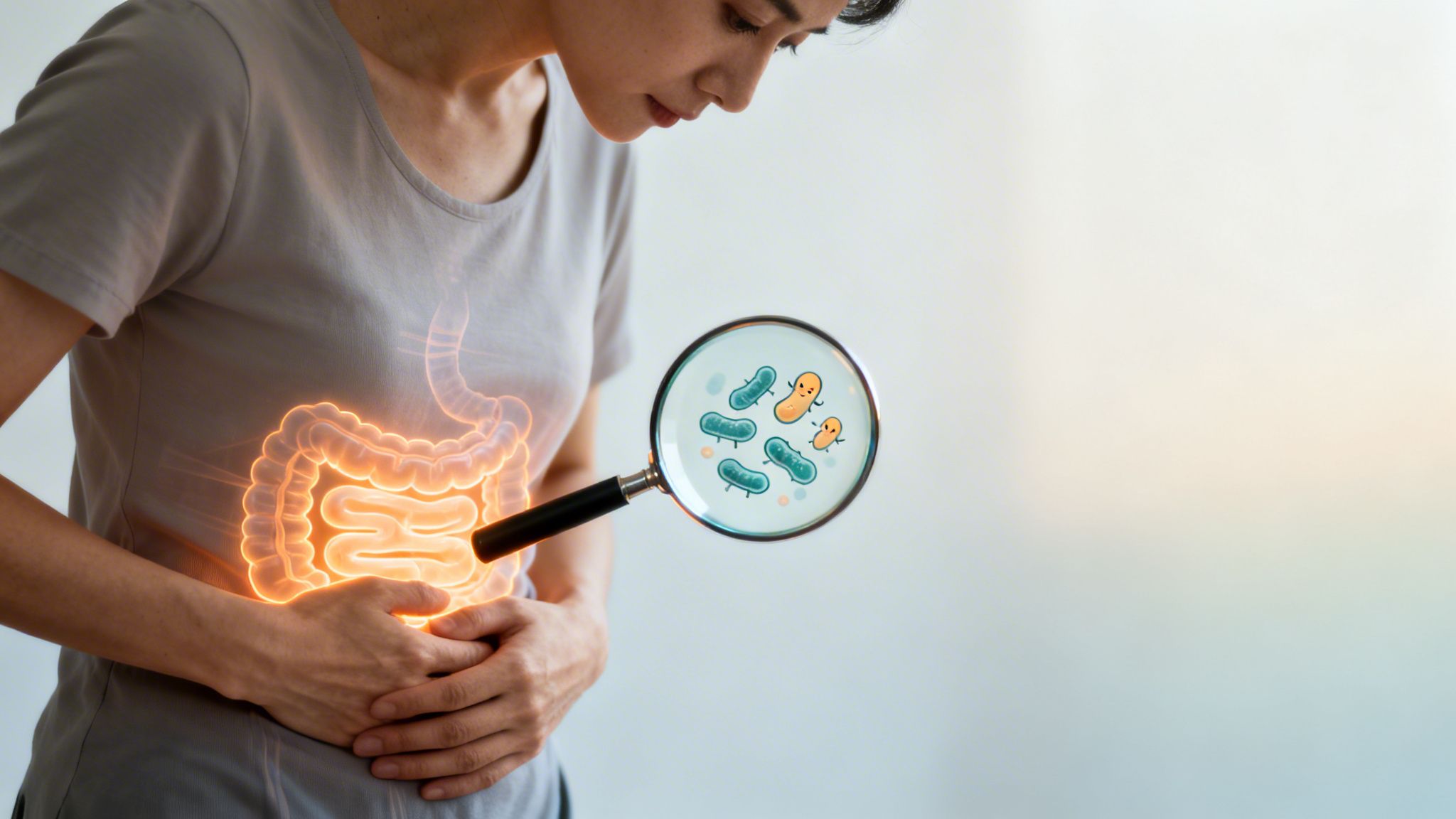
Understand intestinal pain and finally find its cause
Intestinal pain is more than just an occasional twinge. It is an important signal from your body that often points to deeper causes such as undetected intolerances, nutrient deficiencies, or a disrupted gut microbiome. Instead of ignoring it, you can see it as an opportunity to regain control over your well-being.
Why you should take your intestinal pain seriously
Imagine sitting down to eat when suddenly your stomach rebels—a feeling that millions of people know all too well. You are by no means alone. In fact, gastrointestinal complaints are among the most common health problems in Germany and can severely impair your quality of life.
Diffuse discomfort, bloating, or cramps are often dismissed as “normal” or blamed on everyday stress. But they are not. These symptoms are your gut’s way of clearly telling you that something has fallen out of balance.
The hidden messages from your gut
Instead of repeatedly treating the symptoms only in the short term, it makes far more sense to get to the root of the actual cause. Your intestinal pain may point to various, often unnoticed triggers:
- Undetected food intolerances: Your body may be reacting silently to lactose, fructose, or histamine without you having been able to identify the cause.
- A disrupted gut microbiome: The fragile balance of trillions of bacteria in your gut may have been thrown off by stress, diet, or medication.
- Nutrient deficiencies: A lack of important vitamins or minerals can noticeably impair the functioning of your digestive system.
These factors can affect your health unnoticed over a long period of time and drain your energy. The good news is: you no longer have to grope in the dark.
Imagine your gut as a highly sensitive ecosystem. Every meal, every stressful day, and every night of too little sleep affects this delicate balance. Persistent intestinal pain is often the first visible sign that this system urgently needs help.
The prevalence of these problems is enormous. The following table provides a quick overview of how common certain digestive complaints actually are in Germany.
Overview of common gastrointestinal complaints in Germany
| Complaint | Affected share of the population |
|---|---|
| Heartburn | 25 % |
| Stomach pain | 23 % |
| Diarrhea | 22 % |
| Constipation | 19 % |
| Bloating | 17 % |
The figures clearly show that you are not alone with your symptoms. A large proportion of the population struggles with similar problems, underscoring the importance of targeted investigation into their causes.
A representative survey by ABDA reached a similar conclusion: Almost 7 in 10 adults in Germany experienced gastrointestinal complaints within a year. You can learn more about the results of this survey at abda.de.
This is exactly where we come in. With mybody®x self-tests, such as the food intolerance test or the gut microbiome analysis, you can move from mere speculation to concrete facts. Instead of continuing to guess what is causing your symptoms, you gain scientifically based insights into your body—all from the comfort of your home. This helps you take back control and take targeted steps toward feeling better in your gut.
Where does your intestinal pain really come from? The most common causes revealed
Does your stomach often feel unsettled, but you simply do not know why? This section is like your personal map to the roots of your symptoms. Without any confusing medical jargon, we will look at which factors put a strain on your gut and can trigger pain.
Imagine your gut as an incredibly complex ecosystem. Here, trillions of organisms, your diet, and even your emotional world must be in harmony. Even the smallest disruptions can throw this delicate balance off track. Often, it is not the major, obvious diseases, but rather a combination of smaller, everyday stresses that put a strain on your gut.
The following graphic summarizes the three central pillars that significantly influence your gut health and are often at the heart of recurring complaints.

This makes it very clear how closely diet, stress, and the microbiome are interconnected and directly affect your gut. A change in just one of these areas can quickly trigger an unpleasant chain reaction.
Food intolerances as silent culprits
One of the most common reasons for recurring intestinal pain is the way your body reacts to certain foods. Unlike a classic allergy, where the immune system immediately and intensely sounds the alarm, symptoms of intolerances often appear with a delay. This makes it so difficult to identify the trigger.
Possible hidden culprits include:
- Lactose (milk sugar): Bloating and diarrhea after consuming dairy products are typical signs.
- Fructose (fruit sugar): Too much fruit, juice, or sweetened food can lead to cramps and a bloated stomach in people with fructose malabsorption.
- Gluten (wheat protein): Not only in the case of celiac disease, but also with gluten sensitivity, consuming wheat, spelt, and similar products can cause problems.
- Histamine: Foods such as red wine, aged cheese, or smoked sausage can cause headaches, skin rashes, and also intestinal pain in people with histamine intolerance.
A mybody®x food intolerance test can help you identify specific IgG4 reactions to a wide range of foods. This finally gives you concrete indications of which foods you should temporarily eliminate to give your gut a much-needed break.
Your gut microbiome out of balance
Trillions of microorganisms live in your gut—your personal gut microbiome. This complex ecosystem is essential for your digestion, immune system, and even your mood. When it is in balance, you feel well. But when it gets out of sync, this is called dysbiosis.
Dysbiosis is like a beautiful garden in which weeds suddenly take over. The beneficial plants—in your gut, the good bacteria—are displaced. This disrupts nutrient absorption and can lead to inflammation and pain.
Such a disruption can be triggered by many factors: an unbalanced, sugar-rich diet, taking antibiotics, chronic stress, or too little exercise. The consequences are often bloating, irregular bowel movements, and cramp-like intestinal pain. Want to take a deeper look? In our article on gut dysbiosis, you will find all the important information.
Stress and medications as invisible enemies
The connection between your brain and your gut is incredibly strong—this is also known as the gut-brain axis. When you are constantly under pressure, your body releases stress hormones such as cortisol. These can alter intestinal movement, reduce blood flow, and make the protective intestinal lining more permeable.
Certain medications can also disrupt this delicate balance:
- Antibiotics: They are sometimes unavoidable, but they kill not only harmful bacteria, but also countless beneficial bacteria in the gut and can cause lasting damage to the microbiome.
- Painkillers (NSAIDs): Ibuprofen or diclofenac can damage the stomach lining when taken regularly and lead to discomfort.
- Acid blockers (PPIs): They alter the pH level in the stomach, which can impair digestion and promote the growth of unwanted bacteria in the small intestine.
The causes of intestinal pain are therefore varied and often interconnected. The key is not only to treat the symptoms, but also to identify your individual triggers. A self-test at home can be the first crucial step toward greater clarity and well-being.
Irritable bowel syndrome and other chronic complaints
When intestinal pain, a bloated abdomen, or unpredictable bowel movements become your constant companions, there is often more to it than just a bad meal. Many people experience these symptoms not just occasionally, but as a chronic burden that dictates their daily lives. The frustrating part? Although the symptoms are completely real, you often feel left alone because conventional examinations such as a colonoscopy frequently find nothing abnormal.
This scenario is typical of irritable bowel syndrome (IBS), a functional disorder that has developed into a silent widespread condition. A defining characteristic of IBS is that no visible inflammation or damage can be found in the intestines. As a result, the diagnosis is often made only after all other possible illnesses have been ruled out—a long journey filled with uncertainty and the wearing feeling of not being taken seriously.

When the gut is particularly sensitive
The exact causes of irritable bowel syndrome are complex and not yet fully understood, but research is painting an increasingly clear picture. It is now believed to result from an interaction of several factors that trigger the symptoms. The most important are:
- A disrupted gut-brain axis: Think of this connection between the gut and the brain as a sensitive communication highway. In people with IBS, it is often overstimulated. Stress or emotional strain can therefore directly lead to intestinal pain and digestive problems.
- Altered intestinal motility: The muscle movements in your intestines are out of sync—either too fast (leading to diarrhea) or too slow (causing constipation).
- Visceral hypersensitivity: The intestine itself is more sensitive to pain. Normal digestive processes that other people do not notice at all are perceived as painful by those affected.
Particularly alarming is the sharp increase in diagnoses among young, active people. An analysis by KKH Kaufmännische Krankenkasse shows that in 2022, the proportion of 20- to 24-year-olds diagnosed with IBS had risen by a full 15 percent compared with 2012. Women are affected almost twice as often as men.
The cycle of uncertainty and the role of the microbiome
For many people affected, this begins a veritable odyssey from one doctor’s appointment to the next without a clear cause being found. This leads to enormous frustration and sometimes even to the feeling that they are imagining their symptoms. This is exactly where an analysis of your gut microbiome can provide the crucial missing piece of the puzzle.
When standard examinations do not provide any results, that does not mean your intestinal pain is not real. It simply means that the cause lies at a level these tests cannot detect—for example, in the invisible ecosystem of your gut bacteria.
A mybody®x gut microbiome analysis provides you with objective, scientifically sound data about the condition of your gut flora. You will learn specifically:
- How diverse your microbiome is: A high diversity of bacterial species is considered a sign of a healthy and resilient gut.
- Whether an imbalance (dysbiosis) is present: The test reveals the ratio of beneficial to potentially harmful bacteria.
- How well you are supplied with key bacteria: You can see whether important bacterial strains are missing—for example, those responsible for producing protective substances such as butyrate, which nourishes the intestinal lining.
These findings are incredibly valuable. They break the cycle of uncertainty and give you concrete ways to specifically improve your gut health—whether through an adapted diet, the targeted intake of prebiotics and probiotics, or better stress management. If you would like to learn more about what exactly irritable bowel syndrome is, you can find more information in our detailed article “What Is Irritable Bowel Syndrome?”.
When an acute infection leaves long-term effects
Sudden cramps, severe diarrhea, nausea—a gastrointestinal infection can completely knock you off your feet from one minute to the next. In most cases, it is viruses such as norovirus or rotavirus, or bacteria such as salmonella, that force your body into a state of emergency. The effects are anything but harmless.
In fact, gastrointestinal infections are among the most common reasons for sick leave. A recent analysis by the AOK shows how sharply the figures have risen: In Hamburg alone, there were 15 cases of incapacity for work per 100 employed people in 2023. Statistically speaking, one in seven people was affected. Young people aged 20 to 29 were particularly affected, with 26 cases per 100 people—well above average.
But what actually happens in your body after the acute symptoms have finally subsided? Unfortunately, the end of the infection does not always mean that everything returns to normal.
When the infection goes away but the problems remain
Imagine your gut during an infection as a battlefield. Your immune system fights the invaders with all its strength, but this battle leaves its mark. Your sensitive gut microbiome in particular—that is, the community of beneficial gut bacteria—is severely affected.
The result is often dysbiosis—a significant imbalance in your gut flora. This imbalance is often why you continue to struggle with symptoms weeks or months after the infection itself.
An acute gastrointestinal infection is like a fierce storm sweeping through the garden of your microbiome. Even after the storm has passed, many valuable plants have been uprooted and the soil is vulnerable to weeds. Restoring the original balance requires targeted care.
Such a weakened gut ecosystem can open the door to long-lasting problems. One of the best-known is post-infectious irritable bowel syndrome. Around 1 in 10 people develop chronic symptoms after a bacterial gastrointestinal infection that resemble those of irritable bowel syndrome—even though they had never experienced problems before.
After the infection comes regeneration
This is exactly the right moment to take responsibility for your gut health and actively prevent subsequent problems. Instead of simply waiting and hoping that everything will regulate itself, you can take a targeted look at how your gut is really doing and support it as it rebuilds.
mybody®x self-tests are a smart tool for this. They help you finally gain clarity:
- A mybody®x gut microbiome analysis: It gives you a detailed insight into the state of your gut flora after the infection. You find out whether important bacterial strains are missing and whether an imbalance (dysbiosis) is present that could explain your symptoms.
- A mybody®x nutrient test: A severe infection depletes your body's reserves. A test can show whether important vitamins and minerals are lacking that could weaken your recovery and immune system—for example, vitamin D, zinc, or selenium.
With these concrete results, you receive not only data but also a sound basis for your next step. You can adjust your diet in a targeted way, replenish missing nutrients, and systematically rebuild your microbiome. This helps your body not only overcome acute intestinal pain but also gradually return to balance in the long term.
Finally find clarity: How an at-home test gets to the root of the causes
Are you fed up with intestinal pain and constantly wondering what is behind it? Waiting times for an appointment with a specialist drag on endlessly, and you feel completely helpless. I understand that all too well. But there is a way for you to take action yourself and break free from uncertainty – scientifically backed and directly from the comfort of your own home.
mybody®x self-tests are designed precisely for situations like this. They give you a tool to finally gain concrete insights into your body instead of continuing to grope in the dark.

Your path to answers in three simple steps
The entire process is designed to give you maximum control with minimal effort. No complicated phone calls, no weeks of waiting for appointments. You can take action immediately and take matters into your own hands.
1. Order your test online and receive it discreetly Browse mybody-x.com and choose the test that best matches your symptoms. Whether you want to specifically test for food intolerances or take a closer look at your gut microbiome, the right kit will arrive discreetly packaged at your home.
2. Collect your sample – easily in the comfort of your own home Every test kit includes simple instructions and everything you need. A small blood, saliva, or stool sample is all it takes. You can do this conveniently and without stress in your own home, whenever it suits you.
3. Analysis in a specialized laboratory and results you can understand You then send your sample free of charge to our German partner laboratories. There, it is analyzed according to the highest scientific standards. Our laboratories are ISO-certified, guaranteeing you the highest level of precision and reliability.
Your test result is much more than just a list of laboratory values. It is your personal roadmap to greater well-being. We translate the complex data into an easy-to-understand report with specific, personalized recommendations for your diet and lifestyle.
Your data is completely secure. The entire process is subject to the strict requirements of the GDPR, ensuring that your personal health information is protected at all times.
Which mybody®x test is right for your intestinal pain?
Not all intestinal pain is the same, which is exactly why it is so important to find the right test for your individual symptoms. This table will help you decide which self-test is most suitable for your specific symptoms and what insights you can gain from it.
| Symptoms | Recommended test | What you discover with it |
|---|---|---|
| Bloating, cramps, or diarrhea after certain meals. | mybody®x Food Intolerance Test | You see which of up to 286 foods your body reacts to with an IgG4 response. This gives you clear guidance on which foods you should try eliminating. |
| Chronic symptoms such as irregular bowel movements, bloating, and general discomfort. | mybody®x Gut Microbiome Analysis | You receive a detailed analysis of your gut flora, see the ratio of beneficial to harmful bacteria, and find out whether dysbiosis (an imbalance) is present. |
| Persistent fatigue, lack of energy, and a weak immune system in combination with intestinal pain. | mybody®x Nutrient Analysis | The test shows whether you are lacking important vitamins, minerals, or trace elements that are crucial for healthy digestion and your overall well-being. |
| Hormone-related symptoms (e.g., during your cycle) combined with digestive problems. | mybody®x Hormone Test | You can uncover connections between your hormone levels (e.g., cortisol, estrogen) and your intestinal problems. |
An at-home test is your chance to regain control and create a solid foundation for targeted changes. Instead of remaining uncertain, you get a clear roadmap for addressing your intestinal pain at its root.
If you want to learn more about exactly how such a test works, also read our detailed guide to the mybody®x gut test.
This is how your test result becomes your new everyday life
You are holding your mybody®x report in your hands. This is a true pivotal moment. It is more than just a sheet of paper—it is the long-awaited answer to the question of what could be behind your persistent intestinal pain. The guesswork is finally over. Now the truly exciting part begins: putting this knowledge into practice and giving your body what it really needs.
Of course, the thought of changing your diet can initially feel like facing a huge mountain. But don’t worry—it’s not about turning your entire life upside down overnight. Rather, it’s about small, targeted adjustments that often have a surprisingly significant impact on your well-being.
From knowledge to concrete action
Imagine your mybody®x food intolerance test shows a clear reaction to wheat and cow’s milk. Instead of simply avoiding these foods in a panic, your personalized recommendations provide you with practical and delicious alternatives.
A typical day could then look like this:
- Breakfast: Instead of your usual wheat roll with cheese, try a creamy porridge made from gluten-free oats, refined with fresh berries and a splash of oat milk.
- Lunch: Pasta with cream sauce makes way for a colorful bowl with quinoa, plenty of crunchy vegetables, chicken, and a light olive oil-based dressing.
- Dinner: A warming lentil soup or a tray of colorful roasted vegetables and potatoes replaces the classic evening meal.
Often, it’s precisely these small, conscious swaps that make a noticeable difference after a short time and relieve your intestinal pain.
Your test result is like a personal instruction manual for your body. It shows you which "buttons" to press to bring your system back into balance—without having to keep fumbling in the dark.
Strengthen your microbiome strategically
Did your gut microbiome analysis reveal dysbiosis, meaning an imbalance in your gut flora? Then the focus now is on specifically feeding and rebuilding the good bacteria in your gut. Your recommendations will therefore focus on prebiotic and probiotic foods.
Prebiotics (Food for your good bacteria):
- Incorporate more fiber-rich foods such as leeks, onions, asparagus, chicory, and whole-grain products into your diet.
- A great trick: Cooked and then cooled potatoes or rice develop resistant starch—true superfood for your beneficial gut inhabitants.
Probiotics (The living helpers):
- Incorporate fermented foods such as plain yogurt (if you tolerate it), kefir, fresh sauerkraut, or kimchi into your diet.
Don’t see these adjustments as a short-term sprint, but as the beginning of a lasting friendship with your gut. It’s about establishing new habits that will help you enjoy a better quality of life and a carefree feeling in your stomach in the long term.
If you ever feel overwhelmed or have questions along the way, you are not alone. Our mybody®x experts are available to support you through optional coaching. Together, you can develop a plan that fits perfectly into your everyday life, helping you achieve your goals and soon feel completely comfortable again.
Do mybody®x tests replace a visit to the doctor?
Quite clearly: No. A self-test is never a substitute for a medical diagnosis. Instead, see our tests as your personal tool for taking a proactive approach—a smart first step on the path to improvement.
Imagine going to the doctor and saying only, “I have stomach pain.” The search for the cause starts from scratch. With one of our test results, you can say, “I have stomach pain, and my test shows a strong reaction to gluten and an imbalance in my microbiome.” That is a completely different starting point. You already bring well-founded data and thus help significantly accelerate the search for the causes.
How quickly can I expect to feel better?
This is the question that concerns us all the most. The answer naturally depends heavily on the cause and your consistency. However, many of our customers notice a significant change after just a few weeks when they adjust their diet.
Your gut is like an overstimulated muscle. It needs time to calm down and regenerate. Give it that time—patience and consistency are your most important companions on the path to feeling better in your belly.
Especially when you eliminate foods that your body reacts to according to your intolerance test, your gut can recover surprisingly quickly. But when it comes to deliberately building up your microbiome, it is more of a marathon than a sprint—yet one with lasting results.
What if I have trouble understanding the results?
We can completely understand this concern. A report containing a lot of new information can truly feel overwhelming at first. That is exactly why we designed our analyses so that you never feel left on your own.
We translate your laboratory data into easy-to-understand language and provide you with specific, practical recommendations for everyday life. If you still have questions or would like support putting them into practice, you can contact our experienced mybody®x health experts at any time. In optional coaching, you will work together to create a plan that fits perfectly into your life.
Are you ready to stop guessing and find the true cause of your intestinal pain? Discover the self-tests from mybody®x and start your journey toward greater clarity and well-being. Find out now at https://mybody-x.com which test is best suited to you.


Share now:
What is personalized nutrition? DNA, microbiome & success
Irritable bowel syndrome—what to do? Your guide to greater well-being in everyday life