
Is my gut healthy? Find out with a test
Do you often feel tired and drained, struggle with constant bloating, or have problems with your skin? There may be more behind this than just stress or a bad night’s sleep. Such everyday complaints are often a cry for help from your gut. With a simple at-home test from mybody-x, you can get to the bottom of the issue and find out whether an undiscovered food intolerance, a nutrient deficiency, or a hormonal imbalance could be the cause.
The first signs: When your gut cries out for help
The famous “gut feeling” is far more than just a figure of speech. Your gut is a highly intelligent system that constantly sends you signals about your overall health. However, many of us have simply grown accustomed to recurring problems such as bloating, irregular bowel movements, or that uncomfortable feeling of fullness and dismiss them as “normal.” Yet these are precisely the first messages from your gut, showing you that something is wrong.

If you recognize yourself here, you are definitely not alone. In fact, around three out of five people in Germany regularly suffer from digestive problems. Whether bloating, constipation, or diarrhea—these issues are widespread. A recent market study on gut health confirms how common these complaints still are.
How the gut communicates with the rest of the body
An imbalance in the digestive tract rarely stays confined to the abdomen. Your gut is the command center of your immune system, directly affects your skin, and is even in close communication with your brain.
Your gut is home to around 80 % of your immune system. If its protective barrier is weakened, this not only causes digestive problems but also makes you more susceptible to infections and can promote inflammation throughout the body.
Think of your gut as the foundation of a house. If this foundation develops cracks, the entire building becomes unstable. Similarly, problems in the gut can cause symptoms that you would never associate with it at first glance:
- Skin problems: If your complexion looks dull or you suddenly find yourself struggling with acne and eczema, it could be a sign that your gut is overwhelmed by detoxification.
- Mood swings: A constant dialogue takes place via the so-called gut-brain axis. A disrupted microbiome can therefore directly affect your mood and lead to irritability or a lack of energy.
- Persistent fatigue: If your gut cannot properly break down and absorb nutrients, your body is simply lacking the fuel it needs for everyday life. The result: You feel constantly exhausted.
Typical signs you should take seriously
Persistent bloating is probably the best-known warning sign. It usually occurs when bacteria break down incompletely digested food remnants in the large intestine, releasing gases in the process. If you would like to learn more about the diverse causes of a bloated stomach, you can find more in-depth information in our guide.
But other warning signs are also important. Irregular bowel movements—whether constipation or diarrhea—indicate impaired bowel function. Feeling the need to use the bathroom immediately after eating or experiencing unexplained abdominal cramps are also clear indications. A mybody-x test, such as the food intolerance test, can provide targeted clarity by analyzing whether your immune system responds defensively to certain foods.
The following table provides a quick overview of which symptoms could indicate which problems and which test can help narrow down the cause.
Symptoms and suitable mybody-x tests at a glance
| Symptom | Possible cause | Suitable mybody-x test for clarification |
|---|---|---|
| Bloating, feeling of fullness | Intolerance, disrupted gut flora, enzyme deficiency | Food intolerance test |
| Skin problems (acne, eczema) | Weakened gut barrier ("leaky gut"), nutrient deficiency | Food intolerance test, nutrient tests (e.g., zinc & selenium) |
| Constant tiredness, exhaustion | Deficiency of B vitamins, iron, or vitamin D | Comprehensive nutrient test, iron deficiency test, vitamin D test |
| Mood swings, irritability | Disrupted gut-brain axis, deficiency of essential nutrients | Cortisol test (hormone test), vitamin B12 test (nutrient test) |
| Irregular bowel movements | Imbalance of gut bacteria, food intolerance | Food intolerance test |
With the right test, you can finally move from simply guessing to taking targeted action and give your body exactly what it needs to restore balance.
Understanding the fascinating ecosystem in your gut
Your gut is so much more than just a digestive organ. Instead, imagine it as a blooming, living garden growing right inside your abdomen—that is your gut microbiome. This inner garden is home to trillions of tiny helpers, mainly bacteria, that work around the clock for you.

The diversity of species in this garden is truly the key to your well-being. The more varied the mix of “good” bacteria, the more resilient your entire body is. These microorganisms are true multitaskers, taking on tasks that go far beyond mere digestion.
Your little helpers and their big responsibilities
We would be in a pretty bad way without the inhabitants of your gut garden. They not only help break down nutrients from food and make them usable for the body, but also produce vital vitamins. But that is far from all.
A huge part of your immune system is located in your gut, where it is trained by the bacteria. You could say they are the personal trainers of your immune cells, teaching them to distinguish between friend (food) and foe (pathogens). A diverse microbiome is therefore the foundation of a strong, balanced immune system.
The human gut microbiome controls not only digestion, but also hormone balance, blood sugar levels, and even the distribution of body fat. Experts emphasize that changes in the microbiome are directly linked to visceral belly fat—a risk factor for cardiovascular disease. Read more about the University of Marburg’s research on this fascinating topic.
And then there is the famous gut-brain axis, through which your gut bacteria can even influence your mood. They produce messenger substances that communicate directly with your brain. So your “gut feeling” is not merely imagined, but a tangible biological connection. This also explains why stress often affects our stomach or why a healthy gut can help us feel more relaxed.
When the garden gets out of balance
Every garden has a few weeds alongside its beneficial plants. The same is true in your gut: Alongside the many helpful bacteria, a few potentially harmful species also live there. As long as the good ones clearly outnumber them and keep everything in balance, this is not a problem at all.
It only becomes critical when this delicate ecosystem tips out of balance. Experts call this state dysbiosis. Various factors can contribute to it:
- Unbalanced diet: Lots of sugar and highly processed foods are like fertilizer for the “bad” bacteria and make them proliferate.
- Stress: Chronic stress can demonstrably alter the composition of your gut flora in a negative way.
- Antibiotics: They do not distinguish between good and bad and often leave a trail of destruction in the microbiome.
- Lack of sleep: Too little rest can quickly throw this delicate balance off.
Such dysbiosis can be the trigger for many of the symptoms we discussed at the very beginning—from digestive chaos and skin problems to constant fatigue. It weakens the gut barrier and can lead to increased permeability, known as “leaky gut.”
If you would like to delve even deeper into the subject, our article explains exactly what the microbiome is and how it works in detail. This knowledge is the first and most important step toward understanding what valuable information an “is my gut healthy test” can provide. It gives you a snapshot of your inner garden and shows you where you can take targeted action to help it bloom again.
Find the right blood test for your needs
People who search online for an “Is my gut healthy test” often feel overwhelmed very quickly. The market is full of offers, and the many technical terms do not make it any easier to see the bigger picture. In fact, you really only want one thing: clear answers to your questions and an explanation for your symptoms, instead of continuing to grope around in the dark.
That is exactly the idea behind mybody-x's at-home blood tests. Instead of a general analysis that measures a little of everything, we offer specialized tests focused on specific areas of health. You could say that each test is like a little detective, specifically looking for clues in your blood to track down the cause of your symptoms.
Intolerance, nutrient deficiency, or hormonal imbalance?
To find the right test for you, you first need to understand the differences. Not every test is suitable for every problem. Your symptoms are the best guide to determining which blood analysis really makes sense for you.
mybody-x's tests can be divided into three major categories that answer very different questions:
- Food intolerance tests: The right choice if you suspect that certain foods are behind your digestive problems, skin blemishes, or constant fatigue. These tests look for specific antibodies in your blood that your immune system produces in response to certain foods.
- Nutrient tests: Do you often feel sluggish, low on energy, or simply not at your best? Then a nutrient test could shed some light. It measures the concentration of important vitamins and minerals such as vitamin D, B12, zinc, and iron in your blood, helping to specifically identify possible deficiencies.
- Hormone tests: Do you feel like your mood is on a roller coaster, sleep poorly, or feel stressed for no apparent reason? A hormone test that measures the stress hormone cortisol, for example, can provide clarity. It provides insight into the balance of important messengers that strongly influence your physical and emotional well-being.
What exactly does a test measure—and what does that reveal about you?
Each of our tests analyzes very specific biomarkers in your blood. These are measurable values that function like an early warning system for certain processes in your body. They translate your body’s signals into concrete, understandable data.
Think of your body like a car. The biomarkers are like the warning lights on the dashboard. When one lights up, you know where to take a closer look.
A biomarker is an objective indicator of a biological process. For example, a high IgG4 antibody level against gluten is a biomarker indicating an immune reaction to wheat products. A low ferritin level, in turn, signals depleted iron stores.
Here are some specific examples of biomarkers measured by our tests:
| Test type | Measured biomarkers (examples) | What the results may mean |
|---|---|---|
| Intolerance test | IgG4 antibodies against gluten, lactose, and fructose | Your immune system reacts to these foods, which can trigger inflammation and symptoms. |
| Nutrient test | Vitamin D level (25-OH vitamin D), ferritin (iron stores) | A deficiency can lead to fatigue, a weakened immune system, or problems with concentration. |
| Hormone test | Daily cortisol profile | A disrupted cortisol rhythm can indicate chronic stress and affect your sleep and energy levels. |
If you’re still unsure which test is right for your situation, take a look at our guide. There, we explain which test is right for you and help you make your decision.
The benefits of an at-home test at a glance
Choosing to take a test at home offers several tangible benefits that make the entire process much more pleasant. You take your health into your own hands—on your terms and at your own pace.
The biggest advantages are:
- Convenience: You can simply order your test kit online and collect the sample in familiar surroundings. No packed schedule, no waiting at the doctor’s office.
- Discretion: Your health is something very personal. With an at-home test, the entire process remains private, from the first click to the results report.
- Speed: After collecting your sample, you send it free of charge to our certified partner laboratory. Your results are available digitally within just a few days, so you can immediately start putting the recommendations into practice.
A mybody-x home test is therefore much more than just a general “Is my gut healthy test.” It is a targeted tool that provides you with a solid data foundation. This finally takes you from mere speculation to concrete knowledge, enabling you to take the right steps for your well-being.
How your mybody-x home test works
The idea of carrying out a medical test yourself at home may seem a little unfamiliar at first. Isn’t it complicated? Does collecting the sample hurt? Don’t worry—I’d like to put your mind at ease. The entire process is not only completely safe and hygienic, but above all surprisingly simple.
You are in control of everything and can carry out the test comfortably in familiar surroundings—without waiting rooms or the stress of appointments. At mybody-x, we have made the path to greater clarity about your health as simple and direct as possible.
Your results in just four steps
The entire process has been carefully designed from A to Z so that you feel well looked after from your first click to your completed report. Nothing is left to chance here.
- Order online: Choose the test on our website that best matches your symptoms and questions. With just a few clicks, the test kit is ordered and discreetly shipped to your home in neutral packaging.
- Collect your sample: The kit contains everything you need, including simple, illustrated step-by-step instructions. For most tests, such as our food intolerance test, just a few drops of blood from your fingertip are enough. The small prick is over very quickly and is barely noticeable.
- Return it free of charge: Once you have collected the sample, pack everything securely in the enclosed return envelope. Simply drop it in the nearest mailbox—the postage has already been paid for you.
- Receive your results: Your sample is sent directly to our certified German partner laboratory. The analysis is completed within a few days. You will then be notified as soon as your personal results report is available in your secure online account.
The following diagram gives you another clear overview of how you go from your symptoms, through the right test, to your results.
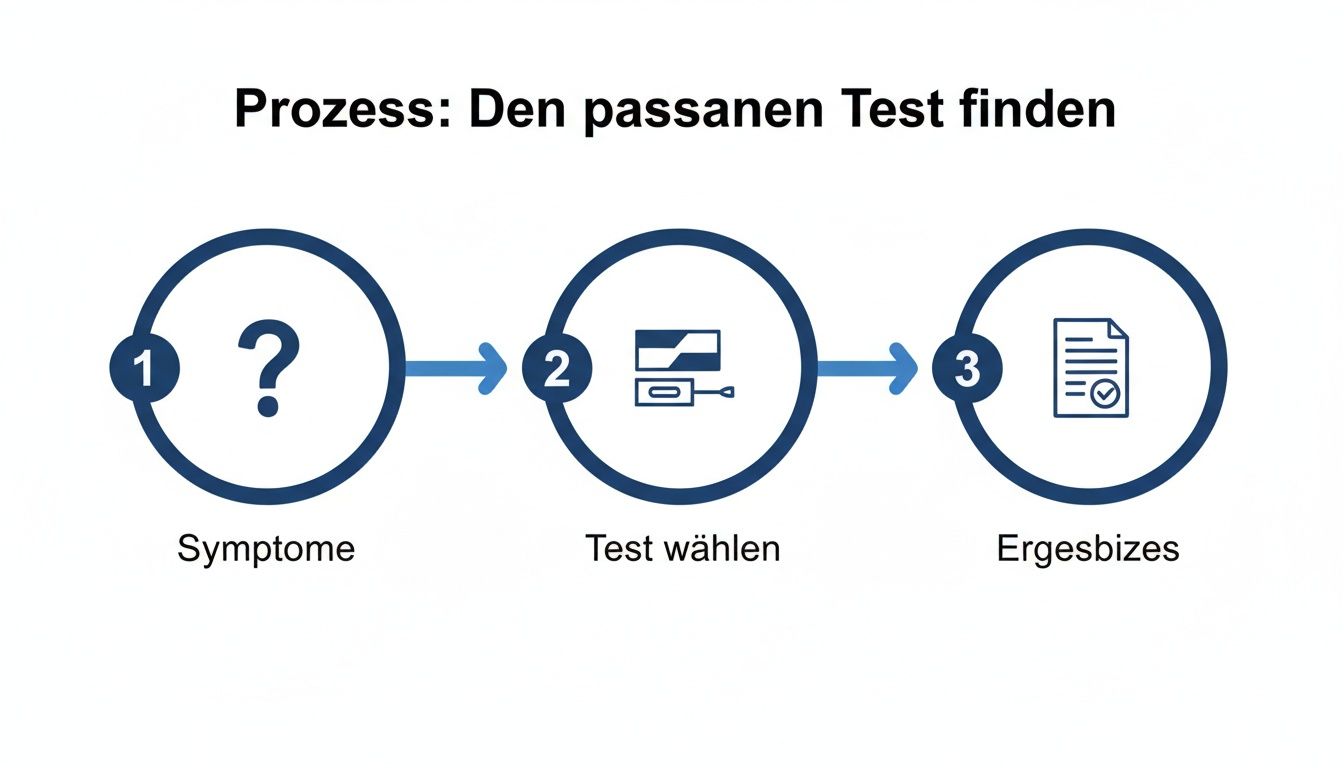
As you can see, the path to clarity is a simple three-phase process that begins with your personal needs and leads to concrete, easy-to-understand insights.
What exactly is included in the test kit?
To give you an even better idea, let’s take a look inside. We’ve really thought of everything to make collecting the sample as easy as possible for you.
Your mybody-x kit typically contains:
- Detailed, easy-to-understand instructions with illustrations.
- Two automatic lancets for a quick and relatively painless finger prick.
- A sample tube for collecting the blood drops.
- Disinfectant wipes and plasters for a clean procedure.
- An activation card with your personal test code.
- A prepaid return envelope for free shipping to the laboratory.
Very important: Please register your test online using the code on the activation card before collecting the sample. This is the only way we can assign your sample anonymously in the laboratory and securely provide your results later.
And what happens after collecting the sample?
As soon as your sample arrives at our certified specialist laboratory, medical experts begin the analysis. The same state-of-the-art procedures used in medical practices and clinics are employed. This guarantees you a precise and completely reliable result.
While you wait for your results, you can already explore our health portal. There you’ll find many valuable articles and tips on gut health, nutrition, and well-being. This way, you’ll be well prepared when your results arrive. You can also find a more detailed description of the entire process on our page How the process works.
As you can see, a gut health test is not rocket science, but a truly accessible and effective way to take an active role in managing your own health.
Turn your test results into concrete steps
So, you’re holding your results report in your hands—a crucial moment on your journey toward greater well-being. At last, you no longer have vague suspicions, but clear data. But what do you do with it now? Don’t see the test result as the end point, but as the starting signal for targeted change. And we won’t leave you on your own. Let’s translate the laboratory values together into understandable language and concrete, practical recommendations for everyday life.
Your results are like a personal map of your health. They show you exactly where to start to alleviate symptoms and finally improve your quality of life again. Whether it is about avoiding certain foods for now, replenishing your nutrient stores, or strengthening your gut flora—you now have the information you need to make the right decisions.
When a food intolerance is the cause
A very common result of the mybody-x food intolerance test is an increased reaction to certain foods. This means that your immune system is producing more IgG4 antibodies against proteins from these foods. This can lead to low-grade inflammation and familiar symptoms such as bloating, skin problems, or constant fatigue.
The most important first step here is a so-called elimination diet. It sounds stricter than it actually is.
- Identify: Take a close look at your results. Which foods triggered a moderate to strong reaction? These are your main suspects.
- Eliminate: Consistently avoid exactly these foods for a period of at least four to six weeks. This gives your gut a chance to calm down and finally allows the inflammatory reactions to subside.
- Observe: During this time, keep a simple symptom diary. Write down how you feel. Are the bloating symptoms improving? Is your skin becoming clearer? Do you feel more energetic?
After this phase, you can slowly begin reintroducing the avoided foods one at a time and in small amounts. This will help you find out which ones you may be able to tolerate again in moderation and which you would be better off avoiding in the long term.
The most important thing here is consistency. Only if you really avoid the problematic foods for a while can your digestive system recover. This is the key to breaking the vicious cycle of irritation and symptoms.
Targeted correction of nutrient deficiencies
If your nutrient test shows that you are lacking important vitamins or minerals, such as iron, vitamin D, or zinc, you also have a clear course of action. A deficiency in these small helpers can have a massive impact on your energy, immune system, and even your mood.
Here are your next steps:
- Iron deficiency: Focus more on iron-rich foods. Good plant-based sources include lentils, chickpeas, and pumpkin seeds. To improve absorption, always combine them with vitamin C—for example, with a squeeze of lemon juice in your dressing or a small glass of orange juice with your meal.
- Vitamin D deficiency: Vitamin D is the “sunshine vitamin.” In our latitudes, a deficiency, especially in winter, is almost normal. In addition to fatty fish such as salmon, you could also consider targeted supplementation after consulting a healthcare professional.
- Zinc & selenium deficiency: These trace elements are essential for your immune system and healthy skin. You can find them in oats, nuts (especially Brazil nuts for selenium), and legumes.
Would you like to delve deeper and learn how to optimally adjust your diet after a test? In our comprehensive guide, we provide you with a detailed guide to optimizing your diet after receiving a test result.
Nourishing the good gut bacteria strategically
Regardless of your specific result, taking care of your gut microbiome is always a good idea. Your trillions of tiny helpers in the gut thrive on the right “food.” This not only supports your digestion but also your immune system and overall well-being.
Incorporate probiotic and prebiotic foods into your diet regularly:
- Probiotics (live bacterial cultures): plain yogurt, kefir, fresh sauerkraut, kimchi, or miso.
- Prebiotics (food for the good bacteria): onions, garlic, leeks, artichokes, bananas, and oats.
These simple adjustments can make a huge difference. But the sad truth is that only 2% of Germans meet the criteria for a completely healthy lifestyle. For this reason, the German Association of Nursing Professions (DBfK) is calling for stronger health promotion so that gut problems and associated diseases do not continue to spread.
When you should also see a doctor
A mybody-x home test is a valuable tool for self-analysis and a perfect first step toward finally gaining clarity. It provides you with a sound foundation to build on.
However, there are situations in which you should also discuss your results with a doctor:
- In the case of very severe, acute, or long-lasting symptoms.
- When your symptoms simply do not improve despite your efforts.
- When values deviate significantly, especially in nutrient or hormone tests.
Your test result is your personal roadmap. Use it to take control of your health and, step by step, find a better feeling in your gut and more joy in life.
Frequently Asked Questions (FAQ) About Gut Health Tests
Are you interested in a blood test and still have one or two questions on your mind? That’s completely normal and even a good sign, because you’re taking your health into your own hands. To give you confidence along the way, we’ve collected the answers to the most frequently asked questions for you here.
Think of this section as a small but valuable knowledge base that clears up any remaining uncertainties. We want you to make a well-informed decision that perfectly suits you and your goals.
How reliable are home tests?
A completely valid and probably the most important question of all. The short answer is: mybody-x tests are highly reliable. Your sample is analyzed in the same certified German specialist laboratories that countless medical practices and clinics throughout Germany also work with.
The only real difference lies in the process beforehand. Instead of taking a seat in a waiting room, you collect the sample discreetly and stress-free in your own home. The scientific laboratory analysis that follows, however, meets the same high medical standards.
A home test is therefore an excellent, scientifically sound first step toward gaining clarity. However, one thing must be clear: In the case of severe, acute, or very persistent symptoms, seeing a doctor is essential to safely rule out serious illnesses.
How often should I take a test like this?
That depends entirely on your personal starting point and your goals. There is no rigid rule here, but a few tried-and-tested guidelines can help you find your bearings.
- As a baseline assessment: If you’re experiencing unexplained symptoms and finally want to know what’s behind them, an initial test is the ideal starting point. It gives you, so to speak, a snapshot of your body.
- To monitor progress: Have you changed your diet or established new habits based on your results? Great! A follow-up test after about three to six months can be extremely motivating. It shows you in black and white which of your efforts are paying off.
- For prevention: Even if you feel completely well, an annual check-up can be worthwhile. This helps identify minor imbalances early—often before they become noticeable problems.
But your own body remains the most important guide. Learn to listen to its signals. It knows best when it’s time to take another look inside.
What can I do right away for my gut health?
You don’t have to sit around idly while waiting for your test kit or results. There are a few simple but incredibly effective things you can do right away to support your gut.
Your gut especially loves two things: routine and the right nutrients. Even small but consistent changes in your daily life can make a huge difference to your well-being and lay the foundation for a strong gut flora.
Here are a few tips you can implement right away:
- More fiber: Gradually but steadily add more fiber-rich foods to your diet. Vegetables, whole-grain products, legumes, and nuts are your beneficial gut bacteria’s absolute favorite food.
- Try fermented foods: Plain yogurt, kefir, fresh sauerkraut, or kimchi provide live bacterial cultures (probiotics) that directly support and enrich your gut flora.
- Avoid sugar and processed foods: Highly processed foods and excessive amounts of sugar primarily feed the “wrong” bacteria and quickly disrupt the delicate balance.
- Drink enough: Water is essential for smooth digestion and allows fiber to have its full effect.
- Exercise and relaxation: A daily walk stimulates bowel activity, while short breaks or breathing exercises calm the important gut-brain axis and reduce stress.
Who would benefit most from a mybody-x test?
Basically, an at-home blood test is a good idea for anyone who no longer wants to grope in the dark but wants to take a proactive approach to their health. It provides solid data instead of vague assumptions.
However, a test is especially valuable for people who recognize themselves in one of the following situations:
- For persistent digestive problems: When bloating, constipation, diarrhea, or stomach cramps have become your constant companions.
- For chronic fatigue: When you often feel exhausted and lacking in energy, even though you actually get enough sleep.
- For skin problems with no clear cause: When acne, eczema, or a dull complexion simply won't leave you alone.
- If you suspect intolerances: When you feel that your body reacts negatively to certain foods but don't know exactly which ones.
A test can provide the missing pieces of the puzzle, helping you better understand the bigger picture of your health. This allows you to finally take targeted measures that truly make a difference.
Are you ready to take the first step and get to the bottom of your gut feeling? At mybody-x, you'll find the right test to provide you with clear answers. Discover the possibilities now and begin your journey toward greater well-being at https://bodysperfect.com.



Share now:
Gut microbiome analysis: Your guide to greater well-being
How to optimize my digestion: Step-by-step guide to better gut health