
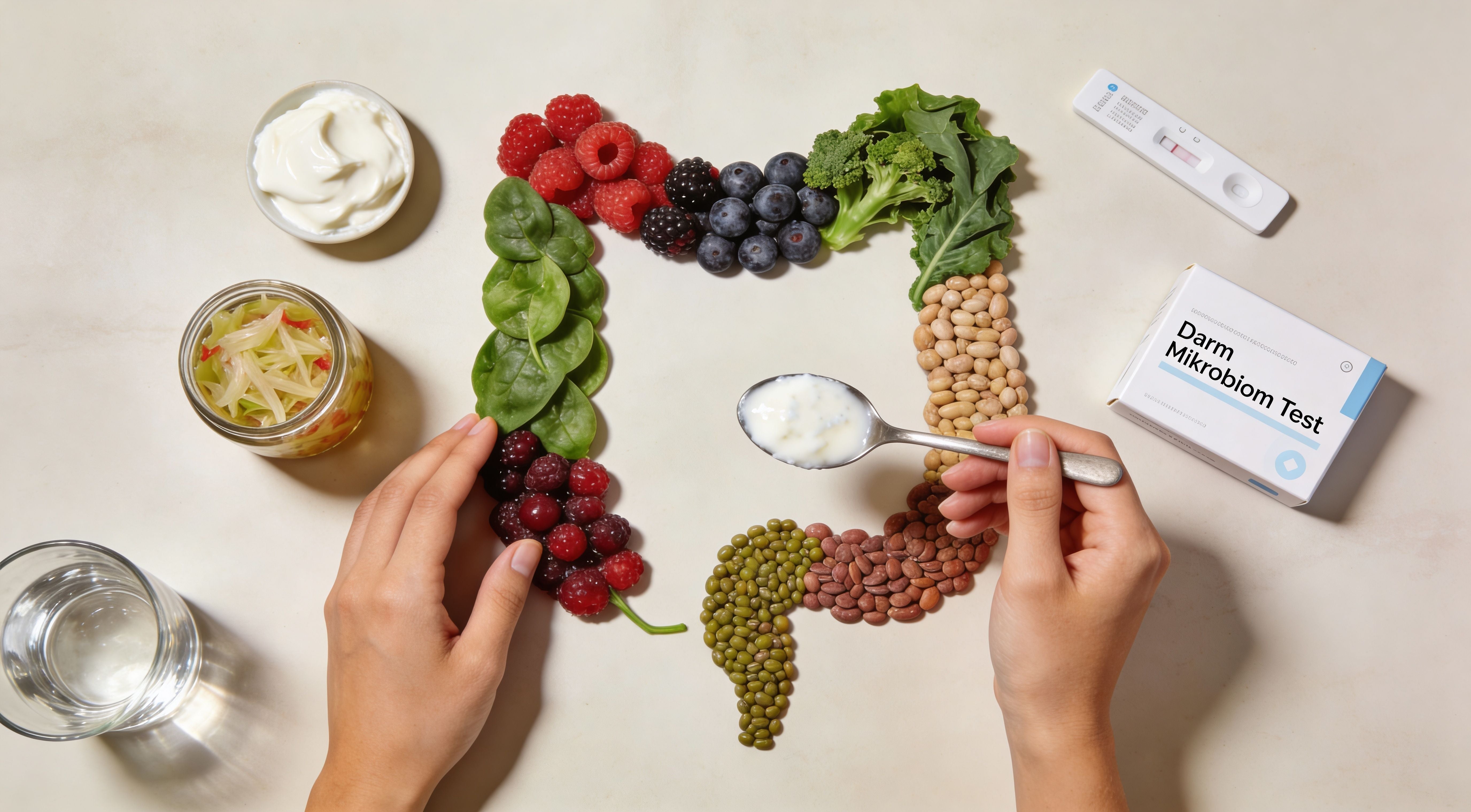
Eat Your Gut Healthy: Your Plan for Greater Well-Being
You are not actually eating completely wrong. Yet after eating, you often feel heavy, your stomach is bloated, your energy crashes, or you feel that your body has suddenly become sensitive to harmless foods. This is exactly where many people begin eliminating things at random. Less bread, no dairy, perhaps gluten, perhaps fructose, perhaps everything at once.
The problem is not just the frustration. It often takes you even further away from a diet that truly strengthens the gut. eat your gut healthy does not mean working through a rigid list of forbidden foods. It means improving the environment in your gut so that digestion, barrier function, and well-being can work together again.
A good gut plan is therefore neither radical nor complicated. It is clear, practical for everyday life, and builds step by step. That is exactly what this is about.
Why your gut health is the key to everything
If you have felt “not quite right” for weeks or months, people often look first at stress, sleep, or individual nutrients. That is not wrong. But the gut is often right in the middle of this network. It not only processes food, but also influences how well you absorb nutrients, how stable your digestion is, and how resilient your immune system is.

One point makes this especially clear: around 80% of active immune cells are located in the gut. At the same time, around 20 to 30% of adults in Germany experience regular digestive problems. A varied diet can improve immune resistance, as described in the article on interesting facts about the gut.
Why symptoms often seem nonspecific
The gut does not always speak up through stomach pain alone. It often shows itself more indirectly. You become tired more quickly, feel restless in your stomach after meals, or notice that your food is no longer “passing through” properly. Many people interpret this as personal bad luck or a normal consequence of a hectic everyday life.
In practice, the opposite is often more helpful. Instead of constantly cutting out new foods, it is worth looking at the bigger picture. How regularly do you eat? How varied is your diet really? Are your beneficial gut bacteria getting what they need to live?
An irritated gut rarely needs more harshness. It usually needs more structure, more rest, and better nourishment.
Your gut is not an isolated organ
Improving your gut health is about more than digestion. A stable microbiome also supports the intestinal lining, an important barrier between the inside and outside. When this barrier comes under strain, some people become more sensitive to foods or develop a persistent feeling of unease in their stomach.
That is why a good plan is so valuable. Not because it has to be perfect, but because it gives you a direction that works: less irritation, more variety, better routines. That is precisely the core of “eat your gut healthy”.
The foundation of a healthy gut
The most important foundation is surprisingly unremarkable. Your gut regularly needs food for the beneficial bacteria. This food is primarily fibre. The German Nutrition Society recommends around 30 grams of fibre a day. In reality, women in Germany often consume only 18 to 22 grams, while men consume 23 to 26 grams. Increasing intake to the recommended amount alone can reduce the risk of chronic diseases by up to 20 to 30%, as summarised by AOK in its information on gut health and fibre.

What belongs on your plate
Fibre is not simply “something to do with whole grains”. It is your gut’s daily working material. Foods that you can add to every shop without buying speciality products are particularly useful:
- Whole-grain products in everyday life. Whole-grain bread, oats, brown rice or other minimally processed grain products provide substance rather than empty calories.
- Legumes in moderation. Lentils, chickpeas and beans are a powerful lever for many people. If you are sensitive, start with small amounts and increase them gradually.
- Vegetables as a foundation. Not as a tiny side portion, but as a regular part of every main meal.
- Whole fruits. An apple, berries or pears are often more beneficial than juices.
- Root vegetables and alliums. They provide prebiotic components that your microbiome can use effectively.
What often throws the gut off balance
Not every problem is caused by a single “bad” food. Usually, it is the overall pattern. A diet high in sugar, fat and highly processed foods can push beneficial gut microbiota out and promote unfavourable microbes. This is one reason why the typical Western diet so often plays a role in digestive problems.
In practice, this does not mean you can never eat pizza or sweets again. It simply means that if processed foods, white flour and sweet snacks dominate your everyday life, your gut is missing what keeps it stable.
Practical rule: Add the useful things first, before cutting out everything possible. More vegetables, more whole grains, more legumes. Only then think about the finer details.
Two simple basic rules that are often underestimated
A high-fiber diet works better when you drink enough. The AOK source cited recommends 1.5 liters of fluid daily, preferably water, so that food can be transported properly through the intestines.
Then there is the famous five-a-day rule for vegetables and fruit. It sounds simple, but it is surprisingly effective in everyday life. Once this foundation is established, you often need neither complicated plans nor expensive products at first.
Your gut’s little helpers: prebiotics and probiotics
Many people confuse the two terms. But the difference is simple. Prebiotics are food for beneficial gut bacteria. Probiotics are living microorganisms from foods such as yogurt or sauerkraut. Your gut garden needs both: nourishment for existing bacteria and regular living input from fermented foods.

If you want to understand the difference in more detail, this article on the difference between probiotics and prebiotics is a useful supplement.
Prebiotics, or food for beneficial bacteria
Prebiotic substances are found in completely ordinary foods. Inulin and oligofructose are particularly well known. They serve as food for beneficial gut bacteria and promote the production of short-chain fatty acids. These have anti-inflammatory effects, protect the intestinal lining, and lower the pH in the gut environment.
Particularly interesting foods from the verified data include:
- Onions. They contain prebiotic components and can be added to almost anything.
- Jerusalem artichoke. It contains 12.2 to 20 g per 100 g of prebiotic substances.
- Parsnips. Well suited when cooked.
- Oatmeal with apple. A simple combination that often works better in everyday life than exotic “superfoods.”
If you are sensitive, avoid overdoing it, especially with onions or large amounts of raw vegetables. Prebiotics are helpful, but increasing them too quickly can initially worsen bloating.
Probiotics, or living support
Probiotic foods provide beneficial microorganisms. Practical everyday options include:
- Yogurt
- Kefir
- Sauerkraut
- Fermented vegetables such as kimchi
- Kombucha, if you tolerate it well
It’s not perfection that matters here, but consistency. A small portion of fermented foods several times a week is often more realistic in everyday life than an overly ambitious fermentation plan that ends after four days.
Not every gut takes to fermented foods right away. Start small, observe how your stomach responds, and increase only if your body is comfortable with it.
What works in practice
The combination works best. For example: oatmeal with apple in the morning, cooked vegetables with whole grains at lunch, and a small portion of plain yogurt or some sauerkraut with a simple meal in the evening. This isn't hype, but a reliable routine.
What usually doesn't work: heaps of raw vegetables, three new fermented products, and abruptly doubling your fiber intake all at once. The gut likes gradual development. It rarely likes a forced march.
Your meal plan for the first two weeks
A structured start is often more effective than a perfect master plan. That's precisely why a 2-week program works well for many people. According to the methodology described in “Eat Your Gut Healthy,” 78% of participants reported a significant reduction in bloating in a pilot study. A common mistake is increasing fiber intake too quickly, which can initially trigger symptoms in about 25% of people, as reported in the book presentation of Eat Your Gut Healthy by Dagmar von Cramm.
Week one: relieving rather than overwhelming
The first week is neither a detox nor a starvation mode. It is a relief phase. The aim is to reduce stimuli, simplify meals, and calm the stomach. Many people do well with cooked foods, soft textures, and manageable portions at this stage.
Soups, cooked root vegetables, porridge, plain yogurt, or mildly fermented foods in small quantities are typically beneficial. Very large amounts of raw vegetables, lavish mixed meals, and constant snacking often achieve little during this phase.
Week two: targeted rebuilding
In the second week, more substance is added. You can now cautiously increase fiber and incorporate resistant starch. It is found, for example, in cooked and cooled potatoes or pasta. Legumes, if you tolerate them, can also be added gradually now.
The difference from week one is important. First calm things down, then feed them. Many people fail precisely because they start with everything at once.
Anyone who has had symptoms for a long time doesn't need to eat boldly. They need to dose carefully.
Sample daily plan for your gut reset
| Meal | Week 1 (relief) | Week 2 (building up) |
|---|---|---|
| Breakfast | Porridge with stewed apple | Oatmeal with apple and a little plain yogurt |
| Lunch | Creamy vegetable soup with cooked root vegetables | Lentil dish or vegetable bowl with whole grains and a little sauerkraut |
| Dinner | Steamed vegetables with potatoes | Chilled potato salad with vegetables and a small portion of fermented food |
How to make the plan work in everyday life
If you work, have children, or are often on the go, you don't need an ideal kitchen day. You need preparation. Cook vegetables and potatoes in advance, keep yogurt or kefir on hand, and plan simple basic meals instead of elaborate recipes.
A set routine is also helpful. The DGE recommends taking breaks between meals. This helps many people because the gut is not constantly busy all day. For ideas on how to plan this simply, you will find good suggestions in this weekly plan for healthy eating.
What you should avoid during the two weeks
A few pitfalls come up almost every time:
- Increasing fiber too quickly. It sounds healthy, but often leads to abdominal pressure and bloating.
- Too many experiments at once. Introducing new fermented foods, legumes, raw food, and reducing sugar all at once makes it difficult to identify what agrees with you.
- Not drinking enough. This is especially counterproductive when increasing your fiber intake.
- Constant snacking. A gut that is supposed to calm down usually benefits from regular, clearly defined meals instead of constantly adding more food.
The plan is meant to give you confidence, not stress. If you react to a food, that is not a failure. It is information.
Find out what your gut really needs
A general plan can take you a long way. But sometimes, despite eating well, the question remains why specifically healthy foods cause discomfort. One person tolerates apples well, while another gets abdominal pressure from them. One reacts to onions, another to yogurt. This is not a contradiction. It simply shows how individual gut health is.

Personalization is therefore more than just a trend. According to the cited book source, up to 60% of adults in Germany have unrecognized intolerances. GDPR-compliant tests such as those from mybody x Gesundheit can enable targeted dietary adjustments. This can increase the success rate for alleviating digestive complaints to over 80%, as described in Iss deinen Darm gesund at KulturKaufhaus.
When a test becomes useful
A test is particularly helpful if you have already tried many things but cannot identify a clear pattern. An analysis can also provide more clarity than further guesswork after recurring digestive problems or if your reactions to otherwise healthy foods vary.
A gut test is no substitute for mindful eating. It makes it more targeted. Instead of indiscriminately “eliminating all sorts of things,” you can better determine what you should focus on.
What a microbiome analysis can practically do for you
What matters is not only that bacteria are present in the gut, but how diverse and balanced the overall picture is. This can inform dietary choices. Some people benefit more from a cautious approach using cooked vegetables and little fermented food. Others should specifically work on increasing the variety of plant-based foods or observe certain triggers more closely.
If you want to explore the topic in greater depth, Gut Test provides an overview of how such an analysis can generally be interpreted.
The less clear your reactions are, the more valuable data becomes. Not to make you dependent on tests, but so you have to guess less.
Gut health as a lifestyle: tips for everyday life
The biggest change rarely comes from one radical week. It comes from habits you can genuinely maintain. That is exactly what makes “eat your gut healthy” so practical for everyday life. You do not need dogmas, but repeatable choices.
Four things that make a long-term difference
- Chew more slowly and thoroughly. Digestion does not begin in the gut. People who eat hurriedly often swallow air, eat past the point of fullness, and put unnecessary strain on their stomach.
- Keep your meals simpler. Fewer components per meal make it easier to identify what agrees with you.
- Take stress seriously. A stressful daily routine often shows up directly in your stomach. Regular breaks, walks, or calm mealtimes are not a minor detail.
- Think in weeks, not individual meals. One heavy meal will not ruin your gut. What matters is what your pattern looks like over time.
Good enough beats perfect
Many people stop as soon as they have a bad day. That is exactly what is unnecessary. The gut responds well to consistency. Not perfection. If you manage oatmeal in the morning, include vegetables at lunch, and do not reach for a ready-made solution every evening, you are often already well on your way.
Your body does not need punishment or dietary fanaticism. It needs consistency. More real foods, sensible breaks between meals, enough fluids, and a plan that fits your everyday life.
If you take this seriously, gut health does not become a project that eventually ends. It becomes a lifestyle that carries you through everyday life with greater calm, clarity, and resilience.
If you no longer want to simply observe your symptoms but understand them better, a structured self-test can be a useful next step. At mybody x Gesundheit, you can find analyses for the gut microbiome, intolerances, nutrients, and hormones that can help you tailor your diet and daily routine more specifically to your body.



Share now:
Probiotics: Understand Their Effects and Use Them Specifically for Gut Health
Elektrolyte verstehen: Funktion, Einfluss und Ernährungstipps