

Recognize and correct vitamin D deficiency
Do you often feel tired, lacking in energy, or do you seem to catch every bug going around, especially during the darker months? A vitamin D deficiency could be the culprit – a problem that's far more widespread than most people realize. Vitamin D, the famous "sunshine vitamin," is much more than just a bone strengthener. It plays a key role in your immune system, your energy levels, and even your mood.
What you need to know about a vitamin D deficiency
Imagine vitamin D as a master key for your body. It unlocks countless vital processes that keep you fit, healthy, and balanced. Without this key, many doors remain closed. The result? A whole host of vague symptoms that you easily blame on everyday stress. Constant fatigue, low mood, and a bad temper – we often look for the cause externally, when it might lie deep within our own cells.
Vitamin D deficiency is not uncommon. On the contrary, it's a widespread phenomenon in this country. This is simply due to our geography: your body primarily produces vitamin D itself, but needs the sun's UVB radiation on your skin to do so. The problem? From October to March, the sun is simply too weak in Germany. Add to that a modern lifestyle where we spend most of our time indoors, and a deficiency is practically inevitable.
The silent deficit in Germany
The figures speak for themselves. Vitamin D deficiency is widespread in Germany. Studies show that approximately 60 percent of adults do not reach the blood concentration recommended for good bone health.

In winter, the situation becomes dramatically worse: then, around 80 percent of the population have insufficient vitamin D levels. On average throughout the year, about 61% of people have low vitamin D levels. If you would like to read more about vitamin D status in Germany , you can find good information at the consumer advice center.
These statistics make it clear: This isn't an individual problem, but a widespread health issue. However, a vitamin D deficiency isn't inevitable. It's a condition you can recognize and, more importantly, correct. The first and most crucial step is to gain clarity about your own vitamin D status.
A blood test is the only way to reliably determine if you have a vitamin D deficiency. It measures the exact level in your blood, thus providing a reliable basis for further action.
Without a test, you're groping in the dark. You might misinterpret symptoms or take supplements blindly, without knowing your true needs. A simple test gives you back control and allows you to take targeted action for your health.
In this article, we'll guide you through the process. We'll explain everything you need to know about the causes, symptoms, and diagnosis of a vitamin D deficiency. We'll also show you how to easily check your levels from the comfort of your own home. With the mybody-x Vitamin D Test, you'll not only receive a precise result from a certified laboratory, but also the knowledge to take control of your well-being.
Why the sunshine vitamin is so important for your body
Sure, when you think of vitamin D, strong bones immediately come to mind. That's true, but it's far from all it has to offer. In fact, the "sunshine vitamin" is much more than just a vitamin – it's a so-called prohormone . You can think of it as a precursor to a hormone that controls countless, absolutely vital processes in your body.
Imagine your body as a giant orchestra. Vitamin D is the conductor. It ensures that all the instruments – your cells, organs, and systems – play in the right rhythm. Without the conductor, the entire ensemble is thrown off. The result? Dissonances that can manifest as serious health problems.

Your immune system as your personal bodyguard unit
Perhaps one of vitamin D's most important functions is regulating your immune system. It acts like an intelligent trainer for your immune cells, helping them distinguish friend from foe.
When your vitamin D levels are well-regulated, your immune system can react strongly and precisely to pathogens such as viruses or bacteria. At the same time, it prevents the immune system from overreacting, which could otherwise lead to autoimmune diseases or chronic inflammation.
A vitamin D deficiency cripples this bodyguard unit. Your immune cells become sluggish and ineffective. This is also one of the main reasons why many of us are so susceptible to colds and flu-like infections in autumn and winter when vitamin D levels drop.
Vitamin D is not a passive component, but an active manager of your immune system. It plays a crucial role in determining how quickly and effectively your body reacts to threats.
Far more than just bones and immune system
The importance of vitamin D goes much further than that. It is involved in an impressive variety of bodily functions that are crucial for your daily well-being.
- Bone health: This is where it plays its most prominent role. Vitamin D is essential for your body to absorb calcium from the intestines. Without enough vitamin D, even the most calcium-rich food is useless – your bones will become brittle and weak.
- Muscle function: Do you sometimes feel tired or have muscle pain for no apparent reason? This could be a clue. Vitamin D is directly involved in muscle strength and coordination. A deficiency often leads to muscle weakness.
- Cell growth and division: The sunshine vitamin ensures that cells throughout the body develop and divide normally. This is a fundamental process for maintaining healthy and functional tissues.
The direct connection to your psyche
Ever heard of the "winter blues"? This seasonal depressive mood that strikes many during the darker months is often directly linked to a vitamin D deficiency . Research increasingly shows that vitamin D also plays a crucial role in the brain.
In the brain regions responsible for our mood, there are specific receptors for vitamin D. A good level can boost the production of important neurotransmitters like serotonin – our “happiness hormone.” If it's deficient, this delicate balance can quickly become disrupted, which can manifest as mood swings and a lack of motivation.
An optimal vitamin D level is therefore one of the most important foundations for your physical and mental fitness. Since it's difficult to meet your needs through diet alone, you should know your level. If you'd like to learn more about the role of diet, read our article on vitamin D in food .
How can I recognize a vitamin D deficiency?
A vitamin D deficiency is often like a silent roommate. It slowly creeps into your daily life, and the first signs are usually so nonspecific that you quickly attribute them to stress, lack of sleep, or a rough patch. This is precisely what makes it so tricky to detect without a test.
Your body does send you signals. The important thing is to listen to them and interpret them correctly. Perhaps you're familiar with that feeling of leaden fatigue that just won't go away, no matter how long you sleep? This is one of the most common and, at the same time, most frequently ignored symptoms.
When energy is lacking and mood is low
Constant fatigue and exhaustion are absolute classics. Do you suddenly find it harder to get out of bed in the morning? Do you often feel sluggish and unfocused during the day? A vitamin D deficiency can completely deplete your energy reserves.
At the same time, as we've already discussed, the sunshine vitamin has a direct connection to your mental health. Many people are familiar with the classic "winter blues," that low mood during the darker months. This is often due to a drop in vitamin D levels, as the vitamin plays a crucial role in the production of happiness hormones like serotonin.
A vitamin D deficiency can be imagined as constantly driving through life with the handbrake on. Performance decreases, mood plummets, and overall enjoyment of life diminishes.
The immune system and muscles also suffer.
Another typical sign is a high susceptibility to infections. Do you feel like you catch every cold going around the office or on the train? Since vitamin D is one of the most important regulators of your immune system, a deficiency quickly becomes noticeable through a weakened immune system.
Your muscles and bones can also send you signals. Pay attention to these signs:
- Muscle weakness: Do your muscles often feel weak even though you haven't done any strenuous exercise?
- Bone and limb pain: Do you suffer from diffuse, pulling pain in your back or in your arms and legs?
- Poor recovery: Do you need much longer to get fit again after exercise than before?
All of these can be your body's cries for help, signaling a deficiency in this crucial nutrient. Many of these symptoms also overlap with other deficiencies. If you'd like to delve deeper into this topic, check out our article on common vitamin deficiency symptoms .
Overview of signs of vitamin D deficiency
Vitamin D deficiency develops gradually. Initially, the symptoms are often barely noticeable, but become increasingly pronounced over time.
This table will help you identify possible symptoms of a vitamin D deficiency, from subtle early signs to more pronounced symptoms in the case of a longer-term deficiency.
| Symptom category | Early or subtle signs | Signs of prolonged deficiency |
|---|---|---|
| General well-being | Persistent fatigue, exhaustion, general lack of energy. | Chronic fatigue, significant loss of performance in everyday life. |
| immune system | Increased susceptibility to colds and flu-like infections. | Frequent and prolonged infections, poor wound healing. |
| psyche and mood | Mild mood swings, irritability, "winter blues". | Depressive moods, lack of motivation, concentration problems. |
| Muscles and bones | Nonspecific muscle pain, mild muscle weakness, joint pain. | Severe bone pain (especially in the back and pelvis), muscle atrophy. |
The symptoms can therefore vary greatly from person to person. If you recognize several of these signs in yourself, this could be an important clue.
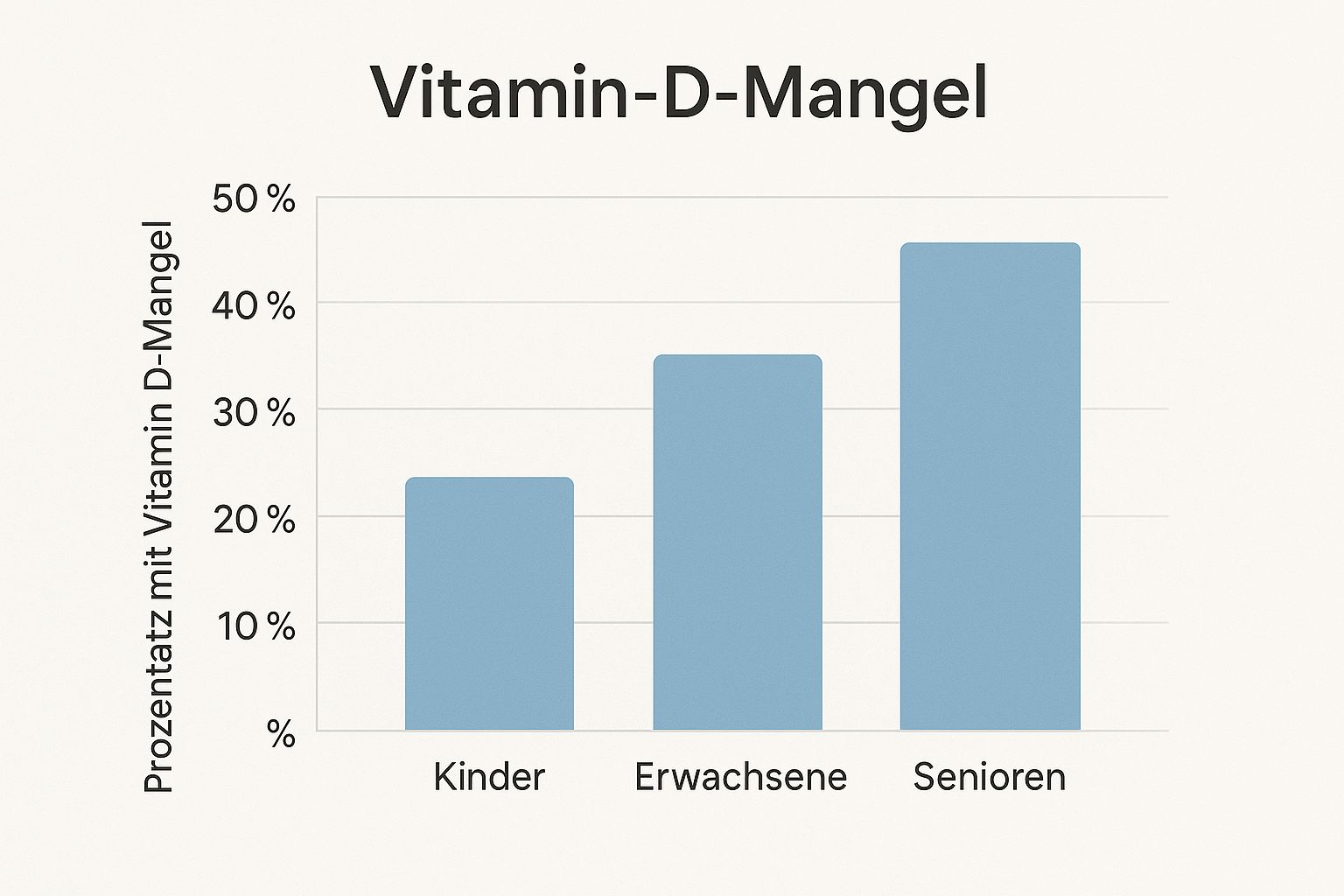
The infographic clearly shows how widespread vitamin D deficiency is – and that the risk unfortunately doesn't decrease with age. This only underscores how important an adequate supply is at every stage of life.
The main causes of vitamin D deficiency
You might be wondering how vitamin D deficiency can be so widespread, even though your body can produce this "sunshine vitamin" itself. The answer is actually quite simple, yet also complex: It's due to our modern lifestyle and simply where we live.
The biggest factor by far is a lack of sunlight. Your body needs direct UVB radiation on your skin to even begin vitamin D production. The problem in our latitudes: From about October to March , the sun is so low in the sky that its rays hit the earth at far too shallow an angle. As a result, the crucial UVB rays barely penetrate the atmosphere.
During these dark months, it is therefore virtually impossible to produce enough vitamin D – even if you spend time outdoors.

Modern everyday life as a vitamin D blocker
Our daily lives don't exactly help matters. Most of us spend the majority of the day indoors – in the office, at university, or at home. Even in summer, when the sun would actually be strong enough, we often sit inside precisely when it's at its highest point.
And a sunny spot by the window? Unfortunately, that doesn't help. Window glass filters out all the important UVB rays. This lack of direct sunlight is one of the main reasons why so many of us are deficient in UVB rays.
Be honest: How many minutes a day do you actually spend outside with bare skin and without sunscreen? Realistically speaking, for most people it's very few.
The figures on vitamin D levels in Germany speak volumes. More than half of all adults in this country have insufficient vitamin D levels in their blood. According to the National Nutrition Survey II, a shocking 82 percent of men and 91 percent of women don't even reach the recommended daily intake. This particularly affects young people and the elderly. If you'd like to delve deeper into the research findings on vitamin D levels , you can find fascinating details at the German Food Federation.
Other individual risk factors
Besides lifestyle and place of residence, there are a number of personal factors that can increase your risk of vitamin D deficiency .
- Sun protection: Sunscreen is extremely important to protect us from skin cancer. But it also blocks the UVB rays that we need for vitamin D production. Even a sun protection factor (SPF) of 15 can reduce the body's own synthesis by over 95% .
- Darker skin type: People with more melanin in their skin have a natural sun protection. However, this pigment makes it more difficult for the skin to produce vitamin D. Therefore, people with darker skin need to spend significantly more time in the sun to produce the same amount of vitamin D as people with lighter skin.
- Aging: With age, the skin's ability to produce vitamin D declines significantly. A 70-year-old person, even with the same sun exposure, produces only about a quarter of the amount a 20-year-old produces.
- Nutrition: Very few foods naturally contain significant amounts of vitamin D. These include primarily fatty fish such as salmon or herring. A diet low in these foods – and this applies to most of us – can hardly compensate for the deficiency through food alone.
Furthermore, certain chronic diseases, for example those affecting the gastrointestinal tract or liver, can disrupt the absorption and utilization of vitamin D. Some medications also negatively impact vitamin D metabolism. All these factors combined create a mix that unfortunately makes vitamin D deficiency more the rule than the exception.
How you can easily test your vitamin D levels from home
You've now read a lot about the symptoms and causes of a vitamin D deficiency and may even nod in agreement at some points. But mere assumptions won't get you anywhere. On the contrary, they only create uncertainty. The only way to truly gain clarity about your vitamin D status is a blood test.
Many people dread going to the doctor – whether due to lack of time or because they don't feel "really sick". For precisely these situations, there are now modern health tests that you can conveniently and discreetly perform at home. It has truly never been easier to proactively manage your own health.
The mybody-x Vitamin D Test: Explained step by step
We want to make it as easy as possible for you. Away with vague assumptions, towards a clear, fact-based result – and all without much effort. The mybody-x Vitamin D test is designed precisely for this: You can do everything yourself in just a few minutes.
And it's that easy:
- Ordering: You can easily order your test kit online. It will arrive discreetly packaged directly to your home.
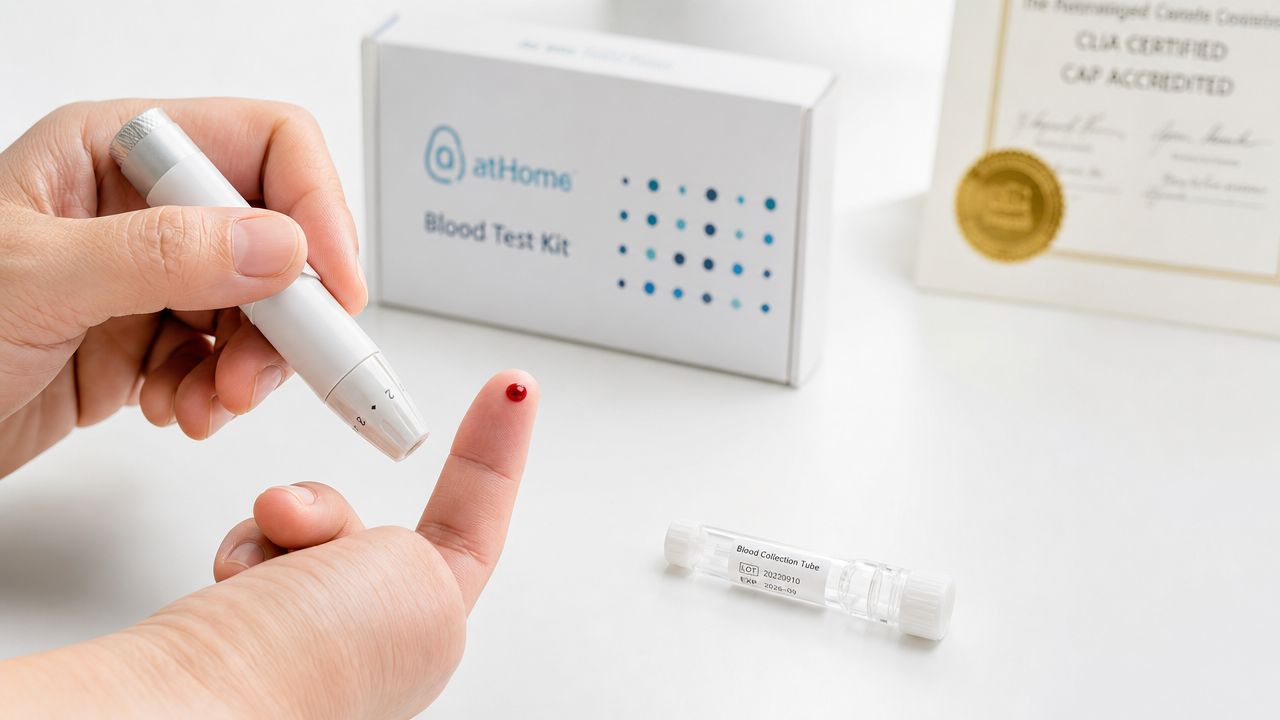
- Taking a sample: The kit contains everything you need. Using a small lancet, you briefly prick your fingertip and collect a few drops of blood. It's quick and painless.
- Send it back: Place the blood sample on the enclosed dried blood spot card and send it in the prepaid return envelope to our certified German specialist laboratory.
This process not only saves you the trip to the doctor's office and the waiting time, but also gives you the freedom to take care of your health when and where it suits you best.
What exactly does the test measure?
The crucial factor in any blood test is, of course, which value is actually being measured. To measure your vitamin D status, there is a clear gold standard, which our laboratory also uses: the 25-hydroxyvitamin D level , or 25(OH)D for short.
The 25(OH)D level is the storage form of vitamin D in your body. It most reliably indicates how well your vitamin D supply is maintained over a longer period. Therefore, it is the internationally recognized marker for diagnosing a vitamin D deficiency.
Other values, such as the active form of the vitamin (1,25(OH)2D), fluctuate far too much throughout the day and are therefore unsuitable for diagnosing a deficiency. By focusing on the 25(OH)D level, you get a precise and reliable result that you can depend on.
You will receive a detailed report from us that clearly and understandably breaks down your vitamin D levels. This way, you can see at a glance whether your levels are within the normal range, whether you have a deficiency, or even a severe vitamin D deficiency .
With this clarity, you can finally take targeted action. If you're curious to see how uncomplicated it all is, take a closer look at the mybody-x Vitamin D self-test and take the first step towards greater well-being.
What to do if a vitamin D deficiency is diagnosed
You're holding your test results in your hands and see it in black and white: your vitamin D level is extremely low. Your first thought might be uncertainty, but look at it positively – now you finally have clarity and can take targeted steps to improve your well-being. A vitamin D deficiency isn't inevitable, but a condition you can actively address.
The most natural and important way to replenish your vitamin D levels is through sunlight. Your body is essentially a small power plant that can produce vitamin D itself with the help of UVB rays on the skin. The best time to do this is during the summer months from April to September.
Use the power of the sun correctly
Especially around midday, when the sun is at its highest point, UVB radiation is strongest. Often, just 15 to 25 minutes with uncovered arms, legs, and face is enough to significantly boost the body's own UVB production. The exact duration, of course, depends on your skin type and the current sun intensity.
Most importantly: avoid sunburn at all costs! After this short "sunbathing" session, you should protect your skin again with clothing or a good sunscreen.
Vitamin D deficiency is unfortunately widespread in our latitudes. Epidemiological estimates suggest that around 30 percent of Germans have a genuine deficiency. More recent studies even indicate that between 52 and 77 percent of adults have levels below the optimal range, especially in winter. Learn more about the prevalence of vitamin D deficiency in Germany and the scientific background.
Unfortunately, sunlight alone is often insufficient, especially outside the summer months. A vitamin D deficiency is also difficult to compensate for through diet, as very few foods contain significant amounts of it.
- Fatty fish: Salmon, herring or mackerel are the best natural sources of vitamin D.
- Certain mushrooms: Especially button mushrooms or chanterelles that have been dried in the sun contain some vitamin D.
- Egg yolks and liver: These also contain small amounts of the sunshine vitamin.
As you can see, the list is quite short. To meet your needs through food alone, you would have to eat large portions of these nutrients almost every day – which is unrealistic for most of us. That's why supplements are often the most effective way to correct a deficiency.
How to choose the right supplement
If you opt for a supplement, it's important to pay attention to a few things. This is the only way your body can optimally utilize the vitamin.
The most common form, which your body can best absorb, is vitamin D3 (cholecalciferol) . This is precisely the form your body produces itself when exposed to sunlight. Vitamin D2 (ergocalciferol) comes from plant sources, but is not utilized quite as efficiently by the body.
Two other partners also play a crucial role in optimal absorption and utilization in the body: vitamin K2 and magnesium.
- Vitamin K2: This vitamin ensures that the calcium absorbed through vitamin D is transported to where it belongs – your bones and teeth. Without K2, the calcium could otherwise be deposited unused in the arteries.
- Magnesium: Your body needs magnesium to convert vitamin D into its active form. A magnesium deficiency can therefore severely limit the effectiveness of vitamin D supplements.
The most important point, however, is the correct dosage. It should always be based on your individual blood level, which you obtained through the mybody-x test . Taking a general dose without knowing your own level is not recommended, as an overdose is possible. General recommendations serve only as a rough guide and do not replace a strategy tailored to your personal needs. If you would like to learn more about what to consider when taking vitamin D, you will find valuable information in our article on vitamin D – when to take it .
Your most frequently asked questions about vitamin D deficiency
We receive many questions about vitamin B12 every day. Here we've compiled the answers to the most pressing questions for you, so you're well-informed and can take control of your health.
How long does it take to rectify a deficiency?
This is one of the most frequently asked questions – and the answer depends entirely on your personal starting point. Depending on how depleted your stores are and what dose you choose, it can take a different amount of time.
With targeted, high-dose initial therapy precisely tailored to your blood levels, your stores can often be replenished within one to three months . Once that's achieved, the goal is to maintain this improved condition. For this, you switch to a lower maintenance dose. Regular check-ups are your best friend here, as they show you whether the dose is still appropriate or if you need to adjust it.
Is it possible to overdose on vitamin D?
Yes, that's theoretically possible, but thankfully very rare in practice. An overdose almost never happens due to too much sun – our bodies have a clever built-in protective mechanism. The risk only really exists if you take high doses of supplements uncontrolled over a long period without knowing your own needs.
Typical signs of too much vitamin D include nausea, loss of appetite, or elevated blood calcium levels. That's precisely why it's so important not to just blindly take anything. A simple blood test gives you the certainty you need to ensure the correct dosage.
How often should you have your blood sugar levels tested?
If you're currently actively addressing a vitamin D deficiency , a follow-up test after about three to four months is a great idea. This way, you'll see in black and white whether your efforts are paying off and the chosen dosage is working for you.
Once you've reached your target value and maintained it, an annual check-up is usually sufficient. Autumn is a good time for this. Then you can see how well you've fared over the summer and whether your energy stores are prepared for the darker months.
Are you ready to finally get clarity about your vitamin D status and take control of your health? With mybody-x blood tests, you can easily find your exact level from home and get a scientifically sound basis for your next steps. Find the right test for you now at https://mybody-x.com .


Share:
TSH Thyroid Levels: Your Guide to Thyroid Health
Nutritional analysis for your optimal health