

Function of Micronutrients: What Your Body Really Needs
Micronutrients are defined as vitamins, minerals, and trace elements that the body needs in small amounts to maintain vital processes. They do not provide energy like carbohydrates or fats, but they are essential for hundreds of metabolic reactions. Micronutrients act as enzyme cofactors, antioxidants, and hormone components, thereby regulating everything from cell division to immune defense. Iron transports oxygen in the blood, iodine is a component of thyroid hormones, and vitamin C protects cells from oxidative stress. Understanding the function of micronutrients helps you make better dietary choices and recognize sooner when your body is lacking something.
What is the function of micronutrients in the body?
Micronutrients work mostly behind the scenes. They activate enzymes, build hormones, and protect cell membranes from damage. Without them, many processes simply do not take place, even if you still feel well in the short term. The effects of micronutrients are often indirect because they work behind the scenes as regulators and are therefore easily underestimated.
The three main groups and their functions at a glance:
- Vitamins (e.g., vitamin C, D, B12, folic acid): They support the immune system, protect cells through their antioxidant effects, regulate gene expression, and are involved in blood formation. Vitamin D acts less like a classic vitamin and more like a hormone.
- Minerals (e.g., calcium, magnesium, potassium, sodium): They build bones and teeth, regulate fluid balance, and are essential for muscle and nerve function. Magnesium alone is involved in more than 300 enzymatic reactions.
- Trace elements (e.g., iron, zinc, iodine, selenium, copper): They are needed in very small amounts but have precise functions. Iodine is essential for the production of thyroid hormones. Zinc regulates wound healing and the immune response.
You can find more about vitamins and minerals and their effects on well-being in the mybody x health portal.
Pro tip: If you want to understand which micronutrients you are actually consuming, keep a food diary for three days using an app such as Cronometer or Yazio. You will be surprised by the gaps that become visible.

What exactly do iron, iodine, vitamin D, and magnesium do?
Four micronutrients deserve special attention because deficiencies are particularly common among them in Germany and have far-reaching consequences.
-
Iron is the central component of hemoglobin, the protein in red blood cells that transports oxygen from the lungs to all tissues. When iron is lacking, the oxygen supply to the cells decreases. The result: persistent fatigue, concentration problems, and weakened immune defenses. Iron supports oxygen transport and is therefore one of the best-studied micronutrients of all.
-
Iodine is not an optional nutrient but the only known building block of the thyroid hormones thyroxine (T4) and triiodothyronine (T3). These hormones control basal metabolic rate, body temperature, and the development of the nervous system. Iodine deficiency is the most common preventable cause of intellectual developmental disorders in children worldwide.
-
Vitamin D behaves biochemically like a steroid hormone. It binds to receptors in almost every tissue in the body and regulates, among other things, calcium absorption in the intestines, bone mineralization, and immune cell activity. Vitamin D regulates calcium and phosphate metabolism and therefore directly affects bone health.
-
Magnesium is involved in more than 300 enzymatic reactions, including ATP synthesis (energy production in the mitochondria), DNA repair, and blood pressure regulation. Magnesium deficiency often manifests as muscle cramps, sleep disturbances, or increased irritability. Because magnesium is rapidly depleted by stress and exercise, deficiency is more common among active adults than many people realize.
How does bioavailability affect micronutrient status?
Not every micronutrient you eat ends up in your cells. Bioavailability describes how much of a nutrient the body can actually absorb and use. It depends on the form of the nutrient, the food matrix, and its combination with other nutrients.
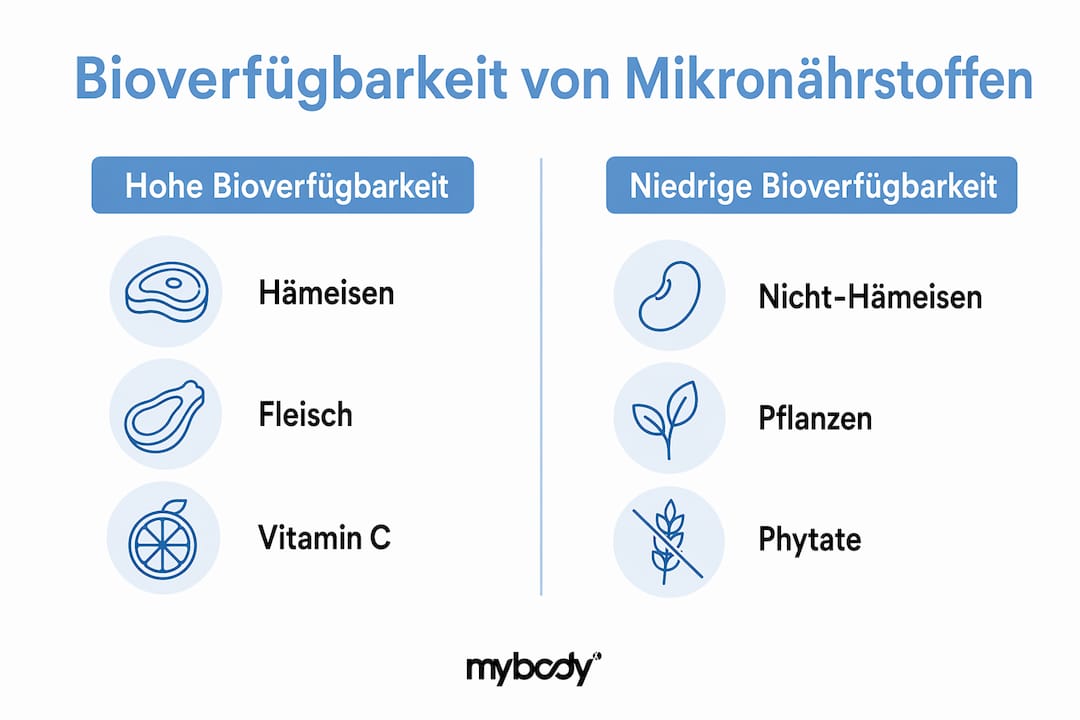
| Nutrient | High bioavailability | Low bioavailability |
|---|---|---|
| Iron | Heme iron from meat (15 to 35%) | Non-heme iron from legumes (2 to 20%) |
| Calcium | Dairy products, fortified soy drink | Spinach (inhibited by oxalates) |
| Magnesium | Magnesium citrate, magnesium glycinate | Magnesium oxide (poor solubility) |
| Vitamin D | Fat-soluble, best taken with a meal | Hardly absorbed without fat |
A varied, colorful diet based on DGE recommendations is the most effective way to maximize bioavailability because foods provide natural cofactors that promote absorption. A classic example: Vitamin C from peppers or citrus fruits triples the absorption of plant-based iron from lentils or spinach.
Mineral absorption is influenced by other minerals: Calcium inhibits the absorption of magnesium and iron when all three are taken at the same time. High-dose zinc suppresses copper absorption. This means that anyone combining multiple supplements risks unintended interactions.
Pro tip: Never consume iron-rich foods together with coffee, tea, or milk. Tannins and calcium significantly inhibit iron absorption. By contrast, a glass of orange juice with lentil soup is one of the simplest ways to improve iron intake.
What risks are associated with micronutrient supplementation?
Dietary supplements are not a harmless extra. Too many micronutrients from dietary supplements can be harmful to health, and the consumer advice center expressly advises against exceeding the manufacturer’s recommended daily dose. There are still no uniform EU-wide maximum levels for micronutrients in dietary supplements. The German Federal Institute for Risk Assessment (BfR) issues its own recommendations, which serve as guidance.
The greatest risks arise with the following nutrients:
- Vitamin A: Chronically high doses damage the liver and increase the risk of birth defects in pregnant women’s babies. As little as 3,000 micrograms daily over an extended period is considered toxic.
- Vitamin D: Overdosing causes hypercalcemia, meaning too much calcium in the blood, with symptoms such as nausea, kidney stones, and, in extreme cases, cardiac arrhythmias. Supplements often significantly exceed natural amounts and increase the risk especially with fat-soluble vitamins, which the body stores instead of excreting.
- Iron: Excess iron generates free radicals and places strain on the liver and heart. Iron supplements should be taken only in cases of a confirmed deficiency.
- Zinc: Consistently high doses of zinc (more than 25 mg daily) inhibit copper absorption and can lead to a copper deficiency that damages the nervous system.
The key difference between foods and supplements: Foods provide micronutrients in natural concentrations, embedded in a matrix of fiber, secondary plant compounds, and other cofactors. Supplements often provide isolated substances in amounts that do not occur in nature. Effective supplementation depends on the dose, individual needs, and the presence of genuine deficiencies. Anyone who takes supplements without a laboratory test is operating in the dark.
How can you optimize your micronutrient intake effectively?
Optimization begins with knowing your own status. Here is a practical six-step approach:
-
Get a blood test: Laboratory values are the only reliable way to identify a deficiency. Laboratory parameters help identify actual needs and prevent inadequate nutrition. Subjective feelings are not enough because many deficiencies remain symptom-free for a long time. A micronutrient analysis gives you a clear starting point.
-
Make nutrition the foundation: A varied diet rich in vegetables, legumes, whole grains, nuts, and high-quality animal products reliably provides most micronutrients. The DGE recommends eating at least 400 grams of vegetables and 250 grams of fruit daily.
-
Know the risk groups: Pregnant women, older adults, vegans, and people with chronic illnesses have increased needs. 86% of women in Germany have an inadequate folate intake. This shows that gaps can arise even with a conscious approach to nutrition.
-
Use supplements selectively: When a deficiency has been confirmed, supplements are sensible and effective. Without confirmation, they are unnecessary at best and harmful at worst.
-
Consider interactions: For optimal nutrient absorption, it is important to consider how multiple micronutrients interact in order to avoid inhibition. For example, do not take calcium and iron at the same time.
-
Test regularly: Anyone taking supplements or changing their diet should be retested after three to six months to measure progress and adjust the dosage.
Key findings
The function of micronutrients is not optional: They are the biochemical foundation for metabolism, immune defense, and cellular protection, and a deficiency often goes unnoticed for a long time until laboratory values reveal it.
| Point | Details |
|---|---|
| Micronutrients provide no energy | They act behind the scenes as cofactors, antioxidants, and building blocks for hormones. |
| Bioavailability is decisive | The form of the nutrient and the food combination determine how much the body actually absorbs. |
| Overdosing is a real risk | Fat-soluble vitamins such as vitamins A and D can accumulate and have toxic effects. |
| Laboratory values are indispensable | Subjective feelings do not reliably identify deficiencies. Blood tests provide clarity. |
| Food before supplements | A varied diet based on DGE recommendations is the safest foundation. |
What I have truly learned after years of working with micronutrient data
The most common question we hear at mybody x is: “Which supplements should I take?” The honest answer is: none, until you know what you need.
What surprised me most after analyzing thousands of micronutrient profiles is that the people with the poorest results are often not those who eat poorly. They are frequently health-conscious adults who take many supplements—but the wrong ones, in the wrong combinations, without ever having had a blood test. High-dose zinc that blocks copper absorption. Calcium and iron taken at the same time, neutralizing each other. This is not a rare occurrence.
What actually works is combining a solid nutritional foundation with targeted supplementation where deficiencies have been confirmed. No more, no less. Anyone who truly wants to understand their body needs data, not assumptions. A blood test costs less than three months of supplements that may not provide any benefit.
The other truth: Micronutrients do not work in isolation. Vitamin D is activated less effectively without sufficient magnesium. Iron is hardly absorbed without vitamin C. The body is not a storage unit into which you pour nutrients. It is a system that requires coordination. This is the essence of what we aim to convey with every analysis report at mybody x.
— MYBODY X
Your next step toward optimal micronutrient status
You now know how micronutrients work and why blindly taking supplements can do more harm than good. The logical next step is to find out where you really stand.

mybody x offers ISO-certified blood tests for micronutrients that you can conveniently perform at home. You receive a personalized report with specific dietary recommendations and guidance on targeted supplementation. No guesswork, no blanket recommendations. More than 11,300 customers trust this approach, with an average rating of 4.77 stars. Get started now at mybody-x.com and find out what your body really needs.
FAQ
What are micronutrients, and why does the body need them?
Micronutrients are vitamins, minerals, and trace elements that the body needs in small amounts for metabolism, immune defense, and cell protection. They do not provide energy, but are essential as cofactors and building blocks for hormones.
Which micronutrients are particularly important?
Iron, iodine, vitamin D, magnesium, vitamin C, zinc, and folic acid are among the micronutrients with the highest risk of inadequate intake in Germany. Their deficiency has measurable effects on energy, the immune system, and hormone balance.
How can I recognize a micronutrient deficiency?
Many deficiencies remain symptom-free for a long time. Fatigue, difficulty concentrating, hair loss, or frequent infections can be signs, but only a blood test provides a reliable diagnosis.
Are dietary supplements useful or dangerous?
Dietary supplements are useful when a deficiency has been confirmed through laboratory testing. Without such confirmation, there is a risk of overdosing, particularly with fat-soluble vitamins such as vitamins A and D, which can accumulate in the body.
How can I improve the absorption of micronutrients through my diet?
A varied, colorful diet with vegetables, legumes, nuts, and whole grains provides the best foundation. Specific combinations, such as vitamin C with plant-based iron or fat with vitamin D, can specifically improve bioavailability.



Share now:
Vitamin D deficiency and skin problems: Symptoms & solutions 2026
Hormone test costs: How to find the best option