
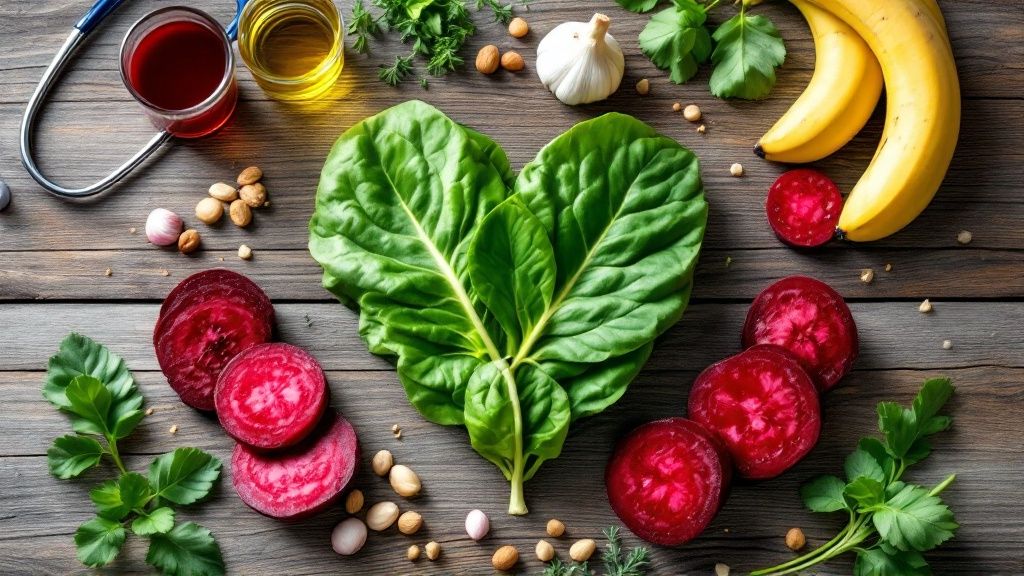
Lowering blood pressure with food: Your path to greater well-being
Yes, absolutely! With the right foods, you can actually lower your blood pressure. A balanced diet rich in potassium-containing vegetables, healthy fats, and lean proteins can make a noticeable difference. It is often even the first and most important step toward a healthier cardiovascular system.
Why your diet is the key to healthy blood pressure
High blood pressure isn’t a fate you simply have to accept. On the contrary: Through your daily diet, you hold one of the most powerful levers for naturally regulating your levels.
Think of your body as a finely tuned clockwork mechanism—everything needs to be in balance for it to run smoothly.
The delicate interplay of nutrients
Two of the most important players in this system are the minerals potassium and sodium. Sodium, which we mostly consume through table salt, causes the body to retain water. This increases blood volume and, consequently, the pressure on the vessel walls.
Potassium is the natural counterpart: It helps the kidneys eliminate excess sodium and simultaneously ensures that the walls of your blood vessels relax.
In our modern diet, the balance is often off—too much sodium, too little potassium. This is a major reason for the prevalence of high blood pressure. Even small, conscious changes can make a big difference. A handful of spinach instead of salty chips? A great start to restoring the balance.
It’s about more than just salt
But potassium and sodium aren’t the only nutrients that play a role. Other nutrients also make a significant contribution:
- Magnesium: Acts like a natural muscle relaxant for the blood vessels, thereby improving blood flow.
- Omega-3 fatty acids: Fight inflammation and help keep blood vessels elastic.
- Fiber: Supports a healthy body weight, which directly relieves strain on blood pressure.
In Germany, around 20 to 30 percent of adults struggle with high blood pressure. One of the best-known dietary strategies for combating it is the so-called DASH diet. It focuses precisely on these nutrient-rich foods, and studies confirm that it can significantly lower blood pressure.
Healthy blood pressure doesn’t start in the doctor’s waiting room—it starts with every single meal. Your food is a daily opportunity to actively do something for your heart health.
Find your individual path
However, a one-size-fits-all approach often falls short, because every body is different. Could you be specifically lacking certain nutrients? Or might undetected food intolerances be creating hidden stress that indirectly affects your blood pressure?
To go beyond general advice, it’s crucial to address the causes specifically. The first step is always to get a sense of your own nutrient levels. A mybody-x nutrient test can provide clarity here and show whether you might be lacking important minerals. If you’re unsure what normal values are, you can read more here about what normal blood pressure is. This gives you the perfect foundation for making your diet truly work for you.
The best foods for naturally lowering blood pressure
Now let’s get down to the essentials. Instead of simply giving you a dry list, let’s take a look at which power-packed supermarket foods can really benefit your blood pressure. You’ll see: It’s not about strict deprivation, but about making conscious choices and enjoying them.
The key to success lies in understanding the “why” behind each food. When you know how the nitrates in beetroot relax your blood vessels or how flavonoids in dark chocolate keep them elastic, every meal becomes an active source of support for your heart.
Your shopping list for a strong heart
Think of this section as your personal shopping advisor. It’s not just about what you eat, but also how you prepare it. The right cooking method can make all the difference in whether the valuable nutrients actually make it onto your plate.
Some of the most effective helpers can be found right in the produce section:
- Leafy greens such as spinach: A powerful trio of potassium, nitrates, and magnesium. Magnesium, in particular, is crucial, as a deficiency can negatively affect the muscles in your blood vessels. If you want to explore the topic in more depth, read our article on symptoms of magnesium deficiency.
- Garlic: This small bulb packs a punch. It contains allicin, a sulfur compound that stimulates the production of nitric oxide. This, in turn, helps widen the blood vessels and lower blood pressure.
- Berries: Whether blueberries, raspberries, or strawberries, they’re packed with antioxidants. The anthocyanins they contain in particular are great for your blood vessels, protecting and improving their function.
Your shopping cart is your most important tool for healthier blood pressure. Every conscious choice of a fresh, nutrient-rich food is a direct benefit to your heart health.
Potassium: Sodium’s Natural Counterpart
One of the smartest strategies is to deliberately add potassium-rich foods to your diet. Potassium is essentially sodium’s (salt’s) counterpart and helps your body eliminate excess sodium—and this sodium is one of the main culprits behind high blood pressure.
This infographic gives you a quick overview of which potassium sources you can easily incorporate into your daily routine.
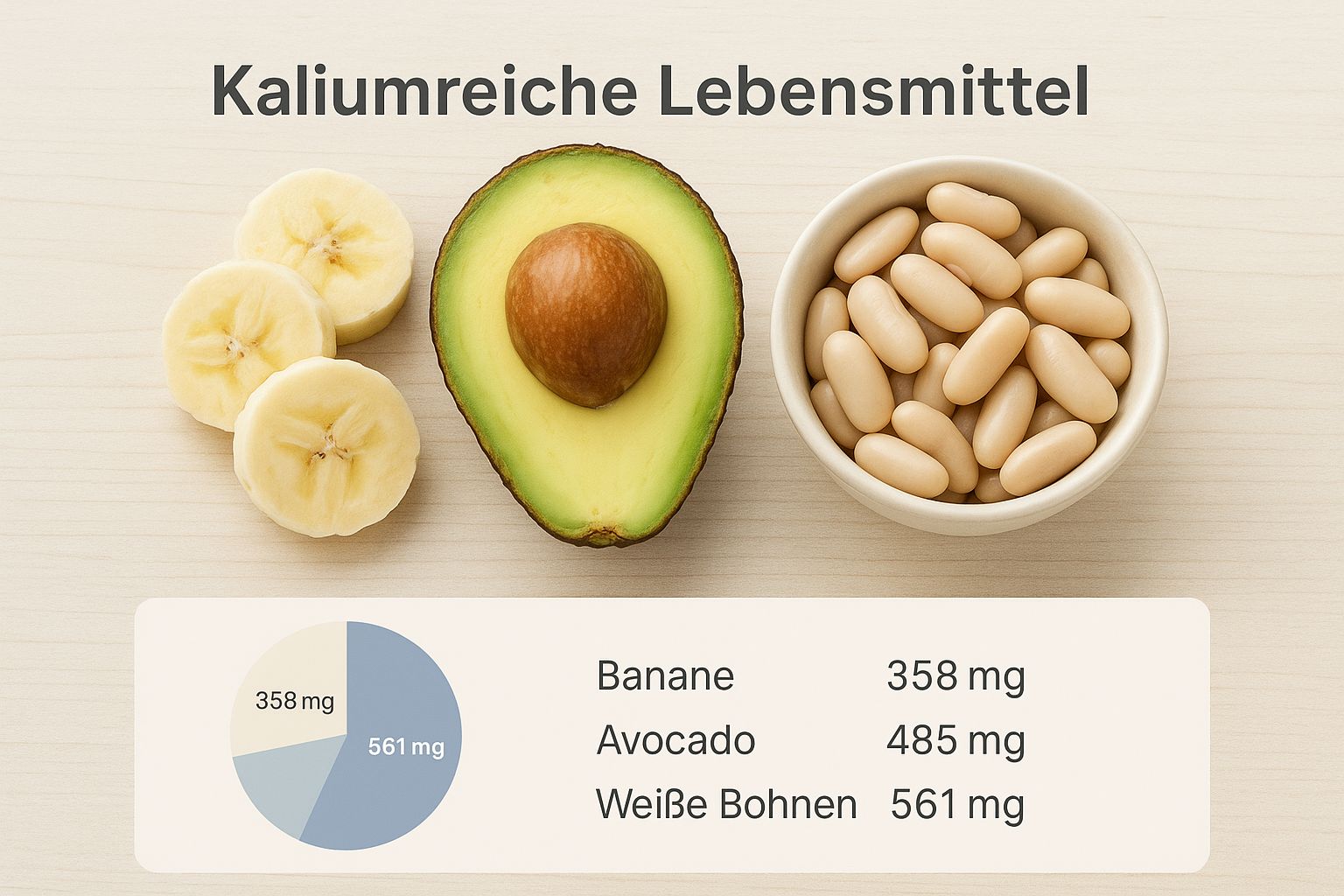
As you can see, it’s often everyday foods like bananas, avocados, or beans that can make a huge difference.
Beetroot juice in particular has proven to be an effective blood-pressure reducer in studies. Just half a liter a day can lower systolic blood pressure by up to 10 mmHg. Potatoes are also often underestimated potassium powerhouses that help the kidneys get rid of sodium, thereby noticeably relieving pressure.
To help you keep track, we’ve put together a brief overview for you here.
Nutrient Heroes for Your Blood Pressure This table gives you an overview of which foods are rich in blood-pressure-lowering nutrients and how they help your body.
| Food | Important Nutrient | How It Works in the Body |
|---|---|---|
| Bananas, spinach, sweet potatoes | Potassium | Helps eliminate excess sodium and relaxes the walls of blood vessels. |
| Beetroot, arugula | Nitrates | Are converted in the body into nitric oxide, which widens the blood vessels. |
| Salmon, walnuts, flaxseeds | Omega-3 fatty acids | Have anti-inflammatory effects and improve the elasticity of blood vessels. |
| Dark chocolate, berries | Flavonoids | Powerful antioxidants that promote and protect vascular health. |
| Legumes, pumpkin seeds | Magnesium | Plays an important role in regulating blood pressure and relaxing muscles. |
These foods are not only healthy but also versatile and delicious—perfect for enhancing your meals while doing something good for your heart.
More Powerhouses and Smart Tips
But there’s more than just vegetables! Other food groups also play an important role in your heart-healthy diet.
Healthy fats and seeds: Flaxseeds, chia seeds, and walnuts are fantastic sources of omega-3 fatty acids. They have anti-inflammatory effects and promote the health of your blood vessels. A spoonful of ground flaxseed in your morning muesli is already a wonderfully simple way to start.
Legumes: Lentils, chickpeas, and beans provide not only potassium and magnesium but also plenty of fiber. This helps you maintain a healthy weight, which further eases the strain on your cardiovascular system.
A small everyday tip: When buying canned goods, look for the label “no salt added.” When preparing vegetables, it is better to steam them or sauté them briefly rather than cook them for a long time, so many more nutrients are preserved. With this knowledge, you can make choices at the supermarket and in the kitchen that actively work in your favor.
How to make it work in everyday life: Your simple weekly plan
Theory is all well and good, but what really matters is putting it into practice in everyday life. That is why this practical and uncomplicated roadmap will help you easily incorporate a blood-pressure-friendly diet into your week. Forget complicated recipes—this is about simple ideas that taste good and do your body good.
Think of this plan as your personal jump-start. It is meant to show you that making lowering blood pressure with food a pleasurable habit is not difficult at all. You will be surprised by how easily these nutritional powerhouses from the supermarket can be transformed into delicious meals.
Start your day full of energy
Breakfast lays the foundation for the entire day. A good start provides you with important nutrients and helps prevent cravings that often tempt us to reach for unhealthy, salty snacks.
- Monday & Thursday: A potassium-rich smoothie made with a banana, a handful of spinach, a spoonful of ground flaxseed, and some unsweetened plain yogurt.
- Tuesday & Friday: A bowl of oatmeal (whole grain, of course) with a handful of fresh berries and a few walnuts. This provides fiber and healthy omega-3 fatty acids.
- Wednesday & Saturday: Two slices of whole-grain bread with avocado and fresh herbs. Avocado is a fantastic source of potassium and healthy fats.
- Sunday: A delicious scrambled egg with fresh herbs and tomatoes, served with a slice of whole-grain bread.
Light and nutritious options for your lunch break
Your lunch should give you energy for the afternoon without weighing you down unnecessarily. Large meals high in salt and fat can cause your blood pressure to rise quite a bit in the short term.
A large, colorful salad is always a great choice. The base could be lamb’s lettuce or arugula. Then you can get creative:
- Proteins: Grilled chicken breast, chickpeas, or a few white beans.
- Color & nutrients: Cucumbers, bell peppers, diced beetroot, and tomatoes.
- Healthy fats: A few pumpkin or sunflower seeds and a simple dressing made with olive oil and lemon juice.
Clever meal prep is your best friend in everyday life. Simply cook a larger portion of quinoa or lentils on Sunday. That way, you’ll have a quick, healthy base for your salads or a side dish for dinner during the week.
Heart-healthy dinner for relaxation
In the evening, it’s best to keep things a little lighter so your body can wind down properly. The meal should be easy to digest and provide you with the day’s last important nutrients.
- Fish days (e.g., Tuesday & Friday): A piece of salmon or mackerel baked in the oven with steamed broccoli and boiled potatoes. The fish provides valuable omega-3 fatty acids, while the broccoli and potatoes supply important potassium.
- Plant-based power (e.g., Monday & Thursday): A lentil curry with plenty of vegetables and coconut milk. Season it generously with turmeric and garlic, and you’ll hardly need any salt.
- Light cuisine (e.g., Wednesday & Saturday): A large vegetable stir-fry with strips of chicken or turkey breast, generously seasoned with fresh herbs.
Recent studies from Germany impressively show what this type of diet can achieve. A study conducted with researcher Maninder Kahlon showed that simply eating more fruit and vegetables can lower systolic blood pressure by an impressive 5–10 mmHg. You can read more about these exciting study results on lowering blood pressure here.
By the way, these meals are not only good for your blood pressure—they can also help you manage your weight. If you’d like to learn more, take a look at our guide to losing weight without giving anything up.
These foods are best avoided if you have high blood pressure
Just as important as what ends up on your plate is what you consciously leave out. If you want to lower your blood pressure sustainably with food, you also need to know its adversaries. But don’t worry, this isn’t about strict prohibitions. Rather, I want to show you where the biggest “blood pressure drivers” lurk in everyday life, so you can cleverly avoid them.
The most notorious culprit is undoubtedly salt, or more precisely the sodium it contains. But the real challenge is the hidden sources of sodium. You’d be surprised where salt can be hiding.
The hidden salt traps in everyday life
The salt shaker on the table is often just the tip of the iceberg. We consume much larger amounts unnoticed through processed products. The German Nutrition Society (DGE) recommends a maximum of five to six grams of salt per day. The reality? Most Germans consume significantly more.
Here’s where the largest amounts of salt are hidden:
- Ready-made meals and sauces: Sure, they’re convenient. But they’re often packed with salt to create flavor and extend shelf life.
- Sausages and smoked meat: Cold cuts such as salami or ham contain extremely high levels of sodium due to the curing process.
- Bread and baked goods: Would you have guessed it? These often contain more salt than you might think, too. It stabilizes the dough and intensifies the flavor.
- Cheese: Hard cheeses such as Parmesan or alpine cheese can be real salt bombs.
My tip: Learn to read labels. A quick look at the sodium content helps you shop more mindfully and find lower-salt alternatives. You’ll see: With fresh herbs and spices, you can give your food so much more flavor that you’ll hardly miss the salt.
Sugar, fats, and alcohol—but in moderation
Besides salt, there are a few other culprits you should keep an eye on. Consuming a lot of sugar can quickly lead to excess weight, which in turn is one of the biggest risk factors for high blood pressure. Sweet drinks, candy, and pastries should therefore really remain the exception.
Fats also deserve a closer look. While unsaturated fatty acids from high-quality olive oil, nuts, and fatty fish are great for you, too many saturated fats and trans fats (think fast food and fried foods) put a strain on your blood vessels.
It’s not about banning everything. The key is finding a healthy balance. Give your body what it really needs and reduce what puts unnecessary strain on it.
And what about alcohol? It can also raise blood pressure because it temporarily constricts the blood vessels. An occasional glass of wine is perfectly fine for most people, but regular consumption can noticeably affect your levels negatively.
When the body reacts badly to “healthy” foods
Sometimes even a seemingly healthy food can cause problems. If your body has an undetected food intolerance, it can lead to silent inflammation and internal stress responses. This constant strain can also indirectly affect your cardiovascular system and therefore your blood pressure.
Are you already eating very healthily, but the results you want still haven’t appeared? This could be the reason. A mybody-x intolerance test can finally give you clarity. It’s an important step toward a diet truly tailored to you and your body.
How a test can help improve your diet in a targeted way
A general change in diet is a great start, no question. But to really make a difference, you need a strategy tailored precisely to you. Your body is unique—what works wonders for one person may have little effect on you. This is exactly where modern self-tests come in. Instead of feeling around in the dark, they give you a clear picture of your individual situation.
So if you want to lower your blood pressure with food, a test gives you solid facts instead of relying on guesswork.
Discover hidden nutrient deficiencies
Does this sound familiar? You’re really making an effort, eating lots of potassium-rich vegetables and healthy fats, but your levels simply don’t seem to improve properly. A common reason is an undetected deficiency in other important minerals. A mybody-x nutrient test can show you precisely how well you’re supplied with blood-pressure-regulating nutrients like potassium and magnesium.
Imagine finding out that your magnesium levels are too low. Suddenly, everything clicks, and you understand why you still haven’t reached your goal despite eating a potassium-rich diet. Armed with this knowledge, you can specifically incorporate magnesium-rich foods like pumpkin seeds or almonds into your diet and close a crucial gap.
A test is like a personal map for your body. It shows you the direct route to your destination instead of making you take detours that only cost time and motivation.
Find the hidden stress factors
Sometimes it’s not nutrient deficiencies at all, but certain foods themselves that cause unnoticed problems. An undiagnosed food intolerance can trigger silent inflammation and chronic stress in your body. This internal stress places enormous strain on your entire cardiovascular system and can negatively affect your blood pressure.
Maybe you eat supposedly healthy whole-grain products every day, yet often feel sluggish and bloated? Your body could be reacting to gluten or another substance. A food intolerance test from mybody-x reveals these reactions. It gives you the opportunity to avoid exactly the foods that are secretly harming your system.
With the results in hand, you get a clear, data-based picture. You can optimize your diet on an entirely new level because you finally know exactly what your body needs—and what harms it. That’s the crucial difference between general advice and a customized strategy that really suits you. If you’d like to learn more about how these analyses work, read our article on whether a DNA test can improve your diet.
Your questions—our answers about nutrition for high blood pressure
Finally, I’d like to address the questions we keep receiving about getting blood pressure under control with the right foods. Here, you’ll find clear, practical answers for everyday life.
How quickly does a change in diet affect blood pressure?
Of course, this varies somewhat from person to person. However, many people tell us that they see the first positive changes on their monitor after just two to four weeks when they consistently switch to a lower-salt, potassium-rich diet.
But please think of this as a marathon, not a sprint. Truly sustainable improvement takes time. You’ll achieve the best—and above all, lasting—results when healthy eating simply becomes your new, perfectly normal habit.
Do I have to give up salt completely now?
No, don’t worry—a life without salt is not necessary. What matters is significantly reducing your intake. A good guideline is the maximum of five to six grams of salt per day recommended by the German Nutrition Society (DGE). The biggest impact comes from simply leaving ready-made meals, processed sausages, and salty snacks on the shelf.
Instead, discover the world of herbs and spices! Fresh herbs, garlic, onions, chili, or paprika powder give your food an incredible boost of flavor. You will be surprised by how intensely food can taste when it is not buried under a thick layer of salt.
Our practical tip: Cook for yourself as often as possible. Only then do you have complete control over the ingredients and can decide for yourself what is good for your heart.
Does high blood pressure really only affect older people?
A clear no. This is a persistent myth. Although the risk increases with age, in practice we are seeing more and more young adults already struggling with high blood pressure. Stress at work, too little exercise, and a diet that often consists of quick, unhealthy meals set the stage for high blood pressure early on.
That is precisely why it is so important not to wait until it is too late to take action. A heart-healthy diet is the best preventive measure for staying fit and full of energy in the future as well.
What if a healthy diet alone doesn’t help?
Have you changed your diet, eat plenty of vegetables, and avoid salty foods, but your blood pressure simply refuses to go down? That can be frustrating, but there are often concrete reasons. Sometimes undiscovered nutrient deficiencies or food intolerances are putting your body under stress without you realizing it.
This is where a targeted blood test can provide clarity. It shows you in black and white where hidden deficiencies or stresses may be present. This allows you to fine-tune your diet and move from general recommendations to a strategy that is truly tailored to you.
Do you want to know whether you are lacking important nutrients or whether undetected intolerances are affecting your blood pressure? The blood tests from mybody-x give you precise insights and a scientific basis for taking your diet to the next level in a targeted way. Find out now what your body really needs: https://mybody-x.com.



Share now:
What is iron deficiency? Symptoms & easy detection
Micronutrient analysis at the family doctor: What costs can you really expect?