

The importance of food intolerance – pathways to better nutrition
Unexplained stomach pain after breakfast or constant fatigue despite a healthy diet are an everyday reality for many people in Central Europe. Statistically, about 1 to 2 percent of the population have been medically confirmed to have food intolerances, while countless others are unable to clearly identify the cause of their symptoms themselves. As a result, individualized testing and holistic diagnoses are becoming increasingly important. In this overview, health-conscious people will learn how to identify and specifically test for intolerances and sustainably improve their quality of life.
Table of contents
- What does food intolerance mean?
- Important distinctions: Allergy vs. intolerance
- Common types and triggers in Central Europe
- Typical symptoms and individual manifestations
- Diagnosis: modern laboratory tests and self-tests
- Avoid mistakes: Risks of incorrect self-diagnosis
Key findings
| Point | Details |
|---|---|
| Food intolerance | Refers to physical reactions to certain foods, which can range from mild discomfort to serious problems. |
| Difference between an allergy and an intolerance | Allergies are immune reactions, whereas intolerances are often based on metabolic problems and are typically less severe. |
| Common types in Central Europe | The most common intolerances include lactose intolerance, fructose malabsorption, histamine intolerance, and celiac disease. |
| Importance of professional diagnostics | Self-diagnoses can be dangerous; therefore, professional medical evaluation is essential for an accurate diagnosis and effective treatment. |
What does food intolerance mean?
Food intolerance is a complex term describing various physical reactions to certain foods. Essentially, it refers to unwanted symptoms that occur after consuming specific foods. These reactions can vary greatly, ranging from mild digestive complaints to serious health problems.
There are essentially three main categories of food intolerance: toxic reactions, immunologically mediated reactions, and non-immunological intolerances. Toxic reactions include classic cases of food poisoning, for example, while immunologically mediated reactions include food allergies. Non-immunological intolerances, such as the well-known lactose intolerance, are usually based on enzyme deficiencies.
The symptoms of a food intolerance can vary widely. They range from gastrointestinal complaints and skin reactions to respiratory problems. It is important to know that the prevalence is around 1–2% of the population, although self-assessments often produce higher figures. Every body reacts differently, and what causes symptoms in one person may be completely harmless to another.
Pro tip: Keep a food diary to systematically identify possible triggers of your food intolerance and analyze them with a nutritionist.
Important distinctions: Allergy vs. intolerance
Food allergies and intolerances are often confused, even though they fundamentally differ in how they develop and in their symptoms. A food allergy is an overreaction of the immune system in which even minimal amounts of a food component can trigger a severe immune response. These are usually proteins against which the body produces antibodies and initiates a complex immune response.
In contrast, a food intolerance is not based on an immune reaction, but on metabolic or digestive problems. An intolerance is typically caused by an enzyme deficiency, as with lactose intolerance, where the body lacks the enzyme needed to break down lactose. The symptoms are usually limited to the digestive tract and include bloating, diarrhea, or abdominal pain.
Diagnosis and treatment also differ significantly. Allergies require strict avoidance of the allergen and can potentially trigger life-threatening reactions such as anaphylactic shock. Intolerances are generally less dangerous and can often be managed more effectively through dietary adjustments or supplements such as enzyme preparations. For some food allergies, even trace amounts can cause serious reactions, while the severity of intolerances varies from person to person.
Pro tip: Document your symptoms carefully and consult an allergist or nutritionist to identify the exact cause of your discomfort.
Common types and triggers in Central Europe
Food intolerances are becoming increasingly significant in Central Europe, with certain types being particularly common. The four main forms observed by doctors and nutrition experts in this region are lactose intolerance, fructose malabsorption, histamine intolerance, and celiac disease.
Lactose intolerance tops the list. It affects people who cannot properly digest milk sugar, resulting in bloating, diarrhea, and stomach discomfort. People with Central and Northern European ancestry are particularly affected. Fructose intolerance is the second most common form and manifests as discomfort after consuming sugary fruits and sweets.

Other significant intolerances include histamine intolerance and celiac disease. Histamine intolerance occurs when the body has difficulty breaking down the tissue hormone histamine, which can cause various symptoms such as headaches or skin rashes. Celiac disease, on the other hand, is a gluten intolerance in which the immune system reacts to gluten by causing inflammation of the intestinal lining. The frequency and severity vary depending on ethnic group and regional dietary habits.
For a clearer overview, here is a comparison of typical food intolerances and their characteristics:
| Type of intolerance | Typical trigger | Main symptoms | Special features |
|---|---|---|---|
| Lactose intolerance | Milk sugar (lactose) | Bloating, diarrhea | Common in Europe, enzyme deficiency |
| Fructose malabsorption | Fructose | Feeling of fullness, intestinal problems | Often after eating fruit or sweets |
| Histamine intolerance | Histamine-rich foods | Headaches, skin rashes | Variable tolerance |
| Celiac disease | Gluten | Abdominal pain, weight loss | Immune reaction with intestinal damage |
Pro tip: Keep a detailed food diary and carefully observe which foods cause discomfort in order to systematically identify possible intolerances.
Typical symptoms and individual manifestations
Food intolerances can manifest in extremely diverse and individual ways. Symptoms range from mild discomfort to complex physical reactions that can significantly affect well-being.
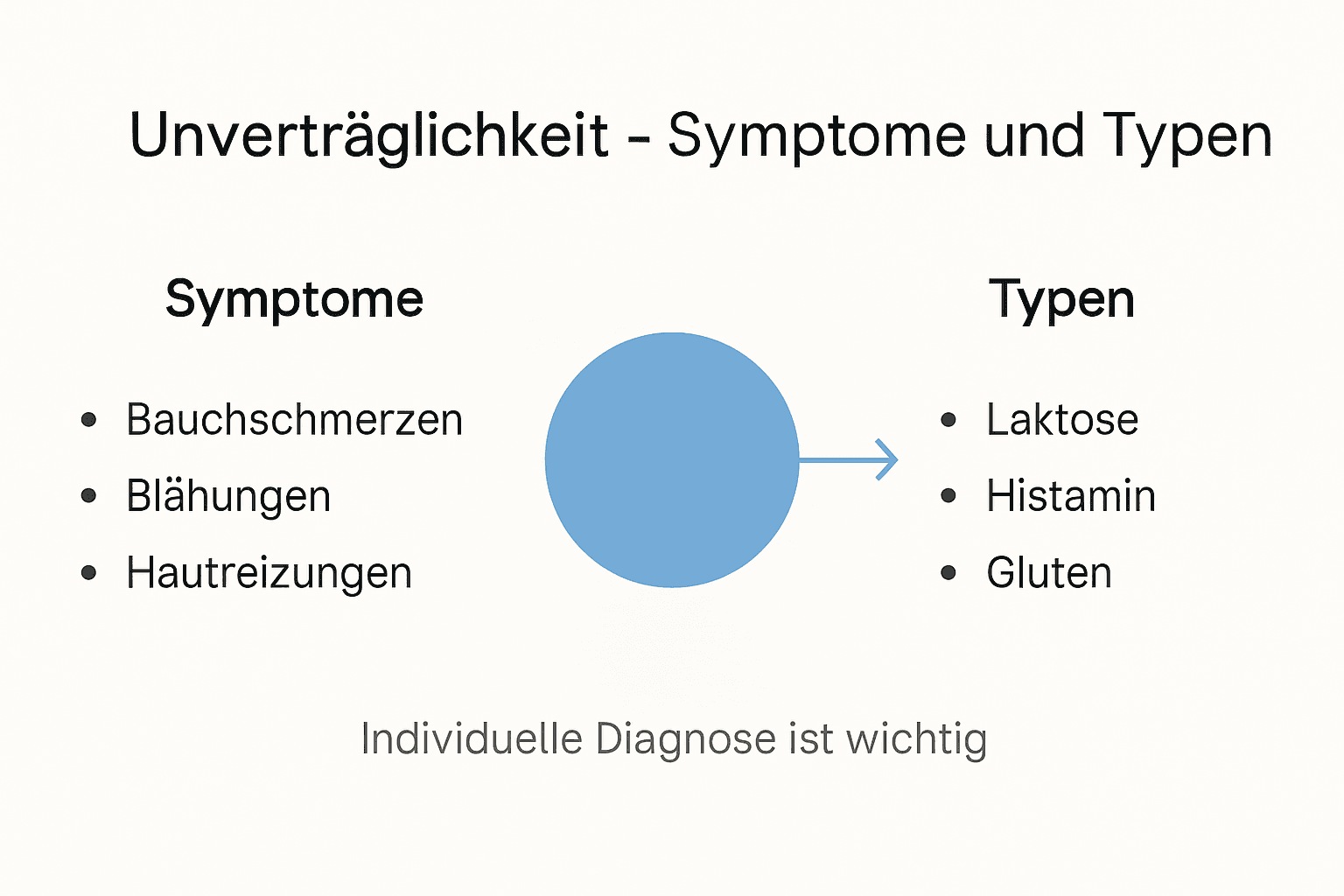
The primary symptoms often affect the digestive tract. Classic signs include bloating, diarrhea, abdominal pain, and an unpleasant feeling of fullness. These symptoms usually occur shortly after eating problematic foods. In addition, food intolerances can also cause systemic reactions, such as headaches, fatigue, skin rashes, or even difficulty concentrating.
One particular challenge is the enormous variability of symptoms. While one person may react to even minimal amounts of the problem food, another may have significantly greater tolerance. Genetic factors, age, health status, and individual metabolic processes all play a decisive role. Symptoms may occur immediately after eating or develop only after a delay.
Pro tip: Document your symptoms precisely and chronologically in a food diary to identify patterns and provide your doctor with valuable information for diagnosis.
Diagnosis: modern laboratory tests and self-tests
The diagnosis of food intolerances has advanced significantly in recent years. Over-the-counter self-tests are booming, but they do not always provide reliable medical results, which is why experts recommend professional evaluation.
Modern laboratory diagnostics distinguish between various testing methods. Blood tests can identify specific antibodies and inflammatory markers, while breath tests can detect metabolic problems such as lactose or fructose intolerance. Genetic analyses can also reveal genetic predispositions to certain intolerances.
Personalized health tests now play a particularly important role, providing comprehensive insights into individual metabolic processes. These molecular tests enable precise analysis of bodily functions and can provide early indications of possible intolerances. The results not only support diagnosis but also enable targeted dietary recommendations.
The following table provides an overview of established diagnostic methods for food intolerances, including their advantages and disadvantages:
| Diagnostic method | Advantage | Disadvantage |
|---|---|---|
| Blood test | Detects immune reactions | Does not cover all intolerances |
| Breath test | Direct metabolic profile | Time-consuming, preparation required |
| Genetic analysis | Identifies genetic risks | High costs, not always conclusive |
| Food diary | Individual patterns identifiable | Subjective, not an immediate diagnosis |
Pro tip: Consult a nutritional medicine specialist before carrying out self-tests so that they can professionally assess the test's validity and necessity.
Avoid mistakes: Risks of incorrect self-diagnosis
Self-diagnosis of food intolerances entails significant risks that are often underestimated. Many people tend to jump to conclusions based on vague symptoms and make far-reaching dietary changes without knowing the actual causes.
The dangers of an incorrect self-diagnosis are diverse. Without medical clarification, important nutrients may be eliminated unnecessarily, which can lead to nutritional deficiencies and health problems. Vague symptoms may indicate more complex health problems that can be overlooked through self-diagnosis, making a professional medical examination essential.
Unvalidated self-tests are particularly problematic, as they often produce misleading or inaccurate results. They may lead people to follow unnecessary diets or avoid important foods. This can not only result in malnutrition but also cause social restrictions and psychological distress. The complexity of food intolerances requires a holistic and professional approach.
Pro tip: Carefully document your symptoms and consult a specialist who can provide a reliable diagnosis using scientific methods.
Understand your personal food intolerance and take targeted action
Food intolerances often cause unpleasant symptoms such as abdominal pain, bloating, or skin reactions. Many people struggle with the uncertainty of which foods are really causing them problems and how they can improve their diet in the long term. This is exactly where modern analysis comes in: Thanks to individually tailored tests, you can specifically determine whether you have any intolerances and which ones, making everyday life considerably easier.
Benefit from the scientifically certified at-home intolerance tests | mybody®x. Use straightforward blood tests specifically for allergies and intolerances to gain clarity. Our experts will support you and provide specific recommendations for an optimal diet. This way, you can discover your personal causes and noticeably improve your well-being and health. Rely on the safety of https://mybody-x.com and learn more about your digestion and potential problems in our understanding and alleviating digestive problems | mybody®x category.
Start your journey toward eating free from symptoms and enjoying a better quality of life. Being able to recognize in everyday life what is good for you and what you should avoid is key. Discover your individual health with mybody® and make informed decisions about your diet and your life.
Frequently asked questions
What are the most common symptoms of a food intolerance?
The most common symptoms of a food intolerance are bloating, abdominal pain, diarrhea, and a feeling of fullness. These symptoms usually occur shortly after eating problematic foods.
How do food allergies differ from food intolerances?
Food allergies are an overreaction of the immune system to certain foods, while food intolerances are usually based on digestive problems or enzyme deficiencies. Allergies can cause serious reactions, whereas intolerances are often less dangerous.
Which types of food intolerances are most common?
The most common food intolerances are lactose intolerance, fructose malabsorption, histamine intolerance, and celiac disease. These conditions affect many people and can cause various symptoms.
How can I get a food intolerance diagnosed?
A food intolerance can be diagnosed through various tests, such as blood tests, breath tests, or by keeping a food diary. Professional medical evaluation is recommended to obtain accurate results.



Share now:
Optimal fT3/fT4 ratio: what the values do and do not indicate
What your vitamin D3 25-OH-D3 level really means