

What is personalized medicine? Fundamentals and the future
Personalized medicine is the individual adaptation of diagnosis and treatment based on unique patient characteristics such as genetics, biomarkers, and lifestyle. Instead of a one-size-fits-all solution, this approach recognizes that two people with the same diagnosis may fundamentally need different treatments. Tools such as next-generation sequencing, pharmacogenomics, and digital biomarkers make it possible to detect diseases earlier and use medications more precisely. The benefits are particularly evident in oncology: tumors are now treated not only according to the organ affected, but also according to their molecular signature. This article explains how personalized medicine works, where it is used today, and what you can realistically expect from it.
What is personalized medicine? Definition and core concept
Personalized medicine, also known as precision medicine, is a medical concept that tailors diagnosis and treatment to the biological, genetic, and lifestyle-related characteristics of an individual patient. The term “personalized” does not mean that every patient receives a completely unique medication. Rather, it means that patients are divided into precisely defined subgroups for which certain therapies have been shown to work better.
The definition of personalized medicine encompasses three core elements: genetic analysis, molecular diagnostics, and the integration of lifestyle data. A doctor treating breast cancer today looks not only at the tumor, but also at its molecular profile. If the tumor produces an excess of the HER2 protein, the antibody trastuzumab can work in a targeted way. Without this information, a patient might receive chemotherapy that offers little benefit and causes substantial harm.

The goal is clear: more effective treatments, fewer side effects, and a better quality of life for patients. This approach differs fundamentally from conventional medicine, which follows the principle “same disease, same treatment.” The difference between personalized medicine and conventional medicine therefore lies not in the care provided, but in the precision of the basis for decision-making.
How does personalized medicine work?
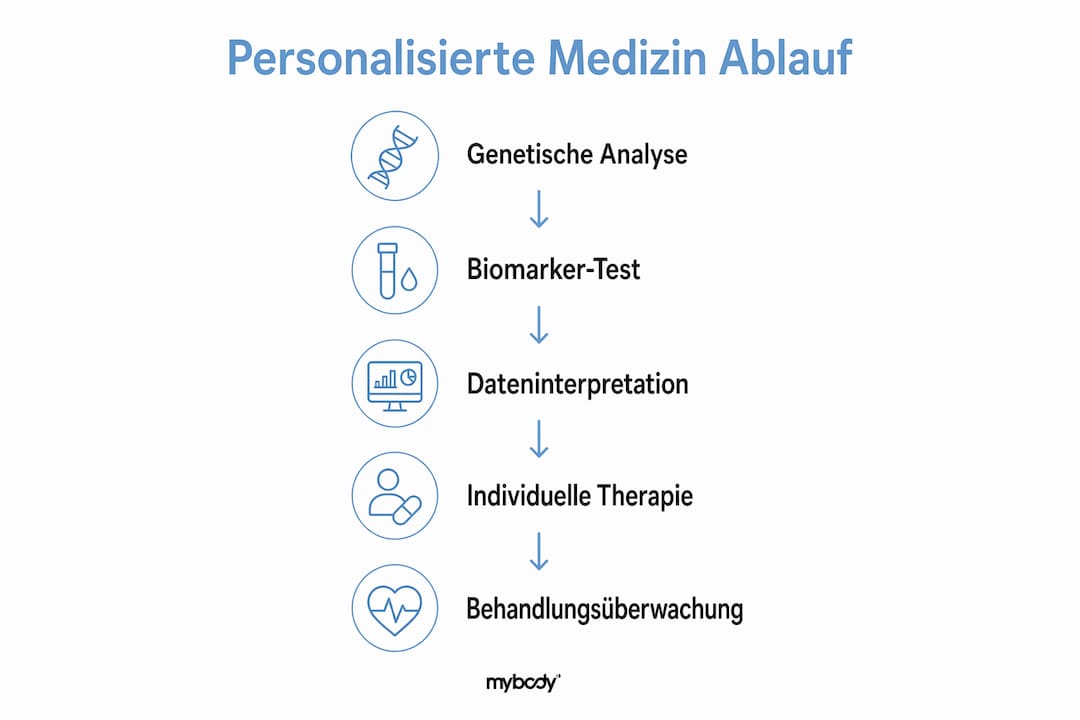
Personalized medicine uses genetic and molecular tests, pharmacogenomics, and digital technologies to select safe and effective therapies. The methods behind it are diverse and evolving rapidly. Here is an overview of the most important techniques:
- Next-generation sequencing (NGS): This method reads the entire genome or targeted gene segments in a short time. It reveals mutations that are responsible for diseases or influence responses to certain medications.
- Biomarker diagnostics: Biomarkers are measurable biological characteristics in the blood, tissue, or urine that provide information about disease processes. Biomarkers enable targeted therapies for up to 50% of patients with certain tumors and prevent unnecessary side effects. This means that one in two cancer patients could benefit from a biomarker-based treatment decision.
- Pharmacogenomics: This field examines how genes influence whether a drug works or causes side effects. For example, people who carry certain variants in the CYP2D6 gene metabolize antidepressants much faster or more slowly than average.
- Multi-omics and computer-based models: Combining genomics, proteomics, and metabolomics provides a comprehensive picture of metabolism. Algorithms analyze this volume of data and identify patterns that no doctor could recognize alone.
- Digital monitoring: Wearables such as the Apple Watch and continuous glucose monitors provide real-time data on heart rate, sleep, and blood sugar. Data-driven personalization through wearables requires strong adherence to treatment and active patient participation. Those who do not consistently record their data will not receive reliable recommendations.
- Liquid biopsies: These blood tests detect tumor DNA in the bloodstream without the need for surgical tissue sampling. They enable early diagnoses and monitoring of treatment progress.
The greatest challenge lies not in the amount of data, but in interpreting it. Multidisciplinary collaboration is essential. Oncologists, geneticists, bioinformaticians, and clinicians must work together to determine what a finding means for the individual patient.
Pro tip: If you have a genetic test, explicitly ask your doctor or provider for a written report of the findings with recommendations for action. Raw data alone, without interpretation, has no medical value.
What advantages does personalized medicine offer over standard medicine?
The difference between personalized medicine and conventional medicine is most apparent in treatment outcomes. The benefits of personalized medicine can be demonstrated concretely in four areas:
- Greater treatment efficiency: When a medication is tailored to a patient’s specific biomarker, it works more reliably. A melanoma patient with a BRAF mutation responds significantly better to BRAF inhibitors such as vemurafenib than to general chemotherapy.
- Fewer side effects: Personalized medicine can significantly reduce side effects because medications are selected deliberately rather than according to a “trial and error” approach. This spares organs, reduces hospital stays, and noticeably improves quality of life.
- Better quality of life and patient trust: Treatment goals must take quality of life and individual expectations into account, not just prolongation of life. Particularly for older patients between 81 and 95, a less aggressive but better-tolerated treatment may be the right choice.
- Cost savings by avoiding unnecessary treatments: Those who receive the right therapy from the outset need fewer follow-up treatments. Unnecessary chemotherapy that remains ineffective in a patient without the appropriate biomarker costs the healthcare system billions and burdens the patient without providing any benefit.
Cardiology and neurology provide further examples: Genetic risk markers for heart attacks or Alzheimer’s disease enable preventive measures before symptoms appear. This shifts the focus from treatment to prevention. And that is precisely the deeper meaning of personalized medicine: not merely to heal better, but to prevent more intelligently.
Where is personalized medicine used today?
Today, the applications of personalized medicine extend far beyond oncology. The following table shows the key areas with specific examples:
| Specialty | Application example | Method |
|---|---|---|
| Oncology | Breast cancer with HER2 overexpression | Trastuzumab (Herceptin) after biomarker testing |
| Oncology | Melanoma with a BRAF mutation | BRAF inhibitors such as vemurafenib |
| Cardiology | Genetic risk of heart attack | Polygenic risk scores, preventive statin therapy |
| Neurology | Early diagnosis of Alzheimer’s disease | APOE genotyping, amyloid PET |
| Transplant medicine | Risk of rejection after kidney transplantation | HLA typing and immunosuppression |
| Autoimmune diseases | Rheumatoid arthritis | Biologic selection based on biomarker profile |
In oncology, personalized medicine is the most advanced. Molecular tumor boards, meaning interdisciplinary groups of experts comprising oncologists, pathologists, and geneticists, jointly analyze complex cases and recommend therapies based on the molecular tumor profile. University hospitals such as Heidelberg University Hospital and the Charité Comprehensive Cancer Center in Berlin already operate such boards routinely.
Preventive genetic diagnostics is also becoming increasingly important. Tests for BRCA1 and BRCA2 indicate the risk of breast and ovarian cancer before the disease develops. Women with a confirmed BRCA1 mutation have a lifetime breast cancer risk of up to 72%. This knowledge enables early monitoring or prophylactic interventions.
The limitations of current research lie primarily in rare diseases and complex multifactorial diseases such as type 2 diabetes or depression, in which hundreds of genes and environmental factors interact. The available data is still too limited to provide reliable personalized recommendations.
What challenges exist in personalized medicine?
Personalized medicine is not an immediately available standard. High costs and technological barriers significantly limit its broad implementation. An overview of the key challenges:
- Cost intensity: Next-generation sequencing and molecular diagnostics are expensive. The individualized production of medicines is complex and is still not fully reimbursed by most health insurers.
- Data privacy and ethical questions: Genetic data is highly sensitive. Who has access to your genetic makeup? Could insurers or employers use this data to discriminate against you? The GDPR provides protection in Europe, but regulation is lagging behind technological development.
- Unrealistic expectations: The Austrian Platform for Personalized Medicine warns that expectations of personalized medicine are often too high and that scientific and economic limitations currently restrict bespoke solutions. The term “personalized” sounds like a bespoke suit, but it is often more like a well-fitting off-the-rack suit.
- Reductionist approach: Genetics does not explain everything. In addition to biomarkers, psychomarkers and sociomarkers should also be considered for comprehensive personalized therapy. Someone living in poverty, sleeping poorly, or experiencing chronic stress will not become healthier from a genetic test result alone.
- Treatment adherence and data burden: Wearables and continuous monitoring require patients to participate actively. Many people find this constant self-monitoring burdensome or lose motivation after a few weeks.
- Data quality and technical hurdles: Algorithms are only as good as the data they were trained on. If study populations consist predominantly of Western white men, the results are less reliable for other population groups.
“Personalized medicine is not a cure-all. It is a powerful tool that must be used by the right people and with realistic expectations.” (Austrian Platform for Personalized Medicine)
Pro tip: Before buying a commercial genetic test, check whether the provider is ISO-certified, has clear privacy policies, and provides an understandable report with specific recommendations. Not every test on the market lives up to its promises.
How can you use personalized medicine in practice?
The future of personalized medicine lies not only in clinics but also in your own hands. Here are concrete steps you can take to benefit from this approach today:
- Have a basic genetic test performed: A DNA analysis test provides information about metabolism, nutrient utilization, food intolerances, and genetic risk factors. Providers such as mybody x conduct these analyses with ISO-certified laboratories and deliver easy-to-understand reports with recommendations for action. You can find more information about how a step-by-step DNA analysis works directly from the provider.
- Check blood biomarkers regularly: Nutrient deficiencies, hormone levels, and inflammatory markers provide information about your current state of health. These values change with diet, stress, and sleep and should therefore be monitored regularly.
- Adjust your diet based on your data: Personalized nutrition based on biomarkers is one of the best-supported areas of application. If you know that you have difficulty digesting lactose or absorb very little vitamin D from food, you can take targeted countermeasures.
- Involve multidisciplinary experts: Complex findings require more than one doctor. Geneticists, nutritional medicine specialists, and your primary care physician should make decisions together. Molecular tumor boards are the clinical model for this approach.
- Use digital tools for continuous monitoring: Apps such as MyFitnessPal, Oura Ring, and continuous glucose monitors provide data that reveal patterns over weeks and months. This data is worthless without interpretation. Combine it with professional advice.
Research into the future of personalized medicine points in clear directions: gene and cell therapies such as CRISPR-Cas9 make it possible to correct faulty sections of DNA directly. CAR-T cell therapies for leukemia are already clinically approved and show remission rates that would not be achievable with conventional chemotherapy. Holistic approaches that integrate nutrition, the microbiome, sleep, and psychosocial factors will shape the next wave of personalized medicine. The connection between genetic analysis and dietary adjustments is a particularly accessible starting point for anyone who wants to take action today.
Key findings
Personalized medicine is most effective when genetic data, biomarkers, and lifestyle analyses are evaluated together and translated into concrete treatment decisions by multidisciplinary experts.
| Point | Details |
|---|---|
| Definition and core concept | Personalized medicine adapts diagnosis and treatment to individual genetics, biomarkers, and lifestyle. |
| Most important methods | Next-generation sequencing, pharmacogenomics, biomarker diagnostics, and wearables form the technical foundation. |
| Greatest advantage | Targeted therapies reduce side effects and increase effectiveness, particularly in oncology. |
| Key limitations | High costs, privacy concerns, and unrealistic expectations are still slowing widespread adoption. |
| Practical starting point | DNA tests, biomarker checks, and personalized nutrition are already accessible and can be used based on scientific evidence. |
My assessment of the significance of personalized medicine
At mybody x, we work every day with people who want to understand what is really happening in their bodies. And I’ll tell you honestly: Personalized medicine is the most compelling development health science has produced in recent decades. Not because it solves everything, but because it asks the right questions.
What concerns me, however, is the hype. The term “personalized” creates expectations that reality cannot yet fulfill. A genetic test can tell you how your body metabolizes caffeine or whether you have an increased risk of vitamin D deficiency. It cannot tell you whether you will be happy or how you cope with stress. Psychosocial factors, sleep, relationships, and a sense of meaning are just as much a part of your health as your BRCA status.
What I’ve learned after years in this field: The biggest mistake is to interpret genetic data as destiny. They are probabilities, not verdicts. An increased genetic risk for type 2 diabetes does not mean you will develop diabetes. It means you know where to start. That is a gift, not a curse.
My advice: Use personalized analyses as a compass, not a roadmap. Combine them with open conversations with your doctor, common sense, and the knowledge that health is more than the sum of your genes.
— MYBODY X
Personalized health analyses with mybody x
If you want to know what your body really needs, mybody x is the right starting point. As a Swiss provider with ISO-certified laboratories, mybody x analyzes your DNA, metabolism, microbiome, and nutrient status based on saliva, blood, and stool samples. You do not receive raw data, but easy-to-understand reports with specific nutrition recommendations and lifestyle strategies.
All tests can be conveniently performed at home. With more than 11,300 satisfied customers and a rating of 4.77 stars, mybody x stands for quality you can feel. Start now with your personalized health analysis and understand your body on a whole new level.
FAQ
What is the difference between personalized and conventional medicine?
Conventional medicine treats all patients with the same diagnosis according to the same standard protocols. Personalized medicine divides patients into precise subgroups based on biomarkers, genetics, and lifestyle, then selects therapies proven to work better for that group.
Which diseases most commonly use personalized medicine?
Personalized medicine is most advanced in oncology, particularly for breast cancer (HER2), melanoma (BRAF mutation), and leukemia (CAR T-cell therapy). Other areas of application include cardiology, neurology, transplant medicine, and autoimmune diseases.
Can I use personalized medicine without seeing a doctor?
Yes, for preventive purposes, DNA tests, nutrient analyses, and microbiome tests from ISO-certified providers such as mybody x can be carried out at home. A doctor is always required for medical diagnoses and treatment decisions.
How safe is my genetic data with such tests?
Reputable providers pseudonymize samples immediately upon receipt and destroy them after analysis. In the EU, the GDPR provides the legal framework. Make sure the provider explicitly explains who has access to your data and how long it is stored.
Is personalized medicine expensive?
Clinical applications such as next-generation sequencing or molecular tumor boards are costly and are not always covered by health insurance. By contrast, preventive tests for nutrition, metabolism, and nutrients are now available at affordable prices and provide immediately actionable benefits.



Share now:
Examples of wellness checkups: Types compared
Muscle weakness: causes, symptoms & which tests can help