

What is a DNA test? Your guide for 2026
Many people believe DNA tests can predict their entire health future or guarantee weight-loss results. The reality is different. Genetic analyses provide valuable insights into your individual predisposition regarding metabolism, nutrient utilization, and nutritional needs, but they are not a miracle cure. This guide explains what DNA tests can really do, how they work, and what limitations you should know about in order to make informed decisions about your health.
Table of contents
- What lies behind a DNA test
- Personalized nutrition based on genetic data
- Limitations, risks, and legal aspects of DNA tests in Switzerland
- The future of genetic analysis for nutrition and health
- How mybody®x supports you with your genetic analysis
- Frequently Asked Questions
Key points
| Point | Details |
|---|---|
| Genetic variations | DNA tests analyze variants in your genes that influence metabolism and nutrient processing. |
| Personalized recommendations | You receive dietary advice tailored to your genetics, but no guarantees of weight loss. |
| Expert assistance required | Test results should be interpreted with healthcare professionals to avoid misinterpretations. |
| Legal restrictions | Strict rules apply to DTC genetic tests in Switzerland, especially for minors. |
| Holistic approach | Genetics is just one factor, alongside lifestyle, diet, and the environment, that affects your health. |
What lies behind a DNA test
DNA tests examine your genetic makeup for specific variations that affect your health and nutritional needs. These analyses focus on so-called SNPs for assessing disease risks and metabolism, tiny differences in individual building blocks of your DNA. Such variations determine, for example, how well you process certain vitamins or how your body responds to carbohydrates.
A well-known example is the MTHFR gene, which regulates folate metabolism. Certain variants of this gene can impair the conversion of folic acid, affecting heart health and energy production. Similar genetic patterns influence your meta-type, meaning how your body optimally uses macronutrients. These insights enable the benefits of personalized nutrition by allowing you to make targeted adjustments to what you eat.
Important to understand:
- DNA tests analyze genetic predispositions, not diagnoses
- SNPs provide insights into metabolic tendencies and nutrient needs
- Results show probabilities, not certainties
- Lifestyle and the environment influence whether genes become active
Pro tip: Treat DNA results as a compass, not a map. Your genes provide guidance, but your daily decisions determine the path.
Genetic analyses work best in the context of your overall lifestyle. Without considering exercise, sleep, stress, and environmental factors, the findings remain incomplete.
Personalized nutrition based on genetic data
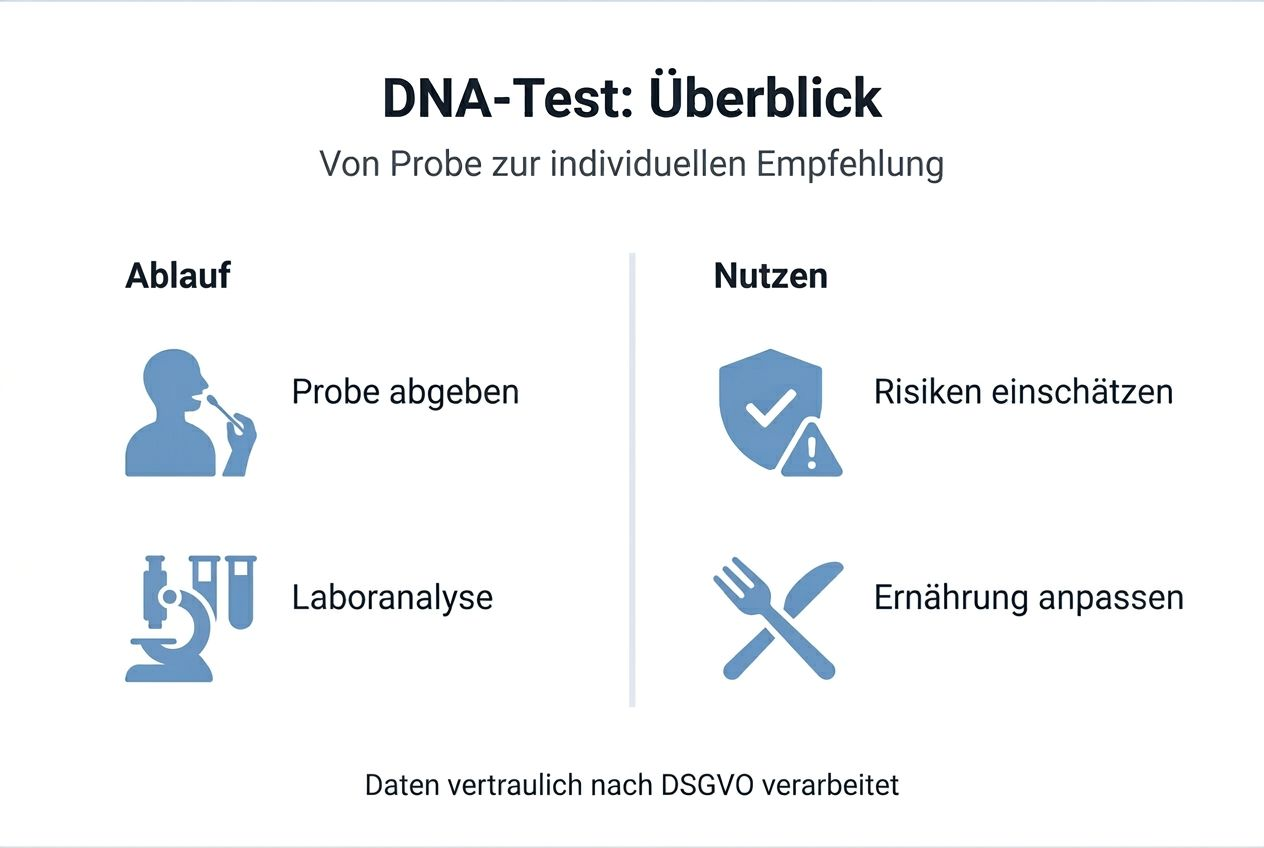
The process of genetic nutritional analysis is straightforward and begins with a saliva sample. You receive a test kit at home, collect a small amount of saliva, and send it to the laboratory. There, analyses identify specific genetic variants for dietary adjustments that provide insight into your metabolic type.
The four meta-types describe how your body processes nutrients:
- Alpha type processes carbohydrates efficiently and benefits from balanced meals
- Beta type needs more protein for optimal satiety and energy supply
- Gamma type is sensitive to fats and should consume them in carefully adjusted amounts
- Delta type combines several tendencies and requires individually tailored balance
Typical nutrient analyses include:
- Vitamin D utilization and the need for sunlight or supplementation
- Vitamin B12 absorption, particularly relevant for vegetarian diets
- Omega-3 metabolism for reducing inflammation and supporting heart health
- Gluten tolerance and celiac disease risk
- Lactose breakdown and dairy product tolerance
The practical benefits become apparent in everyday life. If you know that your body processes carbohydrates more slowly, you can adjust portions and avoid blood sugar fluctuations. If you have an increased need for vitamin D, you can supplement purposefully instead of taking supplements blindly. This DNA-based personalized nutrition helps optimize energy levels and stay healthy in the long term.
Pro tip: After receiving your DNA report, book a consultation with nutrition experts. They will help you interpret the results correctly and set realistic goals instead of hoping for supposed miracle solutions.
Implementation requires patience. Genetic recommendations take effect over weeks and months, not overnight.
Limitations, risks, and legal aspects of DNA tests in Switzerland
Despite their potential, DNA tests have significant limitations. Scientific evidence for weight loss through genetic testing is limited. Many providers promise more than research supports. Genes influence your weight, but lifestyle, sleep, stress, and social factors are at least equally influential.

Switzerland strictly regulates direct-to-consumer genetic tests that do not provide medical advice. Direct-to-consumer tests without medical supervision are generally not permitted. This protects consumers from misinterpretations and dubious promises. Those who order tests from abroad enter a legal gray area and bear full responsibility for interpreting the results.
Particularly problematic:
- Testing third parties, especially children, is prohibited
- Results can affect family members and trigger conflicts
- Misinterpretations lead to unnecessary anxiety or false reassurance
- Data protection is often inadequate with foreign providers
Experts warn that the risk of misinterpretation without professional guidance often outweighs the benefits. Genetic information without context can confuse more than it helps.
Those who research experiences with genetic tests for weight loss will find mixed reports. Some users benefit from the insights, while others feel overwhelmed or disappointed. The difference often lies in support from qualified professionals.
Ethical considerations also include questions about who owns your genetic data and how insurance companies or employers might use it. Strict GDPR rules apply in Switzerland, but not all international providers comply with them.
The future of genetic analysis for nutrition and health
Nutrigenomics is advancing rapidly. Current research on gene–nutrient interactions for health optimization shows how specific dietary patterns can reduce the risk of metabolic syndrome. Scientists are continually discovering new connections between genes and nutrition.
| Gene variant | Nutrient interaction | Health relevance |
|---|---|---|
| FTO gene | Fat intake and satiety | Weight regulation and obesity risk |
| APOE4 | Cholesterol metabolism | Cardiovascular health |
| CYP1A2 | Caffeine metabolism | Coffee consumption and blood pressure response |
| LCT gene | Lactose digestion | Dairy product tolerance |
These insights enable more precise recommendations. If you know that your CYP1A2 gene breaks down caffeine slowly, you can adjust your coffee consumption to avoid sleep disturbances. For APOE4 carriers, it is worth paying particular attention to heart-healthy fats.
Nevertheless, integration remains crucial. The benefits of genetic analyses for health only become apparent when you combine genetic data with lifestyle factors. Your genes load the gun, but the environment and your behavior pull the trigger. Epigenetics shows that lifestyle determines which genes become active.
Professional tip: Set realistic expectations. DNA tests are tools, not crystal balls. They provide guidance for optimization but do not guarantee health or weight loss.
Future developments will be more precise. Researchers are working on algorithms that combine genetic data with microbiome analyses, blood values, and activity data. Such DNA sequencing fundamentals are constantly improving and becoming more affordable. In a few years, comprehensive health profiles could become standard, revolutionizing prevention.
The challenge remains to combine scientific rigor with practical applicability. Reputable providers invest in research and transparent communication instead of making unrealistic promises.
How mybody®x supports you with your genetic analysis
If you want to optimize your diet based on scientific evidence, mybody®x offers professional DNA analyses with comprehensive support. You receive not only a report but also personalized nutritional recommendations that take your genetic characteristics into account. The mybody®x experts help you interpret the results correctly and turn them into practical steps.
All tests are conducted in ISO-certified laboratories, ensuring the highest quality. Your data is protected according to GDPR standards, samples are pseudonymized and destroyed after analysis. With over 11,300 satisfied customers and a rating of 4.77 stars, mybody®x is one of the trusted providers in Switzerland. Discover the possibilities on the mybody®x homepage and start your personal health journey.
Frequently Asked Questions
How accurate are DNA tests for nutrition?
Scientific accuracy varies depending on the gene analyzed and the available research. Tests reliably identify genetic variants, but interpreting their impact on nutrition and weight is complex. Genetics explains only part of your health, while lifestyle, environment, and behavior are at least equally important. Professional advice helps put the results into perspective.
How much does a DNA test cost in Switzerland?
A comprehensive DNA test for optimizing nutrition costs between 200 and 400 Swiss francs. The price depends on the scope of the analysis, the number of genes examined, and additional services such as consultations. Reputable providers often include expert support and detailed reports.
Are DNA tests allowed for children?
In Switzerland, ordering DTC genetic tests for children is prohibited for ethical and legal reasons. Tests for minors require parental consent and medical supervision. Concerns include possible misinterpretation and psychological distress caused by genetic information without appropriate guidance.
Which nutrients are typically tested?
Standard DNA tests analyze genes related to vitamin D, B12, folate, omega-3 fatty acids, and minerals such as iron. They also assess lactose and gluten tolerance, as well as caffeine metabolism. More comprehensive panels examine up to 50 relevant genes related to metabolism, detoxification, and antioxidant capacity.
How long does it take to receive results?
After you send in your sample, laboratory analysis usually takes two to four weeks. The duration depends on the scope of the test and laboratory workload. Reputable providers keep you informed at every step and make the report available digitally.
Can DNA tests predict diseases?
DNA tests show predispositions and risk factors, not definitive predictions. They provide probabilities for certain conditions based on genetic variants. Many diseases arise from a complex interaction of genes, the environment, and lifestyle, so genetic information alone cannot replace diagnoses.



Share now:
Self-Test Process 2026: How to Use Personalized Analyses
Lose Weight with a Gene-Based Diet: How to Find Your Ideal Weight