

Self-test process 2026: How to use personalized analyses
Would you like to optimize your health but are not sure exactly how modern self-tests work? Many health-conscious people are unsure about the precise process and reliability of these analyses. This article shows you step by step how to perform DNA, metabolic, and microbiome tests at home and obtain scientifically sound results. You will learn which quality standards apply and how to use personalized recommendations specifically for your health.
Table of contents
- Key insights into the self-test process in 2026
- Introduction: Importance and development of self-tests in 2026
- The typical self-test process in 2026
- Personalized health and nutrition analyses: How they work and their benefits
- Quality standards and data protection for modern self-tests
- Comparison: Medical self-tests versus traditional laboratory tests
- Common mistakes, misunderstandings, and the right approach to self-tests
- Practical application of test results for nutrition and health
- Conclusion and outlook: Self-tests as the key to self-determined health
- Discover mybody®x for personalized health analyses
- Frequently asked questions
Key insights into the self-test process in 2026
| Point | Details |
|---|---|
| Easy sample collection | You can conveniently collect saliva, blood, or stool samples at home without visiting a doctor. |
| ISO-certified analysis | Certified laboratories guarantee precise and scientifically validated results. |
| Personalized reports | Digital evaluations provide individualized nutrition and lifestyle recommendations based on your genetics. |
| Data protection compliance | GDPR-compliant pseudonymization protects your personal data throughout the entire analysis. |
| Practical implementation | Specific recommendations for action enable direct integration into your everyday life for measurable health improvements. |
Introduction: Importance and development of self-tests in 2026
Self-tests are revolutionizing the way we understand and shape our health. They enable you to obtain precise analyses without visiting a medical practice and provide personalized insights into your genetic predisposition, metabolism, and gut health. The growing popularity of these tests shows a clear trend: more and more people want to take a self-directed and preventive approach to their health.
Technological advances have established modern self-tests as scientifically grounded methods. The analysis procedures are mature and provide results comparable to those of traditional laboratory tests. DNA metabolism tests, microbiome analyses, and nutrient checks are gaining particular importance.
The key developments in 2026 include:
- Greater accuracy through improved sequencing technologies
- Faster evaluation times of just 7 to 14 days
- More comprehensive analysis of over 140 gene variants for more precise recommendations
- Integration of digital platforms for simple result presentation
- Increasing acceptance among medical professionals and health insurance providers
The market's development reflects growing trust. Providers such as mybody® have more than 11,300 satisfied customers, with an average rating of 4.77 stars. These figures demonstrate that self-tests are not only practical but also reliable.
Quality and transparency are at the forefront. ISO certifications and GDPR-compliant processes ensure that you can rely on your results. The combination of scientific precision and user-friendliness makes self-tests a valuable tool for anyone who wants to achieve their health goals.
The typical self-test process in 2026
The process from purchasing the test to receiving the personalized report is straightforward and takes approximately two to three weeks in total. Each step is clearly defined so that you can achieve optimal results.
-
Ordering the test kit: You select the appropriate test online, such as a DNA metabolism, microbiome, or nutrient analysis test. After ordering, the kit is delivered discreetly and securely to your home.
-
Collecting the sample at home: The kit includes detailed instructions for collecting saliva, blood, or stool. Most tests require only a few minutes of your time. Following the instructions precisely is essential for reliable results.
-
Shipping to the laboratory: You send the sealed sample back free of charge using the enclosed return label. The samples are analyzed in ISO-certified laboratories that meet the highest quality standards.
-
Laboratory analysis: Experts examine your sample using state-of-the-art methods. DNA tests identify genetic variants, while microbiome analyses determine the bacterial composition of your gut. This step usually takes 7 to 14 days.
-
Digital delivery of results: You will receive an email notification as soon as your personalized report is available online. The report contains easy-to-understand visualizations and specific recommendations for action.
-
Personal consultation: Many providers offer additional consultations to discuss the results and answer questions. This support helps you successfully implement the recommendations.
You can find more details about the entire process in our article about at-home genetic testing explained. It answers frequently asked questions about the procedure and interpretation.
Pro tip: Collect the sample in the morning on an empty stomach. This minimizes external influences and ensures more precise readings, especially for metabolism and nutrient tests.

Personalized health and nutrition analyses: How they work and their benefits
Modern self-tests are based on complex scientific methods that analyze your individual genetic and biological makeup. The findings go far beyond general health tips and provide tailored strategies.
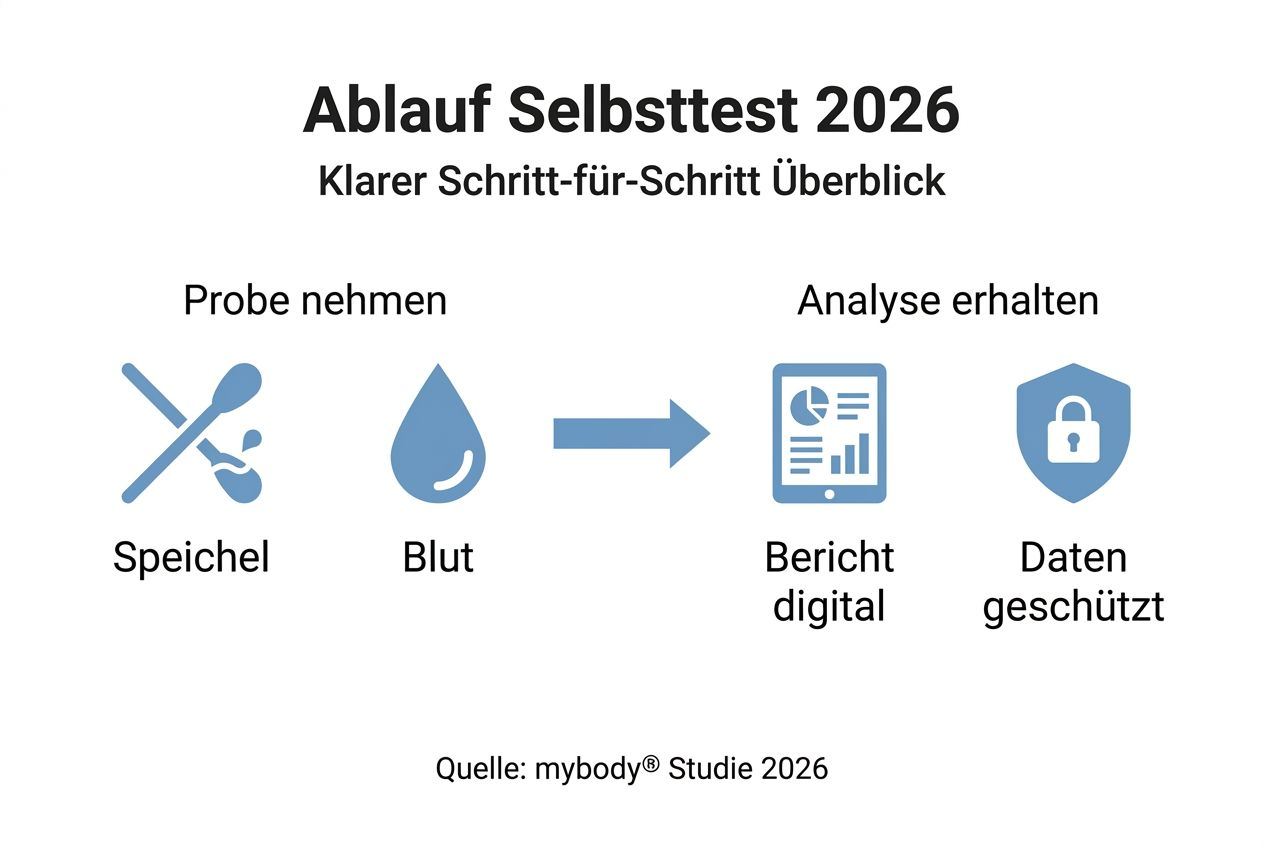
DNA metabolism tests examine more than 140 gene variants that influence your metabolism, nutrient utilization, and weight management. These genetic markers show how your body processes carbohydrates, fats, and proteins. Based on this, you receive precise nutrition recommendations.
Microbiome analyses provide detailed insights into the composition of your gut flora. You learn which bacterial strains are present and how they influence your digestion, immune system, and even your mood. The results show which foods support your gut health and which you should avoid.
The key benefits of personalized analyses:
- Precisely identifying your metabolic type for optimal macronutrient distribution
- Identifying genetic predispositions to intolerances or nutrient deficiencies
- Personalized supplementation recommendations based on your actual needs
- Optimizing your training strategy through genetic fitness markers
- Long-term anti-aging strategies through analysis of longevity genes
Studies show that genetically tailored nutrition increases the success rate by up to 30% compared with general diet plans. This difference arises because you receive recommendations that precisely match your biological predisposition.
Integrating different data sources enhances the effect. When you combine DNA analysis, a microbiome test, and a nutrient check, you gain a comprehensive picture of your health. You understand not only what you should eat, but also why certain strategies work better for you than others.
For more information on the effects of genetic analyses on health and nutrition, please see our specialist article. It explains the scientific foundations in an accessible way.
Quality standards and data protection for modern self-tests
Trust in self-tests comes from verifiable quality and transparent handling of your sensitive data. Reputable providers meet strict standards that guarantee both analytical accuracy and data protection.
ISO certifications are the foundation of reliable laboratories. They confirm that analysis processes meet the highest quality requirements and are regularly reviewed. These certificates are not a marketing tool but binding proof of quality.
Data protection according to GDPR standards is a given with reputable providers. Your personal data is pseudonymized so that no one in the laboratory can draw conclusions about your identity. Samples are assigned anonymous codes that only you can link to your identity through your personal account.
Important security features:
- Complete pseudonymization of all samples and data during the analysis process
- Encrypted data transmission and storage on secure servers
- Biological destruction of samples immediately after analysis is complete
- No sharing of data with third parties without your explicit consent
- Transparent information about data processing and storage duration
Medical recognition is growing steadily. More and more doctors accept results from certified self-tests as a basis for consultations. Some health insurance providers are even beginning to subsidize preventive tests because they recognize their health benefits.
Transparency builds trust. Reputable providers explain exactly how your sample is processed, which analytical methods are used, and how long your data is stored. You have the right to have your data deleted at any time.
Pro tip: Before ordering, check whether the provider explicitly documents ISO certifications and GDPR compliance on its website. If this information is missing, you should look elsewhere. Quality providers communicate their standards clearly and publicly.
Comparison: Medical self-tests versus traditional laboratory tests
Self-tests and traditional laboratory tests have different strengths. Which option is best for you depends on your situation and goals.
| Criterion | Self-tests | Traditional laboratory tests |
|---|---|---|
| Convenience | Sample collection at home, no appointment required | Practice visit required, waiting times |
| Cost | 60 to 300 euros, often paid out of pocket | Partially covered by health insurance, but not always for preventive purposes |
| Evaluation time | Available digitally within 7 to 14 days | 3 to 10 days, consultation with a doctor |
| Scope of analysis | Focus on preventive and personalized markers | Comprehensive medical diagnostics for symptoms |
| Consultation | Optional: digitally or by phone | Direct communication with medical professionals |
| Suitability | Prevention, optimization, self-determination | Acute symptoms, complex diagnoses |
Self-tests offer maximum flexibility. You decide when to collect the sample and do not have to work around office hours. The results are digital and available at any time. This makes them ideal for health-conscious people who want to take preventive action.
Traditional tests are advantageous for complex medical questions. If you have acute symptoms or need comprehensive diagnostics, visiting a doctor is essential. Laboratories can measure values there that are not covered by self-tests.
Combining both approaches significantly increases the success rate. Use self-tests for regular monitoring and preventive optimization. If you notice anything unusual or have specific questions, also consult a medical professional.
Benefits of combining them:
- Self-tests provide baseline data for informed consultations with doctors
- Doctors can tailor recommendations more precisely to your genetic predisposition
- Regular self-tests reveal developments and trends over longer periods
- Cost efficiency through targeted use of both types of tests
Self-tests are not a complete substitute, but rather a valuable supplement. They enable continuous self-optimization and give you control over your health data.
Common mistakes, misunderstandings, and the right approach to self-tests
Even simple tests can be subject to errors that distort your results. With the right knowledge, you can avoid these problems and obtain accurate analyses.
Incorrect sample collection is the most common cause of inaccurate results. If you do not follow the instructions precisely, the sample may become contaminated or contain too little material. This leads to unclear or unprocessable results.
Common collection errors:
- Eating or drinking shortly before collecting the saliva sample, which affects the readings
- An insufficient sample quantity for the analysis
- Contamination from unclean hands or containers
- Storing the sample at the wrong temperature before shipping
- Delayed shipping that compromises sample quality
Misunderstandings when interpreting results are also common. Many users confuse genetic predispositions with diagnoses. A DNA test shows genetic tendencies, not diseases. If your test identifies a lactose intolerance variant, this does not automatically mean that you cannot tolerate dairy products.
Studies show that clear instructions can reduce the error rate by around 15%. Take the time to read the instructions carefully before you begin.
How to proceed correctly:
- Read the entire instructions carefully before beginning the collection
- Observe fasting requirements and time windows for optimal sample quality
- Wash your hands thoroughly before opening the test kit
- Ship the sample the same day or the next day
- If anything is unclear, contact customer service before collecting the sample
Support is your most important helper. Reputable providers offer telephone or chat support if you are unsure. Do not hesitate to ask questions. It is better to invest five minutes than to wait weeks for an unusable result.
You can find more practical tips in the article Explaining at-home genetic testing. It also addresses common uncertainties during the first test.
Pro tip: Photograph your sample after collecting it and before sealing it. If there are any problems, you can show support that everything was done correctly. This speeds up any replacement orders or clarifications.
Practical application of test results for nutrition and health
Test results are only valuable when you put them into practice. Most reports contain detailed recommendations that you can gradually integrate into your everyday life.
Personalized nutrition plans are based directly on your genetic data. If your DNA test shows that you metabolize carbohydrates more slowly, you can adjust your macronutrient distribution accordingly. More protein and healthy fats, fewer fast-digesting carbohydrates.
Recommendations for dietary supplements are precisely tailored to your needs. Instead of supplementing blindly, you learn which vitamins and minerals your body actually needs. This not only saves money but also prevents overdosing.
Important areas of application:
- Adapting meal frequency to your individual metabolic type
- Selecting foods that optimally support your gut flora
- Timing carbohydrate intake for better energy levels
- Targeted supplementation for identified genetic deficiency risks
- Integration of exercise and recovery phases based on fitness genes
Studies show that personalized nutrition leads to up to 30% better results. The reason: You work with your body, not against it.
Long-term implementation requires patience and consistency. Do not change everything at once; instead, start with the three most important recommendations from your report. After four to six weeks, evaluate the effects and add further adjustments.
Digital tools help with tracking. Many providers offer apps or online portals where you can document your progress. This increases motivation and shows you in black and white what works.
You can find practical checklists in our article Checklist for Identifying Nutrient Deficiencies. It systematically explains the most important steps for implementation.
For hormonal balance, the article 7 Effective Tips for Hormonal Balance offers additional strategies that complement test results perfectly.
Conclusion and outlook: Self-tests as the key to self-determined health
Self-tests in 2026 are far more than a trend. They are scientifically grounded tools for preventive health strategies and personalized optimization. The combination of easy handling, ISO-certified quality, and detailed analyses makes them the ideal solution for anyone who wants to take responsibility for their health.
Technological advances are continuously improving accuracy and significance. Future developments will enable even deeper insights into epigenetic factors, hormonal balance, and aging processes. Integrating artificial intelligence will make recommendations even more precise.
With self-tests, you gain more than just data. You gain autonomy, health literacy, and the ability to make informed decisions about your diet and lifestyle. The trend is clearly moving toward greater individualization, integration, and scientific depth.
Discover mybody®x for personalized health analyses
Ready to take your health to the next level? mybody®x offers a comprehensive range of DNA, metabolism, gut, and blood tests that you can conveniently perform at home. All analyses are conducted in ISO-certified laboratories and provide scientifically validated results with personalized recommendations.
We will guide you through every step, from ordering to receiving your digital report. You benefit from free shipping on orders over 49 euros, personal consultation, and a money-back guarantee if no results are obtained. More than 11,300 satisfied customers, with an average rating of 4.77 stars, confirm the quality and added value.
Discover your options now at mybody®x and start your journey toward better health, energy, and well-being. Your personalized analyses are waiting for you.
Frequently asked questions
How long does it take to receive the results of a self-test?
You will generally receive your results 7 to 14 days after the sample is sent to the laboratory. The exact duration depends on the type of test; DNA analyses usually take somewhat longer than basic nutrient tests. Your digital reports will be conveniently available online as soon as the analysis is complete.
Are self-collected samples just as reliable as samples collected in a medical practice?
Yes, if you follow the instructions precisely. ISO-certified laboratories ensure high analysis quality regardless of where the sample is collected. Detailed step-by-step instructions minimize errors during sample collection. Studies show that self-collected samples, when obtained correctly, deliver results comparable to samples collected in a medical practice.
How is data protection ensured during sample analysis?
Your data is pseudonymized and encrypted in accordance with GDPR standards. No one in the laboratory can draw conclusions about your identity, as samples bear only anonymous codes. Once the analysis is complete, all biological materials are professionally destroyed. Your personal health data remains stored exclusively in your secure online account.
Can I discuss the test results with my doctor?
Absolutely, this is even recommended. Test results from certified laboratories can serve as a sound basis for discussions with your doctor. Combining self-testing with medical advice is ideal for developing personalized health strategies. Many doctors value the additional information, which helps them provide more targeted recommendations.
Recommendation
- Health analysis 2026: 30% better nutrient absorption – mybody®x
- Analyzing your personal metabolism: The complete guide – mybody®x
- At-home genetic testing: Personalized health explained simply – mybody®x
- Step-by-step DNA analysis: Understanding individual health data – mybody®x
- Personalized dental solutions – The impact on health



Share now:
Gut Microbiome Analysis: A Guide to Your Gut Health
What Is a DNA Test? Your Guide for 2026