

Metabolic syndrome: Causes, diagnosis, and solutions
TL;DR:
- Around one quarter of all adults worldwide suffer from metabolic syndrome. It develops through a combination of central obesity, high blood pressure, and impaired fat and glucose metabolism. Personalized diagnostics and lifestyle changes are crucial for prevention and reversal.
Around one quarter of all adults worldwide live with metabolic syndrome, many without knowing it. The situation is similar in Switzerland. The insidious aspect is that it is not a single disease, but an interplay of several risk factors that together endanger the cardiovascular system and metabolism. Those who know the causes can take targeted action. In this article, you will learn exactly what metabolic syndrome is, how it is diagnosed, which individual factors play a role, and which personalized approaches genuinely help.
Table of contents
- What Is Metabolic Syndrome? Definition and Fundamentals
- How is metabolic syndrome diagnosed? Criteria and screening
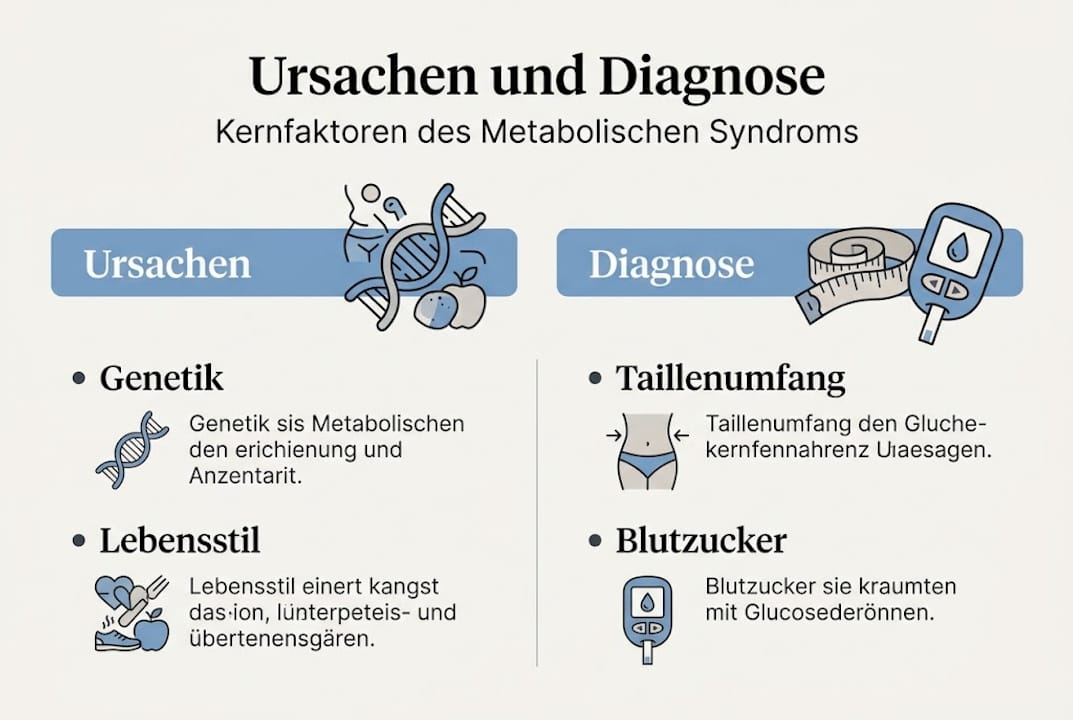
- Causes and mechanisms: From genetics to lifestyle
- Individual differences and edge cases: Who is particularly affected?
- How can it be prevented and treated? Personalized approaches
- Why standard therapies often fail—and how true personalization helps
- Individual analyses for your well-being: The next step with mybody®x
- Frequently asked questions about metabolic syndrome
Key findings
| Point | Details |
|---|---|
| High prevalence | One in four adults is affected, and many are unaware of their risk. |
| Diagnosis with simple tests | Waist circumference and blood values provide key indications of the syndrome. |
| Multiple causes | Genetics, the microbiome, and lifestyle create individual risks. |
| Personalized prevention works | Individualized nutrition and analyses significantly improve the chances of success. |
What Is Metabolic Syndrome? Definition and Fundamentals
Metabolic syndrome is not an independent disease in the classical sense. It describes a combination of central obesity, high blood pressure, impaired fat metabolism, and impaired glucose tolerance. The syndrome is diagnosed only when several of these factors occur simultaneously. Each individual factor is already a risk in its own right. Together, they amplify one another.
What exactly does this mean for the body? The metabolism becomes unbalanced: Cells respond less effectively to insulin, fat preferentially accumulates around the abdomen, and inflammatory processes continue in the background. The risk of cardiovascular disease increases significantly. Compared with people without this combination of risk factors, those affected have a two- to threefold higher risk of heart attack and stroke.
Typical characteristics of metabolic syndrome at a glance:
- Increased waist circumference (central obesity)
- Blood pressure over 130/85 mmHg
- Fasting blood glucose over 100 mg/dl
- Triglycerides over 150 mg/dl
- HDL cholesterol under 40 mg/dl (men) or 50 mg/dl (women)
| Characteristic | Normal range | Risk range |
|---|---|---|
| Waist circumference (women) | under 80 cm | 80 cm and above |
| Waist circumference (men) | under 94 cm | 94 cm and above |
| Fasting glucose | under 100 mg/dl | 100 mg/dl and above |
| Blood pressure | under 130/85 mmHg | 130/85 mmHg and above |
| Triglycerides | under 150 mg/dl | 150 mg/dl and above |
Important to understand: Metabolic syndrome differs from diabetes or high blood pressure alone in that it describes a pattern. Having only high blood pressure does not automatically mean someone has the syndrome. It is defined only by the combination of several factors.
The distinction from an individual diagnosis is crucial for treatment. Treating only one value does not go far enough. The syndrome requires a holistic view of overall metabolism.
How is metabolic syndrome diagnosed? Criteria and screening
Once it is clear what metabolic syndrome is, the question arises: How can doctors reliably identify it? The good news is that diagnosis is possible using simple methods. The challenge lies in applying them consistently.
The best-known diagnostic standards are the criteria of the International Diabetes Federation (IDF) and the American NCEP ATP III. According to the IDF criteria, an increased waist circumference plus at least two additional risk factors from the areas of blood pressure, blood glucose, triglycerides, and HDL cholesterol are required. This is the current gold standard in clinical practice.
Step-by-step diagnosis:
- Measure waist circumference (at the level of the navel, fasting in the morning)
- Measure blood pressure in both arms
- Have a fasting blood panel taken (glucose, triglycerides, HDL)
- Compare the values with the IDF thresholds
- If two or more abnormalities are present: Consult a doctor
| Criterion | IDF threshold | ATP III threshold |
|---|---|---|
| Waist circumference (men) | 94 cm | 102 cm |
| Waist circumference (women) | 80 cm | 88 cm |
| Triglycerides | 150 mg/dl | 150 mg/dl |
| HDL (men) | below 40 mg/dl | below 40 mg/dl |
| Fasting glucose | 100 mg/dl | 110 mg/dl |
Pro tip: You can measure your waist circumference yourself. Stand upright, exhale normally, and place the measuring tape at the level of your navel. Measure in the morning before breakfast for comparable results.
A metabolic analysis can help identify individual patterns beyond basic laboratory values. Anyone who wants to understand how their body responds to nutrients can benefit from the benefits of personalized nutrition, which go far beyond general recommendations.
Causes and mechanisms: From genetics to lifestyle
Understanding the diagnosis brings the underlying mechanisms into focus. Why does one person develop metabolic syndrome while another does not, even though they live similar lifestyles? The answer lies in a complex interplay of biology, genetics, and behavior.

The core of the syndrome is insulin resistance. Cells respond less effectively to the hormone insulin, which regulates blood sugar. The body then produces more insulin, which in turn promotes fat storage. Visceral fat is particularly problematic: it releases inflammatory messengers that further intensify insulin resistance and disorders of fat metabolism. This creates a vicious cycle.
Key causes and risk factors:
- Lack of exercise and a high-calorie diet
- Chronic stress and sleep deprivation
- Genetic predisposition (certain gene variants increase the risk)
- Epigenetic changes caused by environmental factors
- Imbalances in the microbiome
Statistics: Studies show that people with an unfavorable gut microbiome face a significantly increased risk of insulin resistance and overweight. The role of the microbiome in the development of metabolic syndrome is being intensively studied.
Pro tip: Not everyone who is overweight develops metabolic syndrome, and not everyone with metabolic syndrome is severely overweight. What matters most is abdominal fat, not total body mass.
Genetic factors explain why some people struggle despite eating a healthy diet. Epigenetics shows that genes can be switched on or off by lifestyle. This means that even people with a genetic predisposition have real options for taking action.
Individual differences and edge cases: Who is particularly affected?
After reviewing the general mechanisms, we turn to individual characteristics. Metabolic syndrome does not affect everyone in the same way, and the standard definitions do not cover every situation.
A central problem is that different definitions, such as IDF and NCEP ATP III, use different thresholds. As a result, the same person may be classified as ill or healthy depending on the standard applied. Adjusted criteria exist for children and adolescents because adult reference values cannot be applied to them.
Specific risk groups and special cases:
- Children and adolescents who are overweight (separate thresholds are needed)
- People with a so-called “thrifty metabolism” (thrifty genotype), which has an evolutionary tendency to store fat
- People of Asian descent, whose risk increases at a lower waist circumference
- Women after menopause due to hormonal changes
- People with certain genetic polymorphisms that affect fat metabolism
Important: Genetic factors can mean that a standard diet does not work. Anyone who makes no progress despite their efforts should understand their genetic predisposition.
This diversity shows why blanket recommendations often miss the mark. A 45-year-old man of European ancestry needs a different strategy than a 55-year-old woman after menopause or an overweight teenager. The reasons for personalized nutrition lie precisely here: in each person's biological fingerprint.
Therapeutic challenges arise particularly when genetic polymorphisms affect insulin metabolism or fat burning. Without this knowledge, you are working in the dark.
How can it be prevented and treated? Personalized approaches
After the specific characteristics and exceptions, we come to the concrete solution. The good news first: In many cases, metabolic syndrome is reversible. With the right measures, the risk factors can be significantly reduced.
Standard therapies focus on weight loss, more exercise, and a balanced diet. This works, but not equally well for everyone. Losing 5 to 10 percent of body weight can reduce the risk of subsequent diseases by 30 to 50 percent. Personalized approaches are particularly helpful for people with a genetic predisposition.
| Approach | Standard therapy | Personalized approach |
|---|---|---|
| Nutrition | General recommendations | Based on genetics and metabolic type |
| Exercise | 150 min. per week | Tailored to muscle type and recovery |
| Diagnostics | Blood test at the doctor's office | Genetic test, microbiome analysis, metabolic test |
| Progress monitoring | Weight and blood pressure | Biomarkers and individual target values |
Steps toward personalized prevention:
- Perform a genetic metabolic test
- Identify individual risk factors
- Create a nutrition plan based on the test results
- Adapt your exercise routine to your individual muscle type
- Measure progress using biomarkers, not just weight
Pro tip: Weight management strategies are most effective when tailored to your individual metabolic type. Knowing whether you respond more strongly to carbohydrates or fats allows you to intervene more strategically.
Sustainable lifestyle changes need a solid foundation. Health optimization in Switzerland today means understanding your own biology and acting accordingly. Those who consistently follow guidance for weight problems reach their goal faster.
Why standard therapies often fail—and how true personalization helps
Here is an uncomfortable truth: Around 70 percent of people do not achieve lasting success with conventional recommendations for metabolic syndrome. Not because they lack discipline, but because the recommendations do not suit their biology.
Medicine has long relied on one-size-fits-all solutions: eat less, exercise more. This is fundamentally true, but it does not go far enough. Someone who genetically has difficulty processing carbohydrates will make little progress on a standard low-fat diet. Someone with a microbiome imbalance is fighting an invisible opponent.
What really helps is looking at your own biology. A metabolic analysis shows how your individual body responds to nutrients. Genetic tests reveal risks before they manifest. This is not a vision of the future but something accessible and affordable today. Knowing your starting point helps you make better decisions—ones that last.
Individual analyses for your well-being: The next step with mybody®x
If you want to understand how your metabolism really works, mybody®x offers exactly the right tool. With certified DNA metabolism tests, microbiome analyses, and personalized nutrition recommendations, you gain a sound basis for your health decisions. All tests can be conveniently completed at home, and the analysis is performed in an ISO-certified laboratory. More than 11,300 satisfied customers trust this Swiss expertise. Instead of general advice, you receive specific answers tailored to your biology. Prevention begins with knowledge of your own body.
Frequently asked questions about metabolic syndrome
What symptoms indicate metabolic syndrome?
Central obesity, hypertension, dyslipidemia, and impaired glucose tolerance typically occur together. Individually, these signs are often unremarkable; together, they signal an increased risk.
How is metabolic syndrome diagnosed?
Doctors measure waist circumference, blood pressure, blood lipids, and fasting glucose. According to IDF diagnostic criteria, an increased waist circumference plus two other abnormalities is sufficient for diagnosis.
Who is particularly at risk of developing metabolic syndrome?
People with abdominal fat, little physical activity, or a genetic predisposition face an increased risk. Women after menopause and people of certain ethnic backgrounds are also affected more often.
What role do genetic tests play in care?
Genetic polymorphisms make standard therapies more difficult and necessitate individualized approaches. Genetic analyses help identify personal risks early and tailor measures precisely.



Share now:
Healthy Cuisine: 10 Ways to Your Perfect Diet
Self-control: 43% more success with evidence-based methods