
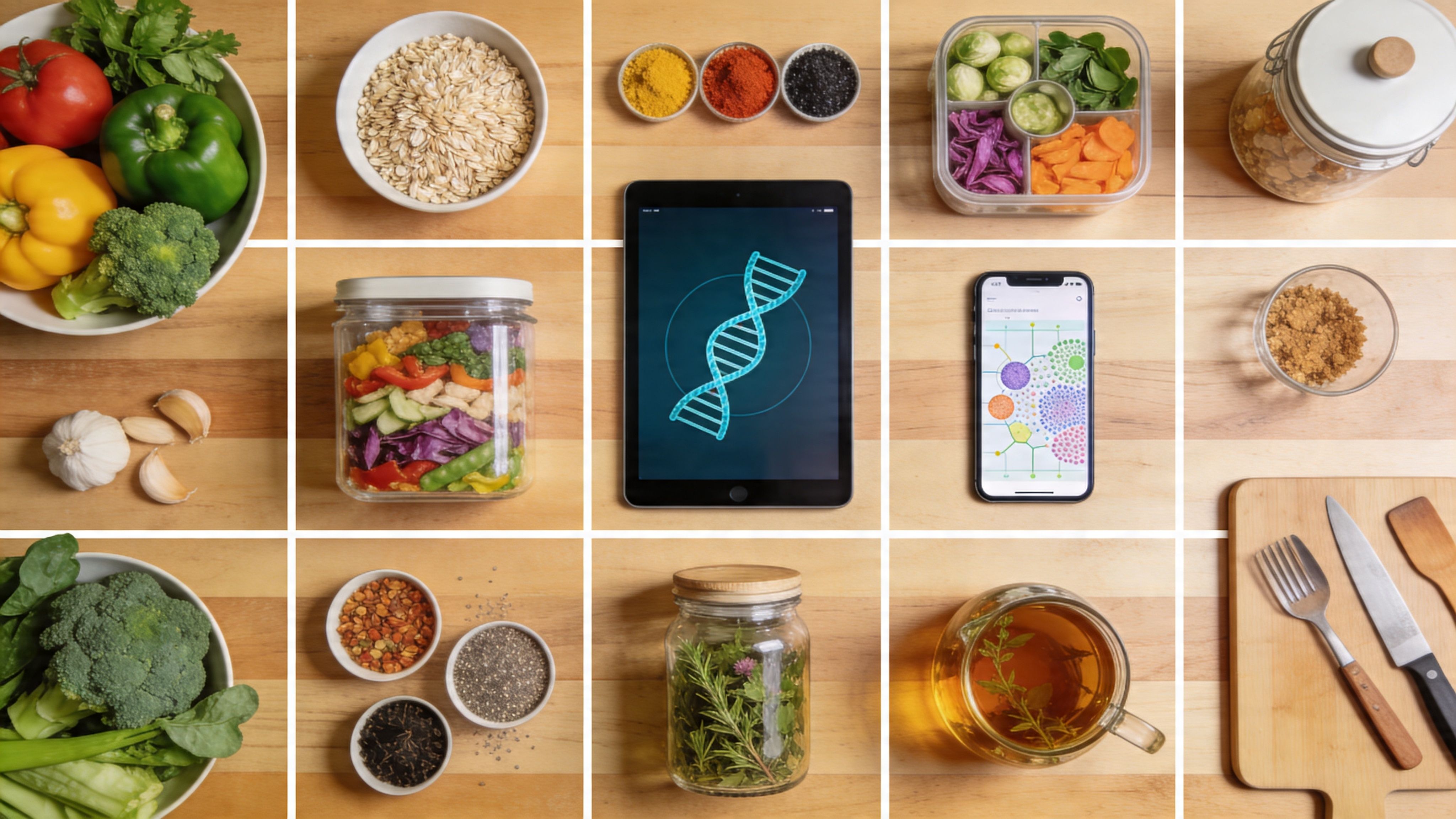
Healthy Kitchen: 10 Ways to Find Your Perfect Diet
You cook fresh food, pay attention to quality ingredients, and try healthy recipes. And yet you may wonder why you do not always feel as fit, full, and balanced as you would expect from a healthy kitchen. This is exactly where the gap in conventional nutritional thinking lies. Healthy does not automatically mean right for you.
What works wonderfully for your friend may make you tired. What looks balanced on paper may trigger cravings, bloating, or an energy slump in you. Your daily routine, digestion, metabolism, and even your genetic predispositions influence how well a dish actually suits you.
The desire to eat healthily has long been there. According to Mintel, 66% of Germans actively try to eat or drink healthily. However, there is often a gap between wanting to do so and putting it into practice. Many people want to cook more healthily, but in everyday life they end up choosing solutions that are practical but not necessarily optimal for their own bodies.
A modern healthy kitchen therefore begins not only at the supermarket or in the cookbook, but with you. When you understand how your body responds to carbohydrates, fats, fiber, or certain foods, cooking becomes easier. You have to guess less and can make more targeted decisions.
That is exactly what this is about. You will get 10 specific ways to personalize your kitchen step by step. With simple meal ideas, practical cooking principles, and a focus on how DNA, the microbiome, and nutrient status can turn abstract health data into real, delicious cooking practices.
1. Personalized protein-optimized bowls based on DNA metabolic type
Bowls are ideal for healthy cooking because you can easily customize them. What matters is not the attractive appearance, but the balance of protein, carbohydrates, and fats. Not everyone tolerates this combination equally well.
If you are genetically more sensitive to high amounts of carbohydrates, a bowl with chicken, broccoli, avocado, and a smaller portion of sweet potato may be more suitable than a very grain-heavy version. If your metabolism is more flexible, a bowl with fish, quinoa, leafy greens, and olive oil may suit you better. The same works just as well with plant-based ingredients, such as lentils, tofu, nuts, and roasted vegetables.

How to build your bowl thoughtfully
A good bowl only needs four components: protein for satiety, vegetables for volume, a suitable source of carbohydrates, and a source of fat for flavor and nutrient absorption.
- Protein first: Chicken, fish, eggs, tofu, tempeh, or lentils form the foundation.
- Be generous with vegetables: Broccoli, leafy greens, bell peppers, cucumber, or roasted vegetables provide fiber and color.
- Choose carbohydrates mindfully: Adjust quinoa, rice, potatoes, or sweet potatoes to suit your needs.
- Add healthy fats: Avocado, olive oil, tahini, or nuts make the meal more satisfying.
Practical rule: If you get hungry again soon after a meal, it is often because you are missing protein or volume from vegetables. Not necessarily discipline.
With a mybody® DNA metabolism test, you get a better basis for deciding how to distribute your macronutrients in the kitchen. This is especially helpful if you have already tried many different diets and still feel like you have never truly found what works for you.
2. Microbiome-friendly anti-inflammatory recipes with prebiotics and probiotics
Your gut does not like extremes. A healthy cuisine that supports the microbiome usually focuses on variety, regularity, and good tolerance. It may sound unremarkable, but in everyday life it can have a significant impact on well-being, digestion, and eating habits.
A simple example is a breakfast of overnight oats with yogurt, apple, and flaxseed. Or, for lunch, a bowl with roasted vegetables, some kimchi, and a source of protein. Sourdough bread with herb quark and fermented vegetables can also be a good starting point if you have rarely eaten fermented foods before.

What your gut really likes on your plate
Prebiotic foods feed beneficial gut bacteria. These include oats, onions, leeks, garlic, apples, and legumes. Probiotic foods provide live microorganisms, such as yogurt, kefir, sauerkraut, and kimchi.
The order matters. If you suddenly increase your fiber intake significantly, your gut may initially react with bloating or pressure. A gentle, gradual approach is better.
Fermented foods are not a competition. Small amounts eaten regularly are often more practical for everyday life than large portions that leave you feeling bloated.
If you want to delve deeper, the overview of probiotics and prebiotics at mybody® can help you connect practical kitchen knowledge with gut health insights. This turns the abstract concept of the microbiome into a very concrete meal plan.
3. Nutrient-Optimized Smoothies Based on Deficiency Tests
Smoothies are not mandatory. But they are a practical tool if you want to incorporate certain nutrients more intentionally into your everyday routine. Especially when you have little appetite in the morning, are often on the go, or otherwise don’t eat enough vegetables.
An iron-focused smoothie could contain spinach, beetroot, orange, apple, and some almond butter, for example. For a more relaxing evening smoothie, banana, cocoa, leafy greens, and a nut or seed component work well. A savory green blend with avocado, herbs, and cucumber can also be a good option if you prefer less sweetness.
Smart combinations instead of colorful guesswork
A good smoothie is not a way to use up leftovers. It works best when you combine ingredients intentionally. Fat-soluble vitamins need some fat, iron-rich ingredients often benefit from vitamin C-rich components, and too much raw food at once can overwhelm sensitive stomachs.
- For an iron focus: Combine green ingredients with some citrus fruit.
- For satiety: Add nut butter, seeds, or yogurt.
- For better tolerance: Start with smaller portions and fewer ingredients.
- For everyday practicality: Prepare freezer packs so that all you have to do in the morning is blend them.
The historical development in Germany shows how much eating habits have changed. According to Statista’s data on nutrition in Germany in 1900 and 2021, overall fruit and vegetable consumption rose from around 50 kg to 150 kg per person, while the consumption of oils, fats, and meat also increased significantly. In practical terms, this means that more plants on your plate make sense, but quality and composition remain crucial.
If you don’t want to guess whether you should focus more on magnesium, iron, or other nutrients, a nutrient deficiency test from mybody® can serve as a basis for more suitable smoothie recipes.
4. Hormone-Balanced Recipes for Men and Women
Hormones are not a niche topic relevant only to certain stages of life. They influence your hunger, energy, sleep, and often your eating habits as well. That’s why a healthy kitchen sometimes feels perfect on some days and not at all on others.
Women’s nutritional needs can change throughout the menstrual cycle. During phases of increased appetite and a stronger desire for satiety, warm, nourishing dishes such as lentil curry with sweet potato, broccoli and nut pasta, or roasted vegetables with egg and tahini are often helpful. Many men benefit during periods of high stress from simple, protein-rich dishes with plenty of vegetables and complex carbohydrates, rather than eating too little during the day and making up for it all in the evening.
Cooking for hormonal balance without complicated rules
Hormonal balance in the kitchen usually does not mean buying exotic superfoods. It is more about consistency. Regular meals, enough protein, sufficient energy, and a good sleep routine are often the basics on which everything else is built.
The mybody® guide to hormonal balance can help you better identify typical patterns. This turns a vague sense of restlessness or exhaustion into a clearer view of possible adjustments in everyday life.
Many people look for the problem in a single food. Often, it is more related to a pattern of stress, lack of sleep, long gaps between meals, and too little substance on the plate.
5. Allergy- and intolerance-safe elimination recipes
Do you sometimes feel that even an otherwise healthy meal throws your digestion, skin, or energy off balance? Then you do not need more complicated recipes, but greater clarity. That is exactly what a well-planned elimination diet can provide.
The basic idea is simple. For a limited time, you reduce the number of possible triggers, observe your reaction, and then gradually reintroduce foods. It works like a fresh start with a tidy workspace. The fewer things on your plate at the same time, the easier it is to recognize later what agrees with you and what does not.
Basic dishes that are filling and leave little room for interpretation are particularly helpful during this phase. Suitable options include rice with steamed zucchini and chicken, a quinoa skillet with carrots and a well-tolerated protein source, or a mild soup made with pumpkin, sweet potato, or carrots. Such dishes may seem unremarkable. But for personalized healthy cooking, they are often the cleanest starting point because they first establish a reliable foundation.
Fewer variables, better decisions
Many people make the same mistake during elimination phases. They eliminate gluten, dairy, legumes, nuts, and spices all at once, yet still do not know what caused the symptoms in the end. A calm, structured approach makes more sense.
- Start with just a few ingredients per meal: This makes it easier to identify reactions.
- Keep recipes similar for several days: Repetition provides more insight here than variety.
- Record symptoms specifically: The time, intensity, and possible triggers are more helpful than a vague gut feeling.
- Test reintroductions one at a time: Introduce one new food after another. Otherwise, the signals will become mixed up.
If you are still unsure which food groups to examine first, a targeted allergy and intolerance test from mybody® can provide you with a structured starting point. It does not replace careful observation in your kitchen. However, it can help you turn nonspecific symptoms into a clear plan and later build your own system of well-tolerated recipes.
6. Anti-Aging and Longevity Recipes with Bioactive Plant Compounds
Longevity in the kitchen can quickly sound like laboratory-style self-optimization. In everyday life, it is much simpler. A healthy kitchen focused on healthy aging primarily relies on regular, plant-rich meals with as few highly processed ingredients as possible.
Dishes such as a salad with beetroot, herbs, and nuts, a berry bowl with plain yogurt and seeds, or salmon with broccoli and good olive oil fit very well here. A cup of green tea or a spice blend with turmeric, ginger, and herbs can also become part of this routine. Not spectacular, but solid.
The Longevity Concept in Real-World Cooking
Although eating habits in Germany have modernized, overall quality improved little according to the BZfE’s report on the development of eating habits from the past to the present, based on the Alternative Healthy Eating Index from 1990 to 2018. That is precisely why it is worth focusing on habits rather than trends. More plants, better fats, less highly processed food, and a kitchen routine you can actually maintain.
It also fits the picture that Germans today eat significantly less bread and potatoes than they used to, but more meat, fats, and citrus fruits. This shift does not automatically indicate a better diet. Above all, it shows how important conscious choices have become.
Healthy aging rarely begins with a miracle cure. It often starts with five or six dishes that you cook regularly and that genuinely benefit your body.
7. Metabolism-Boosting Recipes for More Sustainable Weight Loss
Many people cook “light” and then wonder why they are constantly hungry. For weight management, this is a classic trap. A healthy metabolism-friendly kitchen does not require eating as little as possible, but rather following the right structure.
A good example is a spicy chili with beans and an additional protein source. Or oatmeal with cinnamon, seeds, and protein in the morning instead of just coffee followed by cravings later. A quick stir-fry with chicken, vegetables, and a modest but appropriate portion of carbohydrates is also often much more helpful than a salad that is too small.
Satiety is part of the strategy
Weight-loss dishes should keep you satisfied for longer. This is usually achieved through protein, fiber, volume, and preparation methods that taste good. Spices, herbs, and roasted flavors help ensure that “healthy” doesn’t taste like deprivation.
When looking at nutrition trends, it is interesting that meat consumption in Germany fell by 14% between 2018 and 2023 to 51.6 kg per person per year, according to the German Environment Agency’s nutrition and market data. This creates more room in healthy cooking for creative protein sources such as legumes, fish, eggs, tofu, or combinations of plant-based and animal-based foods.
If you often feel that “eating less” doesn’t work for you, it may be worth looking at your metabolic type. This can make losing weight more predictable and less frustrating.
8. Performance and recovery recipes for athletes and fitness enthusiasts
Around training, it’s not just what you eat that matters, but also when you eat it and how well it suits your exertion. Those who train regularly often need more precision in the kitchen rather than more discipline. Otherwise, you may lack energy during training or your recovery may stall.
Before training, something simple may be enough, such as a banana with nut butter or a light porridge. After training, many people are well nourished with a combination of protein, vegetables, and well-tolerated carbohydrates, such as chicken with rice and broccoli or tofu with potatoes and vegetables. On stressful days, a recovery smoothie can be useful when a solid meal isn’t practical.
Training success also happens between workouts
Performance doesn’t grow only in the gym or while running. It also grows when you consume enough energy, recover effectively, and don’t overlook deficiencies. Those who always want to eat “clean” but eat too little often end up holding themselves back.
- Before exertion: Choose easily digestible energy.
- After exertion: Choose a balanced combination of protein and suitable carbohydrates.
- On rest days: Do not simply eat less without a plan; adjust your intake accordingly.
- When you are tired: Check whether sleep, nutrients, or insufficient overall energy are the underlying problem.
Personalized nutrition can be particularly interesting for active people because small everyday adjustments often have a noticeable effect right away.
9. Anti-inflammatory recipes rich in omega-3 and polyphenols
You do not always notice inflammation immediately. Many people experience indirect signs instead, such as slow recovery, diffuse fatigue, or the feeling of never really getting going. A lower-inflammation healthy kitchen therefore often relies on recurring ingredients that help stabilize everyday life.
Very practical options include lentil stews with herbs and ginger, salads with oily fish and nuts, or chia pudding with berries. A simple tray-baked dish made with vegetables, olive oil, and a suitable source of protein can also have exactly this effect without being complicated.
Small kitchen decisions with a big impact
What often matters is not a single superfood, but the overall pattern. More berries, herbs, vegetables, nuts, seeds, and healthy fats. Fewer highly processed products and less constant snacking on the side.
The broader body of evidence makes it clear why this matters. According to the BZfE, an unbalanced diet causes about one quarter of preventable deaths worldwide. Factors mentioned include high consumption of sugary drinks, salt, and red and processed meat. In your kitchen, this translates into simple questions: What appears on your plate more often, and what less often?
You do not have to perfect every dish to be anti-inflammatory. It is enough if your week is generally heading in that direction.
10. Integrated personalized meal-prep programs based on combined test results
The biggest lever in healthy cooking is often not the individual recipe, but your system. When you consider DNA, the microbiome, nutrient status, and personal tolerances together, meal planning becomes much more efficient. You are then not simply cooking “healthily,” but cooking in a way that suits you.
A typical weekly plan might look like this: two prepared lunch bowls, one soup for sensitive days, fermented side dishes in small portions, a protein-rich evening meal, and one or two simple standard breakfasts. For women, alternating between lighter and more filling dishes based on the menstrual cycle may also be useful. For active people, a different carbohydrate distribution on training and rest days is often worthwhile.
How to make meal prep truly personal
Meal prep often fails not because of the cooking, but because of unrealistic plans. If your weekly plan only works perfectly as long as nothing comes up, it is too fragile. Flexible building blocks work better.
- Prepare the basics: Cook proteins, vegetables, and side dishes separately in advance.
- Consider tolerance: Use ingredients that your gut and daily routine can genuinely handle.
- Build in goals: Weight, energy, digestion, or performance can guide your choices.
- Adjust regularly: What benefits you today can change with stress, training, or your stage of life.
Looking at the development of diet quality shows how necessary an individualized approach is. According to Mintel, 74% of respondents consider healthy eating important, but only 43% say they implement it well or very well in everyday life. This is exactly where a personal kitchen system helps more than yet another motivational tip.
10-point comparison: Healthy cuisine
| Offering | Complexity (🔄) | Resource requirements (⚡) | Expected results (📊⭐) | Ideal use cases (💡) | Main benefits (⭐) |
|---|---|---|---|---|---|
| Personalized protein-optimized bowls (DNA metabolism type) | Moderate to high: DNA test + recipe customization | Moderate: testing costs, fresh proteins, meal prep time | Improved satiety, optimized weight management, metabolic efficiency | Weight management, muscle building, personalized diet plans | Scientifically grounded; higher adherence; less trial and error |
| Microbiome-friendly anti-inflammatory recipes | Moderate: microbiome test recommended, fermentation required | Moderate: fiber-rich & fermented ingredients, time for fermentation | Improved gut barrier, reduced inflammatory markers, improved nutrient absorption | Digestive issues, immune support, chronic inflammation | Supports healthy microbiota; reduces symptoms |
| Nutrient-optimized smoothies (deficiency tests) | Low to moderate: nutrient test + recipe formula | Low: blender, fresh produce, and possibly powders/supplements | Rapid improvement in deficiencies; measurable through follow-up tests | Acute deficiency correction, energy and cognitive boost | Quick to implement; targeted nutrient intake |
| Hormone-balanced recipes (men & women) | Moderate to high: hormone tests, cycle-based planning | Moderate: specialized ingredients, tracking tools, longer adjustment period | Improved mood, sleep, and libido; changes in 4–12 weeks | PMS/cyclical symptoms, hormone-related fatigue, men with testosterone problems | Sex- and phase-specific; systemic effects |
| Allergy-/intolerance-safe elimination recipes | Moderate: elimination protocol + reintroduction | Moderate–high: substitute products, careful planning | Reduction of inflammation, skin and digestive symptoms | Confirmed allergies, suspected intolerances | Better symptom control; clarity about triggers |
| Anti-Aging & Longevity Recipes (Bioactive Compounds) | Moderate: targeted ingredient selection, biomarker monitoring recommended | Moderate–high: expensive bioactive ingredients, regular testing | Long-term improvement of longevity biomarkers, skin & cognition | Longevity optimizers, biohackers, prevention-oriented individuals | Targeted biomarker improvement; evidence-based |
| Metabolism-Boosting Recipes (Faster Weight Loss) | Moderate: DNA test recommended, training integration required | Moderate: protein-rich ingredients, thermogenic spices, potentially supplements | Increased energy expenditure, reduced feelings of hunger, faster weight-loss results | Weight loss while preserving muscle mass, metabolic reset | Quickly visible effects; appetite-suppressing; customizable |
| Performance & Recovery Recipes (Athletes) | High: timing, macronutrient periodization & testing | High: specialized ingredients, supplements, precise timing | Improved performance, faster recovery, increased muscle growth | Competition preparation, intensive training, athletes | Measurable performance improvement; reduced recovery time |
| Inflammation-reducing omega-3 & polyphenol recipes | Low–moderate: simple principles, consistent intake required | Moderate: fatty fish, nuts, berries, potentially expensive ingredients | Reduction of systemic inflammation markers, cardiovascular benefits | Prevention, chronic inflammation, heart health | Evidence-based inflammation reduction; broadly applicable |
| Integrated personalized meal-prep programs (combined tests) | High: integration of multiple test results and personalization | High: data analysis, time investment, individualized ingredients/service | High adherence, measurable biomarker improvement, practical for everyday life | Busy people, multiple goals/restrictions, clinical programs | Operationalizes testing; saves time; reduces food waste |
Your Personal Cookbook The Next Step in Your Kitchen
Do you wonder why healthy cooking often remains complicated despite good intentions?
The reason is usually simple. You’re not cooking for an average body, but for your own. This is exactly where the difference begins between general nutrition advice and a kitchen that truly suits you.
Many people collect knowledge about protein, fiber, sugar, or inflammation. In everyday life, however, this knowledge only helps when you can use it like clear cooking instructions. DNA, microbiome, nutrient status, and tolerances are not abstract laboratory topics for this purpose. They are more like four different maps. Each shows you a different part of your body. Only together do they reveal which ingredients are good for you, which meals sustain you for a long time, and which recipes you should adapt.
That is why more nutrition knowledge alone is often not enough. You need translation—onto your plate, into your shopping, and into your weekly routine.
If you want to use health data meaningfully, three simple questions can help. What do I tolerate well? What reliably keeps me full? What can I realistically cook several times a week? These three questions may seem simple, but they bring remarkable clarity. They bring complex laboratory findings from the lab to the pan. A microbiome finding might, for example, become a breakfast with more prebiotic ingredients. A nutrient deficiency test might become a smoothie that not only sounds good but is specifically suited to your needs.
That is precisely where the special value of a radically personalized approach to nutrition lies. You no longer cook based on guesswork or the next trend; instead, you gradually develop your own system. Perhaps your DNA suggests that you respond better to certain macronutrient distributions. Perhaps your gut responds better to selected fermented foods. Perhaps you need to focus more on iron, omega-3, or vitamin D. These signals do not create a rigid diet program, but your personal recipe book.
The practical benefit is easy to understand. General recipes say: Eat more vegetables, pay attention to protein, and avoid triggers. Personalized kitchen practice goes one step further. It tells you which vegetables you can incorporate particularly well, which protein sources fit your everyday life, which spices, fats, or cooking methods make sense for you, and how to turn them into dishes you will enjoy cooking again.
This is how healthy eating becomes a repeatable habit—and your kitchen becomes a place where scientific self-tests do not end with numbers, but with delicious, practical meals that suit your body.
If you want to take this path, a provider that presents DNA, microbiome, nutrient, hormone, and intolerance data in an understandable way can make implementation much easier. An approach that directly turns the results into concrete cooking ideas and a personalized recipe book is especially helpful. That is when analysis becomes real kitchen practice.



Share now:
Eat healthier: Your path to a personalized nutrition plan
Metabolic syndrome: causes, diagnosis, and solutions