

Understanding blood values correctly – gaining more vitality
Around 90 percent of diseases can be detected early based on altered blood values. Those living in Germany, Austria, or Switzerland who value an active lifestyle know that the right blood parameters provide crucial information for nutrition and vitality. This overview shows how targeted analysis enables you to identify health risks and use personalized nutrition recommendations for more energy.
Table of contents
- Blood values and their importance for health
- Important blood parameters and their functions
- How a modern blood test works at home
- Common mistakes when interpreting blood values
- Optimize your nutrition and vitality with blood values
Key findings
| Point | Details |
|---|---|
| Blood tests are essential for assessing health | They provide precise information about bodily functions and reveal risks at an early stage. |
| Regular analyses and documentation are advisable | An annual examination and a health journal make it possible to identify changes. |
| Interpretation requires professional expertise | Laypeople should seek professional analysis to avoid misinterpretation. |
| Personalized nutrition based on blood values | Individual blood analyses help identify nutrient deficiencies and make targeted adjustments. |
Blood values and their importance for health
Blood values are a key to understanding your health. They provide precise information about various bodily functions and can reveal potential health risks at an early stage. An analysis of your blood values enables a comprehensive assessment of your physical condition, from immune defenses to metabolism.
The most important blood values provide information about various areas of health. Important blood values such as hemoglobin, leukocytes, and thrombocytes play a central role in your vitality. They indicate oxygen supply, immune function, and blood-clotting ability. Deviations may indicate anemia, infections, or inflammation that would otherwise go unnoticed without a diagnosis.
A comprehensive blood test covers other important aspects of health. Blood lipid levels such as LDL and HDL affect cardiovascular risk, while the CRP level measures inflammatory processes in the body. Liver, kidney, and thyroid values also provide information about the functioning of these vital organs.
Pro tip: Have your blood values tested at least once a year and keep a health journal to identify changes at an early stage.
Important blood parameters and their functions
Your blood values are like a complex communication system that gives you detailed insights into your health. Important blood parameters such as erythrocytes, leukocytes, and hemoglobin play a crucial role in your vitality and performance. Each of these parameters fulfills specific functions that together provide a comprehensive picture of your health.

The key blood parameters can be divided into different categories. Cell-based parameters such as erythrocytes transport oxygen throughout your body, while leukocytes act as guardians of your immune system. Platelets perform the important function of blood clotting and prevent excessive blood loss when you are injured. Proteins, enzymes, and minerals are also measured in the blood plasma, providing information about various organ functions.
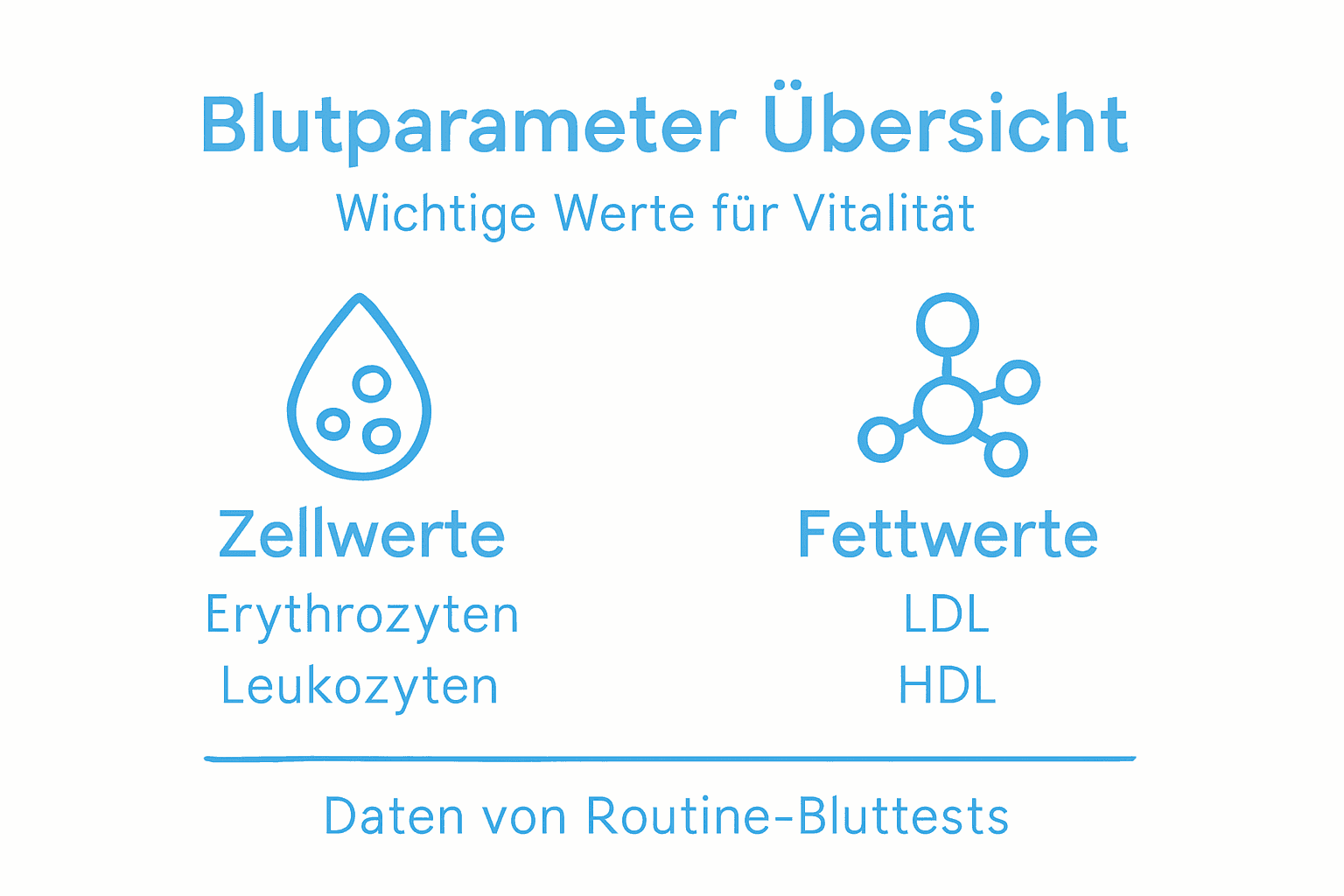
Other important blood parameters include blood lipids such as LDL and HDL, which influence cardiovascular risk, as well as inflammation markers such as CRP. Blood glucose and liver values provide insight into your metabolism and the functioning of important organs. Interpreting these parameters helps doctors identify potential health risks at an early stage and develop targeted preventive measures.
The following table provides a quick overview of key blood values, their main functions, and common causes of abnormalities:
| Blood value | Function in the body | Possible causes of abnormalities |
|---|---|---|
| Hemoglobin | Oxygen transport | Anemia, blood loss, iron deficiency |
| Leukocytes | Immune defense | Infections, stress, inflammation |
| Platelets | Blood clotting | Clotting disorder, splenomegaly |
| LDL cholesterol | Lipid transport, risk | Poor nutrition, genetic factors |
| CRP | Inflammation marker | Acute/chronic inflammation |
Pro tip: Have your blood values comprehensively analyzed and documented regularly by a medical specialist so that changes can be tracked precisely.
How a modern blood test works at home
Modern at-home blood tests make health diagnostics considerably easier and enable convenient analysis of your blood values directly from the comfort of your own home. The process is extremely simple and can be completed in just a few steps: You order a specially developed test kit containing all the necessary materials for professional blood sample collection.
The main component of the test kit is a dried blood spot method, in which you take a small blood sample from your fingertip. This process is virtually painless and comes with precise instructions. After collecting the sample, you dry the drops of blood on a special test card and send it in a prepaid envelope to a certified laboratory. Modern laboratories comprehensively analyze your sample and examine various health parameters such as vitamins, minerals, fatty acids, and complex blood cell structures.
After the laboratory analysis, you will receive your results digitally in a clear format. The evaluation is carried out by medical experts who provide you not only with the measured values but also with specific recommendations for action. These may include dietary advice, supplement recommendations, or lifestyle adjustments to help you optimize your health in a targeted way. The digital documentation also makes it easy to track your health progress.
Here you will find a comparison of traditional and modern blood testing methods:
| Method | Procedure | Result delivery | Benefits |
|---|---|---|---|
| Doctor's office/clinic | On-site blood draw | In person/on site | Direct consultation, immediate analyses |
| Home test (dried blood) | Self-collection at home | Digital report | Convenient, time-saving, flexible |
Pro tip: Drink enough water before your blood test and avoid large meals to achieve more accurate test results.
Common mistakes when interpreting blood values
Interpreting laboratory values is a complex matter that requires more expertise than just a superficial glance at numbers. A common mistake is to consider individual blood values in isolation without taking the broader health context into account. Every blood value interacts with other parameters and can be influenced by various factors such as diet, time of day, stress, or medication.
The fluctuations in blood values make simplified interpretation particularly dangerous. People tend to panic easily when a single value falls outside the reference range. In fact, fluctuations can be completely normal and do not necessarily indicate an illness. A holistic view is important: How do the values relate to one another? Are there changes compared with previous measurements? Which individual circumstances could be influencing the results?
Another critical mistake is self-diagnosis without professional support. Medical laboratory results require professional interpretation by experts with experience and specialized knowledge. They can recognize nuances that may be hidden from a layperson. In addition, factors such as age, sex, lifestyle, and individual health history play a crucial role in correctly evaluating blood values.
Pro tip: Always have your blood values interpreted by a doctor or medical expert, and keep a personal health journal to document changes over the long term.
Optimize your nutrition and vitality with blood values
Personal blood analyses are the key to targeted dietary optimization. They provide precise insights into your individual metabolism and reveal nutrient deficiencies that can affect your vitality. Everyone has unique needs, and a blanket dietary recommendation often falls short.
Analyzing your blood values enables a tailored nutrition strategy. Important parameters such as vitamins, minerals, hormones, and fatty acids provide insight into which nutrients you should specifically supplement. Certain foods can compensate for deficiencies and reduce inflammatory processes in the body. For example, an iron deficiency can be addressed with iron-rich foods such as green leafy vegetables or lean meat.
In addition to diet, other factors play a crucial role in optimizing your vitality. Regular exercise, sufficient sleep, and stress management complement a targeted nutrition strategy. Interpreting blood values requires expertise, so consulting nutrition experts or doctors is essential. They can help you understand the complex relationships and develop an individualized strategy for optimizing your health.
Pro tip: Document your blood values and dietary adjustments in a health journal so you can track your progress over the long term.
More vitality through targeted blood value analysis with mybody®x
Understanding your blood values correctly is the key to actively managing your health and gaining more vitality. Important signs of nutrient deficiencies or hormonal imbalances often go undetected. When you know and understand your individual blood values precisely, you can take targeted action and optimally adjust your diet and lifestyle. With targeted tests such as at-home hormone tests or at-home intolerance tests, mybody®x offers you modern solutions for conveniently analyzing your health from home.
Take this opportunity now to have your blood values evaluated professionally and based on scientific evidence. Discover with mybody®x at https://mybody-x.com how you can sustainably improve your well-being through personalized recommendations. Don't wait any longer and start your journey toward more energy and quality of life today with mybody®x's innovative health analyses.
Frequently asked questions
What are the most important blood values I should know?
The most important blood values include hemoglobin, leukocytes, and platelets, which are responsible for oxygen transport, immune defense, and blood clotting.
How often should I have my blood values tested?
It is recommended to have your blood values tested at least once a year to detect changes and potential health risks at an early stage.
How can I conveniently test my blood values at home?
Modern at-home blood tests allow you to collect a small blood sample yourself and send it to a certified laboratory for analysis. It is a simple and painless process.
Why should I leave the interpretation of my blood values to a specialist?
Interpreting blood values requires medical expertise, as values interact with one another and individual circumstances must be taken into account. A specialist can assess the results precisely and provide an accurate diagnosis.
Recommendation
- Understand the VO2max value table and improve strategically – mybody®x
- Losing weight without giving up really works: How to find your balance – mybody®x
- What is examined in a complete blood count? Everything at a glance – mybody®x
- What is normal blood pressure? Your comprehensive guide – mybody®x
- Activate Your Inner Power - RestartiX Summit 2024



Share now:
Hormone test for menopause: Your guide to greater clarity
Blood Test Guide at Home: Step-by-Step Instructions for Optimal Evaluation