

What is weight management? Paths to better health
Constant calorie counting often fails to deliver the desired breakthrough when the body falls back on established patterns and appetite suddenly increases. Many people in Germany, Austria, and Switzerland are looking for sustainable solutions that go beyond simple diets. Anyone who truly wants to combine weight control with health needs an understanding of hormones, metabolism, and personalized nutrition strategies based on modern scientific findings.
Table of contents
- Understanding the fundamentals of weight management
- Scientific Methods and Approaches 2026
- Personalization: genetics, metabolism, and microbiome
- Behavior, Motivation, and Everyday Integration
- Risks, sources of error, and safe implementation
Key findings
| Point | Details |
|---|---|
| Holistic approach | Weight management requires considering physiological and psychological factors, not just calorie intake. |
| Personalized strategies | Individual genetic and metabolic differences should be incorporated into weight management. |
| The importance of behavior | Psychological support and realistic goals are crucial for long-term success. |
| Minimizing risks | Expert guidance helps avoid potential pitfalls and risks in weight management. |
Understanding the fundamentals of weight management
Weight management is more than simple calorie counting. It is a holistic approach to optimizing health that takes various physiological and psychological factors into account. Weight control means actively and consciously developing strategies that positively influence individual metabolism and body composition.
Science shows that weight management involves complex biological processes. Physiological mechanisms of weight control illustrate how our brain integrates signals about energy intake and expenditure. Important hormones play a crucial role in this process:
- Leptin: Regulates hunger and satiety
- Insulin: Regulates blood sugar levels and fat storage
- GLP-1: Influences appetite and digestion
The challenge of weight management lies not only in reducing calories, but in gaining a comprehensive understanding of individual bodily processes. Factors such as stress, sleep quality, and hormonal balance have a major impact on our metabolism.
Pro tip: Create a personal health journal to document and analyze your diet, physical activity, and well-being holistically.
Scientific Methods and Approaches 2026
The approach to weight management has evolved rapidly in recent years. Modern scientific methods go far beyond traditional dieting approaches and focus on a holistic and personalized approach. Current guidelines for obesity treatment present a comprehensive treatment approach that combines various intervention strategies.
The most important scientific methods include:
- Nutritional therapy concepts
- Behavioral therapy measures
- Pharmacological treatment options
- Surgical interventions for severe obesity
A particular focus is placed on personalizing therapy. Modern approaches take individual genetic factors, metabolic processes, and personal health histories into account. New medications such as GLP-1 agonists are particularly promising, showing benefits not only for weight loss but also for comorbidities.
The following overview compares various scientific methods of modern weight management and highlights their key areas of application:
| Method | Target group | Main benefit |
|---|---|---|
| Nutritional therapy | General population | Improving eating habits |
| Behavioral therapy | People with motivational challenges | Support with behavior change |
| Pharmacological therapies | Patients with comorbidities | Effective weight loss for obesity |
| Surgical interventions | People with severe obesity | Long-term weight stabilization |
Digital health programs are becoming increasingly important. They enable close monitoring and support during weight management processes, based on real-time data and individual progress.
Pro tip: Consult specialists who take a holistic, science-based approach to weight loss and consider your individual needs.
Personalization: genetics, metabolism, and microbiome
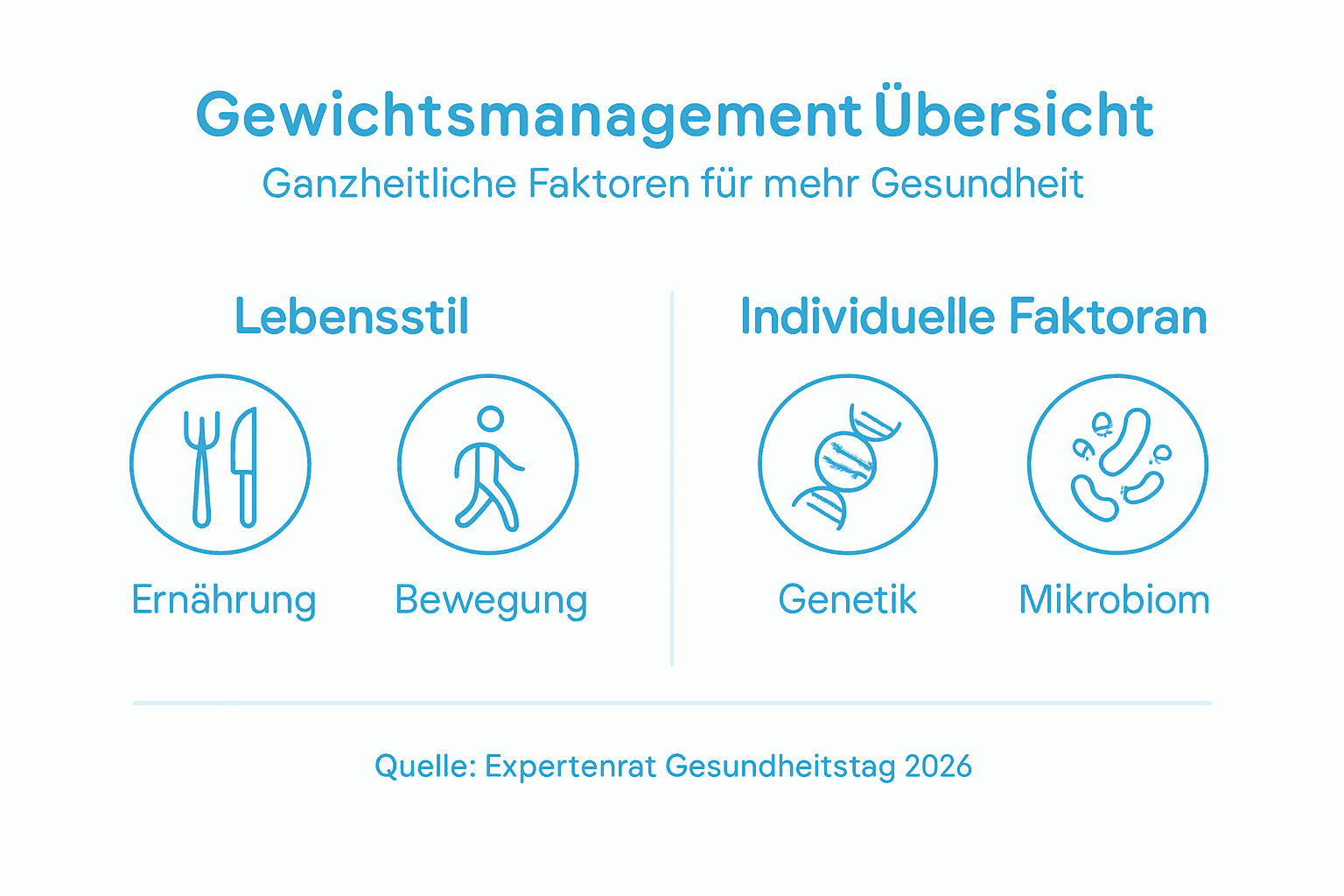
The key to modern weight management lies in holistic personalization. Personalized nutrition strategies now use cutting-edge analytical methods that precisely account for individual biological factors.
The three central dimensions of personalization include:
- Genetics: Analysis of individual genetic variations
- Metabolism: Examination of metabolic characteristics
- Microbiome: Analysis of the individual's gut microbiota composition
Modern technologies such as artificial intelligence and multi-omics approaches make it possible to generate highly precise nutrition recommendations. These take into account not only genetic predispositions, but also lifestyle, metabolic characteristics, and microbial composition.

The following comparison table shows how genetic factors, metabolism, and the microbiome can influence individual recommendations for weight management:
| Dimension | Impact on Therapy | Typical Analysis Methods |
|---|---|---|
| Genetics | Selection of Suitable Dietary Patterns | Genome Sequencing |
| Metabolism | Calorie Requirement Adjustment | Blood and Hormone Analyses |
| Microbiome | Personalized Food Selection | Microbiome Profiling |
The benefits of this individualized approach are impressive: improved weight control, optimized nutrient absorption, and targeted health management become possible.
Pro tip: Have a comprehensive health check carried out that analyzes your genetic and metabolic characteristics in detail.
Behavior, Motivation, and Everyday Integration
Sustainable weight management goes far beyond simple diet plans. Behavior change and motivation strategies are crucial for long-term success and must be approached holistically.
The most important aspects of successful behavior change include:
- Realistic Goal Setting: Define small, achievable milestones
- Psychological Support: Systematically break down mental barriers
- Environmental Design: Create healthy choices in everyday life
- Continuous Motivation: Make progress visible and tangible
Multidisciplinary support can be crucial. Coaches, nutritionists, and psychologists help develop individual strategies that go beyond simply changing your diet. New habits are incorporated into everyday life gradually and patiently.
The key lies in balancing self-acceptance with gentle change. Small daily decisions add up to major successes.
Pro tip: Keep a motivation diary in which you record small daily successes and positive changes.
Risks, sources of error, and safe implementation
Weight management requires a prudent, scientifically sound approach. Strategies for safely implementing weight management programs must be carefully planned and individually tailored.
Common risks and sources of error include:
- Insufficient diagnostics: No holistic health assessment
- Unrealistic expectations: Unrealistic weight goals
- Lack of sustainability: Short-term rather than long-term strategies
- Psychological neglect: Lack of mental support
Especially with pharmacological and surgical interventions, potential side effects and individual risk factors must be carefully weighed. Professional, multidisciplinary support is crucial for a safe and successful process.
The keys to safe implementation lie in continuous monitoring, adjustment, and a holistic understanding of your personal health situation.
Pro tip: Always consult specialists and seek comprehensive medical advice before making major changes to your weight management program.
Discover your individual path to sustainable weight management
Weight management today requires more than general advice. The complex interplay of genetics, metabolism, and the microbiome in particular requires a personal analysis to identify the optimal strategies for your health. Many people struggle with uncertainties such as choosing the right diet, a lack of motivation, or unclear causes of their excess weight. Individual causes and personal needs are the key to lasting success.
With the DNA Metabolism Tests for Your Optimal Nutrition – mybody®x, you can gain an in-depth understanding of your genetic and metabolic characteristics. Complemented by the customized solutions from our Individual Solutions for Overweight | Lose Weight Permanently – mybody®x category, we offer scientifically based support that goes far beyond conventional diets. Visit mybody-x.com now and benefit from innovative health analyses that specifically improve your nutrition, metabolism, and well-being.
Start your journey toward better health and sustainable weight management today. Harness the power of personalization for measurable results and finally feel comfortable in your body.
Frequently Asked Questions
What is weight management?
Weight management refers to a holistic approach to controlling body weight that takes physical, psychological, and social factors into account to optimize long-term health.
What role do hormones play in weight management?
Hormones such as leptin, insulin, and GLP-1 play a crucial role in regulating hunger, satiety, and energy expenditure. Their balance directly influences weight management.
How can I personalize my weight management?
Personalization can be achieved by considering individual genetic factors, metabolic processes, and microbiome composition. Technologies such as genome sequencing and blood analyses can help.
What are effective strategies for sustainable behavior change?
Sustainable behavior changes can be fostered through realistic goal-setting, psychological support, and creating a health-promoting environment. Small, achievable steps are particularly important.
Recommendation
- Healthy Nutrition for Weight Loss – Here's How to Make It Easy – mybody®x
- Weight-Loss Injection Experiences 2025: All the Information, Opinions & Alternatives – mybody®x
- Switching Metabolism to Fat Burning: Here's How – mybody®x
- Losing Weight Through Nutrition: Your Path to Your Feel-Good Weight Begins on T – mybody®x
- Role of Mindfulness in Therapy: Real Impact on Anxiety and Depression - ReviveHealthTherapy



Share now:
Discover the DNA test: Your personal key to health, nutrition & fitness
Online DNA Test 2026: The 7 Best Providers for Your Health Goals