

Weight-loss injection experiences 2025: All the information, opinions & alternatives
You hear about the “miracle injection” for weight loss everywhere and wonder what is really behind it? On social media and in numerous reports, medications such as Wegovy or Ozempic are celebrated as a revolution in the fight against excess weight. But what are real weight-loss injection experiences like beyond the hype? This article offers you a comprehensive and honest insight.
We analyze in detail how these medications work, their potential results, as well as the significant risks, side effects, and costs associated with them. You will learn firsthand what results users achieve, as well as the challenges they face.
But we take this a decisive step further. We contrast these experiences with a personalized and sustainable alternative: genetic analysis. What if the answer to your weight-loss goals lies not in an injection but hidden in your own DNA? We show you how DNA analysis can help you truly understand your metabolism and tailor your path to a comfortable weight—without medication or the yo-yo effect.
Are you ready for an unvarnished comparison to help you make the right decision for you? Find out whether the weight-loss injection is the right path for you or whether a gene-based approach offers a healthier solution in the long term.
1. Wegovy (semaglutide): A successful, long-term weight-loss journey
Wegovy, whose active ingredient is semaglutide, has quickly become one of the best-known options in the field of medication-assisted weight loss. It belongs to the class of GLP-1 receptor agonists, which were originally developed to treat type 2 diabetes. The treatment aims to reduce hunger and increase feelings of fullness, helping many people significantly lower their calorie intake and thus lose weight.
How does Wegovy work, and who is it suitable for?
Weight-loss injection experiences with Wegovy are based on mimicking the body's own GLP-1 hormone. This hormone is released in the intestines after eating and signals satiety to the brain. At the same time, semaglutide slows gastric emptying, making the feeling of fullness last longer. This dual effect makes it an effective tool in the fight against excess weight.
Wegovy is suitable for adults with a body mass index (BMI) of 30 or higher (obesity) or a BMI of 27 or higher (overweight) if at least one weight-related comorbidity, such as high blood pressure or type 2 diabetes, is present. It can only be prescribed by a doctor, who assesses suitability and closely monitors the treatment.
A specific personal account: The journey from a BMI of 35 to 27
A documented case impressively demonstrates Wegovy’s potential. One person started with a BMI of 35 and managed to reduce it to 27 within 18 months. This success resulted from a combination of weekly injections and significant lifestyle changes.
Strategic analysis: The key to success was not the medication alone. Medical supervision and professional nutritional counseling were crucial pillars. The person learned to reinterpret their body’s signals and establish sustainable eating habits that would endure even after potentially ending the therapy.
This personal account highlights that the best results are achieved when the treatment is understood as part of a holistic approach.
The following infographic summarizes the key data from this successful journey.
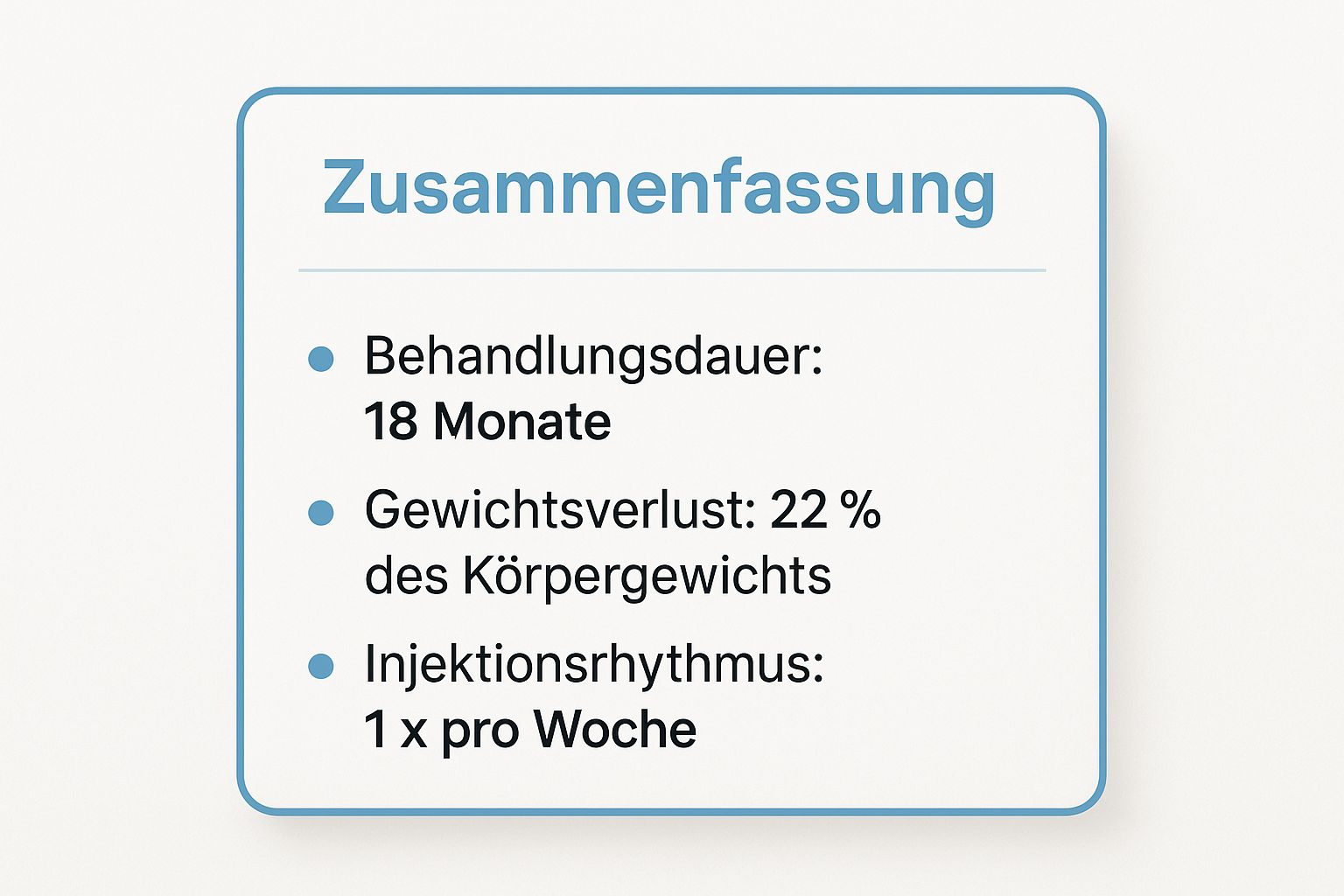
As the graphic illustrates, consistent weekly use over a long period led to impressive and sustained weight loss.
Actionable Takeaways: Practical Tips for Your Journey
If you are considering treatment with Wegovy, these tips can help you get the most out of the therapy and minimize side effects:
- Start slowly: The dose is gradually increased over several weeks. Always begin with the lowest dose to give your body time to adjust.
- Consistency is key: Inject the medication on the same day and at the same time every week to ensure stable levels of the active ingredient.
- Seek professional help: Combine the treatment with nutritional counseling. An expert can help you develop a nutrition plan that suits you.
- Keep a diary: Record what you eat, how you feel, and which side effects (e.g., nausea) occur. This helps you and your doctor optimize the treatment.
- Rotate injection sites: Change the injection site (abdomen, thigh, upper arm) with each application to avoid skin irritation.
While weight loss injection experiences are often positive, it is important to understand that results vary from person to person. A deeper understanding of your own body, for example through genetic analysis, can give you additional insights into why certain diets work better or worse for you. Learn more about the connections between genes and weight loss on mybody-x.com. This personalized approach can be a valuable complement to drug therapy.
2. Ozempic (semaglutide): Unexpected weight loss success during diabetes treatment
Ozempic, which also contains the active ingredient semaglutide, is primarily approved for the treatment of type 2 diabetes. However, many patients report significant weight loss as a positive side effect. Although this “off-label use” for weight loss alone is not the actual indication, the weight loss injection experiences of diabetes patients contributed significantly to the development of Wegovy (a higher dose of semaglutide specifically for obesity).

How does Ozempic work, and who is it suitable for?
Like Wegovy, Ozempic works as a GLP-1 receptor agonist. It improves blood sugar control by stimulating insulin release when blood sugar levels are high, reducing the production of glucagon (a hormone that raises blood sugar), and slowing gastric emptying. This last effect produces a longer-lasting feeling of fullness and reduces appetite, which explains the weight loss.
Ozempic is prescribed by doctors to adults with type 2 diabetes, often in combination with diet and exercise. Using it solely for weight loss without a diabetes diagnosis is off-label use and requires careful medical consideration.
A specific patient report: From diabetes management to a new body image
A typical patient report comes from a patient with type 2 diabetes whose main goal was to lower his HbA1c level (long-term blood sugar). At the beginning, his level was 8.2%, indicating poorly controlled diabetes. After 12 months of consistent Ozempic use, the level fell to 6.8%, representing a significant improvement.
As an unexpected but highly welcome side effect, the patient lost 15 kg during the same period. This success even enabled him to reduce other diabetes medications in consultation with his doctor.
Strategic analysis: The success here was based on a dual effect. Improved blood sugar control stabilized energy metabolism and reduced cravings. At the same time, semaglutide’s appetite-suppressing effect naturally reduced calorie intake without constant hunger. The patient learned to feel satisfied with smaller portions.
This experience shows how treating an underlying condition can lead to comprehensive health improvements that go far beyond the original goal.
Actionable Takeaways: Practical Tips for Your Journey
If you use Ozempic to treat diabetes and want to maximize weight loss, these tips can help:
- Monitor blood sugar closely: Especially at the beginning of treatment, you should measure your blood sugar more frequently to understand how your body is responding.
- Coordinate meals with the injection: Some users find it helpful to plan their meals so that they can make optimal use of the appetite-suppressing effect.
- Stay in regular contact with your doctor: Record your blood sugar levels, weight, and overall well-being. Regular doctor visits are essential for adjusting the medication.
- Embrace changes in appetite: Be prepared for your hunger to decrease significantly. Use this opportunity to choose healthier, smaller meals.
- Take a holistic approach: The injection is a powerful tool, but not a complete solution on its own. A balanced diet and regular exercise remain the foundation of sustainable health.
The weight-loss injection experiences show that the effect can vary greatly from person to person. A deeper understanding of your metabolism, for example through DNA analysis, can provide valuable insights into why your body reacts to certain nutrients or medications in a specific way. This personalized approach can help you tailor your diet and lifestyle more closely to your genetic makeup and thereby optimize your results.
3. Saxenda (Liraglutide) – The experience of gradual weight loss
Saxenda, containing the active ingredient liraglutide, is another established option among GLP-1 receptor agonists and was one of the pioneers in the market for dedicated weight-loss injections. Unlike the weekly injections of Wegovy or Ozempic, Saxenda is administered once daily. This approach enables a constant concentration of the active ingredient in the body, which some users tolerate better and which promotes gradual, steady weight loss.
How does Saxenda work, and who is it suitable for?
The weight-loss injection experiences with Saxenda, as with semaglutide, are based on mimicking the GLP-1 hormone. Liraglutide acts on receptors in the brain that regulate appetite. It enhances the feeling of fullness after meals and reduces hunger, making it easier to control calorie intake and achieve a calorie deficit. Daily use supports a continuous effect throughout the day.
Saxenda is approved for adults with a BMI of 30 or higher (obesity) or a BMI of 27 or higher (overweight) with at least one weight-related comorbidity. The decision to start treatment and its monitoring must always be handled by a doctor, who also gradually adjusts the dose to optimize tolerability.
A specific experience report: 18 kg weight loss in 14 months
A user report documents the successful use of Saxenda over a period of 14 months. During this time, the person gradually lost 18 kilograms. The seamless integration of the daily injection into the morning routine and its combination with an adapted fitness program were crucial. Particularly noteworthy: The reduced weight was maintained for 8 months after discontinuing treatment.
Strategic analysis: The success was based on the discipline of daily use and the conscious decision to use the treatment phase to build lasting habits. Instead of hoping for a quick fix, the treatment was viewed as support for making sustainable changes to diet and exercise. Preparing for plateaus and focusing on non-weight-related successes (e.g., more energy, improved fitness metrics) were psychologically crucial.
This case shows that a daily routine with Saxenda can help develop a strong awareness of your own lifestyle and establish long-term behavioral changes.
Actionable Takeaways: Practical Tips for Your Journey
If you are considering treatment with Saxenda, these practical tips can help you make the most of its potential:
- Establish a daily routine: Set a fixed daily reminder (e.g., in your smartphone calendar) so you don’t forget the injection and can maintain a consistent effect.
- Rotate injection sites systematically: Rotate the injection site (abdomen, thigh, upper arm) according to a fixed schedule to minimize skin irritation.
- Measure success holistically: Don’t track only your weight on the scale, but also other positive changes such as your waist circumference, clothing size, or energy level.
- Prepare mentally for plateaus: Weight plateaus are normal. Use these phases to analyze your diet and training instead of giving up in frustration.
- Build sustainable eating habits: Use your reduced hunger to learn to listen to your body’s signals and establish a balanced diet that you can maintain after treatment.
The positive weight-loss injection experiences are often the result of a comprehensive approach. A deeper understanding of how your body reacts to certain nutrients can provide additional support during the process. Learn more about how healthy weight loss can really work and which individual factors play a role in your journey.
4. Mounjaro (Tirzepatide): Rapid results through a dual mechanism of action
Mounjaro, whose active ingredient is tirzepatide, is one of the latest developments in the field of weight-loss injections and is distinguished by its unique dual mechanism of action. It is a so-called “twincretin” agonist that mimics the effects of both the GLP-1 and GIP hormones. This combination often leads to an even greater reduction in appetite and improved blood sugar control, which in many cases results in particularly rapid and significant weight loss.
How does Mounjaro work, and who is it suitable for?
Weight-loss injection experiences with Mounjaro are often characterized by rapid results, as tirzepatide binds to two receptors in the body. Like GLP-1 agonists, it slows gastric emptying and sends satiety signals to the brain. The additional activation of the GIP receptor can enhance this effect and also positively influence energy metabolism.
Mounjaro is approved for adults with obesity (BMI ≥ 30) or overweight (BMI ≥ 27) and at least one weight-related comorbidity. The decision to start treatment is always made by a doctor after a comprehensive examination to ensure that the medication is suitable for you and that the treatment proceeds safely.
A specific personal account: The journey from a BMI of 38 to 29
An in-depth personal account documents the journey of a person who started with a BMI of 38 and was able to reduce it to 29 within just 10 months. This corresponded to a weight loss of 25 kg. Particularly noteworthy was the reversal of prediabetic markers, underscoring the profound effect on metabolism.
Strategic analysis: The rapid weight loss here was the result of an intensive combination therapy. In addition to the weekly injection, a strictly structured nutrition and exercise plan was followed under medical supervision. The greatest challenge was coping with the rapid physical changes and sometimes significant side effects such as severe nausea.
This report makes clear that rapid results are possible, but require close medical supervision and strong personal motivation to ensure the treatment is successful and healthy.
Actionable Takeaways: Practical Tips for Your Journey
If you are considering treatment with Mounjaro, these tips can help you overcome the challenges of rapid weight loss:
- Strategies for nausea: Have remedies for nausea on hand from the start, such as ginger tea, and eat smaller, more frequent meals to avoid overloading your stomach.
- Focus on protein: Make sure you consume enough protein to support muscle retention during rapid weight loss.
- Monitoring nutrients: Have your doctor check your blood values regularly to help prevent possible nutrient deficiencies that may occur with a greatly reduced calorie intake.
- Supporting skin elasticity: Plan measures to support skin elasticity, such as massages, special creams, and adequate fluid intake.
- Realistic expectations: Be aware that side effects may occur. Open communication with your doctor is essential so the dose can be adjusted if necessary.
Drug therapy acts on the hormonal regulatory cycle, but healthy weight loss also depends on your individual metabolism. Learn more about how you can naturally stimulate your metabolism to support the results of the treatment. Understanding your body is the key to sustainable success.
5. From Trulicity to a weight-loss injection: A strategic switch for double success
Many people with type 2 diabetes know Trulicity (active ingredient: dulaglutide) as an effective medication for blood sugar control. As a GLP-1 receptor agonist, it often has the positive side effect of weight loss. But what if the weight-loss goal goes beyond this side effect? This is where many people make a conscious switch to a dedicated weight-loss injection like Wegovy, in order to keep their diabetes under control while also specifically maximizing weight loss.
How does the transition work, and who is it suitable for?
The weight-loss injection experiences when switching from Trulicity to a medication like Wegovy are often shaped by the realization that obesity and diabetes are closely linked. While Trulicity primarily lowers blood sugar, Wegovy is specifically approved for weight reduction at higher doses. The switch is therefore not a leap into the unknown, but a targeted step toward continuing a journey already underway more effectively.
This step is ideal for people with type 2 diabetes and overweight (BMI of 27 or higher) or obesity (BMI of 30 or higher) who have achieved stable blood sugar control with Trulicity but only moderate weight loss. The switch must be medically supervised to closely monitor blood sugar levels and gradually adjust the dosage of the new medication.
A specific case report: Successfully switching despite obstacles
A case study illustrates this process: A patient with type 2 diabetes and a BMI of 34 successfully used Trulicity to control her blood sugar, but lost only about 5% of her body weight over the course of a year. Her doctor suggested switching to Wegovy to intensify weight loss and thereby improve her long-term diabetes prognosis. The health insurance provider initially rejected the application.
Strategic analysis: The key to success was meticulous documentation. The patient kept a detailed diary of her blood sugar levels, weight, diet, and symptoms. The doctor used this data to file a well-founded appeal that clearly demonstrated the medical necessity of the switch. After approval, the patient managed to lose an additional 12% of her body weight within 9 months, while her long-term blood sugar level (HbA1c) remained stable.
This report shows that persistence and a strong doctor-patient relationship can be crucial for overcoming bureaucratic hurdles and receiving the best possible treatment.
Actionable Takeaways: Practical tips for your transition
Are you planning a similar switch or would you like to discuss the matter with your doctor? These tips may help:
- Thorough documentation: Keep an accurate diary of your weight, blood sugar, diet, and well-being. This data is invaluable when making your case to the health insurance provider.
- Strong partnership with your doctor: Work closely with your doctor. They are your most important ally in justifying the switch and navigating the authorization process.
- Understand health insurance rules: Find out about the requirements for coverage. An “application for prior authorization” (Prior Authorization) is often necessary.
- Record symptoms: Note all side effects of both the old and the new medication. This helps your doctor adjust your treatment optimally.
- Be patient: The approval process can take time. Do not let an initial rejection discourage you, and prepare for a possible appeal.
Such experiences with weight-loss injections make it clear that the journey can sometimes be difficult, but may be worthwhile. To further personalize the success of such a change, it can be helpful to take a closer look at your genetic predisposition. A DNA analysis for weight loss can show how your body responds to fats, carbohydrates, and various types of exercise. This knowledge enables you to tailor your diet and lifestyle even more precisely to the medication-based treatment, thereby laying the groundwork for sustainable success.
6. The self-pay route: A financial and physical investment
Not everyone who could benefit from a weight-loss injection receives coverage from their health insurer. In these cases, treatment becomes a deliberate financial decision, with the full cost paid privately. This self-pay route requires careful planning and a clear understanding of the investment involved, both in one's own health and in one's finances.
How does the self-pay route work, and who is it relevant for?
Experiences with weight-loss injections as a self-paying patient often begin where insurance coverage ends. Although many people meet the medical criteria, they do not meet their health insurer's specific requirements for coverage. This approach therefore requires a private prescription from a doctor and a willingness to pay the monthly cost of the medication themselves.
This approach is relevant for people who are firmly determined to improve their health and are willing to view the treatment as a valuable investment. It is about weighing the long-term health benefits against the short-term financial expenses. Successful treatment can significantly reduce subsequent costs caused by weight-related illnesses.
A specific testimonial: 20 kg of weight loss in 15 months
A frequently shared testimonial on forums and in communities describes a person who consciously chose to pay for treatment themselves. With monthly costs of around €350, they invested in their treatment over a period of 15 months. The result was an impressive weight loss of 20 kg. This person did not see the monthly expenses as a loss, but as a targeted investment that paid off through an improved quality of life and better health outcomes.
Strategic analysis: Success was based on disciplined financial planning and clear goal-setting. The person created a budget covering the costs of the entire planned treatment period. This financial roadmap provided the necessary security to continue the therapy without interruptions and focus fully on the health aspects.
This report emphasizes that the financial aspect is an integral part of treatment planning and must be managed proactively to avoid jeopardizing success.
Actionable Takeaways: Practical Tips for Your Journey as a Self-Paying Patient
If you are considering this path, these tips will help you manage the financial and physical journey successfully:
- Budget for the entire treatment: Plan not only for next month’s costs but for the expected total duration of the therapy. Also consider possible dosage adjustments, which may affect the costs.
- Research discount programs: Some manufacturers or pharmacies offer programs that can reduce costs for self-paying patients. Comparing prices is always worthwhile.
- Keep track of the cost per kilogram: Track your expenses and compare them with your weight loss. This metric can help you assess the cost-effectiveness of the treatment and stay motivated.
- Combine financial and health goals: Set clear milestones for both your weight and your budget. This will help you keep track and view the process as a holistic project.
- Invest in additional knowledge: To make the most of your investment, it is essential to understand your body. For example, a DNA analysis can show you how your body responds to fats and carbohydrates. This knowledge enables you to optimize your diet alongside the treatment so that you achieve sustainable results and get the most out of your financial investment.
Ultimately, the decision to cover the costs yourself is a very personal one. A comprehensive understanding of the costs and financing options for weight-loss injections is the first step toward making an informed decision for your health.
Experience Comparison: 6 Weight Loss Injections at a Glance
| Example | Implementation Complexity 🔄 | Resource Requirements ⚡ | Expected Results 📊 | Ideal Use Cases 💡 | Main Benefits ⭐ |
|---|---|---|---|---|---|
| Wegovy (Semaglutide) - Successful Long-Term Journey | Medium (weekly injections, dose titration) | High (medical monitoring, costs of €300–400/month) | 22% weight loss over 18 months, improved blood sugar | Long-term weight reduction with medical supervision | Sustainable weight loss, reduced appetite |
| Ozempic Off-Label Use - Diabetes Patient | Medium (weekly injections, adjustments) | Medium-high (regular monitoring, high costs without an indication) | 15 kg weight loss, better HbA1c levels | Diabetes patients requiring additional weight management | Improved metabolic values, fewer medications |
| Saxenda (Liraglutide) - Gradual Weight Loss | High (daily injections, dose escalation) | Medium (daily use, storage) | 18 kg weight loss over 14 months | Long-term therapy focused on lifestyle integration | Steady weight loss, better eating habits |
| Mounjaro (Tirzepatide) - Rapid Results | Medium (weekly injections, complex effects) | High (high costs, intensive monitoring) | Very rapid weight loss (25 kg in 10 months) | Patients seeking rapid weight loss | Fastest results, greatly reduced fat mass |
| Trulicity Transition - Medication Switch | High (multi-step process, complex adjustments) | Medium (insurance-related challenges) | Optimized weight loss while maintaining diabetes control | Switch from diabetes to weight loss medication | Informed choice, improved treatment efficiency |
| Self-Pay Weight Loss Injection Journey | Medium (self-directed planning) | Very high (directly paid costs, approx. €350/month) | Approx. 20 kg weight loss, cost-benefit analysis | Self-pay without insurance coverage | Complete freedom of treatment, fast access |
Your path to a comfortable weight: injection or personalized plan?
The numerous weight loss injection experiences examined in this article paint a clear picture. From the significant success achieved with Wegovy and Mounjaro to the gradual progress with Saxenda, it is clear that these medications can be an effective tool for breaking the cycle of obesity. They suppress appetite, stabilize blood sugar, and thus enable a calorie deficit that previously seemed unattainable for many. The reports show that weight loss of 15% or more is not uncommon and represents a massive improvement in quality of life for many users.
However, the testimonials also reveal the other side of the coin. Side effects such as nausea and digestive problems are common companions that require significant adjustment. Even more important is the question of sustainability. What happens when the injection is discontinued? Most studies and reports indicate that without fundamental and lasting lifestyle changes, the lost weight quickly returns. The injection is therefore often only a temporary crutch, not a lasting cure.
The personalized alternative: Your body, your plan
This is where a fundamentally different approach comes in—one that does not aim to suppress symptoms, but to understand their causes. Instead of influencing the body with medication, you can learn to work in harmony with it. The answer lies in your own biology, more precisely in your DNA.
A DNA-based metabolic analysis is not an off-the-shelf diet, but the blueprint for your individual success. It answers key questions that a weight loss injection leaves unanswered:
- What type of metabolism do you have? Do you process carbohydrates, fats, or proteins particularly efficiently? While an injection generally suppresses appetite, here you learn which nutrients your body really needs to feel full and energized.
- How does your body respond to exercise? Are you more suited to endurance or strength training? A DNA analysis can show you which type of exercise is most effective for fat burning and muscle building.
- What genetic predispositions do you have? Are you prone to the yo-yo effect? How strongly is your feeling of hunger genetically determined? This knowledge gives you the power to develop targeted strategies instead of fighting against your own biology.
The crucial difference lies in sustainability and the insights gained. While weight loss injection experiences often report dependence on the medication, knowledge of your genetics empowers you to make the right decisions for the long term. You build habits that suit you because they are based on your unique body. This is not a quick fix, but an investment in your health for the rest of your life. You learn to understand your body and give it exactly what it needs for a healthy weight and well-being.
Are you ready to take the path that begins with you? Instead of merely treating symptoms, a mybody x blood test can help you understand the foundations of your health and provide your body with the right nutrients in a targeted way. Discover what you are truly lacking and create a plan based on facts—not assumptions. mybody x blood test



Share now:
Weight-loss injection costs: A recurring expense or a one-time investment in yourself?
How do you test for gluten intolerance? Your detailed how-to guide