

What is lipid metabolism? Understanding its importance
Fat is not only an energy store but also controls many vital processes in the body. And the surprising thing is this: Even a minor disruption in lipid metabolism can significantly increase the risk of diabetes, cardiovascular problems, or obesity. But the real surprise lies in how strongly nutrition and exercise can influence this process.
Table of contents
- Fundamentals of lipid metabolism: What is it?
- The importance of fat metabolism for health
- How does fat metabolism work in the body?
- Influence of diet and lifestyle on fat metabolism
- Connection between fat metabolism and diseases
Quick overview
| Takeaway | Explanation |
|---|---|
| Lipid metabolism is essential for life | It ensures the energy supply and is central to many bodily processes. |
| Nutrition significantly influences lipid metabolism | The type and quality of food intake regulate lipid metabolism and therefore health. |
| Exercise improves metabolic efficiency | Regular physical activity promotes muscle growth and positively activates lipid metabolism. |
| Imbalances lead to disease | Disruptions in lipid metabolism can lead to diabetes, cardiovascular disease, and obesity. |
| Stress management is important | Chronic stress can negatively affect metabolism and should be actively managed. |
Fundamentals of lipid metabolism: What is it?
Lipid metabolism is a complex biological process that is crucial for our energy supply and health. It describes all the biochemical processes through which fats are absorbed, transported, converted, and stored in the body. According to medical research, these processes play a fundamental role in our organism.
How lipid metabolism works
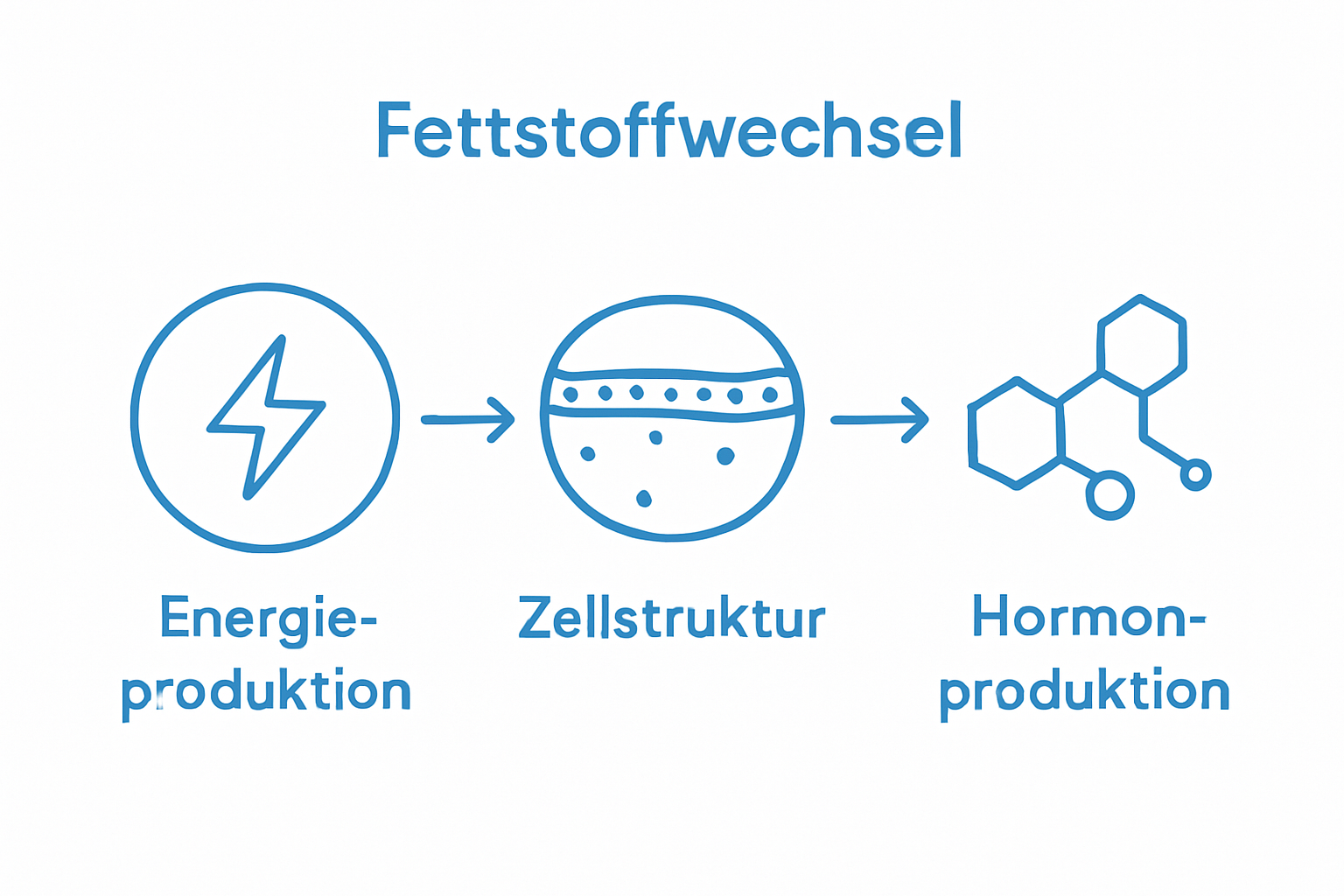
Lipid metabolism begins with the intake of dietary fats through the digestive tract. Here, lipids are broken down into the smallest components, which can be absorbed and processed by the body. Triglycerides are split into fatty acids and glycerol, which then perform different functions:
- Energy production for bodily functions
- Formation of cell membranes
- Hormone production
- Thermal insulation
Importance for the body
A functioning lipid metabolism is crucial for numerous bodily processes. It not only regulates our energy balance but also influences weight management, hormone production, and cell stability. Our guide to healthy nutrition can help you optimize your lipid metabolism.
It is important to understand that fat metabolism is not a static process but a dynamic system that constantly absorbs, converts, and uses fats. The efficiency of this process depends on various factors, such as diet, exercise, genetics, and general health.
The importance of fat metabolism for health
Fat metabolism plays a central role in our health and affects nearly every aspect of our physical well-being. Scientific studies show that properly functioning fat metabolism is crucial for prevention and maintaining health.
Impact on organ functions
Balanced fat metabolism has a positive impact on various body systems. It not only regulates the energy supply but also influences critical organ functions
 :
:
- Heart health through cholesterol regulation
- Hormonal balance
- Immune system function
- Neuronal health and brain function
Health risks of metabolic disorders
Disruptions in fat metabolism can have serious health consequences. Imbalances can lead to conditions such as diabetes, cardiovascular problems, and obesity. With our guide to foods that boost metabolism, you can positively influence your metabolism.
It is important to understand that fat metabolism is not static but can be actively influenced by diet, exercise, and lifestyle. A balanced diet, regular physical activity, and stress management are key factors for healthy fat metabolism.
How does fat metabolism work in the body?
Fat metabolism is a complex biological process that encompasses the absorption, processing, and use of fats in the human body. According to scientific research, this process goes through several critical stages that ensure our energy supply and health.
Absorption and digestion of fats
Fat metabolism begins with food intake. Dietary fats are broken down into triglycerides by enzymes in the small intestine. This process enables their breakdown into the smallest components that can be absorbed by the body:
- Breakdown of dietary fats into fatty acids
- Transport through the intestinal walls into the bloodstream
- Conversion into usable forms of energy
Energy production and storage
After ingestion, fats are processed in different ways. The liver plays a central role in their regulation and distribution. Excess energy is stored as depot fat. Our guide to belly fat will help you better understand this process.
The body uses fat as an energy reserve and can mobilize stored fat when needed. This process, called lipolysis, enables the body to remain functional even when food intake is low. Efficiency depends on various factors such as diet, exercise, and individual metabolic rate.
Influence of diet and lifestyle on fat metabolism
Fat metabolism is not a fixed constant but a dynamic system strongly influenced by our lifestyle habits. Scientific studies show that diet and lifestyle are decisive factors in the efficiency of our metabolism.
Dietary influences
The composition of your diet plays a central role in regulating fat metabolism. Different nutrients influence metabolic processes in different ways:
Below is a table summarizing the most important effects of dietary components on fat metabolism, providing a quick overview of their respective effects.
| Dietary component | Effect on fat metabolism |
|---|---|
| Proteins | Support muscle growth and promote metabolism |
| Complex carbohydrates | Stabilize blood sugar levels and support energy balance |
| Healthy fats | Promote hormone production and cellular metabolism |
| Fiber | Improve digestion and nutrient absorption |
| Unhealthy fats (trans fats) | Can disrupt metabolism and increase health risks |
- Proteins support muscle growth and metabolism
- Complex carbohydrates stabilize blood sugar levels
- Healthy fats promote hormone production and cellular metabolism
- Fiber improves digestion and nutrient absorption
Movement and lifestyle
Regular physical activity is a key factor in properly functioning fat metabolism. Exercise increases basal metabolic rate, promotes muscle development, and activates metabolic processes. Our WeightLoss DNA Test can help you understand your individual metabolic potential.
Stress management is also important: Chronic stress can negatively affect metabolism by releasing stress hormones such as cortisol. Sufficient sleep, relaxation techniques, and a balanced lifestyle support healthy fat metabolism.

Connection between fat metabolism and diseases
Fat metabolism is closely linked to various health risks and chronic diseases. Medical research shows that disorders of lipid metabolism can have significant effects on our health.
Metabolic risks
Impaired fat metabolism can promote various metabolic diseases:
The following table provides a structured overview of the key health risks that can result from impaired fat metabolism, as well as their typical causes in the body.
| Disease | Typical cause in fat metabolism |
|---|---|
| Type 2 diabetes | Insulin resistance due to elevated fatty acids in the blood |
| Cardiovascular diseases | Cholesterol deposits due to impaired fat processing |
| Fatty liver | Excessive accumulation of fat in the liver |
| Obesity | Inefficient use and storage of energy |
- Type 2 diabetes due to insulin resistance
- Cardiovascular diseases due to cholesterol deposits
- Fatty liver due to excessive fat accumulation
- Obesity due to inefficient energy utilization
Hormonal and systemic effects
Fat metabolism affects not only individual organs but the entire hormonal system. Imbalances can trigger inflammatory processes and impair immune function. Our tips for naturally stimulating metabolism can help you counteract this.
It is important to recognize that impaired fat metabolism can be a warning sign from the body. Early detection and targeted lifestyle changes can significantly reduce the risk of serious diseases.
Take your fat metabolism to the next level
You now understand how important healthy fat metabolism is for your health, well-being, and performance. Perhaps you wonder why weight management is often so difficult or why your body does not use fats optimally. The cause often lies in individual differences that cannot be addressed through general dietary advice alone.
Find out how your body really works and what could be blocking your fat metabolism. Our DNA metabolism tests analyze your genetic predispositions and provide personalized nutrition recommendations for lasting success. With scientifically grounded analyses from mybody®x, you gain clarity and a tool that makes your health goal achievable. Start now and optimize your diet individually. Your step toward more energy, easier weight loss, and long-term well-being awaits you today.
Frequently asked questions
What is fat metabolism and why is it important?
Fat metabolism encompasses all the biochemical processes through which fats are absorbed, converted, and used in the body. It is crucial for our energy supply and has a significant impact on health-related aspects such as weight management and hormonal balance.
How does fat metabolism work in the body?
Fat metabolism begins with the digestion of dietary fats, which are broken down into fatty acids and glycerol. These are processed by the liver, where they are either used as energy or stored as body fat.
What role does diet play in fat metabolism?
Diet has a significant impact on fat metabolism. Healthy fats, proteins, and complex carbohydrates promote metabolism, support hormone production, and stabilize blood sugar levels.
What are the health risks of impaired fat metabolism?
Impaired fat metabolism can lead to serious conditions such as type 2 diabetes, cardiovascular problems, and obesity. Early detection and lifestyle adjustments can help minimize these risks.



Share now:
Recognize and understand the symptoms of a slow metabolism
Metabolic Analysis for Nutrition – Your DNA-Based Path to Vitality & Well-Being