

Reducing Belly Fat – Your Plan for Sustainable Results
When it comes to getting rid of belly fat, most people think of a purely cosmetic goal. Sure, a flat stomach looks good. But the truth is that the real problem lies much deeper and is crucial to your long-term health. We are talking about so-called visceral fat, which takes up residence invisibly in your abdominal cavity and surrounds your organs.
Why belly fat is about so much more than appearance

Many of us are bothered by the “love handles” we can grab. But to truly understand the issue, we need to distinguish between two types of fatty tissue.
Then there is subcutaneous fat. This is the fat located directly beneath the skin. It is soft, pinchable, and serves as an energy store and protection against the cold. In normal amounts, it is hardly a health concern.
But the real danger lurks deeper: visceral fat. This fat deposits itself around vital organs such as the liver, pancreas, and intestines. You can neither see nor touch it, but its effects on the body are massive.
The silent troublemaker in your body
Visceral fat is anything but passive. You can almost think of it as an independent organ that constantly produces and releases messenger substances into the body.
These substances are often pro-inflammatory and can trigger so-called silent inflammation. These are chronic, low-grade inflammatory processes that keep your immune system permanently on alert and are considered one of the main causes of many diseases of modern civilization. If you want to know more about how such inflammation is measured in the body, read our article on elevated CRP levels.
The consequences of having too much visceral fat are far-reaching and serious:
- Insulin resistance: The substances released make cells less sensitive to insulin. Your pancreas has to work at full capacity to regulate blood sugar, paving the way for type 2 diabetes.
- Cardiovascular disease: Pro-inflammatory messenger substances raise blood pressure, worsen blood lipid levels, and accelerate atherosclerosis. The risk of heart attack and stroke increases dramatically.
- Fatty liver: Excess fat can be deposited directly in the liver, impairing its function and causing non-alcoholic fatty liver disease.
Belly fat is not a passive energy store, but an active endocrine gland that sabotages your metabolism and endangers your health. Reducing it is one of the most important preventive measures for a long, vibrant life.
A problem that affects many people
This is no longer a niche problem. In Germany, overweight and especially the accumulation of belly fat are growing health risks. Current figures show that around 54% of all adults in the country are overweight, significantly increasing the risk of visceral fat. Men are affected more often, at 62.4%, than women, at 42.5%.
Understanding why the fight against belly fat is so important is the first and crucial step. It is not about short-term crash diets or unrealistic ideals of beauty. It is about giving your body the foundation for true vitality. This motivation will accompany you through the next practical steps.
Understand your body before you begin
Have you ever wondered why your best friend loses weight so easily with low-carb while nothing seems to happen for you despite all your efforts? The answer is as simple as it is crucial: Each of us works differently. The key, therefore, is not to follow just any plan that has worked for others, but to understand your own body first.
Trying to get rid of belly fat without knowing your metabolism is like traveling without a map. You try different routes, waste time and energy, and ultimately end up frustrated back where you started. This is exactly where a thorough analysis comes in—not as a miracle cure, but as your personal compass for sustainable success.
Why a standard plan often fails
Standard diets are based on averages and assume that everyone functions the same way. Biologically, however, this is simply wrong. Your sex, age, genes, and current lifestyle have a huge impact on how your body processes energy and stores fat.
A general plan can only roughly estimate your individual basal metabolic rate—the amount of energy your body needs when completely at rest. If this estimate is off, you either eat too much and fail to lose weight, or eat too little, slow down your metabolism, and create the perfect breeding ground for the yo-yo effect.
The most sustainable way to reduce belly fat does not begin with a radical diet, but with understanding yourself. First find out how your engine works before trying to push it into top gear.
This image shows a bowl containing a colorful, low-calorie salad with protein-rich ingredients, symbolizing a nutrient-rich meal tailored to individual needs.
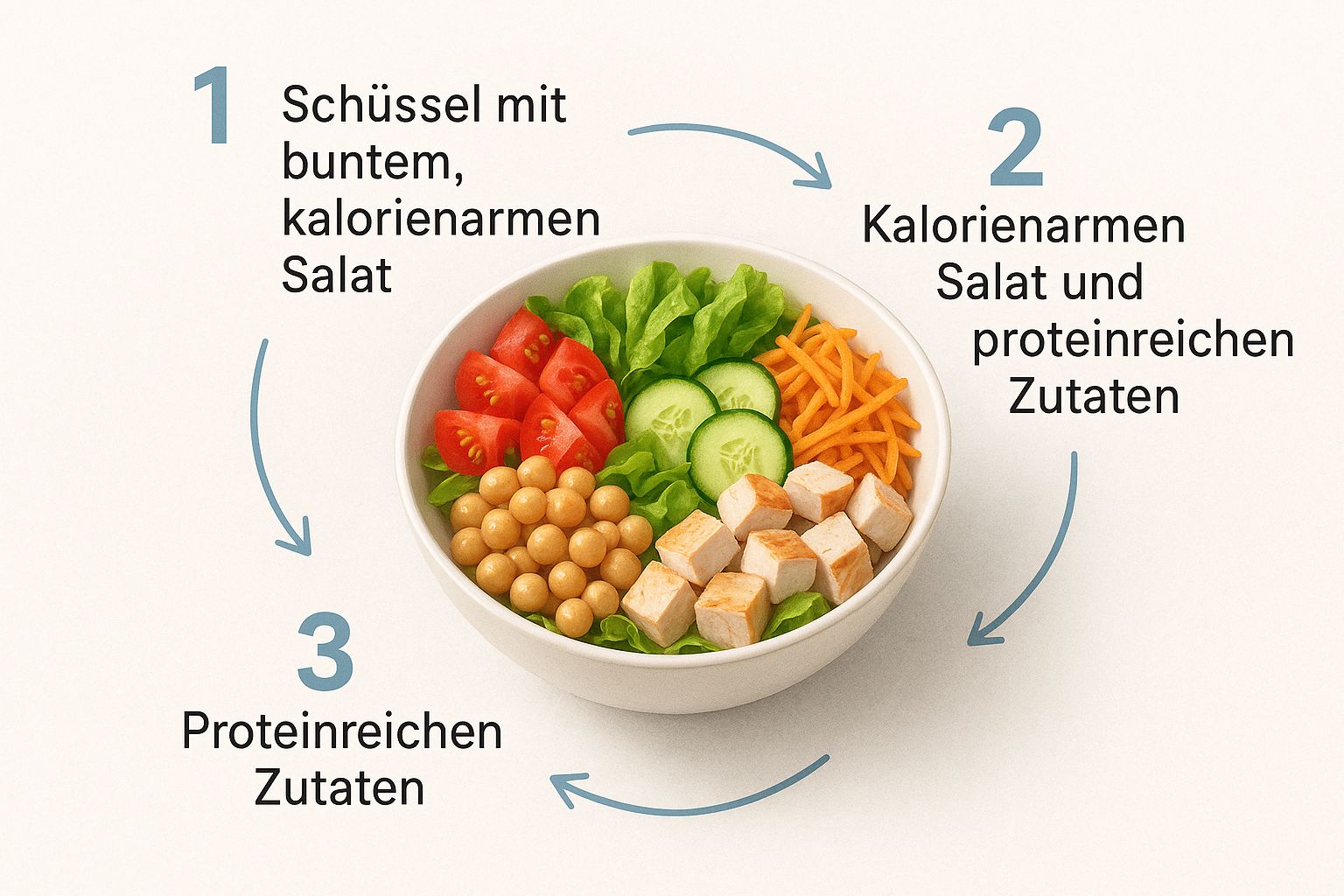
The visualization emphasizes that success depends not only on restriction, but also on choosing the right foods to match your personal metabolism.
Your metabolism as the key to success
A metabolic analysis is the tool that provides the data you need to develop a truly personal strategy. It reveals how efficiently your body burns the three main energy sources—carbohydrates, fats, and proteins.
Imagine your body as a hybrid car. Some engines run best on electricity (carbohydrates), while others primarily need gasoline (fats). Metabolic analysis reveals which “fuel” is optimal for you. With this knowledge, you can adjust your diet so that your body specifically taps into its fat reserves—especially visceral belly fat. This is the decisive advantage for sustainable success without constant guesswork.
- The carbohydrate type: Your body gets energy very efficiently from carbohydrates. A moderate reduction in fat and a focus on complex carbohydrates can work wonders here.
- The fat type: Your metabolism uses fat as its primary energy source. A diet rich in healthy fats and protein, with simple carbohydrates reduced, is often the most effective approach.
- The mixed type: You can process both carbohydrates and fats well. Here, a balanced mix of macronutrients is key.
If you would like to learn more about how it works and its benefits, you will find all the important details in our in-depth article on metabolic analysis.
Personalized nutrition based on your metabolic analysis is not a short-term trend, but a fundamentally different approach. Here, you can see the key differences at a glance:
General diet vs. personalized nutrition compared
This table shows the differences between a standard diet and a personalized approach based on metabolic analysis, highlighting the benefits of personalization.
| Feature | General diet approach | Personalized approach (with metabolic analysis) |
|---|---|---|
| Foundation | General rules and averages | Individual measurement data (basal metabolic rate, macronutrient utilization) |
| Effectiveness | Often short-term, with a high risk of the yo-yo effect | Sustainable in the long term because it is tailored to the body |
| Motivation | Drops quickly due to frustration and a lack of results | Stays high because progress is visible and easy to understand |
| Implementation | Guessing and experimenting (“trial and error”) | Clear, data-based recommendations for foods and meals |
| Health | Can lead to nutrient deficiencies or a slowdown in metabolism | Promotes a healthy metabolism and optimizes nutrient supply |
As you can see, it's about making informed decisions instead of fumbling in the dark.
From analysis to practical implementation
With the results of your analysis in hand, planning your meals suddenly becomes logical and simple. You no longer have to guess whether pasta or avocado is better for you. You know.
A practical example: Suppose the analysis shows that you are a fat-metabolism type. Instead of reaching for cereal with fruit in the morning—high in carbohydrates—a scrambled egg with avocado—rich in protein and fat—would be the much smarter choice for you. This simple change not only keeps you feeling full for longer, but also signals to your body to use fat as an energy source instead of storing it around your belly.
This individualization is precisely the crucial difference between short-term frustration and long-term success. You work with your body instead of fighting against it. This lays a solid foundation for the next steps: targeted nutrition and the right training to finally get rid of your belly fat.
Developing the right diet to combat belly fat

Now that you know how crucial your own metabolism is to your success, we come to the centerpiece: your diet. And don't worry, this isn't about radical crash diets or complicated lists of forbidden foods. Sustainable success is built on smart, scientifically grounded principles that you can easily integrate into your everyday life.
The goal is not short-term suffering, but an eating habit that gives you energy, tastes good, and supports your body in specifically breaking down visceral fat. We focus on strategies that not only work, but that you also want—and are able—to stick with in the long term.
The power of protein and fiber
Two nutrients are your strongest allies in the fight against belly fat: protein and fiber. They work on several levels and create the ideal foundation for successful, frustration-free fat loss.
Protein has a high thermic effect. This means your body burns more calories digesting it than it does digesting fats or carbohydrates. At the same time, protein is the most important building block for your muscles—and more muscle mass means a higher basal metabolic rate. Most importantly, though: protein is incredibly filling and thus helps prevent those dreaded hunger attacks.
Fiber, especially soluble fiber, swells in the stomach and also provides a strong, long-lasting feeling of fullness. It slows digestion, stabilizes blood sugar levels, and thus prevents nasty insulin spikes that promote fat storage. A nice side effect: It feeds the good bacteria in your gut, benefiting your overall metabolic health.
Every main meal should include a high-quality source of protein and plenty of fiber-rich vegetables. This combination is the most effective natural appetite-suppressant duo and keeps your metabolism going.
Reduce inflammation and rev up your metabolism
Visceral belly fat is not just a passive energy store; it is also a source of low-grade inflammation in the body. Certain foods can further fuel these processes and effectively sabotage your fat loss. These include, above all, sugar, products made with white flour, and highly processed foods with countless additives.
By consciously reducing these “inflammation drivers,” you create an environment in which your body can let go of fat much more easily. Simply replace them with nutrient-dense, anti-inflammatory alternatives. It’s less complicated than it sounds.
Practical examples for your everyday life:
- Instead of sugary soda: Choose unsweetened green tea or water with a squeeze of lemon and fresh mint.
- Instead of white bread for breakfast: Choose whole-grain bread with cottage cheese and herbs, or scrambled eggs with spinach.
- Instead of chips in the evening: Try a handful of unsalted nuts, vegetable sticks with herb-infused quark, or roasted chickpeas.
Many of these foods also give your metabolism a boost. In our article about foods that boost your metabolism, you’ll find even more inspiration for your shopping list.
True belly-fat fighters for your meal plan
Some foods are true powerhouses when it comes to reducing belly fat. Their effects are often based on a clever combination of nutrients, plant compounds, and metabolism-boosting properties.
One particularly promising approach is the so-called green Mediterranean diet. A study by Leipzig University has shown that this dietary pattern can significantly reduce visceral belly fat—by around 14 % more effective than conventional diets. Their secret? A high proportion of plant-based protein and polyphenol-rich foods. These natural polyphenols have anti-inflammatory effects and actively support fat loss.
Here’s a list of foods you should start putting on your plate more often:
- Green tea: The catechins it contains have been shown to boost fat burning, especially around the belly.
- Walnuts: They are rich in omega-3 fatty acids and polyphenols, which reduce inflammation and promote a feeling of fullness.
- Cruciferous vegetables: Broccoli, Brussels sprouts, and cauliflower provide plenty of fiber and sulforaphane, a compound that may positively influence fat cells.
- Avocado: Provides you with healthy monounsaturated fats that keep you full for a long time and help stabilize blood sugar levels.
- Berries: They contain many antioxidants and fiber while being low in sugar. Perfect for satisfying your sweet tooth.
Why your individual path is crucial
These principles are an excellent foundation. But as we’ve already discussed, every body works differently. Whether moderately reducing carbohydrates or increasing healthy fats is the faster route to your goal depends largely on your individual metabolic type.
A metabolic analysis provides the crucial guidance here. It helps you personalize these general recommendations and develop a nutrition strategy tailored precisely to your body. This way, you avoid frustration and ensure that your efforts deliver maximum results—for sustainable belly-fat reduction and a completely new feeling in your body.
Which training really targets belly fat
When it comes to getting rid of belly fat, a few myths persist. The most well-known? The idea that hundreds of crunches and sit-ups can specifically melt away belly fat. Let’s clear that up right away: Spot reduction doesn’t exist. Your body decides for itself where to tap into its fat reserves—and unfortunately, the belly is often one of the last places it does so.
But that doesn’t mean you’re helplessly at the mercy of it. Quite the opposite. With the right strategy, you can get your body to target exactly these stubborn reserves. The key isn’t isolated abdominal exercises, but an intelligent training mix that gets your entire metabolism working at full speed.
Why strength training is more important than endless cardio
Of course, jogging or cycling is great for your cardiovascular system. But when it comes to sustainably reducing belly fat, strength training clearly comes out on top. The reason is simple: muscles are your body's calorie-burning furnaces. The more muscle mass you have, the higher your basal metabolic rate—that is, the amount of energy your body uses even when completely at rest.
A study by the Harvard School of Public Health demonstrated this impressively. Over the years, people who did just 20 minutes of strength training daily experienced less growth in their waist circumference than those who relied solely on endurance training. Muscles are metabolically active tissue that helps you burn more calories around the clock. You can find more details about this fascinating study in this article about the Harvard study.
The afterburn effect: your secret ally
Another crucial benefit of intense training is the so-called afterburn effect (EPOC – Excess Post-exercise Oxygen Consumption). After a truly strenuous workout, your body has to work hard to return to its normal state. It replenishes oxygen stores, regulates its temperature, and breaks down metabolic byproducts.
This entire process requires additional energy, and it continues for hours after the actual workout. This effect is particularly strong after:
- Full-body strength training: Exercises that challenge many large muscle groups at once (think squats, deadlifts, or push-ups).
- High-intensity interval training (HIIT): Short, extremely intense bursts of exercise alternating with short rest periods (such as sprints or burpees).
While you may have a slightly elevated calorie burn for 30 to 60 minutes after an easy jog, the afterburn effect following an intense strength or HIIT session can last up to 24 hours.
Imagine that your workout is not just the time when you sweat, but the starting signal for an elevated metabolism lasting for hours. That is the true power behind intelligent training for reducing belly fat.
The unbeatable combination: strength training and HIIT
So instead of choosing one form of training, combine the strengths of both. Strength training builds valuable muscle mass, which boosts your basal metabolic rate. HIIT ensures a massive calorie burn during the workout and, above all, afterward.
What could this look like in practice? Here is a simple weekly plan that cleverly combines both elements without completely exhausting you:
| Day | Workout | Focus |
|---|---|---|
| Monday | Full-body strength training (45 min.) | Squats, lunges, rows, bench presses, shoulder presses |
| Tuesday | Active recovery | Walk, gentle yoga, or stretching (30 min.) |
| Wednesday | HIIT (20 min.) | 30 sec. burpees, 30 sec. rest; 30 sec. stationary sprints, 30 sec. rest (alternating) |
| Thursday | Active recovery | Walk or easy bike ride (30–45 min.) |
| Friday | Full-body strength training (45 min.) | Deadlifts, push-ups, pull-ups (or lat pulldowns), leg press |
| Saturday | HIIT or moderate cardio | 20 min. HIIT or 45 min. easy jogging/cycling |
| Sunday | Complete recovery | No training |
This plan also gives your body enough time to recover—and that is absolutely crucial if you want to build muscle and avoid overtraining.
Personalize your training for maximum results
The same applies to exercise: what is perfect for one person may not suit another at all. Your individual constitution, fitness level, and metabolic type play a huge role in how you respond to specific training stimuli.
This is exactly where the insights from a metabolic analysis can make a decisive difference. For example, if you know that your body uses fat particularly efficiently as an energy source, you could benefit from somewhat longer, moderate cardio sessions in addition to strength training. If, on the other hand, you are more of a carbohydrate type, short, intense HIIT sessions might be the fastest way to deplete your energy stores and boost fat burning. An analysis therefore provides the data you need to optimize your training sustainably.
Uncover the hidden saboteurs of your success
You watch your diet and have a solid training plan, but the belly fat just will not budge? We know that all too well. Often, it is not the obvious things that stand in our way. There are silent opponents working in the background and undoing your hard-earned progress.
Two of the most powerful of these saboteurs are chronic stress and sleep deprivation. Both completely disrupt your hormonal system and specifically promote fat storage around your midsection. But the good news is that once you know these hidden obstacles, you can take targeted action.
The stress belly is not imaginary
In our hectic world, stress is everywhere. Sure, a short-term surge of stress can even spur us to peak performance, but when stress becomes chronic, your body switches into a permanent state of alert. The hormone pulling the strings here is cortisol.
Cortisol originally served to prepare us to fight or flee in dangerous situations by releasing energy quickly. With ongoing stress, however, cortisol levels remain constantly elevated—and this has serious consequences for reducing belly fat. High cortisol levels signal the body to conserve energy and build up reserves, preferably as visceral fat in the abdominal area.
This hormonally driven belly fat is particularly stubborn. It hardly responds to diets as long as the underlying cause of stress isn't addressed. If you'd like to take a deeper look at how elevated cortisol levels affect women in particular, you'll find valuable information in our article about symptoms of high cortisol levels.
Chronic stress is like an internal command telling your body to store belly fat. Until you manage your stress, you're fighting an invisible opponent that you can't defeat through exercise and diet alone.
Psychological stress and emotional strain can often inhibit fat loss unnoticed. It can be helpful to learn how to get rid of negative energies and thereby find greater inner peace and strength, which has a positive effect on your physical well-being.
Lack of sleep makes you hungry and causes fat storage
Good sleep isn't a luxury, but a biological necessity for a healthy metabolism. While you sleep, your body regulates important hormones that control your appetite and feelings of satiety.
Just one night of too little sleep can throw this delicate balance out of sync:
- Ghrelin levels rise: This hormone signals hunger. When you're sleep-deprived, your body releases more of it, leading to strong cravings for high-calorie foods, often rich in sugar and fat.
- Leptin levels drop: This hormone is responsible for feelings of satiety. Less leptin means you feel full later and less quickly.
- Insulin sensitivity decreases: Lack of sleep makes your cells virtually insensitive to insulin. Your body has to produce more of it to regulate blood sugar, which in turn promotes fat storage.
This hormonal cocktail is a recipe for guaranteed weight gain, especially around the belly. So you're not just battling fatigue, but also biochemically triggered cravings.
How to Overcome the Silent Opponents
The solution is to take stress management and sleep hygiene just as seriously as your diet and training. This isn't about making huge, time-consuming changes, but about small, consistent habits that make a big difference.
Simple strategies for your everyday life:
- Conscious breathing breaks: When you feel stressed, take two minutes. Breathe in deeply through your nose for four seconds, hold your breath for seven seconds, and slowly breathe out through your mouth for eight seconds. It works wonders.
- Digital breaks: Turn off your smartphone at least an hour before going to bed. The blue light interferes with the production of the sleep hormone melatonin.
- Regular sleep times: Try to go to bed and get up at the same time, even on weekends. This greatly stabilizes your circadian rhythm.
- Exercise in nature: A short walk in the countryside can demonstrably lower cortisol levels and clear your mind.
By identifying and actively combating these hidden saboteurs, you create the hormonal foundation that allows your efforts in nutrition and exercise to become truly effective.
Frequently asked questions about belly fat
On the way to a flatter stomach and a healthier you, the same questions often come up. That is hardly surprising, because few topics are surrounded by as many myths and misconceptions. We shed light on the subject and provide honest, well-founded answers to the most important questions. This will help you reach your goal safely and with motivation.
How quickly will I see the first results?
Patience is your most important companion here. Sustainable reduction of belly fat is a marathon, not a sprint. How quickly it happens for you depends on your starting point, your genetics, and above all, your consistency.
Realistically, you may start feeling better after just two to four weeks—more energy and looser-fitting clothes. Visible results around your stomach, meaning a genuinely measurable reduction in waist circumference, often take eight to twelve weeks or even longer. Much more important than the pace is sticking with it.
Real change takes time. Every small but consistent step brings you closer to your goal than any radical crash diet.
A metabolic analysis can give you a real head start here. Instead of groping around in the dark, you build your strategy on solid data from the outset, often reaching your goal faster and more sustainably.
Can I get rid of belly fat without exercising?
Sure, nutrition plays the biggest role in fat loss. A suitable calorie deficit alone will also help you lose belly fat. But—and this is a big but—this path is significantly slower and far less sustainable.
Exercise, especially strength training, is more than just a calorie burner. It is your crucial ally:
- Muscles boost metabolism: More muscle mass increases your basal metabolic rate. That means you burn more energy even while sitting on the sofa.
- Better insulin sensitivity: Exercise helps your cells respond better to insulin. This directly counteracts fat storage around the stomach.
The combination of the right diet and targeted training remains the unbeatable key to long-term success and a fit body.
Does my age affect losing belly fat?
Yes, age has an influence, but it is not an excuse. Over the years, metabolism often slows down somewhat, and hormonal changes—in both women and men—can promote fat storage around the stomach.
That certainly does not make the goal impossible. It simply requires a somewhat smarter and more targeted strategy:
- Regular strength training is now essential to preserve valuable muscle mass.
- A protein-rich diet keeps you fuller for longer and supports your muscles.
- Good stress and sleep management is crucial for keeping your cortisol level (the “stress hormone”) in check.
Especially during this phase of life, an individual metabolic analysis is worth its weight in gold. It shows you exactly which levers you need to pull to specifically support your metabolism instead of wasting time on methods that no longer work as well for you.
Do all these “belly-busting” products really work?
The short and honest answer: No. Products such as special teas, pills, or creams that promise targeted fat burning around the stomach are pure marketing. There is no miracle cure that simply melts away visceral fat.
At most, such products cause you to lose water temporarily, making your stomach look flatter for a few hours. But that is not real, sustainable fat loss. The only approach that truly works is a holistic change to your diet, training, and lifestyle.
Are you ready to start with a data-driven strategy that is truly tailored to you? The experts at mybody-x.com will support you with a professional metabolic analysis to finally help you understand your body and achieve your goals sustainably. Find out now which metabolic type you are: https://mybody-x.com



Share now:
Strengthen your immune system in autumn
7 Examples of Diets You Should Try