
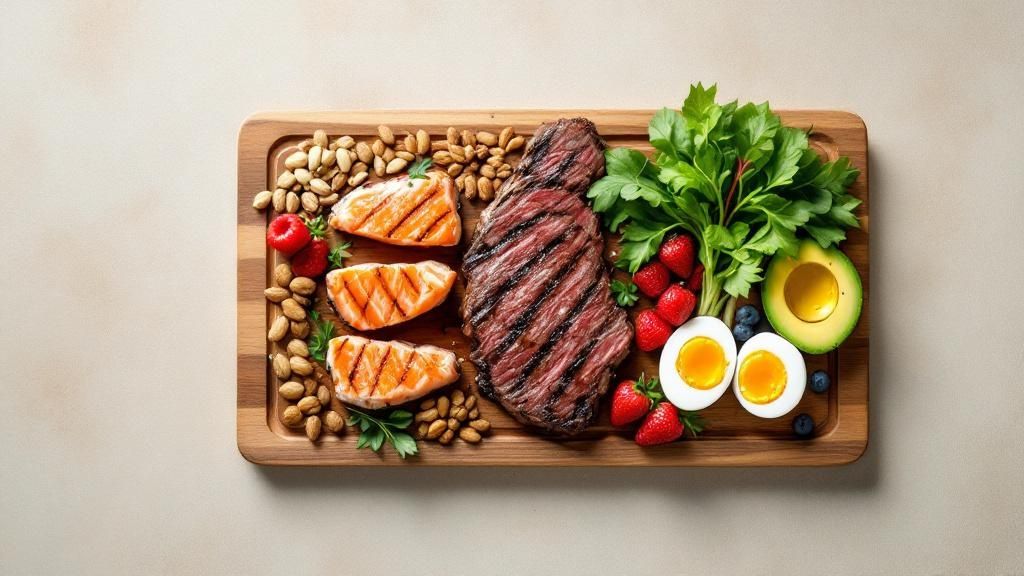
Paleo Diet: Your guide to the Stone Age diet
The Paleo diet, often ridiculed as the Stone Age diet, is actually quite simple: You eat what our ancestors could find as hunter-gatherers. The focus is therefore on real, unprocessed foods—everything that could be hunted, fished, or gathered in nature.
What is really behind the Paleo diet?
Imagine going to the supermarket and being allowed to buy only foods that exist in their original form. No packages, no additives, no complicated ingredient lists. That is the core idea of Paleo. It is an attempt to return to a way of eating that your body was perfectly adapted to over thousands of years.
The idea behind it is the so-called “mismatch hypothesis.” It sounds scientific, but it is logical: Your genes have changed little since the Stone Age, while your diet has changed radically through agriculture and industrialization. Paleo aims to bridge this gap and provide you again with foods that were on the menu before this agricultural revolution.
The cornerstones of the Paleo diet
Paleo is about nutrient-dense, unprocessed foods. Your plate naturally fills up with the right things:
- High-quality meat and fish: Preferably from pasture-raised animals or wild-caught sources, because their nutrient profile is simply better.
- Plenty of vegetables: Whether leafy greens, root vegetables, or broccoli, they provide vitamins, minerals, and important fiber.
- Fruit, but in moderation: Seasonal fruit and berries are great sources of natural carbohydrates and antioxidants, but they are not a main course.
- Healthy fats: Nuts, seeds, avocados, and healthy oils such as olive or coconut oil are essential.
- Eggs: A true superfood that keeps you full and is packed with nutrients.
At the same time, certain food groups are excluded that have only been part of our diet since the advent of agriculture and livestock farming. And there are good reasons for that.
Why certain foods are off-limits
Avoiding “modern” foods is the key point of Paleo. The theory is that your body is simply not optimally designed to digest them.
Paleo is more than a simple diet with “allowed” and “forbidden” foods. It is a philosophy that aims to bring your diet back into harmony with your evolutionary biology. You give your body what it is genetically best adapted to recognize and process.
Based on this reasoning, the following foods are avoided:
- Grains: Bread, pasta, and rice contain so-called antinutrients such as lectins and gluten. These can interfere with nutrient absorption and fuel inflammation in the body in sensitive people.
- Legumes: Beans, lentils, and peanuts also contain lectins and phytic acid, which is why they are avoided in the classic Paleo approach.
- Dairy products: Many adults can no longer properly digest lactose (milk sugar). This often leads to intolerances and digestive problems.
- Sugar and artificial sweeteners: They provide only empty calories, disrupt your blood sugar levels, and have no place in a natural diet.
- Industrially processed foods: Ready-made meals, trans fats, and artificial additives are the exact opposite of what Paleo is about.
The Paleo diet, which is gaining more and more followers in Germany as well, is based on the assumption that the body responds best to this original diet. Initial studies suggest that this approach may not only help with weight loss but also stabilize blood sugar. If you want to delve deeper, you should read the scientific assessment of the Stone Age diet to better understand the background.
The scientific perspective on the Stone Age diet

The idea of eating like your ancestors sounds somehow... right. Almost romantic. But does this idea also stand up to modern scientific scrutiny? As is so often the case in nutritional science, the answer is a clear “yes and no”—because the Paleo diet has considerable strengths, but also a few weaknesses you should know about.
Paleo is far more than just a short-lived trend. Numerous studies have examined its health effects in greater detail. And indeed, the results point to some tangible benefits that stem directly from the core principles of this diet: a clear focus on natural, nutrient-rich foods and a deliberate avoidance of highly processed foods.
What are the health benefits?
One of the best-documented benefits is improved blood sugar regulation. When you eliminate sugar, grains, and other quickly digestible carbohydrates from your diet, your blood sugar levels will thank you with greater stability. This can improve insulin sensitivity—a crucial factor in preventing or better managing metabolic diseases such as type 2 diabetes.
Paleo can also score points when it comes to weight management. The combination of plenty of protein and fiber from vegetables creates a feeling of fullness that lasts a long time. This allows you to regulate your calorie intake almost effortlessly, without constantly having to battle hunger.
The real “trick” of the Paleo diet is no secret; it is a return to the essentials: real, unprocessed foods provide your body with exactly the building blocks it has known and been able to use optimally for thousands of years. This can reduce inflammation in the body and noticeably improve your overall well-being.
Many people who follow a Paleo diet also report clearer skin, more energy in everyday life, and calmer digestion. This is often because potential irritants such as gluten and lactose are automatically eliminated.
Critical points and what you need to watch out for
Despite the many positive aspects, there is also criticism. A central concern is the complete elimination of entire food groups, especially dairy products and legumes. This can lead to nutrient deficiencies if you are not careful.
- Calcium intake: In our Western diet, dairy products are the main source of calcium. On Paleo, you need to consciously obtain this important mineral from other sources, such as leafy green vegetables like kale and broccoli, almonds, or sardines (with bones!).
- Fiber and B vitamins: Legumes and whole grains also provide important fiber and B vitamins. The key is to eat a wide variety of vegetables and other Paleo-compliant foods to meet your needs.
- The challenges of everyday life: Let's be honest: following a strict Paleo diet can be challenging in everyday life. Whether at a restaurant, with friends, or while traveling, some planning and sometimes a bit of flexibility are required.
Paleo compared with other diets
Does Paleo outperform the official dietary recommendations? There are similarities, but also clear differences. The focus on plenty of vegetables, high-quality proteins, and healthy fats is viewed positively. The same applies to avoiding sugar and highly processed products.
However, the strict exclusion of grains and legumes conflicts with common recommendations. This shows once again that there is no one perfect diet for everyone. While some people benefit enormously from avoiding gluten, others tolerate whole-grain products without any problems.
So, the health benefits of the Paleo diet are quite real. Studies suggest that it may reduce the incidence of diseases such as colorectal cancer and lower markers of inflammation in the body. This fits perfectly with the growing health consciousness in Germany. A survey on Statista shows that more and more people are willing to invest in high-quality, healthy foods—a trend that the Paleo diet fully embraces with its focus on quality and naturalness.
Your food choices for the Paleo diet
Now let’s get specific: What actually goes on the plate with the Paleo diet, and what would be better left on the shelf? Rather than simply giving you dry lists, I’d like to explain the reasoning behind them. That way, you’ll truly understand why certain foods form the foundation and others are deliberately avoided.
The selection is refreshingly straightforward and is based on what our ancestors could find in nature. At its core, it’s about nutrient-dense, unprocessed foods that provide your body with everything it needs—without unnecessary extras.
Paleo-friendly foods
The foundation of your diet consists of high-quality proteins, a wide variety of vegetables, and healthy fats. This combination not only keeps you full for a long time but also provides a steady supply of energy throughout the day.
- Meat and poultry: It’s best to choose meat from pasture-raised or organically raised animals. The species-appropriate diet of these animals results in a better nutrient profile, such as a higher proportion of omega-3 fatty acids.
- Fish and seafood: Above all, wild-caught fish is a gold mine of valuable omega-3 fatty acids. These have anti-inflammatory effects and are extremely important for brain function. Fatty fish such as salmon, mackerel, and herring are the best choices here.
- Eggs: They’re nutritional powerhouses, packed with high-quality protein, vitamins, and minerals.
- Vegetables: This is where you can really indulge! Whether leafy greens, broccoli, cauliflower, or root vegetables such as carrots and sweet potatoes, they all provide important fiber, vitamins, and antioxidants.
- Fruit: Seasonal fruits, especially berries, are excellent sources of vitamins and add a natural, moderate sweetness to your diet.
- Healthy fats: Avocados, olive oil, coconut oil, as well as nuts and seeds (in moderation), are indispensable sources of energy and support countless bodily functions.
The typical macronutrient distribution in the Paleo diet clearly focuses on fats and proteins as the main energy sources.
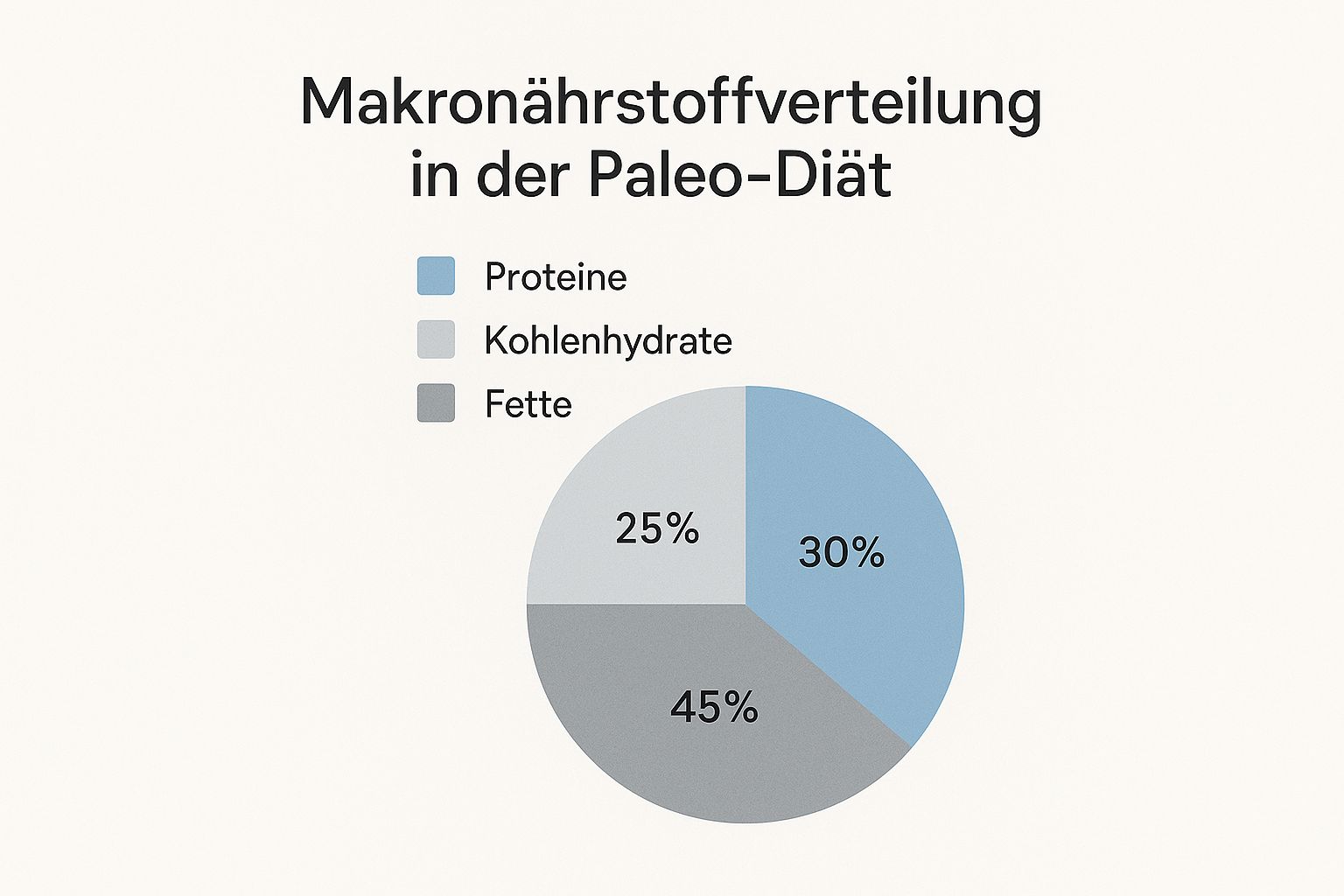
As the graphic shows, fats make up the largest proportion. This promotes lasting satiety and prevents cravings, which are often triggered by highly fluctuating blood sugar levels.
To make getting started easier, I’ve created a clear overview. It shows you at a glance which foods you can enjoy and which ones you’d be better off avoiding.
| Food group | Allowed and recommended | To avoid |
|---|---|---|
| Proteins | Meat (pasture-raised), poultry (free-range), wild-caught fish, seafood, eggs | Processed meat (sausage with additives), meat from intensive livestock farming |
| Vegetables | All types of vegetables, especially leafy greens, cabbage, root vegetables, onions, and garlic | Corn (counts as a grain) |
| Fruit | Berries, apples, bananas, citrus fruits (all in moderation) | Sweetened dried fruit, fruit juices made from concentrate |
| Fats | Avocado, olive oil, coconut oil, ghee, nuts, seeds | Margarine, trans fats, sunflower oil, rapeseed oil, soybean oil |
| Beverages | Water, herbal tea, coconut water | Sugary soft drinks, fruit juices, energy drinks, milk |
| Grains | - | Bread, pasta, rice, oats, corn, quinoa, amaranth |
| Legumes | - | Beans, lentils, chickpeas, peanuts, soy |
| Dairy products | - | Milk, cheese, yogurt, quark, butter (ghee is an exception) |
| Sugar & sweeteners | - | Refined sugar, syrup, artificial sweeteners (aspartame, etc.) |
This table serves as a guide. Over time, you will develop an intuitive sense of what is good for your body and what is not.
Why certain foods are avoided
Avoiding certain food groups is not coincidental but a central pillar of the Paleo diet. The reasoning behind it: These foods only became part of our diet with agriculture and animal husbandry. From an evolutionary perspective, that is a very short period, and your digestive system may not be optimally adapted to them.
Avoiding grains and legumes is not an arbitrary ban. It is based on the concept of antinutrients—substances that plants developed to protect themselves from predators and that can block nutrient absorption or irritate the intestinal lining in humans.
Here are the main groups excluded from the Paleo diet:
- Grain products: Bread, pasta, rice & co. often contain gluten and lectins. In sensitive people, these can make the intestinal wall more permeable (the so-called "leaky gut") and fuel inflammation in the body.
- Legumes: Beans, lentils, chickpeas, and peanuts (which are botanically legumes) also contain lectins and phytic acid. This acid can block the absorption of important minerals such as iron, zinc, and calcium in the intestines.
- Dairy products: Many adults lose the ability to properly digest lactose (milk sugar) after childhood, which can lead to bloating or cramps. The milk protein casein is also suspected of triggering inflammatory reactions in some people.
- Refined sugar and artificial sweeteners: They provide pure energy without nutritional value, send blood sugar levels on a roller coaster ride, and promote inflammation.
- Highly processed foods: Anything with a long list of ingredients containing artificial flavors, colors, and preservatives simply does not fit the Paleo philosophy.
By avoiding these foods, you give your digestive system a break and provide your body with maximum nutrient density.
If you would like to dive deeper into the world of nutritional building blocks, read our article on what a nutrient actually is and the role the individual components play in your health. This knowledge will help you make even more conscious food choices.
How to adapt Paleo to your body
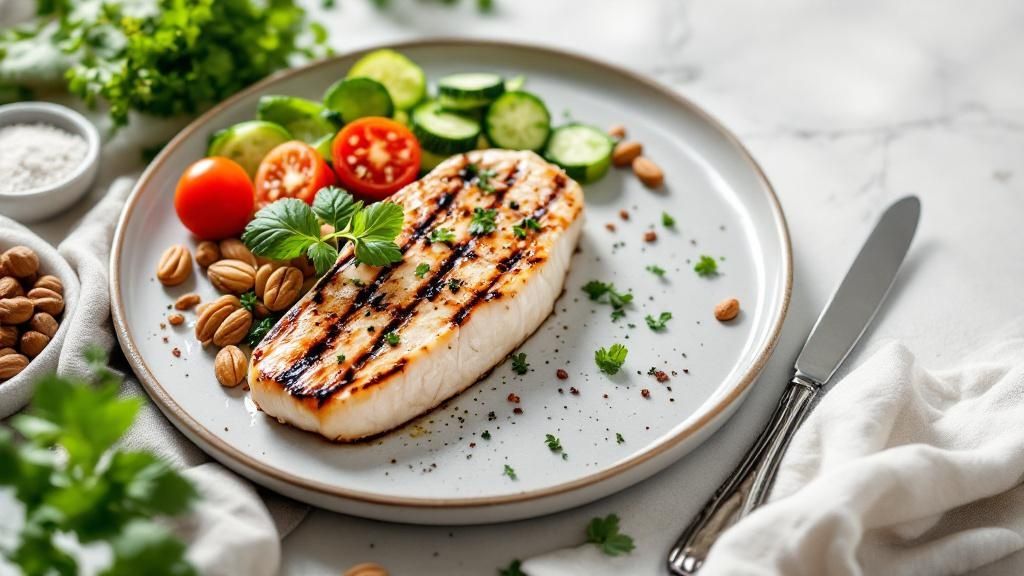
The Paleo diet gives you a fantastic framework for healthy eating, but it is not a rigid set of rules that works exactly the same way for everyone. Your body is unique—with a personal genetic predisposition, an individual lifestyle, and a metabolism that belongs only to you. So rather than blindly following a plan, the goal is to use the principles of Stone Age nutrition as a starting point and tailor them to your needs.
This process of personalization is precisely the key to long-term success and genuine well-being. Think of it as a partnership with your body: you learn to understand its signals and adjust your diet accordingly. This transforms Paleo from a mere “diet” into a sustainable lifestyle.
Metabolic type as a guide
Not every body burns energy in the same way. Your metabolic type gives you important clues about how best to distribute your macronutrients—that is, proteins, fats, and carbohydrates. While the classic Paleo diet takes a moderate approach to carbohydrates, there is definitely room for flexibility here.
Are you very active, exercise a lot, or have a physically demanding job? Then your body probably needs more carbohydrates as a quick source of energy. In that case, it may make sense to increase the proportion of starchy vegetables.
- For active people: Consciously include more sweet potatoes, pumpkin, parsnips, or beetroot in your meals, especially after training.
- For less active people: If you lead a mostly sedentary lifestyle, you may benefit from a lower-carbohydrate, higher-fat variation. In this case, avocados, nuts, and healthy oils take center stage.
The modern science of nutrigenetics goes even a step further, examining how your genes influence the processing of nutrients. In our article, you’ll learn how your DNA can reveal insights into your personal nutrient needs and help you fine-tune your diet even more precisely.
Your Microbiome: Your Personal Nutritionist
Your gut is home to an entire ecosystem of trillions of microorganisms—your microbiome. These tiny helpers play a huge role in your digestion, immune system, and even your mood. The composition of your gut flora is as unique as your fingerprint and helps determine how well you tolerate certain foods.
Your gut is not a silent bystander, but an active contributor to your health. A healthy gut flora is the foundation that allows you to absorb the valuable nutrients from your Paleo diet in the first place.
Perhaps you notice that you do not tolerate certain types of cabbage well and experience bloating. This could be a sign that your gut flora lacks the bacteria needed to process these specific types of fiber.
Instead of eliminating a food completely, try reintroducing it in small amounts and well cooked to gradually get your gut used to it. Fermented foods such as sauerkraut or kimchi can also help promote the diversity of your gut bacteria and support healthy digestion.
Learn to listen to your body's signals
Ultimately, you are the most important expert on your own nutrition. Your body is constantly sending you signals—you just have to learn to listen. How do you feel after eating? Energized or rather tired? Do you have a clear head, or do you feel “brain fog”?
Here are a few practical tips to help you interpret these signals better:
- Keep a food diary: For a few weeks, write down what you eat and how you feel afterward. Pay attention to your energy, digestion, skin, and sleep. This will help you quickly identify patterns.
- Experiment mindfully: If you suspect a food is causing problems, eliminate it completely for two to three weeks. Observe whether anything changes. Then reintroduce it and see how your body reacts.
- Pay attention to real hunger: Eat when you are truly hungry, not out of boredom or habit. Learn to recognize when you feel full, and stop when you are comfortably satisfied—not stuffed.
Adapting the Paleo diet is not a one-time thing, but a journey. Your needs may change over time—depending on your age, stress levels, or activity level. By staying flexible and trusting your body's wisdom, you can create an eating pattern that nourishes and strengthens you in the long term.
How Paleo Works in Everyday Life: Your Practical Guide
Knowing the theory behind the Paleo diet is one thing. Actually following it in the stress of everyday life is another. The key to success, however, lies not in iron discipline but in good preparation and a few simple routines. With the right plan, the Stone Age diet becomes an effortless habit rather than a daily hurdle.
Think of this section as your personal guide to a relaxed start. We’ll show you how to get your kitchen ready, shop smart, and stick to your principles with ease even when you’re invited out.
Get your kitchen ready to start
A successful start always begins in your own kitchen. When your surroundings are right, making the right choices comes naturally. It’s not about making everything perfect overnight, but about setting the right course.
The first step is a small but honest “inventory.” Take a close look at your supplies and remove anything that doesn’t belong on the Paleo meal plan. Grain products, sugar in every form, highly processed snacks, and unhealthy vegetable oils can now make room for real foods.
This isn’t about deprivation, but about making a conscious choice for more nutrients. You’re making room for high-quality, delicious foods that are genuinely good for your body.
Instead, stock your cupboards and refrigerator with the basics of the Paleo diet. That way, you’ll always have the right foods on hand when hunger strikes:
- High-quality fats: Extra-virgin olive oil, coconut oil, ghee.
- Nuts and seeds: Almonds, walnuts, chia seeds, flaxseeds.
- Spices and herbs: A colorful variety of dried herbs and spices to give every dish the right kick.
- Good staples: Coconut milk, strained tomatoes, or fish in its own juice are perfect for quick meals.
Shop smart and cook ahead
A well-planned shopping list is worth its weight in gold. If you plan your meals a few days in advance, you shop much more purposefully and resist unnecessary impulse purchases. Focus on the outer aisles of the supermarket—in most cases, that’s where you’ll find fresh vegetables, fruit, meat, and fish.
Meal prep is an absolute game changer for stressful weeks. Simply set aside an hour or two over the weekend to prepare a few components. Not only does this save you an incredible amount of time during the week, it also ensures that you always have a healthy option on hand.
- Chop vegetables: Wash and cut up bell peppers, onions, or broccoli ahead of time and place them in airtight containers.
- Prepare protein: Hard-boil a batch of eggs, pan-fry chicken breasts, or shape some meatballs in advance.
- Keep snacks within reach: Portion out small servings of nuts or vegetable sticks. If you’re still looking for inspiration for snacks, you’ll find plenty of delicious and easy ideas for Paleo-friendly snacks on our blog.
A simple 3-day meal plan to get started
To show you how simple and delicious everyday Paleo eating can be, we’ve put together an uncomplicated plan for the first three days.
| Day | Breakfast | Lunch | Dinner |
|---|---|---|---|
| Day 1 | Scrambled eggs with spinach and avocado | Large mixed salad with grilled chicken breast and an olive oil dressing | Oven-baked salmon fillet with steamed broccoli and half a sweet potato |
| Day 2 | Smoothie made with berries, coconut milk, and a handful of almonds | Leftover salmon with fresh vegetables or as a salad | Ground beef skillet with plenty of vegetables (zucchini, bell peppers, onions) |
| Day 3 | Boiled eggs with cucumber and carrot sticks | Tuna salad (with avocado mayo instead of regular mayonnaise) in large lettuce leaves | Chicken curry with cauliflower rice and plenty of fresh cilantro |
Of course, this plan is only a suggestion. As you can see, Paleo means enjoyment and variety, not deprivation.
Mastering everyday challenges
Of course, there will always be situations that are trickier—for example, at restaurants or when you’re invited to someone’s home. But don’t worry; there are simple solutions for those situations too.
You’ll almost always find something suitable at a restaurant. Simply order a piece of grilled meat or fish and ask them to replace the typical filling side dish (such as fries or bread) with an extra portion of vegetables or a side salad. Most kitchens are very flexible about this these days.
And when you’re with friends? Simply explain briefly how you eat. Often, it’s enough to mention that you’re currently avoiding grains and sugar. With a little preparation and the right attitude, the Paleo diet can easily become part of your life.
Paleo and your wallet: What does the Stone Age diet really cost?
One of the first questions that often comes up when switching to Paleo is about money. And yes, let’s be honest: High-quality, pasture-raised meat, wild-caught fish, and fresh organic vegetables often cost more than their conventional counterparts at discount stores. But this extra expense is less a cost than a conscious investment in yourself and your health.
Quality comes at a price. Food from animals raised in species-appropriate conditions or from organic farming often has a better nutrient profile, such as more omega-3 fatty acids and fewer pesticide or medication residues. So you’re not just giving your body empty calories, but high-quality building blocks it can use optimally for regeneration and proper function.
How to make Paleo budget-friendly
A nutrient-rich Paleo diet doesn't have to break the bank. With a few smart strategies, you can significantly reduce costs without making major compromises on quality. It's about shopping mindfully and with a little foresight.
Here are a few tried-and-tested tips that can make an immediate difference:
- Shop seasonally and locally: Seasonal vegetables and fruit are not only fresher and more nutritious but also noticeably cheaper. A visit to the farmers' market is often doubly worthwhile.
- Use the whole animal ("Nose to Tail"): Instead of always reaching for the expensive fillet, discover more affordable cuts of meat. Stews made with beef for braising or a hearty bone broth from marrow bones are not only inexpensive but also extremely nutritious.
- Plan your meals: A weekly meal plan and a targeted shopping list prevent impulse purchases and food waste. That way, you only put what you really need in your basket.
- Buy in larger quantities: Larger packs of meat or staples such as coconut oil are often cheaper per unit. Simply freeze the meat in suitable portions.
The cost of the Paleo diet is relative. Think of it as a shift in priorities: You invest your money directly in high-quality foods and, consequently, in your well-being, rather than having to pay later for the consequences of a nutrient-poor diet.
Especially in Germany, the economic aspects of the Paleo diet are an important factor, as the focus on organic quality can be a financial hurdle. At the same time, demand for healthy, sustainable foods continues to grow, strengthening the markets for these products as well. Learn more about the economic significance of the Paleo diet in Germany and how the cost-benefit trade-off influences acceptance at quantumleapfitness.de.
Frequently asked questions about the Paleo diet
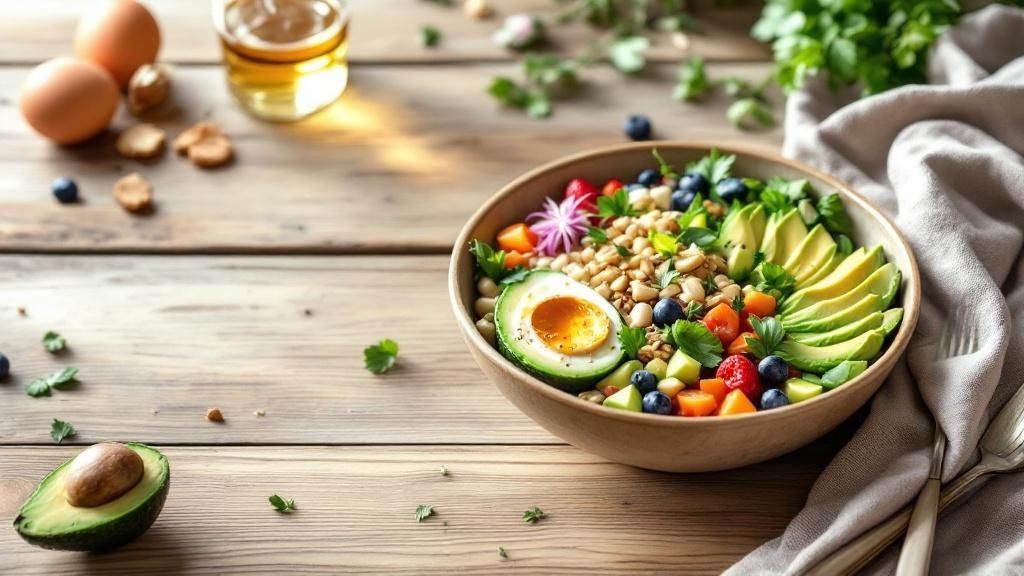
Even when the basics are clear, very specific questions often still come up in everyday life. Here, I've gathered the most common uncertainties about the Paleo diet and answered them clearly and directly—so you can get started with confidence and all the information you need.
Think of this section as your quick reference guide—one that clears up any remaining doubts and gives you the confidence you need for your journey.
Isn't Paleo simply a low-carb diet?
Not necessarily. Although giving up grains and sugar eliminates many typical sources of carbohydrates, Paleo is not automatically Low-Carb.
In fact, you can consume a considerable amount of carbohydrates from starchy vegetables such as sweet potatoes, pumpkin, or parsnips, as well as plenty of fruit. You alone determine the amount of carbohydrates—simply adjust it to your personal needs and activity level.
Can I drink coffee on the Paleo diet?
This question is a matter of debate in the Paleo community. If you take a strict view, coffee—as a product made from roasted beans—is not Paleo.
However, many people take a more pragmatic approach and allow themselves high-quality black coffee in moderation. After all, it also offers health benefits, such as a high concentration of antioxidants. Ultimately, it is your personal decision. Test how your body reacts to it. Perhaps taking a break will do you good, or you may simply enjoy your morning coffee without a guilty conscience.
What about alcohol?
As with coffee, the same applies here: Alcohol is an agricultural product and, strictly speaking, does not fit into the original Paleo concept. It also provides empty calories and can place stress on your metabolism.
If you still do not want to give it up completely, clear spirits such as vodka (made from potatoes) or dry wine in small amounts are the better choice. However, you should avoid sugary cocktails or beer (grains!).
Does the Paleo diet also work for vegetarians or vegans?
That is a real challenge. The classic Paleo diet is very heavy on meat and fish, which makes following it as a vegetarian or vegan complicated. Since legumes, grains, and most soy products are excluded, it becomes difficult to meet your protein needs.
One compromise is the “Pegan” diet (Paleo + Vegan). It combines the principles of both worlds, focusing on vegetables, nuts, seeds, and healthy fats, while allowing legumes in small amounts. However, this requires very careful planning to avoid nutrient deficiencies.
It is important to view the Paleo principles as a flexible framework. It is not about dogmatic rules, but about finding a nutrient-rich, anti-inflammatory way of eating that suits you.
Every body is different and responds individually to dietary changes. If you want to know exactly which nutrients your body really needs or how your metabolism works, the analyses from mybody-x.com can provide valuable insights. Discover with a DNA metabolism test how to perfectly tailor your diet to your genetic predisposition.



Share now:
Keto diet: what it involves and who it isn’t suitable for
Switching your metabolism to fat burning: what really happens