

Health optimization: 70% do not benefit from standard approaches
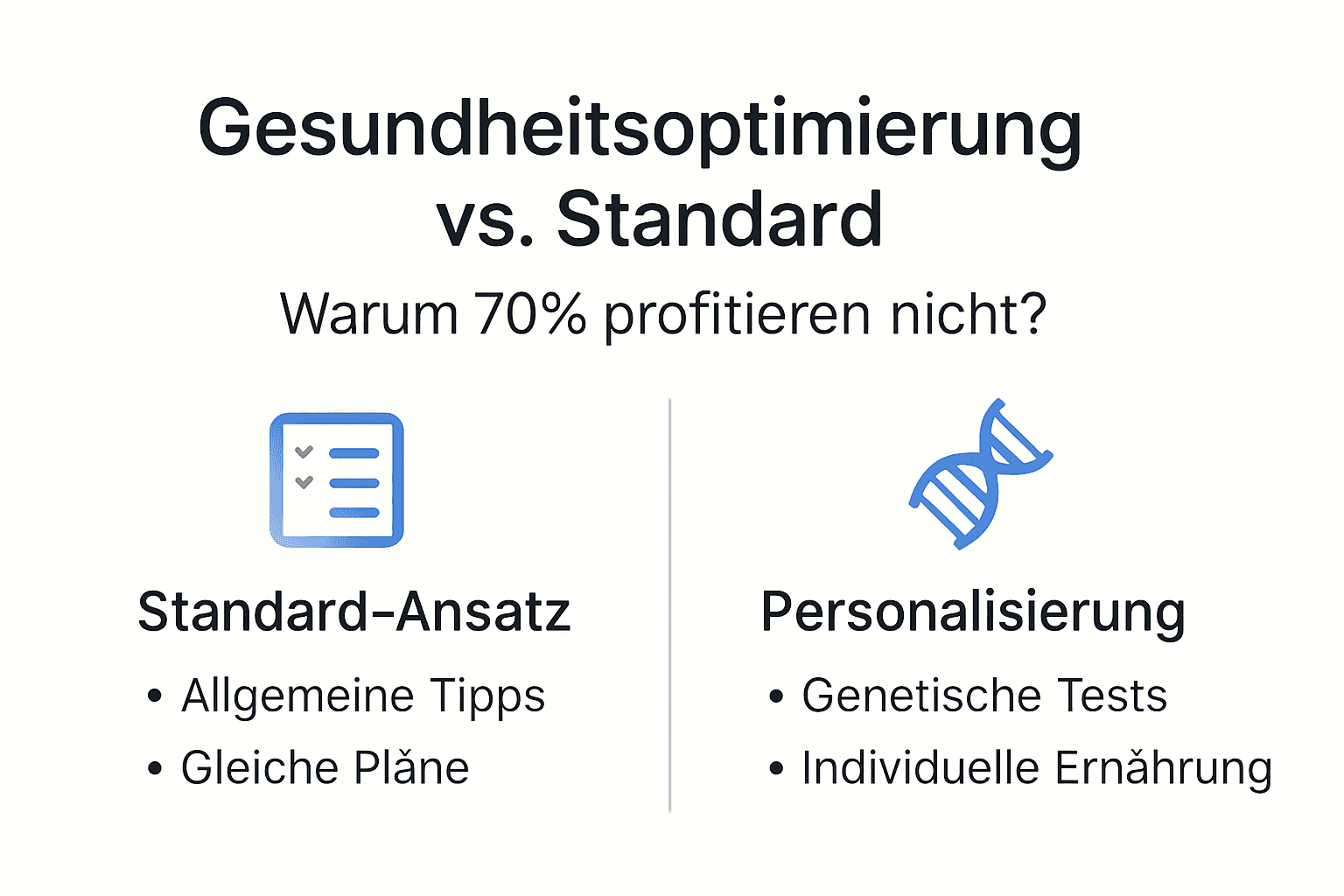
More than 70% of people do not benefit optimally from standard nutrition recommendations. This surprising finding shows that general health advice does not work for many people. Health optimization uses individual genetic and metabolic data to sustainably improve nutrition, lifestyle, and well-being. Personalized approaches significantly increase the chances of success.
Table of contents
- Key insights at a glance
- What does health optimization mean? Foundations and dimensions
- How do genetic and metabolic tests work? Technical and scientific insights
- The Role of the Microbiome in Health Optimization
- Personalized Nutrition and Lifestyle Strategies: From Data to Practical Implementation
- What is often misunderstood: Common misconceptions and facts
- Data and privacy protection in modern health analyses
- Practical implementation of personalized health optimization
- Discover personalized health solutions at mybody®x
- Frequently Asked Questions About Health Optimization
Key insights at a glance
| Point | Details |
|---|---|
| Individual data foundation | Genetic, metabolic, and microbial analyses enable precise health strategies for each person. |
| Personalization is decisive | Customized nutrition and lifestyle choices significantly increase success rates compared with standard recommendations. |
| Clarifying misconceptions | Many people believe standard diets work for everyone and fear data privacy risks without justification. |
| Interdisciplinary consultation | Professional guidance increases the chances of implementation and therefore sustainable health success by 40%. |
What does health optimization mean? Foundations and dimensions
Health optimization is the scientifically grounded improvement of health and quality of life through targeted measures. It is based on integrating individual data from genetics, metabolism, and the microbiome. Unlike general wellness or beauty measures, it aims for measurable, long-term results.
The most important dimensions include:
- Genetic analyses: Identifying hereditary predispositions related to metabolic processes, nutrient requirements, and disease risks.
- Metabolic tests: Assessing current metabolic parameters such as blood sugar, lipid levels, and hormonal balance.
- Microbiome analyses: Examining the gut flora to optimize digestion, immune function, and nutrient absorption.
- Lifestyle integration: Adjusting nutrition, exercise, and stress management based on individual results.
The long-term goals are preventing chronic diseases, enhancing physical and mental performance, and achieving sustainable well-being. Health optimization clearly distinguishes itself from short-term diet trends and relies on evidence-based strategies.
How do genetic and metabolic tests work? Technical and scientific insights
Genetic and metabolic tests analyze biological samples such as saliva or blood to create individual health profiles. They identify genetic variants, known as SNPs (Single Nucleotide Polymorphisms), which influence how the body processes nutrients, responds to exercise, or develops disease risks.
The most important test parameters include:
- Genetic markers: SNPs in genes involved in metabolism, vitamin utilization, and fatty acid breakdown.
- Metabolic values: Blood sugar, cholesterol, triglycerides, and inflammation markers.
- Hormone profiles: Cortisol, insulin, and thyroid hormones used to assess the endocrine system.
- Nutrient status: Vitamins, minerals, and trace elements used to identify deficiencies.
Tests are conducted in ISO-certified laboratories to ensure scientific validity and reproducibility. Personalized nutrition successes are based on the analysis of genetic diversity, as current research shows. A DNA test for nutrition provides specific recommendations for nutrient optimization.
Pro tip: When selecting providers, look for ISO certifications and transparent privacy policies. Reputable providers pseudonymize samples and destroy them after analysis.
The Role of the Microbiome in Health Optimization
The gut microbiome consists of trillions of microorganisms that significantly influence digestion, immune function, and metabolism. A balanced microbiome composition promotes nutrient absorption and protects against inflammation. Disruptions to the gut flora can contribute to chronic diseases, obesity, and autoimmune problems.
Microbiome analyses provide targeted insights into:
- Bacterial diversity: Greater diversity correlates with better health and resilience.
- Functional genes: The microbiome's ability to produce short-chain fatty acids or synthesize vitamins.
- Dysbiosis markers: Imbalances that indicate inflammation or metabolic disorders.
Integrating microbial data into health strategies enables personalized nutrition recommendations, for example through prebiotic fiber or fermented foods. These measures measurably improve gut health and increase the effectiveness of other optimization approaches. Learn more about the meaning of the microbiome in our health portal.

Personalized Nutrition and Lifestyle Strategies: From Data to Practical Implementation
Personalized nutrition significantly outperforms standard diets because it takes individual genetic and metabolic differences into account. The following table shows key differences:
| Aspect | Standard nutrition | Personalized nutrition |
|---|---|---|
| Basis | General recommendations | Genetic and metabolic data |
| Nutrient intake | Uniform guidelines | Individually adapted as needed |
| Chances of success | Low (approx. 30%) | High (over 70%) |
| Sustainability | Short-term effects | Long-term behavioral changes |
Implementation takes place in clearly defined steps:
- Understand test results: Analyze genetic and metabolic findings with professional support.
- Adjust nutrition: Integrate specific nutrients, macronutrient ratios, and foods based on individual needs.
- Integrate into daily life: Develop practical routines that fit seamlessly into your daily schedule.
- Monitor progress: Regularly check parameters such as energy, digestion, and metabolic markers.
The chances of success increase by 40% with professional support during implementation. Interdisciplinary counseling combines nutritional counseling, medical expertise, and behavioral psychology. Learn more about personalized nutrition in our health portal.
Pro tip: Combine personalized nutrition with regular exercise and stress management. The synergy of these factors sustainably maximizes the health benefits.
What is often misunderstood: Common misconceptions and facts
Many people have inaccurate ideas about health optimization. Correcting these misconceptions is crucial for realistic expectations and successful application.
Common misconceptions:
- Health optimization is purely cosmetic: Wrong. It aims for measurable improvements in metabolism, immune function, and disease prevention, not outward appearance.
- Standard recommendations work for everyone: More than 70% of people do not benefit optimally from general diets due to genetic differences.
- Genetic results are destiny: Genetic tests show risk profiles and predispositions, not unchangeable diagnoses. Lifestyle significantly modulates gene expression.
- Privacy risks are high: Switzerland has strict data protection laws. Reputable providers pseudonymize samples and destroy them after analysis.
These clarifications help put the scientific basis and practical benefits of health optimization into better perspective. Informed users demonstrably achieve better results.
Data and privacy protection in modern health analyses
Swiss data protection law imposes strict requirements for processing sensitive health data. Providers must pseudonymize samples so that they cannot be directly linked to individuals. After laboratory analysis, samples are destroyed to prevent data misuse.
Key protective measures include:
- Pseudonymization: Samples receive unique codes without names or dates of birth.
- Secure storage: Encrypted databases with access controls prevent unauthorized access.
- Transparency: Clear information about data collection, storage duration, and purpose of use.
- Consent: Active user consent before testing and data processing.
These measures build trust and enable the secure use of personalized health analyses. They are required by law and regularly audited.
Pro tip: Choose only providers with clearly defined GDPR-compliant processes and ISO certification. Carefully review privacy policies before carrying out the test.
Practical implementation of personalized health optimization
The successful implementation of personalized health optimization follows a structured process that translates scientific findings into everyday routines.
The steps at a glance:
- Test procedure: Conveniently collecting saliva, blood, or stool samples at home.
- Laboratory analysis: Evaluation in ISO-certified laboratories according to scientific standards.
- Integration with lifestyle: Comparing test results with current eating and exercise habits.
- Personalized recommendations: Developing individual strategies for nutrition, supplementation, and behavioral adjustments.
- Monitoring and adjustment: Regular monitoring of metabolic markers, well-being, and performance for continuous optimization.
Long-term success is measured using objective parameters such as improved blood values, stable digestion, and subjective well-being. Interdisciplinary consultation increases the chances of success by 40% because nutritionists, physicians, and behavioral experts work together to address individual obstacles.
The combination of scientific precision and practical everyday usability makes personalized health optimization sustainably effective. It replaces short-term diets with lasting lifestyle improvements.
Discover personalized health solutions at mybody®x
mybody®x offers comprehensive genetic, metabolic, and microbial tests that precisely assess your individual health needs. Our ISO-certified laboratory analyses deliver scientifically validated results with specific recommendations for nutrition, lifestyle, and prevention. You benefit from personal guidance, the highest Swiss data protection standards, and the security of pseudonymized sample processing.
With a DNA test from mybody®x, you gain insights into your genetic predispositions related to metabolism and nutrient requirements. The microbiome test from mybody®x analyzes your gut flora and enables targeted digestive optimization. Start your health optimization with mybody®x now and experience measurable improvements in your well-being.
Frequently Asked Questions About Health Optimization
How long does it take to notice improvements?
Initial effects, such as better digestion or more stable energy levels, often become noticeable within 2 to 4 weeks of changing your diet. Measurable changes in metabolic markers usually require 8 to 12 weeks of consistent implementation.
Are genetic tests also useful for healthy people?
Yes, definitely. Genetic tests identify predispositions and optimization potential before symptoms appear. Prevention is more effective and cost-efficient than treating established diseases.
How is my privacy protected during data processing?
Swiss providers pseudonymize samples and destroy them after analysis. Data is stored in encrypted form with strict access restrictions in accordance with Swiss data protection requirements. Your consent can be withdrawn at any time.
Can the results also be used without professional guidance?
Basically, yes, but professional guidance significantly increases the chances of success. Experts help interpret results correctly and develop personalized strategies that can realistically be implemented in everyday life.
What costs are associated with personalized health analyses?
Costs vary depending on the scope of the tests, ranging from 150 to 500 Swiss francs. Many providers offer free shipping above a minimum order value and money-back guarantees if no results are achieved.



Share now:
Genetic analysis: three tests that share the same name
DNA Diet Test 2026: Your guide to personalized weight loss