
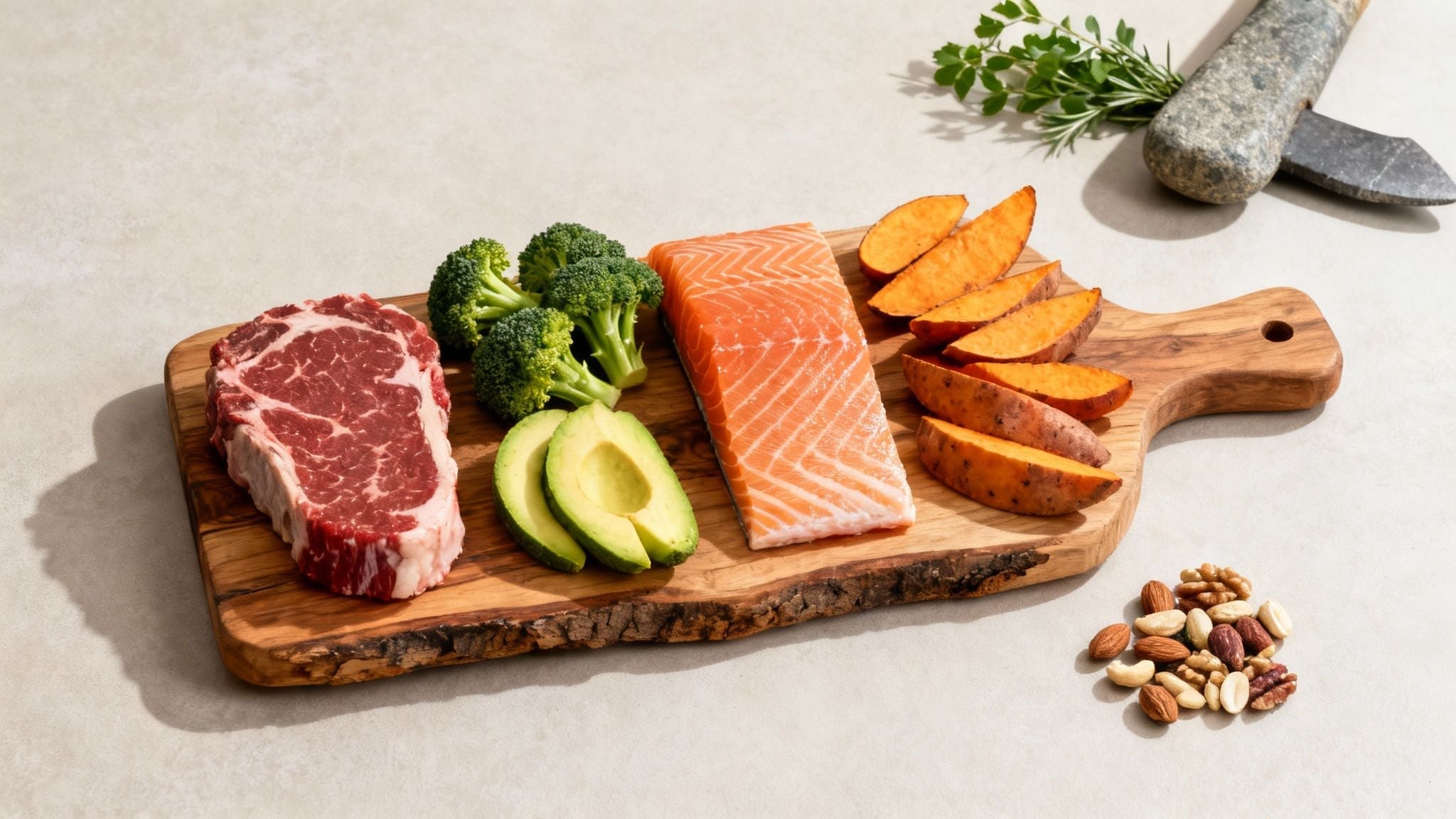
Paleo diets: Your complete guide to the Stone Age diet
Are you wondering what the hype around Paleo is really about? Imagine eating only what our ancestors could hunt, fish, or gather in the Stone Age. That's the simple yet incredibly powerful idea behind this way of eating.
What Paleo really means
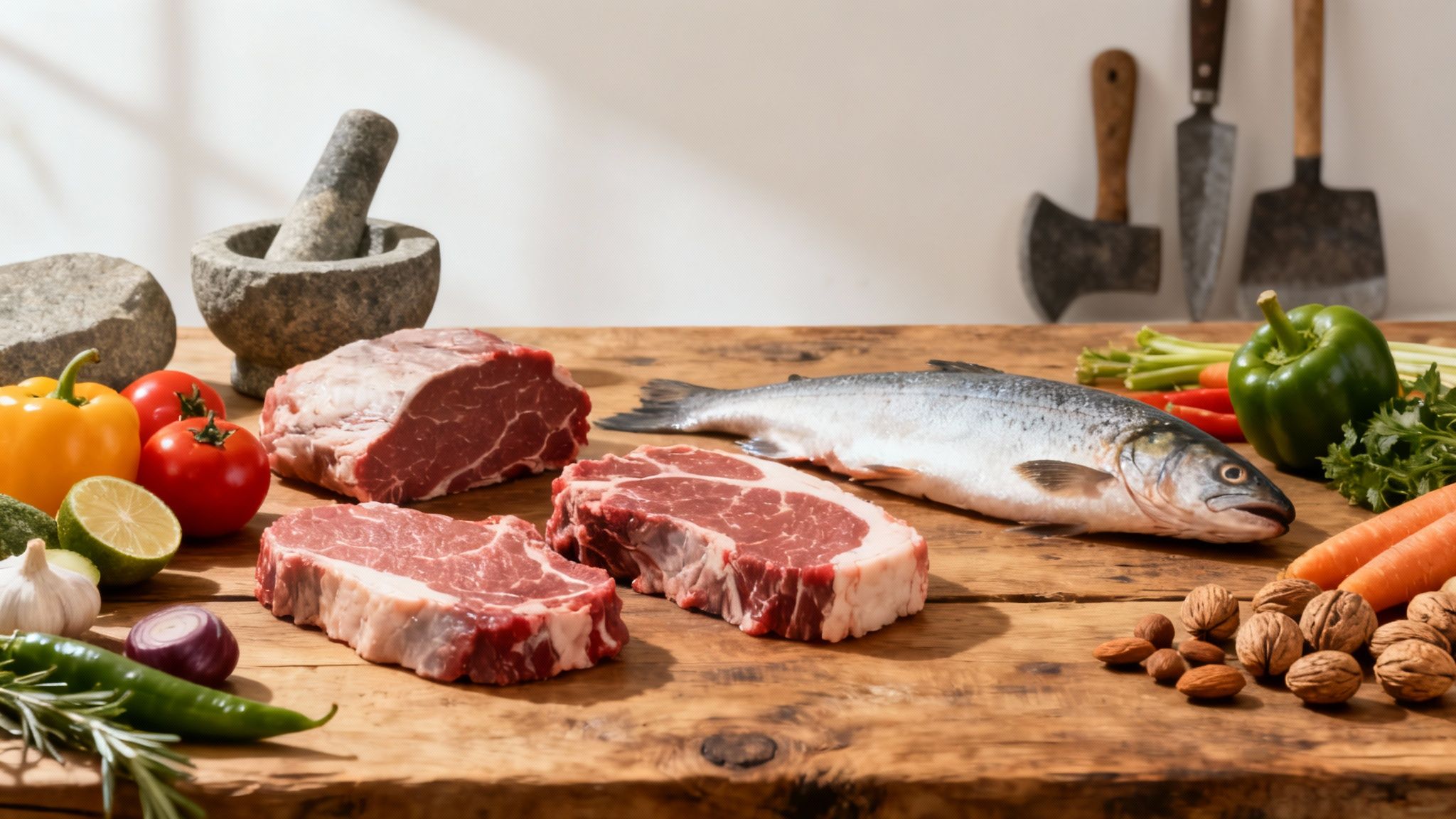
Paleo is far more than just a diet—it is a philosophy. A way to return to the roots of our nutrition. The central message: Our bodies are still genetically programmed for the food eaten by our hunter-gatherer ancestors. Agriculture and industry have radically changed what is on our plates over the past few millennia, but our genes haven't caught up.
Many experts consider this “genetic mismatch” with modern, highly processed foods to be one of the main causes of lifestyle diseases. Paleo aims to close this gap by refocusing on real, unprocessed foods.
The basic principles of the Stone Age diet
At its core, the Paleo diet follows clear, simple rules. It's about focusing on what nature gives us directly.
So what ends up on your plate?
- High-quality meat and fish: Ideally from pasture-raised animals or wild-caught sources. This ensures a top-quality supply of protein and healthy fats.
- Plenty of vegetables: From leafy spinach to sweet potatoes, vegetables provide essential fiber, vitamins, and minerals.
- Fruit in moderation: Berries and seasonal fruit in particular are excellent because they provide natural energy and valuable antioxidants.
- Healthy fats: Nuts, seeds, avocados, and good oils such as olive or coconut oil are essential.
- Eggs: True nutritional powerhouses and a staple of the meal plan.
At the same time, you leave out everything that only came onto our tables with agriculture and livestock farming.
Strictly avoiding grains, legumes, dairy products, refined sugar, and highly processed foods is the cornerstone of the Paleo philosophy. This relieves the strain on your body and finally gives it what it naturally knows and can process optimally.
By the way, this isn't just a passing idea from some food bloggers. From a nutritional perspective, the Paleo diet is considered healthy because its high proportion of vegetables and fruit gives it an enormous nutrient density while drastically reducing the consumption of empty calories from sugar and white flour. You can find more on the scientific assessment, for example, in this article about the Paleo diet on stern.de.
More Than Just Food
For many people, Paleo is a holistic lifestyle. In addition to diet, other aspects that were part of everyday life for our ancestors also come into focus: natural, regular movement, sufficient sleep, and a more mindful approach to stress.
It is not about copying life in the Stone Age. No one expects you to hunt with a spear. The first and most important step is much simpler: consciously shopping for high-quality, real foods.
Your Paleo Food Pyramid
Forget the classic food pyramid you remember from school. With Paleo diet types, we simply turn the familiar structure upside down. The focus is on foods your body has known for thousands of years and can process optimally.
Instead of using grain products as the foundation, we rebuild the pyramid from the ground up. It is based on nutrient density and natural availability, just as in the Stone Age. The goal is clear: to provide your body with as many valuable vitamins, minerals, and macronutrients as possible while avoiding anything that could promote inflammation or be difficult to digest.
This visual representation shows you the hierarchy of the Paleo diet at a glance.
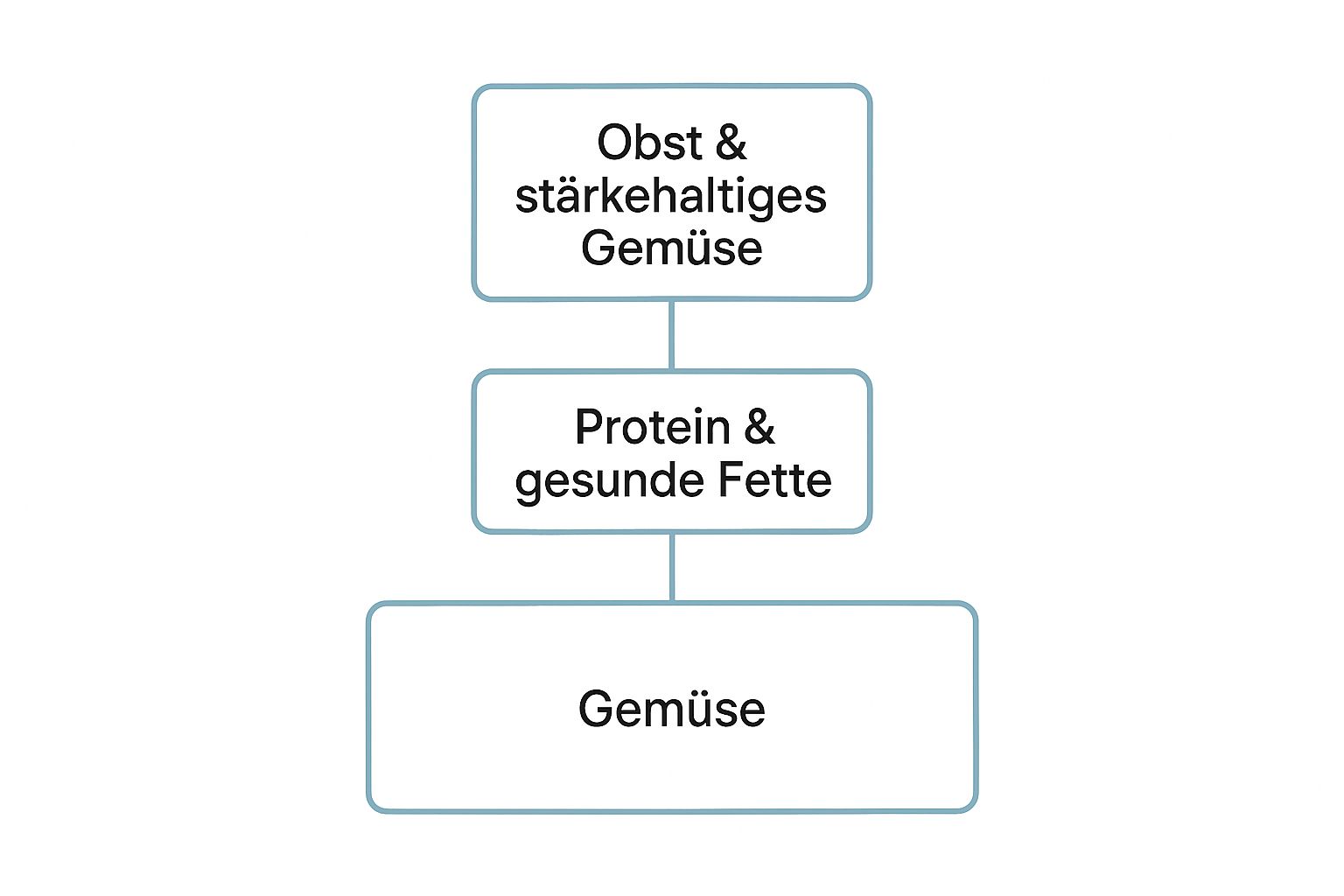
The graphic makes it clear: Nutrient-rich vegetables form the foundation, while fruit and starchy vegetables should be enjoyed in moderation.
The Foundation: Vegetables in Every Color
The absolute foundation of your Paleo diet is vegetables. They should make up the largest part of your plate at every meal. Leafy greens such as spinach, lettuce, and kale, as well as broccoli, cauliflower, bell peppers, and zucchini, are true powerhouses.
They provide essential vitamins, minerals, and fiber, all with a pleasingly low calorie density. The fiber is not only invaluable for healthy digestion but also keeps you feeling full for a long time. Aim for a colorful variety, as the colors ensure that you consume a broad spectrum of antioxidants that protect your cells from stress.
The Middle: Protein and Healthy Fats
One level above vegetables are high-quality protein sources and healthy fats. They are essential for muscle growth, hormone production, and maintaining stable energy levels throughout the day.
- Protein: Choose grass-fed meat, wild-caught fish, and free-range eggs. These sources provide not only high-quality protein but often a much better ratio of omega-3 to omega-6 fatty acids.
- Healthy fats: Avocados, nuts, seeds, and high-quality oils such as olive oil or coconut oil are indispensable. They provide long-lasting energy, help absorb fat-soluble vitamins, and are extremely important for your brain function.
This exact combination of protein and fat is the key to keeping cravings at bay and stabilizing your blood sugar level.
The top: Fruit and starchy vegetables
At the very top of the pyramid, you will find fruit and starchy vegetables such as sweet potatoes and squash. They are completely Paleo-compliant and healthy, but because they contain more sugar (fructose) or starch, they should generally be enjoyed in moderation.
Berries are often the best choice here. Compared with other types of fruit, they contain less sugar while also being packed with antioxidants. How many carbohydrates from these sources are ideal for you depends greatly on your personal lifestyle and activity level. An elite athlete naturally has very different needs from someone with an office job.
The logic of the Paleo pyramid is actually quite simple: Eat plenty of nutrient-dense, low-calorie foods (vegetables) as a base. Then supplement them strategically with energy-rich proteins, fats, and a moderate amount of natural carbohydrates.
To help you keep track of what can and cannot go on your plate, we have put together a brief overview for you.
| Food group | Allowed and recommended | To avoid |
|---|---|---|
| Vegetables | Leafy greens, broccoli, cauliflower, bell peppers, zucchini, asparagus (almost anything) | Corn (classified as a grain) |
| Fruit | Berries, apples, bananas, oranges, avocados (in moderation) | Excessive consumption of very sugary fruit |
| Meat & Fish | Grass-fed beef, chicken (free-range), game, salmon (wild-caught), tuna | Processed meat (sausage with additives), meat from factory farms |
| Fats & Oils | Olive oil, coconut oil, avocado oil, ghee, nuts, seeds | Plant oils (sunflower oil, rapeseed oil), margarine, trans fats |
| Drinks | Water, herbal tea, black coffee | Sugary drinks, soft drinks, milk, juices (except freshly squeezed juice in moderation) |
This table is intended to serve as a quick guide for shopping and planning your meals.
Why certain foods are avoided
But why exactly do you avoid grains, legumes, and dairy products with this type of diet? The reason lies in so-called antinutrients. These are substances that plants have developed over millions of years to protect themselves from predators. Examples include lectins and phytic acid, which you find primarily in grains and legumes.
These substances can block the absorption of important minerals such as iron, zinc, and calcium in the gut and can cause digestive problems or low-grade inflammatory reactions in some people. If you want to learn more about what exactly a nutrient is, you can find valuable information about nutrients in our article.
By avoiding these food groups, you give your gut a break. Many people report feeling significantly better and experiencing noticeably improved digestion after just a short time.
Find your personal Paleo variation
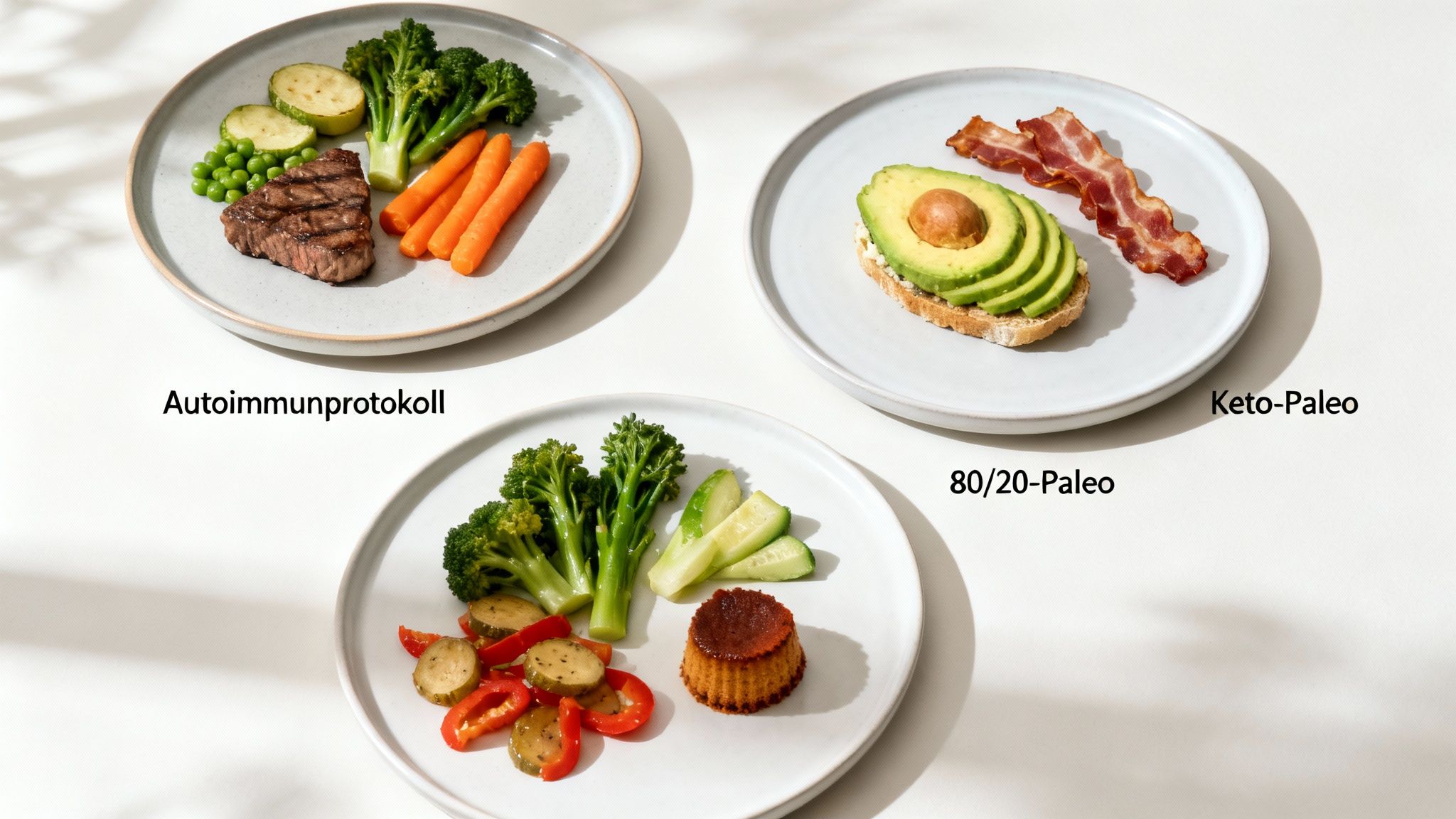
Paleo is anything but a rigid set of rules that you simply check off blindly. Think of it instead as a flexible toolkit that you can adapt to your goals, daily life, and personal needs. Every body works differently. What works great for one person may not be the best path for another.
And this is exactly where the Paleo philosophy shows its greatest strength: it gives you room for individuality. Within the Paleo world, there are different approaches that vary in their strictness and focus. The real goal is to find the version that feels right for you—and that you can stick with happily in the long term. Let's take a look at what they are.
The Autoimmune Protocol (AIP) for Sensitive Bodies
The autoimmune protocol, or AIP for short, is probably the strictest form of the Paleo diet. It was specifically developed for people with autoimmune diseases such as Hashimoto's, rheumatoid arthritis, or Crohn's disease. The idea behind it is simple: to relieve your immune system as much as possible.
With AIP, not only the usual Paleo no-gos are eliminated, but also additional food groups for a certain period that could potentially fuel inflammation or irritate the gut.
- Eggs: Although they play an important role in standard Paleo, they can trigger the immune system in some people.
- Nuts and seeds: They, too, contain substances that can be problematic for an already stressed gut.
- Nightshades: These include tomatoes, peppers, eggplants, and potatoes. Their alkaloids can intensify inflammatory reactions in sensitive people.
Important to know: AIP is not a long-term diet, but rather a kind of detective work. After a strict phase lasting several weeks or months, you gradually reintroduce the omitted foods and identify your personal intolerances in a targeted way.
Keto-Paleo: the fat-focused fusion
The keto-Paleo diet takes the best of both worlds. It combines the basic principles of Paleo with those of the ketogenic diet. In concrete terms, this means you continue to eat only natural, unprocessed foods, while reducing your carbohydrate intake to an absolute minimum—usually under 30 grams per day.
This shifts the focus heavily toward healthy fats from avocados, coconut oil, and animal sources, supplemented by a moderate amount of protein. Fruit and starchy vegetables such as sweet potatoes are almost completely eliminated. The goal is to bring your body into ketosis, a metabolic state in which it uses fat instead of carbohydrates as its primary energy source.
The pragmatic 80/20 approach for greater flexibility
For anyone who wants to follow Paleo in everyday life without becoming dogmatic, the 80/20 approach is simply perfect. The rule is brilliantly simple: For 80 % of the time, you follow the Paleo principles strictly. The remaining 20 % are reserved for mindful exceptions.
This approach makes the diet practical for everyday life and socially sustainable. A slice of birthday cake at a party or a glass of wine with friends won’t immediately derail your entire plan; instead, they become planned moments of enjoyment.
This flexibility makes it much easier to stick with the approach and view your diet not as an obligation, but as a positive decision for yourself. It’s about balance, not perfectionism.
Although the community is growing, Paleo is still a niche movement in Germany. A 2025 survey shows that only around 1% of Germans follow Paleo principles. What’s interesting, though, is that more than 77% of adults regularly eat plant-based foods, showing a general openness to mindful dietary choices. You can find more details about this survey in the GFI Europe study.
Finding the right approach for you is a very personal process. Your body gives you the best clues. If you’d like to learn how to interpret these signals better and tailor your diet more precisely to your needs, take a look at our guide to personalized nutrition.
Paleo under the microscope: What does it really offer?
No dietary approach is perfect, and that applies to Paleo too. To make the right decision for you, we need to take an honest look at both sides of the coin. So let’s take an open-minded look at what the Stone Age diet can do—and where its limitations or challenges lie.
This honest examination is intended to help you get a sense of whether this path really suits your body and lifestyle. The aim is not to glorify Paleo, but to give you a realistic perspective.
Reasons to Choose the Paleo Diet
Many people who switch to Paleo report noticeable, positive changes. This is usually due to the fundamental principles on which this way of eating is based.
-
Stable blood sugar levels: Without sugar and the quickly digested carbohydrates from grains, sharp blood sugar spikes and the dreaded energy crashes that follow are avoided. The result? A much more consistent energy level throughout the day and significantly fewer cravings.
-
Successful weight loss: Paleo focuses on nutrient-rich foods that keep you properly full. The high amounts of protein and fiber provide a long-lasting feeling of satiety. This makes it easier to maintain a natural calorie deficit without constantly having to battle hunger.
-
Better nutrient intake: Your meal plan is packed with vegetables, high-quality meat, fish, and healthy fats. This generally also means a generous supply of vitamins, minerals, and essential fatty acids.
-
Fewer processed foods: You automatically leave artificial additives, trans fats, and empty calories behind. Your body is relieved and can focus entirely on processing real, unprocessed food.
The decisive advantage of Paleo is its focus on quality and nutrient density. You learn to give your body exactly what it needs and leave out what would only burden it.
A Critical Look at Paleo
Despite the many potential benefits, there are of course also legitimate criticisms and challenges that you should be aware of. Not every aspect of the Paleo diet is ideal for every person or life situation.
A key criticism is the complete elimination of entire food groups. Legumes and whole grains are strictly avoided, even though they can provide valuable fiber, plant-based protein, and important nutrients as part of a balanced diet. Many nutritionists consider this radical exclusion unnecessary.
Another important point is the potential risk of nutrient deficiencies. Calcium intake in particular can become a real challenge, since dairy products, the main source, are eliminated completely. Green vegetables such as kale and broccoli do contain calcium too, but you have to be very deliberate about eating enough of them to meet your needs.
The social and practical hurdles
In addition to purely dietary issues, there are also some very practical hurdles in everyday life. Paleo can be quite challenging socially.
- Eating at restaurants: Dining out can quickly become complicated. Not every restaurant has dishes on the menu that are 100% Paleo-compliant. Often, you'll need to ask questions and request changes.
- Invitations from friends: An invitation to dinner can be stressful. Either you inform your hosts in advance about your diet, or you make a pragmatic exception—which, of course, goes against the strict concept.
- Cost and effort: High-quality grass-fed meat, wild-caught fish, and organic vegetables are simply more expensive than conventional products. At the same time, it takes more time and planning to prepare everything fresh rather than simply reaching for ready-made products.
Paleo shares some basic principles with other low-carbohydrate diets, such as the ketogenic diet, which also focuses on avoiding grains and sugar. If this approach interests you, you'll find more fascinating insights in our article about the keto diet.
Ultimately, the decision for or against Paleo is a very personal one. Honestly weigh the potential benefits against the practical and nutritional challenges. That's the only way to find the approach that truly works for you.
Successfully overcoming typical Paleo hurdles

Every dietary change has its pitfalls—that's completely normal. When you switch to Paleo, you'll probably encounter a few classic stumbling blocks that make getting started difficult for many people.
But don't worry: With the right strategies in hand, you'll be well prepared. These hurdles aren't there to hold you back, but to be overcome with confidence. And the good news is that typical early challenges can be managed well with some planning and a few clever tricks. This quickly turns the initial challenge into a positive habit.
Managing costs cleverly
One of the first concerns many people have is their budget. High-quality meat, fresh fish, and mountains of organic vegetables can quickly become expensive—there's no question about it. Studies show that a Paleo diet can indeed be more expensive than a traditional mixed diet. Anyone who meets their protein needs solely with organic meat will have to dig deeper into their pockets.
But Paleo doesn't have to be a luxury. With these tips, you can keep costs under control:
- Shop seasonally and locally: Seasonal fruits and vegetables are not only packed with nutrients, but also considerably cheaper. A trip to the farmers’ market is often doubly worthwhile.
- Discover more affordable cuts of meat: It doesn’t always have to be expensive fillet. Braised dishes made with cheaper cuts such as goulash meat or shank are not only budget-friendly, but often incredibly delicious and nutritious.
- Take advantage of special offers and freeze food cleverly: Buy meat and fish in larger quantities when they’re on sale, and freeze them in portions. This will save you a lot of money in the long run.
Managing the time required in everyday life
Paleo means cooking fresh. And yes, that takes time. In a busy daily routine between work, family, and hobbies, this can quickly become a burden. The key to success has a name: Meal Prep.
By deliberately setting aside time to meal prep once or twice a week, you save a great deal of time and stress during the week. This way, you always have a healthy, Paleo-compliant meal ready to go and never even get tempted to reach for unhealthy snacks.
Simply plan your meals for the coming week on Sunday. Cook a large portion of sweet potatoes, sauté some chicken breast, and chop a large bowl of vegetables in advance. This way, you can put your meals together in just a few minutes during the week.
Overcoming cravings for bread and sweets
Your body is a creature of habit. If you suddenly take away sugar and grains, it will protest—usually in the form of cravings. This is the toughest challenge for many people at first, but there are effective strategies for this too.
Make sure you eat enough protein and healthy fats with every meal. These two keep you feeling full for an extremely long time and stabilize your blood sugar levels. A handful of nuts, a hard-boiled egg, or a few slices of avocado can work wonders when hunger strikes.
Sometimes, however, there’s more behind cravings. Undiscovered intolerances can really throw your metabolism off balance. If you feel that your body reacts strangely to certain foods, it’s worth taking a closer look. A test can provide clarity about how to get tested for food intolerances and help you understand your body even better.
Paleo myths debunked: Your most important questions, answered honestly
You now have a good overview of the Paleo principle. But you probably still have a few specific questions going through your mind. That’s completely normal! Such a fundamental change always raises detailed questions that need to be clarified.
That is exactly what this section is for. We have collected the most pressing questions we encounter time and again in everyday life and provide short, clear, and above all honest answers. Think of it as your personal quick Q&A session to clear up any lingering uncertainties.
Do I have to give up carbohydrates completely on Paleo?
No, that is one of the biggest and most persistent myths surrounding Paleo. Paleo is not automatically a low-carb diet, even if it may seem that way at first glance.
It is true that classic carbohydrate-heavy foods such as bread, pasta, rice, and, of course, sugar disappear from the menu. But that does not mean you stop consuming carbohydrates altogether. Quite the opposite: You replace empty, nutrient-poor carbs with high-quality, nutrient-rich alternatives.
- Fruit: Berries, apples, and bananas provide quick energy and are packed with vitamins.
- Starchy vegetables: Sweet potatoes, squash, parsnips, and carrots are fantastic sources of carbohydrates. They keep you full for a long time and provide you with important fiber.
The great thing about Paleo is its flexibility. An athlete who trains every day has very different energy needs from someone with an office job. You can—and should—adjust the amount of carbohydrates to your personal needs.
Is Paleo suitable for vegetarians or vegans?
A perfectly valid question. The honest answer is: It is very, very difficult. The classic Paleo diet places a strong emphasis on animal proteins from meat, fish, and eggs. They are one of the central pillars of meeting nutritional needs.
For vegetarians who still eat eggs and perhaps ghee (clarified butter), it is achievable with good planning, but it is already a real challenge. For vegans, eating a fully balanced diet according to the classic Paleo rules is almost impossible.
The main reasons for this are:
- Elimination of plant-based protein sources: Legumes such as lentils, beans, and chickpeas are off-limits on the classic Paleo diet. Soy products such as tofu are also excluded, leaving out the most important vegan sources of protein.
- Risk of nutrient deficiencies: Without animal products and legumes, it becomes extremely challenging to meet the need for essential amino acids, vitamin B12, iron, and calcium.
Modern approaches like “Pegan”—a fusion of Paleo and vegan—do try to unite both worlds. However, this requires extremely careful planning and usually the targeted use of dietary supplements to reliably prevent deficiencies.
What is the best way to get started with Paleo?
Taking the plunge is not the right approach for everyone. A radical change from one day to the next can quickly lead to overwhelm and frustration. A gradual approach is much more sustainable, giving your body—and your mind—time to adapt.
A tried-and-tested approach is to make the change week by week:
- Week 1: Focus only on breakfast. Replace cereal or bread rolls with scrambled eggs and vegetables or a smoothie with berries and coconut milk.
- Week 2: Add lunch. A large salad with chicken breast or a vegetable stir-fry with fish are perfect options.
- Weeks 3 & 4: Now plan your dinner and snacks according to Paleo principles as well.
At the same time, you should make your kitchen “Paleo-friendly.” Make room by giving away or disposing of all “forbidden” foods such as pasta, flour, sugar, and processed snacks. Instead, stock your refrigerator and pantry with fresh vegetables, quality meat, eggs, nuts, and healthy fats. Starting with no temptations within reach makes getting started infinitely easier.
Can I really lose weight with Paleo?
Yes, absolutely. For many people, weight loss is one of the biggest and fastest effects of the Paleo diet. This success is based on several mechanisms that work together intelligently—and it is not primarily about counting calories.
The main reason for the weight-loss success is that you automatically avoid empty calories from refined sugar, white flour, and processed snacks. Instead, you eat foods that are naturally nutrient-rich and extremely filling. The high intake of protein and fiber keeps your blood sugar levels stable and prevents cravings. You stay full and satisfied for longer.
This makes it much easier to achieve a natural calorie deficit, which is the basic prerequisite for any weight loss. You lose weight without feeling like you constantly have to go hungry. Your body is essentially programmed to use fat as an energy source instead of constantly craving its next sugar rush.
Every body is unique. Whether Paleo, Keto, or another dietary approach, what works best for you depends on your individual predisposition, metabolism, and goals. If you no longer want to guess but finally want to understand how your body works, the analyses from mybody® Lab GmbH are the perfect next step. Use a scientifically based test to find out which diet is truly right for you.
Discover your personal health analysis now at https://mybody-x.com.



Share now:
Switching your metabolism to fat burning: what really happens
How to find the right health test