
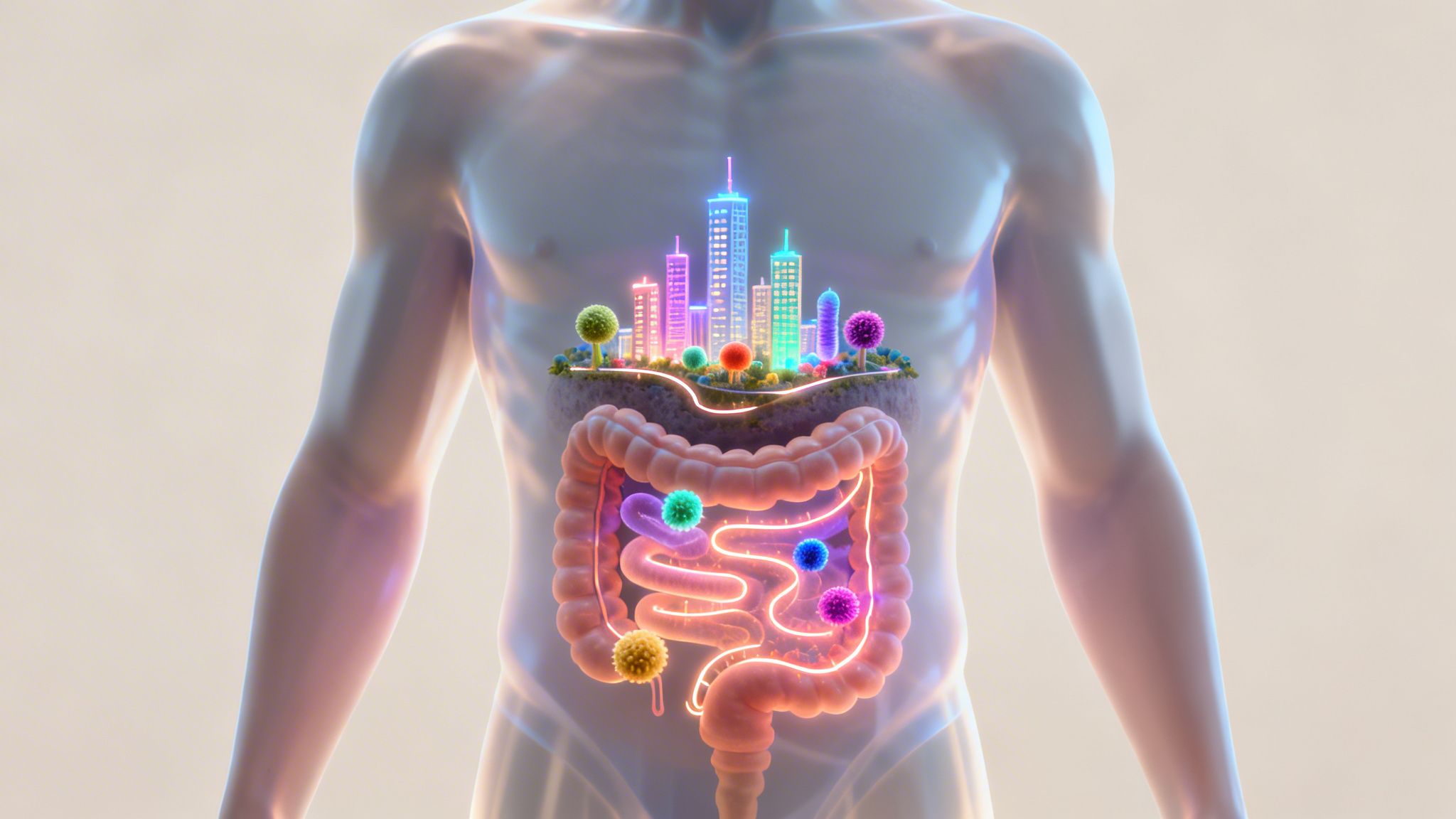
Understanding the gut microbiome and building it up strategically
Your gut microbiome is so much more than just part of your digestive system—think of it instead as a vibrant metropolis within you. Trillions of microorganisms live here and act as invisible architects of your health. They shape your well-being from the ground up.
Your gut as the center of your health

Imagine your gut as a huge, bustling city. The inhabitants of this city—countless bacteria, viruses, and fungi—together form your very own gut microbiome. Each of these tiny helpers has a specific role that goes far beyond mere digestion.
This complex ecosystem is so essential to your health that it is often referred to as the “second brain” for good reason. It is in constant communication with your body and influences fundamental processes that are absolutely essential for your daily well-being.
The hidden superpowers of your microbiome
The tasks performed by your countless gut inhabitants are remarkably diverse and affect almost every aspect of your life. They are the silent heroes working behind the scenes to ensure that you feel fit, energized, and simply good.
This table shows the most important tasks that a healthy gut flora performs for your body and how it directly influences your well-being.
The core functions of your gut microbiome
| Functional area | Description of the task |
|---|---|
| Digestion & Nutrients | Your gut bacteria help break down hard-to-digest food components. In the process, they even produce vital vitamins such as vitamin K and some B vitamins, which your body otherwise could not produce. |
| Immune System | About 70–80% of your immune cells are located in the gut. Your microbiome trains these cells, helps them distinguish friend from foe, and forms a strong protective barrier against pathogens. |
| Metabolism & Weight | The composition of your gut flora directly influences how many calories you extract from food and how your body stores fat. A healthy microbiome supports a stable body weight. |
| Mind & Mood | Through the so-called gut-brain axis, your gut bacteria are constantly communicating with your brain. They produce important neurotransmitters such as serotonin, the “happiness hormone,” and thus directly influence your mood and resilience to stress. |
In short, a healthy balance in this “gut metropolis” is the foundation of your vitality. If you would like to delve deeper into this fascinating world, you can read more in our article about what exactly the microbiome is and how it works: What Is the Microbiome?
A balanced gut microbiome is responsible for more than good digestion. It is a key factor in a strong immune system, a stable mental state, and even the regulation of your body weight.
When the gut metropolis descends into chaos
But what happens when this delicate balance is disrupted? Persistent digestive problems, unexplained fatigue, or even skin problems can be early signs that unrest is brewing in your gut metropolis.
This kind of imbalance, also known as dysbiosis, means that harmful bacteria gain the upper hand and displace the beneficial helpers. The result is often a chain reaction that affects your entire body. Sudden food intolerances or feeling drained despite eating a healthy diet often originate right here.
Truly understanding your body also means taking a look at this invisible world within you. A test from mybody-x.com can provide clarity and show whether your gut microbiome needs support.
Warning signs: When your microbiome gets out of balance
Your body is constantly sending signals. An uncomfortable feeling in your stomach, unexplained fatigue, or skin problems are often more than just annoying everyday complaints. They are frequently clear warning signs that your gut microbiome has become unbalanced—a condition that experts call dysbiosis.
This imbalance is not uncommon. It occurs when the delicate ecosystem of your gut inhabitants is disrupted by external or internal influences. Beneficial bacteria are displaced while harmful microorganisms gain the upper hand. But what exactly triggers this chaos in your “gut metropolis”?
The main causes of an imbalanced gut flora
The causes of dysbiosis are diverse and often deeply rooted in our modern lifestyle. Many factors can disrupt the balance of your microbiome, often several at the same time.
-
Antibiotics and medications: Antibiotics save lives by fighting harmful bacteria. Unfortunately, they do not distinguish between “good” and “bad” bacteria and can also destroy large parts of your beneficial gut flora. Other medications, such as painkillers or acid blockers, can also negatively affect the composition of your microbiome in the long term.
-
Chronic stress: Your gut and brain are closely connected through the gut-brain axis. Ongoing psychological or physical stress causes the release of stress hormones, which can weaken the gut barrier and promote the growth of harmful bacteria. A hormone test from mybody-x.com can help you detect a possible imbalance in your stress hormones.
-
Unbalanced diet: A diet rich in sugar, processed foods, and unhealthy fats but low in fiber primarily feeds the wrong gut inhabitants. Beneficial bacteria effectively starve, while unwanted microorganisms thrive and multiply rapidly.
These factors disrupt the balance and can trigger a chain reaction that affects your entire body.
When the gut cries for help – typical symptoms
The signs of dysbiosis are often subtle and cannot always be immediately linked to the gut. Your body communicates in many ways that something is wrong.
Direct digestive complaints: The most obvious symptoms appear directly in the abdominal area. These include chronic gas, persistent bloating, irregular bowel movements such as constipation or diarrhea, abdominal cramps, and general discomfort after eating. These are the classic “cries for help.”
Indirect signals from your body: However, your gut microbiome influences far more than just your digestion. Also watch for the following, less obvious signs:
- Chronic fatigue: You feel constantly exhausted and lacking in energy, even though you get enough sleep. A nutrient test can clarify whether a deficiency of important vitamins or minerals is the cause.
- Skin problems: Blemishes, acne, eczema, or a dull complexion may indicate inflammatory processes that begin in the gut.
- Sudden intolerances: Foods you previously tolerated without problems suddenly cause discomfort. An intolerance test from mybody-x.com can help you identify the exact triggers.
- Mood swings: Unexplained irritability, anxiety, or depressive moods may be linked to a deficiency of important neurotransmitters produced in the gut.
- Cravings for sweets: Harmful bacteria and fungi feed on sugar and can trigger intense cravings to ensure their survival.
Dysbiosis is often the hidden reason why diets fail or why you feel exhausted despite what seems to be a healthy lifestyle. Your body is fighting on a front you may not even have considered yet.
The consequences for your weight and health
An unbalanced gut microbiome also has a direct impact on your metabolism and long-term health. It can make weight control considerably more difficult because certain bacteria increase calorie absorption from food and promote fat storage. The increase in visceral abdominal fat is particularly problematic; it lies deep in the abdominal cavity and is considered metabolically active. This fat promotes low-grade inflammation in the body, which is regarded as a driver of numerous lifestyle-related diseases.
In Germany, around 60% of adults are overweight. Studies show that an altered microbiome is directly correlated with the accumulation of visceral abdominal fat. This fatty tissue increases the risk of cardiovascular disease by up to 50% because it releases substances that promote inflammation. An unbalanced diet high in animal fats, sugar, and products made with white flour specifically promotes those harmful bacteria, which in turn produce toxins and further fuel inflammation. If you would like to learn more about these connections, you can continue reading here and discover the role of the gut in overall health.
Taking these warning signs seriously is the first step toward regaining control of your health. A suitable self-test from mybody-x.com can help you get to the root of the cause and give your gut the support it needs to regain balance.
From gut feeling to facts: How to analyze your microbiome
Are you wondering how to find out what is really going on in your “gut metropolis” instead of simply guessing? The answer lies in the modern self-tests from mybody-x.com. A simple glance at the scales or counting calories is nowhere near enough to understand the complex world of your gut microbiome. To take targeted action, you need reliable data.
Instead of fumbling in the dark, a scientifically based gut microbiome test enables you to get a precise picture of the state of your inner ecosystem. Think of it as a detailed assessment of your personal gut flora that shows you exactly where your strengths lie and where you may need a little support.
What a modern gut test really reveals
A high-quality test, such as the one from mybody-x.com, goes far beyond simply counting bacteria. It analyzes highly specific markers that are crucial for your health, well-being, and even your performance.
-
Bacterial diversity: How varied is the colonization of your gut flora? High diversity is considered a sign of a healthy and resilient microbiome. It can then respond much better to external influences such as stress or an unhealthy dietary indulgence.
-
Balance of bacterial strains: The test takes a close look at the ratio of beneficial to potentially harmful bacteria. This tells you whether your “good helpers” are in the majority or whether unwanted strains have spread—a classic sign of dysbiosis.
-
Production of important substances: The analysis also examines how well your tiny gut inhabitants produce essential substances. One example is butyrate, a short-chain fatty acid. It is the main energy source for your intestinal cells and also has an anti-inflammatory effect.
This infographic clearly illustrates the typical process that can lead to an imbalance in the microbiome.

It is clearly shown here how factors such as stress and an unbalanced diet trigger an entire cascade that ultimately leads to noticeable digestive problems.
From sample to results: your path to clarity
Don't worry—the entire process is deliberately designed to be simple and discreet, so you can easily fit it into your daily routine. You don't need to visit a laboratory or follow complicated instructions.
-
Simple sample collection at home: You receive a test kit containing everything you need. Collecting the sample itself is straightforward and takes just a few minutes.
-
Analysis in a certified specialist laboratory: Your sample is analyzed in a German specialist laboratory certified according to ISO standards. This guarantees the highest scientific standards and absolutely reliable results.
-
Easy-to-understand results report: You won't receive incomprehensible raw data, but a clearly presented report. It translates the “medical jargon” into tangible information about the condition of your gut microbiome.
At mybody-x.com, we take your data security extremely seriously. Your personal health data is handled strictly in accordance with GDPR guidelines and processed anonymously. You retain full control at all times.
Modern laboratory methods make it possible to measure deviations from a healthy microbiome precisely. This allows important values such as the dysbiosis index, bacterial diversity, and profiles for butyrate production or inflammation-promoting bacteria to be calculated. In Germany, an estimated 20–30% of adults suffer from dysbiosis. And after antibiotic treatment, the diversity of gut bacteria can be reduced by up to 30%, making analysis particularly worthwhile.
Such a test provides the facts you need to take targeted control of your gut health. Instead of continuing to guess, you receive a clear map of your gut that guides you toward greater well-being. If you would like to learn more about exactly how such a test works, you can read everything about testing your microbiome here.
Your Personal Roadmap to a Healthy Gut

Analyzing your gut microbiome is the first crucial step. You gain clarity about where you stand. But the real change only begins afterward—with consistent implementation. Think of your test result as a detailed map. Now it is about planning the best route for your journey toward a healthier you and then setting off.
This is precisely where personalized recommendations for action, such as those from mybody-x.com, reveal their true value. Instead of leaving you with general advice, you receive a specific, practical plan tailored exactly to the needs of your gut microbiome.
More Than Just Food: Your Customized Nutrition Plan
The centerpiece of your roadmap is a personalized nutrition strategy. It takes a close look at which of your beneficial gut inhabitants need support and which foods provide them with the best nourishment. This is not about a short-term diet, but rather a sustainable adjustment that is good for you and your gut.
The recommendations are based on two central pillars that are essential for building a healthy gut flora:
-
Prebiotics – Food for Your Helpers: Prebiotics are special dietary fibers that your beneficial gut bacteria love. You will learn exactly which prebiotic foods are especially valuable for you. These may include leeks, onions, asparagus, or even cooled potatoes, for example.
-
Probiotics – Direct reinforcement for your team: Probiotics are living microorganisms that directly support your microbiome. Your plan shows you which probiotic sources, such as yogurt, kefir, or sauerkraut, are best suited to you to promote diversity in your gut.
Personalization means that you receive recommendations for exactly the foods your individual gut microbiome needs to regain balance. You do not have to guess—you can take targeted action.
By providing the right nutrients, you create the ideal environment for a thriving ecosystem. If you would like to explore the topic in greater depth, you will find helpful tips in our article on how to specifically build up your gut flora.
Your lifestyle as the key to success
A healthy diet is fundamental, but your lifestyle plays an equally decisive role in maintaining the balance of your gut microbiome. The best foods are of little benefit if other factors constantly keep your body under stress. That is why a holistic action plan always includes these areas as well:
-
Stress management: Chronic stress can damage the gut barrier and promote inflammation. Techniques such as meditation, breathing exercises, or regular breaks help your body move out of “fight mode” and protect your microbiome.
-
Sleep quality: While you sleep, your entire body regenerates—including your gut. Consistent sleep hygiene with regular bedtimes is therefore essential for a healthy gut flora.
-
Targeted exercise: Regular, moderate exercise such as brisk walking or cycling stimulates bowel activity and promotes the diversity of your gut bacteria. However, you should avoid overtraining, as it can put your body under stress.
Achieving your goal together – the value of personalized coaching
The biggest challenge with any change is sticking with it. Your weaker side, old habits, or a stressful daily routine can quickly get in the way. This is exactly where personalized coaching from the health experts at mybody-x.com comes in.
Your coach is your partner on this journey. They help you truly understand the recommendations from your test report, integrate them into your everyday life, and motivate you when things get difficult. This personal support is often the decisive factor in achieving not only short-term results but also establishing sustainable habits that improve your quality of life in the long term. With this support, you turn knowledge into real, tangible results.
Your microbiome as the key to preventive healthcare
A healthy gut microbiome is so much more than a quick solution for bloating or digestive problems. Think of it as perhaps your most powerful ally for long-term stable health and proactive prevention. Instead of always reacting once symptoms have already appeared, caring for your internal ecosystem gives you the chance to avoid many problems from the outset.
Imagine being able to significantly reduce your risk of many common lifestyle-related diseases simply by taking good care of the trillions of tiny helpers in your gut. Modern research is providing increasing evidence that this is not wishful thinking. A balanced microbiome is one of the most fundamental building blocks of preventive healthcare.
The microbiome as your personal shield
A healthy gut microbiome functions like an intelligent shield for your entire body. It not only controls what happens directly in the gut but also influences processes throughout the body—and that is precisely why it is so crucial for preventing chronic diseases.
-
Regulating inflammation: Many lifestyle-related diseases, from cardiovascular conditions to neurodegenerative disorders, have their roots in chronic, low-grade inflammation. Your beneficial gut bacteria are true peacemakers: They produce anti-inflammatory substances such as butyrate, which help keep these “silent fires” in the body under control.
-
Boosting metabolism: Your microbiome also plays an important role in metabolism, particularly in regulating your blood sugar levels and processing fats. An imbalance here can quickly lead to insulin resistance and fat accumulation, significantly increasing the risk of type 2 diabetes and obesity.
By caring for your gut microbiome, you actively strengthen your body’s natural defense mechanisms. You work with your body instead of against it.
An alarming trend and the role of the gut
The rise in serious illnesses among increasingly younger people is particularly concerning. A dramatic example is the increase in cases of colorectal cancer among people under 50. It used to be considered a disease of older age, but today a different, worrying picture is emerging.
Prevention means taking control before a problem arises. An early analysis of your microbiome is a smart investment in your future health. It gives you the opportunity to act proactively and minimize risks.
Research projects such as the PerMiCCion project in Germany have produced alarming findings in this context. The researchers found that the composition of the gut microbiome can influence later cancer risk even in healthy young adults. Particularly striking: In Germany, the number of colorectal cancer cases among people under 50 has increased by more than 20 %.
A microbiome test from mybody-x.com can detect such risky imbalances at an early stage. It provides personalized dietary recommendations that can help you actively reduce your risk. Learn more here about these new approaches from microbiome research against colorectal cancer.
Take responsibility for your future
All these findings underscore one central philosophy: Health is not a product of chance, but the result of conscious decisions you make day after day. To a large extent, responsibility for your well-being lies in your own hands.
A mybody-x.com gut microbiome test is a powerful tool in this process. It does not simply provide data, but a genuine basis for targeted action. You can see in black and white where your body needs support and receive a clear roadmap for specifically strengthening your gut microbiome. That is precisely the essence of true prevention and taking responsibility for your own health – an approach that perfectly suits you and your desire for a healthy, self-determined life.
Your questions about the gut microbiome – answered briefly and clearly
You now have a good overview of the fascinating world inside your gut. But on the path to better gut health, very specific questions often arise. Here, we address the most common ones and provide clear, practical answers so that you know exactly where you stand and what the next steps are.
How quickly can I really improve my gut microbiome?
You can often measure the first positive changes in the composition of your microbiome after just a few days of consciously changing your diet. Your body responds remarkably quickly when you give your beneficial bacteria better “food.”
For a stable and lasting improvement, however, you should be prepared to be a little more patient. Especially after antibiotic treatment or in cases of a more severe imbalance (dysbiosis), it is realistic to expect three to six months for a new, robust balance to become established. Staying consistent is the key here.
A test like the one from mybody-x.com gives you a precise starting point and a targeted roadmap. This allows you to make the process effective from the outset and avoid wasting time on trial and error.
Is a microbiome test useful even without symptoms?
Yes, absolutely. Think of it as a powerful tool for prevention. Many imbalances in the gut microbiome develop gradually over the years and only become noticeable much later through tangible symptoms.
An early analysis gives you the opportunity to specifically optimize your diet and lifestyle, maximize your well-being, and actively prevent potential problems. It is a proactive investment in your long-term health and performance—instead of waiting to act until symptoms are already limiting your everyday life.
What is the difference between prebiotics and probiotics?
Imagine your gut microbiome as a garden. To help it truly flourish, you need two things: the right plants and the right fertilizer.
-
Probiotics are the “good,” living microorganisms themselves—in other words, the new plants for your garden. You consume them, for example, through fermented foods such as yogurt, kefir, or sauerkraut.
-
Prebiotics are the “food” for these beneficial helpers—in other words, the fertilizer. They are special types of fiber found, for example, in onions, garlic, leeks, asparagus, and oats.
So, to cultivate a thriving microbiome garden, you need both: a regular supply of new, beneficial bacteria and the right food so they can feel at home in your gut, multiply, and do their valuable work for you.
Are the recommendations from mybody-x.com really individualized?
Yes, to 100 %. The recommendations are not based on general advice, but directly on the results of your personal microbiome analysis. Instead of blanket tips that might apply to everyone, you’ll learn exactly which bacterial strains are out of balance in your gut or whether you may be lacking important producers of nutrients such as butyrate.
Based on these results, you’ll receive tailored suggestions for foods and lifestyle adjustments that are precisely suited to your gut’s needs. Coaching from our experts also helps you successfully and sustainably integrate these recommendations into your everyday life.
Are you ready to take control of your gut health and take your well-being to a new level? Discover the health self-tests from mybody-x.com and get your personal roadmap to a healthy gut.



Share now:
At-home blood test: Clarity about your health
Understand your gut microbiome and use it to support your health