

Understanding genetic tests: How they work, benefits, and safety
More than one million people in Germany now use genetic tests to gain insights into their health. Anyone who has ever wanted to know why certain medications work better or what risks run in their family can find many answers in their own genetic code. Modern DNA analyses show with surprising precision how your genetic makeup can influence personalized health strategies.
Table of contents
- What is a genetic test and how does it work?
- Different types of genetic tests and areas of application
- Step-by-step process of modern home genetic tests
- Benefits of personalized health analyses
- Data protection, risks, and the legal framework
Key insights
| Point | Details |
|---|---|
| Genetic tests are medical analyses | They are used to analyze genetic DNA in order to identify health predispositions and risks. |
| Different types of genetic tests | These range from medical diagnostic tests to preventive analyses for health care. |
| Conducting at-home genetic tests | At-home genetic tests are user-friendly and enable samples to be easily collected and analyzed at home. |
| Data protection and risks | Data protection and the proper handling of test results are essential to prevent psychological distress and discrimination. |
What is a genetic test and how does it work?
A genetic test is a medical examination in which your genetic DNA is analyzed to obtain important information about your health predispositions. This analysis is based on your unique genetic fingerprint, which provides insights into potential risks, metabolic processes, and individual characteristics.
The way a genetic test works is fascinating: Scientists identify genetic variations associated with specific health aspects. Your genetic material is usually analyzed using a simple saliva sample. The analysis comprises several key steps:
- Sample collection using a saliva test or cheek swab
- Extraction and isolation of DNA
- Sequencing and molecular analysis
- Evaluation by genetics experts
- Preparation of a personalized health report
Modern genetic testing technologies provide precise insights into your genetic makeup. They can provide information about your metabolic tendencies, nutrient utilization, disease risks, and even your personal fitness performance. The goal is not to cause anxiety, but to give you evidence-based insights that enable you to take an active role in shaping your health.
Different types of genetic tests and areas of application
There are various types of genetic tests, each covering different areas of health and life. The main categories include medical, predictive, and presymptomatic genetic tests, which analyze different types of genetic information.
In medical diagnostics, genetic tests are used specifically to identify particular genetic conditions. These include:
- Disease risk tests for hereditary conditions
- Prenatal tests to examine embryos
- Cancer risk analyses for conditions such as breast or colorectal cancer
- Pharmacogenetic tests for medication tolerance
Preventive genetic tests also provide insights into your individual genetic makeup. Modern genetic analyses can provide information about your metabolic predisposition, nutrient utilization, and personal fitness performance. These tests help you develop targeted prevention strategies and take an active role in managing your health.

In addition to medical applications, there are also genetic tests for ancestry and genealogical research. They provide insights into your origins and ethnic composition and can reveal family relationships. The range of genetic tests shows that modern genetics offers precise tools for better understanding our bodies and health.
Step-by-step process of modern home genetic tests
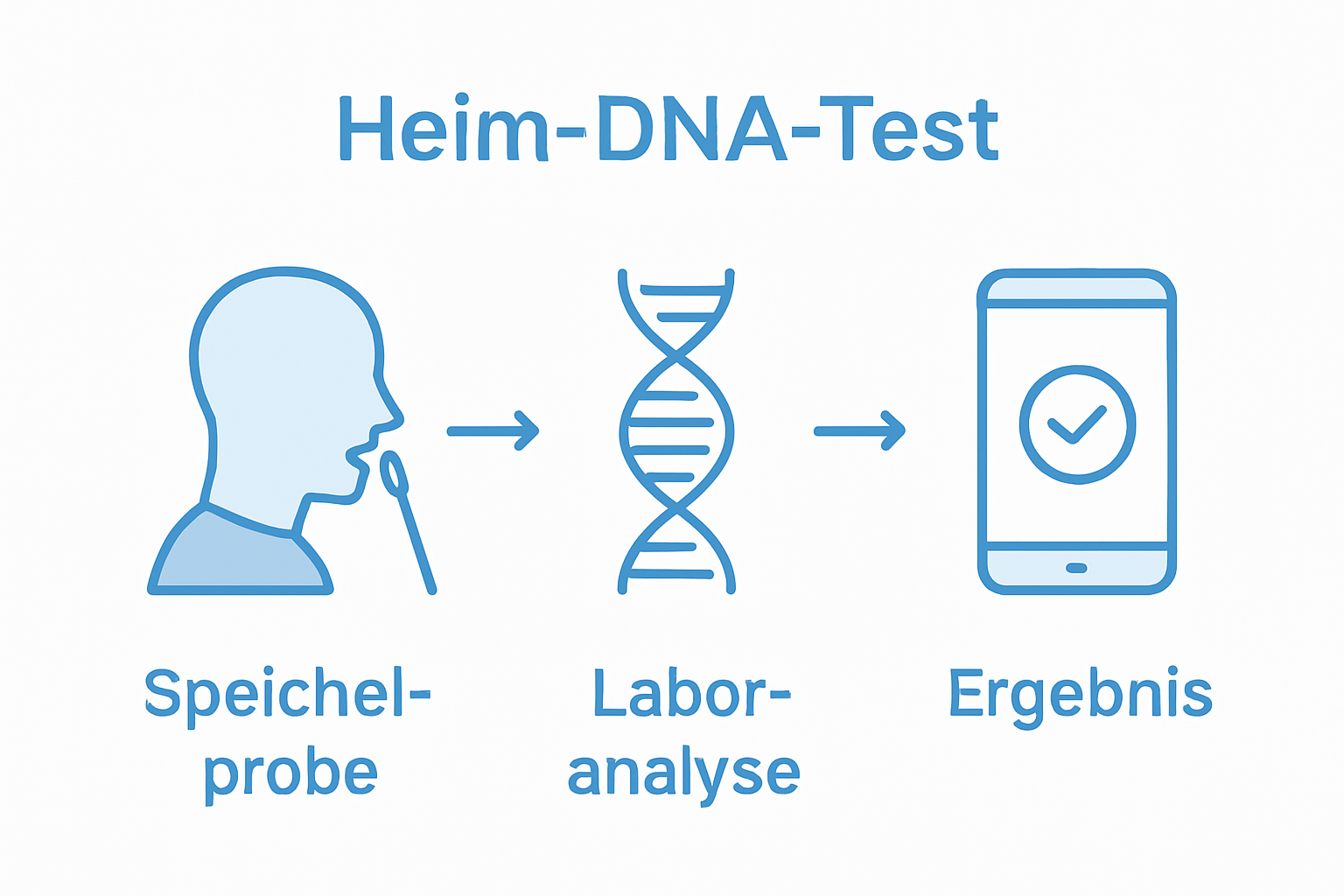
Modern home genetic tests are designed to be simple and user-friendly. The entire process generally takes place in several consecutive steps that are easy for anyone to complete.
The typical process of a home genetic test consists of the following phases:
- Ordering the genetic test
- Selection of the appropriate test package online
- Delivery of the sample collection kit directly to your home
- Receipt of detailed instructions
- Sample collection
- Usually a saliva sample collected with a cotton swab or saliva tube
- Simple collection according to the instructions
- No prior medical knowledge required
- Shipping and laboratory analysis
- Return of the sample in the enclosed envelope
- Professional analysis by certified laboratories
- Molecular genetic analysis of DNA
- Presentation of results
- Online delivery of the results
- Personalized interpretation of results
- Optional: Consultation with experts
Modern saliva tests offer you maximum convenience and scientific precision. The analysis is quick, confidential, and conducted according to the highest security standards. You receive detailed insights into your genetic makeup without having to visit medical practices or laboratories.
Benefits of personalized health analyses
Personalized health analyses are revolutionizing modern medicine by enabling customized treatment strategies through the identification of individual genetic risks. They give you the opportunity to manage your health proactively and based on scientific evidence.
The most important benefits of personalized analyses include:
-
Precise disease prevention
- Early detection of genetic health risks
- Targeted preventive measures
- Timely intervention in the case of predispositions
-
Optimized nutrition strategies
- Individual nutrient recommendations
- Adapting your diet to your metabolism
- Effective weight management strategies
-
Optimization of drug therapy
- Prediction of medication effects
- Avoidance of unwanted side effects
- Personalized treatment approaches
Genetic analyses provide you with unique insight into your physical condition. They transform preventive healthcare from a reactive into a proactive strategy. Instead of merely treating symptoms, you can now specifically strengthen your individual health potential and minimize risks.
Data protection, risks, and the legal framework
When it comes to genetic testing, data protection and the legal framework play a crucial role. In Germany, genetic examinations must comply with strict legal regulations that protect your personal data and privacy.
The most important legal aspects include:
-
Legal basis
- Genetic Diagnostics Act (GenDG)
- Protection against discrimination
- Voluntary participation in the examination
-
Data protection standards
- Pseudonymization of samples
- Highest encryption standards
- Strict confidentiality of results
-
Counseling obligations
- Mandatory genetic counseling
- Information about potential risks
- Psychosocial support
Risks and challenges should be considered critically. Not every genetic test is equally reputable, and there may be potential psychological strain from confronting genetic risks. Professional support and responsible handling of the information obtained are important. Genetic analyses can provide valuable insights, but they should always be conducted thoughtfully and with professional guidance.
Take control of your health with mybody®
Genetic tests offer unique opportunities to identify hidden health risks at an early stage and make targeted adjustments to nutrition and lifestyle. Many people want easy-to-understand results and scientifically sound recommendations that truly fit their individual metabolism. This is exactly where mybody® comes in, supporting you with modern DNA metabolism tests for your optimal nutrition – mybody®x.
Benefit from certified laboratory analyses that can be conveniently performed at home and provide you with personalized health reports. In addition, discover targeted solutions at mybody® for identifying and preventing nutrient deficiencies – at-home tests | mybody® – mybody®x that sustainably support your vitality. Rely on transparent data protection and comprehensive advice at every step. Get started now and use https://mybody-x.com to manage your health based on evidence and on your own terms.
Frequently asked questions
What is a genetic test?
A genetic test is a medical examination in which your DNA is analyzed to obtain information about genetic risks, metabolic processes, and individual characteristics.
How does a genetic test work?
A genetic test involves several steps: sample collection (e.g., a saliva sample), DNA extraction, sequencing, analysis by experts, and preparation of a health report.
What types of genetic tests are available?
There are medical genetic tests for diagnosing diseases, preventive genetic tests for risk analysis, and genealogical tests for researching ancestry.
How secure are genetic tests regarding data protection?
Genetic tests are subject to strict legal regulations that ensure data protection. These include pseudonymization of samples and strict confidentiality of results.



Share now:
Why you’re not losing weight despite dieting: Your slow-metabolism type
Lose weight according to your metabolic type: Why diets fail and what really helps