

What is metabolic analysis? Explained in full
About 70 percent of our daily energy needs are consumed by the body while at rest alone. Have you ever wondered why diets work for some people but hardly at all for others? The answer often lies in individual metabolic processes. A metabolic analysis gives you concrete insights into how your body actually processes nutrients. This helps you better understand which nutrition and exercise truly suit you.
Table of contents
- Metabolic analysis: Definition and basic principles
- Different methods of metabolic analysis
- Process for modern at-home tests and laboratory analyses
- Benefits of personalized nutrition and fitness reports
- Costs, results, and data protection for metabolism tests
Key findings
| Point | Details |
|---|---|
| Understanding metabolic analysis | A metabolic analysis provides insights into biochemical processes and enables the identification of individual metabolic characteristics. |
| Select analysis methods | The key methods include indirect calorimetry, blood tests, genetic tests, and respiratory gas analyses, each with specific advantages and disadvantages. |
| Use personalized reports | Personalized nutrition and fitness reports help take individual needs into account and develop effective strategies for optimizing health. |
| Observe data protection | When conducting tests, compliance with data protection regulations is essential, including pseudonymization of data and transparent use. |
Metabolic analysis: Definition and basic principles
A metabolic analysis is a comprehensive scientific examination of the biochemical processes in our bodies, showing how nutrients are converted into energy. According to research by health experts, it includes detailed measurements such as resting metabolic rate, sugar and fat burning, and oxygen utilization.
The indirect calorimetry method enables a precise analysis of an individual's basal metabolic rate. It measures how many calories the body burns at rest and the proportions of carbohydrates, fats, and proteins. Our tips for improving your metabolism can help you put these findings into practice.
The main objectives of metabolic analysis are:
- Uncovering individual metabolic characteristics
- Identifying potential barriers to weight loss
- Developing personalized nutrition and training strategies
- Understanding the body's energy conversion processes
This detailed analysis provides valuable insights into your health and enables you to take targeted measures to optimize your metabolism.
Different methods of metabolic analysis
There are various scientific methods for conducting a metabolic analysis, each illuminating different aspects of our energy metabolism. According to research by medical experts, these methods include genetic tests, blood tests, indirect calorimetry, and breath gas analyses, each providing specific information about our metabolism.
Breath gas analysis is a particularly precise method that determines individual energy expenditure by measuring exhaled oxygen and carbon dioxide. Genetic analysis can provide valuable additional insights here by revealing your individual metabolic predispositions.
The most important analysis methods at a glance:
- Indirect calorimetry: Measurement of basal metabolic rate and energy expenditure
- Blood tests: Analysis of metabolic biomarkers
- Genetic tests: Analysis of genetic metabolic variants
- Breath gas analysis: Direct measurement of energy metabolism
Each method has specific advantages and disadvantages and can shed light on different aspects of your individual metabolism.
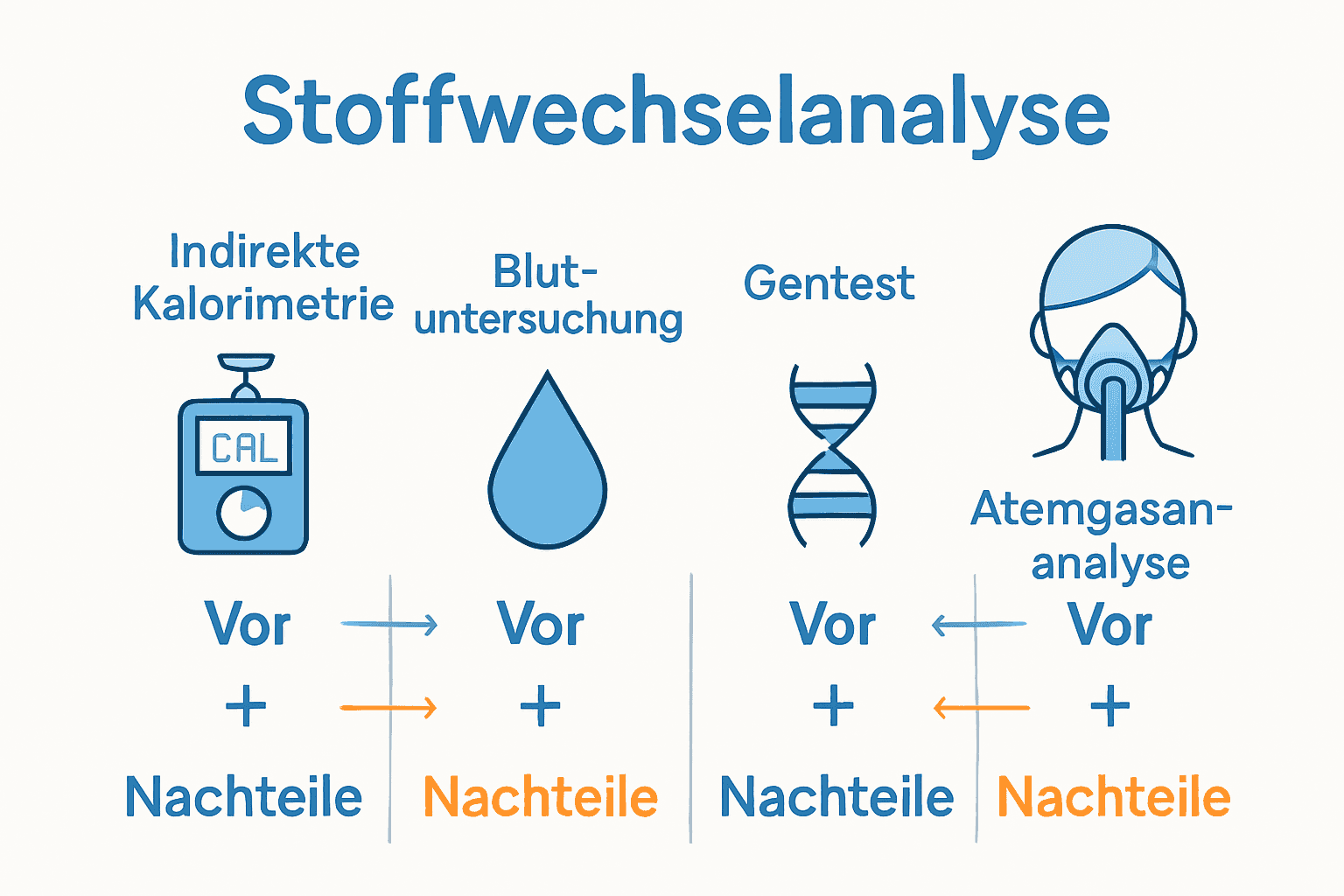
Here is a comparison of the most important metabolic analysis methods:
| Method | What is analyzed | Advantages | Disadvantages |
|---|---|---|---|
| Indirect calorimetry | Basal metabolic rate, energy expenditure | Precise Fast results |
Sometimes expensive Equipment required |
| Blood test | Blood biomarkers | Comprehensive values Laboratory standard |
Delayed results |
| Genetic test | Genetic predispositions | Long-term insights Personalization |
One-time Cannot be changed |
| Breath gas analysis | O₂/CO₂ utilization, energy expenditure | Highly accurate Direct measurement |
Specialized equipment Complex |
Process for modern at-home tests and laboratory analyses
Modern metabolic analyses can now be conveniently carried out at home and generally involve a systematic, straightforward process. With at-home metabolic analysis tests, you first receive a specially developed test kit containing all the necessary materials and step-by-step instructions.
The typical process begins with sample collection, which may vary depending on the analysis method. For breath gas analysis, for example, you use a special breathing mask that measures oxygen and carbon dioxide levels at rest. This measurement enables the precise determination of metabolic parameters such as carbohydrate and fat burning, as well as your individual resting metabolic rate.
The most important steps for at-home tests:
- Order and receive the test kit
- Collect samples according to the instructions
- Return the sample in the provided envelope
- Digital analysis and personal results consultation
After you return your sample, it undergoes laboratory analysis, during which highly precise equipment accurately measures and evaluates your metabolic data.

Benefits of personalized nutrition and fitness reports
Personalized nutrition and fitness reports offer an individual approach to optimizing health that goes far beyond traditional dietary recommendations. Personalized nutrition strategies take your unique genetic, metabolic, and physical characteristics into account to develop tailored recommendations.
The benefits of such personalized reports include a precise analysis of your metabolic profile, the identification of individual dietary needs, and the development of targeted fitness strategies. By taking genetic variations into account, these reports can help you optimally adapt your diet and exercise routines to your personal needs.
Key benefits at a glance:
- Personalized dietary recommendations
- Tailored fitness strategies
- Metabolism optimization
- A better understanding of your body's needs
- Scientifically based health recommendations
However, it is important to note that while personalized reports can provide valuable insights, they are not a miracle solution. They should be understood as a complementary tool for improving your health, not as an absolute guarantee.
Costs, results, and data protection for metabolism tests
The cost of metabolism tests varies depending on the scope and level of detail of the analysis and can range from 50 to 400 euros. The prices of genetic tests can vary significantly, depending on the complexity and scope of the examination.
With reputable providers, after the analysis you receive a detailed, easy-to-understand report that explains your individual metabolic data based on scientific evidence. This report typically includes information about your basal metabolic rate, nutrient utilization, genetic characteristics, and personalized dietary recommendations.
Important aspects of data protection:
- Pseudonymization of samples
- Strict compliance with the GDPR
- Voluntary consent to data processing
- Immediate deletion of the original data after analysis
- Strict confidentiality of personal health information
When choosing a provider, pay particular attention to transparency, scientific validation, and clear data protection policies.
Optimize your metabolism with personalized tests from mybody®x
Understand how your body processes energy and specifically identify potential barriers to weight loss. The metabolic analysis in the article shows how important an accurate determination of basal metabolic rate, carbohydrate and fat burning is for your health. If you feel that your previous efforts in nutrition and fitness have not produced the desired results, a personalized analysis of your genetic and metabolic factors may be the decisive step.
Use DNA metabolic tests for your optimal nutrition – mybody®x for individual nutrition recommendations and tailored fitness plans. Our professional solutions help you improve your metabolism in the long term and actively shape your health with sustainable strategies. Get started now and secure your personalized metabolic analysis at mybody-x.com. Discover the science behind your body and take action while the opportunity for lasting change remains.
Frequently asked questions
What is a metabolic analysis?
A metabolic analysis is a scientific examination of biochemical processes in the body to understand how nutrients are converted into energy.
What methods are available for conducting a metabolic analysis?
There are several methods, including indirect calorimetry, blood tests, genetic tests, and breath gas analysis, each of which examines different aspects of metabolism.
What are the benefits of a personalized metabolic analysis?
A personalized metabolic analysis provides individual nutrition recommendations, tailored fitness strategies, and helps you specifically optimize your metabolism.
How much does a metabolic analysis cost?
The cost of metabolic analyses varies between 50 and 400 euros, depending on the complexity and scope of the analysis.



Share now:
What is a metabolic disorder? Everything you need to know
Genetic Metabolism: Everything You Need to Know