

What is DNA analysis? Everything you need to know
Over 99 percent of every person's DNA is identical. Yet tiny differences determine appearance, health, and ancestry. More and more people want to know what genetic secrets they carry. Modern DNA analyses now provide surprisingly accurate answers to questions about ancestry, family relationships, and individual health risks.
Key findings
| Point | Details |
|---|---|
| Modern DNA analysis | Uses molecular biological methods to precisely decipher the genetic composition. |
| Diverse application possibilities | DNA tests provide insights into ancestry, kinship, health risks, and forensic identification. |
| Process of a DNA test | A comprehensive process, from sample collection and sequencing to data analysis, ensures reliable results. |
| Data protection and costs | High safety standards are required; costs vary greatly depending on the type of test, from €40 to €600. |
Table of contents
- DNA analysis: Definition and scientific principles
- Overview of different types of DNA analysis
- Procedure and evaluation of a DNA test
- Applications of DNA analysis for health
- Data protection, security and cost aspects of DNA tests
DNA analysis: Definition and scientific principles
DNA analysis is a modern molecular biological method that allows for the precise decoding of a person's genetic makeup. It uses biochemical techniques to analyze deoxyribonucleic acid (DNA) and identify individual genetic characteristics. Learn more about genetic analysis .
The scientific methods of DNA analysis include various highly complex techniques:
- Chromosome mapping : Detailed recording of chromosome structure
- DNA sequencing : Deciphering the exact sequence of bases
- Genetic fingerprint : Unique genetic profile of an individual
- STR analysis : Examination of short, repeating DNA sequences
According to the Federal Criminal Police Office, DNA typing is performed using a PCR-based method in which specific DNA segments (short tandem repeats) are copied and visualized using electrophoresis. The resulting DNA profiles allow for precise comparison and provide extensive insights into individual genetic predispositions.
Overview of different types of DNA analysis
The world of DNA analysis is multifaceted and offers various testing methods for different applications. Discover your personal DNA analysis path to find out which method best suits your individual health goals.
According to Mivano Health, DNA tests can be divided into several main categories:
Here is a comparison of the most important types of DNA analysis:
| Type of analysis | Main purpose | Typical applications |
|---|---|---|
| ancestry and origin | Clarification of genetic origin | Genealogy Regions of origin |
| Kinship tests | Examination of biological relationships | fatherhood Brotherhood |
| Health and hereditary disease tests | Analysis of genetic risks | Predisposition to disease Carrier status |
| Forensic DNA tests | Identification and forensic use | criminal cases Missing persons cases |
| Genealogical tests | Researching family history | Family tree Degrees of kinship |
- Parentage and ancestry tests : Determining genetic origin and ancestors
- Kinship tests : Verification of biological kinship relationships
- Health and hereditary disease tests : Analysis of genetic risks and predispositions
- Forensic DNA tests : Identification and criminal investigations
- Genealogical tests : Researching family history
One important method is DNA sequence analysis , a computer-aided procedure for determining characteristic genetic segments. This method enables scientists to obtain precise information about genes and to understand complex genetic relationships.
Procedure and evaluation of a DNA test
A DNA test follows a structured scientific process that delivers precise and reliable results. Learn more about our DNA analysis methods to understand how we decipher your unique genetic information.
The typical process of a DNA test can be divided into several crucial steps:
- Sample collection : Usually by painless swab of the oral mucosa or saliva sample
- DNA extraction : Isolation of genetic information from cells
- Molecular amplification : PCR-based method for amplifying specific DNA sequences
- Sequencing : Use of modern technologies such as SNP chip or Whole Genome Sequencing (WGS)
- Data analysis : Comparison with scientific reference databases
According to Rattlestork, the evaluation is carried out using state-of-the-art technologies that can analyze up to 700,000 genetic markers.
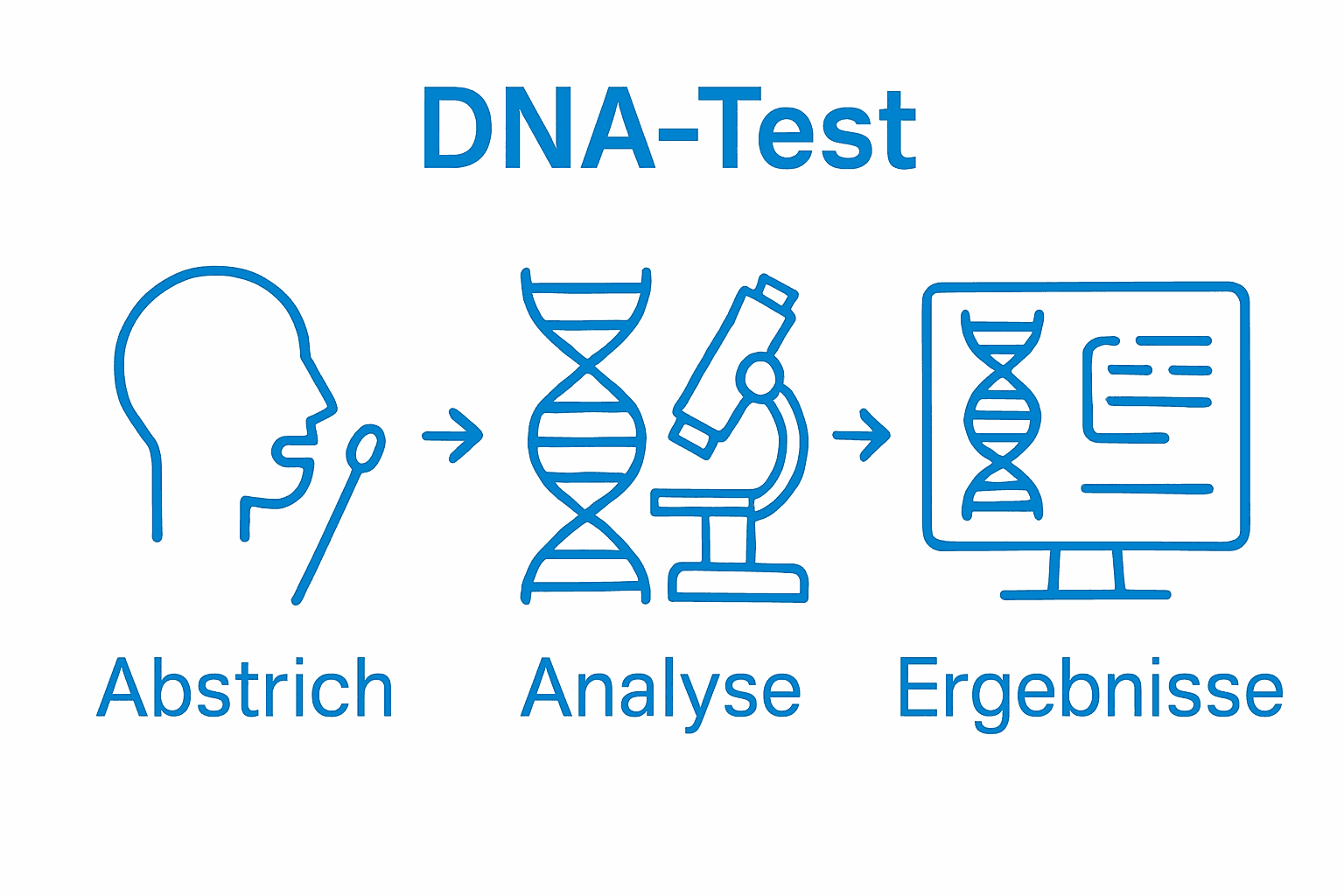 The results are presented clearly in personalized dashboards, including the option to download detailed raw data.

Applications of DNA analysis for health
DNA analysis has become an indispensable tool in personalized medicine. Discover your personal nutritional recommendations through DNA tests to individually optimize your health strategy.
According to findings from Mivano Health, health DNA tests focus on several key areas:
- Genetic risk analysis : Identification of disease-related predispositions
- Carrier status : Examination for carrier status of genetic diseases
- Preventive healthcare : Early detection of potential health risks
- Metabolic analysis : Examination of individual metabolic processes
- Nutritional optimization : Personalized nutritional recommendations based on genetic profiles
According to Rattlestork, modern home tests enable various analysis technologies such as SNP chip analysis, exome sequencing for rare diseases, and whole-genome sequencing for comprehensive genetic research. These methods allow for precise analysis of genetic markers and offer profound insights into individual health predispositions.
Data protection, security and cost aspects of DNA tests
Conducting a DNA test requires the highest security standards and transparent data protection policies. Learn more about our scientific methods to understand how we protect your personal health data.
According to Rattlestork's findings, the following data protection measures are crucial:
- Use of pseudonyms : Anonymization of personal data
- Opt-out option : Voluntary participation in research projects
- GDPR compliance : Right to data erasure and access to information
- Secure storage : Encrypted data storage
- Raw data management : Full control over genetic information
The cost of DNA tests varies depending on the scope of the analysis. Research indicates that prices range between:
- SNP chip analysis: €40-120
- Exome sequencing: €250–450
- Whole genome sequencing: €400–600
Stiftung Warentest recommends exercising particular caution with providers outside the EU and emphasizes the importance of careful data protection checks before conducting the test.
Your DNA knows the way to better health
Do you finally want to understand what your DNA means for your diet and well-being? Uncertainty about genetic risks or a lack of clarity when planning your health strategy weighs heavily on many people. In this article, you read how DNA analysis provides important answers to individual questions about genetics, metabolism, and health. But information alone is often not enough when concrete solutions are lacking.
Start your personal health journey now with a scientific DNA metabolism test. With DNA metabolism tests for your optimal nutrition – mybody®x – you'll discover how your genes can influence your diet and weight. All tests allow for convenient sample collection at home, and you'll receive personalized nutritional advice and recommendations to truly achieve your goals. Take the first step and secure your health advantage today at mybody-x.com . Find more solutions and our complete selection of modern at-home tests directly under Our Tests & Product Overview – mybody®x . Experience how easy self-determination in everyday life can be – based on your unique DNA.
Frequently Asked Questions
What is a DNA analysis?
DNA analysis is a molecular biological method for investigating the genetic composition of an individual, which uses biochemical methods to decode the DNA and identify genetic traits.
What types of DNA analysis are there?
There are several types of DNA analysis, including ancestry and origin tests, kinship tests, health and hereditary disease tests, forensic DNA tests, and genealogical tests.
How does a DNA test work?
A DNA test typically includes sample collection, DNA extraction, molecular amplification, sequencing, and subsequent data analysis. This leads to precise and reliable results.
What possibilities does DNA analysis offer for health?
DNA analyses offer insights into genetic risk factors, carrier status of genetic diseases, preventive healthcare, metabolic analyses and individual nutritional recommendations based on the genetic profile.



Share:
Antioxidant effect for your skin and cells
What is a metabolic disorder? All the important information