

Metabolism Analysis Step-by-Step: How to Optimize Your Diet
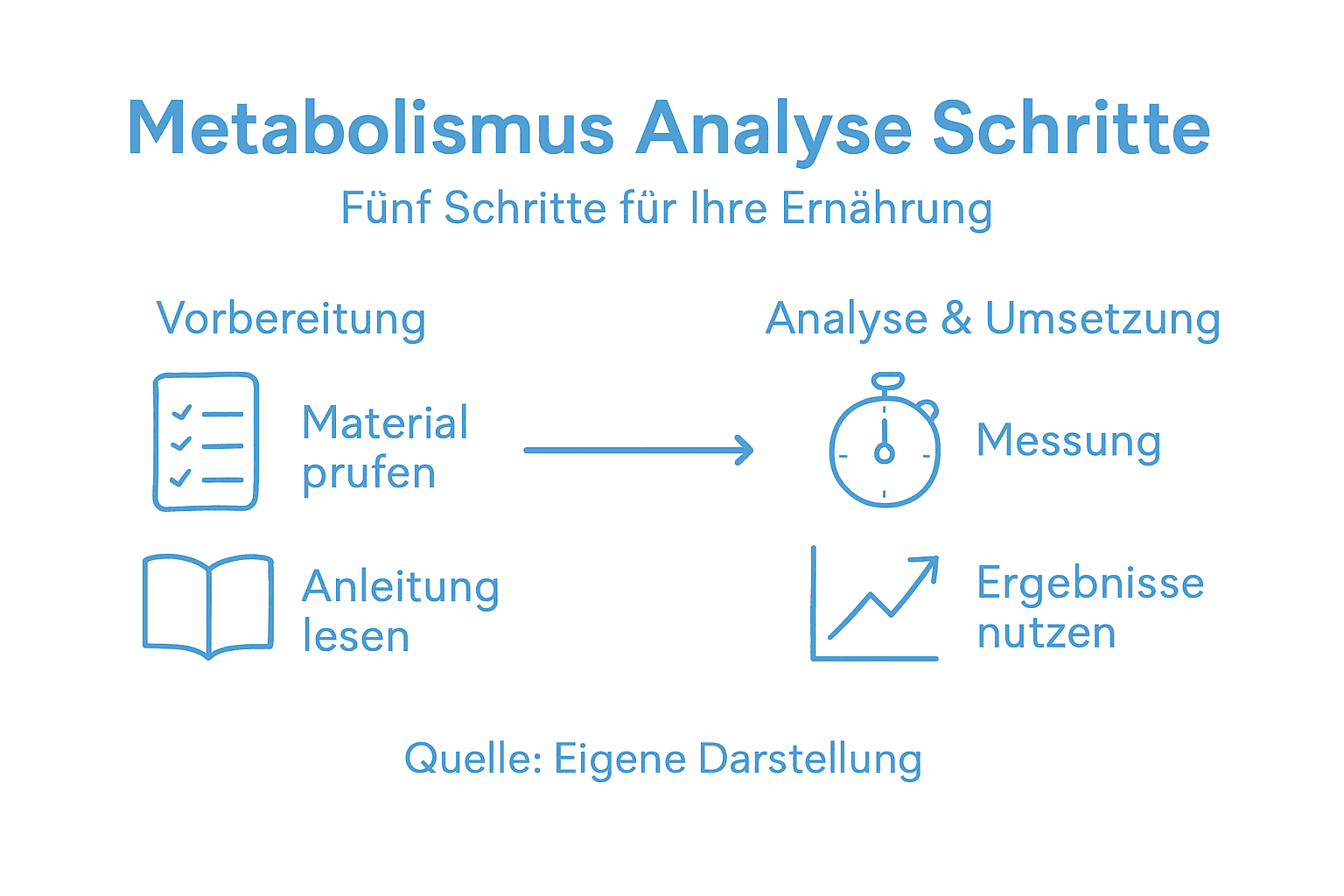
Every step toward better health begins with clarity about your own metabolism. In Central Europe, more and more health-conscious adults are interested in personalized genetic analyses in order to implement tailored dietary plans. Careful and professional sample preparation supports the precision of the analysis, allowing you to obtain reliable results and optimally tailor your diet to your metabolism.
Table of contents
- Step 1: Prepare properly for sample collection
- Step 2: Undergo the certified metabolism analysis
- Step 3: Safely send your samples to the laboratory
- Step 4: Evaluate your personal analysis results
- Step 5: Implement individual dietary recommendations
Quick summary
| Important point | Explanation |
|---|---|
| 1. Precise sample preparation is essential | Careful preparation for sample collection ensures the accuracy and reliability of the analysis results. |
| 2. Follow strict fasting requirements | There should be at least four hours between your last meal and sample collection to avoid distorted results. |
| 3. Follow safety guidelines for shipping | Samples must be packaged correctly and shipped quickly to ensure their integrity and quality. |
| 4. Evaluate the results together | Ideally, the analysis results should be discussed with a specialist to receive personalized recommendations. |
| 5. Adjust your diet according to your metabolic type | Based on your metabolic analysis, personalized dietary recommendations should be implemented to optimize your health. |
Step 1: Prepare properly for sample collection
Sample collection is at the heart of every successful metabolic analysis. Before you begin collecting the sample, you must carefully complete several essential preparation steps to ensure precise and reliable results.
First, it is important to understand that the quality of sample preparation directly affects the accuracy of your analysis results. Therefore, ensure absolute care at every step. Begin by laying out all the materials you need: your sample collection kit, clean gloves, disinfectant, and the provided containers. Wash your hands thoroughly and work on a clean, well-lit surface.
Make sure to study the instructions provided carefully and follow each step precisely. Pay particular attention to aspects such as fasting before sample collection, any medication intake, or specific dietary recommendations beforehand. Sometimes small details, such as the time of sample collection or a previous meal, can significantly affect the results.
Pro tip: Have all materials within easy reach before collecting the sample, and work with focus but stay relaxed to avoid errors.
The following table provides an overview of typical sources of error during metabolic sample collection and their effects:
| Source of error | Possible effect | Preventive recommendation |
|---|---|---|
| Inaccuracy due to material selection | Distortion of analysis values | Check for completeness |
| Poor hygiene | Sample contamination | Wash hands thoroughly and wear gloves |
| Failure to fast | Misleading metabolic results | Strictly follow dietary requirements |
| Time of sample collection | Fluctuating measurement values | Collect samples at approximately the same time of day |
Step 2: Undergo the certified metabolism analysis
Now begins the most exciting part of your metabolic journey: undergoing the certified metabolic analysis, which provides you with detailed insights into your individual metabolic processes.
For precise indirect calorimetry, prepare yourself properly. Make sure not to eat any large meals for at least four hours before the measurement and avoid physical exertion. The analysis itself takes only a few minutes and measures your oxygen intake and carbon dioxide output at rest. This makes it possible to draw conclusions about your basal metabolic rate and your body's energy production.

During the measurement, breathe calmly into a special device that precisely records the composition of your exhaled gases. Remain seated calmly and relaxed to ensure reliable measurement results. The data obtained forms the basis for personalized nutrition and training recommendations tailored precisely to your metabolism.
Pro tip: Wear comfortable clothing during the measurement and avoid caffeine or nicotine shortly beforehand to ensure an optimal analysis.
Step 3: Safely send your samples to the laboratory
After careful sample collection, the critical process of safely sending it to the laboratory now begins, where every detail matters to ensure the integrity of your metabolic analysis.
Observe the shipping regulations for dangerous goods for biological samples. Your sample must be transported in triple packaging: a leak-proof primary container, a secure secondary package, and a sturdy outer package. Make sure absorbent material surrounds the sample to prevent potential leaks and protect the sample quality.
Use only the shipping containers included in the sample collection kit and follow the enclosed packaging and labeling instructions exactly. Seal all containers airtight and securely. Check the laboratory’s address details and include all required accompanying documents. Be sure to ship the sample immediately to ensure optimal sample quality.
Pro tip: Photograph the correctly packaged sample and the shipping receipt as proof that it was shipped properly.
Step 4: Evaluate your personal analysis results
You have now reached the most exciting moment of your metabolism analysis: interpreting the results, which provide deep insights into your individual metabolism.
After the evaluation of your metabolic data, you will receive a detailed report covering your oxygen utilization, carbon dioxide output, and respiratory quotient. This report shows you precisely how efficiently your body burns fats and carbohydrates and what your resting energy expenditure is. Typically, a traffic-light system is used to help you understand your results quickly and intuitively.
It is best to analyze the results together with a nutritionist or doctor who can explain the specific data to you in detail. Pay particular attention to recommendations for optimizing your diet and physical activity that are tailored specifically to your individual metabolic profile. These findings form the basis for targeted changes to your lifestyle.
Pro tip: Compare your analysis results at regular intervals to document your progress and continuously adapt your dietary strategy.
Step 5: Implement individual dietary recommendations
After analyzing your metabolism, the next step is to translate the insights gained into your daily diet and lifestyle.
Use the dietary recommendations of the German Nutrition Society as a guide. They focus on a plant-based, balanced diet. Tailor these recommendations to your individual metabolic type. Plan your meals to include plenty of vegetables, fruit, whole-grain products, and plant-based oils. At the same time, reduce highly processed foods and ensure a balanced composition.
Observe your body and document how different foods affect your energy levels and well-being. Be flexible and ready to continuously adapt your dietary strategy. It is important to view changing your diet as a positive process of self-care, not as a restrictive diet with prohibitions.
Pro tip: Keep a food diary to document your progress and understand your individual reactions to different foods.
The following table illustrates how analysis results can be translated into dietary strategies depending on the metabolic type:
| Metabolic type | Typical characteristics | Recommended dietary strategy | Example foods |
|---|---|---|---|
| Carbohydrate type | High energy requirements | More complex carbohydrates | Whole-grain rice, oatmeal |
| Fat-burning type | Slow energy release | More healthy fats and proteins | Avocado, nuts, legumes |
| Mixed type | Balanced metabolism | Mixed nutrient intake | Vegetables, fish, whole-grain products |
Achieve your optimal diet with a well-founded metabolic analysis
Do you finally want to gain clarity about your individual metabolism and optimize your diet in a targeted way? The detailed step-by-step guide to metabolic analysis shows how crucial precise sample collection and certified measurement procedures are for obtaining reliable results. But do you really understand your data and effectively implement personalized recommendations in your everyday life? This is exactly where mybody® comes in.
Discover an innovative solution with mybody®’s DNA metabolism tests for your optimal nutrition, based on scientific laboratory quality and providing you with specific nutritional tips. Benefit from a simple at-home process and receive personalized evaluations that can sustainably transform your nutrition strategy. Take this opportunity now to learn more at mybody-x.com. Start your individual metabolism analysis today and put your body on the path to success.
Frequently asked questions
How do I optimally prepare for sample collection for the metabolism analysis?
Prepare thoroughly for sample collection by laying out all materials, such as the sample collection kit, gloves, and disinfectant. Be sure to wash your hands before collecting the sample and use a clean work surface.
What should I consider when carrying out the certified metabolism analysis?
Make sure you do not eat for at least four hours before the analysis and avoid physical exertion. Wear comfortable clothing and avoid caffeine or nicotine to ensure accurate results.
What steps should I follow to safely ship my samples to the laboratory?
The samples must be transported in triple packaging: a leak-proof primary container, a sturdy secondary package, and outer packaging. Seal all containers airtight and carefully check the shipping address details.
How do I interpret the results of my metabolism analysis?
Analyze the results with a nutritionist or doctor to better understand the specific data. Based on the report, develop individualized nutrition and activity strategies tailored to your results.
What should I consider when implementing the dietary recommendations?
Follow a balanced, plant-focused diet and plan meals rich in vegetables and whole grains. Keep a food diary to document your individual reactions to foods and adjust your strategy.



Share now:
How much protein for muscle building: Discover your ideal amount
What is DNA metabolism? Genetic influences decoded