

Why gut flora matters: Understanding its role
Our digestion functions only thanks to an incredible microcosm inside us, consisting of over 100 trillion microorganisms in the gut. That sounds enormous, but hardly anyone knows how diverse and unique this ecosystem really is. The truly surprising insight: This invisible network controls not only how we absorb food but also influences our immune system and even our mood every day.
Table of contents
- What is the gut flora and what are its functions?
- Why is gut flora important for health?
- How does the gut flora influence our digestion?
- What happens when the gut flora is unbalanced?
- What factors affect gut flora?
Quick summary
| Takeaway | Explanation |
|---|---|
| The gut flora is unique to each individual. | Every person has their own microbiome signature, influenced by diet and lifestyle. |
| A healthy microbiome strengthens the immune system. | 70–80% of our immune cells are located in the gut, where microbes support our immune system. |
| Dysbiosis can lead to serious health problems. | An imbalance in the gut flora can trigger chronic inflammation and digestive disorders. |
| Diet has a major influence on the gut flora. | Fiber-rich and fermented foods support beneficial bacteria in the gut. |
| Regenerating the gut flora requires a holistic approach. | A combination of a healthy diet, stress reduction, and exercise helps restore balance to the microbiota. |
What is the gut flora and what are its functions?
The gut flora, also known as the microbiome, is a complex ecosystem of trillions of microorganisms that live in our digestive tract. These tiny organisms include bacteria, fungi, and viruses that exist in close symbiosis with our bodies. They play a crucial role in our health and are much more than passive components of our digestive system.
The composition of the gut flora
Our gut is home to more than 100 trillion microorganisms, which together account for approximately 1–2 kg of our body weight. This microscopic world is highly complex and unique to each individual. Every person has their own “microbiome signature,” shaped by factors such as diet, lifestyle, genetics, and environmental influences.
Functions of the gut flora
The gut flora performs several crucial functions for our bodies:
-
Digestion and nutrient absorption: Certain bacteria help break down food components and make nutrients available to our bodies
-
Immune system support: Around 70–80% of our immune system is located in the gut. Microorganisms communicate directly with our immune cells and regulate inflammatory responses
-
Protection against pathogens: Healthy gut bacteria compete with harmful microbes and prevent them from spreading
For a detailed analysis of your individual gut flora, we offer specialized microbiome tests that provide insights into your unique microbial composition.
A disrupted gut flora can have far-reaching effects, ranging from digestive problems and weakened immunity to psychological changes. Scientific studies are increasingly demonstrating the central role these microscopic organisms play in our overall health.
The following table summarizes the most important functions of gut flora and their specific significance for our health.
| Function of gut flora | Description |
|---|---|
| Digestion and nutrient absorption | Bacteria break down food and make nutrients available |
| Immune system support | Microorganisms communicate with immune cells and regulate inflammation |
| Protection against pathogens | Healthy bacteria displace harmful pathogens |
| Vitamin production | Production of vitamins such as B12 and vitamin K |
| Regulation of blood sugar levels | Support for stable blood sugar levels |
| Impact on mood and the nervous system | Communication via the gut-brain axis, influencing mental processes |
Why is gut flora important for health?
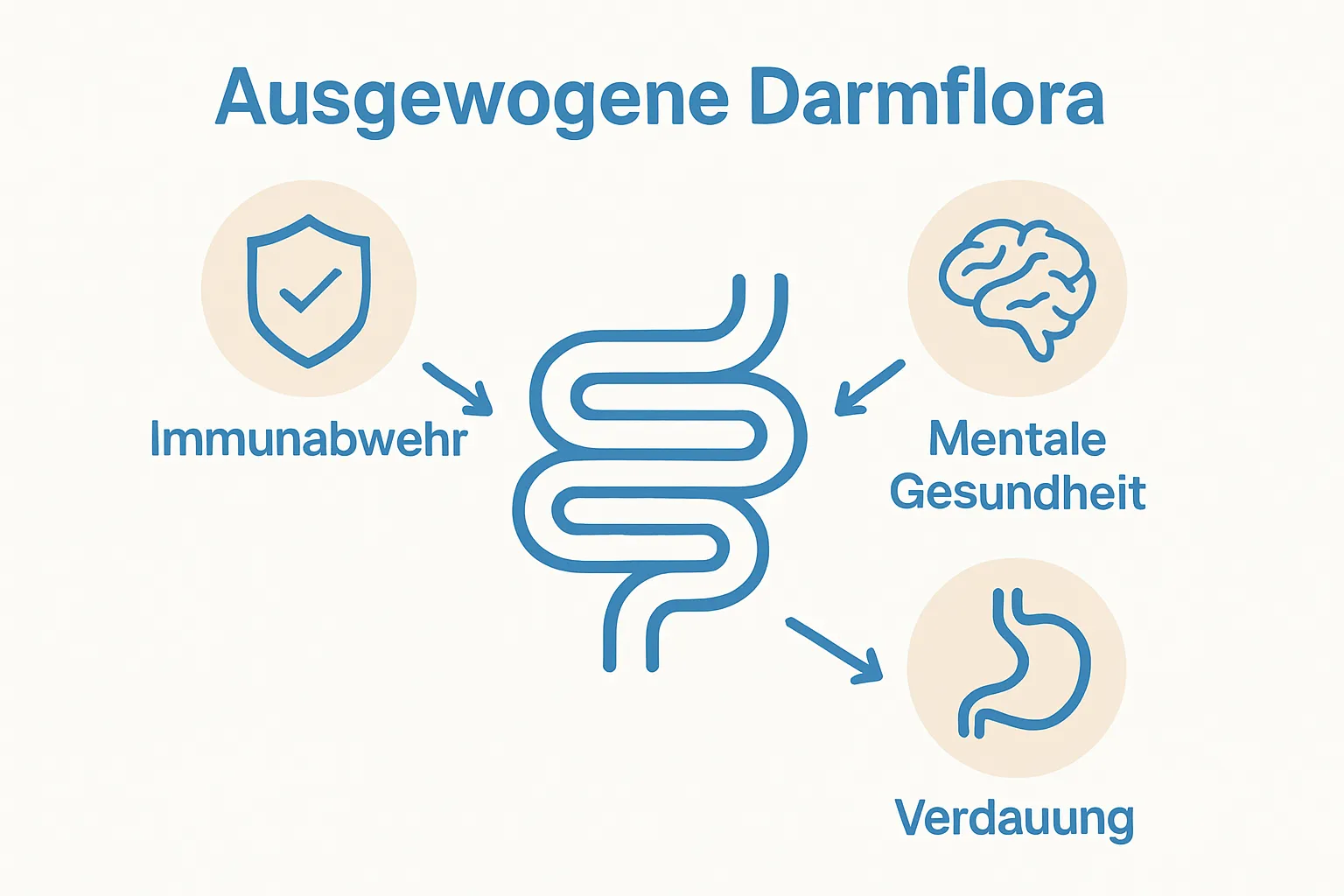
Gut flora plays a central role in our overall health and functions as a complex ecosystem that does far more than just digest food. It is a crucial factor in our immune system, mental health, and even mood regulation.
Immune system and defenses
Around 70–80% of our immune cells are located in the gut, underscoring the immense importance of gut flora. These microorganisms act as the first line of defense against pathogens and help neutralize harmful bacteria. They train and stimulate our immune cells and ensure a balanced immune system.
Mental health and the gut-brain axis
Scientific research shows a direct connection between gut flora and our mental state. The so-called gut-brain axis enables communication between gut bacteria and our nervous system. This interaction affects mood, stress, and even neurological processes.
Metabolism and nutrient absorption
A healthy gut microbiome supports our metabolism in many ways:
- Breakdown of complex food components
- Production of important vitamins such as B12 and vitamin K
- Regulation of blood sugar levels
- Support for weight management
For a comprehensive analysis of your gut health, we recommend our specialized microbiome tests, which provide insights into your individual gut flora.
According to researchers at Stanford University, changes in the microbiome affect chronic diseases, inflammatory processes, and even the risk of autoimmune diseases. A balanced gut flora is therefore not only a health factor but also a key to our well-being.

How does the gut flora influence our digestion?
The gut flora is not merely a passive component of our digestive system, but an active and dynamic processor that decisively controls our nutrient intake and digestion. It is a complex ecosystem that does far more than simply break down food components.
Food breakdown and nutrient extraction
Bacteria in our gut possess enzymes that we do not have ourselves. These enable them to break down complex carbohydrates, fiber, and other hard-to-digest food components. This produces short-chain fatty acids, which not only provide energy but also perform important functions for our gut health.
Digestive processes and nutrient absorption
The microorganisms in our gut flora play a central role in breaking down and utilizing nutrients. They help produce vitamins such as B12 and vitamin K, which our body cannot produce on its own. At the same time, they support the absorption of minerals such as calcium, magnesium, and iron through the intestinal wall.
Digestive problems and contributing factors
An impaired gut flora can cause various digestive problems:
- Bloating and intolerances
- Constipation or diarrhea
- Irritable bowel syndrome
- Reduced nutrient absorption
For support with dietary questions and digestive problems, we offer specialized consultations and analyses.
According to a study published in the European Journal of Nutrition, the composition of our gut flora affects not only digestion but also has a direct impact on our metabolism, immune system, and even our mental health. A balanced and diverse gut flora is therefore the key to a properly functioning digestive system.
What happens when the gut flora is unbalanced?
An imbalance in the gut flora, also known as dysbiosis, occurs when harmful bacteria gain the upper hand over beneficial microorganisms. This condition can have serious effects on our health and is more than just a temporary digestive problem.
This table shows key triggers of an imbalance in the gut flora and their typical health consequences.
| Cause of dysbiosis | Health Consequences |
|---|---|
| Unhealthy diet | Chronic inflammation, digestive complaints |
| Antibiotics and medications | Weakened immune system |
| Chronic stress | Hormonal and psychological changes |
| Environmental toxins and pollutants | Impaired gut function |
| Lack of sleep & lack of exercise | Reduced regeneration and immune function |
Causes of the imbalance
Various factors can promote dysbiosis. These include an unbalanced diet high in processed foods, frequent antibiotic use, chronic stress, environmental toxins, and a sedentary lifestyle. These influences can permanently disrupt the delicate balance of our gut bacteria.
Health Consequences
A disrupted gut microbiome can cause multiple health problems:
- Chronic inflammation
- Weakened immune system
- Digestive problems
- Hormonal imbalances
- Psychological changes such as anxiety and depression
Of particular interest is the connection to leaky gut syndrome, in which the intestinal barrier becomes permeable and toxins can enter the bloodstream.
Restoring Balance
Restoring gut flora requires a holistic approach. Important strategies include:
- Fiber-rich diet
- Probiotic and fermented foods
- Stress reduction
- Sufficient sleep
- Regular exercise
According to a study by the Harvard Medical Center, a targeted dietary change can positively alter the composition of the gut flora within just a few weeks. A balanced gut flora is therefore not only a health factor but also a crucial key to our well-being.
What factors affect gut flora?
Our gut flora is a complex and dynamic ecosystem influenced by numerous external and internal factors. These influences can fundamentally alter our microbiome composition and directly affect our health.
Diet as a Key Factor
The food we eat is the most important influence on our gut flora. Different foods promote or inhibit certain groups of bacteria. While fiber-rich and fermented foods support beneficial bacteria, highly processed products, sugar, and animal fats can negatively affect the microbiome.
External Influencing Factors
In addition to diet, there are other significant factors that shape our gut flora:
- Medications, especially antibiotics
- Chronic stress
- Environmental toxins and pollutants
- Sleep deprivation
- Lack of exercise
- Age and genetic predisposition
For holistic gut health in autumn, we recommend special dietary strategies that support your microbiome.
Individual Microbiome Dynamics
Everyone has a unique gut flora that changes continuously. Interestingly, the composition of our gut bacteria can change significantly within just a few days due to dietary changes.
According to a study by the Robert Koch Institute, antibiotics have a particularly long-lasting impact on our gut microbiome. They can alter the bacterial composition for months and require targeted regeneration strategies.
Discover how your gut microbiome affects your health
You have learned how important a healthy gut microbiome is for your digestion, immune system, and even emotional well-being. Perhaps you repeatedly suffer from digestive problems, fatigue, or intolerances and are finally looking for a way to address these complaints at their root. Scientific studies increasingly confirm that an imbalanced gut microbiome can contribute to many physical and psychological complaints.
Take the opportunity to analyze and specifically improve your microbiome. With a gut microbiome analysis from mybody®x, you gain precise insights into your bacterial diversity and receive personalized recommendations for nutrition, lifestyle, or probiotics. Even small changes can have a major impact on your well-being. Choose an evidence-based fresh start now and discover our full range of gut health products and personalized solutions at mybody®x. If recurring digestive problems are limiting you, find targeted help at Understanding and alleviating digestive problems. Don't wait any longer—start your journey toward a healthier gut feeling today.
Frequently asked questions
What is the role of the gut microbiome in digestion?
The gut microbiome is essential for digestion because it breaks down food components and makes nutrients available. Bacteria in the gut produce enzymes that break down complex food components while producing important vitamins and fatty acids.
How does the gut microbiome affect the immune system?
Around 70–80% of our immune system is located in the gut. The microorganisms in the gut microbiome help fight pathogens and regulate inflammatory responses, playing an important role in immune defense.
What are the consequences of an imbalanced gut microbiome?
An imbalanced gut microbiome can lead to various health problems, including digestive issues, chronic inflammation, a weakened immune system, and even psychological changes such as anxiety and depression.
How can I support my gut microbiome naturally?
To support your gut microbiome, eat a fiber-rich diet and consume probiotic and fermented foods, reduce stress, get enough sleep, and exercise regularly.
Recommendation
- Gut health nutrition: Your immune system booster for autumn – mybody®x
- Microbiome test explained: How gut microbiome analysis works – mybody®x
- Build a healthy gut microbiome: Your nutrition guide for a healthy gut feeling – mybody®x
- Healthy gut: How to strengthen your gut microbiome | Gut health – mybody®x
- Improve gut health: Simple ways to boost your well-being



Share now:
Step-by-step optimization of gut health for greater well-being
Gut flora test: Analyze your optimal health