

Microbiome Analysis – How Gut Bacteria Shape Health
Around 100 trillion microorganisms live in the human body and influence our well-being more than many people realize. Microbiome analysis is therefore attracting increasing attention because our individual microbiome shapes not only digestion, but also immune defenses and even mental health. Understanding how modern analyses work and the scientific findings behind them enables people to actively support their gut health and take targeted steps to improve their quality of life.
Table of Contents
- Microbiome Analysis: Definition and Scientific Background
- Important bacterial species and their functions
- Procedure, methods, and interpretation of results
- Practical Applications for Digestion and Prevention
- An overview of opportunities, limitations, and data privacy
Key Findings
| Point | Details |
|---|---|
| The Microbiome as a Health Factor | The microbiome has a significant impact on health through its role in digestion, immune regulation, and protection against pathogens. |
| Individual Microbiome Analysis | Modern analytical methods allow precise examination of the microbial composition and can reveal health risks. |
| Preventive Approaches Through Diet | A balanced, fiber-rich diet can support the microbiome and reduce the risk of intestinal diseases. |
| Opportunities and Limitations | Microbiome analysis offers opportunities for early detection, but limitations in scientific interpretation must be taken into account. |
Microbiome Analysis: Definition and Scientific Background
The microbiome is far more than just a random collection of bacteria in our bodies. It is a complex ecosystem of microorganisms that fundamentally influences our health. The human microbiome comprises all the microorganisms that colonize the human body, with the gut playing a central role.
Scientific research shows that these microbial communities are far more than passive observers. They play an active role in digestion, immune regulation, and protection against pathogens. Modern microbiome analyses now provide us with detailed insight into these complex biological systems. Researchers have developed standardized methods to minimize bias in microbiome analysis, significantly improving the accuracy of scientific findings.
The composition of our microbiome is unique and shaped by various factors such as diet, lifestyle, genetics, and environmental influences. Everyone has an individual microbial profile that continually changes. Modern analytical methods can now examine several million genetic sequences to obtain information about bacterial species, their functions, and potential health risks.
Pro tip for microbiome enthusiasts: Pay attention to a balanced, high-fiber diet and regular exercise to positively influence your gut flora and support a healthy microbiome.
Important bacterial species and their functions
The human gut is home to an incredibly diverse community of microorganisms that are essential to our health. The gut flora consists of a wide variety of microorganisms that are essential to the host organism, with some bacterial species performing particularly important functions.
An outstanding example is Akkermansia muciniphila, an important bacterium in the human gut that breaks down mucin and thus helps maintain the intestinal mucus layer. This bacterium plays a key role in promoting gut health by strengthening the barrier function and supporting the growth of beneficial microbes. Other important bacterial species, such as Lactobacillus and Bifidobacterium, aid digestion and support the immune system.

The various bacterial species in the microbiome perform different tasks. Some produce important vitamins, others help digest dietary fiber, and some protect against harmful pathogens. The interaction among these microorganisms is extremely complex and affects not only digestion but also metabolic processes, immune functions, and even mental health.
The following summarizes key bacterial species in the gut and their main characteristics:
| Bacterial species | Main function | Impact on health |
|---|---|---|
| Akkermansia muciniphila | Breakdown of mucus | Strengthens the intestinal lining |
| Lactobacillus | Production of lactic acid | Supports the immune system |
| Bifidobacterium | Digestion of complex carbohydrates | Promotes intestinal balance |
| Faecalibacterium prausnitzii | Anti-inflammatory effect | Protects against intestinal diseases |
Pro tip for microbiome care: Eat a varied diet with fermented foods such as yogurt, kefir, and sauerkraut to promote healthy diversity among your gut bacteria.
Procedure, methods, and interpretation of results
Microbiome analysis is a complex scientific process that provides detailed insights into the composition of our gut microbiota. Microbiome analysis of the gut captures the microbial composition of the intestinal tract and provides important information about our health.
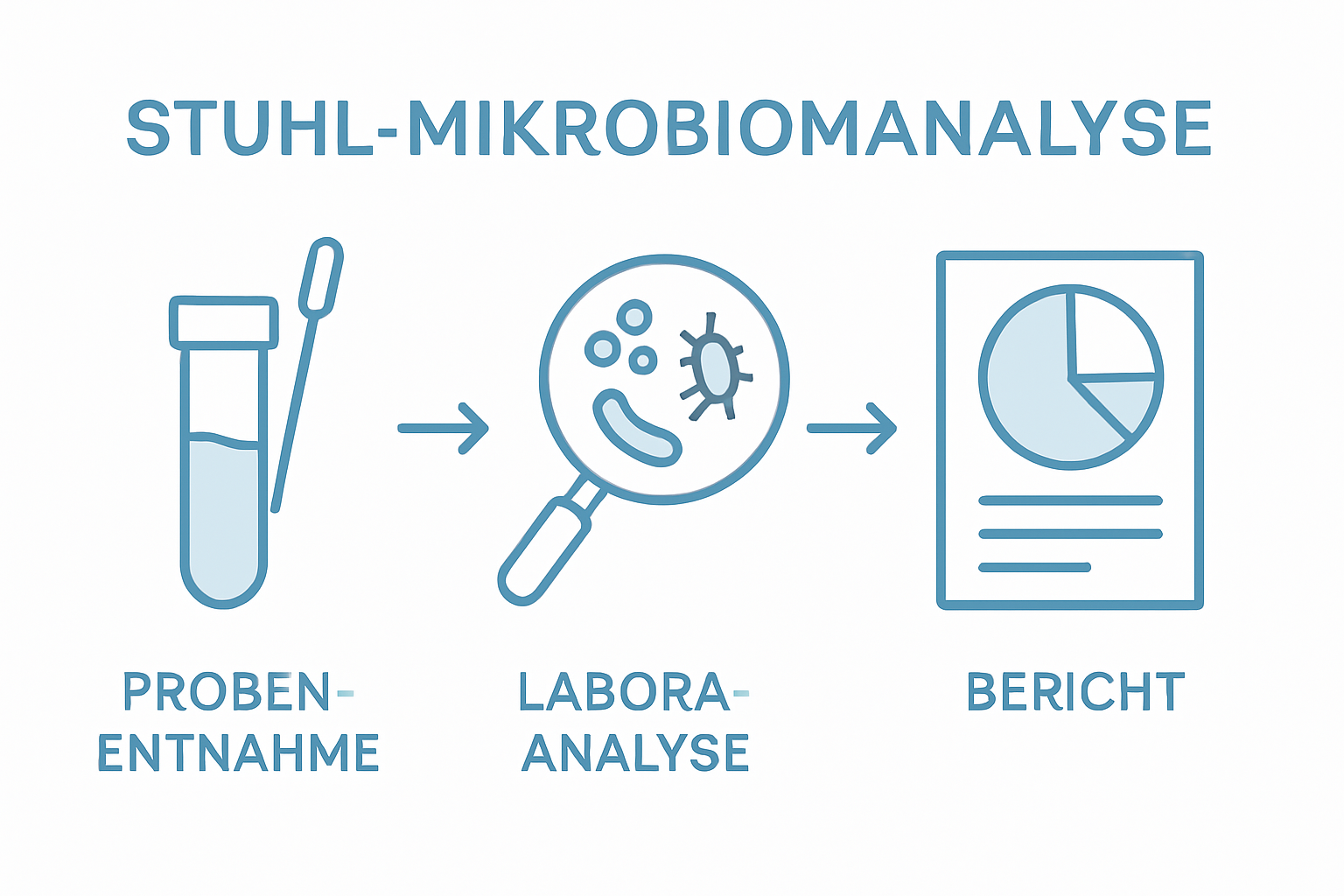
The microbiome analysis process typically begins with sample collection. A small stool sample is required, which is collected under sterile conditions and sent to a specialized laboratory. Modern genetic sequencing techniques such as 16S rRNA gene sequencing enable the precise identification and quantification of the various bacterial species.
After the analysis, you will receive a detailed report that not only shows the composition of your gut bacteria but also identifies possible imbalances and risks. Interpreting the results is complex and requires expertise. It includes assessing bacterial diversity, the ratio of beneficial to potentially harmful bacteria, and possible connections with health conditions such as digestive problems, metabolic disorders, or immune deficiencies.
Pro tip for interpreting results: Always have your microbiome analysis professionally explained by a nutritionist or doctor so that you can fully understand the results and derive specific health strategies from them.
Practical Applications for Digestion and Prevention
By improving bacterial analyses for clinical applications, more accurate diagnoses can be made and more personalized treatment approaches developed, underscoring the importance of microbiome analysis for our health. Modern analytical methods enable us to understand the complex relationships between gut bacteria and various health conditions.
The practical applications of microbiome analysis are diverse. Analysis of the gut microbiota makes it possible to assess the balance of microorganisms in the gut and take targeted measures to promote digestive health. In cases of digestive problems such as irritable bowel syndrome, chronic inflammation, or food intolerances, a detailed microbiome analysis can provide valuable insights.
The preventive possibilities are particularly interesting. The analysis can identify early warning signs of potential health risks, such as metabolic disorders, immune deficiencies, or inflammatory processes. This enables a proactive approach to health. Targeted dietary recommendations, probiotics, or lifestyle adjustments can positively influence the composition of gut bacteria and thus help develop prevention strategies.
Pro tip for microbiome optimization: Perform microbiome analysis regularly and document changes in your diet and lifestyle to develop a balanced gut microbiome in the long term.
An overview of opportunities, limitations, and data privacy
The development of standardized procedures for microbiome analysis offers opportunities for more precise diagnoses and more individualized therapies. At the same time, we must realistically assess the possibilities and limitations of this technology.
The opportunities offered by microbiome analysis are promising. Microbiome analysis enables a detailed assessment of the gut microbiota, which can help identify individual health risks at an early stage. It can provide indications of digestive problems, metabolic disorders, and immune functions, and supports personalized prevention strategies.
However, it is equally important to understand the limitations. Despite advanced analytical techniques, direct diagnoses or immediate treatment recommendations cannot be guaranteed. Scientific interpretation requires highly qualified experts, and not all connections between the microbiome and health have been fully researched.
The following table provides an overview of the opportunities and limitations of modern microbiome analyses:
| Aspect | Opportunities of the analysis | Limitations |
|---|---|---|
| Health promotion | Early detection of risks | Not a substitute for medical diagnosis |
| Prevention | Individual nutrition tips | Scientific evaluation required |
| Personalization | Tailored recommendations | Not all connections are known yet |
| Data privacy | Increased data control | Sensitive information must be protected |
Pro tip for data privacy: Choose only providers with certified data protection that pseudonymize your personal health data and completely delete it after analysis.
Your path to a healthy gut with mybody®x
The complex interplay of gut bacteria has a major influence on your health and well-being. If you have digestive problems or want to understand your microbiome in greater detail, a microbiome analysis gives you the opportunity to gain valuable insights into your gut flora. At mybody®x, you will find specially developed solutions such as the Gut Flora Analysis – For Healthy Gut Flora, using state-of-the-art laboratory technology and scientific precision.
Take the opportunity now to actively shape your health and discover personalized recommendations for nutrition and lifestyle with your test results. Our tests are convenient for home use and guarantee the highest data protection standards. Start your individual microbiome analysis today and benefit from expert knowledge and sustainable prevention. Also take a look at our DNA Metabolism Tests for Your Optimal Nutrition to complete your journey toward greater vitality. You can find all the information and offers at mybody-x.com—take the first step toward your very own health boost!
Frequently asked questions
What is a microbiome analysis?
A microbiome analysis is a scientific process that examines the composition of microorganisms in the human gut. It provides important information about the health and balance of the gut flora.
What role do gut bacteria play in health?
Gut bacteria are essential for digestion, the immune system, and protection against pathogens. They also influence metabolic processes and mental health.
How is a microbiome analysis performed?
A microbiome analysis begins with collecting a small stool sample, which is sent to a specialized laboratory. There, genetic sequencing is performed to identify the bacterial species.
What can I learn from the results of a microbiome analysis?
The results show the composition of your gut bacteria, identify potential imbalances, and provide indications of health risks. They can be used to develop personalized health strategies.
Recommendation
- Microbiome Test Explained: How Gut Flora Analysis Works – mybody®x
- Microbiome Test: Your Guide to Better Gut Health – mybody®x
- Gut Analysis Test: Find Your Path to Better Gut Health – mybody®x
- Build a Healthy Gut Flora: Your Nutrition Guide for a Healthy Gut – mybody®x
- Battery Repair Guide: How to Bring Your Batteries Back to Life - accu.blog



Share now:
How to optimize my digestion: Step-by-step guide to better gut health
Microbiome test experiences and what they really reveal about you