

Firm Stools: Comprehensive Guide 2024
Surprisingly many people repeatedly suffer from hard stools. According to studies, around 15 percent of adults in Germany are regularly affected by constipation. Firm stool consistency can burden your daily life and also provide important insights into your gut and overall health. Understanding what causes these changes and what to look out for can help protect you from discomfort and identify warning signs earlier.
Key Insights
| Point | Details |
|---|---|
| Healthy Stool Consistency | Firm stools should be soft and compact in form and occur regularly to indicate healthy digestion. |
| Common Causes | Dehydration, a low-fiber diet, and lack of exercise are key factors contributing to firm stools. |
| Warning Signs | Persistent pain, blood in the stool, or sudden changes in bowel habits may signal serious health problems. |
| Preventive Measures | A balanced diet with sufficient fiber, adequate fluid intake, and regular exercise is essential for good digestive health. |
Table of Contents
- Definition and Characteristics of Firm Stools
- Common Causes of Hard Stool Consistency
- Health Effects and Warning Signs
- Modern Diagnostics with Stool and Microbiome Tests
- Prevention, Nutrition, and Self-Help Tips
Definition and Characteristics of Firm Stools
When it comes to digestive health, stool consistency plays a crucial role. Firm stools are more than just an unpleasant experience—they can provide important insights into your gut health.
According to the Bristol Stool Form Scale, which is recommended by AOK, types 1 and 2 are considered particularly hard and firm. These stool types may indicate constipation. Consistency is largely influenced by the time stool remains in the large intestine, where water is removed, causing the stool to become thicker.

Normally, bowel movements should have the following characteristics:
- Formed, soft and compact consistency
- Regular frequency between 3 times a day and 3 times a week
- Easy bowel movements without much effort
- No pain or significant straining
You can learn more about gut health in our comprehensive guide: learn more about gut health. Deviations from these parameters—such as consistently very hard stools—may indicate health problems and should be evaluated by a doctor.
Common Causes of Hard Stool Consistency
Hard stools can have various causes, ranging from your lifestyle to medical factors. Dehydration is one of the most common causes and is often overlooked. If you do not drink enough water, your body draws moisture from the stool, resulting in a harder consistency.
According to the MSD Manual, there are numerous other reasons for hard stools:
- Diet: Low-fiber diet
- Physical activity: Lack of physical activity
- Hormones: Hypothyroidism, pregnancy
- Medications: Certain medicines that cause constipation as a side effect
- Conditions: Neurological or hormonal disorders
Understanding bloating and digestive problems can help you better recognize the connections. It is important to know that constipation can be either acute or chronic. If your symptoms persist, you should seek medical advice to rule out possible underlying health problems.
Health Effects and Warning Signs
Hard stools are more than just an inconvenience—they can send serious health warning signals. Chronic constipation can lead to various complications in the long term that should not be underestimated.
According to AOK, the following accompanying symptoms are particularly concerning:
- Straining heavily during bowel movements
- Persistent pain
- Extreme bloating
- Persistent feeling of fullness
Medications and their potential interactions can also affect your bowel movements. According to research by T-Online, there are also critical warning signs that must be evaluated by a doctor:
- Blood in the stool
- Mucus-covered or foul-smelling stool
- Pencil-thin stool
- Alternating bowel habits between constipation and diarrhea
These symptoms may indicate serious conditions such as colorectal cancer. If your symptoms persist, do not hesitate to seek professional medical help.
Modern Diagnostics with Stool and Microbiome Tests
Modern medicine offers precise methods for analyzing your gut health that go far beyond traditional examinations. Stool and microbiome tests provide detailed insight into your digestive functions and the complex ecosystem of your gut.
According to Gesundheits-Lexikon, comprehensive stool diagnostics includes various examination parameters:
- Stool consistency
- Color and odor
- Stool volume
- Pathological admixtures
Microbiome analysis for your gut health provides additional important insights. Interestingly, according to Wikipedia, about 10-20% of stool mass consists of gut bacteria—a decisive factor in assessing your gut flora.
Modern diagnostic procedures enable precise analysis that can detect functional disorders and systemic diseases at an early stage. The examination not only provides information about acute symptoms but also offers preventive insights into your health.
Prevention, Nutrition, and Self-Help Tips
A healthy gut needs more than just good food. Holistic prevention means consciously shaping your lifestyle and diet. The foundation for smooth bowel movements is a balanced and supportive dietary strategy.
According to Focus, the following preventive measures are crucial:
- Consume 25 g of fiber daily
- Drink at least 2–3 liters of water or unsweetened tea
- Consume healthy, unsaturated fats
- Stay physically active regularly
- Reduce stress effectively
Strengthening gut health through proper nutrition can be a key to greater well-being. Dr. Böhm's guide also recommends fiber blends from pharmacies as a supplementary measure.
In addition to diet, exercise and stress management play a crucial role. Make sure you get enough exercise, take time to relax, and listen to your body. A holistic approach is the key to a healthy digestive system.
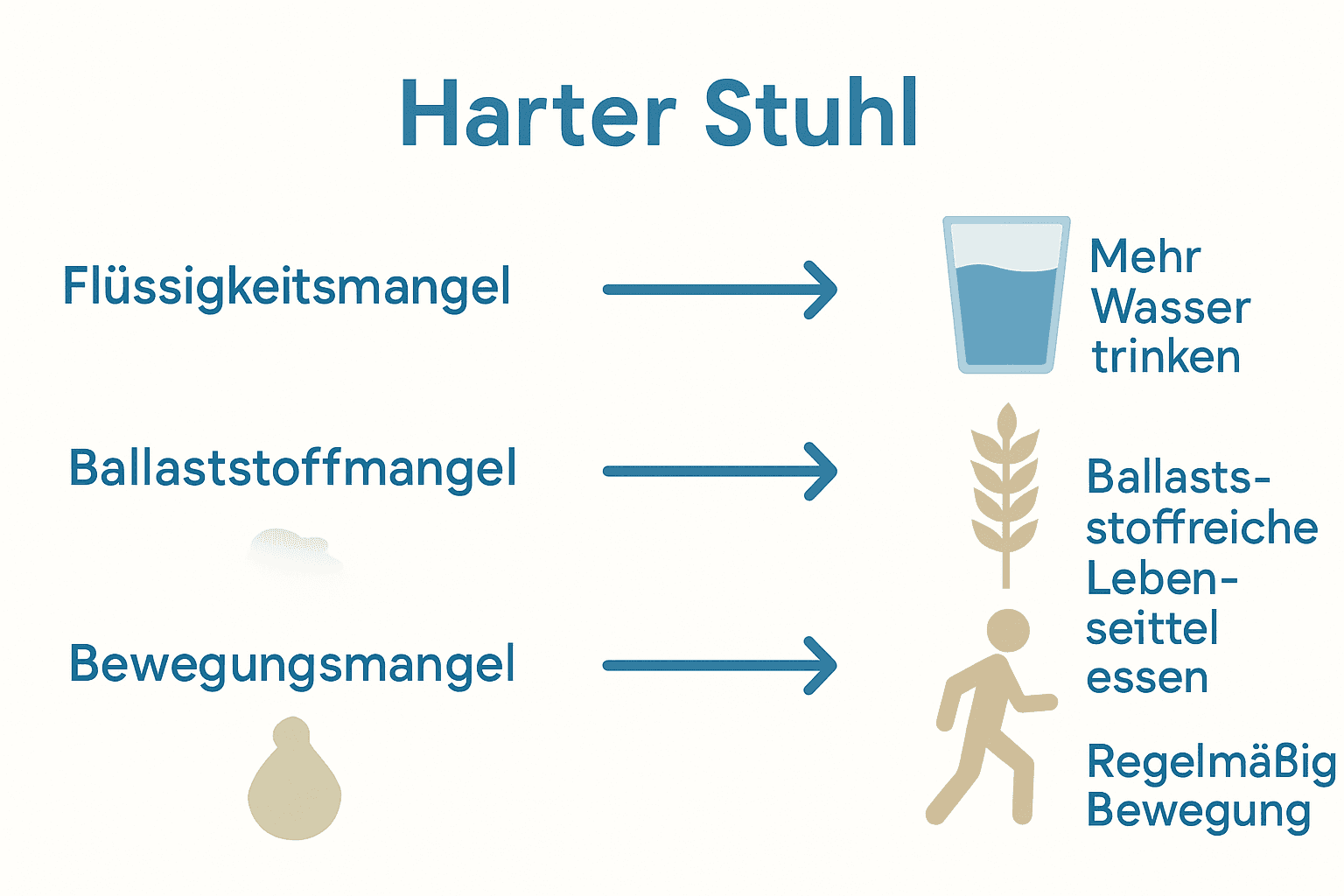
Here is an overview of common causes and corresponding preventive measures:
| Cause | Description | Preventive recommendation |
|---|---|---|
| Dehydration | Insufficient water intake | Drink 2–3 liters daily |
| Fiber deficiency | Little vegetables, whole grains, and fruit | At least 25 g of fiber |
| Lack of exercise | Little physical activity | Regular exercise |
| Stress | Psychological stress | Stress reduction, relaxation |
| Medications/illnesses | Medications, hormonal disorders | Medical evaluation, consultation |
Analyze your gut health—find the cause of hard stools
Are you one of the people who regularly suffer from hard stools or constipation? An uncomfortable feeling of fullness, pain when using the toilet, and uncertainty about possible causes can significantly affect everyday life. According to our guide, an incorrect diet, too little exercise, or an imbalanced microbiome are often overlooked—yet a targeted analysis can provide crucial answers.
Choose true clarity for your health. With a microbiome analysis for your gut health, you can discover what your gut is really lacking and receive personalized recommendations for sustainably supporting your digestion. In addition, our overview of nutrition and gut health provides practical tips for dealing with hard stools. Get professional support from mybody® now and benefit from scientifically validated results—get started today so that your well-being noticeably improves.
Frequently asked questions
What are the symptoms of hard stools?
Symptoms include hard, well-formed stools, difficulty passing stool, the urge to strain, pain or tension, and possibly bloating and a feeling of fullness.
What causes hard stools?
Common causes include dehydration, a low-fiber diet, lack of exercise, certain medications or hormonal disorders, and conditions such as constipation.
How can I prevent hard stools?
To prevent hard stools, you should drink enough water (at least 2–3 liters daily), eat fiber-rich foods (at least 25 g per day), and engage in regular physical activity.
When should I see a doctor for hard stools?
You should see a doctor if you have persistent pain, notice blood in your stool, or if your bowel habits suddenly change, especially if constipation and diarrhea occur together.

Share now:
Understanding Water Kefir: Health Benefits and Uses Explained
Soften your stool: Step-by-step instructions for home