
Mushy Stool Cause: Find the Answer!
You sit on the toilet in the morning, look down, and think: This somehow does not seem normal. Not quite diarrhea, but not formed stool either. More soft, mushy, and unclear. Maybe it has only been this way for a few days. Perhaps it has been accompanying you for longer, sometimes more intensely, sometimes less.
This very uncertainty is what makes mushy stool so stressful. Many people initially ignore it, briefly adjust their diet, and hope it will disappear on its own. Sometimes that works. But sometimes mushy stool is a sign that your gut needs more attention.
The good news is that you do not need to panic right away. Behind a mushy stool cause there is often something that can be understood and influenced. When you learn to interpret your gut’s signals correctly, you will feel calmer, clearer, and more able to take action.
What your stomach is really trying to tell you
Perhaps you know a day like this: You eat breakfast as usual, have a few meetings, drink coffee in between, grab something quick while out in the evening, and later notice that your stomach feels uncomfortable. Your bowel movement is soft, mushy, and unpleasant. The next day, it is somewhat better. Then it happens again.
Your gut does not react randomly. It is signaling that something has become unbalanced. This may be a short-term reaction to stress or food. But it may also mean that your body has been struggling with something for some time—something you have not yet clearly recognized.
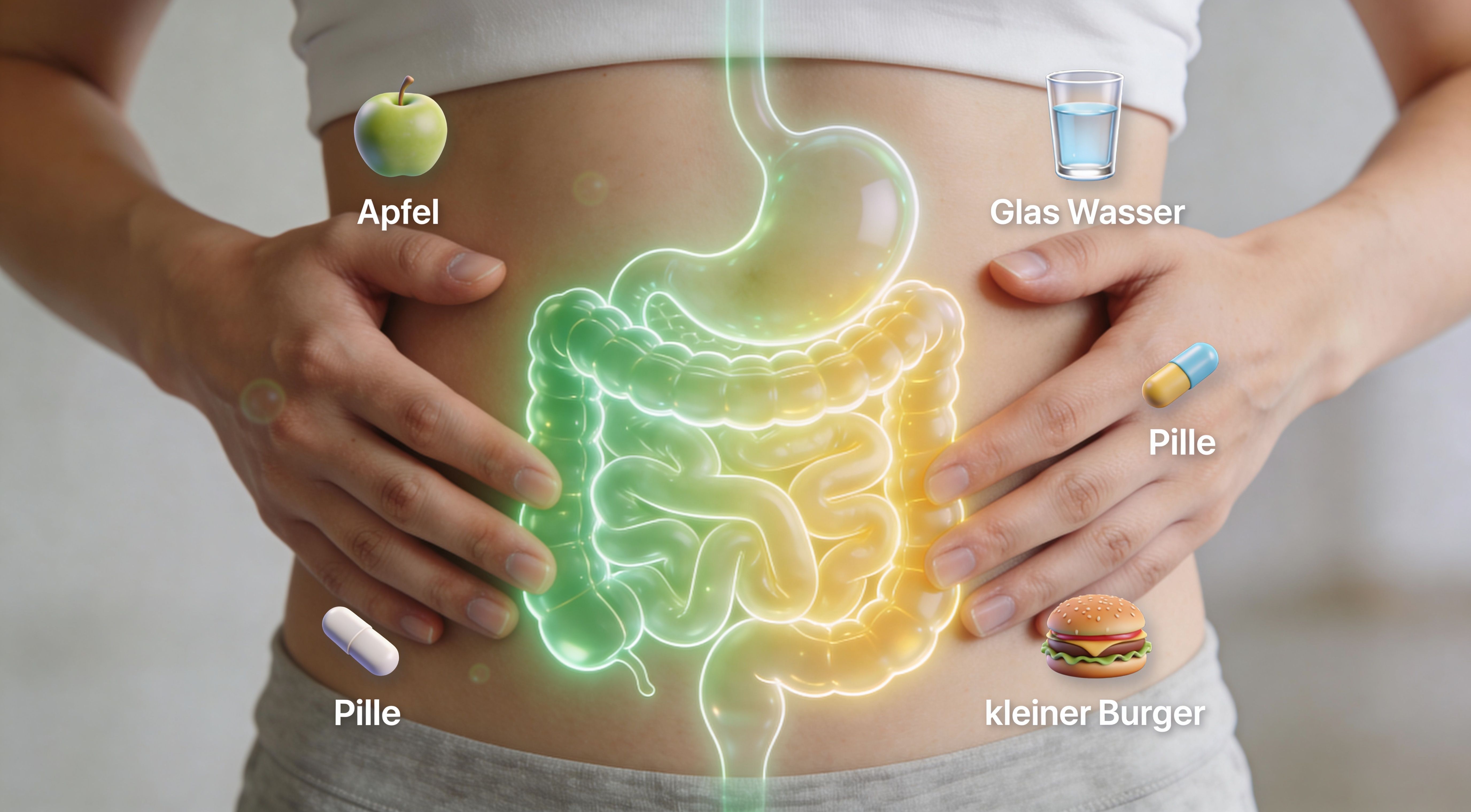
Many people view mushy stool merely as an annoying secondary symptom. It makes more sense to see it as a signal from your body. Stool consistency often reveals how quickly food is moving through the intestines, how well it is being processed, and whether your digestion is currently stable.
Mushy stool is not automatically something serious. But it is a good reason to take a closer look.
If you often feel unsure about what is still normal, a clear overview of healthy bowel movements and how to assess them can help. This already takes the initial pressure off many people because they learn to observe differences more closely instead of simply worrying.
Why your body is drawing your attention
Your digestive system works closely with your nervous system, your diet, and your microbiome. Even small changes can cause your stool to become softer than usual. Typical triggers include rushed meals, unfamiliar foods, inner tension, or a period following medication.
What matters is not dramatizing every deviation. What matters is recognizing patterns. Does it occur after certain foods? During stressful weeks? After consuming dairy products? Or simply for no apparent reason?
What you should pay attention to first
Before thinking about rare causes, observe three things for a few days:
- Timing: When do the loose stools occur?
- Accompanying symptoms: Do you experience bloating, abdominal discomfort, or a feeling of fullness?
- Connection: Do you notice a link to food, stress, or medication?
This turns vague discomfort into a clear picture, step by step.
The map of possible causes
Loose stools do not have just one cause. Usually, there are several possible directions to explore. If you sort them out carefully, everything immediately seems less confusing.
This overview can help you get your bearings:

Diet and lifestyle
These are the causes most often overlooked in everyday life. Your gut responds to what you eat, how regularly you eat, and the state your nervous system is currently in.
Examples include:
- Not enough fiber: The stool often lacks structure as a result.
- Very fatty or heavily spiced food: This can irritate digestion.
- Stress: The gut becomes more sensitive and often works less steadily.
- Lack of exercise: Natural bowel activity can become sluggish or unbalanced.
- Not drinking enough: This also affects stool consistency.
Intolerances and gut flora
Some people eat something seemingly harmless and still react with bloating, cramps, or loose stools. In that case, it is worth looking at food intolerances and the microbiome, meaning the community of bacteria in your gut.
Typical candidates include lactose, fructose, or gluten. A disrupted gut flora can also play a role. This often happens after infections, antibiotics, or prolonged periods of stress. The gut then no longer processes food as calmly and reliably as usual.
Medications and underlying conditions
The third category is more medical. It concerns triggers that you cannot explain solely by your diet.
A brief overview:
| Area | Possible role |
|---|---|
| Antibiotics | Can disrupt the bacterial balance in the gut |
| Irritable bowel syndrome | Often lead to alternating digestive problems |
| Chronic bowel diseases | Require medical evaluation |
| Thyroid and metabolism | Can indirectly affect digestion |
The longer a symptom persists, the less useful it is to simply guess.
The most important insight is often not: Which cause sounds the worst? But rather: Which one is most likely in your case? That is where meaningful self-observation begins.
What you eat and how you live
Often, the cause of mushy stools is closer to everyday life than you might think. Your intestines are not a rigid pipe but a sensitive system. They respond to whether you eat calmly or hurriedly, whether your diet is balanced or chaotic, and whether your body is in alarm mode.

An important foundation is fiber intake. A low-fiber diet with less than the recommended 25-30 g per day can cause digestive problems. Mushy stools are often directly associated with this, as described in the Focus Gesundheit article on mushy stools and possible causes.
When the intestines react to everyday life rather than illness
Fiber adds bulk to stool and helps the intestines work more regularly. If there is not enough fiber, stools can become soft and poorly formed. At the same time, if you suddenly switch from very little fiber to a lot of raw vegetables, legumes, or bran, your stomach may initially feel overwhelmed.
Fat also plays a role. Very fatty meals remain in the stomach longer and can noticeably alter digestion. Some people notice this directly after fast food, cream sauces, or very rich meals. Others react more to alcohol, large amounts of sugar, or spicy food.
Stress is not just in your head
The intestines and nervous system are closely connected. When you are under pressure, your body releases stress signals that also affect digestion. As a result, your intestines may work faster, become more sensitive, or react more restlessly.
Practical rule: If mushy stools occur mainly during hectic weeks, it is at least as worthwhile to look at stress as at what is on your plate.
Common everyday triggers include:
- Irregular meals: Going without food for a long time and overeating late can disrupt your rhythm.
- A lot of coffee or alcohol: Both can irritate the intestines.
- Eating quickly: People who eat hurriedly often swallow air and put additional strain on digestion.
- Too little exercise: Even a short walk after eating can do many people good.
What you can specifically try
You don’t have to overhaul your entire diet right away. A calm mini-test over a few days makes more sense.
- Simplify your meals: Temporarily eat simpler, less fatty meals more regularly.
- Observe instead of banning: Write down what you eat and how your stomach reacts.
- Increase fiber gently: Do not force it. Take it step by step instead.
- Reduce evening triggers: Less alcohol, fewer heavy late-night meals, and less chaos.
This often helps you recognize whether your daily routine is the main driver or whether the cause lies deeper.
Hidden culprits: Intolerances and disrupted gut flora
If you feel you have already tried everything and your stools are still mushy, it is worth looking at things you cannot see directly. Two of them occur particularly often: food intolerances and a disrupted gut flora, also known as dysbiosis.

Both can have similar effects. You eat something completely normal but develop bloating, rumbling, pressure, or loose stools. That is exactly why the two are often confused.
What happens in the body with food intolerances
When you have an intolerance, your body does not process certain components of foods well. A classic example is lactose. When lactose is not properly broken down, it travels deeper into the intestine, draws in water, and is fermented there by bacteria. This can lead to bloating, abdominal pain, and loose stools.
In Germany, around 40% of cases are attributable to intolerances such as lactose intolerance, and approximately 15% of the population is affected. In addition, up to 70% of irritable bowel syndrome cases may be triggered by dysbiosis following antibiotic use or stress. These figures are described in the underlying data.
If you are unsure about dairy products, this article provides useful guidance on recognizing and self-testing for lactose intolerance.
Why the microbiome is so often underestimated
Your gut is home to a huge community of microorganisms. When this ecosystem is in balance, it supports digestion, the protective function, and metabolism. When it gets out of sync, digestion can become more sensitive, unpredictable, and irritable.
Typical triggers of dysbiosis include:
- Antibiotics: They not only attack unwanted germs but often alter beneficial bacteria as well.
- Chronic stress: It affects intestinal movement, the mucous membrane, and the bacterial balance.
- Monotonous diet: Little variety often means little nourishment for beneficial gut bacteria.
Sometimes the cause is not the individual food, but how your gut responds to food overall.
Intolerance or dysbiosis
The distinction is not always easy. This brief comparison can help:
| Indication | More likely intolerance | More likely disturbed gut flora |
|---|---|---|
| Symptoms after certain foods | Frequently clearly identifiable | Often variable |
| Reaction to dairy, fruit, or gluten-containing foods | Typical | Possible, but less specific |
| Onset after antibiotics | Less typical | Common suspicion |
| Unpredictable digestion over a longer period | Possible | Very common |
Why guessing is often not enough
Many people first cut out dairy, then gluten, then fruit, then raw vegetables. In the end, they eat less and less and still do not know what is really behind it. The problem is not a lack of discipline. The problem is a lack of clarity.
If you really want to understand the cause of mushy stools, you do not need more speculation but a comprehensible assessment. This is especially true when the symptoms recur or cannot clearly be linked to a meal.
When a visit to the doctor becomes unavoidable
Not every instance of mushy stool is harmless. There are situations in which you should no longer simply monitor your symptoms but should have them medically evaluated. This applies especially when symptoms persist, worsen, or occur together with other warning signs.
Irritable bowel syndrome is common in Germany. About 10–15% of the population are affected, and women are twice as likely to be affected. Mushy stools occur alternately with constipation in 30–50% of those affected. These figures are described in the underlying data.
Irritable bowel syndrome is common, but not everything is irritable bowel syndrome
Irritable bowel syndrome can cause soft or mushy stools, abdominal pain, bloating, and alternating bowel movements. The symptoms typically vary in phases. Many people experience good and bad weeks.
Nevertheless, it is important not to jump to irritable bowel syndrome as an explanation for everything. Other conditions can also cause similar symptoms. These include inflammatory bowel disease, persistent infections, or other medical causes that require medical attention.
You should take these warning signs seriously
If one or more of the following signs occur, please see a doctor:
- Blood in the stool: This should always be medically evaluated.
- Unintentional weight loss: Especially if you have not consciously changed your diet.
- Severe or worsening abdominal pain: Not just mild cramping, but significant discomfort.
- Fever or feeling seriously unwell: This could indicate more than just a digestive disorder.
- Nighttime urge to have a bowel movement: If your gut wakes you from sleep, this is an important signal.
- Long-lasting symptoms: Especially if self-help does not change anything.
If your body is sending red flags, waiting is not a sign of strength but a risk.
How to prepare properly for your doctor’s appointment
A doctor’s appointment is often much more helpful when you bring specific observations with you. It is best to make a note for a few days of:
- When loose stools occur
- How often you need to use the bathroom
- What you have eaten
- Which accompanying symptoms occur
- Whether medications or previous antibiotics play a role
This can help assess more quickly whether the underlying issue is more likely to be functional, an intolerance, or something else.
From Guesswork to Certainty: Find Your Personal Cause
Many people get stuck at a frustrating point. They search online, try bland foods, eliminate suspected foods, and hope for improvement. Things get better briefly, then everything comes back. This is exactly where uncertainty often turns into exhaustion.

A more sensible approach is to rely on data. Instead of constantly collecting new guesses, you work with information that fits your body. Especially with recurring digestive issues, this is often the difference between eliminating foods at random and taking targeted action.
Why targeted analyses are more useful than blanket diets
General dietary advice can be a useful starting point. However, it does not reliably tell you why your gut is reacting. Is it a particular food? An impaired bacterial balance? Or both?
The underlying data describes how modern microbiome tests can identify dysbiosis with a high degree of accuracy. They can also be used to derive personalized recommendations that lead to a noticeable improvement in symptoms for a large proportion of users.
If you would like to understand how an analysis like this is generally structured, you can find a helpful introduction to the gut test and its possibilities here.
What personal data can do for you in everyday life
The greatest benefit lies not in the technology itself, but in having greater confidence in your decisions. You no longer have to eliminate all kinds of foods based on guesswork. Instead, you can ask more targeted questions:
- Does my gut tend to react to certain food groups?
- Are there signs of an imbalanced gut microbiome?
- Do I need greater clarity about my diet or medical evaluation?
Clear data cannot replace medical advice. But it can help you address your symptoms in a more organized, targeted way and with less guesswork.
The real benefit is peace of mind
When you can better assess the cause of your mushy stool, it changes more than just your diet. It takes the pressure off. You stop speculating at every meal and start making decisions systematically.
This is often the moment when people begin to feel again: I’m not at the mercy of my gut.
Your immediate action plan for a calmer gut
Until you have more clarity, you can start giving your gut a break right now. Not through radical restrictions, but with simple steps that often bring some immediate calm.
For the next few days
Start with simple, easy-to-digest meals. Many people tolerate cooked foods better than large amounts of raw vegetables, fatty foods, or very large portions. It’s better to eat regularly and somewhat simply than to eat rarely and then consume a great deal all at once.
Pay particular attention to hydration. When your stool is soft, your body loses fluids more easily. Water and mild teas are often a good choice.
What you can do today
- Choose soothing foods: Rice, potatoes, oats, bananas, or gently cooked vegetables are often easier to tolerate than very heavy meals.
- Reduce irritants: Temporarily cut back on alcohol, very spicy food, and large amounts of coffee.
- Reduce stress: A short walk, eating calmly without your phone, and taking conscious breaths before meals often help more than you might think.
- Note your symptoms: Not perfectly, just honestly. Even a few days of observation can reveal patterns.
- Don’t overwhelm your gut: Don’t try five dietary trends at the same time.
What may help in the long term
Some people benefit from slowly incorporating prebiotic foods and rebuilding dietary variety once their gut has calmed down. Others realize that their biggest lever isn’t food at all, but sleep, relaxation, and a regular daily routine.
One thing is especially important: You don’t have to passively wait for your gut to eventually cooperate again by chance. You can observe, organize, and take targeted action.
If you want to understand your symptoms better on a sound basis instead of merely guessing at them, you’ll find modern at-home tests for gut health, intolerances, nutrients, and other areas of health at mybody x Gesundheit. This can help you take the next step away from guesswork and toward greater personal clarity.



Share now:
What is healthy for the gut? Your guide for 2026
Probiotics: Understand Their Effects and Use Them Specifically for Gut Health