
Which blood tests for fatigue really provide insight
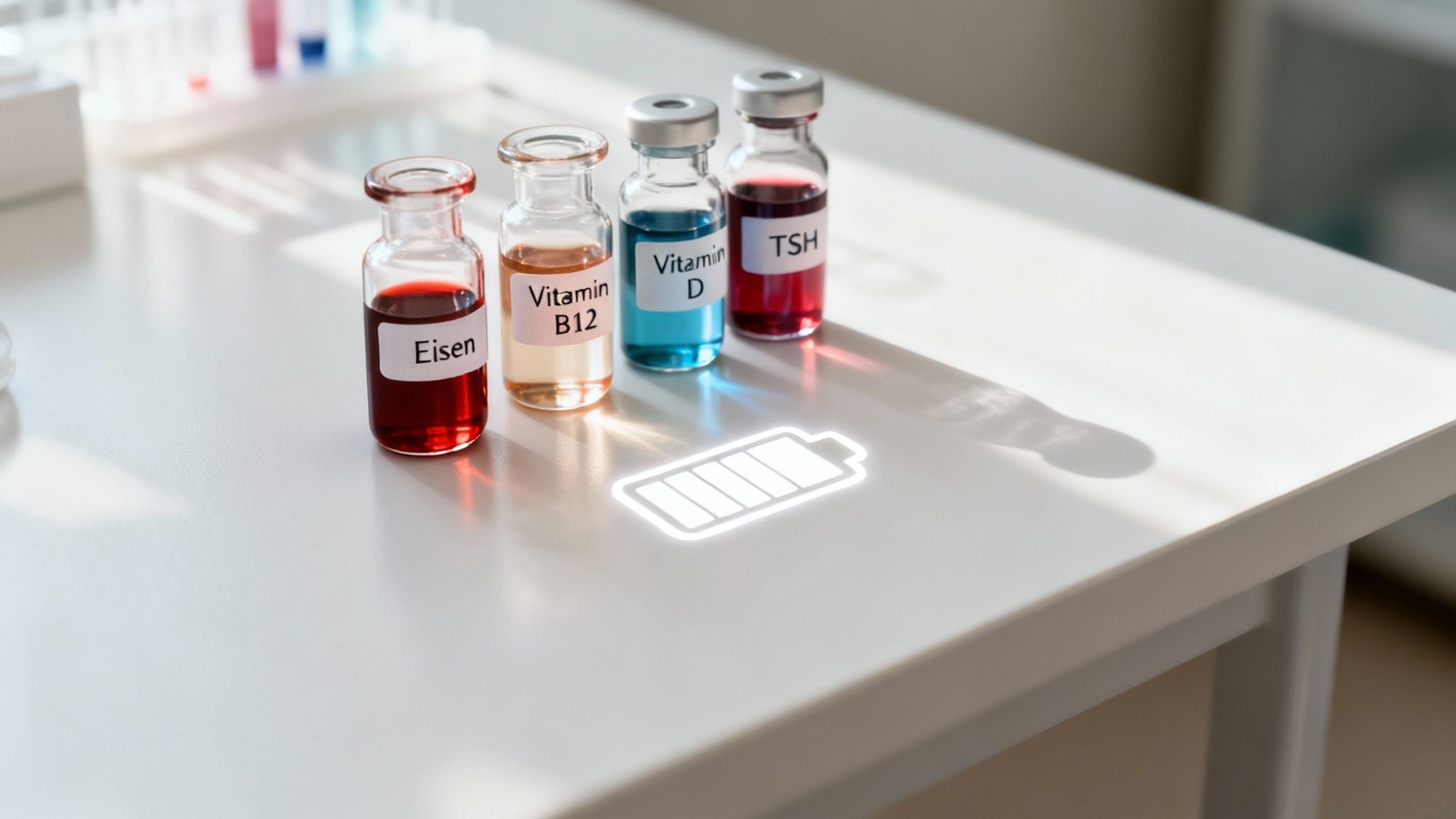
Does this sound familiar? You actually get enough sleep, but still constantly feel as though you are driving with the handbrake on? When your battery simply no longer reaches full charge, there is often no great mystery behind it. The answer to the question “Which blood tests should be checked for fatigue?” usually comes down to four main suspects: iron, vitamin B12, vitamin D, and thyroid hormones. A deficiency in just one of these levels is often enough to bring you to a complete standstill.
What Your Body Is Trying to Tell You Through Fatigue
Think of your body as a finely tuned orchestra. Every vitamin, mineral, and hormone plays its instrument and contributes to the shared melody. But if even one musician is missing or misses their cue, the entire symphony grinds to a halt. That is exactly what happens when you lack important nutrients—the audible result is that leaden fatigue.
Persistent exhaustion is more than just a bad day. It is a loud and clear signal from your body that something is out of balance. Instead of simply pushing this feeling aside, you should see it as an opportunity to listen more closely and get to the root of the cause.
The Four Main Suspects Behind Energy Loss
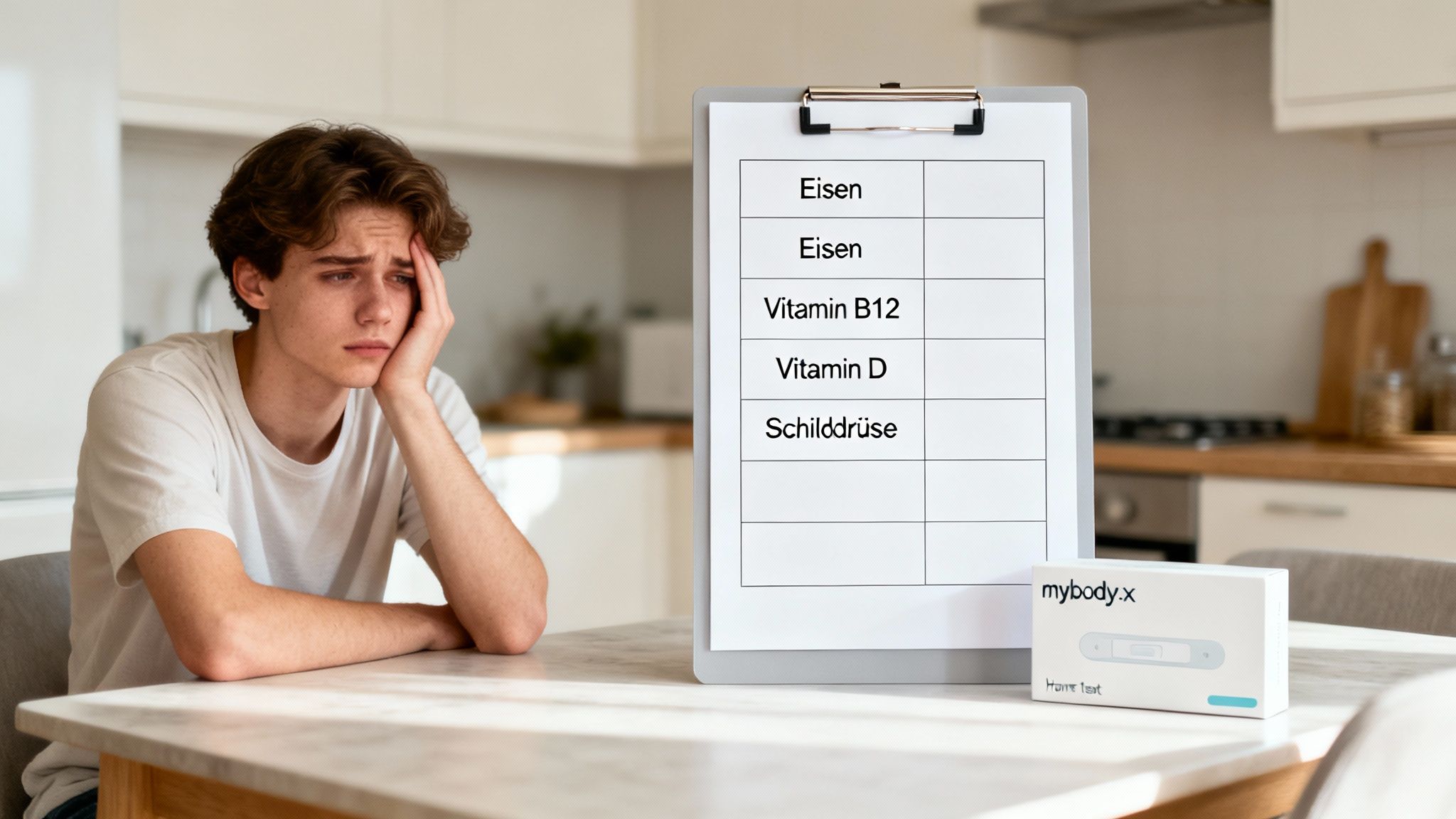
Don't worry—you don't have to wade through a jungle of medical terms right away. In most cases, it makes sense to focus first on the four most common causes, which you can check very easily. These four levels are often the missing pieces of the puzzle when it comes to your energy balance:
- Iron: Your personal oxygen courier. Without enough iron, your cells do not receive enough oxygen to produce energy.
- Vitamin B12: The manager of your nerves and blood formation. A deficiency not only drains your energy but also affects your concentration.
- Vitamin D: The famous sunshine vitamin, essential for your immune system and muscle strength. Too little of it often leaves you feeling tired and listless.
- Thyroid hormones: The directors of your metabolism. When they are not working properly, your entire body runs on low power.
Knowing these levels is the first and most important step toward regaining control over your well-being. A straightforward at-home test from mybody-x.com can quickly give you clarity, without long waits for a doctor's appointment.
A blood test is like looking under the hood of your body. It shows you exactly where the fuel is lacking, so you can top it up in a targeted way and finally get back to running at full power.
To give you an even better overview of why exactly these four values are so important for your energy levels, we have summarized them here for you.
The most important blood values for fatigue at a glance
| Blood value | Function in the body | Why a deficiency causes fatigue |
|---|---|---|
| Iron (ferritin) | Transports oxygen in the blood and is crucial for cellular energy production. | When you are deficient, your cells receive too little oxygen. It feels as though you are constantly breathing in thin air—pure exhaustion. |
| Vitamin B12 | Essential for the formation of red blood cells, nerve function, and DNA synthesis. | Too few red blood cells also mean poor oxygen transport. In addition, nerve signal transmission is impaired, leading to mental and physical fatigue. |
| Vitamin D | Regulates calcium levels, supports the immune system, and is important for muscle function. | A deficiency weakens your muscles and immune system. Your body uses more energy to maintain basic functions, which leaves you feeling drained. |
| Thyroid hormones (TSH) | Control the speed of your entire metabolism and therefore your energy expenditure. | With an underactive thyroid, your metabolism runs on low power. You feel sluggish, get cold easily, and may even gain weight—your body simply has no energy. |
As you can see, each of these values has a very important role. A deficiency can quickly affect your overall well-being and is one of the most common—and most treatable—causes of persistent fatigue.
The empty battery: iron deficiency as the most common cause
Do you often feel as though you are going through the day with the handbrake on? You are not alone. The culprit is often a nutrient we only painfully miss when it is lacking: iron.
Think of iron simply as a diligent courier in your blood. Its most important task is to transport oxygen from your lungs to every single cell in your body. If these “oxygen taxis” are missing, your muscles, brain, and organs do not receive enough fuel. The result? A leaden fatigue that cannot be banished by any amount of sleep. Iron deficiency is in fact one of the most common deficiencies worldwide and the main cause of anemia, which directly manifests as exhaustion.
Women are particularly often affected. Current data show that in Germany, around 4–6 % of adults have clear iron-deficiency anemia. Among women of childbearing age, this figure rises to as much as 10 %. The tricky part is that even if your iron stores are merely running low and no anemia has yet been diagnosed, this can already cause chronic fatigue. You can find more background information in the report on chronic fatigue from Fennerlabor.
Why your iron stores matter more than your current level
When we talk about which blood values indicate iron deficiency when you're tired, there are two key players: hemoglobin and ferritin. Knowing the difference is worth its weight in gold, because this is often the key to identifying the problem early.
-
Hemoglobin (Hb): This is the classic value from the complete blood count at the doctor's office. It shows how much iron-containing red blood pigment is currently active in your red blood cells. You could say it counts how many “oxygen couriers” are currently out on the road.
-
Ferritin: This is your iron-storage protein. Think of it as your body's large warehouse, from which new couriers are sent out when needed. A low ferritin level is the first warning sign that your reserves are running low.
The problem? Your body is clever. It tries to keep transport going for as long as possible. To do so, it first plunders your stores (ferritin decreases) before the number of active couriers drops (hemoglobin decreases).
So you can have a completely normal hemoglobin level and still feel weak and tired because your iron stores are critically low. The ferritin level is therefore the true early indicator of an impending energy deficiency.
Many people go for months or even years with depleted iron stores without realizing it because the standard blood test shows no abnormalities. Only when the storage is completely empty and no new couriers can be sent out does the hemoglobin level also drop. This is when it is referred to as manifest iron-deficiency anemia.
Do you recognize yourself in these symptoms?
An empty iron store doesn't just show up as fatigue. You may also recognize some of these accompanying symptoms:
- Pale skin and mucous membranes
- Difficulty concentrating and a feeling of “brain fog”
- Hair loss or brittle nails
- Shortness of breath even with light exertion
- Frequent headaches or dizziness
- Cracked corners of the mouth
If these symptoms sound familiar, taking a closer look at your iron levels could be the crucial next step. Before you simply start taking iron supplements, however, testing is essential. Too much iron can be harmful to the body.
With the mybody-x.com nutrient test, you can easily and conveniently determine your ferritin level from home. This quickly gives you clarity about whether your battery is really running low because your iron stores are depleted. Find out more in our article about what iron deficiency is and how to recognize it.
Your thyroid: The hidden regulator of energy
After looking at iron stores as one of the most common energy drainers, let’s now take a look at a small but incredibly important organ: your thyroid. It’s best to think of it as the accelerator pedal of your metabolism. When everything is working smoothly, it provides exactly the right amount of “gas” so that your cells can work efficiently and produce energy.
But when it gets out of balance and produces too few hormones, your entire body switches to low-power mode. This widespread condition is called underactive thyroid (hypothyroidism) and is often the hidden cause of constant fatigue. Along with leaden exhaustion, unexplained weight gain, lack of motivation, and constantly feeling cold are also typical companions.
Understanding the hormone trio: TSH, fT3, and fT4
To check your thyroid function through a blood test, three values in particular are crucial. They work together in a finely tuned feedback loop that is a bit like a thermostat.
- TSH (thyrotropin): This is the “boss” from the pituitary gland. Its job is to stimulate the thyroid and give it the signal: “Hey, please produce more hormones!”
- fT4 (free thyroxine): This is the storage hormone produced by the thyroid at the command of TSH. You can think of it as the raw material for your energy.
- fT3 (free triiodothyronine): This is the actual “power hormone.” It is converted from fT4 and is the active form that binds directly to your cells and really gets your metabolism going.
So if your thyroid is sluggish, the pituitary gland notices immediately. It essentially calls louder and louder for more hormones by increasing the TSH level. A high TSH level is therefore the classic first sign of an underactive thyroid.
However, the TSH level alone doesn’t always tell the whole story. It’s like hearing only that the boss is shouting, without knowing whether the employees (fT3 and fT4) are actually getting the work done.
That’s exactly why it’s so important to measure the free, active hormones as well. Sometimes fT4 production is still normal, but the conversion into active fT3 doesn’t work properly. In this case, your TSH level may still be unremarkable, but you may nevertheless feel tired and lacking in energy because the key power hormone is missing from your cells.
Thyroid values explained simply
This table shows the most important thyroid values, what they mean, and what deviations may mean for your energy levels.
| Blood value | What it indicates | Typical change in hypothyroidism |
|---|---|---|
| TSH | The signal from the pituitary gland to the thyroid to produce hormones. | Elevated: The brain is demanding more output from an underactive thyroid. |
| fT4 | The amount of available storage hormone produced by the thyroid. | Low or in the lower normal range: Not enough raw material is being produced. |
| fT3 | The amount of active hormone that directly drives the metabolism. | Low: Not enough “fuel” reaches the cells, which explains the fatigue. |
A comprehensive analysis of all three values therefore gives you the most complete picture of your thyroid function. If you would like to delve deeper into the connections, read our detailed article on the TSH level and thyroid function.
More than just fatigue: Symptoms of an underactive thyroid
An underactive thyroid not only slows down your energy, but can affect your entire body. You may recognize yourself in some of these additional symptoms:
- Unexplained weight gain or difficulty losing weight
- Dry skin and brittle hair
- Constipation and sluggish digestion
- Difficulty concentrating and memory lapses
- Depressed moods or lack of drive
- A constant feeling of cold, especially in your hands and feet
These symptoms often develop gradually, which is why they are not associated with the thyroid for a long time.
If you suspect that your thyroid is holding back your energy levels, the hormone test from mybody-x.com can quickly and conveniently provide clarity. It analyzes the key values and gives you an easy-to-understand evaluation, so you know exactly where to start to get your inner powerhouse running at full speed again.
Don’t underestimate the energy vitamins D and B12
When it comes to blood values and fatigue, most people immediately think of iron or the thyroid. Yet there are two silent heroes working behind the scenes that are at least as crucial for your energy levels: vitamin D and vitamin B12. They are far more than just nutrients—they are the spark plugs for your cellular powerhouses.
A deficiency in these two vitamins is anything but rare in Germany. It often manifests as persistent fatigue, difficulty concentrating, and even low moods. Let’s take a closer look at these two “powerhouse vitamins” and find out why they are so often overlooked.
Vitamin D: the sunshine vitamin for your energy
Vitamin D is often associated only with strong bones, but its functions extend far beyond that. Imagine it as the conductor of your immune system and muscle function. Without this conductor, the entire orchestra falls out of rhythm—and that costs the body an incredible amount of energy.
Particularly during the darker months from October to April, deficiency is widespread in this country, as the weak sunlight simply does not allow our skin to produce enough vitamin D. Many people feel the effects directly:
- Muscle weakness: Your muscles feel heavy and powerless, even during everyday activities.
- Susceptibility to infections: Your immune system runs on low power, forcing your body to constantly fight off pathogens. A real energy drain.
- Lack of motivation: Low vitamin D levels are often closely linked to low mood and the classic “winter blues.”
The body can absorb only very small amounts of vitamin D through food, which is why the sun plays such a central role. In winter, it is therefore almost impossible for most people to maintain an optimal level, which further intensifies fatigue.
A vitamin D deficiency is like trying to start a car with a weak battery. The engine sputters, everything runs on low power, and you simply cannot get up to speed.
Vitamin B12: fuel for nerves and blood
Vitamin B12 is the unsung hero of our blood formation and nervous system. It is absolutely essential for producing red blood cells, which transport oxygen throughout the body. A deficiency causes a specific form of anemia in which the few red blood cells are oversized and inefficient.
The result is the same as with iron deficiency: your cells do not receive enough oxygen, which leads to profound physical and mental exhaustion. At the same time, vitamin B12 is responsible for the protective sheath around your nerve fibers (the myelin sheath). Without it, signal transmission in the brain is disrupted. This can manifest as difficulty concentrating, forgetfulness, and a feeling of “brain fog.”
Certain groups of people are at particularly high risk of deficiency:
- Vegans and vegetarians: Since vitamin B12 is found almost exclusively in animal products, taking a supplement is often unavoidable for them.
- People with gastrointestinal disorders: Conditions such as Crohn’s disease or gastritis can severely impair the absorption of B12 in the intestines.
- Older people: As we age, the stomach often produces less “intrinsic factor,” which is essential for absorbing B12.
The symptoms of a B12 deficiency often develop gradually. That is precisely why the true cause of persistent fatigue frequently remains undetected for a long time. If you would like to explore the topic in greater depth, you will find more helpful information in our article about which vitamins may be lacking when you are tired.
Because vitamin D and B12 play such a central role in your energy, it makes perfect sense to keep an eye on both levels. With the nutrient test from mybody-x.com, you can conveniently check the status of both vitamins at home at the same time. This will quickly show you whether your batteries may simply be waiting for these important “spark plugs” to finally get back to full power.
Tracking down hidden energy drains in the body
Have you had your iron, vitamin, and thyroid levels checked, but still constantly feel as though you are moving with the handbrake on? Sometimes the cause of fatigue is not one of the usual suspects, but a silent overload smoldering deep inside your body. Imagine your immune system fighting around the clock on an invisible front—that takes an enormous amount of energy that you then lack in everyday life.
These hidden battles can include chronic, low-grade inflammation or undetected food intolerances. Your body then puts all its energy into defending itself against these “troublemakers.” It is as if dozens of apps were running in the background on your phone, secretly draining the battery.
Silent inflammation as an energy drain
You do not feel silent inflammation the way you feel the flu, with fever and aches. It is more like a smoldering fire in the body that often goes unnoticed for months or even years, slowly but surely draining you. One of the most important blood markers for detecting this condition is high-sensitivity C-reactive protein (hs-CRP).
While normal CRP levels shoot up during acute infections, hs-CRP levels detect even the tiniest chronic inflammatory reactions. An elevated hs-CRP level is therefore a strong indication that your body is fighting something somewhere—and could explain your endless exhaustion.
The triggers for these kinds of silent inflammations are often part of our modern lifestyle:
- Chronic stress
- A diet high in sugar and processed fats
- Too little exercise
- Hidden infections or an imbalanced gut microbiome
Tracking down these sources of inflammation is the first step toward finally allowing your body to rest and use its energy for the important things in life.
Imagine your body constantly having to put out small fires. At some point, there simply isn't enough energy left for normal operations. An elevated hs-CRP level is the smoke detector that alerts you to these hidden fires.
When Food Makes You Tired
Another often-overlooked cause of fatigue is food intolerance. Unlike a true allergy, in which the reaction is immediate and severe, the symptoms here are often gradual. You eat something and only feel sluggish or bloated hours or even days later, or you develop a headache.
Your gut plays the absolutely central role here. It isn't just responsible for digestion; it also houses around 80% of your immune system. If you regularly eat foods your body cannot tolerate, they irritate the intestinal lining and provoke a constant defensive response. As a result, your immune system produces more so-called IgG4 antibodies against certain food components.
These antibodies indicate that your body is reacting sensitively to certain foods. The immune system's constant fight against these supposed “enemies” consumes an enormous amount of energy.
This is exactly where the food intolerance test from mybody-x.com comes in. It measures your IgG4 reactions to a wide range of foods, helping you uncover the hidden energy drainers on your plate.
By identifying these potential triggers and eliminating them for a while, you give your immune system and gut a much-needed break. Many people report that this targeted dietary change alone makes them feel more alert, fitter, and simply more energetic. It's a direct way to relieve your body of a heavy burden.
From Knowledge to Action: How to Get Your Energy Back
You now have a pretty good overview of which blood values play a role in fatigue and how much iron, vitamins, or hormones can throw your energy levels off balance. But knowledge alone won't recharge your battery. The truly decisive step comes now: taking action yourself and taking responsibility for your health. But where is the best place to start?
Don't worry, the first step doesn't have to be complicated or start with weeks of waiting for a doctor's appointment. A simple at-home test can quickly and easily provide you with valuable initial clues. It shows you whether your suspicions are correct and gives you a clear direction.
Your roadmap to more energy
Imagine you are investigating the cause of your low energy level. The following infographic shows you a simple way to track down hidden energy drains such as low-grade inflammation or unnoticed intolerances.
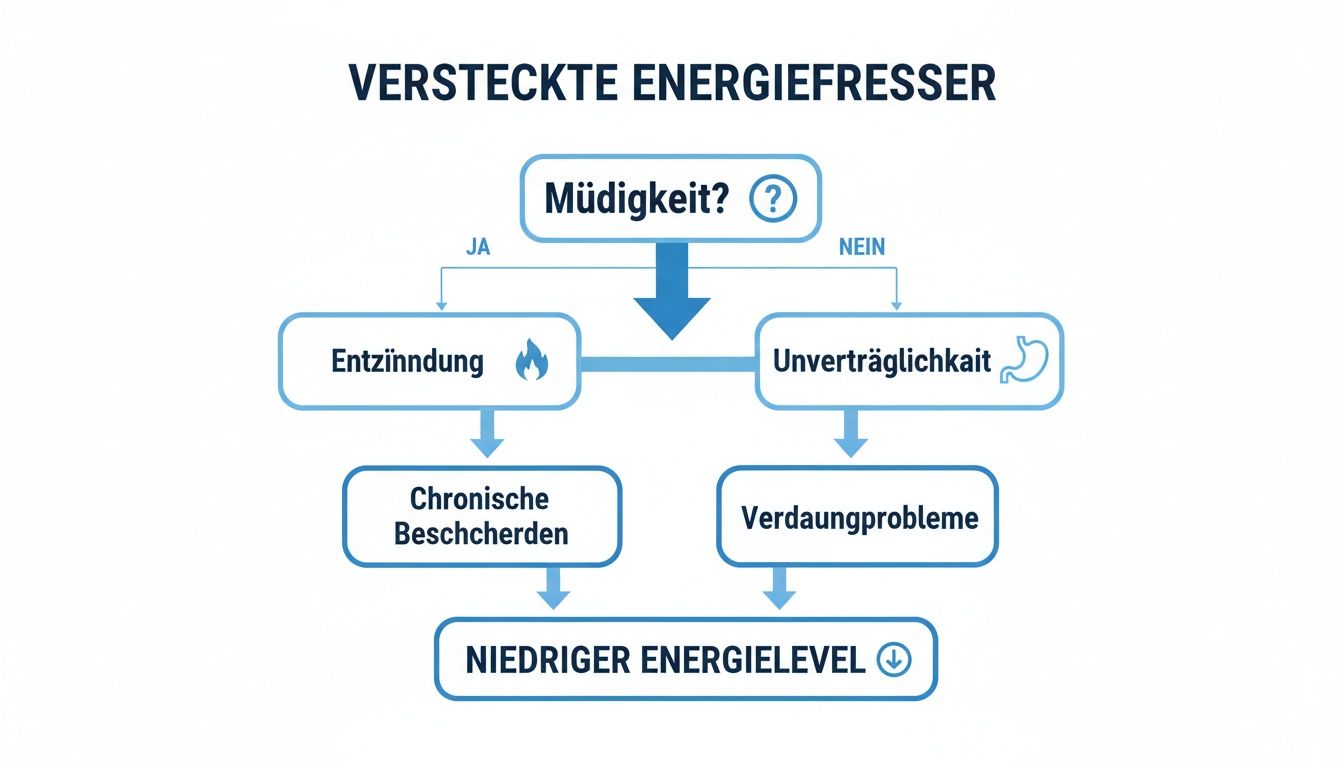
As you can see, both low-grade inflammation and undetected reactions to certain foods can directly lead to a noticeable loss of energy. Uncovering these connections is often the key to finally finding the true cause of your fatigue.
Home test or doctor’s visit—which is the right step for you now?
A home blood test is the ideal first step if you experience general symptoms such as fatigue, difficulty concentrating, or lack of motivation. It allows you to quickly and discreetly check for the most common suspects, such as nutrient deficiencies or hormonal imbalances. This gives you a solid foundation for everything that follows.
A home test is like a personal health check-in. It empowers you to take proactive steps and enter a conversation with a doctor or therapist well-informed, should it be necessary.
However, seeing a doctor remains essential if you experience severe, acute, or concerning symptoms. These include, for example:
- Extreme, sudden weight loss or significant weight gain
- Severe dizziness, rapid heartbeat, or shortness of breath
- Persistent pain or fever
- Severe depressive moods
With signs like these, immediate medical evaluation is absolutely necessary to safely rule out serious conditions.
The first steps after receiving your test results
As soon as you have your results in hand, you can finally take targeted action. A common finding, for example, is an emerging deficiency in iron or vitamin D. You can take immediate steps here with simple adjustments to your everyday routine.
With low ferritin (iron):
- Put more iron-rich foods on your plate, such as lentils, pumpkin seeds, or lean red meat.
- Always combine these meals with vitamin C (such as a glass of orange juice or fresh bell peppers) to significantly improve iron absorption.
With low vitamin D:
- Try to spend a little more time outdoors every day, especially around midday. This stimulates your body's natural production.
- Incorporate fatty fish such as salmon or herring into your diet—they are excellent sources of vitamin D.
Even these small changes can make a noticeable difference. If you want to dig deeper and assess your nutrient status holistically, a comprehensive nutrient deficiency test can provide further valuable insights and help you tailor your diet perfectly.
Your questions, our answers
Here, we have summarized the most pressing questions about blood values and fatigue for you. This will give you even more clarity and help you better assess your situation.
Do I really need to fast for a blood test?
That depends entirely on the test. For many of the usual suspects when it comes to fatigue, such as iron (ferritin) or certain vitamins, fasting beforehand is usually not necessary.
Thyroid values are different, especially the TSH value. It is often recommended that you arrive for the blood draw fasting, as eating and drinking can slightly affect the results. It is always best to read the instructions for your test carefully—including those for the at-home tests from mybody-x—to be sure.
My blood values are normal, but I am still tired. What now?
An incredibly frustrating situation that we know all too well. The problem is that laboratory reference ranges are often huge. A value can therefore be officially “normal” but already be at the lower end of the range for your body and causing symptoms. We see this particularly often with ferritin or vitamin B12.
There is also a whole world beyond standard blood values. Chronic stress, poor sleep, undiagnosed food intolerances, or compromised gut health can drain your energy significantly without showing up in a standard blood count.
How quickly will I feel better once a deficiency has been corrected?
It varies greatly from person to person and from one nutrient to another. If your iron stores are completely depleted, it can take several weeks to months for them to be replenished and for you to feel noticeably fitter again.
In the case of a vitamin B12 deficiency, however, high-dose supplements or injections can often produce results more quickly. Above all, one thing is important: be patient and stick with it consistently. A follow-up test after a few months is a great idea to see whether you are on the right path toward having more energy.
Are you ready to put an end to the guesswork and uncover the true causes of your fatigue? Start your journey toward more energy—right from home with a test from mybody-x. Find the right blood, nutrient, and hormone test on mybody-x.com now.



Share now:
What is non-HDL cholesterol: Why this value often tells you more
Easy explanation of how to do an allergy test yourself