

Cause of high inflammation levels: How to recognize it and act wisely
Constantly tired, run-down, or simply feeling that something isn’t right? If you recognize yourself in unexplained symptoms for which there is no simple explanation, high inflammation levels could be the answer. The cause of high inflammation levels is usually an immune-system response to hidden infections, injuries, or chronic strains such as stress and an unhealthy diet.
What high inflammation levels really mean
It’s best to think of inflammation as your body’s own fire department. If you cut your finger, it immediately responds to limit the damage and fend off intruders. This acute inflammation is extremely useful—you can see it right away: the wound becomes red and swollen—and after a few days, the whole thing is over. Operation successfully completed.
It becomes truly problematic when this firefighting service is in constant operation without you seeing an obvious source of the fire. This is then called “silent” or chronic inflammation. It often smolders unnoticed in the background for months or even years and can severely affect your well-being without showing the classic symptoms of an acute injury.
Understanding your body’s language
Your body is constantly communicating with you, but its signals are not always loud and clear. Instead of a painful wound, it often sends only very subtle signs when there is silent inflammation. These can be many different things:
- Persistent fatigue: You simply feel drained and lacking energy, even though you have actually slept enough.
- Diffuse pain: Your joints or muscles suddenly hurt without you knowing why.
- Difficulty concentrating: That feeling of “brain fog,” which makes clear thinking difficult.
- Skin problems: Unexplained rashes, acne, or persistent redness.
- Digestive problems: A constant feeling of fullness, bloating, or irregular bowel movements.
It’s easy to attribute such nonspecific symptoms to everyday stress. But they can be a crucial warning sign that your immune system is overwhelmed and that there is an underlying cause of high inflammation levels.
Why looking at your blood is so valuable
This is exactly where inflammatory markers come into play. They are specific proteins in your blood that increase as soon as your body is fighting a fire somewhere. They are, so to speak, your body’s smoke detectors—they sound the alarm long before you even see the fire.
A blood test for inflammatory markers is the first truly objective step toward turning vague suspicions into tangible evidence. It gives you a clear answer as to whether an inflammatory process is actually behind your symptoms.
Knowing these values is the key to regaining control of your health. Instead of fumbling in the dark and merely treating symptoms, you can specifically investigate the underlying cause. An elevated level is therefore no reason to panic, but a valuable guide pointing you in the right direction.
In the following sections, we explain which blood values really matter, the most common causes of elevated levels, and how you can take the first step toward greater clarity with a simple self-test from mybody-x. This way, you can finally take your health into your own hands.
Understanding the most important inflammatory markers in your blood
Your blood is like an open book that tells valuable stories about your health. To interpret these stories, we need to learn the language of inflammatory markers. Simply imagine them as three different detectives who help your body detect problems and track down the culprits.
It is extremely important to understand that not every inflammation is bad. Acute inflammation is even vital for survival—it is your immune system's rapid-response team, which cleans up after an injury or infection. It only becomes problematic when a brief operation turns into a permanent condition: chronic, “silent” inflammation that smolders unnoticed in the body and can cause major long-term damage.

It is precisely to uncover these smoldering fires that we look at certain blood values.
C-reactive protein (CRP): the rapid specialist
C-reactive protein (CRP) is the fastest and most sensitive detective of the bunch. It is produced in the liver, and its level shoots up within just 6 to 8 hours during acute inflammation. But it falls just as quickly once the danger has passed.
This rapid response makes CRP the ideal marker for detecting acute infections or monitoring the success of a treatment. An elevated CRP level is a clear warning signal that your immune system is currently working at full capacity. Want to delve deeper into the subject? Then you'll find everything you need in our detailed article about C-reactive protein.
Values up to 5 mg/l are considered unremarkable. However, if the value is already between 10 and 50 mg/l, this indicates mild to moderate inflammation, such as that caused by a cold or a urinary tract infection. If the value rises above this, a more serious bacterial infection is usually behind it and must be evaluated by a doctor.
Erythrocyte sedimentation rate (ESR): the unhurried observer
The erythrocyte sedimentation rate (ESR), often simply called the “sedimentation rate,” is the second detective. It moves at a much more leisurely pace than CRP. This test measures how quickly red blood cells (erythrocytes) sink to the bottom in a tube.
During inflammation, certain proteins form in the blood that cause red blood cells to stick together. These clumps are heavier and settle more quickly—the ESR value rises. However, because this process is much slower, ESR is less suitable for diagnosing acute infections. Instead, it provides valuable clues about chronic inflammatory processes that have been simmering unnoticed in the body for some time.
Leukocytes: the troops on alert
Leukocytes, or white blood cells, are essentially the soldiers of your immune system. Their number is routinely measured with every basic or comprehensive blood count.
An elevated leukocyte count (leukocytosis) is a very direct indication that your body is mobilizing its defense forces. It sends them out to fight invaders such as bacteria, viruses, or fungi.
Overview of the most important inflammatory markers
To keep things clear, this table summarizes the three most important inflammatory markers, their normal values, and their significance once again.
| Marker | Normal range (guideline values) | Possible significance when elevated |
|---|---|---|
| CRP (C-reactive protein) | < 5 mg/l | Acute inflammation, bacterial infections, and tissue damage. Very rapid increase. |
| ESR (erythrocyte sedimentation rate) | Men: < 15 mm/h Women: < 20 mm/h |
Chronic inflammation, autoimmune diseases, and rheumatic diseases. Slow increase. |
| Leukocytes (white blood cells) | 4,000–10,000 /µl | Direct indication of an immune response, usually caused by infections (bacterial or viral). |
Together, these values provide a much clearer picture than any one of them alone.
But one thing is always important: a single elevated value is not yet a diagnosis! Rather, it is a crucial clue—a smoke signal from your body telling you: “Hey, something isn’t right here!” The combination of these three markers helps experts narrow down the cause of high inflammatory markers. They are the first and most important step toward solving the mystery behind your symptoms.
Tracking down the common causes of elevated inflammatory markers
Imagine the check-engine light coming on in your car. You immediately know that something is wrong. But you still don’t know what exactly the problem is. Is it the oil, the radiator, or something completely different? Elevated inflammation markers in your blood work much the same way. They are a clear signal from your body that an immune response is underway, but the cause of high inflammation markers can vary widely.
This signal is your cue to dig deeper and find the real triggers. The causes can be broadly divided into two groups: the obvious “loud” sources of inflammation and the often-overlooked “quiet” smoldering fires.
Acute infections as classic fire starters
The most common and direct reason for a sudden rise in your inflammation markers is infection. When bacteria or viruses enter your body, your immune system immediately sounds the alarm and mobilizes its entire defense force. This massive response causes inflammation markers in the blood to rise rapidly.
Bacterial infections are often the prime suspects when it comes to particularly high levels. In severe infections such as pneumonia, pyelonephritis, or even sepsis (blood poisoning), CRP levels can quickly rise above 100 mg/l in the blood serum. By contrast, levels usually remain significantly lower in viral infections, such as a typical cold.
Chronic diseases as a lasting burden
While infections are often like a brief, intense fire, there are also conditions that smolder like a fire that never goes out in the body. These mainly include chronic inflammatory and autoimmune diseases. In these cases, the immune system mistakenly targets the body’s own tissues and keeps the inflammation going permanently.
Typical examples of such diseases include:
- Rheumatoid arthritis: An autoimmune disease in which the immune system attacks the joints.
- Crohn’s disease or ulcerative colitis: Chronic inflammatory bowel diseases that affect the digestive tract.
- Psoriasis: A skin condition that is also based on a misguided immune response.
With these diseases, inflammation markers are often persistently mildly to moderately elevated and shoot up during an acute flare-up.
Lifestyle factors: The underestimated accelerants
Now we come to the causes that are often overlooked but have an enormous impact on your well-being: the low-grade inflammation fueled by your lifestyle. It is usually not as dramatic as an acute infection, but its constant presence can literally wear your body down over time.
Silent inflammation is like a dripping faucet. A single drop is harmless, but over months and years, it can hollow out even the hardest stone. That is exactly what happens in your body when it is constantly exposed to small irritants.
These insidious processes are a particularly important cause of high inflammation levels because this is where you can take control and actively do something.
Diet and gut health
What you eat has a direct connection to the inflammatory processes in your body. A diet rich in sugar, processed foods, and unhealthy fats acts like an accelerant. It fuels inflammation-promoting processes and puts considerable strain on your gut.
Unrecognized food intolerances in particular can play a major role here. When your body reacts to certain foods such as gluten or lactose with a defensive response, this triggers a small inflammation in the gut every time you consume them. Over time, this can damage the intestinal lining and lead to what is known as “leaky gut”. You can learn more about the connection between gut health and inflammation in our detailed article on leaky gut.
Chronic stress and lack of sleep
Your body cannot distinguish between the stress of an attacking saber-toothed tiger and the stress of an approaching deadline. The physical response is the same: the release of stress hormones such as cortisol. In the short term, this is useful, but constant stress keeps your immune system on permanent alert and thereby promotes chronic inflammation.
Lack of sleep is also pure stress for your body. While you sleep, important repair and regeneration processes take place. Without this important nightly “reset,” inflammation can spread more easily.
Nutrient deficiencies and environmental factors
Your body needs certain vitamins, minerals, and fatty acids to keep inflammation effectively in check. A deficiency in anti-inflammatory nutrients such as omega-3 fatty acids, vitamin D, or antioxidants can quickly shift the balance in favor of inflammation.
External influences can also play a role. Environmental factors such as exposure to pollutants can also fuel chronic inflammation. For example, the dangers of asbestos are known to trigger long-lasting inflammatory reactions in the lungs—showing once again how important a clean environment is for our inner balance.
How Autoimmune Diseases Trigger Silent Inflammation
Under normal circumstances, your immune system is a brilliant bodyguard that can distinguish precisely between friend and foe. But what happens when this sophisticated system suddenly becomes confused? Imagine your body’s defense forces suddenly mistaking your own healthy cells for dangerous intruders and launching an attack. That is precisely the principle behind an autoimmune disease.
This misguided attack puts your body in a permanent state of emergency. Instead of fighting an infection and then returning to normal, the immune system remains in constant attack mode. The result is chronic, often “silent” inflammation that smolders unnoticed in the background and is one of the most common causes of high inflammation levels.
The Example of Rheumatoid Arthritis
To make this a little more tangible, let’s look at rheumatoid arthritis. In this disease, immune cells mistakenly attack the lining of the joints. They classify the joint structures as foreign and try to eliminate them.
This internal battle causes the typical symptoms that many people affected know all too well:
- Painful swelling: The joints, often in the hands and feet, become swollen, feel hot, and are extremely sensitive to touch.
- Morning stiffness: Especially after waking up, the joints remain stiff and immobile for quite some time.
- Persistent exhaustion: The body puts all its energy into this internal war, leading to deep, debilitating fatigue.
These local symptoms are only the tip of the iceberg. The battle can be read clearly in the blood count: Inflammatory markers, especially C-reactive protein (CRP), are often persistently elevated. In a sense, they are the direct echo of the attack raging inside the body.
In an autoimmune disease, inflammation is not a short-term symptom but the core problem of the disease itself. Elevated levels are not a temporary warning signal here, but a persistent condition that places strain on the entire body.
Why CRP is so important here
Especially in autoimmune diseases, C-reactive protein is a crucial guide for doctors. It helps not only with the initial diagnosis, but also with monitoring the course of the disease. If the CRP level rises sharply, this may indicate a new flare-up—in other words, a phase in which inflammatory activity is particularly intense.
Rheumatoid arthritis is one of the most common autoimmune diseases in Germany, with elevated inflammation levels being a key feature. In fact, around 90 percent of patients with rheumatoid arthritis have elevated CRP levels between 50 and 100 mg/l measured in their blood. This makes CRP testing an indispensable tool in rheumatology. Learn more about the significance of CRP levels at springermedizin.de.
So if you suffer from unexplained joint pain, constant fatigue, or other diffuse symptoms, elevated inflammation levels could be the crucial clue. They may indicate that an underlying process is taking place in your body and should be urgently evaluated by a doctor. A simple first step can be a self-test to give you an overview of your inflammation markers.
Your first step toward greater clarity with a self-test
Do you often feel tired, have diffuse symptoms, and suspect that silent inflammation could be the cause of your problems? Then it is time to move from passive speculation to active action. You no longer have to grope in the dark or wait for a doctor's appointment to get initial answers in your hands.
A mybody-x at-home blood test is the ideal, discreet first step toward getting to the bottom of the causes.
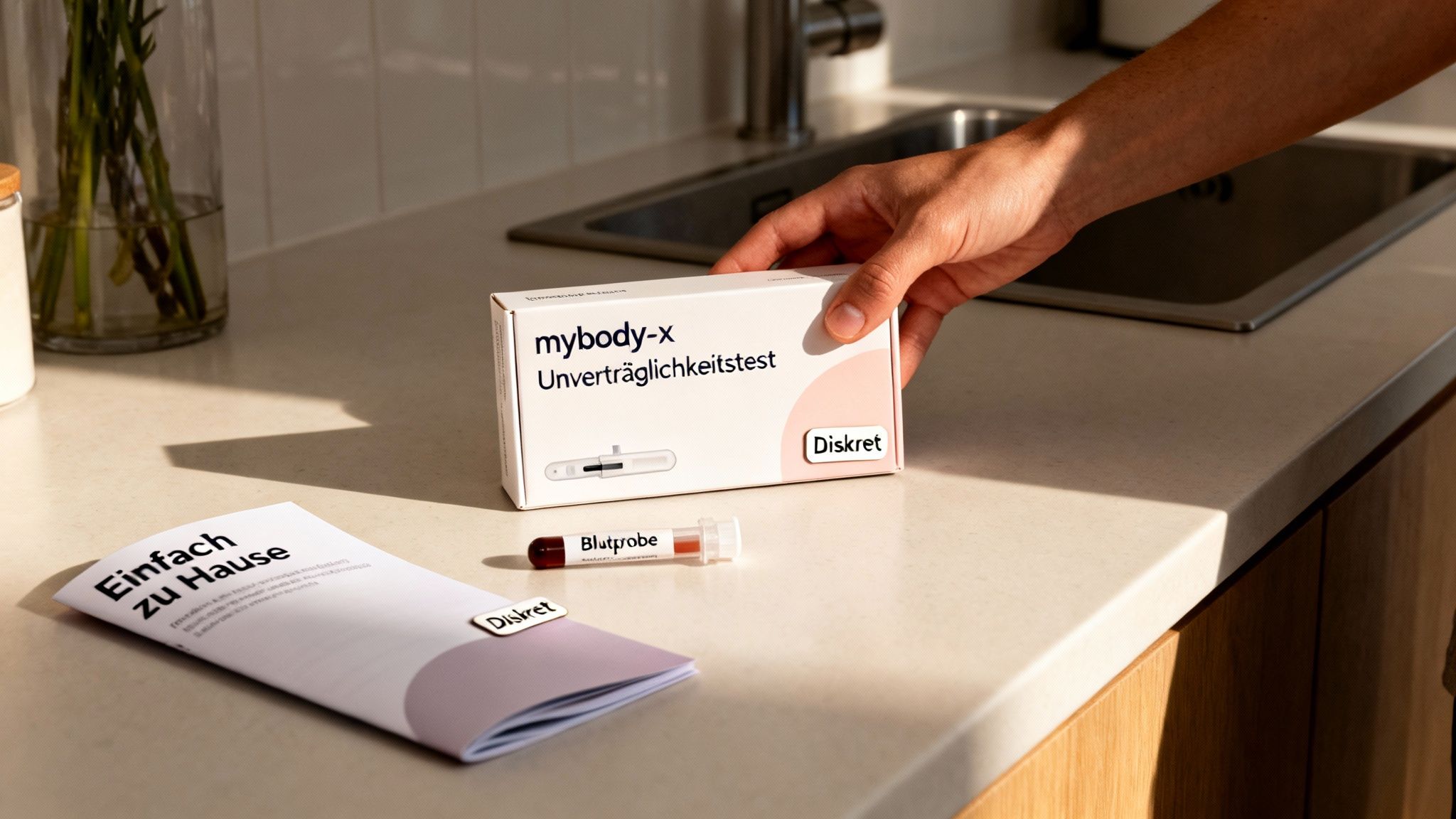
The process is incredibly simple and convenient: At home, in familiar surroundings, you collect a few drops of blood from your fingertip. Everything you need is included in the test kit, including easy-to-follow instructions. You then send your sample free of charge to our certified German laboratory. Within a few days, you will receive a detailed report with valuable insights.
Intolerances as silent accelerants
One of the most common yet frequently overlooked causes of chronic inflammation is on our plates. When your body responds to certain foods with an immune reaction, each consumption triggers a minor inflammation in the gut. The tricky part is that these reactions are often delayed and not as obvious as a classic allergy.
The mybody-x Intolerance Test analyzes your reaction to a wide range of foods. This helps you identify potential troublemakers that may be keeping your immune system on constant alert without you noticing and thereby contributing to a persistently elevated level of inflammation.
Such a test is not a final verdict on your diet. Instead, think of it as your personal map. It shows you which routes you could temporarily avoid to see whether your symptoms improve and your body finally calms down.
By deliberately eliminating these triggers from your diet, you give your gut a chance to regenerate. This simple measure alone often leads to a noticeable reduction in fatigue, digestive problems, and general signs of inflammation.
Are you missing the right fire extinguishers in your body?
Your body has an intricate system for keeping inflammation in check. However, it needs the right “building blocks” for this—vitamins, minerals, and trace elements. If these important helpers are missing, the delicate balance can quickly get thrown off. Inflammation can spread more easily.
This is exactly where a nutrient test comes in. It gives you precise information about whether you are getting enough essential, anti-inflammatory nutrients. The following are particularly important:
- Vitamin D: A deficiency in this “sunshine vitamin” is repeatedly associated with an increased tendency toward inflammation.
- Omega-3 fatty acids: These healthy fats are the direct counterparts of inflammation-promoting substances in the body.
- Magnesium and zinc: These minerals are involved in hundreds of metabolic processes that are also crucial for regulating the immune system.
A nutrient deficiency can be the hidden cause of high inflammation levels that you would hardly discover without a targeted test.
Your path to informed decisions
A mybody-x at-home blood test is more than just a result. It is a concrete, data-based starting point that puts you back in control. With the insights you gain, you can make informed decisions and create a solid foundation for all your next steps. The results help you adjust your lifestyle strategically or have a much more productive conversation with your doctor.
Want to learn more about how to track down hidden inflammation? In our article, we explain everything you need to know about a test for silent inflammation.
By putting together the puzzle pieces from an intolerance test and a nutrient test, you gain a clearer picture of what is really going on in your body. This allows you to take proactive action instead of merely reacting to symptoms.
How you can specifically reduce inflammation through your lifestyle
And now for the good news: You aren't simply at the mercy of inflammation. Your daily life has a huge influence on how your body deals with these processes. By adjusting the right levers, you can actively help put out the smoldering fires inside your body.

Here, we'll give you some specific and, above all, practical everyday tips to strengthen your immune system and deprive inflammation of its breeding ground.
The power of an anti-inflammatory diet
What ends up on your plate has a major impact on whether you fuel the fire inside or put it out. A diet full of sugar, trans fats, and highly processed products acts like an accelerant. An anti-inflammatory diet, on the other hand, gives your body exactly the tools it needs to fight the flames.
Think of these foods as your cells' personal fire department:
- Omega-3 fatty acids: Found in oily fish such as salmon, mackerel, and herring, as well as in flaxseeds and walnuts. They are direct counterparts to inflammation-promoting messengers.
- Antioxidants: You find these protective substances mainly in colorful fruits and vegetables. Berries, dark green leafy vegetables such as spinach and kale, and broccoli are true powerhouses.
- Healthy fats and spices: High-quality olive oil, avocados, and nuts provide valuable fatty acids. Spices such as turmeric and ginger have long been known for their powerful anti-inflammatory effects.
A mindful diet is one of the most effective levers of all. If you want to dive deeper and learn how you can specifically reduce inflammation in the body, we have covered the topic in detail in a dedicated article for you.
Exercise, sleep, and stress management
Your lifestyle is, of course, about more than just what you eat. Other areas of your daily life also play a crucial role in fighting silent inflammation. Focus especially on these three pillars.
Your body needs balance. Regular exercise, restful sleep, and good stress management aren't nice extras—they're the foundation of a strong and resilient immune system.
Even moderate but regular exercise, such as brisk walking, cycling, or yoga, helps lower inflammatory markers in the blood. But be careful—don't overdo it! Excessive exercise can also put stress on the body and have the opposite effect.
Restful sleep is just as important. At night, your body's most important regeneration and repair processes take place. Seven to eight hours per night is the ideal window to give your immune system the necessary break.
Chronic stress, in turn, is pure poison for the body. It stimulates the production of the stress hormone cortisol and further fuels inflammation. So find ways to consciously switch off—whether through meditation, mindfulness exercises, breathing techniques, or simply taking a walk through the woods.
Your questions, our answers
There are many questions and uncertainties surrounding inflammation levels. We have collected the most frequently asked questions and provide clear, easy-to-understand answers here.
At what point does an inflammation level become truly dangerous?
This question cannot be answered with a single number. It always depends on the bigger picture: your symptoms, the doctor's findings, and how the levels change over time. But there is one important rule of thumb: A CRP level above 100 mg/l is a strong warning sign of a severe bacterial infection. Prompt medical action is required here.
Can stress or diet really affect my levels?
Yes, and significantly so. Imagine your immune system constantly on high alert because of ongoing stress—that alone can fuel low-grade inflammation. A diet high in sugar and heavily processed foods then acts like an accelerant and can be an unrecognized cause of high inflammation levels.
The most important thing is this: Your lifestyle is not a side issue—it plays a leading role in your health. The good news? You have the power to actively influence your inflammation levels in a positive way.
Do high levels always mean a serious illness?
Fortunately, no. Even a simple flu-like infection, an inflamed tooth root, or even a sports injury can temporarily send inflammation levels soaring. So a single elevated result is not initially a reason to panic. See it as an important signal from your body to take a closer look and get to the root of the cause.
Do you want to take the first step and proactively learn more about your body? The self-tests from mybody-x give you the opportunity to gain valuable insights from home into topics such as nutrient levels and food intolerances. Find the test that suits you now at https://mybody-x.com.



Share now:
Silent inflammation symptoms you should know about
Inflammation marker in the blood: What your body is really trying to tell you