

Recognizing and treating vitamin B6 deficiency symptoms
Do you constantly feel tired, even though you're getting enough sleep? Are you struggling with cracked corners of your mouth or skin problems that just won't go away? We often blame such complaints on everyday stress. But they could be the first subtle signs that your body is lacking vitamin B6 .
Understanding your body's first warning signals
Vitamin B6, also known as pyridoxine, is a true powerhouse for your health. It's involved in countless processes in your body – from energy production to the formation of important neurotransmitters for your nerves and mood. If this crucial vitamin is lacking, your body sends subtle signals that you unfortunately dismiss far too easily as normal everyday ailments.
Imagine vitamin B6 as the conductor of a large orchestra. As long as he's there, all the instruments – your metabolism, your nervous system, and your immune system – play together perfectly. If the conductor is absent, the first discordant notes quickly creep in. You might first notice it as a general restlessness in the orchestra (fatigue, irritability) or as the stage scenery slowly crumbling (skin problems).
These initial symptoms of vitamin B6 deficiency are often nonspecific and develop gradually. This is precisely what makes them so tricky to interpret correctly.
Why early signs are so easily overlooked
The first signs of a vitamin B6 deficiency are usually mild and inconspicuous. They closely resemble the effects of stress, lack of sleep, or a less-than-ideal diet. It's no wonder, then, that hardly anyone immediately suspects a nutrient deficiency.
The most common early warning signs include:
- Skin changes: Dry, scaly rashes (especially on the face) or inflamed, cracked corners of the mouth, medically also called cheilosis.
- Persistent fatigue: A deep feeling of exhaustion that cannot be dispelled even by a good night's sleep.
- Mood swings: Unexplained irritability, a depressed mood, or trouble concentrating.
The following infographic shows you at a glance what's important.
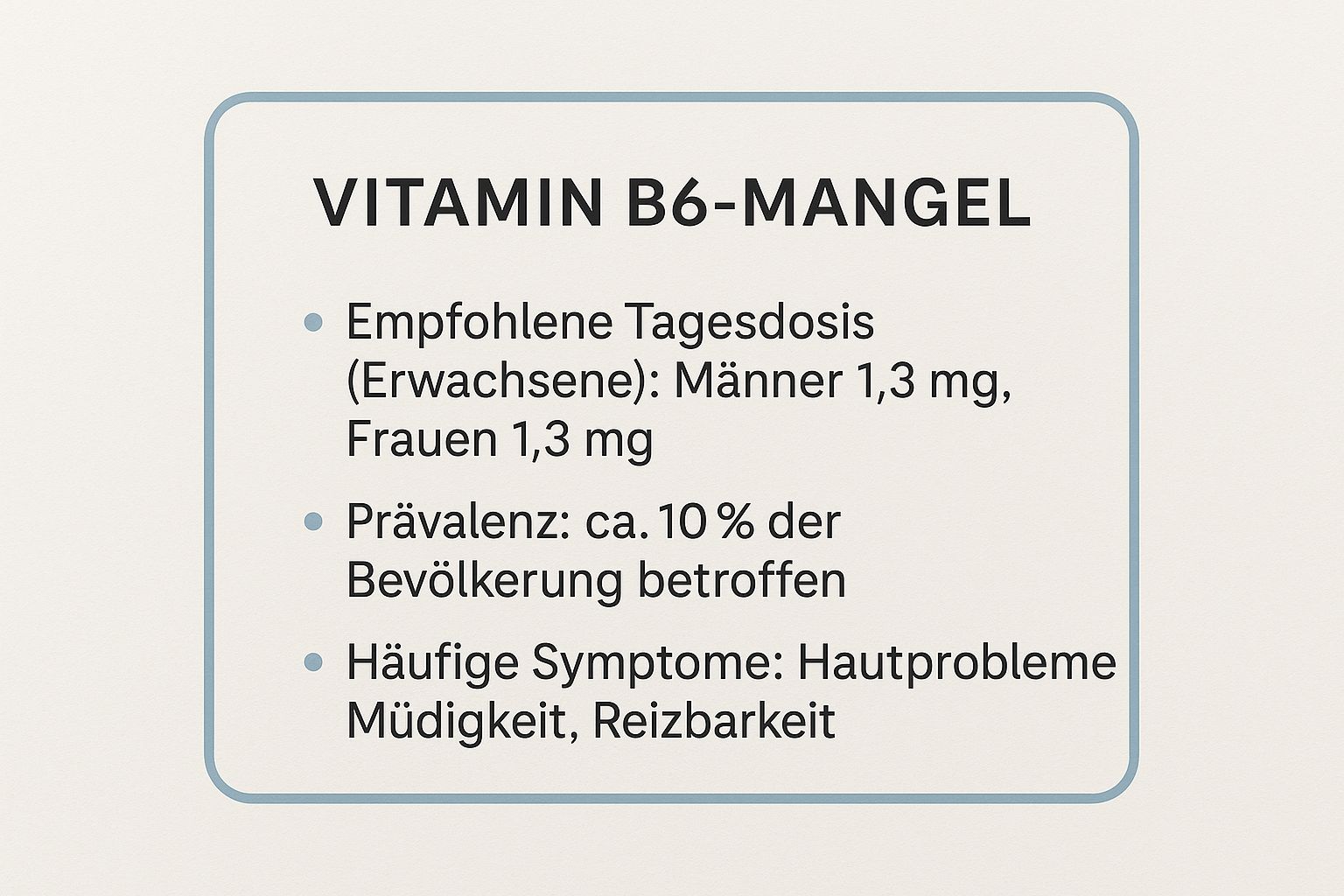
As you can see, even a small gap in your healthcare can have noticeable consequences – and this affects more people than you might think.
Vitamin B6 deficiency is more widespread than many people realize. It doesn't just affect traditional risk groups. Anyone whose diet or lifestyle interferes with absorption or increases their need for it can be affected.
According to the National Nutrition Survey II, around 12% of men and 13% of women in Germany do not reach the recommended daily intake of vitamin B6. Such a deficiency can manifest itself through symptoms such as nervous system disorders, skin inflammation (dermatitis), and inflamed lips. If you would like to delve deeper, you can find out more about the study results on vitamin B synergies here.
How a deficiency affects skin, nerves and psyche
If the first, often vague, signs of a vitamin B6 deficiency are ignored, the deficiency soon becomes noticeable throughout the entire body – and much more so. The effects are anything but one-sided. They can affect your skin, your nervous system, and, not least, your mental well-being. Your body is now sending clearer, albeit more unpleasant, signals that something is wrong.
You can think of vitamin B6 as a personal bodyguard for your nerve cells. It protects them and ensures that communication between them runs smoothly. If this protection is lacking, the nerve pathways become vulnerable. Imagine it like an electrical cable without insulation – interference occurs. The result is often strange sensations that you might not initially have an explanation for.

When nerves and skin sound the alarm
An advanced vitamin B6 deficiency often manifests itself through symptoms directly related to the nervous system. You should take these signs very seriously, as they indicate a deeper imbalance in your body.
Typical neurological and dermatological symptoms of vitamin B6 deficiency include:
- Tingling or numbness: It often starts in the hands and feet. It feels like limbs have fallen asleep, except the feeling just won't go away.
- Painful or burning sensations: These can occur without any apparent reason and severely restrict the quality of life.
- Seborrheic dermatitis: A scaly, often itchy skin rash that usually appears on the face, scalp, neck or chest.
These physical symptoms are often only one side of the coin. What's happening inside you is at least as important.
A vitamin B6 deficiency can disrupt the production of important neurotransmitters such as serotonin and dopamine. These messenger substances are crucial for our mood, motivation, and overall well-being. Without them, our psychological balance can quickly become unbalanced.
The effects on your psyche
Vitamin B6 plays a huge role in your mental health. It's directly involved in the production of "happiness hormones." A deficiency can cast a shadow over your mood.
Suddenly, you might feel irritable for no apparent reason, anxious, or even depressed. You might notice that your concentration is waning or that you feel more confused. Such psychological changes are not imaginary – they can be a direct biochemical consequence of nutrient deficiency.
If you'd like to learn more about how closely nutrients and mental well-being are linked, read our article on the connections between mental health and your DNA .
It's crucial to understand that these diverse symptoms—from skin and nerves to mental health—are interconnected. They can all stem from the same cause: a vitamin B6 deficiency. If you notice such signs, it's a clear signal from your body to take a closer look and identify the underlying cause, rather than simply treating individual symptoms.
Why some people have a higher risk
A vitamin B6 deficiency rarely appears out of nowhere. Usually, certain life circumstances, habits, or health conditions make your body more susceptible. You can think of your vitamin B6 stores like a bank account: some factors lead to higher withdrawals, while others make deposits more difficult.

If you find yourself in one of the following groups, there's no need to panic; it's valuable information. It simply means you should keep a close eye on your intake to avoid vitamin B6 deficiency symptoms in the first place.
Medications as vitamin robbers
Some medications can directly affect how your body absorbs and processes vitamin B6. They act almost like little "vitamin robbers," gradually increasing your needs without you noticing immediately.
This includes, in particular:
- The birth control pill: Estrogen-containing contraceptives can disrupt vitamin B6 metabolism and increase daily requirements.
- Certain antidepressants: Some medications used to treat depression interact with vitamin B6 levels.
- Anticonvulsants: Medications for epilepsy are also known to reduce the availability of vitamin B6 in the body.
Vitamin B6 deficiency can occur in certain risk groups. Causes include the use of medications such as antidepressants, estrogen preparations (birth control pills), anticonvulsants, a very unbalanced diet, severe underweight, and alcoholism. Learn more about the connections at NetDoktor .
Lifestyle and eating habits
Your daily lifestyle has a huge impact on your nutrient balance. A key factor here is chronic alcohol consumption. Alcohol not only hinders the absorption of nutrients in the intestines, but also accelerates their breakdown and excretion.
Similarly, a very one-sided diet, low in whole grains, legumes, nuts, and lean meat, can restrict nutrient intake from the outset. The goal here is not to be perfect, but to create a healthy and balanced foundation.
Special life phases and health conditions
Some people naturally have a higher need for nutrients or are less able to absorb them. This can be genetically predisposed or triggered by certain illnesses.
- Older adults: As people age, the body's ability to efficiently extract nutrients from food often declines.
- People with gastrointestinal diseases: Chronic inflammatory bowel diseases such as Crohn's disease or celiac disease can massively disrupt nutrient absorption.
- Genetic predisposition: Yes, your genes also play a role in how well your body utilizes vitamins. Nutrigenetics is the exciting field of research that investigates precisely these connections.
If you'd like to delve deeper into the fascinating world of genes and nutrition, read our article about what nutrigenetics is and how it influences our lives . Knowing whether you belong to a risk group is the first important step. The next is gaining certainty.
Here's how to find out about your vitamin B6 levels.
Do you recognize yourself in some of the described vitamin B6 deficiency symptoms ? That's an important first step. But pure guesswork won't get you anywhere – what you need now are facts, not assumptions, so you can take targeted action.
The good news is: you don't have to wait weeks for a doctor's appointment to get clarity. You can take action yourself. The crucial step is knowing your exact nutritional status. A targeted blood test provides you with precise values and shows you in black and white where you stand. This way, you can find out if a deficiency could really be the root cause of your symptoms.
Your path to clarity – easily from home
A modern and convenient way to check your nutritional status is with at-home self-tests. The mybody®x nutrient test was developed precisely for this purpose: It provides you with reliable results quickly and easily, without you having to spend time in waiting rooms.
Here you can see how simple the test is and what it measures for you: As you can see, the test analyzes not only vitamin B6, but also other important micronutrients such as vitamin B12, D, magnesium and zinc, which often play a role in combination.
The process is incredibly simple and tailored to your everyday life. The entire process is divided into three clear steps:
- Easy sample collection: With the test kit, you can painlessly take a tiny blood sample from your fingertip at home. Don't worry, clear instructions guide you step by step.
- Shipping to the specialist laboratory: Simply send your sample in the enclosed return envelope to our certified partner laboratory in Germany.
- Detailed results report: Shortly after, you will receive online access to your personal results report. It not only shows you your results, but also explains clearly what they mean.
With this knowledge in hand, you're well-equipped to take the next steps. Often, you'll not only get a snapshot of your vitamin B6 status, but also valuable insights into the interplay of various nutrients. If you'd like to learn more about how a comprehensive analysis works, read our mybody®x micronutrient analysis guide.
A blood test is the most reliable way to objectively confirm a vitamin B6 deficiency. It measures the concentration of the active form of the vitamin (PLP) and thus gives you an accurate picture of your supply status – the basis for any effective action.
Based on this solid data, you can stop guessing and start taking targeted steps to improve your well-being.
Practical steps to combat a vitamin B6 deficiency
If you know you're deficient in vitamin B6, there's no need to worry. Instead, see it as an important signal from your body – an opportunity to take control of your well-being. With the right steps, you can replenish your stores and regain your former energy levels.

The first and most natural way is always through what you eat. A conscious diet is the best way to provide your body with everything it needs for a healthy life. Fortunately, vitamin B6 is found in many delicious and everyday foods.
Your diet as a foundation
Your body cannot produce vitamin B6 itself, which is why you need to consume it regularly through your diet. By specifically incorporating the right foods into your diet, you can not only prevent a deficiency but also actively correct one.
Here are some of the best sources of vitamin B6 that can be easily integrated into everyday life:
- Legumes: Especially chickpeas – they are real powerhouses and are great in salads, curries or as creamy hummus.
- Fish: Salmon and tuna are particularly noteworthy here. They not only provide you with vitamin B6, but also an extra dose of valuable omega-3 fatty acids.
- Poultry: Lean meat from chicken or turkey is an easily digestible source of protein and also rich in B6.
- Whole grain products: Oatmeal for breakfast, whole grain bread instead of white bread – this ensures long-lasting energy and important nutrients.
- Vegetables and fruit: Bananas, avocados, potatoes and spinach are excellent plant-based sources.
- Nuts and seeds: A handful of walnuts or sunflower seeds is the ideal snack for in between meals.
A balanced diet is and always will be essential for your health. If you'd like to delve deeper into the world of nutrients, check out our comprehensive article on vitamins and minerals .
When are dietary supplements useful?
Sometimes, diet alone simply isn't enough. This can be the case if you're already showing clear symptoms of vitamin B6 deficiency , belong to a risk group, or your blood test has confirmed a clear deficiency. In these situations, dietary supplements can provide very useful and targeted support.
However, it's important not to blindly grab any product off the shelf. Supplementation should always be based on facts – such as the results of your mybody®x nutrient test – and ideally discussed with an expert.
Particular caution is advised regarding dosage. Consumer protection agencies warn that many over-the-counter products exceed the recommended maximum amounts of vitamin B6. A consistently high dose can be toxic, which is why a daily intake of more than 25 mg is considered unsafe for adults. This illustrates how crucial controlled and conscious intake is.
When choosing your supplement, pay attention to high quality, a moderate dosage, and good bioavailability. Only then can your body actually absorb the vitamin, and you can correct the deficiency safely and effectively without harming yourself.
Your questions about vitamin B6 deficiency – answered briefly and clearly
Great, now you know the typical signs of a vitamin B6 deficiency, who is particularly at risk, and what you can do about it. However, a few practical questions often remain. We've compiled the most frequently asked questions and answer them here for you – simply and clearly, so you know exactly what to do.
How quickly will I notice an improvement if I do something about the deficiency?
This question is perfectly understandable, because who doesn't want to get back in shape as quickly as possible? However, the answer depends heavily on the severity of your deficiency and the path you choose. Your body isn't a machine that can simply be repaired, but a complex system that needs time to recover.
If you consistently change your diet, you'll often notice the first positive effects after just a few weeks – perhaps you'll have more energy or your mood will improve. If you specifically use dietary supplements (which you should only do after a test like the one from mybody®x), it can even happen a little faster for some symptoms.
Imagine your vitamin stores are like a nearly empty battery. It takes a while to fully recharge. Patience is key here. It's about securing your long-term well-being, not just a quick fix.
Is it possible to consume too much vitamin B6?
Yes, absolutely. And you should definitely avoid that. While it's practically impossible to consume too much vitamin B6 through a normal diet, the situation is quite different with high-dose supplements. Uncontrolled intake can be harmful.
Consuming excessive amounts of vitamin B6 over a long period can lead to nerve damage, a condition known as neuropathy. This often manifests as tingling, numbness, or even pain in the hands and feet. Therefore, always adhere strictly to the recommended dosage. More is definitely not better.
Which test is the best to reliably detect a deficiency?
If you want to know for sure, there's no way around a blood test. It's the most reliable way to definitively prove a vitamin B6 deficiency. The test measures the concentration of pyridoxal phosphate (PLP) – the active form of vitamin B6 – in your blood. This value shows you exactly how well you're supplied.
A super convenient and precise option is a home test like the mybody®x nutrient test . You simply and painlessly take a small blood sample from your finger, send it to a certified German laboratory, and receive a detailed analysis directly at home. This way, you get reliable data without having to make a doctor's appointment, allowing you to make the right decisions for your health.
Are you ready to take control of your health and finally gain clarity about your nutrient intake? With mybody®x blood tests, you'll find out what your body is truly lacking. Discover your personal health test now at mybody-x.com


Share:
Find your hormonal balance for greater well-being in autumn
What to do about estrogen deficiency? Ways to achieve greater balance and well-being.