

What should you do about estrogen deficiency? Paths to greater balance and well-being
Persistent fatigue, unexplained irritability, or sudden hot flashes—does this sound familiar? These could be early signs that your estrogen levels are out of balance. But the crucial question is: What should you do about estrogen deficiency? Before you take action, however, it is important to first understand what is happening in your body and gain certainty. A hormone test from mybody-x can help you understand your body better and identify the cause of your symptoms.
Understanding estrogen deficiency and interpreting your body's signals

Estrogen is so much more than just a "female hormone." Think of it as a conductor in your body, keeping countless processes in rhythm—from your menstrual cycle and bone health to the elasticity of your skin and your emotional well-being. When estrogen levels drop, this finely tuned orchestra can quickly fall out of rhythm.
This hormonal imbalance can manifest through a whole range of symptoms that you might not immediately associate with one another.
The most common signs of a hormonal imbalance
You know your body best. Perhaps you recognize yourself in some of these points:
- Changed cycle: Has your period become irregular or suddenly stopped altogether? This is often one of the very first signs.
- Emotional roller coaster: You become irritated more quickly, feel down, or experience mood swings for no apparent reason.
- Physical symptoms: Hot flashes, night sweats, and sleep problems can make your everyday life a real challenge.
- Skin & hair: Dry skin, brittle nails, or thinning hair can also indicate a deficiency.
- Less desire: Falling estrogen levels often have a direct impact on libido.
The best-known reason for falling estrogen levels is, of course, menopause. In Germany alone, an estimated nine million women are in precisely this stage of life. But beware: A deficiency can also affect younger women, for example due to prolonged stress, very intense exercise, or an unbalanced diet. In our detailed article, you can learn more about the diverse causes and effects of estrogen deficiency.
An estrogen deficiency is not only uncomfortable; it also has health consequences. It can promote the regression of organs in the urogenital tract and increase the risk of osteoporosis, as estrogen plays a crucial role in bone formation.
Many women in Germany suffer from the effects of this hormonal imbalance, which can cause symptoms such as frequent urination or pain.
The First Step Toward Greater Clarity: Your Hormone Test
Take these signals from your body seriously. They aren’t imaginary, but important indications that something has become unbalanced. Before taking any action, however, it’s crucial to know exactly where you stand.
A mybody-x at-home hormone test provides precise data that you have in black and white. It’s the first crucial step from suspicion to knowledge—and toward regaining control over your well-being.
Your Hormone Status: Stop Guessing, Get the Facts
Your symptoms aren’t imaginary, but assumptions won’t get you anywhere. Instead of wondering whether your persistent fatigue or hot flashes are really caused by an estrogen deficiency, you can finally get clarity. The very first and most important step on your journey is knowing your hormone status in black and white.
Instead of waiting weeks for a doctor’s appointment, you can take matters into your own hands. A mybody-x at-home hormone test is designed precisely for this: simple, discreet, and completely reliable. With a small sample that you can collect conveniently at home, you set the wheels in motion for a professional analysis at a certified German laboratory.
What a mybody-x hormone test really reveals
A test like this doesn’t just provide an isolated value—it examines the key hormones in relation to one another. The main focus is on estradiol (E2), the most potent form of estrogen. Your results report will then show you clearly and understandably exactly where your level stands.
You won’t receive cryptic lab reports, but a clear, easy-to-understand assessment of your hormone status. These facts are the foundation for everything that follows and give you the confidence you need to finally take targeted action.
This insight is so much more than just a number. It’s your tool for taking responsibility for your health again and seeing what’s really going on in your body.
From Knowledge to Action
With this knowledge, you’ll no longer be left in the dark. The test results provide the perfect basis for a conversation with your doctor on equal footing. Instead of merely describing vague symptoms, you can bring concrete data to the table. This allows you to discuss the best next steps for you together.
A hormone test gives you back control and enables you to make informed decisions about your well-being. It's the logical first step toward addressing the problem at its root instead of merely treating the symptoms.
If you'd like to explore the topic in more depth, you'll find more valuable information in our guide on how to test your hormone levels. This will ensure you're well prepared to begin your journey toward greater hormonal balance.
Naturally supporting your hormonal balance
Once you finally have clarity about your hormone levels through a test such as the one from mybody-x, you can take targeted action. Instead of continuing to grope in the dark, you now have a solid foundation for taking charge of your well-being again. Here, we'll take a close look at how you can regain balance through natural means—that is, through your diet and lifestyle.
The key almost always lies in sustainable, small changes—not radical crash diets. It's about giving your body exactly what it needs right now.
Harnessing the power of phytoestrogens
Have you ever heard of phytoestrogens? They are clever plant compounds that are structurally so similar to the body's own estrogen that they can bind to the same receptors. Their effect is gentler, but that's exactly what makes them ideal helpers for naturally restoring balance.
A diet rich in these plant-based allies can often noticeably alleviate typical symptoms such as hot flashes and mood swings.
You don't have to completely overhaul your diet overnight. Simply gradually incorporate more foods containing phytoestrogens into your meals and observe how your body responds.
Here are a few powerhouses that you can easily incorporate into your daily routine:
- Flaxseeds: Ground flaxseeds are the absolute frontrunner. Simply sprinkle one to two tablespoons over your muesli or yogurt, or blend them into your smoothie.
- Legumes: Chickpeas, lentils, and soybeans (for example, as tofu or edamame) are not only excellent sources of protein but also rich in these valuable plant compounds.
- Cruciferous vegetables: Broccoli, cauliflower, and kale should be on your plate more often. They contain compounds that positively influence estrogen levels.
- Whole-grain products: Oats, barley, and rye provide not only important fiber but also a good amount of phytoestrogens.
The following overview summarizes the most important foods once again and shows which nutrients make them so valuable.
Foods to support hormonal balance
An overview of foods rich in phytoestrogens and other important nutrients for regulating estrogen levels.
| Food group | Examples | Effects/ingredients |
|---|---|---|
| Seeds & kernels | Ground flaxseeds, sesame seeds, sunflower seeds | Rich in lignans (a type of phytoestrogen) and omega-3 fatty acids |
| Legumes | Soybeans (tofu, edamame), lentils, chickpeas | High in isoflavones, fiber, and plant-based protein |
| Cruciferous vegetables | Broccoli, cauliflower, kale, Brussels sprouts | Contains indole-3-carbinol and supports estrogen metabolism |
| Whole-grain products | Oats, barley, rye, whole-grain bread | Provide fiber and phytoestrogens and stabilize blood sugar |
| Berries & fruit | Strawberries, raspberries, pomegranates | Rich in antioxidants and secondary plant compounds |
Use this table as inspiration. Simply try out what you enjoy and what makes you feel good.
The infographic shows which symptoms are especially common with estrogen deficiency—and this is precisely where lifestyle adjustments can make a difference.
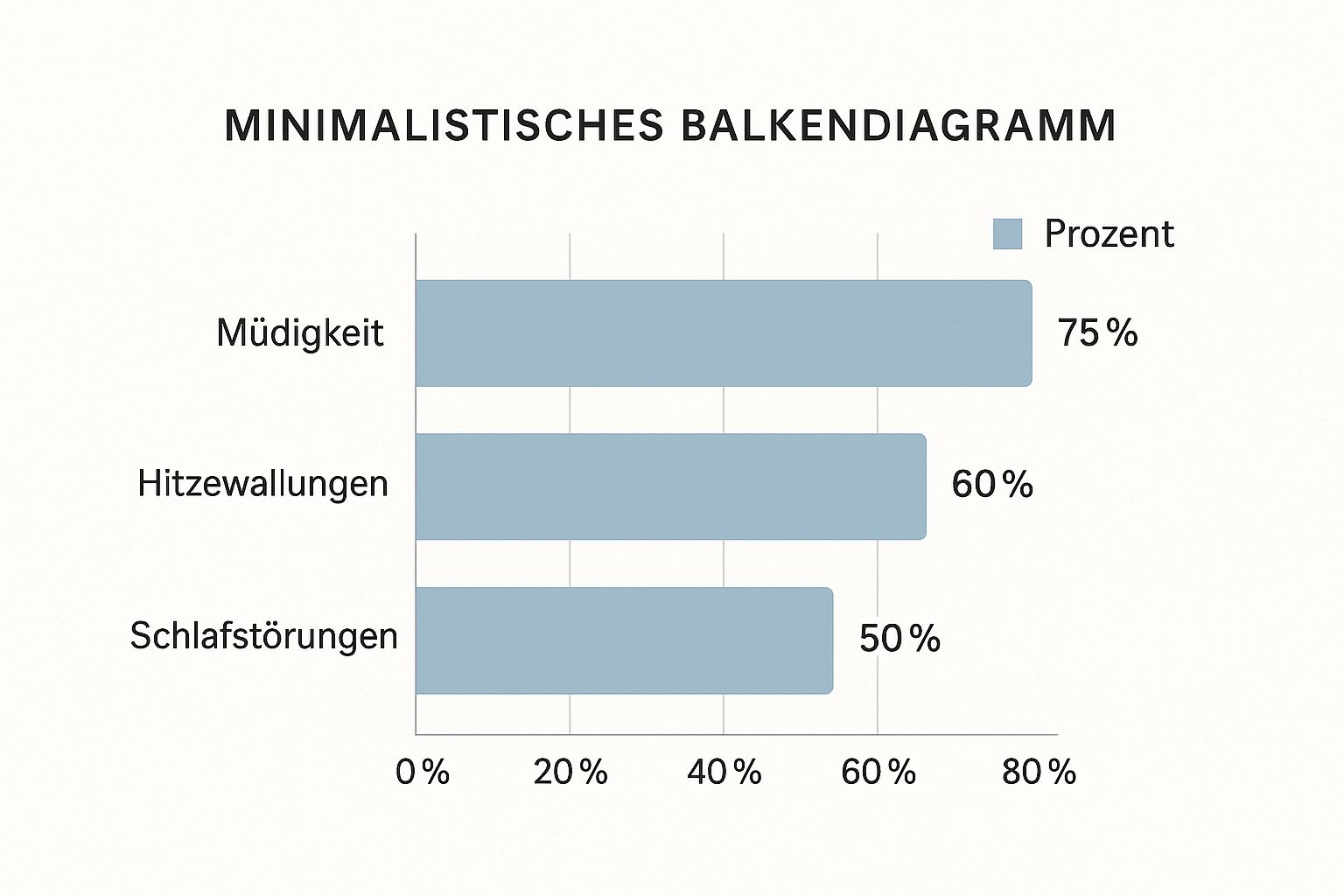
The data clearly show that fatigue, hot flashes, and sleep disturbances in particular are widespread companions of hormonal imbalance.
More Than Nutrition: Your Lifestyle Matters
Your hormonal system is a sensitive network that responds to many different influences. What you eat is an important pillar, but far from the only one.
Exercise as a mood booster Regular, moderate exercise is invaluable. It does not have to be competitive sports! Even daily walks, yoga, or a bike ride get your circulation going and help break down stress hormones such as cortisol. This has a direct positive effect on your entire hormonal system.
Stress management is crucial Chronic stress is a real hormone thief. It keeps your adrenal glands under constant strain, and they are also involved in hormone production. Find ways to help yourself unwind: meditation, mindful breathing exercises, time in nature, or a relaxing hobby.
Sleep as a regenerative boost Good sleep is fundamental for your hormones to regenerate. Unfortunately, it is often disrupted when estrogen levels are low. Establish a consistent evening routine, avoid the blue light from screens before bedtime, and create a cool, dark sleeping environment.
These adjustments are not quick fixes but a long-term investment in your health. If you would like to delve deeper into the subject, you will find many more tips in our guide on how to regulate your hormone balance so you can feel completely comfortable again.
You should not take the long-term health risks lightly

Hot flashes and mood swings? They are often just the tip of the iceberg. Estrogen deficiency is much more than just a challenging phase with a few bothersome symptoms. If you ignore it, it can quietly and unnoticed attack the foundation of your health.
This information is not meant to scare you. On the contrary: It is meant to honestly show you how important it is to understand the connections within your own body and take action in good time. Because knowledge is your strongest weapon when it comes to your health.
Your cardiovascular system under pressure
Think of estrogen as a natural protective shield for your heart and blood vessels. It keeps your blood vessels nicely elastic, helps regulate blood pressure, and has a positive effect on your cholesterol levels. As this protection gradually fades because estrogen levels decline, your body becomes more vulnerable.
The effects often develop unnoticed but can be serious:
- Stiffer blood vessels: Your arteries lose flexibility, which can raise blood pressure.
- Higher risk of atherosclerosis: Without the protective effect of estrogen, deposits can accumulate more easily in the vessel walls.
- Unfavorable blood lipid levels: “Bad” LDL cholesterol often increases, while “good” HDL cholesterol decreases.
These changes increase the risk of cardiovascular disease—the leading cause of death among women in Germany. Experts don’t call menopause a “fire accelerant” for heart problems for nothing. If you would like to learn more about the topic, you will find a wealth of valuable information in this detailed report on menopause.
The silent danger to your bones
Estrogen is the most important conductor of your bone metabolism. It slows down the bone-resorbing cells (osteoclasts) while simultaneously promoting the bone-forming cells (osteoblasts). A perfect balance that ensures stable and strong bones.
With an estrogen deficiency, this delicate balance is disrupted. Suddenly, more bone tissue is broken down than the body can rebuild. The result is a gradual loss of bone density.
The insidious thing is that this process progresses completely unnoticed and painlessly over many years. You often only notice the effects when it is too late—when a bone fracture can be caused by an everyday movement. Doctors then refer to this as osteoporosis, a condition that can severely restrict your quality of life.
Your mental sharpness and your brain
Your brain also depends on estrogen. The hormone protects nerve cells, promotes blood circulation, and is involved in producing important neurotransmitters that we need for concentration, memory, and a balanced mood.
A deficiency can therefore directly affect your mental sharpness. Many women are familiar with the phenomenon known as “brain fog”—a foggy feeling in the head accompanied by concentration problems and forgetfulness. In the long term, low estrogen levels have even been linked to an increased risk of neurodegenerative diseases.
Knowing where you stand is the first and most important step toward actively counteracting these risks. A mybody-x hormone test gives you clarity about your current hormone status. This allows you to make informed decisions—for your health, today and in the future.
When medical treatment makes sense

Natural aids such as a balanced diet and a mindful lifestyle are a fantastic foundation for keeping your body in balance. Sometimes, however, these measures reach their limits—especially if your symptoms simply refuse to go away or long-term health risks are a concern. That is precisely when it is time to seek professional medical help. And that is absolutely not a sign of weakness, but a strong step toward protecting your health.
Do not hesitate if your quality of life is noticeably suffering. Persistent sleep problems that leave you feeling exhausted during the day, severe mood swings that put a strain on your relationships, or constant hot flashes that make everyday life a challenge are clear signals. You do not simply have to put up with these symptoms.
Preparing for your doctor’s appointment with a mybody-x test
To get the most out of your appointment with your doctor, thorough preparation is worth its weight in gold. A hormone test that you conveniently carry out at home beforehand provides you and your doctor with an invaluable basis of data. Instead of simply talking about how you feel, you can put concrete facts on the table.
It is also best to make a list of your symptoms: What exactly are you experiencing? Since when? And how severe are they? The more precise your observations, the more targeted the help you can receive. If you would like to explore the topic in greater depth, our article explains how to have your hormone levels tested and prepare optimally.
Understanding hormone replacement therapy
When natural approaches are no longer sufficient, hormone replacement therapy (HRT) often comes into play. Unfortunately, this topic is still surrounded by old myths and fears that have long been outdated. Today’s modern treatment approaches have little in common with them.
HRT today is tailored entirely to you, your needs, and your medical history. Bioidentical hormones are often used; their structure is exactly the same as that of the hormones produced by the body. The application is gentle and targeted—for example, through gels, patches, or capsules, allowing for very precise dosing.
Today, modern, personalized hormone replacement therapy is considered a safe and effective way not only to alleviate the acute symptoms of estrogen deficiency, but also to help prevent osteoporosis and cardiovascular disease.
The goal is to give your body exactly the support it needs to regain its balance.
Recent research even confirms the long-term benefits of such therapy. A huge US study involving more than 10 million women showed that HRT can significantly reduce the risk of death in women over 65. Women without a uterus who received estrogen alone benefited particularly greatly, with a significantly lower risk of various types of cancer, heart disease, and dementia.
Ultimately, it is about making a decision together with your doctor that suits you and your life. With knowledge of your hormone status and modern treatment options, you are well equipped to stand up for your health with confidence.
Your questions, our answers about estrogen deficiency
Finally, we want to answer a few questions that we receive time and again. They are intended to help you feel even more confident on your journey toward better hormonal balance.
Can I have an estrogen deficiency before menopause?
Yes, absolutely. Many people immediately associate the issue with menopause, but younger women can also be affected. The reasons are varied: Sometimes it is caused by being severely underweight, intense competitive sports, certain conditions such as PCOS, or simply chronic stress that throws the entire system out of balance.
Especially in cases like these, a mybody-x hormone test is invaluable. It finally gives you clarity about whether your symptoms are actually caused by a hormonal imbalance.
How quickly will I notice a difference if I change my diet and lifestyle?
This is a very personal matter and depends entirely on your body and your starting point. Some women notice a difference after just a few weeks—they have more energy or sleep more deeply. For others, it may take a few months before a noticeable improvement occurs.
The most important thing is to be patient with yourself and stick with it. Your body is not a machine; it needs time to adjust to the changes and find a new, healthy balance. Consistency is truly the key here.
Are phytoestrogens from food a good idea for every woman?
For the vast majority of women, phytoestrogens from a balanced diet—think flaxseeds, chickpeas, or high-quality soy products—are completely safe and provide valuable support. They act gently and help the body regulate itself.
However, caution is advised if you have a hormone-dependent pre-existing condition, such as breast cancer. In such a case, you should always consult a doctor before taking highly concentrated dietary supplements.
Can an at-home hormone test replace a visit to the doctor?
No, and this point is very important to us. An at-home hormone test, such as the one from mybody-x, is an incredibly valuable tool for getting an initial assessment and finally having data in hand. It is the perfect first step toward moving from mere speculation to knowledge. The results provide an excellent basis for an informed conversation with your doctor.
However, professional medical advice is essential if you have severe or persistent symptoms. This is the only way to rule out serious illnesses and, if necessary, initiate appropriate treatment, such as hormone replacement therapy. Consider the test your preparation for having this conversation as well-informed and on an equal footing as possible.
Are you ready to take the first step and finally gain clarity about your hormone levels? With mybody-x's hormone tests, you receive precise, easy-to-understand results directly from a German specialist laboratory. Take control of your well-being.



Share now:
Vitamin B6 deficiency: which symptoms indicate it and which do not
TSH Thyroid Levels: Your Guide to Thyroid Health