

Recognizing estrogen deficiency symptoms—How to correctly interpret your body’s signals
Have you often felt exhausted lately, become irritable quickly, or suddenly been overwhelmed by hot flashes? These are not imagined symptoms but could be the first signals from your body that your estrogen levels have become unbalanced. Don’t worry, you are not alone—countless women experience these symptoms, especially during certain stages of life.
What really happens in the body when you have estrogen deficiency

When you think of estrogen, you probably immediately think of your menstrual cycle or pregnancy. Absolutely right, but this hormone is a true multitasker and is involved in far more than just reproduction. It is best to think of it as the conductor of a large orchestra—it sets the rhythm for countless processes in your body.
Estrogen is also crucial for strong bones, supple skin, a healthy cardiovascular system, and even your emotional balance. It acts like a natural mood booster and helps you feel good all over. When estrogen levels drop, this finely tuned system can quickly get out of balance.
Estrogen deficiency is not simply a consequence of aging. It is a complex hormonal imbalance that can trigger a chain reaction and affect your entire physical and emotional well-being.
The role of estrogen in detail
To truly understand the typical symptoms of estrogen deficiency, we need to take a brief look at all the ways this powerhouse hormone plays a role. By the way, estrogen is not a single hormone but a whole group that includes estradiol, estrone, and estriol, with estradiol being the most active form.
Here are some of its most important functions:
- Bone health: Estrogen slows bone breakdown and stimulates bone formation. The result: strong, stable bones.
- Heart and circulation: It helps keep blood vessels elastic and supports healthy cholesterol levels— a true protector of the heart.
- Skin and hair: The hormone boosts collagen production. It helps keep skin firm and hair strong and shiny.
- Mood and brain: Estrogen influences important chemical messengers in the brain, such as serotonin and dopamine. These are directly responsible for your mood and ability to concentrate.
Estrogen deficiency becomes an issue for many women, especially during menopause. And this is not uncommon: Around 80% of all women in Germany who are in this phase feel the effects of declining estrogen levels. For around 33%, the symptoms are even so severe that their quality of life is significantly affected. The reason is completely natural: The ovaries gradually stop producing it. You can also find more information about the causes and symptoms on medizinfuchs.de.
If you understand these connections, you are already a big step ahead. You can interpret your body’s signals more accurately and take targeted action. Would you like to delve even deeper into the fascinating world of hormones? Then also read our comprehensive article about the role of estrogen.
An overview of the most common symptoms of estrogen deficiency
Estrogen deficiency rarely knocks on the door with a single, loud signal. More often, it creeps in quietly—a combination of various physical and emotional changes that gradually become part of your everyday life. Many women initially attribute these signs to the usual stress, too little sleep, or simply getting older. Yet a hormonal imbalance is often behind them.
Almost everyone is familiar with classic estrogen deficiency symptoms such as hot flashes, but that is only the tip of the iceberg. The range is enormous and can affect almost every area of your life, from your skin to your ability to concentrate. The tricky part? Viewed individually, many signs seem harmless and nonspecific.
This image captures a situation that many women know all too well: a sudden hot flash that can completely throw you off balance.
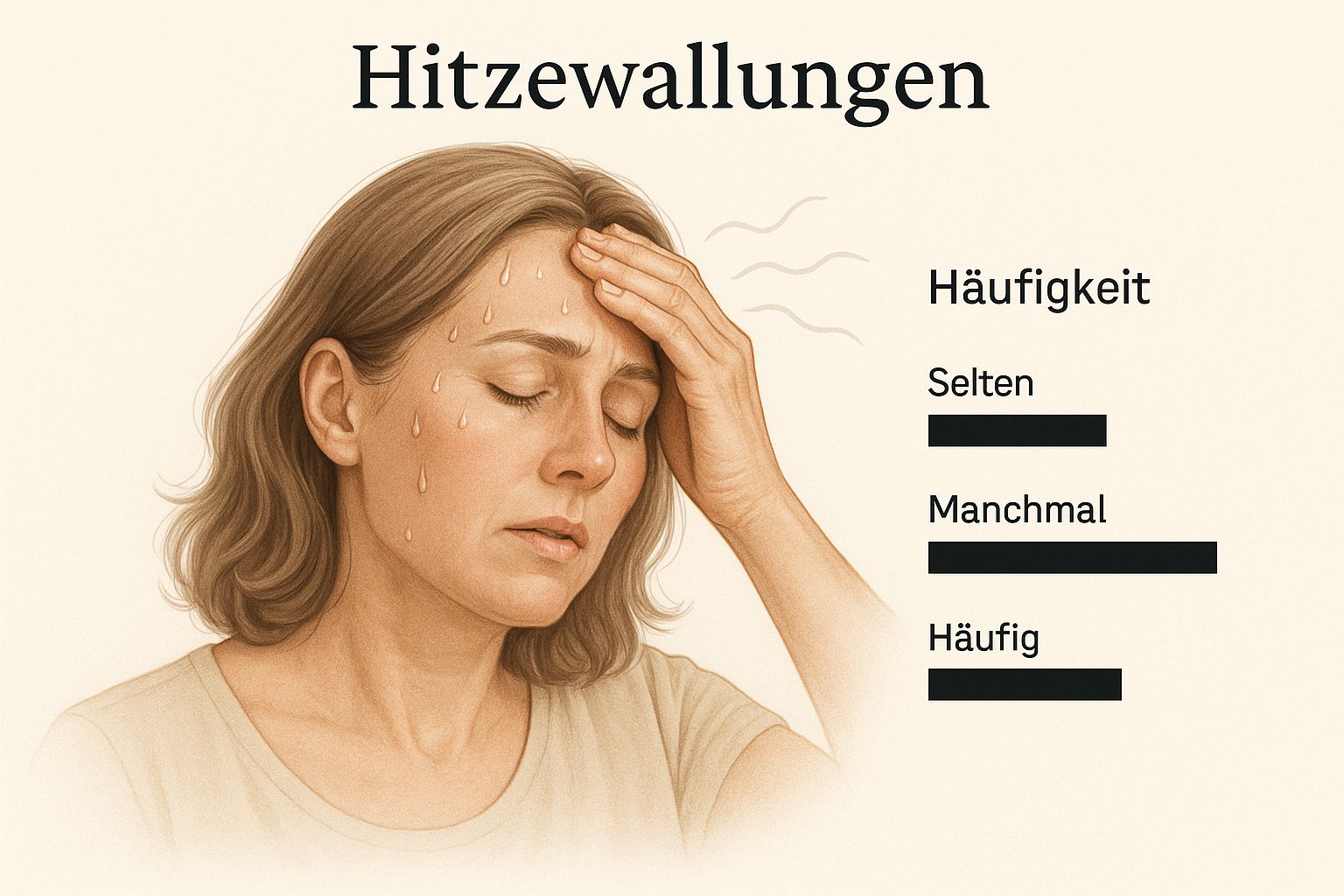
These moments are more than just unpleasant. They are a clear sign that your internal thermostat is going haywire due to hormonal fluctuations.
To give you a better overview, we have summarized the most common signs in a table.
Typical estrogen deficiency symptoms and their effects
This table summarizes the most common physical, emotional, and cognitive signs of estrogen deficiency to give you a quick overview.
| Area | Typical symptoms | Possible effects on everyday life |
|---|---|---|
| Physical | Hot flashes & sweating episodes | Disruption at work and in social life; interrupted sleep |
| Sleep disturbances & night sweats | Persistent fatigue, irritability, difficulty concentrating | |
| Skin & hair changes | Dry, itchy skin; thinning hair, hair loss | |
| Joint & muscle pain | Morning stiffness, limited mobility, general discomfort | |
| Vaginal dryness | Pain during sex, more frequent urinary tract infections, itching | |
| Emotional | Mood swings & irritability | Feeling “thin-skinned”; unexplained anger or sadness |
| Inner restlessness & anxiety | Constant cycle of worrying, nervousness, and sometimes even panic attacks | |
| Lack of motivation | Lack of motivation for hobbies or daily tasks, social withdrawal | |
| Cognitive | “Brain fog” | Difficulty forming clear thoughts; feeling confused |
| Difficulty concentrating | Being easily distracted, having trouble following a task or conversation | |
| Word-finding difficulties | The feeling that the right word is “on the tip of your tongue” |
As you can see, the list is long and the symptoms are varied. It is important to listen to these signals and not simply dismiss them.
Physical signs you should not ignore
Your body is often the first to send you clear signals when estrogen levels drop. These changes can manifest in many different ways and noticeably affect your quality of life.
Here are some of the most common physical symptoms:
- Hot flashes and night sweats: They are the classic symptom. Sudden waves of heat that usually start in the face and upper body and are accompanied by heavy sweating.
- Sleep disturbances: Many women struggle to fall asleep or stay asleep. Often, night sweats jolt them awake and lead to heavy daytime fatigue.
- Skin and hair changes: Your skin becomes drier, loses elasticity, and tends to develop fine lines. Hair loss or noticeably thinning hair can also become an issue.
- Joint and muscle pain: Estrogen also has an anti-inflammatory effect in the body. When it is lacking, it can lead to pain and stiffness in the joints.
- Vaginal dryness: A very common but often unspoken problem. The mucous membranes in the intimate area become thinner and drier, which can cause itching, burning, or pain during sex.
These physical symptoms are not merely a nuisance. They are your body’s way of indicating that it needs support to regain balance.
Listen to your body. These symptoms are not simply “normal” signs of aging. They are your body’s way of signaling that an important component in the hormonal system is missing.
Emotional and cognitive symptoms
Estrogen deficiency does not only manifest physically—it also has a tremendous impact on your mental health and cognitive fitness. Since estrogen is involved in regulating mood messengers such as serotonin, its decline can lead to real emotional turmoil.
These changes are often mistakenly dismissed as personal weakness or mere stress, even though there is a clear hormonal cause behind them. Typical signs include:
- Mood swings and irritability: You may become irritated more quickly, feel more emotional than usual, or feel as though you have much thinner skin.
- Inner restlessness and anxiety: A constant feeling of tension, nervousness, or even the onset of mild anxiety can be linked to hormone deficiency.
- Difficulty concentrating and “brain fog”: Many women know the feeling of being in a haze. They struggle to find the right words or simply have difficulty concentrating.
- Lack of energy and depressive moods: A lack of energy and motivation, as well as a generally low mood, can also be direct consequences of declining estrogen levels.
If you identify with several of these points, it may be time to take a closer look. A reliable hormone test from mybody-x can finally give you clarity and help you find the true causes of your discomfort instead of continuing to grope in the dark.
What actually causes estrogen deficiency?
A declining estrogen level does not come out of nowhere—it is usually the result of specific physical processes or life circumstances. Even if menopause is the first thing that comes to mind, there are many other reasons why your hormone balance can become disrupted. And this can affect women of any age! Once you know the causes, you will also understand the background to your estrogen deficiency symptoms much better.
The most common and natural cause is undoubtedly the hormonal changes that occur in midlife. However, this process does not happen overnight; it unfolds in two phases that transition smoothly into one another.
Main reason no. 1: Menopause
The journey often begins as early as the early to mid-40s with perimenopause. During this phase, ovarian function gradually begins to decline. Think of it as the ovaries slowly entering retirement: They produce estrogen less regularly and in lower amounts overall. These fluctuations are precisely what often trigger the first signs, such as irregular periods or mood swings.
Menopause itself is the point of your very last menstrual period, followed by at least one year without another. From that point onward, estrogen production in the ovaries is virtually shut down. This entirely natural process is the most common reason for persistently low estrogen levels in women over 50.
Menopause is not an abrupt switch but a gradual transition. Your body gradually adjusts to its new hormonal reality, which can lead to the familiar symptoms.
How your lifestyle affects your hormones
Your hormonal system is extremely sensitive—it reacts very strongly to external influences. Certain lifestyle habits can significantly disrupt estrogen production and even cause a deficiency in younger women:
- Chronic stress: Constantly being under pressure puts the body in a permanent state of alert. As a result, more of the stress hormone cortisol is released, which can in turn seriously slow down the production of sex hormones such as estrogen.
- Severe underweight or eating disorders: Fat tissue is not only an energy store but also plays a role in hormone production. When body fat levels are very low, the body reduces estrogen production to conserve energy.
- Excessive athletic training: Extremely intense exercise without sufficient recovery puts the body under immense stress. Especially when combined with a low body-fat percentage, this can impair ovarian function and disrupt the menstrual cycle.
Medical causes and procedures
In addition to natural and lifestyle-related reasons, there are also medical causes that can trigger estrogen deficiency. These often lead to a very sudden and sharp drop in hormone levels.
These include, above all:
- Surgical removal of the ovaries (oophorectomy): Without the ovaries as the main site of estrogen production, levels drop drastically immediately.
- Chemotherapy or radiation therapy: Treatments in the pelvic area can permanently damage ovarian function or even shut it down completely.
- Certain medical conditions: Hormonal disorders such as polycystic ovary syndrome (PCOS) or pituitary gland dysfunction can also negatively affect estrogen production.
Understanding these diverse causes is the first and most important step toward correctly assessing your own situation. It makes one thing clear: Your age is not the only factor—your daily life and your health also directly affect your hormones.
What estrogen deficiency can do over time

Hot flashes, sleep problems—the typical symptoms of estrogen deficiency are familiar to many. They are often the first noticeable signs. But what few people know is that if low estrogen levels go unnoticed for years, they can silently cause serious harm to your health. So this is about much more than just a few annoying symptoms.
A persistent deficiency of this key hormone can significantly increase the risk of certain chronic diseases. That is precisely why it is so important to understand these connections and take timely action. Those who find out early can actively protect their health.
The hidden risk to your bones
One of the most serious and yet quietest consequences of prolonged estrogen deficiency is osteoporosis, also known as bone loss. You can think of estrogen as a diligent construction worker for your bones. It works tirelessly to keep your bone tissue dense and strong. But when this important helper is absent, more bone mass is broken down than is rebuilt.
This process is insidious because it progresses very gradually and painlessly over many years. You notice nothing while your bones become increasingly porous and fragile. The result? The risk of fractures rises dramatically, especially in the spine, hips, or wrists. And this can happen even with minor falls or everyday movements.
Osteoporosis is not a fate you simply have to accept. It is often the direct consequence of years of hormonal imbalance. An early hormone check is one of the most important steps you can take to safeguard your bone health in the long term.
When the heart and circulatory system lose their protective shield
Estrogen is also a crucial ally for your cardiovascular system. It acts like a natural shield for your blood vessels, keeping them elastic and helping to keep your cholesterol levels balanced.
When estrogen levels fall, this protection is gradually lost. In the long term, this can lead to serious problems:
- Worse blood lipid levels: The “bad” LDL cholesterol often increases, while the “good” HDL cholesterol decreases.
- Higher blood pressure: The blood vessels become stiffer, which can drive up blood pressure.
- Increased risk of illness: Over the years, this increases the risk of atherosclerosis (hardening of the arteries) and, consequently, of a heart attack or stroke.
If chronic stress is added to the mix, the situation becomes even more problematic, as it also drives up blood pressure. Read more here about the symptoms that excessively high cortisol levels can cause in women.
Intimate-area symptoms and their consequences
Your urogenital tract—including your bladder and vagina—is also highly dependent on healthy estrogen levels. The hormone ensures good blood circulation and keeps the mucous membranes moist, elastic, and resilient. When it is lacking, the tissue becomes thinner, drier, and more vulnerable.
This leads not only to unpleasant symptoms such as frequent urination, incontinence, or pain during sex. In the long term, it also makes the entire area much more susceptible to recurrent bladder infections and other urinary tract infections.
The good news is that you’re not powerless against this. With the right knowledge and appropriate measures, you can actively counteract these long-term risks and take charge of your health.
How to reliably determine your hormone status
You’re reading the list of estrogen deficiency symptoms and nodding along with many of the points? Then you’re probably wondering: What now? The most important step is to move beyond mere speculation and finally gain clarity. Fortunately, there are now various ways to check your hormone levels and get to the bottom of what’s causing you to feel unwell.
The traditional route naturally leads you to a doctor. A conversation about your symptoms followed by a blood test can provide answers. But honestly: Long waiting times or an intimate conversation about hormone-related issues are a real hurdle for many people. This is exactly where modern alternatives such as mybody-x hormone tests come in, giving you more control and discretion.
Your path to certainty begins at home
Imagine being able to take the first crucial steps easily and conveniently from home. That’s exactly what the mybody-x at-home hormone tests make possible. Instead of remaining uncertain, you take your health into your own hands.
The tests were specially developed to give you a precise overview of the most important female sex hormones. You simply and discreetly collect a saliva or blood sample, send it to our certified German specialist laboratory, and receive a scientifically based analysis of your hormone levels.
Which hormones are measured and why?
One hormone is rarely enough on its own. Your well-being depends on the delicate interplay of several important players. That’s why the mybody-x hormone test measures not only estrogen, but also its key counterparts.
- Estradiol (E2): This is the most active form of estrogen—essentially the boss of your cycle, skin, bones, and mood. A low level is often at the root of many complaints.
- Progesterone: It is also called the “calming hormone” and is estrogen’s most important partner. If its level is too low in relation to estradiol, estrogen dominance can develop, which in turn brings its own symptoms.
- Testosterone: Yes, women need this hormone too! It is essential for energy, libido, and muscle strength. An imbalance can also lead to noticeable problems.
Certainty is the first step toward improvement. A mybody-x hormone test gives you more than just numbers—it provides a sound basis on which you can build and make informed decisions about your health.
Your personal results report explains in clear terms what your levels mean and how your hormones interact. This analysis is the perfect basis for planning your next steps—whether you want to adjust your lifestyle or have a focused conversation with your doctor, armed with concrete facts.
If you’d like to learn more about how you can support your body once you know your levels, you’ll find valuable information in our article on balancing your hormones. With this knowledge, you’ll be well equipped to take action.
Your questions about estrogen deficiency—answered clearly and concisely
By now, you’ve learned quite a lot about the connections and typical estrogen deficiency symptoms. Even so, a few specific questions often remain unanswered. That’s exactly what we’re going to look at now—here are the most common uncertainties and our concise answers.
Can young women also be affected by estrogen deficiency?
Yes, absolutely. Many people immediately associate estrogen deficiency with menopause, but it is by no means solely an age-related issue. Women who are still far from menopause can also develop a hormonal imbalance.
There can be many different reasons behind this:
- Chronic stress: Permanently high stress levels can significantly disrupt the production of sex hormones.
- Severe underweight or competitive sports: When body fat levels are very low or the body is subjected to extreme strain, it switches to energy-saving mode—and hormone production is often one of the first things it downregulates.
- Medical causes: Certain conditions, such as polycystic ovary syndrome (PCOS) or ovarian dysfunction, can also lead to a deficiency.
Are hot flashes always a sign of estrogen deficiency?
Hot flashes are the classic example and a very well-known symptom, but they are far from the only sign. Sometimes estrogen deficiency manifests itself only through subtler symptoms that you may not initially associate with your hormones.
These include constant fatigue, unexplained sleep problems, mood swings, dry skin, or recurring bladder infections. It can even happen that these signs occur without the classic hot flashes, which naturally makes it more difficult to identify the cause.
How reliable is a home hormone test?
Modern self-tests, such as the hormone tests from mybody-x, are a truly reliable and scientifically recognized method of gaining an initial, well-founded overview of your own hormone levels. Your sample is analyzed in a certified specialist laboratory using the same precise methods that are also used in doctors' offices.
The main advantage is, of course, the privacy and ease of use. You collect the sample conveniently at home and receive a clear, easy-to-understand analysis. This result is a great basis for planning your next steps or simply going into a conversation with your doctor well informed.
A home hormone test does not replace a medical diagnosis. However, it is a powerful tool that helps you better understand your body's signals and take an active role in your own health.
By the way: Hormonal imbalance is often closely linked to how well your body is supplied with essential vitamins and minerals. If you suspect that you may also have a deficiency in this area, read more in our article about how to test for nutrient deficiencies.
Do you feel that your hormone balance may be out of equilibrium and wish you could finally get some clarity? With the self-tests from mybody-x, you can easily and reliably check your hormone levels from home. Take control of your well-being and find out what your body really needs. Discover the right hormone tests for you now at https://mybody-x.com.



Share now:
Spelt for gluten intolerance: A good alternative or a health risk?
Recognize nutrient deficiency symptoms – Your guide to greater well-being