
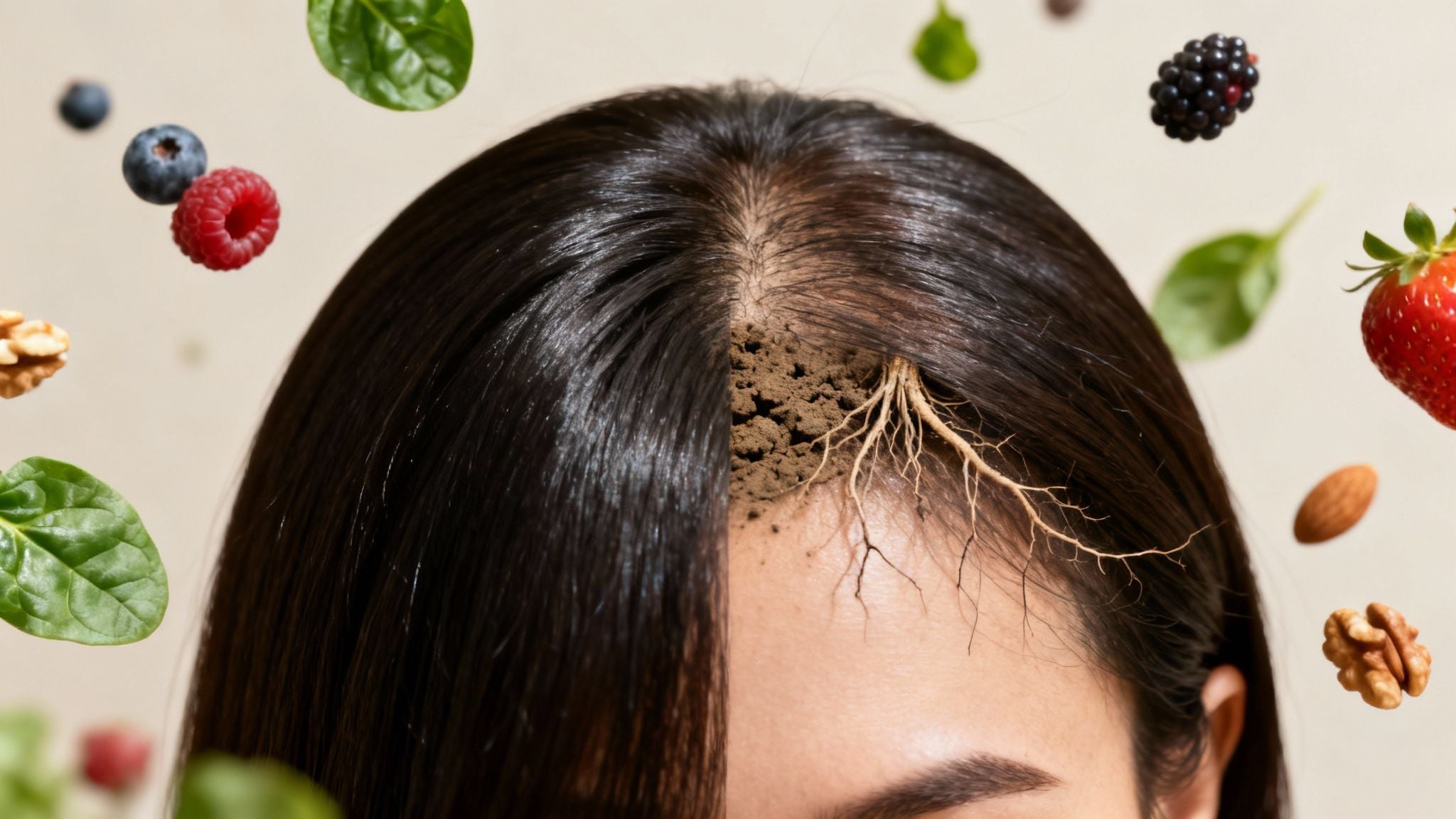
Nutrient deficiency and hair loss: How to identify the true cause
Yes, a nutrient deficiency can definitely cause hair loss. Imagine your hair roots as small, high-performance factories that produce around the clock. But when they lack the crucial raw materials—that is, vitamins and minerals—the entire production process grinds to a halt. The result? Your hair becomes weaker and thinner and may eventually fall out.
Your hair as a reflection of your nutrient supply
Have you been finding more and more hair in your brush or on your pillow lately? That can be quite alarming, but often it is simply an important signal from your body. Hair loss is not just a cosmetic nuisance; it is often a clear sign that something inside has become unbalanced.
For strong and healthy growth, your hair needs a constant supply of nutrients. Without these essential building blocks, the hair follicles cannot do their job properly. This often shows up as diffuse hair loss, in which the hair loses overall fullness.
The direct connection between your plate and your hair roots
Every individual hair root is connected to your bloodstream and receives everything it needs to grow through it. An unbalanced diet, crash diets, or even unnoticed digestive problems can disrupt this important supply chain. You usually notice the consequences only months later because your hair's growth cycle is quite slow.
A deficiency in essential vitamins and minerals is one of the most common causes of diffuse hair loss. Instead of treating only the symptoms, it is crucial to address the cause directly at the root—and that begins by looking at your nutrient status.
Did you know that around 20 to 30 percent of women in Germany are affected by hair loss? Although hereditary hair loss is the most common cause at 90 percent, nutrient deficiencies play a particularly important role in diffuse hair loss. Experts agree: Deficiencies in iron, zinc, vitamin D, and the B vitamins are especially significant here.
To give you a quick overview, we have summarized the most important nutrients and their role in healthy hair in a table.
The most important nutrients for healthy hair
This table summarizes the key nutrients whose deficiency often leads to hair loss and shows their main function for hair health.
| Nutrient | Function for the hair | Typical deficiency symptoms |
|---|---|---|
| Iron | Promotes oxygen supply to the hair roots | Fatigue, pale skin, brittle nails |
| Zinc | Important for the formation of keratin (the building block of hair) | Brittle hair, white spots on the nails, poor wound healing |
| Biotin (B7) | Involved in metabolic processes in the hair root | Hair loss, brittle nails, skin rashes |
| Vitamin D | Stimulates new and existing hair follicles | Diffuse hair loss, fatigue, muscle weakness |
| Vitamin B12 | Supports cell division and therefore hair growth | Exhaustion, tingling in the hands and feet, concentration problems |
These nutrients are only part of the puzzle, but a deficiency in any one of them can already be enough to significantly disrupt your hair growth.
Typical signs of nutrient-related hair loss
How can you tell whether a deficiency could be behind your hair loss? Look out for these accompanying symptoms, which often go hand in hand:
- Brittle nails: Like hair, nails are made of keratin. They are often the first warning sign when important building blocks are missing.
- Dry or dull skin: A vitamin deficiency can quickly become noticeable in your skin as well.
- Constant fatigue: Iron deficiency in particular drains your energy and causes exhaustion.
- Itchy or flaky scalp: An irritated scalp can also be a sign of a nutrient deficiency. Find out more in our guide about what an itchy scalp can reveal about a possible deficiency.
Before you reach for expensive shampoos or tinctures, the first and most important step is to get a clear picture of your nutrient levels. This is the only way to address the problem at the root in a targeted and, above all, sustainable manner.
The most common nutrient deficiencies associated with hair loss
When hair loss is caused by a nutrient deficiency, there are usually a few typical “suspects.” Certain vitamins and minerals are as fundamental to your hair roots as water is to a plant. Without them, growth comes to a standstill, and your hair visibly loses strength and fullness.
Imagine you are building a house. You need a solid foundation, bricks, and mortar. If even one of these building blocks is missing, the whole structure becomes unstable. Your hair is very similar: iron, zinc, biotin, and more are essential building materials for healthy, strong hair.
A deficiency can therefore disrupt hair production directly at the root, leading to visible hair loss.
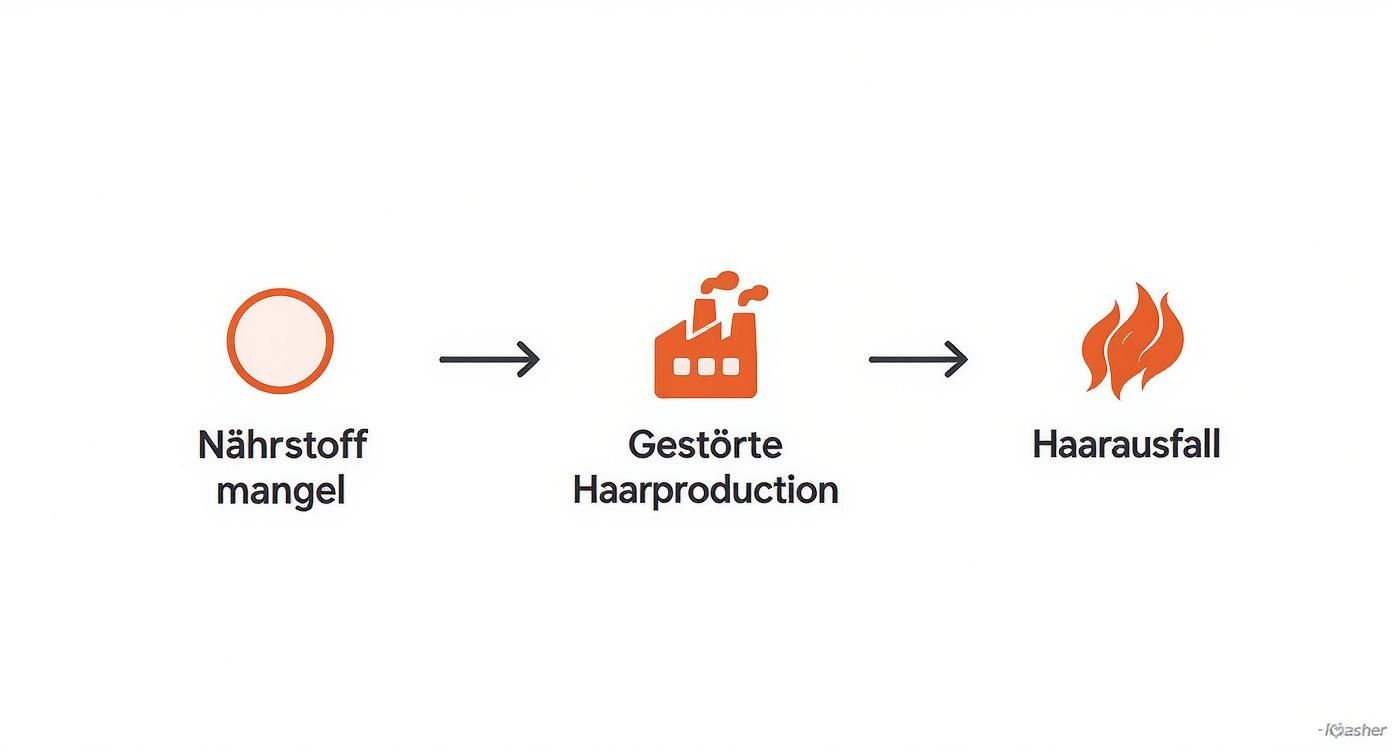
The graphic makes it very clear: An inadequate supply of nutrients slows down production in the hair roots. The result can often be seen on your pillow or in your hairbrush.
Iron deficiency: The silent energy thief for your hair
Iron is probably the best-known culprit when it comes to nutrient-related hair loss. It is a central component of the red blood pigment hemoglobin, which transports oxygen through your body—including to the tiny blood vessels that supply your scalp.
When too little oxygen reaches them, the hair root cells essentially operate at reduced capacity. Cell division slows down, the hair’s growth phase is shortened, and the result is often diffuse hair loss, in which the hair becomes thinner across the entire scalp.
Typical accompanying symptoms that may indicate iron deficiency include:
- Constant tiredness and the feeling of never quite getting fit
- Noticeably pale skin
- Brittle fingernails, perhaps even with ridges
- Difficulty concentrating in everyday life
Women of childbearing age, people who follow a vegetarian or vegan diet, and endurance athletes are particularly at risk. A simple blood test, such as the one offered by mybody-x, quickly provides clarity by measuring the ferritin level—that is, the amount stored in your body’s iron reserves.
If you would like to explore the topic in greater depth, our guide explains exactly what iron deficiency is and how to recognize it.
Zinc: The master of hair production
Zinc is a true all-rounder in the body and is involved in countless metabolic processes. But it is especially important for your hair because it regulates the formation of keratin—the protein that makes up more than 90% of your hair.
A zinc deficiency can therefore directly damage the hair structure, making the hair dry and brittle and slowing the growth of new hair. Zinc also protects the hair roots from inflammation and helps keep sebum production on the scalp balanced.
Biotin and B vitamins: The growth engines
Biotin, also known as vitamin B7 or “beauty vitamin” H, is famous for its effects on the skin, hair, and nails. It stimulates crucial metabolic processes directly in the hair roots and helps keep the keratin structure strong and resilient. Although a deficiency is rather rare, it can manifest as hair loss and brittle hair.
But the other B vitamins are also essential, especially vitamin B12. It plays a key role in cell division, which is absolutely necessary for hair to continually grow back. Since vitamin B12 is found almost exclusively in animal-based foods, people following a plant-based diet in particular should keep a close eye on their levels.
Vitamin D: The sleeping giant in the hair root
The importance of vitamin D for hair growth was underestimated for a long time. We now know that the “sunshine vitamin” plays a key role in activating new hair follicles. It helps “dormant” hair roots awaken from their resting phase (telogen phase) and return to the active growth phase (anagen phase).
A vitamin D deficiency can disrupt this cycle. The result: More hairs than usual remain in the resting phase and eventually fall out. Since our bodies produce vitamin D mainly through exposure to sunlight, deficiency is unfortunately widespread here during the dark winter months.
Of course, there are other important helpers for healthy hair:
- Selenium: Protects cells from oxidative stress.
- Copper: Is involved in the formation of hair structure and pigmentation (hair color).
- Vitamin C: Improves iron absorption and is important for collagen production, which anchors the hair roots firmly in the skin.
- Proteins (amino acids): They are the direct building blocks that make up hair keratin.
If just one of these players is missing, the delicate balance can be disrupted. That is why it is so important not to blindly reach for supplements, but first to find out exactly where you have a deficiency through a targeted analysis, such as a mybody-x nutrient test.
How your lifestyle causes a nutrient deficiency
Your daily habits are often the key to your hair health—for better or worse. Usually, it is not dramatic events but gradual processes in everyday life that can quietly lead to a nutrient deficiency and hair loss.
Do you recognize yourself in one of the following scenarios? Each of these lifestyles can, often without you noticing, sabotage the supply of nutrients to your hair roots.
Strict diets and an imbalanced diet
The desire to lose a few kilos quickly often leads to radical diets that eliminate entire food groups. Low-carb, low-fat, or severely calorie-restricted plans may produce short-term results on the scales, but they are pure stress for your hair.
When you suddenly consume far fewer calories or fewer important building blocks such as fats or carbohydrates, your body switches into a kind of emergency mode. It directs scarce resources to where they are essential for survival—and unfortunately, that is not your hair. Hair production is reduced, which may only become visible as hair loss months later.
An imbalanced diet consisting mainly of processed foods is just as insidious. It may provide plenty of calories, but hardly any valuable micronutrients. This means a deficiency can arise not from eating too little, but from choosing the wrong foods.
Your body is clever: It always prioritizes life-sustaining functions. Hair growth is one of the first processes to be scaled back when nutrients are scarce—a warning sign you should take seriously.
Vegetarian and vegan diets
A well-planned plant-based diet can be extremely healthy. However, it also carries the risk of certain nutrient gaps if you do not look closely. Nutrients that are particularly important for hair health are often less readily available to the body in plant-based sources.
These are the most common stumbling blocks:
- Iron: Plant-based iron (non-heme iron) is absorbed by the body much less efficiently than animal-based iron. Legumes and whole-grain products are good sources, but without combining them with vitamin C, the amount absorbed is often low.
- Vitamin B12: This vitamin is found almost exclusively in animal products. A deficiency often develops gradually over several years, but can then cause serious neurological problems in addition to hair loss.
- Zinc: As with iron, certain substances in plant-based foods, known as phytates, can block zinc absorption.
These diets therefore require a high degree of awareness and careful planning to specifically prevent nutrient deficiencies and hair loss. A mybody-x nutrient test can help you keep track of your levels regularly.
Chronic stress and its effects
Never underestimate what stress does to your body. Prolonged emotional or physical stress puts your body in a permanent state of alarm. In this state, it rapidly consumes important nutrients, especially B vitamins and magnesium—exactly the substances that are also essential for hair growth.
At the same time, the stress hormone cortisol can directly disrupt the hair cycle and prematurely end the hair growth phase. Stress therefore causes harm in two ways: it depletes the necessary building blocks while also disrupting the construction process at the hair root.
A large-scale analysis of the causes of hair loss in Germany strongly supports these connections. It showed that, among cases of non-hereditary hair loss, around 70 percent of all men and nearly 40 percent of women show signs of a vitamin or mineral deficiency. Nutrient intake is particularly critical among people who eat an unbalanced, low-fiber diet. Read more in the findings on vitamin deficiency and hair loss.
If you recognize yourself in one of these lifestyles, there is no reason to panic—it is an opportunity. It shows you exactly where to start looking for the cause of your hair loss. The first and most important step is always to gain clarity about your current nutrient status.
Reliably detect your nutrient deficiency
Home remedies and mere guesswork usually won’t get you far when dealing with persistent hair loss. If you feel that nutrient deficiency and hair loss are connected in your case, you need one thing above all: facts. Real, reliable data about your body. Instead of groping in the dark, you need to know the exact cause.
The most effective way to finally get clarity is through targeted blood analysis. It’s the only way to see in black and white which nutrients your body is actually lacking. A vague suspicion of iron deficiency is completely different from a specific laboratory value showing how full your iron stores really are.
Why a blood test is the best choice
A blood test is like looking into your body’s cockpit. It provides precise data about your nutrient status and puts an end to guesswork. While symptoms such as fatigue or brittle nails can point to all kinds of causes, a blood value gives you an unambiguous answer.
Imagine a warning light coming on in your car. You wouldn’t start randomly replacing parts, would you? You’d have the error memory read to find out exactly what’s wrong. A blood test works on the same principle: It identifies the precise deficiency so you can take targeted action.
Taking high-dose supplements blindly is not only often ineffective, but can even be dangerous. An overdose of certain vitamins, such as vitamin A or selenium, can make hair loss even worse.
A test therefore provides the basis for a sensible and safe strategy to replenish your depleted stores.
How an at-home nutrient test works
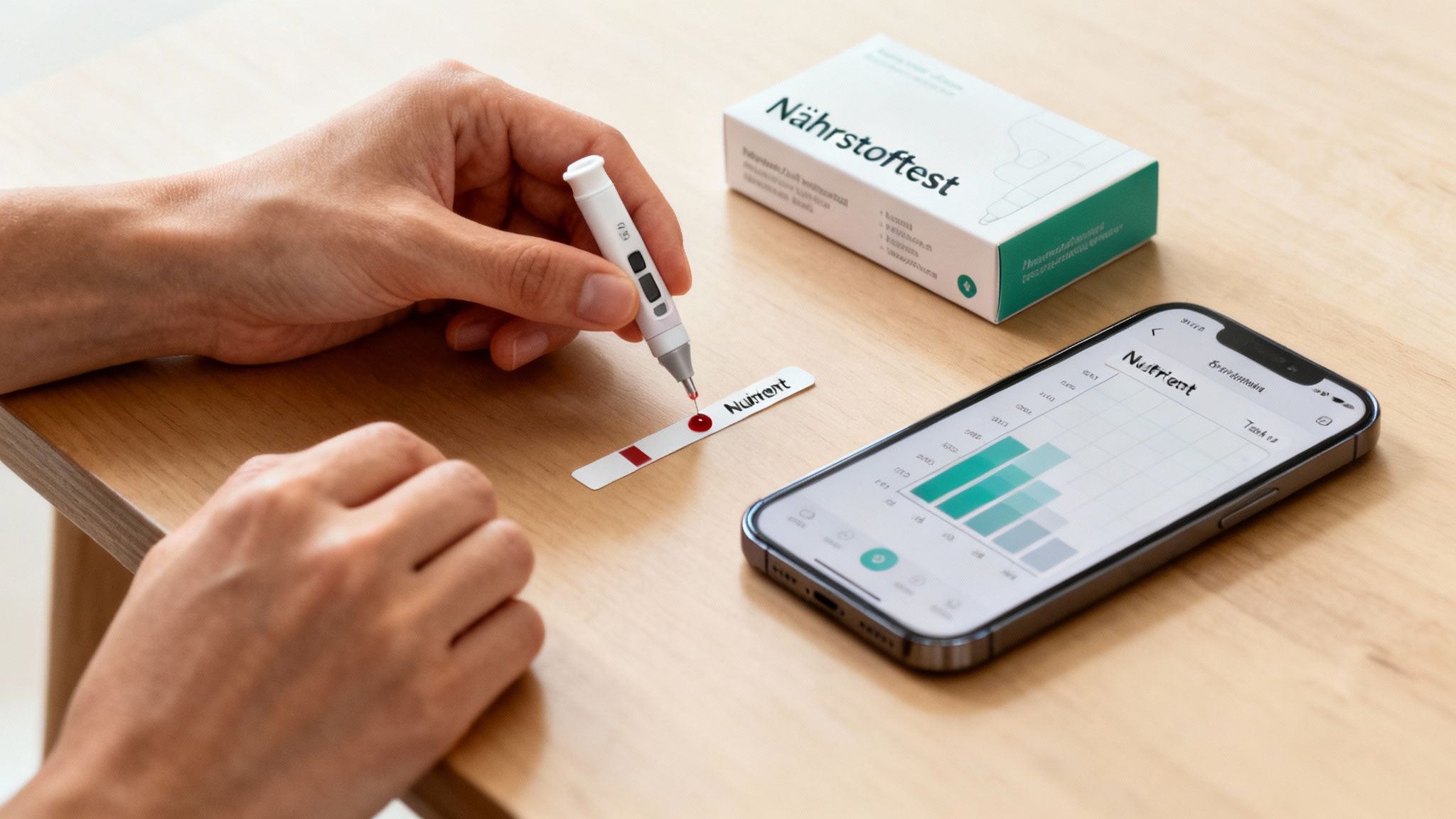
Many people immediately associate the idea of a blood test with a doctor’s visit and long waiting times. But that no longer has to be the case. Modern at-home self-tests, such as the mybody-x nutrient test, make it incredibly easy to check your levels—discreetly, quickly, and comfortably from your own sofa.
The process couldn’t be simpler:
- Order the test: You’ll receive a complete kit with everything you need, delivered directly to your home.
- Easy sample collection: Use a tiny lancet to briefly prick your fingertip and collect a few drops of blood. It’s quick and barely noticeable.
- Free return shipping: Send the sample in the enclosed envelope to a certified laboratory in Germany. Postage is already paid.
- Detailed analysis: After just a few days, you’ll receive your results in an easy-to-understand report through your personal online portal.
You’ll not only find out whether a deficiency exists, but you’ll also receive specific, personalized recommendations on how to bring your levels back into the healthy range.
Which values are crucial for hair loss?
A good nutrient test examines the biomarkers that are truly important for healthy hair growth. Instead of looking at just one value, it gives you the complete picture.
The most important values include:
- Ferritin: This value shows how full your iron stores are—and is therefore much more meaningful than the iron level in your blood alone. If iron deficiency is suspected, it is the decisive indicator.
- Vitamin D: A deficiency in the “sunshine vitamin” is unfortunately very common in our latitudes. Yet it is essential for activating the hair roots.
- Zinc: As an important building block of keratin, a healthy zinc level is essential for strong hair structure.
- Vitamin B12: This vitamin is particularly important for cell division and therefore for the continuous growth of your hair.
A test puts you back in control. You no longer have to guess; instead, you can make the right decisions for yourself and your hair based on hard facts. If you’d like to know more about how such a test works and what insights it provides, you can find all the information in our guide to the mybody-x nutrient deficiency test. This allows you to finally address your nutrient deficiency and the associated hair loss in a targeted way.
Your path to fuller hair: Targeted treatment of nutrient deficiencies
Once your blood test has provided clarity and you can see in black and white which nutrients are missing, it’s time to get down to business. Now you can specifically address the nutrient deficiency and the associated hair loss. From now on, think of your diet as your personal source of strength, nourishing your hair roots from within.
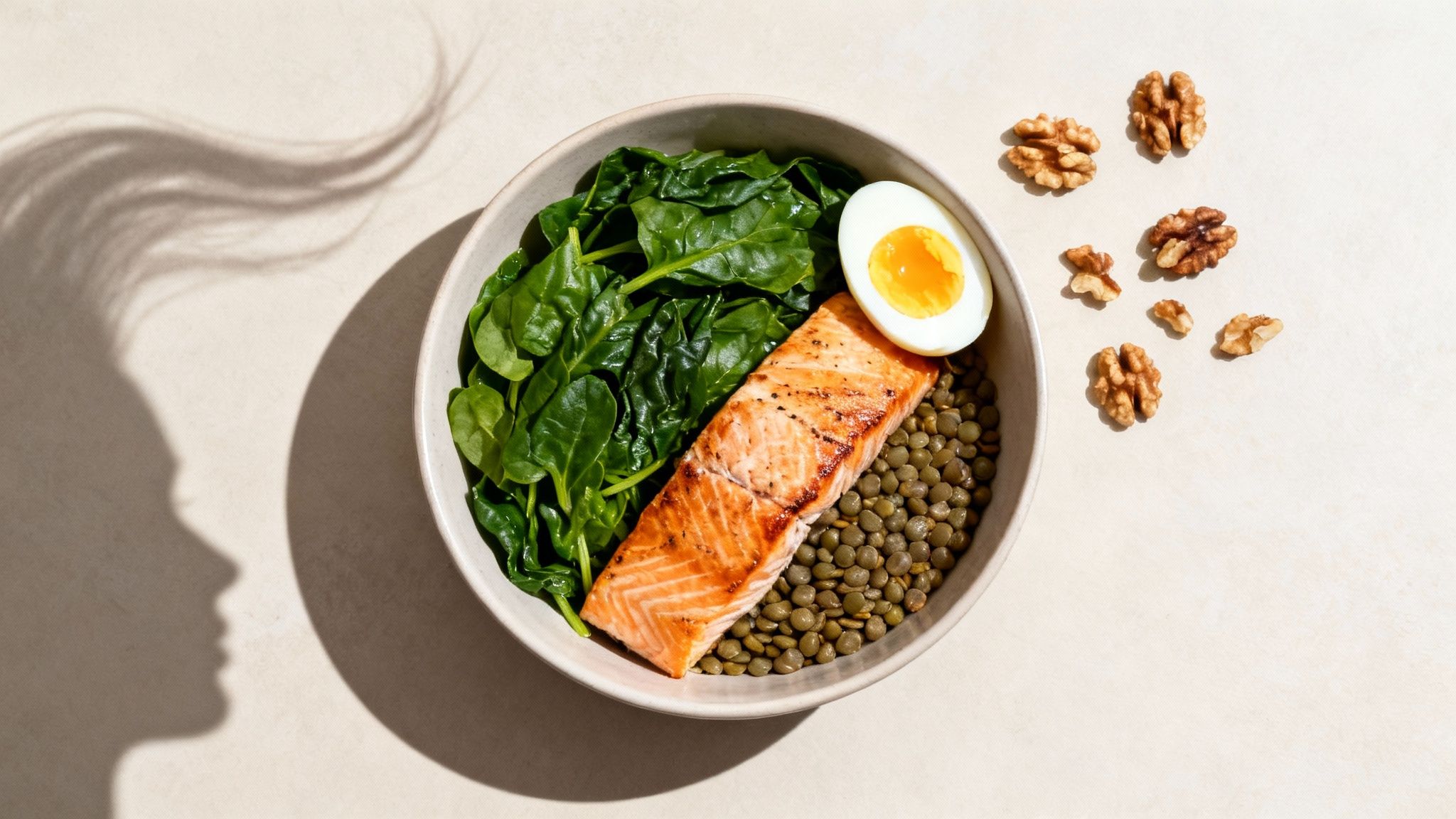
The good news is that a hair-friendly diet doesn’t have to be complicated or monotonous. It’s about consciously choosing the right foods and cleverly incorporating them into your daily routine. This benefits not only your hair but your entire body.
The best foods for your hair
Every nutrient has its own top sources. Instead of simply eating anything, it’s best to focus specifically on the foods that fill your personal gaps. Here’s your practical cheat sheet for the most common deficiencies.
For iron deficiency: Iron is essentially the oxygen courier for your hair roots. To replenish your stores, a combination of animal and plant sources is ideal.
- Animal-based sources: Lean beef, liver, or egg yolks are worth their weight in gold because they provide heme iron, which your body can absorb particularly easily.
- Plant-based sources: Lentils, chickpeas, pumpkin seeds, spinach, and oatmeal are true plant-based powerhouses when it comes to iron.
With zinc deficiency: Zinc is the diligent construction worker that ensures stable keratin—the basic building block of your hair.
- Top sources: Oysters are the undisputed zinc champions. But don't worry—beef, cheese, especially Emmental, pumpkin seeds, and lentils are also reliable sources.
With biotin and B-vitamin deficiency: These vitamins are the spark plugs for your hair roots' metabolism and ensure that everything runs smoothly.
- Rich in biotin: Egg yolks, oatmeal, nuts—especially walnuts and peanuts—and lentils should regularly be part of your diet.
- Vitamin B12: This important vitamin is found almost exclusively in animal products such as meat, fish, eggs, and milk. Vegans therefore need to rely on fortified foods or a good supplement.
With vitamin D deficiency: The well-known sunshine vitamin plays a key role in activating new hair growth cycles.
- Food sources: Fatty fish such as salmon, herring, or mackerel is an excellent natural source of vitamin D. Mushrooms exposed to UV light can also contribute some. But the sun naturally remains the main source.
You don't have to overhaul your entire diet overnight. It's enough to intentionally include one or two of these nutrient-rich foods in every meal. A few pumpkin seeds sprinkled over your salad or a handful of lentils in your soup can already make a huge difference.
How to optimize your nutrient absorption
Eating the right foods is one thing—but your body also needs to be able to absorb the nutrients properly. With a few simple tricks, you can significantly improve bioavailability, meaning how well your body utilizes the nutrients.
Think of it this way: The nutrient is the key, but sometimes it needs a little helper to open the lock.
- Iron + vitamin C = dream team: Always combine iron-rich foods with vitamin C. A glass of orange juice with a lentil dish or fresh bell peppers in a salad can increase the absorption of plant-based iron by three- to fourfold!
- Fat-soluble vitamins need fat: Vitamins D, E, K, and A are fat-soluble. That means your body can only absorb them together with some fat. So a drizzle of high-quality olive oil over vegetables not only tastes better, but also greatly supports your vitamin intake.
- Avoid nutrient thieves: Some substances can seriously block the absorption of important minerals. Coffee and black tea, for example, contain tannins that inhibit iron absorption. It’s therefore best to enjoy them one to two hours apart from your meals.
Practical tips for your everyday life
Enough theory—now let’s put it on the plate. Here are a few simple ideas for making your meals more hair-friendly without much effort.
Breakfast power bowl: Mix oats (iron, zinc, biotin) with a few walnuts (biotin, omega-3), pumpkin seeds (zinc, iron), and fresh berries (vitamin C). Stir it all together with plain yogurt or a plant-based alternative—and you have the perfect start to your day.
Lunch to go: A large mixed salad with spinach (iron), chickpeas (iron, zinc), and bell peppers (vitamin C) makes a great base. Topped with a dressing made from olive oil and lemon juice and a boiled egg (biotin, B12), you’ll be well supplied with essential nutrients.
Nutrient-rich dinner: Pan-fried salmon (vitamin D, omega-3) with delicious lentil vegetables (iron, zinc) is not only tasty but also a true nutrient powerhouse for your hair.
Selenium is also often underestimated. It’s an important trace element that protects cells from oxidative stress. In our guide, we show you the best foods high in selenium, so you don’t forget this building block either. With this knowledge and a clear plan based on your blood test results, you’re giving your hair everything it needs for strong growth.
What you keep asking us
To wrap things up, we’ve collected a few answers to the most frequently asked questions we receive about nutrient deficiencies and hair loss. Here you’ll find quick, clear answers to resolve any remaining questions.
How quickly will my hair grow back once the deficiency has been corrected?
First and foremost: Be patient with yourself and your body. When a nutrient deficiency—for example, identified and addressed through a test from mybody-x—is finally uncovered, your body first needs time to replenish its stores and stimulate hair production.
The hair growth cycle is a marathon, not a sprint. It usually takes three to six months before you see the first real results. You’ll notice this when fewer hairs are left in your brush and you may discover fine, new hairs, often affectionately called “baby hairs.”
Since hair grows only 1 to 1.5 cm per month on average, it can easily take a year or longer for your hair to regain its usual density. So be sure to stay consistent and ensure that your nutrient supply remains stable in the long term.
Should I simply take supplements as a precaution?
Please don’t! We strongly advise against taking supplements “just in case.” Not only is it often a waste of money, but in the worst case, it can even backfire. More is not always better.
An overdose of certain vitamins and minerals, such as vitamin A or selenium, can even worsen hair loss or cause other health problems. You would therefore make the problem worse instead of solving it.
The only sensible and safe approach is a precise blood test, such as the mybody-x nutrient test. Only when you can see in black and white what your body is lacking can you take targeted action at the right dosage.
This way, you can act based on facts rather than vague assumptions.
What role do stress and hormones play in hair loss?
Stress and hormones are often the hidden contributors that really fuel nutrient-related hair loss. One often causes the other, leaving you caught in a vicious cycle.
What stress does to your hair:
- Increased nutrient consumption: When you’re constantly under pressure, your body remains on high alert. As a result, it burns through huge amounts of important nutrients such as B vitamins and magnesium—which naturally makes a deficiency even worse.
- Disrupted hair cycle: The stress hormone cortisol can essentially push your hair out of the growth phase (anagen phase) and send it directly into the shedding phase (telogen phase).
The power of hormones:
- Hormonal roller coaster: Whether it’s pregnancy, menopause, or an underactive thyroid—all of these can seriously disrupt your hormone balance and also lead to hair loss.
In most cases, it’s a combination of everything. A nutrient deficiency makes your hair more vulnerable, while stress or hormonal fluctuations then push it over the edge. That’s exactly why a solid supply of nutrients is essential—it’s the foundation on which everything else is built.
If you suspect that your hormones may also play a role, a hormone test from mybody-x can provide additional clarity. This gives you a complete picture and allows you to systematically address all the causes.
Are you ready to finally get clarity and uncover the true cause of your hair loss? The mybody-x nutrient test provides you with precise laboratory results and clear recommendations for action. Start your journey to healthier, fuller hair now.


Share now:
Lower Cortisol Naturally – Your Guide to Inner Balance
Omega-3 deficiency symptoms: which signs really indicate it