
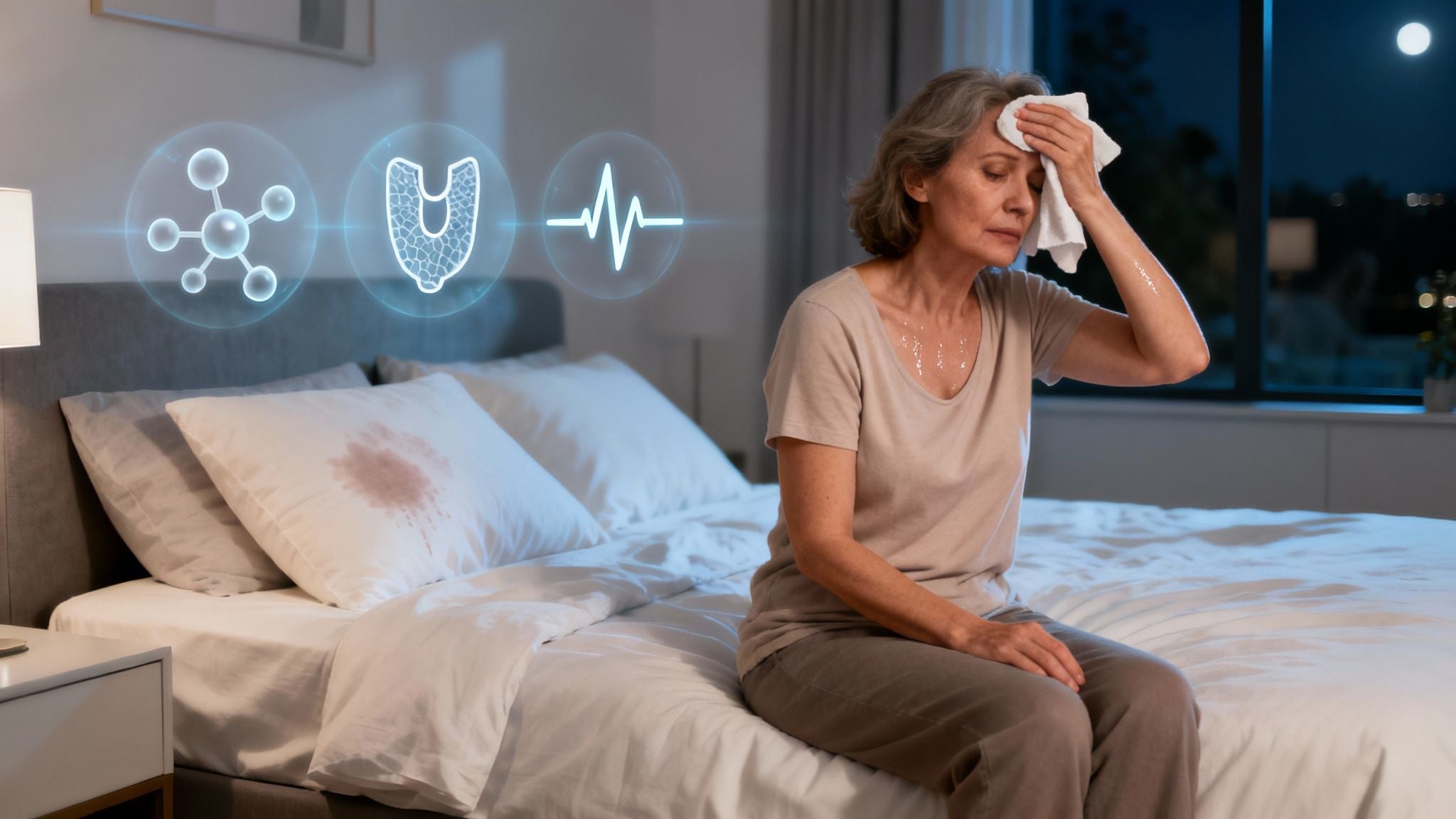
Causes of night sweats in women: Understand them and finally sleep better
You wake up in the middle of the night, your pajamas are soaking wet, and you wonder what on earth is going on? The causes of night sweats in women are incredibly diverse. They can range from the typical hormonal roller coaster of menopause to metabolic problems or even simple nutrient deficiencies. One thing is clear: This nighttime sweating is often more than just annoying—it is an important signal from your body that you should not ignore.
Waking up drenched in sweat—what is really behind it

If you regularly wake up drenched in sweat, you are definitely not alone. Many women know this unpleasant feeling all too well. Sleep is abruptly interrupted because your body suddenly goes into overdrive. But this is not normal sweating like you experience during exercise or on a hot summer day.
Night sweats, also known medically as nocturnal hyperhidrosis, are often so severe that not only your pajamas but also your entire bedding needs to be changed. This not only robs you of sleep but can seriously affect your energy and quality of life over time.
Why your body sends you signals
Your body is a highly sensitive system. Think of night sweats as a kind of alarm system that goes off when something is out of balance. It draws your attention to the fact that it is time to take a closer look. The triggers can vary widely—from harmless causes to more serious issues that require medical evaluation.
What your body is trying to tell you:
- Hormonal changes: Especially during perimenopause and menopause, the temperature-regulating center in the brain can go haywire. This is one of the most common reasons.
- Metabolic chaos: An overactive thyroid or major blood sugar fluctuations can cause your internal engine to overheat at night.
- Nutrient deficiencies: Sometimes, even basic nutrients are lacking, such as magnesium, which is essential for stress regulation and a stable nervous system.
Night sweats are more than just an inconvenience. Think of them as a message from your body that can provide valuable clues about your current state of health.
We want to shed some light on the issue and show you: You are not helplessly at its mercy. There is a suitable solution for almost every trigger. The first and most important step is finding out exactly what is behind your night sweats. A hormone or nutrient test from mybody-x.com for use at home can help you find the first important answers by checking relevant levels easily and conveniently from home.
The Hormonal Roller Coaster as the Main Cause of Night Sweats

Your hormones are like a finely tuned orchestra conducting countless processes in your body. If this delicate balance is disrupted even slightly, you often notice it in unexpected places—for example, at night in bed. For women in particular, these hormonal fluctuations are by far the most common cause of night sweats.
Imagine the temperature center in your brain, known as the hypothalamus, as a highly sensitive thermostat. One of its most important regulators is the hormone estrogen. When estrogen levels suddenly drop, this thermostat goes completely out of sync. It falsely signals overheating even though everything is perfectly fine.
Your body immediately initiates an emergency cooling program: The blood vessels suddenly dilate to release heat (the familiar hot flash), and the sweat glands kick in. The result? A sudden, intense bout of sweating that jolts you awake.
Perimenopause and Menopause as the Main Suspects
The best-known phase of this hormonal roller coaster is, of course, menopause. But the first signs often begin much earlier, during perimenopause, which can start as early as the late 30s or early 40s for some women. During this transition, estrogen levels fluctuate significantly and gradually decline—the perfect trigger for typical nighttime hot flashes.
In fact, the causes of night sweats in women in Germany are closely linked to these hormonal changes. Studies show that around 75% of all women going through menopause experience hot flashes and sweating, much of it at night. General practitioners' offices confirm this too: women between 40 and 55 in particular complain of night sweats, right during the typical perimenopause phase.
A drop in estrogen levels is basically a false fire alarm for your body. Your internal thermostat overreacts and starts the cooling program, even though it isn't actually too hot.
More Than Just Menopause
Although menopause is clearly the main focus, there are also other stages of life when your hormonal balance can cause night sweats:
- The menstrual cycle: Shortly before your period, progesterone levels drop. This can also mildly irritate the hypothalamus and lead to mild night sweats.
- Pregnancy: Major hormonal shifts, especially during the first and third trimesters, can significantly disrupt your body’s temperature regulation.
- After childbirth: Immediately after delivery, hormone levels (estrogen and progesterone) drop rapidly. This sudden decline is often the reason for intense sweating during the first few weeks afterward.
The following table provides a quick overview of how different life stages can influence hormone levels and, consequently, the risk of night sweats.
Hormonal Stages and Their Influence on Night Sweats
| Life stage | Typical hormonal change | Impact on night sweats |
|---|---|---|
| Menstrual cycle | Decline in progesterone and estrogen shortly before the period | Possible: Mild to moderate sweating in the days before bleeding begins |
| Pregnancy | High and fluctuating estrogen and progesterone levels | Common: Especially during the first and third trimesters and after childbirth |
| Perimenopause | Highly fluctuating and gradually declining estrogen levels | Very common: Irregular but often intense hot flashes and sweating |
| Menopause | Persistently low estrogen levels | Very common: Persistent and often severe symptoms are typical |
As you can see, your hormonal balance plays a central role in your well-being during sleep. These hormonal fluctuations are also a common cause of sleep problems that go beyond night sweats alone. Learn more in our guide about how to better manage sleep disturbances during menopause.
If you suspect that your hormones are behind your nighttime disturbances, you no longer have to be left in the dark. A hormone test from mybody-x.com for use at home can give you precise insights into your current hormone status. It measures key hormones such as estradiol and progesterone and helps you finally determine whether an imbalance is the cause of your night sweats.
How Your Metabolism and Thyroid Can Disrupt Your Sleep
Of course, when thinking about night sweats, most women first think of hormones. But there’s another major player that can really turn up your internal heating system: your metabolism. Think of it simply as your body’s engine. The thyroid is the accelerator that controls the engine speed. When this system gets out of balance, things can quickly get too hot—especially at night.
One of the most common metabolism-related causes of night sweats in women is an overactive thyroid (hyperthyroidism). In this condition, your thyroid releases too many hormones, putting your entire metabolism into overdrive. Your body is practically running at full speed nonstop and burning energy at a rapid pace.
The result? A constantly elevated body temperature that somehow needs to be cooled back down. Your body then resorts to its tried-and-tested method: sweating. And this often happens precisely when you actually want to wind down—in the middle of the night.
Signs of an overactive thyroid
An overactive thyroid does not only make itself known through sweating. Pay attention if you also recognize these accompanying symptoms:
- Unexplained weight loss: You eat as usual or even more, but still lose weight.
- Racing heart or palpitations: Your heart often beats rapidly and irregularly, even when you are relaxing on the sofa.
- Restlessness and nervousness: You feel constantly tense, shaky, or easily irritated.
- Tired but still wired: Your body is actually completely exhausted, but you feel as if you are under constant pressure.
- Heat sensitivity: You often feel warm while everyone else has long since reached for a sweater.
When your metabolism is overactive, your body runs a marathon while you sleep. The night sweats are then your body's natural cooling response to this sustained strain.
Blood sugar and night sweats
Another factor that is often overlooked is significant blood sugar fluctuations. If your blood sugar level suddenly drops sharply at night (known as hypoglycemia), your body sounds the alarm and releases stress hormones such as adrenaline. Although these hormones are actually meant to mobilize sugar reserves, they can also cause palpitations, trembling, and intense sweating. Such nighttime episodes of low blood sugar can be an early warning sign of insulin resistance or diabetes.
Because the signs of thyroid dysfunction can vary widely, an accurate diagnosis is essential. Read more about which values really matter in our article on understanding TSH and thyroid levels.
If you suspect that your metabolism or thyroid may be behind your night sweats, a home blood test from mybody-x.com can provide clarity. Our tests check important thyroid values (such as TSH) and other metabolic parameters. With these results in hand, you can address the causes specifically and help your body regain its balance.
Lifestyle, stress, and diet as underestimated triggers
It is not always hormones or a thyroid disorder that causes you to wake up drenched in sweat at night. Sometimes the causes of night sweats in women are much closer to home—right in your daily life. Your lifestyle, diet, and stress level play a huge role in regulating your body temperature, but they are often completely underestimated as triggers.
Certain foods and drinks can significantly rev up your metabolism, almost like an internal turbocharger. An evening glass of wine, caffeinated drinks, or a spicy curry can noticeably raise your body temperature. Your body then naturally tries to get rid of this excess heat—and it does so by sweating, which can promptly jolt you awake.
How stress turns on your internal heater
Psychological stress is probably one of the strongest, yet most invisible, drivers of night sweats. When you are constantly under pressure—whether from work, family, or personal worries—your body continuously releases stress hormones such as cortisol and adrenaline. These hormones essentially put your nervous system into a permanent state of alert.
The result? Your body can no longer properly relax at night either. Your heart rate remains elevated, your muscles tense, and your sweat glands become overactive. It is as if your body is still trying to ward off an invisible threat while you sleep.
A stressed mind leads to a stressed body. Night sweats are often simply the physical outlet for ongoing emotional strain that finds no release during the day.
The good news is that you can actively do something about it. In addition to targeted stress management, it is helpful to understand how your body responds to this tension. In our guide, we show you how to lower your cortisol naturally and regain greater inner balance.
Practical tips for more restful nights
Even small changes in your daily routine can have a major impact and help you get night sweats under control:
- Plan dinner wisely: Avoid spicy dishes, overly heavy meals, alcohol, and caffeine for a few hours before going to bed.
- Introduce relaxation rituals: Establish regular routines that help you wind down. This could be a good book, a warm bath (not too hot!), or a few gentle stretching exercises.
- Optimize your sleeping environment: Keep your bedroom cool and well ventilated. Breathable bedding made from natural materials such as cotton or linen often works wonders.
In Germany, between 10 and 40% of people receiving primary care actually report suffering from night sweats. Being overweight and an unfavorable sleeping environment are among the most common aggravating factors. You can read more about common triggers such as room temperature and diet on Apotheken-Umschau.de.
A nutrient test from mybody-x.com can also show whether you may have a deficiency in important minerals such as magnesium. Magnesium is essential for a healthy nervous system and helps your body cope better with stress. A deficiency can intensify the symptoms and make you more susceptible to restlessness at night.
When night sweats can be a medical warning sign
Although most causes of night sweats in women are harmless and often related to hormones or lifestyle, it is important to take your body's signals seriously. In some cases, heavy night sweating can be a sign of an underlying condition. Do not worry—this is not a reason to panic, but simply an opportunity to take a closer look.
Sometimes infections cause fever and make your body sweat at night. In other cases, autoimmune diseases are behind it, causing the immune system to mistakenly attack the body and trigger inflammatory processes that manifest as night sweats. The important thing is simply to stay alert and consider your body as a whole.
B symptoms as important warning signs
Doctors pay particular attention when night sweats do not occur alone but are accompanied by two other symptoms. This combination is known in medicine as B symptoms and should prompt you to see a doctor soon.
The B symptoms are a trio you should know: unexplained fever above 38°C, unintended weight loss of more than 10 % of your body weight within six months, along with this severe night sweating that requires changing the bed linens.
Watch for these combinations:
- Persistent fever: You repeatedly measure an elevated temperature without an obvious reason such as a cold.
- Significant weight loss: Your clothes become noticeably looser or the scale shows a much lower number, even though you haven’t changed your eating or exercise habits.
- Profuse night sweats: You regularly wake up so drenched in sweat that your pajamas and sheets are completely soaked.
Sleep apnea: an often-overlooked cause
Another medical cause that is often overlooked is sleep-related breathing disorders. Obstructive sleep apnea syndrome (OSAS) is one of the most common, causing repeated pauses in breathing at night. This puts the body under stress: Increased effort to breathe leads to adrenaline release, which in turn triggers heavy sweating.
According to the Women’s Health Portal, about 3% of women between the ages of 30 and 60 have OSAS, and the figure rises significantly after menopause. You can read more about these connections on Frauengesundheitsportal.de.
If you notice these accompanying symptoms, it is really important to have them medically evaluated. This can rule out serious causes and help determine the right treatment for you.
Your path to peaceful nights: what you can do yourself
The good news is that you don’t simply have to put up with nights soaked in sweat. Now that you know the most common causes of night sweats in women, it’s time to take action. With a few targeted adjustments, you can often noticeably improve your sleep quality and regain control.
The first and easiest step begins right in your bedroom. Create a cool, quiet oasis. The optimal temperature for restful sleep is around 16–18 °C. For bedding and pajamas, choose natural fibers such as cotton, linen, or silk. Unlike synthetic fabrics, they are breathable and wick moisture away from your body instead of trapping it.
First steps toward self-help
Often, it’s the small things in everyday life that make a big difference. Take a close look at your evening routine and try to avoid known triggers.
- Adjust your diet: Avoid spicy dishes, heavy meals, alcohol, and caffeine in the last few hours before bed. These are typical “internal heaters.”
- Reduce stress: Relaxation exercises such as gentle yoga, meditation, or a warm bath (but not too hot!) can work wonders. They help your nervous system switch from daytime to nighttime mode.
- Time your exercise properly: Regular exercise is beneficial, but an intense workout shortly before bedtime can put your body into overdrive and raise your core temperature. It is better to schedule exercise earlier in the day.
This graphic summarizes the warning signs you should pay particular attention to when they occur together with night sweats: heavy sweating, fever, and unexplained weight loss.
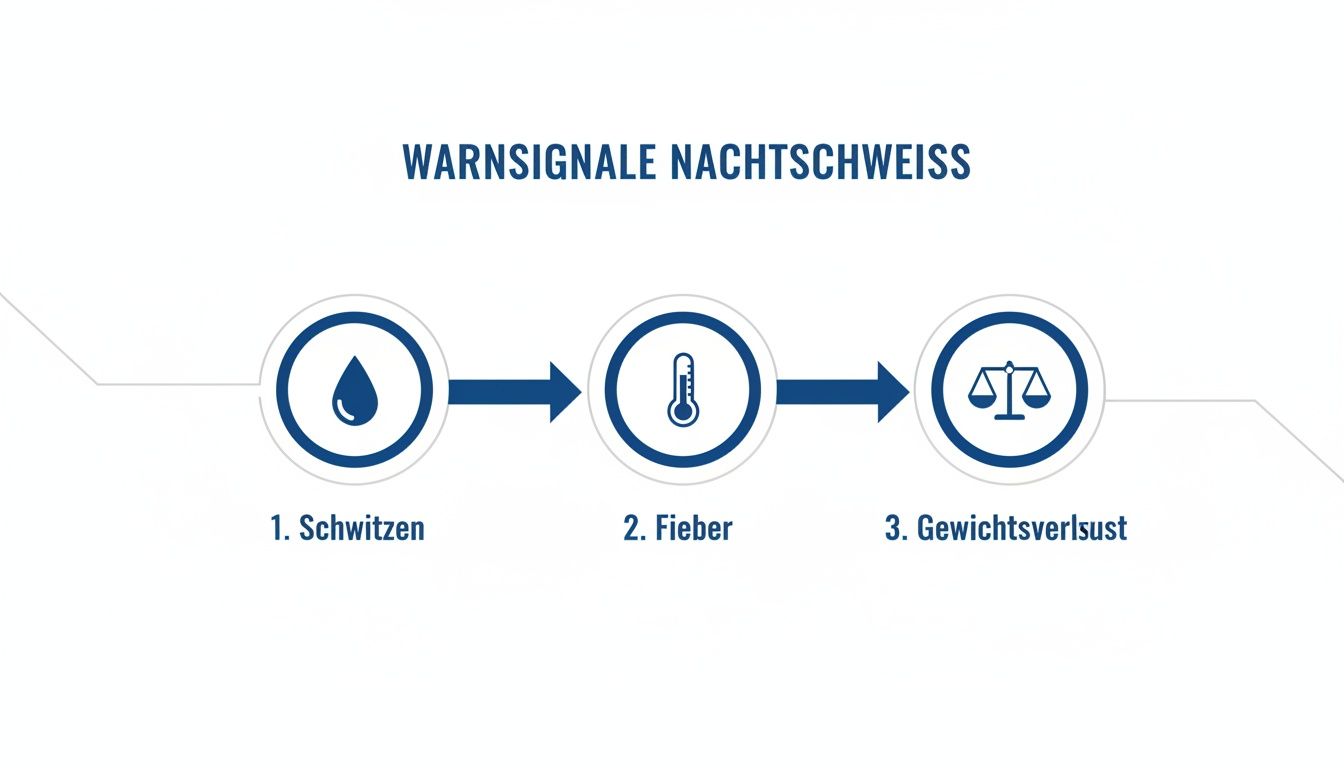
When these symptoms occur together, it is a clear signal from your body that medical evaluation is advisable.
To make it easier for you to get started, we have put together a short checklist of immediate measures.
Immediate measures for night sweats: a checklist
| Category | Measure | Why it helps |
|---|---|---|
| Sleep environment | Tilt the window open for cool ventilation | Lowers the room temperature and improves air circulation. |
| Clothing | Wear loose sleepwear made of cotton/linen | Allows the skin to breathe and prevents heat buildup. |
| Bedding | Lightweight blanket and breathable materials | Reduces heat buildup under the covers at night. |
| Diet | Eat only light meals in the evening; avoid spicy foods | Eases digestion and prevents the metabolism from being overheated. |
| Drinks | Avoid alcohol and caffeine in the evening | Both can increase body temperature and pulse rate. |
| Relaxation | Evening ritual (reading, music, meditation) | Reduces stress, which is a common trigger for sweating. |
This table gives you practical tips you can implement right away. Think of it as your first-aid kit for more peaceful nights.
Find the cause with a blood test
Have you already tried quite a few things, but the night sweats persist? Then it's time to take a closer look. If you suspect that your hormones or metabolism are out of balance, an at-home blood test from mybody-x.com can provide valuable clarity. It examines precisely the markers that play a crucial role in night sweats.
A blood test translates your body's signals into understandable data. This allows you to stop guessing and start taking targeted action.
Important values that can provide insight here include, for example, estradiol (which shows you where your estrogen levels stand), the TSH level (an important indicator of thyroid function), and essential nutrients such as vitamin D and magnesium. Both are essential for stable hormone regulation and help the body cope better with stress.
With these results in hand, you finally know which factors you can adjust. In our guide, you'll find 7 effective tips for hormonal balance to support you on your journey. This puts you in control and helps you move purposefully toward restful nights.
Frequently asked questions about night sweats in women
Do you still have questions about night sweats? That's completely normal, because the subject is more complex than you might think. Here you will find clear, easy-to-understand answers to the most common questions, helping you interpret your body's signals more effectively.
Are night sweats always a sign of menopause?
No, absolutely not. Although the hormonal ups and downs during perimenopause and menopause are a very common cause, there are many other possible triggers. Sometimes they are everyday factors such as the normal menstrual cycle, high stress levels in daily life, certain foods, or an unnoticed thyroid disorder.
Which vitamins or minerals can help with night sweats?
A deficiency in certain nutrients can indeed intensify nighttime sweating. Magnesium plays a particularly important role because it calms our nervous system and regulates the body's stress response. Vitamin D is likewise involved in countless hormonal processes. A nutrient test from mybody-x.com can quickly show whether a deficiency is present and whether you should take targeted action.
It's important not to forget that a nutrient deficiency can disrupt the delicate hormonal balance and indirectly lead to night sweats. So it's worth taking a closer look.
Can I find out the cause of my night sweats myself?
With a little detective work, you can often identify some triggers yourself—for example, the spicy curry in the evening, one glass of wine too many, or simply a duvet that is too thick. But when the causes lie deeper, such as in the hormonal or metabolic system, things become difficult. The symptoms are often too nonspecific to make a clear connection without solid data.
An at-home blood test from mybody-x.com gives you a reliable, data-based foundation. Instead of continuing to guess, you can get to the root causes and finally take the right steps.
Do you finally want to know what is behind your sweat-soaked nights? The at-home blood tests from mybody-x.com give you precise insights into your hormonal, metabolic, and nutritional status. Find out now what your body is trying to tell you at mybody-x.com.


Share now:
Sleep problems in early pregnancy: Causes and how to find rest again
Testosterone Normal Ranges for Men (ng/dL): Understand and Optimize Your Level