
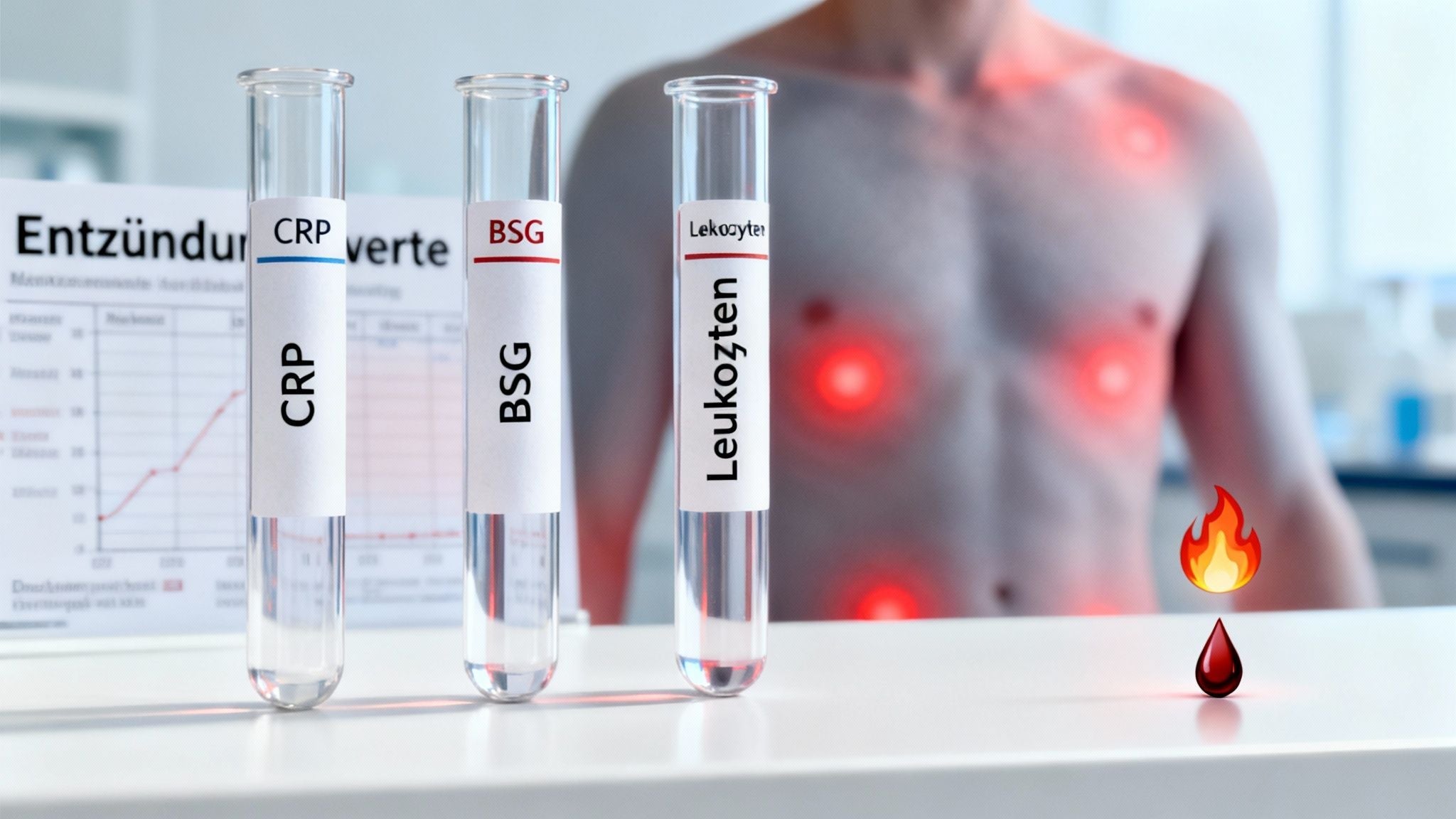
Understanding the causes of high inflammation levels and taking targeted action.
Elevated inflammation levels can have completely harmless causes, such as a simple infection. Sometimes, however, they are a subtle indication of underlying inflammation , often linked to our lifestyle or chronic illnesses. Either way, they are an important warning signal from your body that you shouldn't ignore.
What high inflammation levels in the blood really mean
You may have heard the term "high inflammation levels" before, or even seen it on your own blood test results. This can be worrying at first, but it's actually a pretty clever protective mechanism of your body.
Think of these values as your immune system's alarm system. As soon as a "fire" – an inflammation – develops somewhere, they trigger a signal. They aren't a disease in themselves, but rather important messenger substances that tell you: Attention, something's wrong here!
The most important “alarm markers” in the blood
In the lab, we can measure various messenger substances that tell us what's going on in your body. The three most important signaling molecules of your immune system are:
- CRP (C-reactive protein): This is the sprinter among markers. In cases of acute inflammation, this value often skyrockets within just a few hours. It is extremely sensitive and an excellent indicator of acute processes.
- ESR (erythrocyte sedimentation rate): This value is more like a marathon runner. It reacts significantly more slowly than CRP and therefore provides us with more indications of longer-lasting, chronic inflammatory processes in the body.
- Leukocytes (white blood cells): These are the "soldiers" of our immune system. In the case of an infection, for example by bacteria, they are mobilized and their number in the blood increases in order to fight the invader.
To give you a better overview, we have summarized the most important inflammatory markers and their functions here.
An overview of the most important inflammatory markers
This table summarizes the most common inflammation markers and explains their typical role and reaction time in inflammation.
| marker | What it displays | reaction time |
|---|---|---|
| CRP (C-reactive protein) | A very sensitive marker for acute inflammation , infections, and tissue damage. | Very fast (6–12 hours) |
| hs-CRP (high-sensitivity CRP) | It measures even minimal, chronic inflammation ("silent inflammation"), which is often associated with cardiovascular risks. | Very fast (6–12 hours) |
| ESR (erythrocyte sedimentation rate) | A general, slower-reacting marker for chronic inflammatory processes , e.g., in rheumatic diseases. | Slowly (days) |
| Leukocytes (white blood cells) | The body's immune cells; an increased number often indicates bacterial infections . | Fast (hours to days) |
As you can see, each value tells a slightly different story. Combining the results helps to piece together the puzzle and get to the root cause.
Understanding the language of your body
The great thing about these values is that they can help us detect hidden health problems – sometimes even before you notice any clear symptoms yourself. An elevated value is therefore always a good reason to take a closer look. It won't immediately tell you exactly what the problem is, but it clearly signals that something is going on.
Whether it's a short-term infection, a chronic illness, or the influence of your lifestyle – inflammation markers provide valuable pieces of the puzzle for your overall health. Understanding them is the first step to proactively taking care of your well-being.
By learning to decipher these signals from your body, you can much more effectively narrow down the possible causes of elevated inflammation levels. C-reactive protein, in particular, provides a clear indication of the intensity of inflammation. If you'd like to delve deeper into this topic, read our detailed article on C-reactive protein levels .
Next, we will take a close look at the most common triggers for high inflammation levels.
Acute vs. chronic causes: Where do the inflammations come from?
High levels of inflammation are like a smoke detector going off – they signal a problem, but don't immediately reveal exactly where the fire is. The causes can be as varied as a raging fire (acute) or a smoldering ember (chronic).

This distinction is key to correctly interpreting your body's signals and taking the appropriate next steps. Let's take a closer look at the two types.
Acute inflammation: The body's loud alarm
Often, it's short-term, acute events that cause your inflammation levels to rise rapidly and significantly. Your immune system is reacting with full force to an immediate threat. This is a completely normal and healthy reaction.
Typical triggers for this "fire brigade operation" are:
- Bacterial infections: From cystitis to tonsillitis to pneumonia – bacteria almost always trigger a strong immune response.
- Viral infections: Flu, a cold, or other viruses also activate your immune system. The levels often rise somewhat more moderately in these cases than with bacterial infections.
- Injuries and surgeries: Any major cut, wound, or surgical procedure causes tissue damage. Your body responds immediately with local inflammation to accelerate healing.
Especially in cases of infection, it becomes clear how quickly and significantly inflammatory markers react. In practice , CRP levels above 50 mg/l are considered a clear indication of a serious bacterial infection, which is the cause in approximately 90% of cases. Values up to 5 mg/l are considered normal, while values above 100 mg/l indicate truly severe inflammatory processes. You can find more information about the clinical significance of the diagnostic inflammatory marker CRP at springermedizin.de .
Chronic inflammation: The silent danger
Chronic, often unnoticed inflammatory processes are far more insidious. They don't cause classic symptoms like fever or acute pain, but still keep your immune system in a constant state of alert. These so-called "silent inflammations" are one of the most common causes of elevated inflammation levels and can lead to serious health problems in the long run.
Chronic inflammation is like constant background noise in the body. It slowly but steadily exhausts the immune system and can promote the development of lifestyle diseases.
The drivers for these smoldering fires are diverse and often deeply rooted in lifestyle:
- Autoimmune diseases: In diseases such as rheumatoid arthritis, Crohn's disease or Hashimoto's thyroiditis, the immune system mistakenly attacks the body's own tissue, resulting in a constant barrage of attacks.
- Metabolic disorders: Overweight, especially abdominal fat, and insulin resistance (the precursor to type 2 diabetes) are like small factories that constantly produce pro-inflammatory messenger substances.
- Lifestyle factors: An unbalanced diet, chronic stress, lack of sleep and too little exercise can gradually but surely increase the level of inflammation in the body.
Uncovering these silent processes is crucial for your long-term health. If you want to find out if your body is affected by such hidden processes, you can learn more in our article on silent inflammation testing . Distinguishing between acute and chronic triggers will help you ask the right questions and search for targeted solutions.
How your lifestyle fuels silent inflammation
Inflammation doesn't always have to be loud and obvious, like the flu with fever and body aches. Much more often, it's your daily habits that secretly fuel a persistent, mild inflammatory response in the body – so-called silent inflammation . These insidious processes are one of the main causes of consistently elevated inflammation levels, which worry many people.
Imagine this type of inflammation as a quiet but constant background noise. It's not acutely threatening, but it keeps your immune system permanently on high alert and slowly but surely depletes your energy reserves.
The main drivers from your everyday life
The good news is: You have control over the biggest drivers of these silent inflammations. It's often the small, everyday decisions that add up over months and years, gradually driving up the inflammation level in your body.
Here are the four key factors you should know:
- An unbalanced diet: Highly processed foods, too much sugar, and unhealthy fats act like accelerants for inflammation. They fuel processes in the body that unnecessarily activate your immune system.
- Chronic stress: People who are constantly under pressure have their bodies continuously releasing stress hormones like cortisol. Initially, cortisol has an anti-inflammatory effect, but with prolonged stress, this effect reverses and it even promotes inflammation.
- Lack of sleep: During sleep, your body regenerates and restores balance to the immune system. Without this crucial rest phase, everything becomes disrupted, and pro-inflammatory messenger substances gain the upper hand.
- Lack of exercise: Regular, moderate exercise is a natural anti-inflammatory. Those who hardly move at all, however, make it far too easy for inflammatory processes to occur in the body.
Silent inflammation is often the result of many small lifestyle choices. By recognizing these factors, you can proactively counteract them and help your body regain balance.
Understanding these connections is the first and most important step towards taking control of your health. You can noticeably influence your inflammation levels by learning to recognize these silent drivers and counteracting them with simple adjustments to your daily routine. You'll find many practical approaches in our 10 tips for a healthy lifestyle , which will make it easier for you to get started.
By paying attention to a balanced diet, getting enough sleep, managing your stress, and being regularly active, you can take the wind out of the sails of silent inflammation. Body weight is also a crucial factor in this puzzle, which we will discuss in more detail in the next section.
The relationship between body weight and inflammation
Did you know that excess fat tissue is far more than just a passive energy store? The fat in the abdominal cavity – the so-called visceral fat – behaves like an independent organ. It actively produces and sends out messenger substances that can fuel inflammation throughout the body.
This realization is a real key moment in understanding why being overweight (obesity) is one of the most common causes of high inflammation levels in the chronic range. This isn't about an acute reaction with fever, but rather a gradual, yet constant strain on your immune system.
Abdominal fat as a hidden source of inflammation
Imagine these active fat cells as tiny factories that constantly produce pro-inflammatory substances called cytokines. These enter the bloodstream and put your body in a state of permanent, low-level alert.
The result is a "silent inflammation" that often smolders unnoticed for years, but provides fertile ground for many lifestyle diseases. These include, among others:
- Insulin resistance and type 2 diabetes: The persistent inflammation disrupts the delicate signaling pathways of insulin. As a result, blood sugar levels can no longer be properly regulated.
- Cardiovascular diseases: Inflammatory processes can permanently damage blood vessels and promote the formation of dangerous deposits (arteriosclerosis).
- Joint problems: The additional weight puts mechanical strain on the joints, while the inflammatory messenger substances can worsen existing problems.
This connection is also well-documented in Germany. Studies repeatedly show that obese people have, on average, higher CRP levels than people of normal weight. Since obesity is unfortunately widespread in this country, it significantly contributes to the prevalence of elevated inflammatory markers in the population.
The positive lever: weight reduction
This message should not discourage you in any way – quite the opposite! Because the mechanism also works in the other direction: Every kilogram less, especially around the stomach, reduces the production of these pro-inflammatory substances.
A moderate weight loss of just 5 to 10% of your body weight can measurably lower inflammation levels in the blood. This means you have an incredibly powerful tool in your own hands.
So you don't need to start a radical diet. Even small but consistent adjustments to your diet and more exercise in your daily life can make a huge difference. By reducing active fat tissue, you simply switch off one of the main sources of chronic inflammation in your body.
This not only lowers your lab results but also improves your overall well-being and reduces the risk of secondary illnesses. You can find scientifically sound approaches to this in our guide to 7 strategies for weight management . The first step is understanding the connection – you can take the next one today.
From values to actions: What you can do now
Your inflammation markers are elevated – understandably, such a finding can be unsettling at first. But panicking now would be the wrong approach. Instead, see the result for what it is: a valuable signal from your body, asking you to take a closer look. This section is intended to provide you with a kind of roadmap for the next steps.
An elevated level doesn't automatically mean you have a serious illness. It's simply a signal that you should investigate. The most important thing is to assess the situation correctly and know when you can take action yourself and when a visit to the doctor is unavoidable.
When you should go to the doctor
There are very clear situations in which you shouldn't hesitate to seek medical help. Your first point of contact is always your family doctor, as they are best able to assess your test results within the overall context of your health.
A visit to the doctor is absolutely necessary if any of these points apply to you:
- Very high values: In particular, CRP levels above 50 mg/l or even above 100 mg/l often indicate something acute that needs to be treated, for example a bacterial infection.
- Accompanying symptoms: If, in addition to elevated levels, you also notice fever, severe pain, a pronounced feeling of illness, shortness of breath or unexplained weight loss, immediate medical attention is necessary.
- Persistently high levels: Sometimes the levels are only slightly elevated, but they simply don't decrease over a longer period. If you also feel tired and generally unwell, you should investigate the cause.
How you can take action yourself and narrow down the causes
While acute problems clearly require medical attention, you can do a little detective work yourself if your test results are slightly elevated or unclear. Often, it's the silent inflammation that smolders due to our lifestyle or undetected imbalances in the body. Modern at-home self-tests can provide excellent initial guidance in these cases.
Home tests are like a compass for your health. They don't replace a medical diagnosis, but they give you specific indications of which areas you should take a closer look at and where you can take action.
By examining certain areas yourself, you can uncover potential contributing factors to elevated inflammation levels. A mybody®x blood test can help you gather pieces of the puzzle that complete your overall picture. The following areas are often particularly relevant:
- Nutrient deficiencies: A lack of anti-inflammatory nutrients such as omega-3 fatty acids or vitamin D can actually fuel inflammatory processes in the body.
- Food intolerances: Hidden intolerances can permanently irritate the intestines and thus trigger a chronic, systemic inflammatory response.
- Hormonal imbalance: A hormonal balance that is out of sync can also influence your body's tendency towards inflammation.
The following graphic clearly illustrates how a factor such as body weight can directly lead to inflammation via the production of messenger substances.

Here you can see the direct path from excess weight, especially abdominal fat, to the release of pro-inflammatory messenger substances – precisely those that can then trigger chronic inflammation.
The results of such a test provide you with a solid basis for targeted adjustments. This could involve a change in diet, the targeted supplementation of nutrients, or simply a well-prepared basis for discussion at your next doctor's appointment.
Your most frequently asked questions about high inflammation levels
Finally, we'd like to address a few questions that we frequently receive on this topic. This will give you additional clarity and allow you to take away the most important points, so you feel confident and well-informed.
Can stress really increase my inflammation levels?
Yes, absolutely. When you're constantly under pressure, your body releases more stress hormones like cortisol. While cortisol has an anti-inflammatory effect in the short term, with chronic stress the exact opposite happens: your system becomes overstimulated and the body's tendency towards inflammation increases.
That's precisely why stress management techniques are so incredibly important. Whether it's regular exercise, meditation, getting enough sleep, or simply taking conscious breaks in everyday life – these aren't luxuries, but powerful tools for naturally managing your inflammation levels.
What diet is most helpful for high inflammation levels?
Your diet is one of the most powerful tools you can control. With an anti-inflammatory diet, you can work wonders and tackle the root causes of high inflammation levels .
Focus primarily on these nutrients:
- Omega-3 fatty acids: These are found primarily in fatty fish such as salmon or herring, but also in flaxseeds and walnuts. They are the natural antagonists of inflammatory processes.
- Antioxidants: Reach for colorful berries, dark green leafy vegetables like spinach and kale, and season generously with turmeric. These substances protect your cells from oxidative stress.
- Fiber: Whole grain products, legumes and plenty of vegetables feed your good gut bacteria – and these play a crucial role in a strong and balanced immune system.
Conversely, you should avoid inflammatory foods such as sugar, white flour products and highly processed ready meals as much as possible.
An anti-inflammatory diet is not a short-term diet. Think of it as a long-term change that helps your body regulate itself and effectively keep inflammation in check.
How quickly do inflammation levels decrease again?
Unfortunately, this question cannot be answered generally, as the rate of change depends entirely on the cause. In the case of an acute bacterial infection that is successfully treated with antibiotics, the levels can often drop significantly within just a few days.
However, if the cause is chronic, you'll need a little more patience. If you change your lifestyle – for example, by eating healthier, reducing stress, or losing weight – it can take several weeks or even months before you see a lasting and measurable improvement in your inflammation levels.
Can psychological problems also increase inflammation levels?
Yes, the connection between the mind and the immune system is now well-established scientifically. Research from Germany shows that about a third of patients with depression have elevated inflammatory markers such as CRP. These levels are often associated with an increased BMI and other immune messengers. This underscores that inflammation can be not only a purely physical but also a psychosomatic phenomenon. If you 'd like to delve deeper into the connection between inflammation markers and depression, you'll find fascinating insights here .
Do you want to gain clarity about your health indicators and finally understand what's going on in your body? A blood test from mybody®x can provide valuable insights into possible causes of silent inflammation, whether due to nutrient deficiencies, intolerances, or hormonal imbalances. Take control and start your journey to improved well-being today.



Share:
Which blood values really provide information about fatigue
Determining your hormone levels is the key to your well-being