
Hot Flashes Long After Menopause: What Is Really Behind Them
You thought menopause was finally over, and suddenly it is back—this unexpected hot flash? You are absolutely not alone. Hot flashes long after menopause are a phenomenon many women experience and are directly related to the long-term hormonal changes in your body. There are clear biological reasons behind them—and fortunately, ways to target them by better understanding your body.
Why the Heat Returns Even Years After Menopause
Your last period was quite some time ago, yet sometimes it still feels as though menopause never really went away. The recurrence of hot flashes, even during postmenopause, can be unsettling, but it has a perfectly logical explanation. Your body may have adapted to permanently lower estrogen levels, but this hormone remains a key player in regulating your body temperature.
Imagine the heat center in your brain, the hypothalamus, as an extremely sensitive thermostat. A lack of estrogen easily throws this thermostat out of balance. It suddenly becomes hypersensitive to the slightest temperature fluctuations and mistakenly sounds the alarm. The brain thinks the body is overheating and immediately starts the emergency cooling program: The blood vessels dilate and sweat breaks out. The result is exactly what you feel: sudden sweating and an intense, unpleasant sensation of heat.
Here is a brief overview of the key facts about this topic:
Persistent Hot Flashes After Menopause at a Glance
This table summarizes why hot flashes can still be an issue years after your last period.
| Factor | Brief Description | Average Duration |
|---|---|---|
| Hormonal Changes | Persistently low estrogen levels make your body's thermostat (the hypothalamus) hypersensitive. | The symptoms can last for years. |
| Sensitive Nervous System | Your brain mistakenly responds to the slightest stimuli with a hot flash to cool the body. | Sensitivity can change over time. |
| Statistical Normality | Many women experience hot flashes for years after their last period. | 4.5 years on average after menopause. |
As you can see, this is not rare, but a well-documented biological process.
Duration Is Not an Isolated Case
Many women assume that these symptoms will disappear shortly after menopause. But the reality is often different. So you are in good company, because this phenomenon is statistically well documented and is absolutely not an exception.
A comprehensive analysis in Bundestag printed paper 20/8755 shows that the average duration of hot flashes is 7.4 years. An impressive 4.5 years of these occur only after menopause. You can read more about the findings on menopausal symptoms in Germany.
So it is perfectly normal to still be caught off guard by hot flashes in your late 50s. These symptoms are a clear signal from your body that the hormonal transition is still having an effect. The good news: You do not have to deal with this alone. Understanding the biological processes is the first step toward regaining control. In our guide to the symptoms of menopause in women, you can learn more about exactly what is happening in your body.
Uncovering the True Causes of Your Internal Heat Chaos
Is menopause officially over, but the hot flashes remain? If you are wondering this, you are not alone. The answer is often more complex than simply looking at estrogen levels. Think of your body as a finely tuned orchestra: If even one instrument is out of tune, the entire melody falls apart.
Of course, the main reason for the erratic temperature regulation is the persistently low estrogen level. It throws your hypothalamus—the body’s thermostat in the brain—completely out of balance. But it is rarely the sole culprit. Often, other factors push things over the edge and repeatedly trigger the hot flashes.
This diagram illustrates how the decline in hormones directly affects your brain, triggering the dysregulation of your internal thermostat.
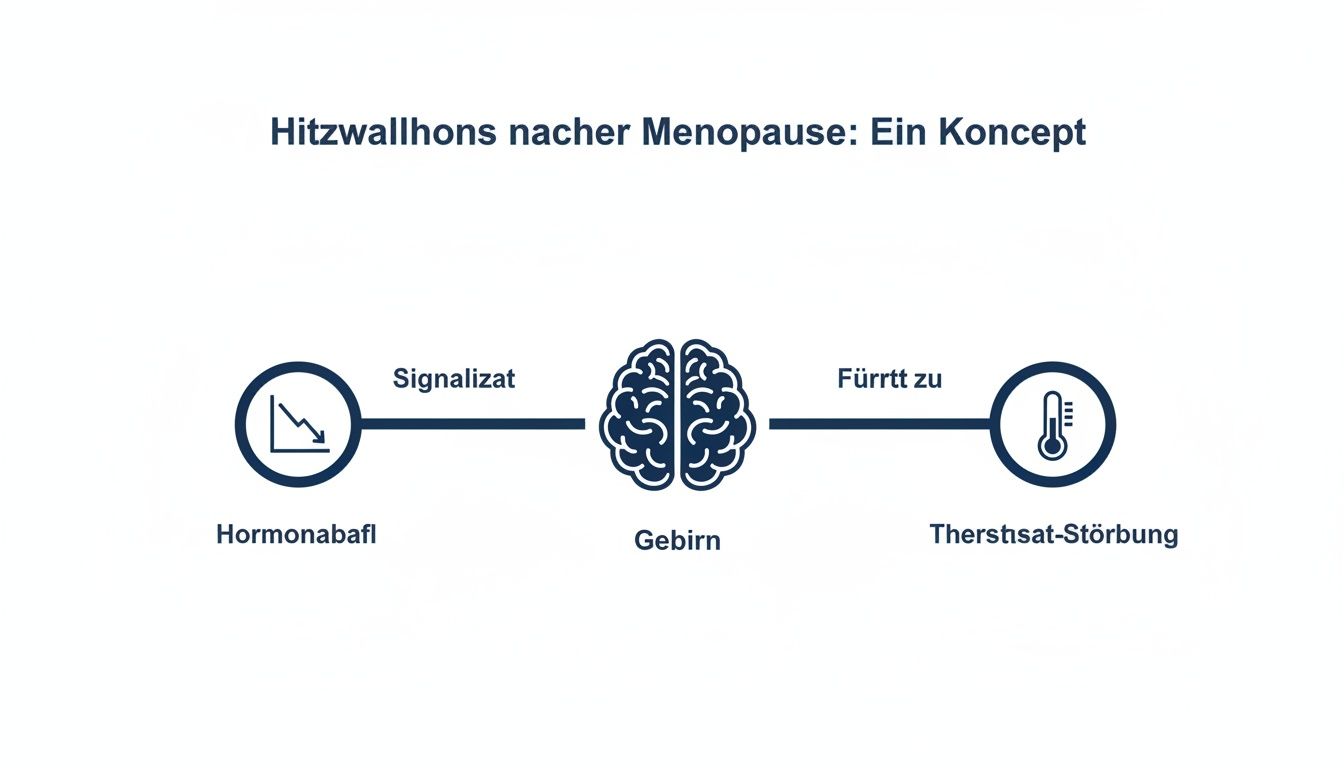
The cause therefore lies deep in the brain, where harmless temperature signals are suddenly misinterpreted and trigger the unpleasant hot flashes.
More Than Just Estrogen: A Look at the Hidden Culprits
Your internal thermostat is not broken; it is simply set extremely sensitively. Various influences can further intensify this sensitivity and irritate the system.
- Stress hormones such as cortisol: Are you constantly under pressure? Chronic stress puts your body in a permanent state of alert. A high cortisol level can further trigger the already sensitive temperature regulation center.
- The thyroid: An unnoticed underactive or overactive thyroid can directly affect your metabolism and body temperature. This can significantly worsen existing hot flashes.
- Blood sugar fluctuations: A roller coaster ride in your blood sugar levels, often caused by a diet high in sugar and carbohydrates, can also trigger hot flashes or noticeably increase their intensity.
Hot flashes are a widespread phenomenon that affects up to 85% of all women. For many, they don’t simply stop after menopause. Studies show that these symptoms last an average of 5.2 years, but for some women they can persist for up to 13 years and severely affect their quality of life.
This complex interplay explains why blanket solutions often miss the mark. If heavy night sweats also accompany your hot flashes, it’s worth taking a closer look at the individual triggers. In our article about the various causes of night sweats, you can learn more about how all of this is connected to your hormonal balance.
The good news is that because there are so many potential triggers, you also have many levers you can adjust. The first and most important step is to identify the specific causes of your personal heat-related symptoms. Only then can you take targeted and effective action. A simple blood test, such as mybody®x’s self-tests, can often provide clarity and show you exactly where your body needs support.
Stop guessing: How to shed light on hormonal confusion with a self-test
Instead of groping in the dark and wondering why hot flashes still have you in their grip long after menopause, you can take matters into your own hands. An at-home hormone test is the first but crucial step toward finally gaining clarity—with facts that come directly from your body. This allows you to make decisions for your well-being based on knowledge, not assumptions.
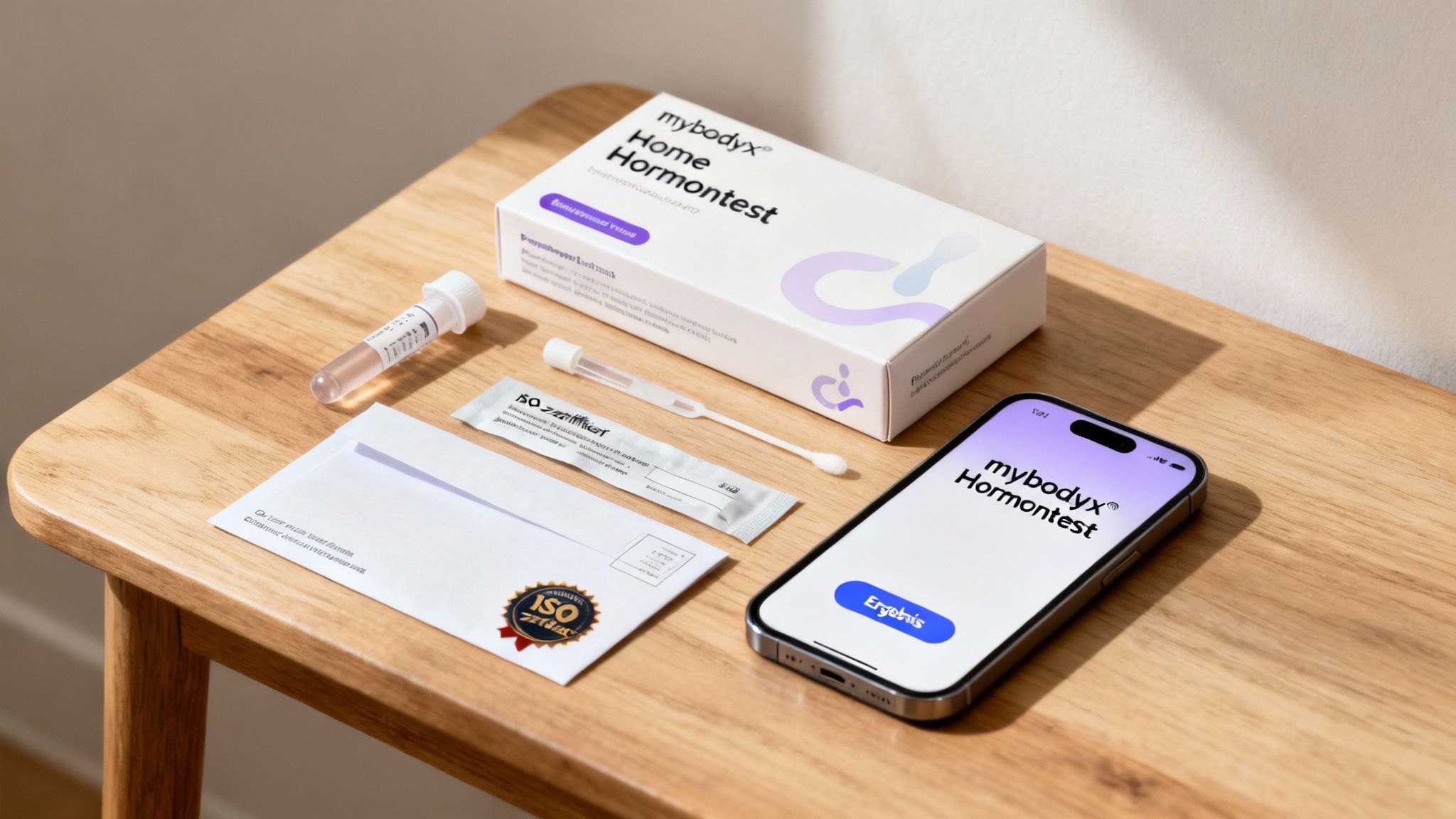
That’s exactly what the mybody®x hormone test was developed for. From the comfort of your own home, it gives you a crystal-clear picture of your current hormonal status. Instead of general speculation, you receive precise measurements directly from an ISO-certified laboratory in Germany.
These values show where the imbalance lies
A “hormonal imbalance” isn’t a vague feeling—it’s something measurable. The test examines the key hormones responsible for your body temperature and overall well-being.
- Estradiol (E2): This is the most important form of estrogen. A persistently low level makes your internal thermostat hypersensitive—this is often the main reason for hot flashes.
- Progesterone: It is often called estrogen’s counterpart. If it is lacking, the delicate balance is disrupted, which can further intensify your symptoms.
- Testosterone: Yes, this hormone is also essential for us women’s energy and zest for life. If it is out of balance, it can manifest itself in many different ways.
- Cortisol: Your “stress hormone.” A chronically elevated level can demonstrably trigger hot flashes and further fuel hormonal chaos.
Imagine receiving concrete data on exactly these hormones. Suddenly, you have a solid foundation to build on. That is the difference between blind guessing and taking targeted action to regain control.
Getting your levels tested is this easy
We have deliberately designed the entire process to be straightforward, so you can gain valuable insights into your health without much effort. You collect a small sample comfortably at home, send it to our partner laboratory in the enclosed envelope, and receive your results shortly afterward.
These are processed in a way that makes them immediately understandable—without any medical degree. You can see in black and white exactly where an imbalance exists. With this knowledge in hand, you are well prepared to take the next steps. If you would like to learn more about exactly how it works, take a look at our article on the at-home hormone test.
What you can do in everyday life to combat hot flashes
While you may be waiting for test results or discussing things with your doctor, you do not have to remain inactive. There are plenty of effective strategies you can implement right away to get hot flashes long after menopause under control. Think of it as your personal toolkit—you have more influence than you may think.

Even a small adjustment can make a noticeable difference. The goal is to calm your overstimulated nervous system and deliberately avoid the typical triggers of hot flashes.
Taming your inner fire with the right diet
What ends up on your plate has a huge influence on how often and how intensely you break into a sweat. Certain foods can calm your internal thermostat, while others really heat it up.
- Use plant-based helpers: Foods such as soy, flaxseed, and chickpeas contain so-called phytoestrogens. These are plant compounds that have a mild, estrogen-like effect in the body and may help restore some balance to hormonal fluctuations.
- Keep your blood sugar balanced: Meals rich in sugar and quickly digestible carbohydrates send your blood sugar levels on a roller coaster ride—a well-known trigger for hot flashes. Instead, opt for a balanced combination of complex carbohydrates, protein, and healthy fats to maintain stability.
- Identify your personal triggers: Spicy foods, caffeine, and alcohol are the usual suspects. They dilate the blood vessels and can directly trigger a hot flash. A small food diary can help you find out exactly what causes your hot flashes.
Actively manage stress and lower cortisol
Chronic stress acts as an accelerant for hot flashes. Constantly elevated cortisol levels further disrupt your already sensitive hormonal system. That is precisely why intentional breaks are so important.
Regular relaxation is not a luxury but a necessity. Techniques such as deep breathing, meditation, or yoga have been shown to help reduce nervous system activity and lower cortisol levels. Just 10–15 minutes a day may be enough to strengthen your inner balance.
Build small moments of relaxation into your daily routine. A short breathing exercise after a stressful meeting or before falling asleep can work wonders. Find out what makes you feel good and truly helps you unwind.
Adjust your lifestyle intentionally
Small but well-considered changes in your daily routine can greatly improve your quality of life. Often, it is the simple things that have the biggest effect.
The following table gives you an overview of which adjustments may be helpful and how they work.
Comparing lifestyle adjustments for hot flashes
A comparison of different approaches and their potential effects on the frequency and intensity of hot flashes.
| Strategy | How it works | Implementation tip |
|---|---|---|
| Breathable clothing | Prevents heat buildup on the skin and allows air to circulate. | Wear natural fibers such as cotton, linen, or viscose in layers. This way, you can quickly remove a layer when a hot flash begins. |
| Regular exercise | Stabilizes the thermoregulatory center in the brain and helps reduce stress. | Moderate exercise such as walking, swimming, or cycling is ideal. However, you should not do intense workouts right before going to bed. |
| Optimized Sleep Hygiene | Reduces night sweats and improves sleep quality. | Keep the bedroom cool (around 18 °C) and ventilate it well. A cooling mattress topper or bedding made from materials such as bamboo can provide additional relief. |
Each of these strategies is one piece of the puzzle that contributes to greater well-being. Find out what works best for you.
These adjustments are a first but highly effective step. If you want to dive deeper and understand how to support your entire hormonal system, you’ll find valuable tips in our article about how to naturally regulate your hormones.
When More Than Just Your Hormones Are Out of Balance
Sometimes hot flashes after menopause are not simply a delayed echo of hormonal changes. They can also be a quiet signal from your body that something is out of balance elsewhere—something that goes far beyond the familiar sex hormones. Two often underestimated but extremely important areas are your nutrient intake and possible hidden food intolerances.
Your body is an incredibly complex system in which everything is interconnected. If it lacks important building blocks or your immune system is constantly kept on alert by certain foods, this can further disrupt your already sensitive temperature regulation.
The Hidden Saboteurs: Nutrient Deficiencies
Certain vitamins and minerals are essential for a stable nervous system and proper hormone production. If something gets out of balance, it can significantly intensify symptoms such as hot flashes.
- B vitamins: They are, so to speak, fuel for your nerves. A deficiency, especially in vitamin B6 and B12, can make your nervous system more easily irritated and make it harder for your body to cope with stress.
- Magnesium: This mineral is a true all-rounder for women after menopause. It not only calms the nervous system but also plays a direct role in hormone regulation. Since magnesium levels often decline after menopause, a deficiency can make the problem worse.
When there is a deficiency in these areas, your internal thermostat overreacts to even the slightest triggers and sends you into a hot flash.
When Food Becomes a Source of Stress
Another cause that many people don’t even consider is undiagnosed food intolerances. Regularly eating something your body cannot properly process often leads to low-grade, chronic inflammation.
Imagine that your immune system is constantly on high alert. This ongoing stress can significantly disrupt your hormonal balance and further irritate your body’s temperature regulation center—potentially contributing to hot flashes long after menopause.
Common suspects here are often gluten, lactose, or histamine. The tricky part is that the symptoms are usually so diffuse that you don’t immediately associate them with hot flashes.
Do you feel that, despite all your efforts, nothing is improving? Then looking beyond hormones could be the decisive step. A targeted test can finally provide clarity. The mybody®x nutrient test can reveal potential nutritional deficiencies, while the intolerance test shows you which foods are causing problems for your body. This gives you a complete picture and finally enables you to take targeted action against the true triggers.
Your roadmap to greater well-being in postmenopause
Things are becoming clearer now: Hot flashes that continue to plague you years after menopause are not a fate you simply have to accept. Instead, they are the result of a complex interplay within your body. The most important step is taken as soon as you stop groping in the dark and start taking your body’s signals seriously. Rather than merely guessing what might be wrong, you can now take action based on clear data.
The key to a better quality of life lies precisely in this: regaining control. This is where modern self-tests come in, providing you with an accurate picture of your hormone levels or nutrient supply conveniently from home. Think of them as a personal compass that points you directly toward the causes of your symptoms.
No one knows your body better than you do. With the right information at hand, you can finally take targeted action to improve your well-being and initiate the right steps together with your doctor or therapist.
See this moment as your personal starting point for a new, better phase. It’s about confidently taking charge of your health and actively shaping it.
Your path to greater balance in 3 steps
- Understand: Recognize that your hot flashes have a specific cause that can be identified.
- Measure: Establish facts instead of relying on assumptions. Use a mybody®x hormone test or other relevant blood analyses from mybody®x to gain clarity.
- Take action: Based on your results, make targeted adjustments to your lifestyle, diet, or nutrient intake.
You have the power to break this cycle. Take the first step now and discover for yourself how good you can feel when you finally know the true causes.
Your questions, our answers: Everything about hot flashes after menopause
Here, we answer the burning questions that concern many women experiencing hot flashes long after menopause. Short and to the point.
Can hot flashes simply return even ten years after menopause?
Yes, absolutely—and you are not alone. Even if your hormone levels have long since settled at a new, lower level, the thermostat in your brain, the hypothalamus, can remain permanently more sensitive.
Think of it like a smoke detector set a little too sensitively: Even the smallest triggers—a stressful moment, a spicy dish, or other hormonal fluctuations—can be enough to set off a hot flash.
What role does the thyroid play in late hot flashes?
A very important one! The thyroid is the engine of your metabolism and directly influences your body temperature. An undetected underactive or overactive thyroid can cause symptoms that feel almost exactly like hot flashes or further intensify existing episodes.
Because declining estrogen levels after menopause can directly affect thyroid function, taking a close look at your thyroid levels is often a crucial step in finding the true cause.
Important to know: General advice rarely gets you very far. Your symptoms are as individual as you are. Taking a precise look at your personal hormone and nutrient levels with a mybody®x self-test is the first step toward a solution that truly suits you.
Do herbal remedies really help?
Herbal remedies such as black cohosh, red clover, or soy contain what are known as phytoestrogens. These are substances that can have a mild, estrogen-like effect in the body. For some women, they can be a great source of support.
However, their effects vary greatly from person to person. They do not work the same way for every woman and depend heavily on exactly where your hormonal imbalance lies. So before turning to herbal remedies, it makes sense to know your precise levels. That is the only way to ensure you are truly giving your body what it currently needs.
Are you ready to finally find out what’s behind your symptoms? The blood tests from mybody®x give you precise insights into your hormone, nutrient, or thyroid levels from the comfort of your home. Find the true causes and regain control of your well-being at mybody-x.com.



Share now:
Iron deficiency symptoms in women: How to recognize the important warning signs
Which vitamins am I lacking? Your quick check for more energy & well-being