
Discover the symptoms of low progesterone: causes & solutions
Do you often feel tired, easily irritable, or suffer from severe mood swings just before your period? Many women know these feelings all too well and attribute them to everyday stress. But the real cause could be a hormonal imbalance—more precisely, symptoms of low progesterone levels , which can significantly impact your well-being. In this guide, we'll help you understand your body's signals and show you how to regain your balance.
What progesterone means for your well-being

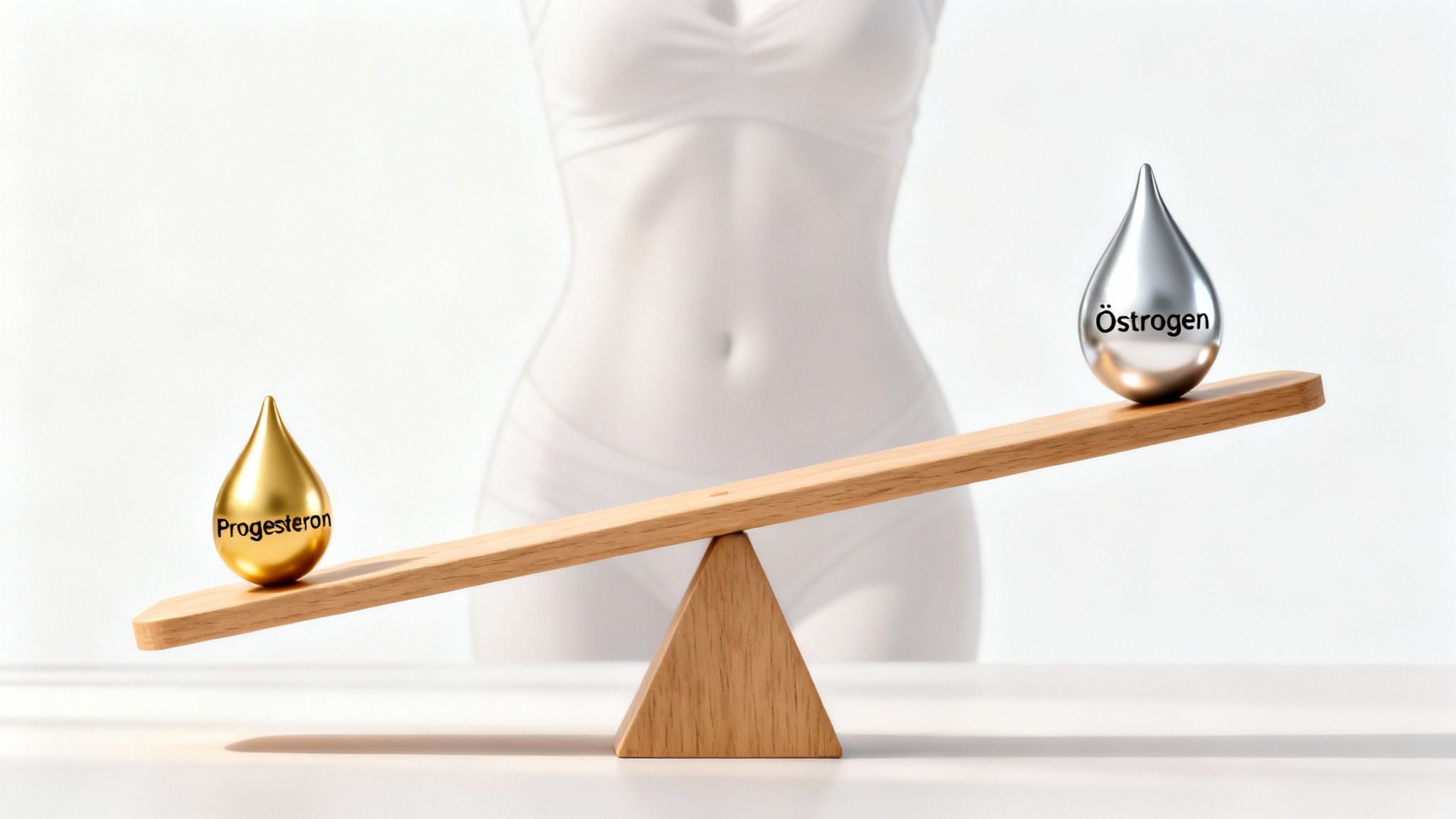
Imagine your hormones as a finely tuned orchestra. While estrogen plays first violin – energetic, building, and driving – progesterone is the conductor, ensuring calm, rhythm, and harmony. It's the balancing counterpart, preventing your cycle's symphony from ending in a chaotic crescendo.
Progesterone is primarily released in the second half of the menstrual cycle, after ovulation. You could almost call it the body's own "cool-down hormone." It has a wonderfully calming effect on your nervous system, helps you sleep more deeply, and acts naturally as a gentle anxiety reliever.
The balancing counterpart of estrogen
A healthy balance between estrogen and progesterone is key to a harmonious cycle and your overall well-being. However, when your progesterone levels drop, estrogen has free rein and essentially operates without a conductor. This condition is known as estrogen dominance and is often the underlying cause of many common women's health issues.
Without sufficient progesterone to balance the hormones, estrogen can exert its anabolic effects unchecked. The result? Symptoms such as unpleasant water retention, painful breast tenderness, or the dreaded mood swings before menstruation. Progesterone is the key player that keeps these effects in check and ensures the necessary balance.
A stable progesterone level is like an inner anchor. It helps you stay emotionally balanced, gives you patience, and ensures that you simply feel completely comfortable in your own skin.
More than just a menstrual cycle hormone
The importance of progesterone extends far beyond your menstrual cycle. It's involved in countless processes in your body that are absolutely crucial for your health:
- Supporting the thyroid gland: Progesterone helps your body to optimally utilize thyroid hormones, thus giving your metabolism a little boost.
- Regulation of water balance: It has a mild diuretic effect, thus preventing bothersome swelling and the feeling of bloating.
- Strengthening bones: The hormone is an important team player in bone formation and thus contributes to stable bones in the long term.
- Skin improvement: It can help maintain skin elasticity and counteract excessive sebum production, which is particularly relevant for impure skin.
A deficiency in this important hormone rarely goes unnoticed and can have far-reaching consequences. In fact, an estimated 30% of all women of childbearing age in Germany unknowingly suffer from a progesterone deficiency. Just imagine: millions of women struggle daily with symptoms like severe PMS or unexplained fatigue without knowing the true root cause. Learn more about the background and how widespread this problem really is .
Understanding the diverse functions of this hormone is the first step to correctly interpreting your body's signals. Low progesterone levels are not uncommon, and the symptoms are often vague. That's precisely why it's so important to take a closer look when experiencing recurring symptoms.
If you suspect your hormones are out of balance, a test can finally provide clarity. The mybody®x hormone test allows you to easily and conveniently check your hormone levels from home. This gives you a reliable basis for taking targeted steps to improve your well-being.
Common signs of progesterone deficiency
Low progesterone levels often send clear signals that we simply need to interpret correctly. Many women suffer from symptoms for years, attributing them to stress or everyday life, completely unaware that the cause is hormonal. This section is your personal checklist to better understand and classify the most common symptoms of progesterone deficiency.
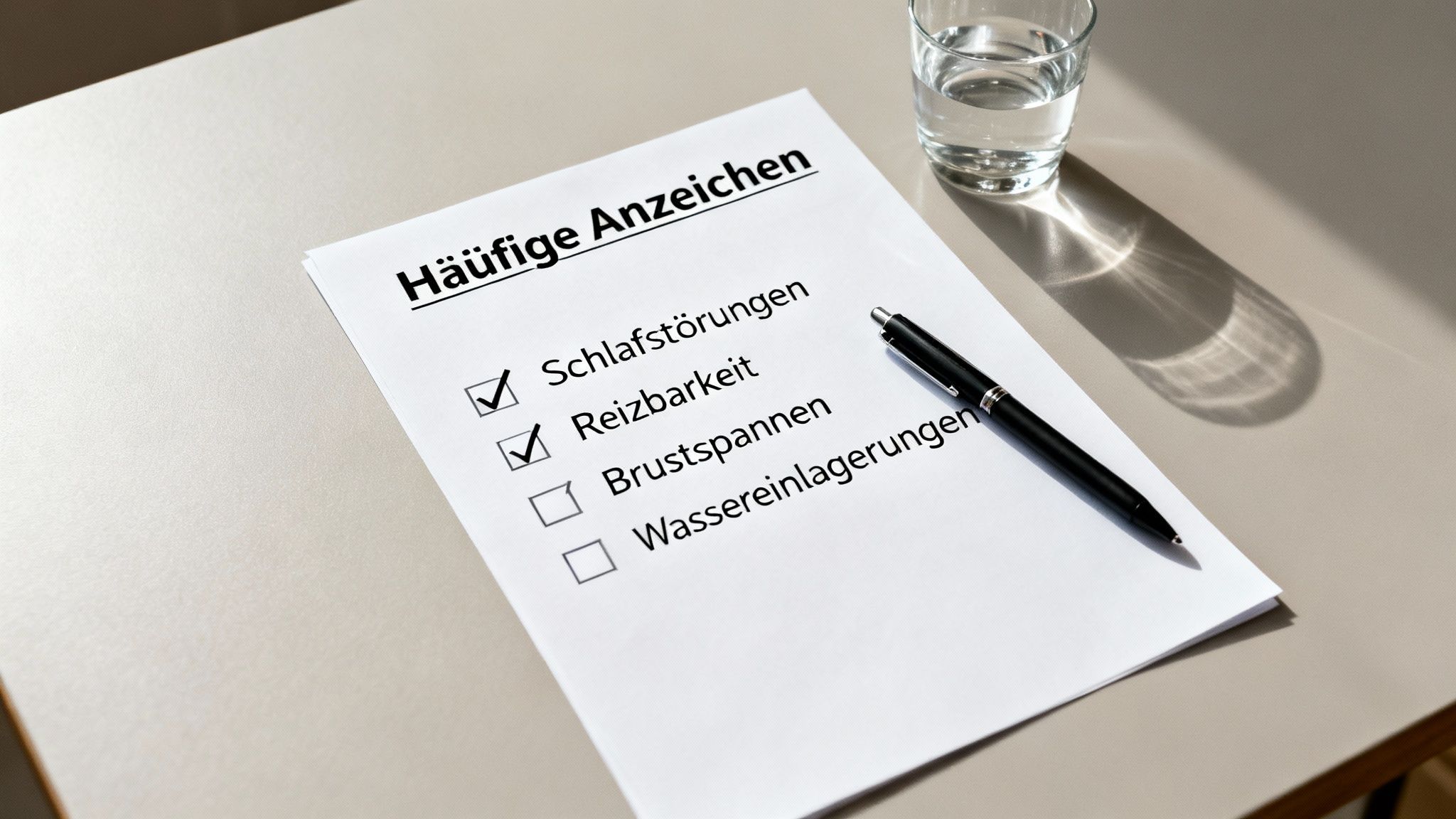
Does any of this sound familiar? This is the first, crucial step to finally gaining clarity and actively searching for solutions.
Menstrual irregularities and menstrual cramps
Your menstrual cycle is usually the first and most honest indicator when your hormonal balance is disrupted. A low progesterone level can manifest itself in a variety of ways.
A classic warning sign is a shortened second half of the menstrual cycle, the so-called luteal phase. If this phase lasts less than 10 to 12 days , the body simply doesn't have enough time to optimally prepare the uterine lining for a possible pregnancy. This is also known as luteal phase deficiency.
Other typical signs that are directly related to your cycle are:
- Spotting before menstruation: It often starts a few days before the actual bleeding, usually with brownish discharge.
- Severe premenstrual syndrome (PMS): Sure, many people experience mild PMS symptoms. But if you regularly suffer from extreme irritability, depressive moods, or severe pain before your period, there's often more to it.
- Irregular cycles: Sometimes they are very short, then extremely long – a progesterone deficiency can really mess up your body's rhythm.
To interpret these signs correctly, understanding your own cycle is invaluable. You can learn more about how everything works together in our detailed article about the menstrual cycle and its phases .
Physical symptoms outside of the menstrual cycle
A progesterone deficiency isn't only noticeable around the time of menstruation. Because the hormone is involved throughout the entire body, the symptoms can be varied and can also occur between periods.
Remember: Progesterone is your "feel-good hormone". If it's lacking, your body often feels stressed, bloated, and simply uncomfortable, even if everything seems fine on the outside.
Pay attention to these physical signals that are often overlooked:
- Sore or tender breasts (mastodynia): This tension can become particularly uncomfortable in the second half of the menstrual cycle. This occurs when estrogen, without its balancing partner progesterone, gains the upper hand.
- Water retention and weight gain: Do you often feel bloated, especially in your stomach, legs, and fingers? Progesterone has a mild diuretic effect. If it's lacking, the body retains more water.
- Sleep disorders: Progesterone has a calming, sleep-promoting effect. A deficiency can lead to difficulty falling asleep, restless sleep, or waking up during the night.
- Headaches or migraines: Hormonal fluctuations, especially the drop in progesterone before menstruation, are a classic migraine trigger for many women.
- Hair loss and blemishes: Skin and hair are also sensitive to hormonal balance. Thinning hair or acne can also be a sign.
Emotional and psychological signs
The connection between your hormones and your emotions is incredibly close. Progesterone acts on your nervous system like a natural stabilizer and anxiety reducer. If its levels drop, this can directly affect your mental health.
Many women describe a kind of emotional rollercoaster that they can't explain. It's important to remember: you're not imagining it! There could be a real hormonal cause behind it.
Pay attention to these emotional changes:
- Mood swings and irritability: You feel overwhelmed quickly, are easily irritable, or react much more emotionally than usual.
- Anxiety or inner restlessness: A feeling of constant tension or nervousness can be a direct symptom of low progesterone levels.
- Depressive moods: You feel sad for no reason, lack motivation, or lose interest in things that usually bring you joy.
- Concentration problems and "brain fog": If you have trouble concentrating or remembering things, this could also be a sign.
This overview is intended to help you better recognize and classify the diverse symptoms of a progesterone deficiency.
Overview of the most common symptoms of progesterone deficiency
This table summarizes the most common signs of low progesterone levels and categorizes them to help you with self-assessment.
| category | symptom | Description |
|---|---|---|
| Cycle & Menstruation | Shortened second half of the menstrual cycle | The phase after ovulation lasts less than 10-12 days (luteal phase defect). |
| Spotting | Brownish discharge that begins several days before the actual period. | |
| Severe PMS | Extreme irritability, low mood, anxiety, or physical pain before menstruation. | |
| Irregular cycles | Sometimes very short, sometimes very long – the cycle no longer has a reliable rhythm. | |
| Physical signs | Sore breasts | Uncomfortable tightness and high sensitivity, especially in the second half of the cycle. |
| Water retention | A feeling of bloating in the abdomen, legs or fingers; slight weight gain. | |
| Sleep disorders | Problems falling asleep, restless sleep, or frequent waking up during the night. | |
| Headaches/Migraines | Recurring headaches, often occurring in relation to the menstrual cycle. | |
| Emotions & Psyche | Mood swings | Rapid changes between good mood, irritability and sadness without a clear reason. |
| Inner restlessness & anxiety | A constant feeling of nervousness, tension, or underlying anxiety. | |
| Depressive mood | A feeling of hopelessness, lack of motivation, and loss of interest. | |
| Brain fog | Difficulty concentrating, remembering things, or thinking clearly. |
The list shows how wide-ranging the symptoms can be. If several of these points sound familiar, it might be time to take a closer look. A hormone test from mybody®x can provide you with the necessary clarity so you can finally take targeted steps for your well-being.
What is the real cause of low progesterone levels?
Why does progesterone levels plummet? The reasons are numerous and often intertwined, like the branches of a tree. A deficiency is rarely the result of a single problem. Rather, it's a clear signal from your body that your hormonal system is out of sync at one or more points.
A closer look at the possible triggers will help you understand which factors might play a role in your personal situation.
When ovulation fails or the corpus luteum collapses
The most common and direct cause of low progesterone lies within the menstrual cycle itself. Imagine progesterone as the main product of a small but extremely important factory: the corpus luteum, which forms after ovulation. If this factory isn't functioning properly, the final product is logically lacking.
This could be due to two typical problems:
- Anovulatory cycles: These are cycles in which no ovulation occurs at all. No ovulation means no corpus luteum, no progesterone production. This can happen occasionally, but should definitely not be the norm.
- Luteal phase deficiency (luteal insufficiency): Ovulation occurs, but the corpus luteum is either too weak or ceases to function prematurely. It doesn't produce enough progesterone or stops working too quickly. As a result, the second half of the menstrual cycle is often shortened – a classic warning sign.
How stress sabotages your hormones
An often underestimated but incredibly powerful adversary of your hormones is chronic stress . Your body has only a limited supply of building blocks from which it can create hormones. If you're constantly under stress, the production of the survival hormone cortisol always takes priority.
The insidious thing about it is that cortisol and progesterone are both formed from the same precursor (pregnenolone). So, figuratively speaking, your body is "stealing" the building blocks that were actually reserved for your progesterone to produce cortisol. This phenomenon is known as "pregnenolone steal" and perfectly illustrates how your lifestyle directly impacts your hormone production.
Stress is an alarm signal for your body. In a perceived dangerous situation, reproduction is not a priority – pure survival is what counts. Therefore, the production of sex hormones like progesterone is reduced.
Natural life phases and hormonal changes
Some phases of life bring about natural hormonal shifts that lead to a decrease in progesterone levels.
Perimenopause , the years leading up to the final menstrual period, is a time of significant change. The ovaries gradually reduce their activity, ovulation becomes irregular, or ceases altogether. The result is a natural decline in progesterone, while estrogen levels often remain stable for quite some time. This is precisely what leads to the typical estrogen dominance of this phase of life.
In Germany alone, around 9 million women are going through menopause. For many of them, the progesterone deficiency becomes a daily challenge, manifesting as hot flashes and sleep disturbances. Statistics show that eight out of ten of these women experience symptoms, with a third even suffering from severe discomfort. Learn more about the reasons behind this hormonal change and the recommendations of professional societies .
Overview of other possible causes
Besides these main reasons, there are other factors that can contribute to a progesterone deficiency. Often, not just one cause is at play, but several interact and reinforce each other.
- Hypothyroidism: A sluggish thyroid gland can disrupt the entire hormonal system and thus also reduce progesterone production.
- PCOS (Polycystic Ovary Syndrome): In this complex hormonal disorder, ovulation often fails to occur, which directly leads to a progesterone deficiency.
- Nutrient deficiencies: Your body is like a factory – it needs raw materials to produce hormones. If it lacks vitamin B6, zinc, and magnesium , progesterone production can stall.
- Excessive exercise: Extremely intensive training can also be a form of stress for the body and disrupt the hormonal balance.
Knowing the causes allows you to address them much more effectively. A mybody®x hormone test can help you determine your current status and gain clarity about which of these factors might be most prominent in your case.
Gain certainty through a hormone test
Assumptions alone won't get you anywhere. If you really want to know whether your symptoms are due to low progesterone, only a test will provide you with concrete facts. You might recognize yourself in many of the described symptoms, but only a measurement will give you the certainty you need for the next steps.
To gain clarity about your hormone levels, the timing of the measurement is absolutely crucial. Your progesterone level is not a static value – it fluctuates with the rhythm of your cycle and only reaches its peak after ovulation.
The right time for testing is crucial.
A test taken at the wrong time can give you a completely misleading picture. The ideal moment for a meaningful measurement is therefore in the middle of the second half of the cycle, the so-called luteal phase.
- Ideally: About 5 to 7 days after your ovulation.
- In a 28-day cycle: This corresponds approximately to the 19th to 22nd day of the cycle .
Your progesterone level should be at its peak during this time. If the level is too low, this is a clear indication of a luteal phase defect.
The following flowchart shows you possible causes of hormonal problems at a glance.
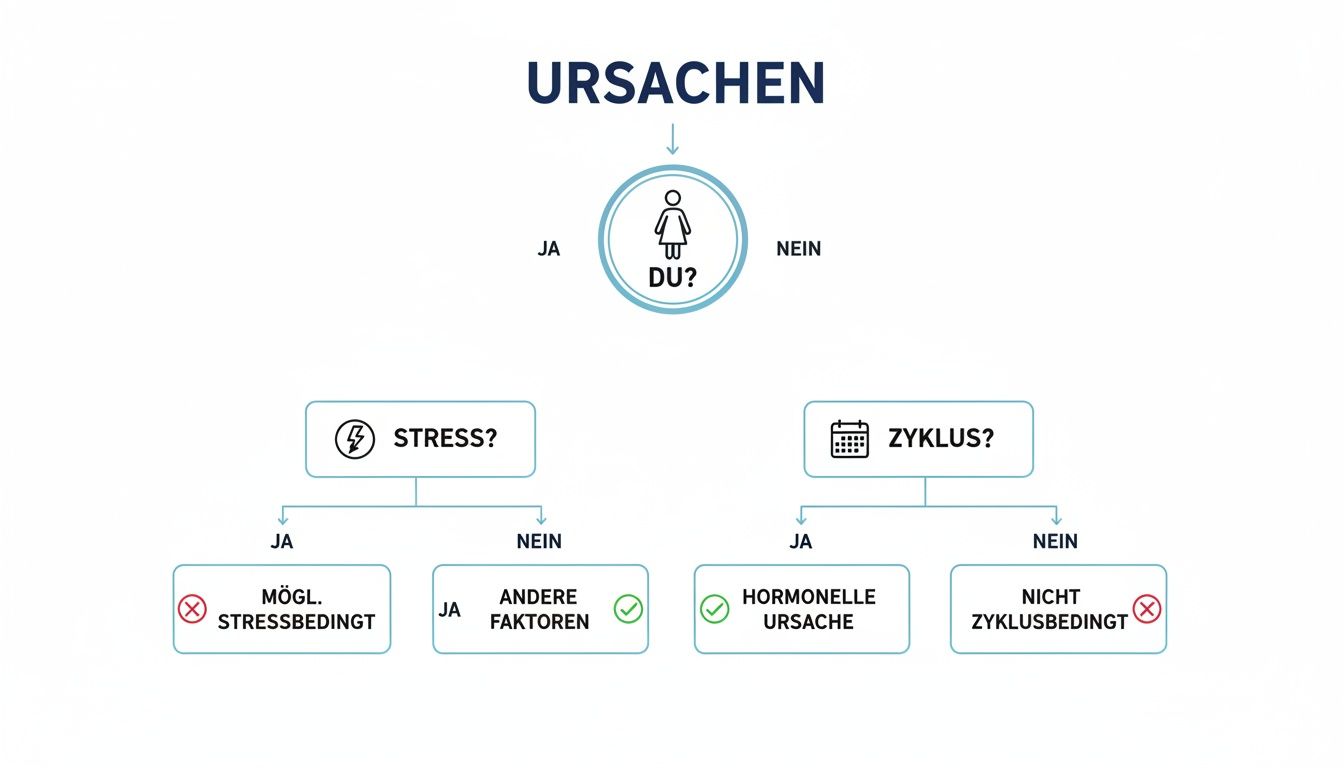
The graphic clearly shows that both your menstrual cycle and external factors such as stress play a central role in your hormonal balance.
Blood test or saliva test – which is better?
There are two common methods for determining your progesterone level: a blood test and a saliva test. A blood test measures the hormones bound to proteins that circulate in the bloodstream. A saliva test, on the other hand, detects the free, biologically active hormones that are directly available to your cells.
Both methods have their merits. However, for a convenient and discreet analysis from home, a test that you can easily perform yourself is recommended.
Low progesterone levels are not uncommon and can have far-reaching consequences. If the level is below 10 ng/ml after ovulation, this indicates luteal phase deficiency in many women. This can increase the risk of miscarriage to as much as 20–30% . In fact, about one-third of cases of infertility in Germany are related to low progesterone levels.
Certainty is the first step towards improvement. A hormone test takes the guesswork out of it and gives you a clear foundation to build on.
For a simple and reliable solution, you don't have to wait weeks for a doctor's appointment. You can take control yourself. With a mybody®x hormone test , you can conveniently and discreetly collect your sample at home.
The analysis is performed in an ISO-certified German laboratory, guaranteeing you precise and reliable results. Afterwards, you'll receive not only your findings but also scientifically sound and personalized recommendations for action. This way, you'll know exactly what steps you can take to restore your hormonal balance. We've summarized everything you need to know about at-home hormone testing .
Your path to greater hormonal balance
The good news is: you don't have to simply accept low progesterone levels. On the contrary – you can actively support your body in regaining its natural balance. In this section, you'll find concrete and practical tips on how to promote your hormonal balance through targeted lifestyle adjustments.
The first and most important step is often the gentlest. It begins right on your plate and in your everyday life, because your body needs the right building blocks to be able to produce hormones like progesterone in the first place.
Your diet as hormonal support
What you eat has a direct and noticeable impact on your hormone production. Certain nutrients are absolutely essential to boost progesterone production while simultaneously keeping potential estrogen dominance in check.
It's best to focus on foods that are rich in these nutrients:
- Zinc: This trace element is a key player in regulating ovulation and the function of the corpus luteum. You can find it in abundance in pumpkin seeds, lentils, oatmeal, and beef.
- Vitamin B6: It not only helps your body produce progesterone, but also supports your liver in effectively breaking down excess estrogen. Good sources include chickpeas, bananas, salmon, and chicken breast.
- Magnesium: Known as the "relaxation mineral," magnesium helps reduce stress. It's involved in hundreds of biochemical reactions, including hormone synthesis. So, indulge in plenty of green leafy vegetables like spinach, almonds, and dark chocolate.
- Healthy fats: Your body needs cholesterol as a building block for the production of progesterone. Avocados, nuts, seeds, and high-quality olive oil are excellent sources.
At the same time, it's wise to reduce foods that can promote estrogen dominance. These include, above all, highly processed products, excessive sugar, and alcohol, as they put a strain on the liver and thus disrupt the hormonal balance.
Stress management as the key to balance
Chronic stress is one of the biggest saboteurs of your hormonal health. As we've already seen, the production of the stress hormone cortisol "steals" the building blocks that your body urgently needs for progesterone. Good stress management is therefore not a nice addition, but an absolute necessity.
Your body doesn't distinguish between the stress of a dangerous saber-toothed tiger and the pressure of an approaching deadline. In both cases, it switches into survival mode and reduces "non-essential" functions such as reproduction – and thus progesterone production.
Find techniques that work for you personally and that you can easily integrate into your daily routine. Here are a few proven methods:
- Yoga and meditation: Even 10-15 minutes a day can help calm your nervous system and lower your cortisol levels.
- Sufficient sleep: During sleep, your body regenerates and regulates its hormones. The goal should be 7–9 hours per night.
- Conscious breaks: Plan short breaks during the day where you simply take a deep breath or go for a short walk.
These simple measures can make a huge difference to your well-being. If you'd like to delve deeper into the topic, you'll find further valuable suggestions in our guide , "7 Effective Tips for Hormone Balance ."
Harnessing the power of medicinal plants
Naturopathy also offers gentle support for your hormonal balance. Certain medicinal plants have proven their worth over centuries, and their effectiveness is increasingly being confirmed by studies.
One of the best-known plants for regulating the female cycle is chaste tree (Vitex agnus-castus). It can help promote ovulation and stabilize progesterone production in the second half of the cycle. However, it's best to discuss taking it with a doctor or naturopath to ensure it's suitable for your individual situation.
A holistic approach that combines nutrition, stress management and targeted support from nature is the most sustainable way to bring your body back into balance and improve your well-being in the long term.
Everything else you need to know about low progesterone levels
Here we answer a few more frequently asked questions. This will help clear up any remaining uncertainties and give you even more clarity.
How quickly can I increase my progesterone levels?
A real improvement in your progesterone levels is a process and unfortunately rarely happens overnight. Your body needs time to regain its hormonal balance.
With consistent changes to your diet and lifestyle, for example through targeted nutrients and better stress management, you can often notice initial positive changes within two to three cycles . Patience and a consistent routine are your best friends here.
Can a progesterone deficiency cause weight gain?
Yes, absolutely. A progesterone deficiency can indirectly lead to a sudden increase in the scale. This is because the hormone has a mild diuretic effect. If it's lacking, your body tends to retain more water, which quickly becomes noticeable.
Furthermore, low progesterone levels promote estrogen dominance. This condition can slow down metabolism and promote fat storage – especially in the abdomen, hips, and thighs.
Low progesterone levels can make weight loss more difficult, even with a healthy diet and exercise. Hormonal balance is often the missing piece of the puzzle for a healthy body weight.
Is a progesterone deficiency linked to infertility?
Definitely. Progesterone is the key hormone for the implantation of a fertilized egg and the maintenance of an early pregnancy. A deficiency, often manifesting as luteal phase deficiency, can completely prevent implantation or significantly increase the risk of early miscarriage.
Many women with an unfulfilled desire to have children only discover through a test that the symptoms of a low progesterone level could be the actual cause.
What role does menopause play in low progesterone levels?
During perimenopause and menopause, a decline in progesterone levels is a completely natural and expected process. The ovaries gradually reduce their function, ovulation becomes less frequent and eventually ceases altogether.
Since progesterone is primarily produced after ovulation, it is usually the first hormone whose levels drop significantly. This decline is one of the main causes of typical menopausal symptoms such as hot flashes, sleep disturbances, and mood swings.
Are you ready to finally gain clarity about your hormone levels and understand the cause of your symptoms? With mybody®x hormone tests, you can easily and conveniently check your levels from home. Receive precise lab results and concrete, scientifically sound recommendations to take control of your hormonal balance. Visit us at https://mybody-x.com and start your journey to greater well-being.



Share:
Hot flashes long after menopause: What's really behind them
Which vitamins am I lacking? Your quick check for more energy & well-being