
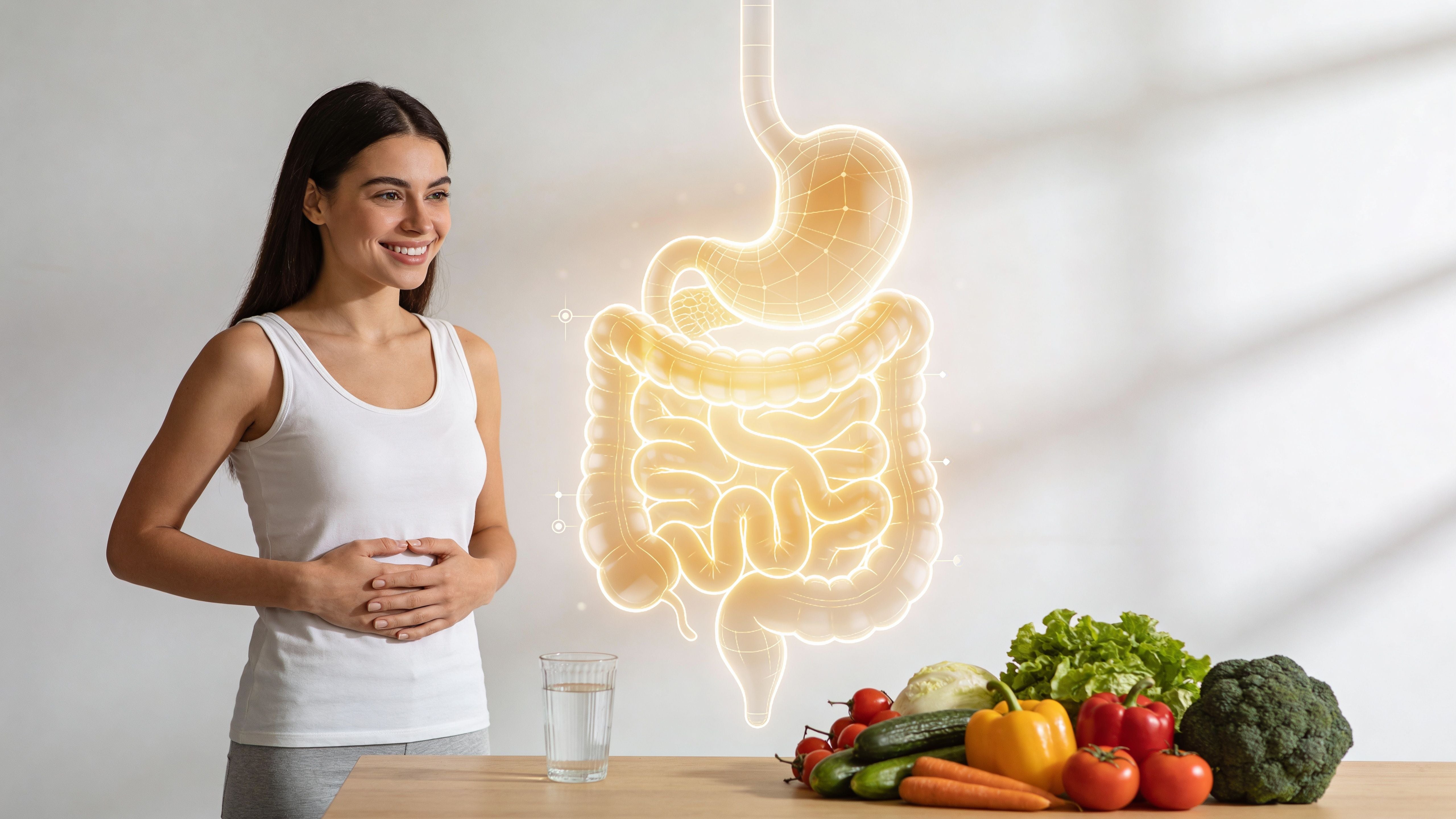
Heal Leaky Gut: Your 5-Step Plan for Gut Health
You eat sensibly, make an effort with your health, and yet your body keeps sending you signals. Sometimes it is bloating after eating, sometimes that afternoon fatigue, and sometimes skin that suddenly becomes irritated. Many people reach this point and realize that simply treating the symptoms is no longer enough.
If you want to heal leaky gut, you do not need another list of random tips. You need a clear plan. The key is to understand the gut barrier as part of a larger system and then work step by step on the actual triggers.
Leaky Gut – More Than Just Stomach Pain?
The term Leaky Gut describes increased permeability of the intestinal lining. Put simply, the intestinal wall no longer functions like a clean filter, but more like a sieve with small gaps. Substances that should actually remain in the gut can pass through more easily and further irritate the immune system.

This explains why symptoms do not always affect just the abdomen. Digestion, energy, skin, and general well-being are more closely connected than they may seem at first glance. Anyone who wants to better understand the function of the protective layer in the gut will find a helpful overview in this article on the role of the gut barrier in health.
What actually goes wrong in the gut
The gut barrier consists of more than just tissue. It is an interplay of the mucous membrane, immune defenses, the microbiome, and a kind of cellular connection system that determines what is allowed in and what should stay out. When this system is disrupted, the body often responds with nonspecific signals.
Typical symptoms may include:
- Digestive problems such as bloating, a feeling of fullness, diarrhea, or constipation
- Exhaustion despite getting enough sleep
- Skin reactions such as blemishes or irritation
- New sensitivities to certain foods
- Diffuse symptoms such as difficulty concentrating or a general feeling of discomfort
An irritated gut rarely affects just one area. The body often shows its imbalance on several fronts at the same time.
Why the issue should be taken seriously
In Germany, around 15% to 20% of adults suffer from chronic digestive problems, and increased intestinal permeability is increasingly recognized as a contributing factor. Particularly among people with chronic inflammatory bowel diseases, impaired barrier function is detectable in up to 80% of cases, which can reduce the absorption of important nutrients by up to 30%, according to information from IMD Berlin about leaky gut.
This is important because an irritated gut not only causes symptoms but also makes regeneration more difficult. When nutrients are absorbed less effectively, the body lacks exactly the material it needs for healing.
The good news
Leaky gut is not something you have to solve through sheer willpower. It is usually a process involving triggers, inflammation, mucosal stress, and disrupted gut flora. That is why a structured approach is often more helpful than blindly trying individual supplements.
Recognize the warning signs and gain clarity
Many people first notice only that “something is wrong.” The problem is that leaky gut rarely comes with a clear label. The symptoms often seem scattered and do not appear to fit together.

Common warning signs in everyday life
Some signs are obvious, while others go unnoticed for a long time. Pay particular attention to patterns, not individual bad days.
These often include:
- Abdominal discomfort after eating. Especially when you react similarly to very different foods.
- Fatigue and brain fog. You function, but you do not feel clear-headed.
- Skin issues. For many people, the skin seems to be connected to the gut.
- Fluctuating tolerance. What worked yesterday causes problems today.
- Stress-related worsening. Symptoms increase significantly during stressful periods.
Why Relying on Guesswork Often Holds You Back
The medical understanding of leaky gut has changed significantly. While the topic was often dismissed as a myth around 2016, experts now confirm that permeability disorders play a role in various diseases. Data also show that up to 70% of Germans who suffer from chronic stress have a connection to intestinal problems, as described in this overview of leaky gut and its medical classification.
Stress is a good example of a genuine trade-off. Many people first try to optimize only their diet. This sometimes helps to some extent, but it is often not enough if the body remains permanently in alarm mode.
Important point: The more diffuse the symptoms, the more useful data-based clarification becomes instead of a lengthy trial-and-error phase.
Which tests can really help you
If you want to heal leaky gut, you first need clarity. In practice, three questions are particularly helpful:
| Test area | What it can clarify | Why this is relevant |
|---|---|---|
| Microbiome | Whether your gut flora has become unbalanced | A disrupted barrier often occurs alongside dysbiosis |
| Intolerances | Whether certain foods regularly trigger your symptoms | Otherwise, you will eliminate either too much or the wrong things |
| Nutrient status | Whether your body is already becoming deficient | Mucosal regeneration requires sufficient building blocks |
This is exactly where home self-tests can be useful. A stool test can reveal patterns in the gut flora. An intolerance test helps you better identify hidden triggers in everyday life. A nutrient test can show whether your body is adequately supplied for regeneration. If sleep, menstrual cycle, resilience, or persistent exhaustion also play a role, a hormone test may also become important for the overall picture.
What does not work well is eliminating ten foods, five supplements, and three routines at the same time. In the end, you will not know what really helped.
Your 5-phase plan for gut healing
Most people do not fail because of a lack of discipline. They fail because the process is unclear. Anyone who tries to do everything at once can quickly lose track. A structured approach makes it easier to identify what irritates the gut and what stabilizes it.

A proven method begins with a microbiome analysis. In practice, a 3-month foundational therapy that reduces triggers and works specifically with L-glutamine, zinc, and probiotics shows a 70 to 90% reduction in symptoms when implemented consistently. The most common mistake is failing to completely eliminate the causes, as described in this overview of leaky gut treatment in practice.
Phase 1: Consistently reduce triggers
It does not start with a supplement, but with the question: What is actually keeping the gut irritated?
Practical rule: First remove what keeps aggravating the problem. Otherwise, you are trying to repair an open construction site.
Typical triggers in everyday life often include:
- Stress caused by constant tension, little recovery, and poor sleep patterns
- Dietary patterns high in sugar, alcohol, or highly processed products
- Medications such as antibiotics or painkillers, naturally to be assessed only in consultation with a medical professional
- Individual intolerances, such as to gluten or lactose
A pragmatic perspective helps more than perfectionism here. It is not about eating “super clean” immediately. It is about reducing the clear aggravating factors first.
Phase 2 Rebuild the gut flora in a targeted way
When the gut flora is out of balance, the barrier is often less effectively protected. In that case, it is not enough to merely calm the symptoms. You need to create favorable conditions for the system again.
This usually means:
- Only incorporate probiotic foods if they are well tolerated
- Do not choose probiotics blindly
- Gradually increase prebiotic fiber instead of overwhelming the gut
Many people make the mistake here of trying to do too much too quickly. More fiber is not automatically better when the gut is already reacting with irritation.
Phase 3 Calm inflammation
An inflamed gut heals poorly. That is why the mucous membrane initially needs rest.
This often includes simple but effective steps:
| Harmful | Beneficial |
|---|---|
| Highly processed products | Simple meals |
| Excess sugar | Vegetables, protein, healthy fats |
| Alcohol | Sufficient fluids and regular mealtimes |
| constant snacking | Meal breaks, if well tolerated |
If you are looking for support with nutrition and mucosal regeneration, you can also find a suitable article on building up the intestinal mucosa.
Phase 4 Actively regenerate the mucous membrane
Now targeted nutrients come into play—not as miracle cures, but as building blocks. L-Glutamine, zinc, vitamin D, omega-3 fatty acids, probiotics, prebiotics, collagen peptides, and antioxidant plant compounds are particularly often beneficial.
A sensible approach is to tailor this selection to your data. mybody x Gesundheit offers at-home self-tests for the microbiome, intolerances, and nutrient status to help you better identify personal triggers and possible nutritional gaps.
The gut usually heals best when diet, micronutrients, and everyday habits work together—not when a single capsule is expected to fix everything.
Phase 5 Stabilize for the long term
Many people feel better and then fall back into old patterns. That is exactly where relapses occur.
Long-term stabilization means:
- Take sleep seriously. Anyone who consistently gets too little recovery also puts stress on the gut.
- Use exercise wisely. Regular activity often helps more than extreme training.
- Make stress management practical for everyday life. Short routines work better than ambitious resolutions.
- Keep your diet simple long term. Not perfect, but tolerable and repeatable.
- Monitor your progress. Symptoms, bowel habits, energy, and tolerance are all connected.
Healing leaky gut is rarely a short journey. But with a clear process, it becomes much more manageable.
The right diet and effective supplements
When the gut is irritated, what you eat each day makes a difference. Not every food is problematic during this phase. But some things make healing unnecessarily difficult.
What is more helpful now
Choose foods that are simple in composition and create little additional irritation:
- Colorful vegetables for fiber and plant-based protective compounds
- Sources of protein such as well-tolerated fish, eggs, or other suitable protein sources
- Healthy fats from omega-3-rich foods
- Gentle sources of fiber such as oats or psyllium husks, increased slowly
- Fermented foods only if you tolerate them well
A temporarily calmer diet is usually helpful. Less chaos on your plate makes it easier to identify reactions.
What often slows things down
These are often temporarily problematic:
- Alcohol
- very sugary products
- highly processed foods
- constant snacking
- large amounts of raw or difficult-to-digest food, if your gut reacts to it with irritation
If you are looking for specific guidance on meals, this overview of leaky gut nutrition in table form can help.
The supplements that make the most sense in practice
Not every supplement is suitable for everyone. Its function matters more than the hype.
| Supplement | Function | Note |
|---|---|---|
| L-Glutamine | Supports the intestinal lining as an important building block | Often used during periods of regeneration |
| Zinc | Important for cell regeneration and barrier function | Especially worth considering in cases of possible deficiency |
| Probiotics | Can help build a more stable gut microbiome | Not every supplement is suitable for every gut |
| Prebiotics | Provide beneficial gut bacteria with nourishment | Increase slowly, otherwise bloating may occur |
| Omega-3 fatty acids | Support a less inflammatory environment | Often complement a gut-friendly diet |
| Vitamin D | Plays a role in immune system and mucous membrane health | Best used according to individual needs |
| Collagen peptides | Can structurally support the intestinal wall | More as a supplement, not as the sole solution |
| Polyphenols | Provide antioxidant support | They also come from plant-based foods |
Supplements work best when they have a clear purpose. Correct a deficiency, support the mucous membrane, stabilize the microbiome. Don't simply take as much as possible.
What often doesn't work
Usually not very useful:
- taking only probiotics without changing triggers
- starting many new supplements at the same time
- treating supplements as a substitute for sleep, stress reduction, and nutrition
A good plan is simpler. First reduce the burden, then build up strategically, and stabilize afterward.
What you can expect: Healing time and success monitoring
The most common question is understandable: How long does the whole process take? The honest answer is: It depends on the triggers, your starting point, and how consistently you follow the plan. However, recognizable patterns do exist.
Practice data shows that with consistent treatment, initial effects are often noticeable after just 2 to 4 weeks, but complete healing can take 3 to 6 months. A common pitfall is that around 90% of failures are due to an untreated microbial burden before probiotics are used. Systematic treatments that first reduce pathogenic microbes achieve significant improvements in over 80% of patients, according to this practical overview of the treatment sequence for leaky gut.
A realistic progression
A typical rapid progression looks like this: First, the abdomen becomes calmer. Bloating, a feeling of pressure, or irregular digestion often improve before other issues. For some people, energy, skin, and resilience follow afterward.
A specific pattern from everyday practice fits this very well: A client with fatigue, bloating, skin blemishes, and recurring intolerances noticed clear improvements in digestion after about 3 to 4 weeks. After around 8 weeks, their energy levels and skin appearance also clearly improved.
How to truly recognize progress
Don't measure success solely by whether you have no symptoms at all. Several markers at once are more meaningful:
- Digestion becomes more predictable
- Energy fluctuates less
- Foods are tolerated better again
- Gut feeling becomes calmer
- Everyday life feels less exhausting
Progress does not mean perfect days. Progress means that setbacks become less frequent, shorter, and less severe.
The biggest mistake
Many people start directly with probiotics. But if a microbial imbalance or another primary cause is overlooked, they often see little benefit. It can then seem as though nothing helps, when the problem is simply that the order is wrong.
Frequently asked questions about leaky gut syndrome
A few questions come up almost every time. These brief answers will help you assess your path objectively and safely.
| Question | Answer |
|---|---|
| Can I heal leaky gut without banning everything? | Yes. The key is to identify your personal triggers and consistently reduce them. Radical lists of prohibited foods are often less helpful than careful individualization. |
| Should I simply take probiotics just in case? | It is better not to take them blindly. Some people benefit, while others initially react sensitively. The starting condition of your gut makes a big difference. |
| Do I necessarily need supplements? | Not always. They can provide useful support, but they do not replace an appropriate diet, sleep, and trigger reduction. |
| When should I seek medical help? | In the case of severe, persistent, or unclear symptoms, blood in the stool, significant weight loss, severe pain, or if you feel generally unwell. |
| How can I prevent relapses? | By not just doing a short cleanse, but keeping sleep, stress management, diet, and tolerance in mind over the long term. |
| Are home self-tests useful? | Yes, if you use them as a guide and translate the results into a clear plan. They do not replace emergency or acute diagnostics, but they can help you take a more targeted approach instead of proceeding randomly. |
Those who want to remain stable in the long term usually do better with simple routines than with extreme programs. The gut likes consistency. Not perfection, but repeatability often produces the best results.
If you want to understand your symptoms more precisely instead of merely guessing at them, take a look at the tests and guides from mybody x Gesundheit. Depending on your situation, a home microbiome self-test, an intolerance test, a nutrient test, or, for more complex symptoms, a hormone test may be particularly useful. This way, you can build your path to better gut health on real data rather than guesswork.



Share now:
Self-control: 43% more success with evidence-based methods
Understand & improve protein digestion