
Avoid the Yo-Yo Effect and Maintain Your Weight Long-Term
Almost everyone knows this feeling: The diet was a complete success, the pounds melted away, but as soon as you return to your old habits, they start creeping back. Often, they even bring a few extra pounds with them. This frustrating cycle is the notorious yo-yo effect.
What Really Lies Behind the Yo-Yo Effect
The yo-yo effect is more than just a disappointment on the scales. It is a clever but counterproductive survival strategy employed by your body. When you go on a crash diet, your body interprets it as a famine and switches into an extreme energy-saving mode.
So the fact that the weight comes back afterward is not a sign of weak willpower. It is a biological response. Your body desperately tries to prepare for the next “crisis” by building up new energy reserves in the form of fat as quickly as possible.
A Vicious Cycle of Biology and Psychology
The phenomenon is a complex mixture of what happens in your body and in your mind. Physiologically, your body adapts to reduced calorie intake by slowing down its metabolism to conserve energy.
When you return to your normal diet after dieting, it encounters a “sleeping” metabolism. Excess calories are now converted into fat stores particularly efficiently. For our ancestors, this was vital for survival—but today it sabotages our weight-loss goals.
In this guide, we will take a close look at the mechanisms that drive this vicious cycle. You will understand why it cannot be about short-term prohibitions, but rather about a long-term understanding of your body’s needs.
The key is to work with your body, not against it. Sustainable success is based on knowledge, patience, and a strategy that suits your unique metabolism.
Why Understanding Your Body Is the Deciding Factor
Each of us responds differently to diet and exercise. What works for one person may be completely ineffective for another. That is precisely why it is so important to understand your body’s individual signals.
Three factors are particularly tricky here:
- Metabolic adaptation: Your basal metabolic rate—that is, the energy you expend at complete rest—can drop significantly after a strict diet. Your body becomes extremely energy-efficient.
- Hormonal chaos: The hormones responsible for hunger and satiety, such as ghrelin and leptin, become unbalanced. The result: You constantly crave food.
- Muscle loss: Radical diets often cause the body to break down not only fat but also valuable muscle mass. Less muscle means lower energy expenditure.
All these factors play into the yo-yo effect’s hands. So if you are wondering why you are not making further progress despite all your efforts, the problem may not be a lack of discipline but biological obstacles. You can also learn more in our guide, which explains why you are not losing weight despite a calorie deficit.
Our goal is to show you how to reach your comfortable weight with strategies that truly suit you and keep you healthy and satisfied in the long term.
What really happens in your body during a crash diet
To finally crack the yo-yo effect once and for all, we first need to understand how it works. Think of your body as a highly intelligent survival system. Over millions of years, it has learned to respond to famines—and from its perspective, a crash diet is exactly that: a sudden, threatening shortage of food.
As soon as you drastically reduce your calorie intake, this ancient program immediately sounds the alarm. It activates a protective mechanism with one goal: to save energy and ensure your survival. Your body does not know that you only want to lose weight for the summer beach season; it thinks a real crisis is looming.
Your metabolism in energy-saving mode
The first and most important reaction of your body is to adjust its metabolism. You can think of metabolism explained simply as the thermostat of a heating system. With a normal food intake, it maintains a comfortable temperature. During a radical diet, however, your body deliberately turns this thermostat down.
Your basal metabolic rate—the amount of energy you burn when completely at rest—drops noticeably. Your body practically becomes a master at conserving energy. This is also why you often feel tired, weak, and unable to concentrate during a strict diet—your entire system is running on low power. This slowed metabolism is at the heart of the problem that later leads to the yo-yo effect.
The hormonal tug-of-war between hunger and satiety
At the same time, a hormonal tug-of-war begins in your body that you can hardly win. Your body releases more of the hunger hormone ghrelin. Ghrelin constantly signals to your brain: “Eat something, we’re starving!”
In return, production of the satiety hormone leptin is reduced. Leptin is responsible for telling your brain that you are full and have stored enough energy. When leptin levels fall, this feeling of satiety disappears. So you are fighting on two fronts: against an intentionally slowed metabolism and hormonally driven, constant hunger.
The yo-yo effect is a widespread phenomenon. About one in five adults in Germany is affected by obesity, and many of them are stuck in a frustrating cycle of dieting and weight gain. Studies show that many people manage to reduce their weight through calorie restriction over a period of three to six months. However, maintaining that reduction in the long term proves far more difficult, as after completing a diet, most people not only regain the weight they lost but often gain even more than before. A study by the Robert Koch Institute offers further insights into this topic.
This graphic illustrates the typical cycle of the yo-yo effect: from dieting to weight loss and then renewed weight gain.
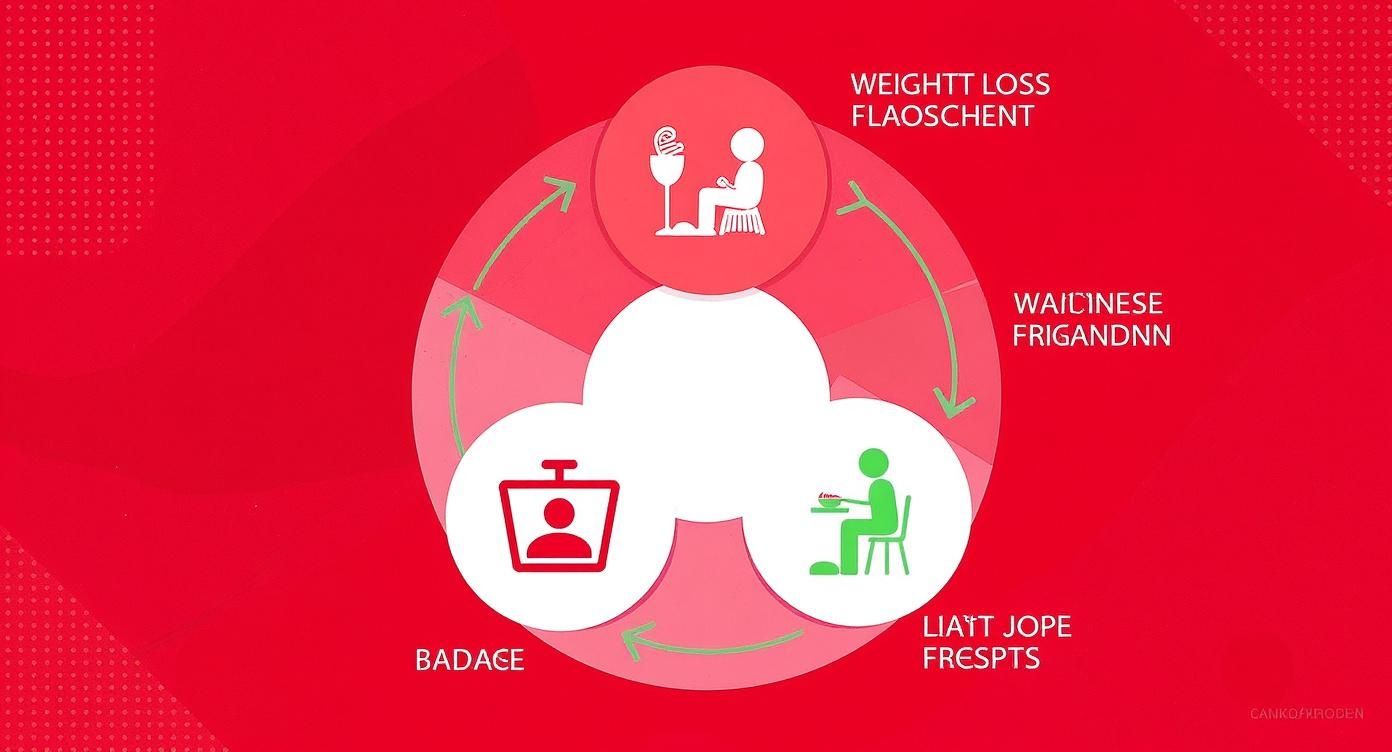
The illustration makes it clear how a short-term diet often becomes a long-term problem in which your final weight is higher than your starting weight.
The devastating loss of muscle mass
Another critical issue with many crash diets is the loss of muscle mass. Especially when your diet provides too little protein, your body, in its search for energy, draws not only on fat reserves but also on the body's own protein—and that is found in your muscles.
Muscles are your body's power plants. Even at rest, they constantly burn energy. Every loss of muscle mass further reduces your daily calorie expenditure.
This muscle loss has two devastating consequences:
- Your basal metabolic rate drops further: Less muscle means an even lower energy requirement. Your body becomes even more efficient at storing calories.
- Your body shape changes negatively: Even if the scale shows a lower number, you lose valuable muscle that helps keep your body toned, while your fat tissue increases proportionally.
When you return to your usual diet after a diet, a normal calorie intake meets a doubly weakened body: a slowed metabolism and reduced muscle mass. Your body ruthlessly takes advantage of this opportunity and immediately stores every excess calorie as a fat reserve—for the next feared famine. The yo-yo effect is therefore not a matter of willpower, but a logical and predictable biological response to the wrong approach.
Why diets are often a psychological trap
The battle against excess weight doesn’t take place only on the scales, but above all in your mind. While your body switches to low-power mode during a diet, your psyche also comes under enormous pressure. The problem is that many diets are based on rigid prohibitions and strict “all-or-nothing” thinking. But that is precisely what promotes an unhealthy relationship with food and practically programs the yo-yo effect psychologically.

The Trap of “Good” and “Bad” Food
As soon as you start a diet, something happens in your mind: You unconsciously divide foods into two categories. Allowed, “good” foods such as salad, and forbidden, “bad” sins such as a piece of chocolate. This moral judgment of food is a huge mental burden. It inevitably makes you feel guilty as soon as you break one of the rules you imposed on yourself.
That one “slip-up” often triggers a disastrous chain reaction. The thought “It doesn’t matter now anyway” creeps in, and suddenly you eat even more of the things you painstakingly forbade yourself. The result is a binge, followed by even more guilt—a vicious cycle that takes you further from your goal and kills your motivation.
Many people even develop a kind of “last supper” mentality before starting a diet. They eat everything that will soon be forbidden one more time, mentally preparing themselves for failure later on. This behavior only increases the pressure and emotional dependence on food.
The Role of Stress and Emotional Eating
Let’s be honest: Diets are pure stress. Constant deprivation, calorie counting, and the fear of doing something wrong increase the release of the stress hormone Cortisol. Chronically elevated cortisol levels can sabotage your weight-loss success in several ways.
Cortisol not only increases your appetite for high-calorie, sugary, and fatty foods—so-called “comfort food”—but also specifically promotes fat storage around the abdomen.
Stress also often leads to emotional eating. We then eat not because we’re hungry, but to compensate for unpleasant feelings such as frustration, boredom, or sadness. A diet based on deprivation intensifies this mechanism. Forbidden foods become a symbol of comfort and reward, which only fuels cravings even more.
The Way Out of the Mental Trap
To break the psychological yo-yo effect, you need to fundamentally change the way you think about food. It’s about replacing rigid prohibitions with a flexible and mindful attitude.
Here are three concrete steps you can take to break free from this trap:
-
Practice mindful eating: Learn to listen to your body's genuine hunger and fullness signals again. Eat slowly, savor every bite, and before reaching for the refrigerator, ask yourself: Am I really hungry, or am I trying to suppress a feeling right now?
-
Recognize emotional triggers: Find out which situations or feelings make you want to eat even though you are not physically hungry. Once you know your patterns, you can develop alternative strategies for dealing with stress or boredom—for example, taking a short walk, listening to music, or talking to a friend.
-
Flexibility instead of perfectionism: Consciously allow yourself to eat anything. There are no “good” or “bad” foods. A great approach is the 80/20 rule: 80% of your diet consists of nutrient-rich, unprocessed foods, while 20% is reserved for pure enjoyment and flexibility. This helps you avoid cravings and feelings of guilt.
By viewing enjoyment as part of a healthy lifestyle again and listening to your body's needs, you build a positive relationship with food. This is the most important mental prerequisite for finally leaving the yo-yo effect behind.
The four pillars for lasting weight-loss success
Put an end to the endless cycle of dieting and frustration. To finally overcome the yo-yo effect, you need a stable foundation—one that is not based on deprivation but on an intelligent understanding of your body. Instead of fighting your metabolism, you learn to make it your strongest ally.

Here, we introduce the four key pillars that form the foundation for your lasting success. They work together like cogs and help you not only reach your comfortable weight but also maintain it effortlessly.
1. Changing your diet instead of deprivation
The most important step is to move away from the classic diet mentality. Instead of banning foods, focus on nourishing your body optimally. Gradually and consciously changing your eating habits is the key to keeping your metabolism active and preventing cravings from arising in the first place.
Three nutrient groups play the main role:
- Protein to protect your muscles: Protein is the building block of your muscles. Consuming enough protein while reducing your calorie intake protects your valuable muscle mass from breakdown. At the same time, protein keeps you feeling full for longer and stimulates thermogenesis—so your body uses more energy during digestion.
- Fiber for satiety: Foods such as whole grains, legumes, vegetables, and fruit are packed with fiber. They swell in the stomach, provide a long-lasting feeling of fullness, and stabilize your blood sugar levels. The result: Cravings don't stand a chance.
- Healthy fats for your hormones: Fat is not your enemy! Unsaturated fatty acids from nuts, seeds, avocados, and high-quality oils are essential for producing important hormones that also regulate your metabolism.
This nutrient-dense diet gives your body everything it needs and prevents it from switching into the dreaded starvation mode. You learn how to lose weight healthily without starving yourself.
2. Building muscle as a metabolic engine
Think of your muscles as small power plants. They burn energy around the clock—even while you sleep or sit on the couch. The more muscle mass you have, the higher your basal metabolic rate. And that is your strongest asset in the fight against the yo-yo effect.
While crash diets often lead to devastating muscle loss, targeted strength training is the direct opposite. It sends your body an unmistakable signal: This muscle is needed and must be preserved.
Every additional muscle is an investment in your metabolism. It increases your daily energy expenditure and creates a buffer that makes it significantly harder to regain weight.
Combine strength training with moderate endurance exercise. This will not only build muscle but also improve your insulin sensitivity and cardiovascular health—the perfect combination for lasting success.
3. Smart stress management
Chronic stress and sleep deprivation are the hidden saboteurs of your weight-loss success. They completely disrupt your hormonal balance, primarily through increased secretion of the stress hormone cortisol. Persistently high cortisol levels not only fuel cravings for unhealthy food but also promote fat storage—especially around the abdomen.
A mindful approach to stress is therefore not a minor concern, but a central part of your strategy. Find techniques that fit easily into your daily routine to restore balance to your system:
- Enough sleep: 7–8 hours per night are ideal for supporting hormone regulation and promoting recovery.
- Relaxation techniques: Just a few minutes of meditation, breathing exercises, or a short walk in nature can demonstrably lower cortisol levels.
- Mindful breaks: Plan short breaks into your day to mentally switch off and recharge.
4. Realistic goals and a large dose of patience
Forget the myth of rapid weight loss. Healthy and sustainable weight loss is around 0.5 to 1 kilogram per week. Anything beyond that increases the risk of muscle loss and a slower metabolism—the direct precursors of the yo-yo effect.
Set realistic and achievable goals. Celebrate small successes and don’t see setbacks as failures, but as what they are: an opportunity to learn. Patience is your most important companion on this journey, because the goal is to establish new habits that last a lifetime.
This approach has proven to be the most successful in research. That is why the German Weight Control Registry was established in Germany. It studies the strategies of people who have successfully maintained their weight over the long term. These findings help develop more effective programs against the yo-yo effect by learning from those who have already succeeded.
How to develop a personal strategy that really works
Standard diets and general meal plans have one major drawback: They ignore the fact that your body is unique. Your genetics, metabolism, and hormonal balance largely determine how you respond to certain foods, nutrients, and exercise. Instead of following a rigid plan created for thousands of people, you need a personal approach. This is the key to finally leaving the yo-yo effect behind.
Your journey to a comfortable weight begins with truly understanding your body. It’s about finding out what it actually needs instead of imposing blanket rules on it. This is how you build a strategy that not only works but also fits effortlessly into your life without constant deprivation.
Why your body already knows the answers
Each of us has an individual biochemical fingerprint. This explains why some people lose weight wonderfully with low-carb diets, while others only feel weak and lacking in energy on them. Still others may need more healthy fats to bring their hormones into balance and boost their metabolism.
A “one-size-fits-all” solution cannot work for these reasons:
- Your genes: They influence how efficiently you metabolize fats, carbohydrates, or proteins.
- Your metabolic type: Some people are naturally “fast burners,” while others have a slower metabolism that requires a different approach.
- Your hormones: Stress, sleep, and nutrition regulate your hormonal balance—and therefore your hunger, satiety, and fat storage.
- Your gut health: The microbiome in your gut plays a huge role in how nutrients are absorbed and utilized.
A strategy that takes these individual factors into account is not only more effective but, above all, more sustainable. It works with your body instead of fighting against it.
Make decisions based on facts, not assumptions
So how do you find out what your body really needs? Instead of guessing and trying one diet after another, you can rely on scientifically based analyses. Modern at-home lab tests provide precise insights into your unique biology.
Looking inside your body provides the facts you need to replace assumptions with knowledge. This enables you to make decisions based on your individual needs.
The coronavirus pandemic in particular showed how quickly external circumstances can affect weight and fuel the yo-yo effect. During this period, hospital admissions due to obesity in Germany increased by around 60 %. Particularly alarming: According to a Forsa study, 16 % of children and adolescents became more overweight, while the figure was as high as 32 % among ten- to twelve-year-olds. These figures clearly show how important it is to find individual, sustainable strategies—and that starts with understanding your own body. You can read more here about the impact of the pandemic on overweight and obesity at Mediclin.
Your personal guide to a customized diet
Scientific analyses, such as those offered by mybody-x, can serve as a personal map for your body. They provide concrete, data-based answers to the crucial questions and help you finally align your diet and lifestyle in the best possible way.
A DNA metabolism test, for example, can tell you which macronutrient type you are. You learn whether your body is genetically more responsive to a protein-, fat-, or carbohydrate-rich diet for regulating your weight.
A microbiome analysis, in turn, provides insight into your gut health. It shows whether an imbalance in your gut bacteria may be sabotaging your weight-loss success and gives you specific tips on how to support your gut flora in a targeted way. Nutrient and hormone tests also provide valuable pieces of the puzzle for understanding the bigger picture. In our guide, we take a detailed look at how you can benefit from personalized nutrition.
When you rely on such personalized data, you create the foundation for a strategy that truly suits you. You avoid unnecessary diet frustration and instead build sustainable habits that bring you closer to your goal—and finally defeat the yo-yo effect.
Your way out of the yo-yo trap starts now
So, let’s recap: The yo-yo effect is not a personal failure. It is your body’s completely logical response to the wrong methods. It isn’t fighting against you—it’s simply trying to protect itself from a perceived famine that you simulate with a crash diet. The key, then, is to finally work with your body instead of against it.
By choosing a gradual, nutrient-rich dietary change, deliberately building muscle as a metabolic engine, and setting realistic goals, you lay the foundation for lasting success. The way out of the yo-yo trap begins with a single decision: to finally leave quick fixes behind.
Get to know yourself and break the cycle
Stop searching for the next miracle cure. Instead, start truly getting to know your unique body and finding out what it needs to function optimally. Rather than guessing blindly, scientific analyses can show you exactly which strategy is truly right for your personal genetics and metabolism.
Your journey toward a comfortable weight is a marathon, not a sprint. But with the right knowledge about yourself and the right tools, you can break this vicious cycle once and for all.
With this knowledge, you’ll build not only new habits but also genuine trust in your body and its signals. This allows you to create a lifestyle in which you feel good in the long term—without the constant struggle against cravings or the next bout of weight gain. It’s about finding a balance that feels good and that you can maintain effortlessly. This way, you’ll not only reach your goal but also keep your achievements forever.
Frequently asked questions about the yo-yo effect
Finally, we’ll answer a few questions that keep coming up in connection with the yo-yo effect. They’re designed to resolve any remaining uncertainties and give you even more clarity on your journey toward a comfortable weight.
How long does it take for my metabolism to recover after a diet?
This is a highly individual matter and depends greatly on how long and how drastic your diet was. It can actually take several months for your basal metabolic rate to return to its normal level.
But the good news is that you can actively support this process. Instead of going back to eating normally overnight, increase your calorie intake slowly and gradually. This approach is also known as “reverse dieting.” Combine it with targeted strength training to actively build muscle mass. Muscle is your most important metabolic engine—the more you have, the more energy you burn, even at rest.
Will I never be able to eat “normally” again after losing weight?
Yes, absolutely! That is precisely the goal: to find a new, healthy “normal” for you that you can maintain long term without feeling like you are constantly depriving yourself. It is not about giving up pizza or chocolate forever.
A tried-and-tested concept that works wonderfully is the flexible 80/20 rule. This means that 80% of your diet consists of nutrient-rich, unprocessed foods. The remaining 20% is reserved for pure enjoyment. This way, you can continue to enjoy eating, and cravings have little chance of taking hold.
Do so-called “metabolism boosters” really help?
To be completely honest, there is little scientific evidence for the effectiveness of most products, or their effects are only minimal. Of course, certain active ingredients such as caffeine can slightly boost metabolism in the short term. But they can never replace the absolute essentials: a balanced diet and regular exercise.
The most effective and sustainable way to truly get your metabolism going is and remains building muscle through strength training, combined with a protein-rich diet.
I've experienced the yo-yo effect many times—do I even still have a chance?
Yes, 100%! Your past does not determine your future. Every new attempt is a valuable opportunity to approach things differently and more wisely this time. Don't see your previous experiences as failures, but as an important learning process. You now know exactly which methods have not worked for you.
By focusing on sustainable strategies instead of short-term crash diets, you can significantly increase your chances of success. Be patient and, above all, kind to yourself. This journey is a marathon, not a sprint—and you have all the tools you need to complete it successfully.
Are you ready to stop guessing and truly understand your body? The analyses from mybody-x provide scientifically sound insights into your metabolism, gut health, and nutrient needs. This allows you to develop a strategy that is perfectly suited to you and finally overcome the yo-yo effect. Discover the right tests for your goals now at mybody-x.com.



Share now:
Calorie Needs Calculator: Find out what your body really needs
Lose Weight Around Your Stomach, Legs, and Buttocks—Your Path to Visible Results