
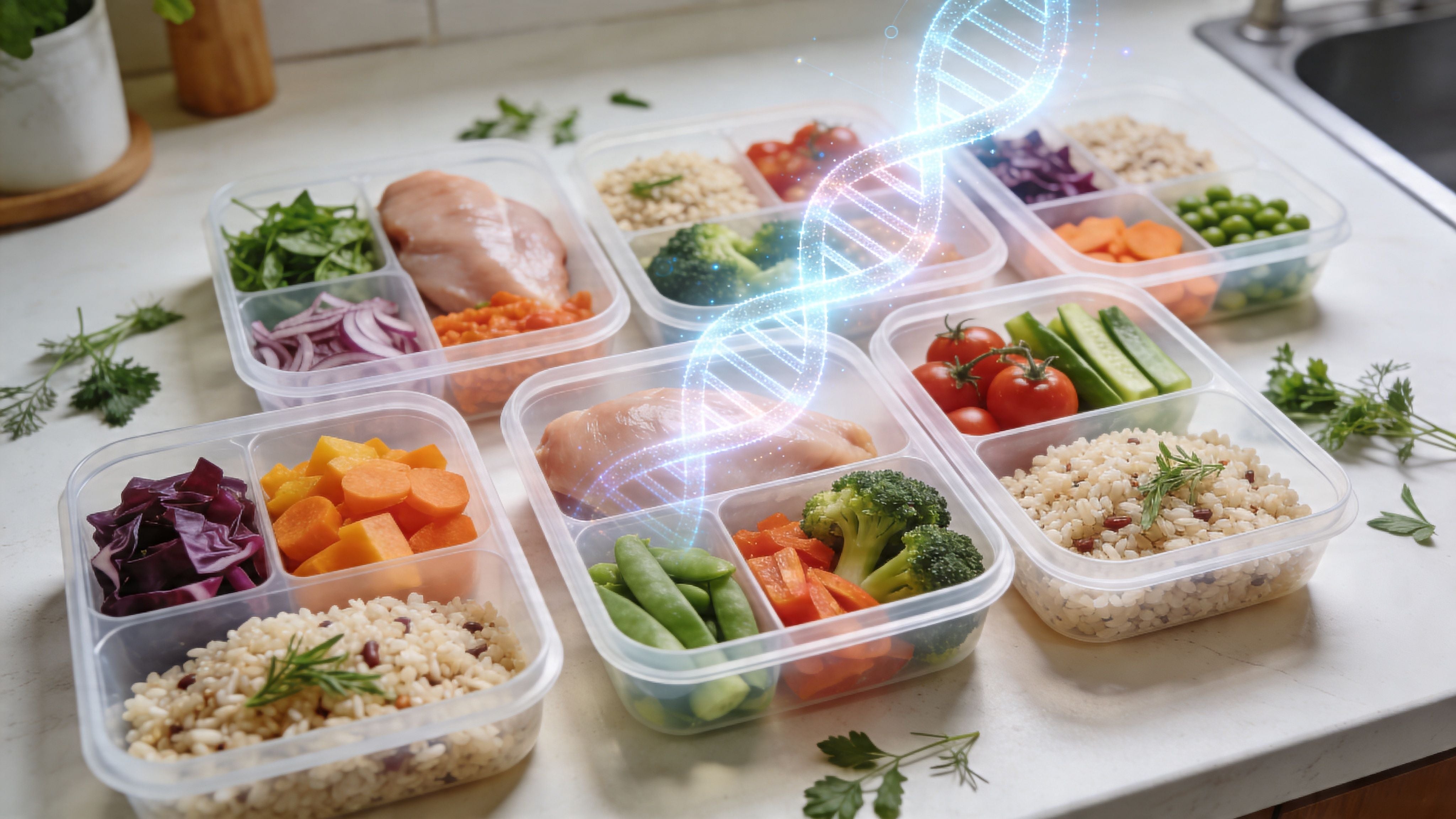
Eating more healthily: Your path to a personalized nutrition plan
You may know the feeling: On Monday morning, you resolve to finally eat more healthily. More vegetables, less sugar, better planning. Two days later, everyday life gets in the way, lunch is quickly bought on the go, you have no energy left to cook in the evening, and at the weekend you wonder why good intentions always become so complicated.
The problem is often not a lack of discipline. Many people know quite precisely what would generally be healthy. It becomes more difficult when nutrition has to fit into a real workday, family life, or stressful periods. This is exactly where it helps to view nutrition not merely as a set of rules, but as something that needs to fit your body and your life.
Why general nutrition tips often fail
Many people start with the same rules: less candy, more salad, and cooking for themselves more often. It sounds sensible. Yet for many, it still feels as though everyday life is working against their plan.

Knowledge is not the same as implementation
You can see this gap in Germany, too. Almost 90 percent of Germans feel well informed about healthy eating. Nevertheless, putting it into practice often fails because of practical obstacles. More than 50 percent cite a lack of time as the main reason, followed by cravings, as shown by Forsa’s findings on healthy eating.
That is reassuring. It means that if it has not worked for you consistently so far, it is not automatically due to a lack of knowledge or willpower. Often, the plan simply does not fit your everyday life.
Healthy eating rarely fails because people know nothing. It often fails because recommendations are too vague or impractical in real life.
A typical example from everyday life
Take two people who both want to “eat healthily.” Both eat oatmeal in the morning, a bowl for lunch, and bread with spread and raw vegetables in the evening. Person A feels full, focused, and light afterward. Person B gets cravings as early as the afternoon, feels tired in the evening, and feels like they are constantly battling their appetite.
From the outside, both look the same. But something completely different may be happening inside the body. Differences in satiety, appetite regulation, carbohydrate processing, or fat metabolism can influence how practical a particular eating style really is for you.
If you want to explore this approach in more depth, the article on personalized nutrition is a good place to start.
Why standard rules often feel alien
Generalized advice has a blind spot. It treats all bodies as if they reacted in the same way. They don’t. Some people do well with a higher proportion of carbohydrates. Others remain more stable when protein and fat play a larger role. Some people eat “healthy enough” and still never feel truly full.
Then there’s everyday life. A recommendation is useful only if you can implement it on a long workday, with children, while working shifts or when you’re on the go. Otherwise, it remains theoretical.
That’s why the important question isn’t just: What is considered healthy? The more important question is: What is healthy and achievable for you at the same time?
Laying the foundation for your healthy diet
Personalization is exciting. Nevertheless, almost everyone needs a solid foundation first. Without that foundation, even the most individualized plan becomes unnecessarily complicated.
Quality first, fine-tuning second
If you want to eat more healthily, a simple filter can help: Foods should be as close as possible to their original form. Vegetables, fruit, legumes, eggs, fish, plain yogurt, nuts, potatoes, oats or rice often make decisions easier than products with a long list of ingredients.
That doesn’t mean you have to eat perfectly. Rather, it means that the more often your meals consist of real foods, the easier it becomes to feel full and keep your energy levels stable.
Interest in healthy eating is high in Germany. In 2024, 24.3 million people showed particular interest in healthy eating. At the same time, 38 percent use guidance tools such as the Nutri-Score when shopping, as shown by Statista data on interest in healthy eating. This shows that many people want to make better decisions but need clear, practical guidance for everyday life.
Three building blocks that almost always help
A good foundation doesn’t have to be complicated. These three points are a sensible starting point for many people:
- Include protein consciously. Protein supports satiety and helps a meal keep you fuller for longer. Practical options include skyr, plain yogurt, eggs, tofu, legumes, fish or quark.
- Choose carbohydrates wisely. Not all sources of carbohydrates are the same. In everyday life, oats, potatoes, whole-grain products or legumes often affect you differently than highly processed snacks or sweet baked goods.
- Don’t automatically cut out fats. Nuts, seeds, olive oil or avocado make meals more well-rounded and often more satisfying.
Those who want to understand the role of macronutrients even better can find a useful practical overview in the article about fat, carbohydrates and protein.
Practical rule: When a meal combines protein, fiber, and a well-chosen energy source, the likelihood of rapid cravings often decreases significantly.
Drinking Without Pressure
Water is often treated as something trivial, but it has a major impact on everyday life. Many people mistake tiredness, restlessness, or the urge to snack for thirst. You do not need to turn it into a rigid drinking schedule.
Helpful are fixed anchors throughout the day:
- Immediately after getting up, drink a glass of water.
- Drink with every main meal.
- Place it where it is visible instead of merely intending to.
This is what a stable foundation looks like
You do not have to change everything immediately. Often, it is enough to start by organizing these things:
- Review breakfast. Does it really keep you full, or only briefly satisfy you?
- Make lunch more reliable. This is often where the day goes off track when something quick and low in nutrients becomes a habit.
- Simplify dinner. Less perfection, more routine.
Once this foundation is in place, personalization becomes much more effective. It is no longer just about eating “healthier,” but about eating what suits you better.
Your Body, Your Rules – Personalize Your Nutrition
At this point, nutrition often finally starts to make sense. Not because a new miracle diet suddenly appears, but because you begin to understand that your body has its own rules.

Why nutrigenetics is so interesting
Nutrigenetics explores how genetic differences influence the way your body responds to food. It is not about destiny, but about tendencies. Some people process certain macronutrients more efficiently, while others are more sensitive to hunger signals or have different needs for individual nutrients.
That is precisely why two people eating the same diet can have very different experiences. What works for your friend may not automatically be right for you.
If you want to put the topic into a scientific context, the article on nutrigenetics and its influence on our lives is a good next step.
What a DNA nutrition test actually examines
A DNA metabolism analysis examines genetic variants known as SNPs. It looks at genes such as FTO, CYP2R1, MCM6, and PPARA, which may be associated with factors such as excess weight, nutrient utilization, or fat oxidation.
The methodology is remarkably practical for everyday use:
- Saliva sample at home using a cheek swab.
- Labor analysis of up to 200 genetic variations from 75 genes using NGS or PCR-based arrays.
- Algorithm-based analysis covering topics such as BMI predisposition, insulin resistance, appetite control, carbohydrate, fat, and protein metabolism, as well as the need for up to 21 essential nutrients.
- Personalized report with a nutrition plan, a food guide covering more than 900 products, and exercise recommendations, as described on the page about DNA metabolic analysis.
Why this is more than curiosity
The decisive point is not the test itself. What matters is what you do with the results. If you know that your body is more likely to benefit from a particular macronutrient distribution or that satiety is regulated differently for you, you can structure meals in a way that is more likely to work realistically.
Existing data show that genetic factors can explain 40 to 70 percent of differences in weight in the population. In addition, personalized nutrition plans based on DNA analysis can increase weight-loss success by up to twofold compared with standard diets, according to the linked description of the DNA metabolic analysis.
A good personalized plan does not just tell you what to avoid. It shows you what is likely to work better for your everyday life.
The connection to the DNA nutrition test with recipe book
If you no longer want to guess and are looking for a more individualized approach, a DNA-based nutrition test is a sensible option. The DNA nutrition test with an individualized cookbook and recipe book from mybody® is one example. It combines genetic analysis with a personal nutrition profile and translates the results directly into practical everyday recipes.
For many people, this is the real lever. Data alone do not change anything. A recipe book tailored to your own genetic starting point turns abstract results into concrete meals.
Where personalization is often misunderstood
Personalized nutrition does not mean that only specialty products are allowed from now on. Nor does it mean that genes determine everything. Rather, they help you identify typical stumbling blocks more easily.
For example:
- Satiety can be experienced very differently from person to person.
- Carbohydrates are not automatically good or bad. What matters is how you respond to them.
- Fats may fit more functionally into everyday life for some people than for others.
- Vitamins and micronutrients are not processed by every body in the same way.
Once you understand this, eating healthier no longer feels like guesswork. It becomes more concrete, more relaxed, and above all, more plausible.
More than genes – understanding the microbiome and nutrients
Your DNA is an important foundation. But it is not the whole picture. How you tolerate, process, and convert food into energy also depends heavily on your gut and your nutrient status.

Why your gut helps determine the outcome
Your gut is home to your microbiome, the community of many bacteria involved in digestion, metabolism, and the gut barrier. In practical terms, this means that two people can eat the same thing, but their guts may respond differently.
Microbiome-supported nutrition optimization uses stool samples and, when needed, combines this data with genetic information. Using 16S rRNA sequencing or shotgun metagenomics, more than 1,000 bacterial strains are identified. This makes it possible to derive insights into diversity, inflammation markers, nutrient fermentation, and the production of short-chain fatty acids, as explained in the description of the DNA- and microbiome-focused nutrition analysis.
Anyone who wants to understand what the term means can find an easy-to-understand introduction in the article what the microbiome is.
What personalized gut data can bring to everyday life
The benefit becomes tangible when data is turned into actionable recommendations. These might include suggestions for specific prebiotics, more fermented foods, or better choices of fiber.
According to the microbiome analysis described, a diet tailored to the microbiome can improve the gut barrier by 25 percent and reduce BMI by 5 to 8 percent after 12 weeks. The analysis of bacterial strains such as Akkermansia muciniphila is also mentioned; this can help assess inflammation risks more accurately.
Your gut is not a side issue. It helps determine how well a nutrition plan works for you in the first place.
Nutrients as a silent influencing factor
Even without spectacular symptoms, suboptimal nutrient status can noticeably affect everyday life. When energy, concentration, or recovery do not keep up, even a good nutrition plan can quickly become frustrating.
That is why combining DNA, the microbiome, and a focus on nutrients is so valuable. It shows not only which diet is theoretically healthy, but also which conditions your body currently brings to the table.
A 360-degree picture is especially useful when you eat “actually well” but still do not feel truly stable, capable, or satisfied. In that case, the answer often is not even stricter rules, but greater precision.
From knowledge to habit – meal prep and everyday tips
Eating more healthily only works in the long term when good choices are prepared in advance. Otherwise, what is quickest to access almost always wins.
General rules such as “5 a day” are often not followed because they do not fit well into people’s individual routines. According to the information described in the DGE context, up to 70 percent of the differences in weight-loss success can be explained by genetics and the microbiome. That is precisely why practically implementable plans are needed instead of just good intentions, as discussed in the DGE recommendations for healthy eating.
A simple meal-prep approach
Let’s take a “fat-protein” metabolic type as an example. This is not a rigid dogma, but one possible practical approach for everyday life: filling meals, a clear focus on protein, and consciously chosen carbohydrates.
| Day | Breakfast | Lunch | Dinner |
|---|---|---|---|
| Monday | Plain yogurt with nuts, berries, and seeds | Chicken or tofu with roasted vegetables and hummus | Salmon or bean skillet with salad and avocado |
| Tuesday | Omelet with vegetables and herbs | Quinoa salad with egg, feta, and cucumber | Ground meat or lentil skillet with zucchini |
| Wednesday | Skyr with flaxseeds and apple pieces | Baked fish or tempeh with broccoli | Large vegetable soup with legumes and a seed topping |
How to plan for just three days
Many people don’t fail because of cooking, but because their expectations are too high. So don’t plan the entire week right away. Three days are more than enough.
Your routine could look like this:
- Set one protein anchor per meal, such as eggs, fish, tofu, yogurt, or legumes.
- Prepare two types of vegetables that go well with several meals.
- Choose a filling side dish consciously, such as potatoes, quinoa, or beans.
- Have a quick extra on hand, such as nuts, olives, hummus, or seeds.
Shopping list for the example
A short, clear list takes the pressure off:
- Protein sources such as eggs, plain yogurt, skyr, tofu, fish, or legumes
- Vegetables for several meals such as broccoli, bell peppers, zucchini, cucumber, and leafy greens
- Sensible basics such as nuts, seeds, olive oil, and spices
- Planned side dishes such as quinoa, potatoes, or lentils
- Quick helpers such as frozen vegetables or precooked legumes
Don’t cook from scratch every day. Prepare components that you can combine into several meals.
When everyday life gets in the way
Not every day goes according to plan. That’s why you need a version of your diet that also works in stressful situations.
Simple rules can help:
- At a restaurant, look for protein and vegetables first, then adjust the side dish.
- When invited, don’t try to eat perfectly; choose the best available option.
- On long workdays, carry an emergency meal with you, such as yogurt, nuts, fruit, or a prepared lunch.
Making new habits stick
Habits are easier to build when you keep them small. Instead of “from now on, I will always eat perfectly,” “I will prepare two lunches on Sundays” is much more effective. Visible progress often comes from these unspectacular routines.
Setbacks are part of the process. What matters is not whether you get off track once, but how quickly you get back on track. A good plan is not the strictest one. It is the plan you can resume even after a chaotic week.
Measuring success and staying motivated in the long term
Many people make the mistake of judging progress only by the scales. That is not enough. If you want to eat healthier, it is worth taking a broader view.
How to recognize real changes
Your body often sends signals before the scales do. Look for things like more stable energy in the afternoon, calmer digestion, fewer cravings, better sleep, or a clearer head. These are not side effects. They are often the first signs that your diet suits you better.
Even more importantly, changes like these provide stronger long-term motivation than a single measurement. They show you that everyday life is becoming easier.
A simple weekly checklist
A few short questions once a week are enough:
- Energy. How stable was your energy level throughout the day?
- Satiety. Did you truly feel satisfied after meals?
- Digestion. Did your stomach feel calm or tense?
- Sleep. Did you wake up feeling more rested?
- Implementation. How well did your plan fit into real days?
You do not need to track anything in a complicated way. A few notes are enough. The important thing is to recognize patterns.
Think long term instead of constantly starting over
Success rarely comes from a perfect month. It comes from adjusting your eating style so that you can maintain it during ordinary weeks too. That is where knowledge, everyday life, and individuality come together.
If you have often started over in the past, that is not a sign of failure. It simply shows that you may not yet have had a plan that truly fits your body and your life. Eating healthier becomes sustainable when it no longer feels like constant control, but like clarity and routine.
If you want to align your diet with your body instead of following general rules, a data-based starting point can make sense. MYBODY Lab GmbH offers at-home analyses covering DNA, metabolism, the microbiome, and nutrients. Especially when it comes to eating healthier, this individual perspective can help turn well-intentioned advice into a plan you can genuinely implement in everyday life.


Share now:
Leaky Gut Diet Table: Gut Health in 2026
Healthy Cuisine: 10 Ways to Your Perfect Diet