

Benefits of regular testing: How to optimize your health in 2026
Up to 40% of healthy people in Central Europe have an asymptomatic vitamin D deficiency. This surprising figure shows that your body does not always send warning signals when something is missing. Regular health tests help you detect hidden deficiencies early and take targeted action. In this article, you will learn which tests are truly important, how often you should test, and how to optimize your diet and weight management through scientifically grounded analyses.
Table of contents
- Introduction to regular health analyses
- Which tests are particularly important for prevention?
- How Often and When Should You Test?
- Personalized nutrition and weight management through testing
Key insights at a glance
| Point | Details |
|---|---|
| Early detection of deficiencies | Regular tests detect asymptomatic nutrient deficiencies before consequences arise. |
| Individual testing intervals | Depending on your health goal, testing every 3 to 12 months is recommended. |
| Personalized nutrition | Test results enable targeted adjustments to your diet and weight. |
| Reliable self-tests | ISO-certified test kits provide over 90% accuracy with convenient at-home use. |
| Preventive benefits | Early testing prevents long-term health problems and reduces risks. |
Introduction to regular health analyses
Regular health analyses are diagnostic procedures that you carry out at set intervals to check your nutrient status, hormones, microbiome, or genetic predispositions. Unlike reactive tests for acute symptoms, preventive analyses aim to detect and correct imbalances at an early stage. In Switzerland, this form of personalized diagnostics is becoming increasingly important as more and more people want to take responsibility for their own health.
Science clearly shows: Many health problems develop gradually over the years without you noticing anything at first. Vitamin D deficiency in up to 40% of the asymptomatic population is just one example of how widespread hidden deficiencies are. In the long term, such deficiencies can weaken your immune system, impair your bone health, and even negatively affect your mood.
Preventive diagnostics help you prevent these developments. Through regular testing, you receive objective data about your body and can intervene in a targeted way before a deficiency becomes a serious problem. The main benefits of regular testing include:
- Early detection of nutrient deficiencies such as vitamin D, B12, iron, or magnesium
- Identifying genetic predispositions related to metabolic processes and nutrient requirements
- Optimizing gut health through microbiome analyses
- Monitoring hormonal balance for energy, sleep, and well-being
- Adjusting your diet based on individual needs
With this knowledge, you can develop your health strategy in a targeted way. A nutrient deficiency test provides an initial overview of your current status.
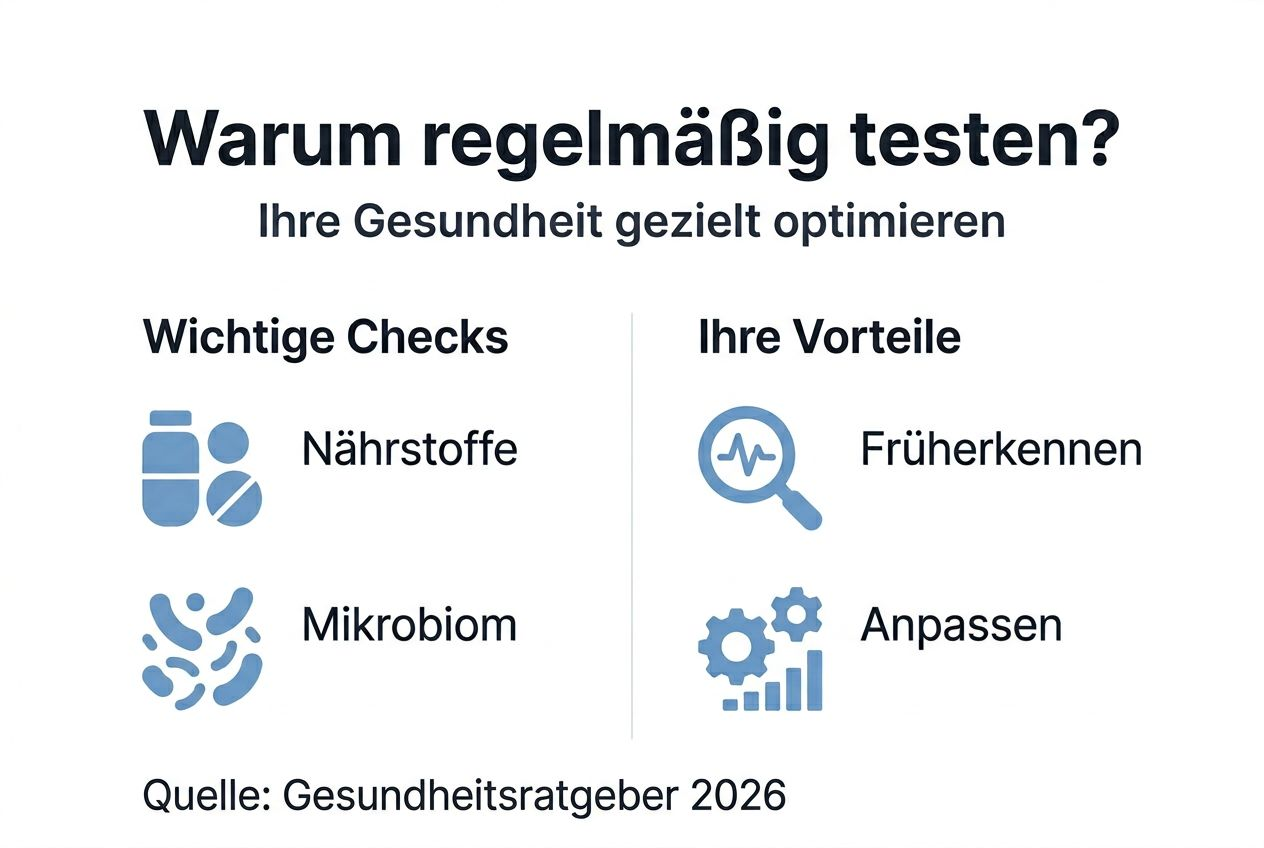
Which tests are particularly important for prevention?
Not every test is equally relevant for everyone. Your personal health goals, lifestyle, and family history determine which analyses should take priority for you. For health-conscious people in Switzerland who want to take preventive action, the following types of tests are particularly valuable:
Nutrient and mineral checks form the foundation. These tests measure vitamins such as D, B12, and folate, as well as minerals such as iron, magnesium, and zinc. They show whether your diet provides all the essential building blocks or whether targeted supplementation would be beneficial. A nutrient deficiency test gives you clear answers.

DNA and metabolic tests analyze your genetic predispositions. You learn how your body processes certain nutrients, which foods are best suited to you, and whether you have an increased risk of specific metabolic problems. This information helps you tailor your diet and training to your individual needs.
Microbiome analyses examine the diversity of bacteria in your gut. A healthy microbiome supports your digestion, immune system, and even weight management. If you would like to learn more about how to understand microbiome analysis, you will find detailed information there.
Hormone tests measure levels such as cortisol, testosterone, estrogen, or thyroid hormones. Hormonal imbalances affect your energy, sleep, weight, and mood. Timely testing can help you restore balance. If you are considering using hormone tests, it is worth taking a closer look at the options.
Intolerance and allergy tests identify foods or substances that your body does not tolerate well. Symptoms such as bloating, fatigue, or skin problems may indicate hidden intolerances. Key testing areas include:
- Lactose and gluten intolerance
- Histamine intolerance
- IgG-mediated food reactions
- Environmental allergens and pollen exposure
The combination of these tests gives you a comprehensive picture of your health and enables precise adjustments.
How Often and When Should You Test?
The right testing frequency depends on your individual goals and current health situation. In general, experts recommend testing intervals of 3 to 12 months, depending on your health goals. If you are just starting with preventive testing, you should measure more frequently to document changes and adjust your measures.
For nutrient tests, once a year is a sensible schedule for healthy people without specific risks. In the case of known deficiencies or after dietary changes, check after three to six months to see whether your measures are working. You can adjust nutrient testing intervals flexibly.
Microbiome analyses provide meaningful comparative results after approximately six months. Your gut does not respond overnight to dietary changes, probiotics, or stress reduction. Give your body time, and you can then measure progress objectively.
You should initially perform hormone tests more frequently when experiencing acute symptoms, approximately every three months. Once balance has been restored, an annual check is sufficient. DNA tests, on the other hand, only need to be performed once because your genetic information remains constant.
Important factors for planning your personal testing:
- Age and stage of life: Hormone and nutrient needs change with age
- Diet: Vegetarians and vegans should check their B12 and iron levels more frequently
- Stress and lifestyle: High stress increases the need for magnesium and B vitamins
- Physical activity: Intense training sessions affect minerals and hormones
- Family history: Genetic risks warrant more frequent monitoring
Plan your tests strategically and document the results. This helps you identify trends and take corrective action at an early stage.
Personalized nutrition and weight management through testing
Test results are the key to a diet that truly suits you. Instead of following general recommendations, you receive precise data about what your body needs. That makes the difference between guesswork and targeted optimization.
Your microbiome plays a central role in weight management. Certain bacterial strains help you burn calories more efficiently, while others promote fat storage. A microbiome analysis shows you which foods your “good
Recommendation
- Health Optimization: 70% Don’t Benefit from Standard Approaches – mybody®x
- Test Types Explained – Find the Right DNA, Blood, or Microbiome Test – mybody®x
- Optimize Your Diet Based on Your Test Results: Step-by-Step Guide – mybody®x
- Health Analysis 2026: 30% Better Nutrient Supply – mybody®x
- The 9-12-9 Method: How to Protect Your Prostate So Simply - YourPowerFoods.com



Share now:
Gut microbiome stool test: Your guide to better gut health
What a microbiome analysis test reveals about your gut health