
Vitamin D in foods – how to optimally supply your body
Vitamin D – the “sunshine vitamin” – is essential for your health. It not only strengthens your bones but also plays an important role in your immune system, muscles, and mood. However, in our latitudes, it is not that easy to get enough of it.
Many people do not know that vitamin D can be obtained not only from the sun but also from certain foods. But which foods are they exactly? And how much can you actually get through your diet?
In this article, you will learn everything about vitamin D in foods, which sources really matter, how high the amounts are, and why a self-test can be useful for knowing your status.
👉 If you want to know immediately whether you are getting enough: Here you can find the vitamin D self-test, which allows you to easily check your level at home.
What is vitamin D and why is it so important?
Vitamin D belongs to the fat-soluble vitamins and, strictly speaking, is more of a hormone precursor than a classic vitamin. It is produced in the body when your skin comes into contact with sunlight (UVB radiation).
Main functions of vitamin D:
-
Regulates calcium and phosphate metabolism → important for bones and teeth
-
Supports muscle function
-
Strengthens the immune system
-
Affects mental health (mood enhancement, protection against depression)
-
Plays a role in cell division
Since vitamin D influences so many processes, adequate intake is essential.
You can also find more information about holistic health on the MyBodyX homepage.
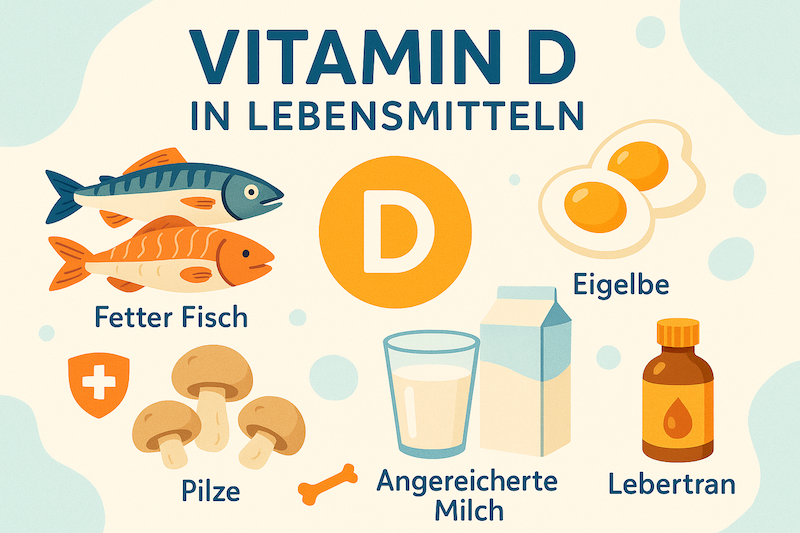
Vitamin D in foods – which sources are relevant?
In reality, there are only a few foods that contain significant amounts.
Fatty fish
The following are particularly rich in vitamin D:
-
Salmon
-
Mackerel
-
Herring
-
Sardines
Salmon contains up to 16–25 µg of vitamin D per 100 g, while mackerel contains around 8–15 µg. This makes them some of the top sources.
Egg yolk
Eggs also contain vitamin D, with the amount concentrated in the yolk.
One egg yolk provides about 1.5–2 µg of vitamin D. The amount can vary depending on how the chickens are fed.
Mushrooms
Mushrooms such as button mushrooms, shiitake, or porcini contain vitamin D2. The amount is particularly high when the mushrooms have been exposed to UV light.
This can provide up to 10 µg per 100 g.
Fortified foods
Since the natural selection is limited, some foods are fortified, for example:
-
Margarine
-
Breakfast cereals
-
Plant-based milk
You will often find 1–2.5 µg per serving.
Is vitamin D from your diet sufficient?
According to the DGE, the recommended daily intake is 20 µg per day (in the absence of sun exposure). This is difficult to achieve through food:
-
100 g of salmon → approx. 16–25 µg
-
2 eggs → approx. 3–4 µg
-
100 g of UV-treated mushrooms → up to 10 µg
It is realistic to cover only part of your vitamin D needs through your diet. Intake is often critical, especially in winter.
Vitamin D deficiency – why it is so widespread
Studies show that in Germany, Austria, and Switzerland, more than 60% of people have vitamin D levels that are too low in winter. Reasons:
-
Little sunlight during the winter months
-
Spending a lot of time indoors
-
Low proportion of vitamin-D-rich foods in the diet
Typical symptoms of a deficiency:
-
Fatigue
-
Muscle weakness
-
Susceptibility to infections
-
Low moods
A vitamin D self-test can help you gain clarity. Take a look at the self-tests overview here.
Testing vitamin D – why a self-test makes sense
Instead of guessing whether your level is sufficient, you can simply have it measured.
Options:
-
Blood test at the doctor’s office
-
At-home self-test – with a finger prick and laboratory analysis
👉 The vitamin D self-test provides accurate results and helps you adjust your diet or supplementation in a targeted way.
FAQ – Frequently asked questions about vitamin D in food
1. Which foods contain the most vitamin D?
Oily fish such as salmon, mackerel, and herring are the best natural sources.
2. Can I meet my requirements through food alone?
Only with difficulty. Even with fish, eggs, and mushrooms, it is difficult to reach 20 µg per day.
3. Are plant-based sources sufficient?
Mushrooms provide vitamin D2, which is less potent than vitamin D3 from animal sources.
4. What is better: sunlight or food?
Sunlight is the main source. Food can supplement your intake, but is not sufficient on its own.
5. Should I take additional vitamin D?
Supplementation is especially useful in winter—but ideally after taking a test.
Conclusion – Your path to optimal intake
Vitamin D in food is important—but the selection is limited. Oily fish, egg yolks, UV-treated mushrooms, and fortified products contribute to your intake, but rarely cover your entire requirement.
👉 That’s why it makes sense to know your level. With a vitamin D self-test, you can quickly and reliably find out.
You can find more practical tests in the self-tests overview or generally on the MyBodyX homepage.

Share now:
Testosterone – Effects, Symptoms & Tests for Men
Diet for irritable bowel syndrome: How to soothe your stomach