

Period pimples—understanding the causes and taking targeted action
Almost every woman knows this: Like clockwork, unwelcome guests appear on the face just before menstruation. Period pimples are not a coincidence, however, but a direct and completely normal reaction of your body to the natural hormonal fluctuations of your cycle. Understanding this is the first step toward finally regaining control and better understanding your body.
Why your skin rebels before your period
Do you sometimes feel as though your skin keeps its own calendar? One day it’s clear and radiant, and shortly before your period it turns into a little battlefield. You’re definitely not alone. More than 60% of women who are prone to acne experience a noticeable worsening of their skin before menstruation.
The reason is a fascinating but often frustrating interplay of your hormones. Imagine your hormones as musicians in an orchestra. For the music to sound harmonious, everyone has to play in the right rhythm. But during the second half of the cycle, this delicate balance gets slightly disrupted.
The hormonal ups and downs
Three main players determine what happens in your body and on your skin:
-
Estrogen is your personal “glow hormone.” It promotes good circulation, stimulates collagen production, and keeps the sebaceous glands in check. Its level is high during the first half of the cycle, giving your skin that fresh, clear appearance.
-
Progesterone rises sharply after ovulation. Its main task is to prepare the body for a possible pregnancy. One of its side effects, however, is that it can narrow the pores and cause water retention in the tissue, which can make the skin swell slightly.
-
Testosterone (yes, a “male” hormone that we women also have in small amounts) remains relatively constant throughout the cycle.
The real drama begins shortly before your period: Estrogen and progesterone levels drop sharply. As a result, testosterone suddenly gains more influence, even though its level remains the same. This hormonal imbalance signals the sebaceous glands to step up their activity and produce more sebum (in other words, skin oil).
The result of this hormonal roller coaster: excess sebum meets narrowed pores. That’s the perfect invitation for bacteria to multiply. The result: clogged pores, inflammation, and the typical, often painful pimples.
These hormone-related blemishes tend to appear especially in the so-called “U-zone”—along the chin line, jaw, and neck.
Understanding these connections is absolutely essential. It shows you that these skin problems have nothing to do with poor hygiene, but are deeply rooted in your body’s biological processes. A hormone test, such as the one from mybody-x.com, can help you get a clear picture of your individual hormone status and find out whether an underlying imbalance may be the cause of particularly persistent skin problems.
Your skin in the rhythm of the four cycle phases
Have you ever wondered why your favorite cream works wonders for a week and then seems to fail completely the next? You won’t find the answer in your bathroom cabinet, but in your own body. Your cycle is the hidden director of your skin health.
Your skin is anything but static. Just like you, it goes through four completely different phases every month, each with its own needs. When you understand this rhythm and adapt your skincare accordingly, you stay one step ahead of period breakouts. You no longer simply react—you act proactively. Join us on a short journey through your monthly cycle.
Phase 1: Menstruation (approx. days 1–5)
The first day of your bleeding marks the start of a new cycle. During this time, levels of the female hormones estrogen and progesterone are at an absolute low. Your skin feels this immediately.
The low hormone levels slow down sebum production. That may sound positive at first, but it also weakens your skin’s natural protective film. The skin barrier becomes more permeable, making it more susceptible to dryness, irritation, and redness.
Your skincare focus now:
- Intensive hydration: Hydrating serums with ingredients such as hyaluronic acid or glycerin are worth their weight in gold right now.
- Gentle cleansing: Choose mild, pH-neutral cleansing products that do not further strip your skin.
- Soothing ingredients: Ingredients such as panthenol or allantoin help calm stressed skin and strengthen the barrier.
It’s best to leave aggressive exfoliants or new, highly concentrated active ingredients in the cupboard during this phase. Your skin primarily needs rest and an extra dose of moisture right now.
Phase 2: The follicular phase (approx. days 6–13)
After your period, the rebuilding phase begins. Your body prepares for ovulation, and estrogen levels rise day by day. This hormone is a true beauty booster for your skin.
Estrogen stimulates the production of collagen and hyaluronic acid. The result? Your skin looks plumper, firmer, and better hydrated. Sebum production also normalizes, and your pores appear finer. This is the time of the famous “glow,” when your skin often looks its best.
Your skincare focus now:
- Boost your glow: A vitamin C serum in the morning protects against free radicals and provides an extra boost of radiance.
- Prevention: Now is the ideal time for gentle exfoliation, for example with enzymes or mild fruit acids. This removes dead skin cells and keeps the pores clear for the more difficult phase ahead.
Use this phase to strengthen your skin and prepare it for the second, often more challenging half of the cycle.
Phase 3: Ovulation (approximately day 14)
Around ovulation, your estrogen levels reach their absolute peak—and your skin usually does too. It is optimally hydrated, resilient, and radiant. However, this estrogen peak can briefly slightly increase sebum production, which may cause an occasional pimple in some women.
Overall, however, this is the phase when you can enjoy a balanced and healthy complexion.
Phase 4: The luteal phase (approximately days 15–28)
After ovulation, the critical period begins. Estrogen levels drop rapidly while the hormone progesterone takes over. And progesterone has a very different agenda for your skin.
It causes the tissue to swell slightly, narrowing the openings of the pores. At the same time, together with the now relatively more dominant testosterone, it stimulates the sebaceous glands to produce more sebum—especially thicker, more viscous sebum. This unfortunate combination is the main reason for premenstrual acne.
The perfect storm for pimples: An excess of viscous sebum meets narrowed pores. This creates an ideal breeding ground for bacteria and inflammation. The result is the typical, often painful, deep-seated hormonal pimples.
The following infographic illustrates this hormonal dance and its effects on your skin.
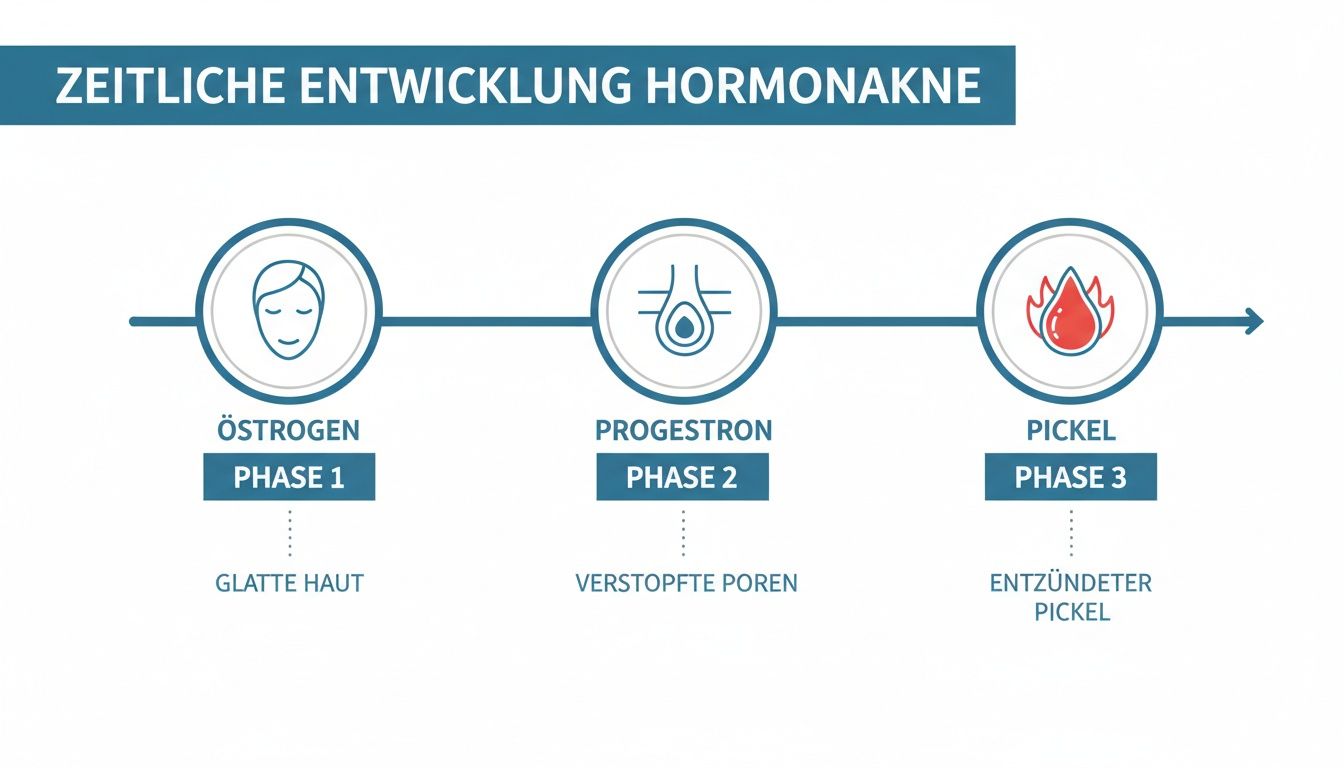
The graphic vividly shows how the hormonal balance shifts and the skin transitions from a clear phase to a problematic one.
Your skincare focus now:
- Deep pore cleansing: This is the perfect time for clarifying clay masks or products containing salicylic acid (BHA). BHA is oil-soluble and can penetrate deep into the pores to clear away excess sebum.
- Reduce inflammation: Ingredients such as niacinamide or zinc help regulate sebum production and stop emerging inflammation in its tracks.
- Light hydration: Continue using a lightweight, non-comedogenic moisturizer. This keeps the skin barrier intact without further clogging the pores.
When you know your skin’s needs during each of these phases, you can give it exactly what it needs. Would you like to delve deeper into how your body works? Learn more about your menstrual cycle and its phases in our in-depth article.
The right skincare routine for hormonal acne
When your hormones go haywire and it shows on your skin, the first reaction is often despair. Many people then reach for aggressive exfoliants or drying spot treatments. The problem? This usually leads to a vicious cycle of irritated skin and even more stimulated sebum production.
The key to clearer skin lies not in attacking it, but in specifically supporting your skin barrier. A well-thought-out skincare routine can make a huge difference—especially when you know which active ingredients work best for you during each phase of your cycle. Forget complicated 10-step routines, because here the rule almost always applies: less is more.
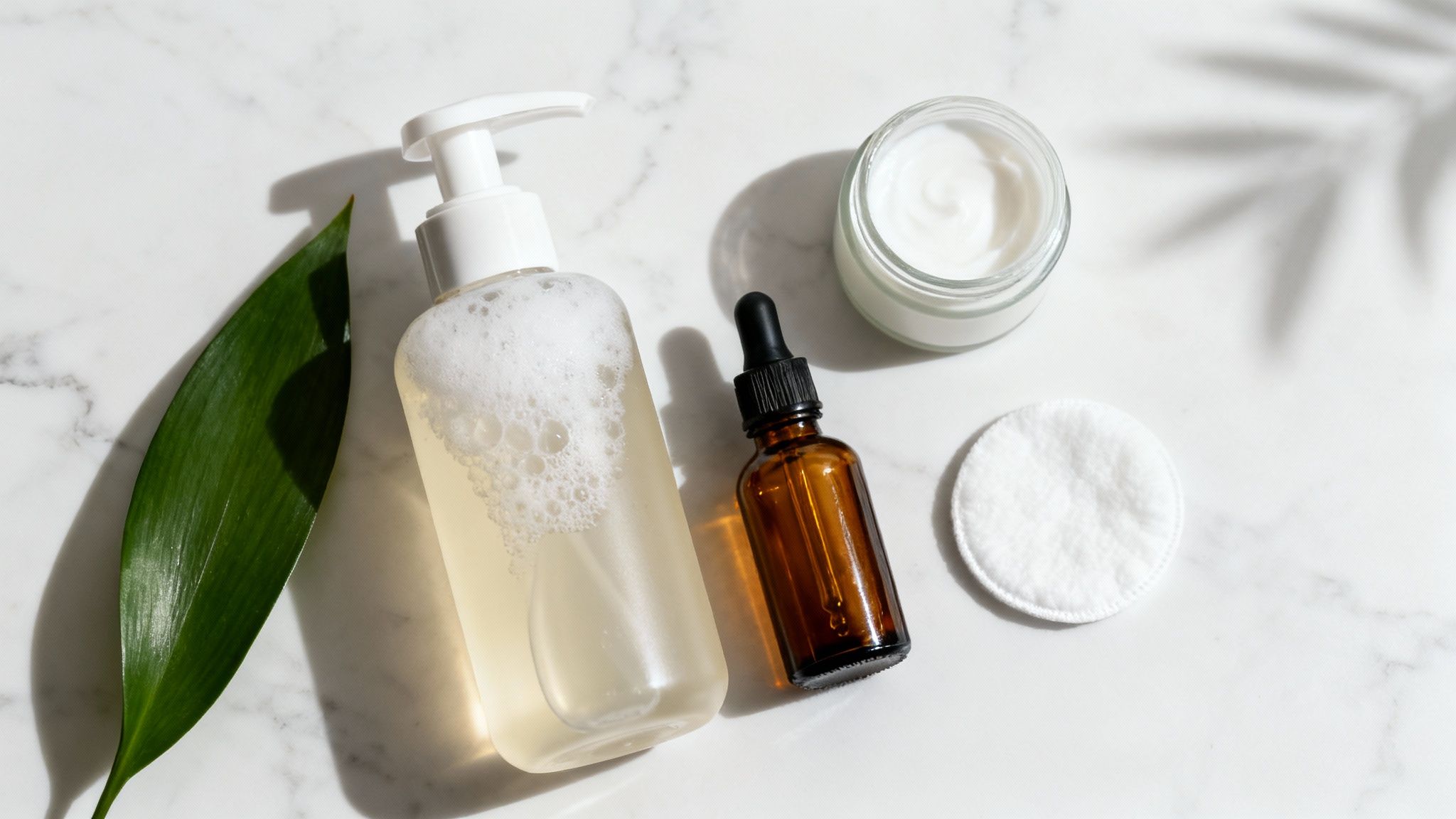
Gentle cleansing as the foundation
It all starts with cleansing. With hormonal acne, you want to remove excess sebum, dirt, and bacteria, but under no circumstances should you attack your skin’s natural protective barrier.
Aggressive, highly foaming cleansers with lots of alcohol or sulfates practically shout at your skin: “Warning, we’re drying you out!” Its reaction is pure panic: It ramps up sebum production even more to compensate for the loss of moisture. The result is even more clogged pores.
Instead, opt for a gentle, pH-neutral cleansing gel or foam. These products respect your skin’s natural barrier and optimally prepare it for the skincare that follows.
Targeted active ingredients instead of experimentation
Instead of trying every new trend, you should focus on a few proven active ingredients. These target the causes of hormonal acne without unnecessarily stressing your skin.
-
Salicylic acid (BHA): This active ingredient is your best friend during the luteal phase, the period before your period. Since BHA is oil-soluble, it penetrates deep into the pores and clears out excess sebum and dead skin cells from within. This effectively helps prevent clogged pores.
-
Niacinamide (Vitamin B3): A true all-rounder for the entire cycle. Niacinamide soothes inflammation, helps regulate sebum production, and strengthens the skin barrier. An added benefit: It can also visibly reduce redness and post-blemish marks.
-
Zinc: As an ingredient in creams or serums, zinc has anti-inflammatory properties and supports wound healing. It helps existing inflammation subside more quickly and reduces redness.
Less is more. Focus on one or two active ingredients that your skin tolerates well. An overloaded routine can weaken your skin barrier and worsen the problem of period breakouts.
Your simple and effective routine
A good skincare routine does not have to be complicated. With these simple steps, your skin will be well cared for in the morning and evening.
Morning routine:
- Cleansing: Start the day with a gentle cleanser to remove overnight sebum.
- Active serum: A serum with niacinamide or vitamin C soothes the skin and protects it from external influences.
- Moisture: Use a lightweight, non-comedogenic moisturizer. Yes, even oily skin needs moisture!
- Sunscreen: This step is absolutely essential, especially when using active ingredients like BHA. It also helps prevent the development of acne marks.
Evening routine:
- Cleansing: Cleanse your face thoroughly to remove makeup, dirt, and the day's sunscreen.
- Targeted treatment: Now is the time for products with salicylic acid (BHA), but not necessarily every night. Start with 2–3 times a week to see how your skin reacts.
- Moisturize: Finish your routine with a soothing moisturizer that helps your skin barrier regenerate overnight.
Common mistakes you should avoid
On the path to clearer skin, there are a few pitfalls that can quickly undermine your efforts or even worsen hormonal breakouts.
- Over-exfoliating: Daily or coarse-grain exfoliation only irritates the skin and damages its protective barrier.
- Squeezing pimples: As tempting as it may be—especially with deep, inflamed pimples—you only push the bacteria deeper into the tissue. The result is worse inflammation and a high risk of scarring.
- Constantly switching products: Give your skin time to adjust to a new routine. It often takes 4–6 weeks before you can see a real improvement.
A well-planned skincare routine is a powerful tool in the fight against period breakouts. However, it is only part of the solution. Real change often comes from within—through an adapted diet and a mindful lifestyle.
How diet and lifestyle affect your skin from within
Your skin is much more than just an outer shell—it reflects what is happening inside your body. While the right skincare routine combats symptoms on the surface, the real power to make a difference often lies deep within. What you eat and how you live have a direct and often underestimated impact on period breakouts.
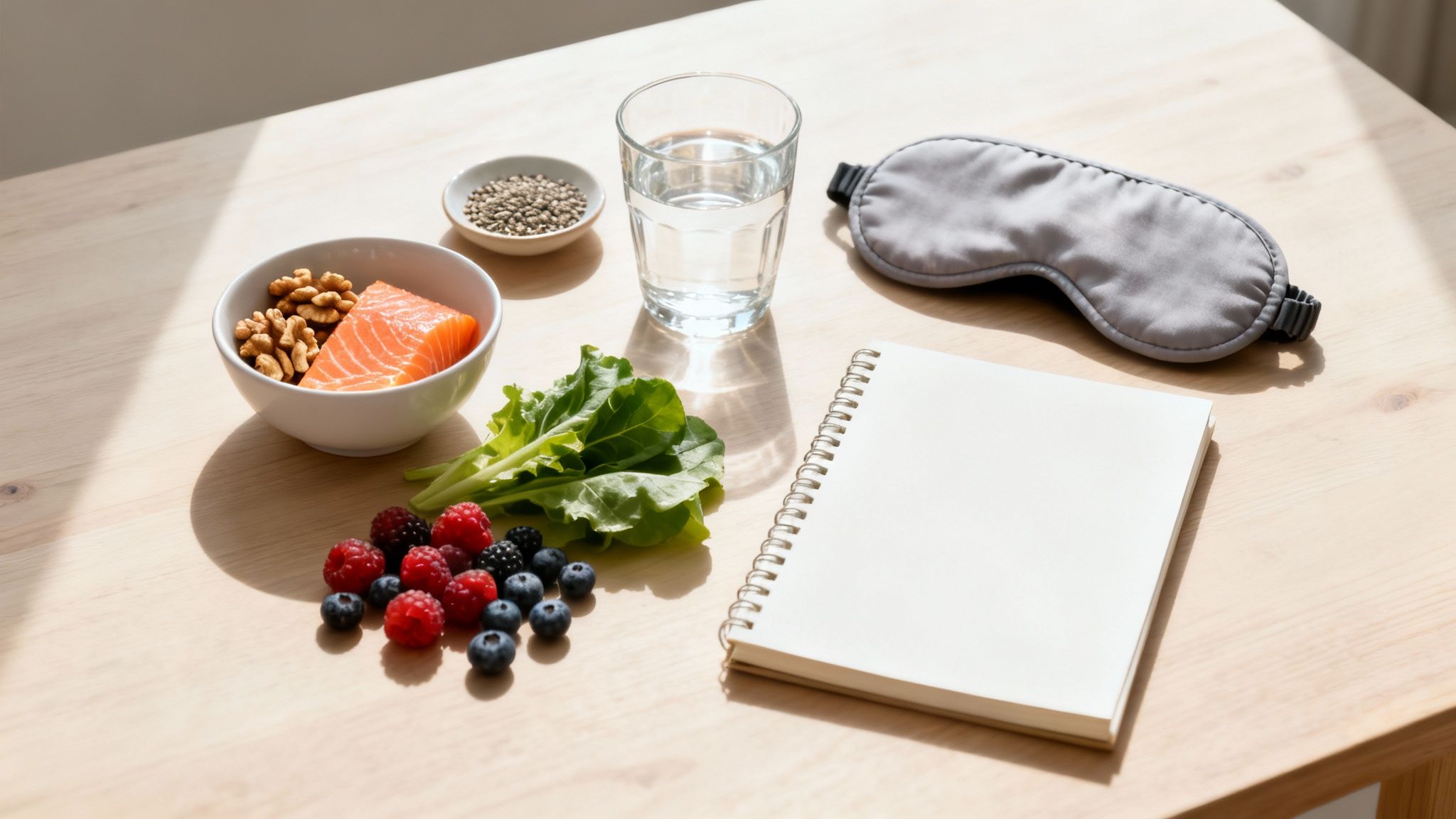
Blood sugar as the key to hormonal balance
Imagine your blood sugar level as a calm lake. Every time you eat sugary or highly processed foods (such as white bread, sweets, or soft drinks), you throw a large stone into it—your blood sugar shoots up. Your body responds by releasing a large amount of the hormone insulin to quickly remove the sugar from your blood.
However, this insulin peak can trigger a veritable chain reaction, which in turn stimulates the production of androgens (male hormones). As you already know, these hormones are the main drivers of increased sebum production. Constantly fluctuating blood sugar levels are therefore essentially adding fuel to the fire of your hormonal acne.
By keeping your blood sugar levels stable, you directly influence your hormonal balance and can regulate sebum production from within.
What you can do:
- Choose complex carbohydrates: Opt for whole-grain products, oats, legumes, and vegetables. These cause blood sugar to rise slowly and steadily, like a gentle ripple rather than a huge wave.
- Combine foods wisely: Include protein (e.g., chicken, fish, tofu) and healthy fats (e.g., avocado, nuts) with every meal to slow sugar absorption even further.
- Avoid “naked” sugar: It’s better to eat sweets as a dessert after a balanced meal rather than on an empty stomach. This helps prevent the most severe blood sugar spikes.
The power of the gut–skin axis
The connection between your gut and your skin is an incredibly fascinating field that is receiving increasing attention. A healthy gut with a diverse bacterial community (the microbiome) helps keep inflammation throughout the body under control. However, when the gut flora is out of balance, it can promote systemic inflammation, which can then also show up on your skin.
Interestingly, research on the gut microbiome often focuses on areas other than cycle-related acne. While there is already evidence of a connection with hormonal conditions such as PCOS, specific research into hormonal acne during menstruation is still in its early stages. You can learn more about the current microbiome diagnostics at IMD Berlin.
How to strengthen your gut:
- Eat probiotic foods: Yogurt, kefir, sauerkraut, and kimchi provide valuable “good” bacteria for your gut.
- Feed the good bacteria: Prebiotic foods such as onions, garlic, leeks, asparagus, and bananas provide beneficial gut bacteria with nourishment and help them multiply.
Stress and sleep: the often-overlooked factors
Lack of sleep and chronic stress are pure poison for your skin. Both lead to increased release of the stress hormone cortisol. Like insulin, cortisol can also stimulate the sebaceous glands to overproduce oil and intensify inflammatory processes in the body.
Have you ever noticed that your skin is particularly blemished after a stressful week or a few short nights? That’s no coincidence. Your body is in a state of alarm, and this also shows on your skin.
Simple strategies for greater balance:
- Prioritize your sleep: Try to get 7–8 hours of sleep per night. Establish a relaxing evening routine—preferably without your phone in bed.
- Find your stress outlet: Whether it’s walks in nature, yoga, meditation, or a good book—find out what helps you truly switch off. Just 10 minutes of mindful relaxation a day can make a huge difference.
A mindful lifestyle and skin-friendly diet are powerful tools for combating breakouts during your period from within. They help you address the root causes instead of merely treating the symptoms. If you’d like to understand more precisely how your genetic predisposition affects your skin, an Anti-Aging & Skincare DNA Test Skin Type Analysis can provide fascinating insights.
When a test makes sense and provides clarity
You’ve adjusted your skincare routine, optimized your diet, and are trying to reduce stress—and yet the breakouts during your period keep coming back stubbornly month after month. This can be incredibly frustrating and make you feel as though you’re stuck in an endless loop. If you’ve reached this point, it’s not a sign of failure, but a clear signal from your body: it’s time to look one level deeper.
Sometimes the cause of recurring skin problems is not on the surface, but rather a deeper imbalance that is invisible from the outside. An adapted lifestyle is certainly the foundation, but it can only have its full effect when the basis is right on the inside. A targeted test is like looking behind the scenes of your body. It provides objective data instead of pure guesswork.
Get to the root of the causes
Instead of continuing to grope in the dark and trying out different products or diets, a test can give you specific clues about exactly where to start. When it comes to cycle-related skin blemishes, two areas are particularly important: your hormones and your nutrient supply.
- Your hormone status: Could there be an imbalance between estrogen and progesterone? Or is your androgen level tending to be elevated, which permanently stimulates sebum production?
- Your nutrient supply: Could you be lacking important building blocks for healthy skin? A deficiency in zinc, vitamin D, or certain B vitamins can make the skin more susceptible to inflammation and slow wound healing.
These questions can only be answered reliably by analyzing your blood values. mybody-x.com tests are specifically designed to give you this clarity—simply and conveniently from home.
A test does not replace a diagnosis by a doctor, but it gives you a powerful tool. It enables you to take proactive action and make informed decisions about your health before taking the next step.
How an at-home self-test works
The thought of a blood test may initially seem intimidating, but modern self-tests make it remarkably easy. You do not need to make an appointment or sit in a waiting room. With a test kit from mybody-x.com, you collect a small blood sample from your fingertip—it is quick and virtually painless.
You then send the sample in the prepared return envelope to our certified laboratory in Germany. After a few days, you will receive your results digitally in a clear and easy-to-understand report. This report not only shows you your raw laboratory values, but also translates them into specific recommendations tailored to you. The insights gained into your hormonal profile can provide a valuable basis for better understanding the causes of your skin problems. If you would like to learn more, read our guide on at-home hormone testing.
Science is increasingly recognizing how closely different systems in the body are interconnected. The connection between the microbiome and overall health is also being studied more intensively. Learn more about the importance of the gut microbiome at Ärztezeitung. A test provides the missing pieces of the puzzle you need to complete the bigger picture of your skin health.
Your path to clearer skin—in sync with your cycle
Pimples during your period are not an unavoidable fate that you simply have to accept. Rather, they are a clear signal from your body—and you now have the knowledge you need to interpret these signs correctly and take proactive action instead of always just reacting to the next blemish.
You now understand how crucial the delicate interplay of your hormones is and how to smartly adapt your skincare routine to the four phases of your cycle. At the same time, you know the tremendous power of a skin-friendly diet and a mindful lifestyle to combat inflammation from within.
Patience is your most important ally
Always remember: Genuine, lasting improvements to your skin take time. This isn’t about quick miracle solutions, but about finding a caring routine and a balance that suits you and your body in the long term. Be patient with yourself and celebrate even the small steps forward on your journey.
But if you feel that there could be a deeper cause behind your skin problems despite all your efforts, you’re not alone. Sometimes, an outside perspective simply isn’t enough to see the full picture.
The crucial step is moving from mere speculation to targeted knowledge. Instead of groping in the dark, you can finally gain clarity about what is happening in your body.
A hormone or nutrient test from mybody-x.com can provide exactly this clarity. It gives you a sound, science-based foundation for finally making truly personalized decisions for your skin health.
Take control and actively shape your path toward healthier skin that is in harmony with your unique cycle. You have all the tools you need to feel completely comfortable in your skin again.
Frequently asked questions
Here, I’ve compiled some of the most frequently asked questions about pimples before your period. They’re intended to help clear up any lingering doubts and give you even more clarity.
Do certain foods really help against pimples before your period?
Yes, absolutely. A mindful diet can make a huge difference here. Focus above all on anti-inflammatory foods that are good for your body. These include, for example, foods rich in omega-3 fatty acids (such as salmon or flaxseeds), zinc (such as pumpkin seeds and lentils), or antioxidants (such as berries and leafy green vegetables).
At the same time, you should try to reduce foods that can tend to fuel inflammation in the body. For many people, these include highly processed products, lots of sugar, and dairy products made from cow’s milk. A stable blood sugar level is essential for clear skin.
Is it normal for pimples to always appear in the same spot?
Yes, this is actually very typical. Hormonal pimples often appear precisely along the chin line, on the jaw, and on the neck. This is also known as the classic “hormonal acne pattern.”
The reason is that the sebaceous glands in this area are particularly sensitive to hormonal fluctuations, especially the relative increase in androgens shortly before your period. So, if pimples repeatedly flare up in the same spot, this suggests locally increased sebum production and a tendency for the pores in that exact area to become clogged.
When should I see a doctor about cycle-related acne?
You should always see a doctor if your acne becomes very severe and painful, forms deep, cystic nodules, or does not improve with any of the measures mentioned, such as skincare or diet. This is especially important if you also experience symptoms such as a very irregular cycle, excessive body hair, or hair loss.
A doctor can determine whether an underlying condition such as PCOS may be involved. A hormone test from mybody-x.com can provide important preliminary indications of possible hormonal imbalances and help you prepare for the conversation.
Research is increasingly showing how closely internal processes, such as the microbiome, are connected to our health. This field is incredibly complex and fascinating. If you would like to explore it in greater depth, you can learn more about the predictive power of the gut microbiome at DZIF.
Can the pill help with hormonal pimples?
The birth control pill is indeed often prescribed to treat hormonal acne. It directly affects hormone levels, regulates cyclical fluctuations, and can reduce the production of male hormones (androgens). The result: sebum production is reduced, which can lead to fewer pimples.
However, it is not the right solution for every woman and can, of course, also have side effects. Essentially, it only treats the symptoms, not the actual cause of a potential hormonal imbalance. An open conversation with your doctor is essential here to find the best and healthiest option for you.
Are you ready to understand the true causes of your skin problems and take control? The self-tests from mybody-x.com provide valuable insights into your hormone and nutrient levels. Discover the right test for you now and begin your journey toward balanced skin.
Share now:
Bloating before your period: when it’s part of your cycle
Zinc on an empty stomach: A good idea or a risk of nausea?