

Hair loss due to iron deficiency: causes, symptoms & what you can do
Are you wondering if your hair loss could actually be related to an iron deficiency? The answer is surprisingly often: yes. Think of iron for your hair roots like water for a plant – it's absolutely vital. A deficiency can severely disrupt your entire hair growth cycle. Women are particularly affected, but you're definitely not alone. In this guide, we'll explain the connections and show you how you can regain control with the right knowledge and a targeted nutrient test.
Why iron is so crucial for your hair

The shock of finding significantly more hair in the brush or shower drain than usual in the morning – who hasn't experienced that? Many immediately think of genes or hormones. However, one of the most common and easily treatable causes is often overlooked: a simple but consequential iron deficiency . What exactly is happening in your body that ultimately leads to hair loss?
Think of your hair follicles as tiny, highly active factories. They work around the clock to produce new hair cells. This process consumes enormous amounts of energy and, above all, oxygen. And this is precisely where iron becomes the star. It is the central building block for hemoglobin in red blood cells, which transports this vital oxygen to the most remote corners of your body – including every single hair follicle.
When the supply chain collapses
If your body lacks iron, it's as if the entire supply chain for these small factories collapses. Oxygen supply is reduced. Your body reacts pragmatically and has to prioritize. To protect vital organs like the heart and brain, the supply to the "luxury consumers" is cut off. And yes, unfortunately, that includes our hair.
The result: The cells in the hair follicles responsible for growth can no longer divide quickly enough. The natural hair cycle is disrupted. Significantly more hairs than usual enter the resting and shedding phase far too early. Experts call this diffuse hair loss , in which the hair becomes visibly thinner all over the head.
Who is particularly at risk?
Certain groups and life stages carry a higher risk of iron deficiency and the associated hair loss. If any of these apply to you, you should be especially vigilant:
- Women of childbearing age: Monthly menstruation leads to regular iron loss.
- Pregnant and breastfeeding women: During these phases, the need for iron increases rapidly in order to optimally supply mother and child.
- People with a plant-based diet: Unfortunately, the body cannot absorb plant-based iron as well as animal-based iron.
- Athletes: Intensive training and heavy sweating can further accelerate iron loss.
But there's good news: Hair loss due to iron deficiency is usually reversible. Once the cause is identified and you take targeted action, your hair has a chance to fully recover. The first and most important step is to determine your iron status. You can find a good overview of the topic and other symptoms in our article about what exactly iron deficiency is .
What ferritin has to do with your hair roots
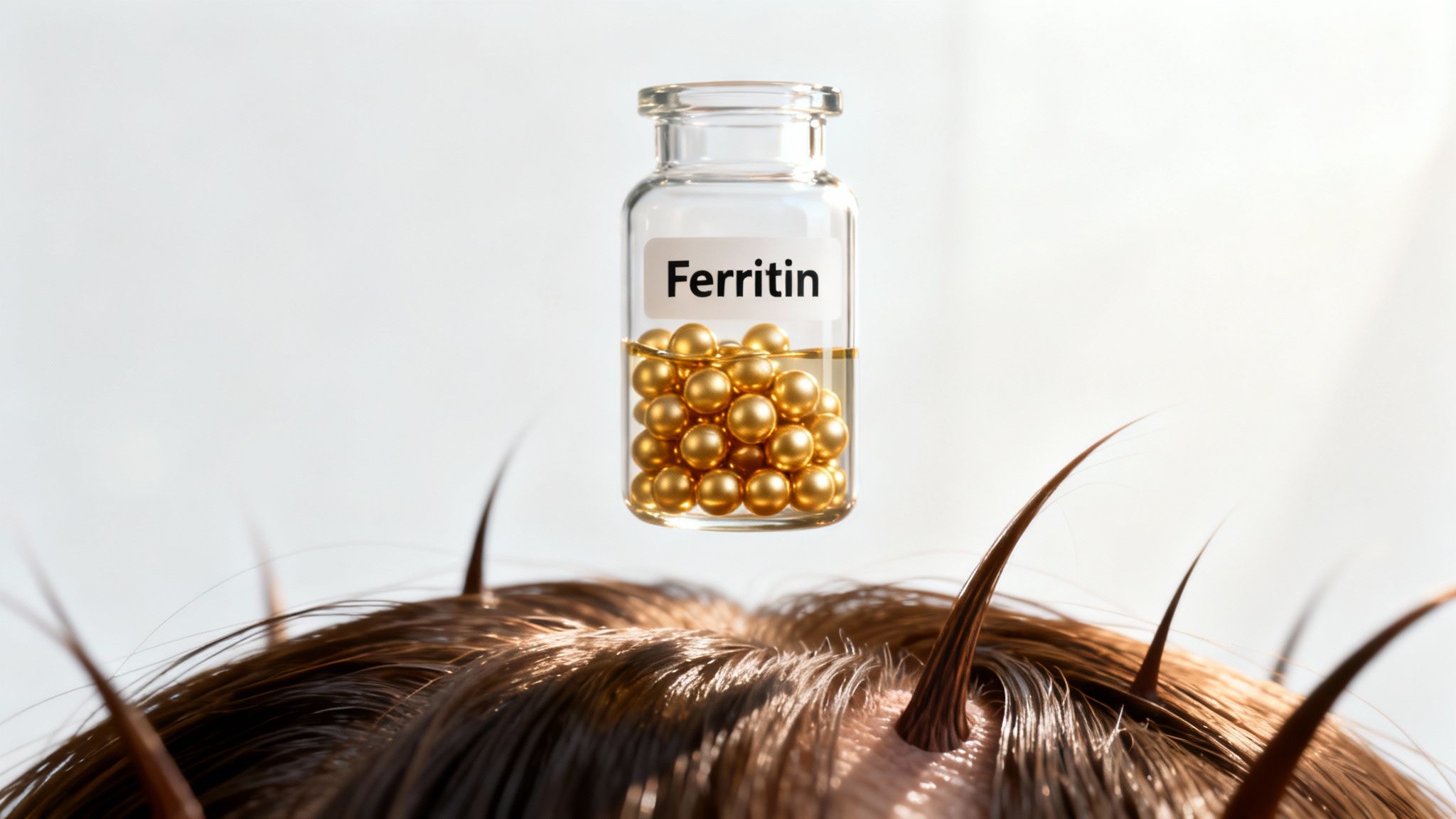
To truly understand the connection between iron deficiency and hair loss , we need to look at a very specific player in your body: ferritin. Imagine your body is a car. The iron currently circulating in your blood (serum iron) is like the gasoline flowing directly into the engine – it's what's keeping you running right now.
Ferritin, on the other hand, is your fully stocked reserve tank. It's the stored iron that your body holds onto for strenuous times and energy-intensive processes. And this is precisely where it becomes interesting for your hair.
Your body's emergency plan
Your hair follicles are like tiny, high-performance factories. They are among the most cell-dividing areas in the entire body and consume enormous amounts of energy. To continuously produce new, strong hair, they need a constant supply of oxygen and nutrients – and iron is essential for this.
So what happens when your "reserve tank," your ferritin stores, slowly run dry? Your body immediately switches into a clever survival mode. Before vital organs like the heart or brain are compromised, it shuts down everything it deems "non-essential." Unfortunately, this includes hair production, skin regeneration, and nail growth.
Your body essentially sacrifices the fullness of your hair to ensure its basic functions. The hair follicles are put into a low-power mode, the growth cycle is disrupted, and more hairs enter the shedding phase.
This mechanism is the reason why you might notice hair loss even though other blood test results are still completely normal. The ferritin level is the crucial early indicator that shows you your reserves are dwindling. If you'd like to delve deeper into the significance of this value, you'll find all the key facts about ferritin levels in our article.
Why empty memory is so critical
A low ferritin level is more than just a warning sign – it has very real biological consequences for your hair follicles. The extremely high cell division rate in the hair roots depends on enzymes that simply cannot function without iron. DNA synthesis, the creation of the blueprint for each individual new hair cell, is particularly important here.
If iron is lacking, this entire process stalls. The result is massive cellular stress in the hair follicles, which essentially forces them to cease functioning and prematurely shed the hair. This is not a sudden event, but a gradual process that can develop over months.
- The growth phase (anagen phase) shortens: The hair simply doesn't have enough time to become strong and long.
- The resting phase (telogen phase) is prolonged: More hairs than usual are in a resting state and eventually fall out.
- Hair grows back thinner: Even the hairs that survive are often weaker and finer than before.
Scientific studies impressively confirm this connection. Research from Germany shows that iron deficiency is one of the most common causes of diffuse hair loss in women of childbearing age. Around 59 percent of women suffering from severe hair loss are also diagnosed with iron deficiency – a statistically significant correlation. You can read more about these findings on the link between iron deficiency and hair loss here.
The good news is that this condition is usually reversible. Once you consistently replenish your iron stores, the hair cycle can normalize and hair growth can resume. However, the very first step is always to get clarity about your ferritin status – for example, with a home nutrient test.
Correctly interpreting your body's warning signals
If you notice hair loss due to iron deficiency , you're often only seeing the tip of the iceberg. Your body usually sends you subtle signals much earlier that it's lacking a crucial building block. The insidious thing is that many of these signs creep into your daily life so slowly that we simply dismiss them as "normal" stress.
But this is precisely the key. If you learn to recognize these early warning signs, you can take countermeasures much sooner and literally tackle your hair health at the root.
More than just tired – the typical symptoms
Hair loss is a very obvious sign, but an iron deficiency often manifests itself much more subtly. Do you sometimes feel like you're going through the day with the handbrake on? That could be an early indication.
Take a moment to reflect and consciously pay attention to the following signs:
- Persistent exhaustion: You are constantly tired, listless and lacking in motivation, even though you have actually slept enough.
- Pale skin and mucous membranes: An honest look in the mirror can reveal a lot. Does your skin look duller than usual? Are the inner sides of your eyelids noticeably pale?
- Brittle nails and cracked corners of the mouth: Do your nails split immediately or have they developed longitudinal ridges? Small, painful cracks at the corners of the mouth (also called rhagades) are also a classic problem.
- Difficulty concentrating: Are you finding it hard to stay focused, or have you become more forgetful lately? Your brain also needs oxygen, and iron is essential for that.
- Shortness of breath during exertion: Does even climbing stairs take your breath away? This could be a sign that your blood is no longer able to transport enough oxygen.
These symptoms can occur alone or together. If you'd like to learn more about the various signs, check out our detailed article on the symptoms of iron and vitamin B12 deficiency .
Who is particularly at risk? The most common causes
Iron deficiency doesn't just appear out of nowhere. It's almost always the result of a gradual imbalance – you're using or losing more iron than you're taking in. Certain life stages, habits, or health conditions can significantly increase this risk.
This table helps you quickly identify which life circumstances or habits could increase your risk of iron deficiency.
Common causes of iron deficiency at a glance
| Risk factor | Why it poses a risk | Who is particularly affected? |
|---|---|---|
| Heavy menstruation | Monthly blood loss always means iron loss. The heavier the bleeding, the greater the loss. | Women of childbearing age, especially those experiencing heavy or prolonged menstrual bleeding. |
| Pregnancy & Breastfeeding | The body must supply not only itself, but also the growing child. Iron requirements skyrocket. | Pregnant women and breastfeeding mothers. |
| Plant-based nutrition | Plant-based iron is absorbed by the body much less efficiently than iron from animal sources. | Vegans and vegetarians who do not specifically plan their iron sources. |
| Gastrointestinal diseases | Chronic inflammation (e.g. Crohn's disease, celiac disease) or even unnoticed intestinal problems can severely impair iron absorption. | People with chronic inflammatory bowel diseases or unexplained digestive problems. |
The most common risk factors are therefore quite clearly defined. It's worthwhile to honestly examine your own situation and consider whether one or more of these points might apply to you.
In Germany, iron deficiency is the most common form of nutritional deficiency worldwide and one of the main causes of hair loss in women. Women of childbearing age are particularly affected, with a prevalence of up to 30 percent ; this figure can increase with heavy menstrual bleeding. The result is often diffuse hair loss, where hair falls out across the entire scalp without creating bald patches. You can read more about these facts regarding hair loss due to iron deficiency here.
By knowing your personal risk factors, you've taken the first and most important step. A targeted nutrient test from mybody-x can then provide the necessary clarity as to whether your suspicion is correct and whether your hair loss is truly related to depleted iron stores.
How to reliably check your iron levels
You've noticed your body's signals and suspect that an iron deficiency might be behind your hair loss? Great, that's the most important first step. But before you reach for any iron supplements on a whim, let's clear things up. Certainty is key to tackling your hair problem at its root.
Checking your iron levels is easier than most people think. It's about measuring the right values in your blood and – very importantly – understanding what they really tell you about your body's iron stores.
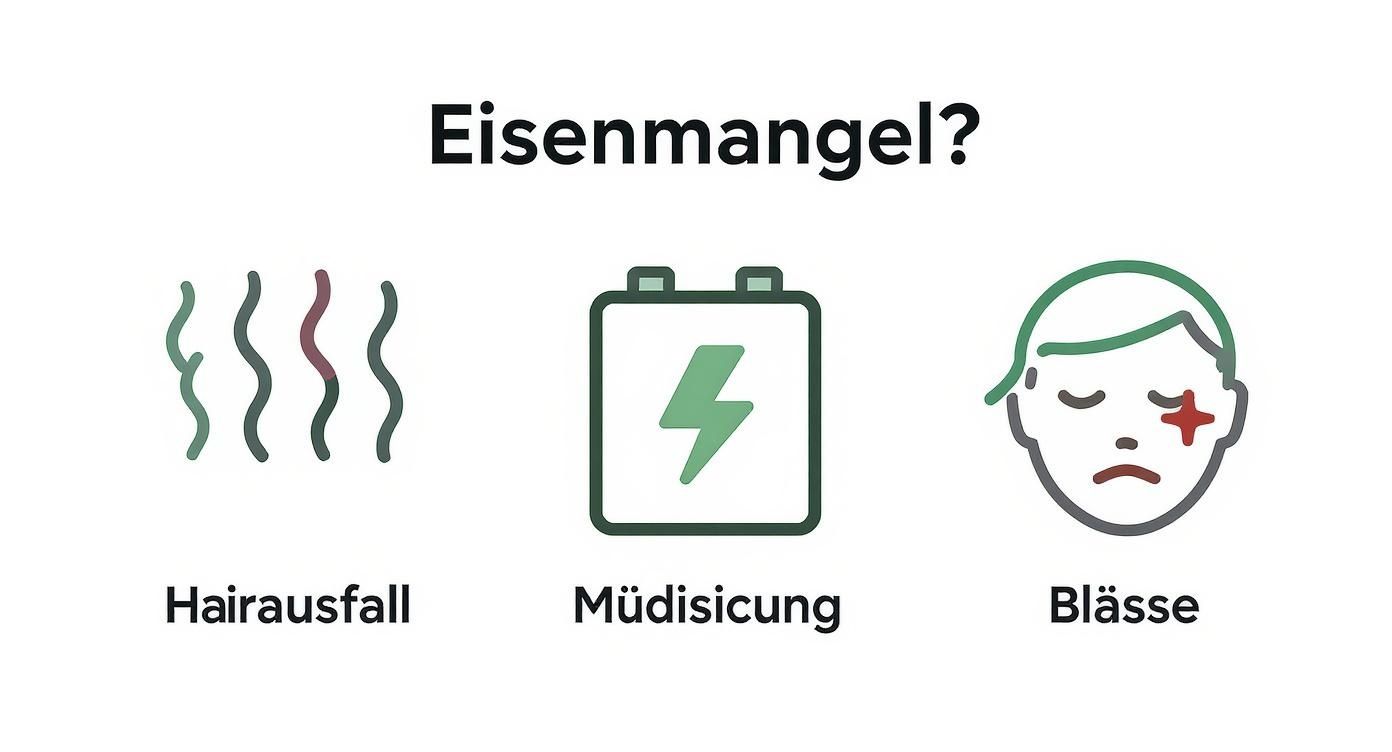
This graphic sums it up perfectly: If hair loss occurs along with constant fatigue and noticeable paleness, your alarm bells should be ringing. This is the classic triad that can indicate depleted iron stores.
The three musketeers of your iron supply
When it comes to blood analysis, there are three key values that together paint a complete picture of your iron levels. Think of them as a team of experts investigating the case of "hair loss due to iron deficiency".
-
Ferritin – The guardian of your reserves: As you've already learned, this is by far the most important value for your hair. It clearly shows you how full (or empty) your iron stores are. A low ferritin level is often the very first warning sign, long before other values even register. For strong hair growth, experts aim for a value above 70 ng/ml , while anything below 30 ng/ml is considered critical for the hair roots.
-
Hemoglobin (Hb) – The oxygen transporter: This value measures the red blood pigment. If it is too low, it is called true anemia – the advanced stage of iron deficiency. But be careful: A normal Hb value is no guarantee of safety ! Your ferritin stores may already be dangerously depleted, while your Hb value is still within the normal range.
-
Transferrin saturation – the load on the delivery vans: This value reveals how many of the "iron transporters" in the blood are actually loaded. A low saturation means there simply isn't enough iron to efficiently transport it to the cells – and therefore also to your hair roots.
Remember this: Hair loss doesn't only start when a full-blown anemia diagnosis is made. It's often the first visible sign that your reserves are running low. That's why ferritin is the crucial early indicator you need to keep an eye on.
The first step towards clarity – all from the comfort of your own home.
The thought of waiting weeks for a doctor's appointment just to have blood drawn can be incredibly frustrating. But you want to know what's going on now so you can finally take action. And that's exactly where you can take the initiative.
For example, the mybody-x nutrient test offers a simple and discreet option. With just a few drops of blood from your fingertip, which you can conveniently take at home, a certified laboratory analyzes your ferritin levels and other important parameters.
The advantages are obvious:
- Fast certainty: Instead of waiting for weeks, you'll have your results in your inbox in just a few days.
- Full control: You receive a clearly presented report that shows you exactly where you stand and provides initial recommendations for action.
- Low threshold for taking action: It's a really easy first step to either confirm or dispel a suspicion.
With this result in hand, you're perfectly prepared. Should the test actually reveal a deficiency, you'll have a solid basis for discussing it with your doctor. Then you can talk directly about the appropriate treatment, instead of starting the diagnostic process from scratch. If you'd like to learn more, you'll find an excellent overview of various testing methods for iron deficiency in our guide.
Your strategy for full hair and replenished iron stores
Now that we've examined the causes in detail, let's get practical. The good news is: you're not helpless against iron deficiency. With the right approach, you can actively counteract it. The most effective strategy for healthy hair roots and full iron stores is based on three strong pillars that support each other.
But first things first: The road back to a full head of hair is not a sprint, but a marathon. Your hair follicles need time to respond to the improved nutrient supply. Give yourself and your body this time – every small step in the right direction counts.
Pillar 1: Proper nutrition as a foundation
Your diet is the foundation for everything. It's the key to not only replenishing your iron stores but also keeping them full in the long term. It's not just what you eat that matters, but above all, how you combine it. The key to better iron absorption is often right there on your plate.
Think of vitamin C as iron's best friend, especially when it comes from plant sources. Vitamin C helps your body convert the less readily available non-heme iron into a form that your intestines can absorb much more easily. Put simply: a few strips of bell pepper in your lentil salad or a glass of orange juice with your muesli can make a huge difference.
At the same time, there are also a few "iron robbers" you should be aware of. These include, above all, coffee, black tea, and calcium-rich dairy products, as they can inhibit iron absorption. However, this doesn't mean you have to completely avoid them. Simply leaving about two hours between consuming these foods and your iron-rich meal is sufficient.
A French study has impressively demonstrated the close link between hair loss and iron deficiency in women. In the study, almost 60 percent of participants with severe hair loss had iron levels below 40 micrograms per liter of blood serum. Nearly one in four even had a critical level below 15 micrograms . You can read more about the results of this study on hair loss here.
To make it easier for you to get started, we have put together a short overview.
Iron-rich foods and their optimal partners
This table shows you which foods contain particularly high amounts of iron and how you can improve absorption by combining them with foods rich in vitamin C.
| Iron source (animal/plant) | Example | Ideal partner (Vitamin C) |
|---|---|---|
| Animal (heme iron) | Beef, liver | Broccoli, Brussels sprouts |
| Plant-based (non-heme iron) | Lentils, chickpeas | Paprika and lemon in the dressing |
| Plant-based (non-heme iron) | Oat flakes, millet | Orange juice, berries |
| Plant-based (non-heme iron) | Spinach, chard | Tomatoes, strawberries |
| Plant-based (non-heme iron) | Pumpkin seeds, sesame seeds | A small glass of sea buckthorn juice |
Remember: Variety is key! The more colorful your plate, the better nourished you usually are.
Pillar 2: Targeted supplementation for an extra boost
If your iron stores are already severely depleted, dietary changes alone are often not enough to quickly bring your levels back into the normal range. This is precisely where high-quality iron supplements come into play. They act like a turbocharger, addressing the deficiency in a targeted and effective manner.
But be careful: Never supplement on mere suspicion! Too much iron can harm the body. Supplementation should always be based on a proven deficiency and ideally in consultation with a doctor.
When choosing a supplement, make sure it's well-tolerated to avoid typical side effects like stomach pain or constipation. For optimal absorption, take it on an empty stomach, about an hour before breakfast, with a glass of vitamin C-rich juice. If you'd like to delve deeper into this topic, you'll find many more tips in our guide to nutrition for iron deficiency .
Pillar 3: Medical therapy for persistent cases
In some cases, tablets are simply not enough or are poorly tolerated. This can be the case with a severe deficiency or when chronic diseases of the gastrointestinal tract impair the absorption of nutrients.
For such situations, there are other medical options:
- Iron infusions: In this method, the iron is administered directly into the bloodstream, completely bypassing the gastrointestinal tract. This method is extremely effective for rapidly replenishing depleted iron stores.
- Higher dose preparations: Your doctor can prescribe stronger, prescription iron supplements that allow for more intensive therapy.
- Investigating the cause: Perhaps the most important step is finding the root of the problem. Is there perhaps an undetected illness or a more significant source of bleeding that is repeatedly causing the deficiency?
Your three-part strategy – consisting of smart nutrition, targeted supplementation, and, if necessary, medical support – provides you with a clear roadmap. This creates the best conditions not only to get your iron deficiency-related hair loss under control, but also to regain your overall energy and well-being.
Your journey to healthy hair starts now.
You've read this far, which is the most important step: you're taking this seriously and understand that hair loss due to iron deficiency isn't inevitable, but a clear signal from your body that you can respond to. Let's summarize the key points again.
The central message is actually quite simple and encouraging: your hair problem has a cause, and it's treatable. It's not about some mysterious secret, but about restoring your inner balance. Your body needs iron to supply the hair roots with vital oxygen. But if your iron stores are depleted, this supply is literally cut off – with visible consequences on your head.
Take back the wheel
The key to success lies in moving from passive observation to active engagement. The endless guesswork about whether the fatigue and hair loss are simply due to stress comes to an end as soon as you establish facts. You no longer have to grope in the dark.
The first step is always to gain clarity. A simple test gives you the certainty you need to make the right decisions for your health. Instead of guessing, you can know.
This is precisely where the mybody-x nutrient test can be a valuable tool. It allows you to quickly, discreetly, and conveniently check your ferritin level from the comfort of your home – the very storage value that is so crucial for the health of your hair. With this result in hand, you regain control.
Your roadmap for the next steps
Consider this article your personal roadmap back to strong, full hair. You now know what matters:
- Understand the signals: Take your body's warning signs seriously – from fatigue and pale skin to brittle nails.
- Establish facts: Check your iron status with a reliable test to finally have certainty.
- Replenish your stores: Optimize your diet and supplement with targeted preparations if a deficiency has been confirmed.
- Be patient: Your body and your hair growth cycle need time to regenerate. Real results will only become visible after a few months.
Don't wait any longer for the problem to resolve itself. Take control of your hair health now. Find out the status of your iron stores and take the first, crucial step towards strong and healthy hair today.
Frequently asked questions about iron deficiency and hair loss
Now that we've delved into the connection between iron and hair health, you might still have some practical questions. Let's address the most common ones so you know exactly what to expect.
How quickly will my hair grow back?
Above all, patience is required here. The good news first: hair loss triggered by an iron deficiency is, in the vast majority of cases, completely reversible. As soon as your iron stores are replenished, the hair follicles will receive the signal to resume their function.
Your hair growth follows a natural rhythm. It takes approximately three to six months for the hair follicles to recover and transition from the resting to the active growth phase. Only then will you notice the first new, stronger hairs. Therefore, it's important to persevere, even if you don't see immediate results in the mirror.
Can I take iron supplements simply on suspicion?
A clear and very important no. Iron supplements should never be taken based on mere suspicion . As harmful as an iron deficiency is, an overdose can have equally serious health consequences. The body cannot simply excrete excess iron; instead, it stores it in organs like the liver, which can be harmful in the long run.
Targeted supplementation is only sensible and safe if a blood test has first confirmed an actual deficiency. Taking responsibility for your own health means: measure first, then act accordingly.
This way, you can be sure you're giving your body exactly what it needs – not too much and not too little. A test from mybody-x provides the necessary data to effectively and safely combat your hair loss.
Is an iron-rich diet alone enough to solve the problem?
It all depends on your starting point. A balanced, iron-conscious diet is and remains the absolute foundation. It's crucial for maintaining your iron levels in the long term and preventing a recurrence of deficiency.
If your iron stores – that is, your ferritin level – are already severely depleted, diet alone is often insufficient to replenish them in the foreseeable future. Think of it like your smartphone battery: your diet is the maintenance charger that slowly keeps the battery topped up. But to quickly recharge a nearly empty battery, you need the powerful fast charger – in this case, targeted iron supplements.
The key to success here is the combination: First, quickly replenish the depleted stores with supplements, and then ensure that they remain full with a smart, iron-rich diet.
Do you suspect your hair loss might be related to your nutrient levels? Find out and gain clarity. With the mybody-x nutrient test, you can easily check your levels from home and get a solid foundation for your next steps. Start your journey to full hair now .

Share:
Why am I not losing weight? The real reasons and how to find them
Omega 3 deficiency symptoms you should know