
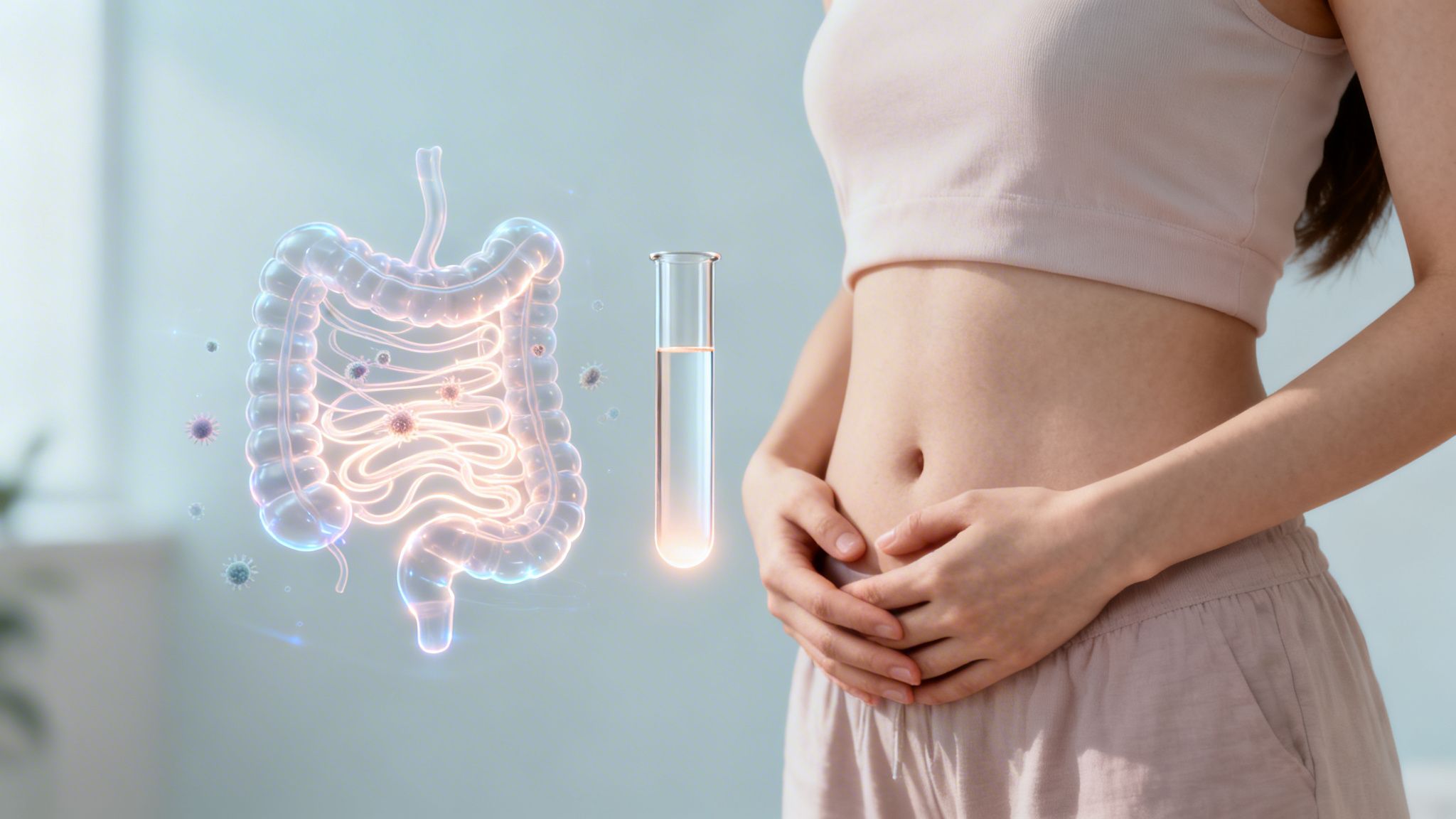
Gut problems: Find the causes and gain clarity with your test
A rumbling in your stomach that follows you through everyday life? A constant feeling of fullness even though you've barely eaten? When your digestion does whatever it wants, it's more than just annoying. It's a clear signal from your body that something has fallen out of balance. If you often feel tired, bloated, and simply not at your best, the answer often isn't in your head but deep in your gut.
Why your gut is sending you an important message
Your gut is a true marvel and much more than just a digestive organ. Think of it as the pulsing center of your body. It houses trillions of bacteria—your personal microbiome—and is in constant communication with your brain via the so-called gut-brain axis.
When this sensitive ecosystem falls out of balance, you feel it throughout your entire body. The consequences are not limited to stomach pain or uncomfortable bloating. They can also manifest as constant fatigue, skin problems such as acne and eczema, or even changes in your mood.

A growing problem, especially among young people
If you feel alone in this, you definitely aren't. Gut problems have long since become a widespread phenomenon affecting more and more health-conscious people. It is particularly striking that these symptoms are increasing among younger adults, especially women.
An analysis by KKH Kaufmännische Krankenkasse from 2022 paints a clear picture: Across Germany, around 189,000 policyholders were receiving treatment for irritable bowel syndrome or similar functional disorders. What is particularly concerning is that the proportion of young women is rising sharply. Among 20- to 24-year-olds, the proportion receiving treatment increased by a full 15 percent between 2012 and 2022, with women affected twice as often as men. You can read more about these alarming figures in the KKH press release.
This trend is a wake-up call. It shows how strongly our modern lifestyle—with all its stress, processed foods, and hectic routines—puts pressure on our gut health. But here's the good news: You can regain control.
Take your body's signals seriously
Instead of simply enduring the symptoms or covering them up with quick fixes, it is crucial to get to the bottom of the true causes. Your gut problems are not imaginary; they are your body’s cry for help, demanding to be heard. As soon as you understand what is really going on in your stomach, you can initiate targeted and sustainable changes.
The first steps are often easier than you might think. It is about becoming your own detective:
- Observe your symptoms closely: When do the symptoms occur? After certain meals, during periods of stress, or at a particular time of day? Keeping a small diary can work wonders here.
- Analyze your diet: Are there foods that regularly make you feel unwell? Often, it is the inconspicuous culprits that place a burden on your system.
- Question your lifestyle: How high is your stress level? Are you getting enough sleep and exercise? All these factors are puzzle pieces that play a crucial role.
The path to a calm stomach begins with taking responsibility for your health again. Instead of continuing to stumble in the dark, you can rely on data-based insights. Modern at-home self-tests, such as those offered by mybody-x.com, are an incredibly valuable tool.
An intolerance test, for example, can clearly show you which foods may not be good for your body at all. A microbiome analysis, in turn, gives you a fascinating insight into the composition of your gut flora and shows where you may be lacking “beneficial helpers.”
With this knowledge in hand, you can finally stop guessing. You can make informed decisions about your diet and lifestyle, transforming bothersome stomach rumbling into a clear roadmap toward greater well-being and a genuinely better quality of life.
The most common triggers of your digestive problems
Why is your gut really rebelling? To finally get your gut problems under control, we need to get to the bottom of the true disruptive factors. Imagine your gut as a highly sensitive ecosystem. Even the smallest change can throw it out of balance—and that is exactly what you feel.
The cause is rarely just a single factor. Most often, it is an interplay of various influences of modern life. Your body sends you clear signals through symptoms such as bloating, cramps, or irregular bowel movements that something is wrong. Learning to interpret these signals correctly is the first and most important step toward improvement.
Your lifestyle as a direct influencing factor
It is no secret that the mind and gut are closely connected. Science calls this connection the gut-brain axis. In concrete terms, this means that stress does not only occur in the mind but directly affects your digestion.
When you are tense, your body releases stress hormones such as cortisol. These can alter intestinal movements, affect stomach acid production, and even make the protective intestinal lining more permeable. The result is often abdominal cramps, diarrhea, or constipation—classic symptoms that many people with stressful daily lives know all too well.
Think of it this way: Your digestive system switches into “fight-or-flight” mode. Energy is diverted away from digestion because the body believes it is needed more urgently elsewhere. Over time, this state leads to chronic gut problems.
But stress is not the only factor. Other habits also have a direct impact:
- Lack of sleep: Too little or poor-quality sleep prevents your body—and therefore your gut—from regenerating. The microbiome cannot recover, which disrupts the delicate balance of your gut bacteria.
- Lack of exercise: Regular, moderate exercise stimulates bowel activity and supports healthy digestion. By contrast, a daily routine spent mostly sitting also makes the intestines sluggish and can promote constipation.
The role of your diet and certain foods
What you eat has the most immediate impact on your gut health. Certain foods can be difficult for your body to digest and can lead to fermentation processes in the gut, causing unpleasant bloating and pain.
Some of the most common culprits include:
- Highly processed foods: Ready-made meals, fast food, and sweets are often packed with sugar, unhealthy fats, and artificial additives. They essentially “feed” the wrong bacteria in your gut and throw your gut flora out of balance.
- Certain types of sugar: Lactose (in dairy products) and fructose (in fruit and many sweeteners) can cause severe digestive problems in people with an intolerance.
- Gluten: The gluten protein in wheat and other grains can trigger inflammatory reactions in the intestines of some people. If you would like to learn more about the differences, also read our article on celiac disease and gluten intolerance.
An unbalanced, low-fiber diet deprives beneficial gut bacteria of their food source. Yet these helpful allies are crucial for an intact intestinal lining and a strong immune system.
Medications and their side effects on the gut
Although they are often necessary, some medications can seriously disrupt your gut ecosystem. Antibiotics in particular: although they are effective against harmful bacteria, they unfortunately do not distinguish between the “good” and the “bad.” As a result, they also destroy parts of your beneficial gut flora.
This aggressive clear-out can result in what is known as dysbiosis—an imbalance in gut bacteria. This imbalance is one of the most common causes of long-lasting intestinal problems after antibiotic treatment. However, other medications, such as certain painkillers (e.g., ibuprofen) or stomach acid blockers, can also put a long-term strain on gut health.
This knowledge is your most powerful tool. Only when you know the potential triggers of your symptoms can you take targeted action. An intolerance test or a microbiome analysis from mybody-x.com can help uncover hidden causes and finally provide clarity.
From irritable bowel syndrome to celiac disease: Understanding the most common diagnoses
Bloating, cramps, diarrhea—when your stomach is constantly rebelling, it can turn your entire daily life upside down. The symptoms are often vague, and it’s incredibly frustrating not to know what’s behind them. Is it simply a reaction to yesterday’s meal, or could there be something more to it?
This feeling of uncertainty is exhausting. That’s why we’ll investigate together here. We’ll shed light on the most common diagnoses and explain clearly the exact differences between irritable bowel syndrome, food intolerances, and celiac disease. This knowledge is your compass for finally classifying your symptoms correctly.
Irritable bowel syndrome—a chameleon among gut problems
Irritable bowel syndrome (IBS) is one of the most common diagnoses when it comes to recurring digestive problems. It’s best to think of your gut as an oversensitive and “stressed” colleague. Organically, everything is fine—there is no inflammation or visible damage. Even so, communication between the gut and the brain, known as the gut-brain axis, is disrupted.
This leads to impaired intestinal movement (motility) and much more intense pain perception. The result is the typical, often fluctuating symptoms such as abdominal pain, bloating, constipation, or diarrhea. The tricky thing about irritable bowel syndrome is that the triggers are extremely individual. They can range from stress and certain foods to an altered microbiome. That is why it is what is known as a diagnosis of exclusion: once all other organic causes have been ruled out, IBS is often suspected.
Food intolerances – the direct trigger
Unlike irritable bowel syndrome, food intolerances have a clearly identifiable cause: your body cannot properly process a specific component of food. It is important to note that this is not an allergy, in which your immune system overreacts, but rather a metabolic problem.
Imagine that your body is missing a very specific tool—usually an enzyme—to break down a component of food. This undigested component then reaches the large intestine. There, intestinal bacteria feed on it and break it down, producing large amounts of gas. That is exactly what causes the typical symptoms.
Some of the best-known intolerances include:
- Lactose intolerance: The enzyme lactase, which is supposed to break down the milk sugar (lactose) in dairy products, is missing.
- Fructose malabsorption: Your small intestine can absorb only limited amounts of fruit sugar (fructose). Larger amounts cause bloating and diarrhea.
- Histamine intolerance: The body is unable to break down histamine from foods such as red wine, aged cheese, or salami quickly enough.
The good news is that such intolerances can often be identified specifically. An intolerance test from mybody-x.com can quickly and easily give you clarity from the comfort of your own home about whether certain foods are causing your intestinal problems.
Celiac disease – a serious autoimmune reaction
Celiac disease is much rarer, but also far more serious than a simple intolerance. It is an autoimmune disease triggered by the protein gluten. Gluten is found in many types of grain, such as wheat, spelt, and rye.
In affected individuals, consuming gluten triggers a fatal immune system misreaction. Instead of attacking only the gluten, the attack targets the intestinal lining, causing chronic inflammation there. Over time, this destroys the intestinal villi responsible for absorbing nutrients. The consequences can range from severe digestive problems and major nutrient deficiencies to an increased risk of secondary diseases. A lifelong, strictly gluten-free diet is the only effective treatment here.
Distinguishing between these causes is absolutely crucial. While you may still tolerate small amounts of the trigger with intolerances, celiac disease requires absolute consistency. With irritable bowel syndrome, on the other hand, it’s often about holistic management involving diet, stress reduction, and targeted development of a healthy gut microbiome.
How to finally find out what your gut is lacking
Put an end to the endless guessing about your digestive problems! If you constantly suffer from symptoms without knowing why, it can be incredibly exhausting. But you no longer have to feel left in the dark. Modern diagnostic methods now give you the opportunity to finally get clarity.
The path to the root cause doesn’t have to be complicated. There are various ways to help you correctly interpret your body’s signals—from traditional medical examinations to innovative tests that you can conveniently and discreetly perform at home.
The process always follows a clear logic: from noticing the symptoms through diagnosis to the underlying cause.

As you can see, the first step is always to carefully observe your symptoms. This is followed by diagnosis, ultimately leading to the root of the problem.
At-home tests as the key: Your body provides the data
Imagine being able to look directly inside your body without having to wait a long time for a doctor’s appointment. That’s exactly what modern at-home self-tests enable you to do. They’re like your personal detectives, giving you precise, scientifically sound insights into your body. Collecting the sample is incredibly easy, and you’ll receive the results of your analysis directly at home from an ISO-certified German specialist laboratory.
These tests don’t provide vague guesses; they’re based on hard facts from your body. Let’s take a closer look at two of the most important tools.
1. The microbiome analysis: Understanding your inner ecosystem
Your gut microbiome is a universe unto itself. Trillions of bacteria live there, playing a crucial role in your digestion, immune system, and even your mood. A microbiome analysis is like a census of your tiny roommates.
- It shows you which beneficial bacteria are present in sufficient numbers.
- It reveals whether unwanted pathogens have proliferated and are causing problems.
- You’ll find out whether an imbalance (dysbiosis) may be causing your digestive problems.
With this information, you’ll receive personalized recommendations on how to restore balance to your gut microbiome with the right foods (prebiotics) and bacterial cultures (probiotics).
A microbiome analysis provides you with a blueprint for your gut. You can see exactly where the problem areas are and what “building materials” you need to restore everything to good working order.
2. The intolerance test: Uncovering hidden culprits
Do you often feel bloated and uncomfortable after eating? Sometimes there are specific foods that your body cannot process properly without you realizing it. An intolerance test based on the analysis of IgG4 antibodies in your blood can help shed light on the issue.
The test is very easy to use: you take a small blood sample yourself, painlessly, from your fingertip. The laboratory then analyzes whether your body reacts to certain foods by producing increased levels of antibodies. This may indicate that these foods are contributing to low-grade inflammation and, consequently, to your symptoms.
Clarity through at-home laboratory testing
You can discreetly and easily collect both the stool sample for the microbiome analysis and the blood sample for the intolerance test at home. The analysis is then carried out in the same state-of-the-art laboratories used by doctors.
At the end, you will receive a detailed, easy-to-understand results report. It not only shows you your laboratory values, but also provides specific recommendations tailored to you for your diet and lifestyle. This allows you to start actively addressing the causes of your gut problems right away.
By making data-driven decisions, you put an end to guesswork and regain control over your well-being. If you would like to learn more about exactly how these tests work and which one is right for you, also read our comprehensive guide on at-home gut testing.
Your roadmap to a healthy, calm gut
Now it’s time to get down to business! With the knowledge from your diagnosis, you can finally stop guessing and take targeted action. This section is your personal roadmap to better gut health—packed with specific strategies based on scientific evidence that can make a real difference in practice.
Think of this section as a toolbox. You now have a clear understanding of what is going on in your gut, whether it is irritable bowel syndrome, an intolerance, or an imbalanced microbiome. Now you can choose the right tools to restore balance and sustainably reclaim your quality of life.

Nutrition as medicine: choosing the right building blocks
Your diet is the most powerful lever you have. It is not just fuel, but also the building material for a healthy intestinal lining and the favorite food of your beneficial gut bacteria. Depending on what your diagnosis has revealed, there are many different approaches.
A good example is the low-FODMAP diet, which often proves extremely helpful for irritable bowel syndrome. FODMAPs are certain carbohydrates and sugar alcohols that are poorly absorbed in the small intestine. In sensitive people, they begin to ferment, causing bloating, pain, and cramps.
With a low-FODMAP diet, you deliberately avoid foods such as wheat, many legumes, certain fruits, and dairy products for a certain period. The goal is to give your gut a chance to settle down first. You then test step by step which foods you can tolerate again and in what quantities without the symptoms returning.
If an intolerance test has clearly identified the culprits, the path forward is even more direct: You should consistently avoid these foods for a while. This gives your body a chance to reduce underlying inflammation and eases the burden on your immune system.
Building up your gut flora: targeted nourishment and colonization
A healthy microbiome is the foundation for a calm stomach. To build it up and strengthen it, you need two types of helpers: prebiotics and probiotics.
- Prebiotics: Think of them as the best fertilizer for your beneficial gut bacteria. They are indigestible dietary fibers found in abundance in foods such as leeks, onions, chicory, artichokes, and rolled oats.
- Probiotics: These are the “good workers” themselves—live bacterial cultures that directly strengthen your gut flora. Fermented foods such as plain yogurt, kefir, sauerkraut, and kimchi are fantastic natural sources.
If your microbiome analysis has revealed a significant imbalance, targeted support with specific bacterial strains may be beneficial. Think of it like gardening: You prepare the soil with prebiotics and then plant the right seeds with probiotics. You can find even more tips in our guide on how to naturally build up your gut flora.
Nutrients as building blocks for your intestinal lining
Your intestinal lining is an extremely important protective barrier that must constantly renew itself. Certain nutrients are essentially the bricks and mortar in this process. A nutrient test can reveal whether you may be lacking crucial building blocks here and whether this is worsening your intestinal problems.
Pay particular attention to these nutrients:
| Nutrient | Why it is important | Where to find it |
|---|---|---|
| L-Glutamine | This amino acid is the main source of energy for the cells of your intestinal lining and helps keep them intact (“leaky gut”). | Meat, fish, dairy products, legumes |
| Zinc | A vital trace element that supports the regeneration of the intestinal lining and regulates the immune system in the gut. | Oatmeal, lentils, pumpkin seeds, beef |
| Omega-3 fatty acids | Have a strong anti-inflammatory effect and can help soothe chronic irritation in the gut. | Fatty fish (salmon, herring), flaxseeds, walnuts |
Stress management: Calming the gut-brain axis
Never underestimate the power your thoughts have over your gut. Chronic stress puts your nervous system in a constant state of alert. This slows digestion and can massively worsen existing intestinal problems.
Make a conscious effort to incorporate short breaks for stress reduction into your daily routine. Even 10–15 minutes a day can make a huge difference. Find out what works best for you: meditation, simple breathing exercises, yoga, a walk in nature, or a relaxing bath. These small breaks signal to your body that it can switch from “fight-or-flight” mode to the important “rest-and-digest” mode.
When you should definitely see a doctor for intestinal problems
Listening to your body and taking care of yourself mindfully is the foundation of a healthy life. But honestly, there are moments when self-care reaches its limits. With persistent or sudden intestinal problems, there comes a point when you need professional help.
It is incredibly important to know the red flags—the so-called “red flags.” These are your body’s warning signals, when seeing a doctor is no longer an option but a necessity. This knowledge gives you the confidence to act responsibly and distinguish between harmless everyday complaints and serious warning signs.
Your checklist: When seeing a doctor is essential
You should never take certain symptoms lightly. If any of the following points apply to you, please do not hesitate to seek medical attention immediately. These signals may indicate more serious conditions such as chronic inflammatory bowel diseases (Crohn’s disease, ulcerative colitis) or even colorectal cancer.
You should pay immediate attention if you notice any of these “red flags”:
- Blood in the stool: Whether it is bright red blood or dark, almost black stool (tarry stool), it must always be medically evaluated.
- Unexplained weight loss: Have you lost a significant amount of weight in a short time even though you haven’t changed your diet or physical activity? That is an alarming sign.
- Severe nighttime pain: Abdominal pain that wakes you from sleep and does not improve even when you change position is a clear warning sign.
- Persistent fever: If you keep getting a fever, especially together with abdominal pain, it may indicate severe inflammation in the body.
- Dramatic changes in bowel habits: A sudden and persistent change between severe constipation and severe diarrhea should always be investigated.
- Chronic fatigue and paleness: Do you feel constantly exhausted and lacking energy? This may indicate undiagnosed anemia caused by chronic blood loss in the bowel.
Remember: A doctor’s visit isn’t meant to frighten you, but to provide clarity. It’s about identifying potentially serious causes early so that you can receive the right treatment.
Why colorectal cancer screening is so important
A particularly important issue in this context is colorectal cancer screening. In Germany alone, an estimated 55,300 new cases of colon cancer were diagnosed in 2023. But the really good news is that screening works. Mortality rates are steadily declining because, in the early stages, cure rates are over 90 percent.
Since many risk factors are also linked to an imbalance in the gut microbiome, a gut microbiome analysis from mybody®x can give you initial insights into your personal profile and help you take preventive action. You can also find more information about current figures and the effectiveness of preventive screenings on the Ärzteblatt Hessen website.
Your questions, our answers about bowel problems
You’ve fought your way through a jungle of information, yet questions are still swirling around in your head? That’s completely normal. Here you’ll find clear, honest answers to the issues that concern many people affected most.
How long does it take for the gut to recover?
Almost everyone asks this question—and the honest answer is: It’s as individual as you are. Often, after consciously changing your diet, you may feel the first noticeable relief within just a few weeks. That’s a fantastic first success!
However, sustainably building a stable and diverse gut flora is more of a marathon than a sprint. It can certainly take several months. Your most important tools on this journey are therefore not miracle cures, but patience and compassionate consistency with yourself.
Can stress really cause gut problems?
A clear yes. Your brain and gut are directly connected via the so-called gut-brain axis—think of it as a data superhighway. When you’re under pressure, your body releases stress hormones.
These hormones can disrupt bowel movements, throw off the balance of your beneficial bacteria, and even make the protective intestinal lining more permeable. The result is often exactly the discomfort that troubles you day after day.
Are home tests like those from mybody-x.com really reliable?
Yes, absolutely. Your sample is analyzed in a German specialist laboratory certified according to ISO standards—using exactly the same quality standards as a medical practice. These tests are an excellent way to get an initial, well-founded look inside your body without waiting times.
Think of it this way: A home test finally gives you a map of your body. You no longer make decisions about your health based solely on guesswork, but on clear facts. This takes you from uncertainty to targeted action.
Isn’t it enough to simply take probiotics?
Probiotics can be valuable helpers, but they are not a cure-all for gut problems. It’s like gardening: There’s little point in randomly scattering new seeds (probiotics) on depleted, dry soil. They won’t take root.
First, you need to prepare the soil. A targeted examination, such as a microbiome analysis, shows you what your “gut soil” really needs. This way, you know exactly which bacterial cultures are missing and which foods (prebiotics) you need to provide them with so they can thrive in your gut over the long term.
Are you ready to finally gain clarity and take back control of your gut health? Discover the scientifically backed self-tests from mybody-x.com and find out what your body is really lacking. Start your journey to greater well-being now.


Share now:
Improve your gut flora and boost your well-being from within
Diabetes self-test 2026: How to check your levels