
Stuhlgang anregen: Welche Wege es gibt und wie gut sie belegt sind
Stimulating bowel movements: available options and how well supported they are
The essentials at a glance
The most reliable way to stimulate bowel movements is through three measures also recommended by official bodies: more fiber from food, sufficient fluid intake, and regular physical activity. The German Nutrition Society (DGE) recommends that adults consume at least 30 grams of fiber per day. Psyllium husks can be used as a supplement, but supplements do not replace dietary changes.
This article evaluates each common option individually: what it is intended to achieve, what evidence supports it, what you need to consider, and who it may be less suitable for. Where the reviewed source material provides no answer, this is explicitly stated in the text—instead of giving an estimated number.
Chapter 1 explains how to recognize a change. Chapter 2 presents the three evidence-based target values, and Chapter 3 covers warning signs. From Chapter 4 onward, each option is discussed individually; Chapter 5 provides a direct comparison of the three fiber-based approaches.
What to expect in this article
1. What does “stimulating bowel movements” actually mean?
2. Which target values are supported by evidence?
3. What do official bodies recommend—and when should you see a doctor?
4. Option 1: Fiber from food
5. Options 2 and 3: Psyllium husks and fiber supplements compared
6. Options 4 and 5: Fluid intake and physical activity
7. Options 6 and 7: Probiotics and laxatives
8. Option 8: Microbiome analysis—what it shows and what it does not
9. What none of these options can do
Frequently asked questions
Sources
Fiber from food
OPTION 1
Fluid intake
The IQWiG specifies 1.5 to 2 liters per day. Without fluids, fiber cannot swell.
Physical activity and daily routine
The WHO recommends 150 to 300 minutes of moderate physical activity per week. In addition, maintaining a consistent daily routine is helpful.
Psyllium husks and bulking agents
Bulking fiber as a supplement—only with sufficient fluids.
What does “stimulating bowel movements” actually mean?
Stimulating bowel movements means two things: making the stool softer and getting intestinal transit into a rhythm that feels normal for you.
There is no universally applicable number for how often a person should have a bowel movement in the sources reviewed—so none is given here. What matters is not a target value, but the change compared with your own normal state.
Why consistency is more informative than frequency
Stool consistency describes how much water it contains. Dietary fiber binds water in the intestines, making the stool softer and easier to move through the digestive tract.
According to the German Nutrition Society (DGE, 2021), dietary fiber affects both the transit time of food through the stomach and intestines and the stool’s mass and consistency, as well as the frequency of bowel movements. That is precisely why nutrition comes first when it comes to this topic.
Hard stools create a second problem: straining heavily. According to IQWiG (2025), heavy straining can worsen symptoms and cause pain in people with enlarged hemorrhoids.
Key message: When considering whether your bowel movements are normal, what matters is not a specific frequency but how they differ from your own previous pattern.
How this article differs from related topics
This article deals exclusively with stool frequency and stool consistency. How to support your digestion overall — including feelings of fullness, bloating, and eating patterns — is covered in the guide Stimulate digestion. You can find a structured weekly nutrition plan in the article Gut cleansing: meal plan.
Which target values are supported by evidence?
Three figures keep coming up in this topic, all from identifiable institutions. They are not guarantees of effectiveness, but guideline and recommendation values.
Source: DGE 2021, IQWiG 2025, WHO 2020
30 grams of dietary fiber: the DGE guideline value
The German Nutrition Society (DGE) gives adults a guideline value of at least 30 grams of dietary fiber per day (DGE, 2021). This figure refers to the total daily intake from food, not to a single product. The DGE (2021) also classifies increased fiber intake as protective against cardiovascular disease, type 2 diabetes, obesity, high blood pressure, colon and breast cancer, and the risk of death.
1.5 to 2 liters: the fluid intake from the IQWiG guide
The Institute for Quality and Efficiency in Health Care (IQWiG) cites 1.5 to 2 liters per day as the recommended fluid intake when it comes to preventing constipation and straining heavily (IQWiG, 2025). The figure is presented in the context of dietary changes and exercise, not on its own.
150 to 300 minutes: the WHO's physical activity recommendation
The World Health Organization (WHO) recommends that adults engage in 150 to 300 minutes of moderate or 75 to 150 minutes of vigorous aerobic activity per week, as well as muscle-strengthening activities on at least two days (WHO, 2020). This recommendation applies generally to health and is not a specific constipation treatment.
What do official bodies recommend—and when is it time to see a doctor?
The most concise summary of self-help measures comes from IQWiG and names exactly the three levers at issue here.
“
“To prevent constipation and excessive straining during bowel movements, dietary changes, drinking enough fluids (1.5 to 2 liters per day), and regular exercise are often recommended.”
Institute for Quality and Efficiency in Health Care (IQWiG)
“What can you do yourself about hemorrhoids?”, gesundheitsinformation.de, 2025
Important for proper interpretation: This source is from the IQWiG guide on hemorrhoids. The recommendation there expressly refers to avoiding constipation and excessive straining—it is not a general treatment recommendation for every form of constipation.
For this article, it is nevertheless the appropriate reference because it describes exactly the point at issue when people talk about “stimulating bowel movements”: softer stools without straining. In addition, IQWiG (2025) often recommends eating fiber-rich foods such as fruit, grains, vegetables, and legumes to soften the stool.
Warning signs that call for more than a home remedy
Certain accompanying signs suggest that more is behind the change than a low-fiber diet.
These signs belong in a doctor's office, not in a self-experiment.
- → Significant weight loss, blood in the stool, fever, or paleness—according to IQWiG (2023), these symptoms are more suggestive of another intestinal disease.
- → Blood in the stool in any amount—according to IQWiG (2023), blood in the stool should always be medically examined to clarify the cause.
- → Severe abdominal pain, a hard abdomen, fever, nausea, rapid heartbeat, and general weakness—according to IQWiG (2026), these signs make it important to seek medical help promptly.
- → Sudden, persistent changes in bowel habits—without an apparent reason, these should be medically evaluated rather than self-treated for weeks.
Constipation can also be a symptom of another condition. According to IQWiG (2026), diverticular disease usually causes pain in the lower left abdomen; bloating, constipation, or diarrhea may also occur.
Option 1: Dietary fiber from food—how well is this approach supported by evidence?
Best for: anyone who wants to make a lasting change
Dietary fiber from ordinary foods is the basic option—and the only one mentioned in the reviewed sources by both the DGE and IQWiG. It works by binding water in the intestine and thereby affecting stool consistency. The IQWiG (2025) names fruit, grains, vegetables, and legumes.
The most common mistake is speed: anyone who doubles their fiber intake in one day will often experience bloating. Increasing it over two to three weeks is more tolerable, and fluid intake must increase as well.
How to recognize a high-fiber week
- ✓ Whole grains are the rule, not the exception—whole-grain bread, pasta, rice, and oats provide most of the daily amount.
- ✓ Legumes are on the plate several times a week—according to IQWiG (2025), lentils, chickpeas, and beans are among the recommended groups.
- ✓ Vegetables are the main component, not a garnish—one-third to one-half of the meal.
- ✓ Fluid intake must increase as well—fiber binds water and therefore needs it.
Arguments in favor
✓ Recommended consistently by DGE (2021) and IQWiG (2025).
✓ No additional product or ongoing costs are needed.
✓ According to DGE (2021), the benefits extend beyond bowel movements.
Arguments against
✗ Requires a genuine change to shopping and cooking routines.
✗ Increasing the amount too quickly often leads to bloating and a feeling of fullness.
✗ Does not work without sufficient fluid intake.
Assessment: The approach using ordinary foods has the broadest evidence base and costs nothing extra—but it requires the most adjustment in everyday life.
Options 2 and 3: Psyllium and fiber supplements compared
If too little fiber is obtained through food, reaching for a product may seem like the obvious choice. Two approaches are often confused, even though their evidence bases are very different.
Option 2: Psyllium seeds and psyllium husks
Best for: anyone who can reliably drink enough
Psyllium consists of swelling plant fibers. They bind water and thereby increase stool volume—the same mechanism as fiber from food, only more concentrated.
According to IQWiG (2025), studies indicate that plant-based fiber products such as psyllium may reduce the frequency of bleeding from enlarged hemorrhoids. This indicates a benefit in a clearly defined context, not general evidence of effectiveness for every form of constipation.
One condition is non-negotiable: According to IQWiG (2025), anyone taking psyllium must pay particular attention to drinking enough. Bulk-forming agents without fluid are not a halfway solution but the wrong approach.
Arguments in favor
✓ According to IQWiG (2025), studies indicate potential benefits for hemorrhoid symptoms.
✓ Easy to dose and can be used without overhauling your entire diet.
✓ Plant-based and neutral enough in flavor for muesli, yogurt, or water.
Arguments against
✗ According to IQWiG (2025), it is not suitable for use without sufficient fluid intake.
✗ The study evidence comes from the context of hemorrhoids.
✗ Does not replace a fiber-rich diet; it supplements it.
Assessment: Psyllium husks are the best-supported supplement — but only for people who can actually reach the required fluid intake.
Option 3: Fiber supplements as a dietary supplement
Best for: no one expecting an effect based on the current evidence
Fiber supplements promise the amount from the guideline value in capsule or powder form. The idea is obvious, but the evidence does not support it.
According to IQWiG (2023), it has not been shown that additional fiber supplements help. This is inconvenient because supplements would be the easiest route. A lack of evidence is not proof of ineffectiveness — but it is not a basis for a recommendation either.
Arguments in favor
✓ Requires no change to shopping or cooking habits.
✓ The amount can be measured precisely.
✓ Practical to use while traveling and working shifts.
Arguments against
✗ According to IQWiG (2023), it has not been shown that they help.
✗ Ongoing costs without a proven benefit in return.
✗ Does not provide the other components of fiber-rich foods.
Assessment: This option has the weakest evidence base — anyone who wants to spend money would be better off investing it in fiber-rich foods.
The three fiber approaches side by side
The following table compares the three approaches across the same five criteria. Where the source material examined provides no information, this is stated explicitly in the cell instead of estimating a figure here.
| Criterion | Fiber from food | Psyllium husks | Fiber supplements |
|---|---|---|---|
| What is the goal? | Make stools softer through your daily diet. | Specifically supplement with bulking fiber. | Add fiber in concentrated form without changing your diet. |
| What has been proven? | DGE (2021): Guideline value of 30 g per day · IQWiG (2025): Eating foods rich in fiber makes stools softer. | IQWiG (2025): Studies suggest less bleeding in people with hemorrhoids. | IQWiG (2023): It has not been shown that they help. |
| What do you need to look out for? | Increase the amount slowly and increase your fluid intake accordingly. | IQWiG (2025): Pay particular attention to drinking enough. | Does not replace dietary changes; you cover the ongoing costs yourself. |
| How quickly does it work? | No proven timeframe stated in the source material used | No proven timeframe stated in the source material used | No proven timeframe stated in the source material used |
| Who is it unsuitable for? | If there is blood in the stool or a persistent change in bowel habits, medical evaluation should come first at a doctor's office. | For anyone unable to reliably reach the required fluid intake | For anyone expecting a proven effect |
The line about speed of action is not an oversight: neither the DGE nor IQWiG specifies in the cited sources a period after which a change should occur.
Options 4 and 5: Fluid intake and physical activity
These two options cost nothing and are presented on an equal footing alongside dietary changes in the IQWiG quotation from Chapter 3.
Option 4: Drink enough fluids
Best for: anyone currently increasing their fiber intake
Fiber binds water. If there is not enough fluid, it does not swell properly—and a higher-fiber diet may then feel even more uncomfortable than before.
IQWiG (2025) specifies 1.5 to 2 liters per day in connection with avoiding constipation and heavy straining. This amount is not a miracle formula but the range on which the other recommendations are based.
Arguments in favor
✓ Costs nothing and can be implemented immediately.
✓ IQWiG (2025) cites it with a specific quantity.
✓ A prerequisite for fiber and psyllium husks to work.
Arguments against
✗ Drinking alone generally does not resolve the issue.
✗ A fluid intake prescribed by a doctor takes priority.
✗ Difficult to maintain in everyday life without an established routine.
Assessment: Drinking is not a standalone solution, but it is the condition under which the other options can work.
Option 5: Physical activity and a regular daily routine
Best for: anyone with a predominantly sedentary daily routine
Regular physical activity is the third lever in the IQWiG recommendation—and the only one with an international recommendation specifying an amount. The WHO (2020) specifies 150 to 300 minutes of moderate or 75 to 150 minutes of vigorous aerobic activity per week, supplemented by muscle-strengthening activity on at least two days.
A regular daily routine includes set mealtimes, allowing enough time to use the toilet, and avoiding straining. According to IQWiG (2025), straining heavily can worsen symptoms and cause pain when hemorrhoids are enlarged.
Arguments in favor
✓ IQWiG (2025) explicitly names it as one of three levers.
✓ The WHO (2020) specifies a concrete weekly amount.
✓ A regular daily routine costs nothing.
Arguments against
✗ The WHO recommendation is general and does not specify an effect on bowel movements.
✗ Difficult to implement for shift workers or people with mobility limitations.
✗ Requires weeks of consistency before a routine becomes established.
Assessment: Physical activity and a regular daily routine offer the best balance between effort and overall benefit—even though the effect on bowel movements is not quantified in the sources reviewed.
In brief
Fluid intake and physical activity are the two options that cost nothing yet appear in the same recommendation as dietary changes. IQWiG (2025) specifies 1.5 to 2 liters per day, while the WHO (2020) specifies 150 to 300 minutes of moderate physical activity per week. Neither figure is a dosage for treating constipation—they describe the framework within which dietary changes can work at all.
Options 6 and 7: Probiotics and laxatives
Two other approaches are mentioned regularly — and lead in very different directions.
Option 6: Probiotics from foods or supplements
Best for: anyone who wants to try them without fixed expectations
Probiotics are living microorganisms such as lactic acid bacteria or certain yeasts. They are found in foods such as plain yogurt and in dietary supplements; they are often credited with health-promoting effects (IQWiG, glossary entry “Probiotics”).
There is a clear statement regarding tolerability: According to IQWiG (2023), probiotics are generally well tolerated, with mild side effects such as bloating occurring only rarely. However, good tolerability is not the same as proven effectiveness. For the specific point “stimulating bowel movements,” the reviewed source material contains no substantiated claim of effectiveness for probiotics — so none is made here.
Arguments in favor
✓ According to IQWiG (2023), generally well tolerated.
✓ Available through foods such as plain yogurt at no additional cost.
✓ Can easily be tried alongside the basic measures.
Arguments against
✗ No substantiated claim of effectiveness for bowel movements in the reviewed source material.
✗ According to IQWiG (2023), mild side effects such as bloating may occur rarely.
✗ Products involve ongoing costs without a proven benefit.
Assessment: Probiotics are well tolerated, but they are not an option on which expectations can be based.
Option 7: Laxatives
Best for: only after medical or pharmacy advice
Laxatives directly affect bowel activity. That is why this article will neither recommend nor provide dosages for them. Selection, dosage, and duration of use belong in a doctor’s office or pharmacy — a blog article knows neither your existing conditions nor your medications.
Key point: Laxatives are not a home remedy and are deliberately not dosed in this article — advice on them belongs in a doctor’s office or pharmacy.
Arguments in favor
✓ An established medical treatment in certain situations.
✓ Pharmacies provide personal advice on selection and use.
✓ Can be a useful supplement to medically supervised treatment.
Arguments against
✗ Not intended for long-term self-use without advice.
✗ May conceal a cause that should be investigated.
✗ Existing conditions and other medications are not taken into account here.
Assessment: Laxatives are the only option here for which this article deliberately provides no instructions for action.
Option 8: Microbiome analysis — what it shows and what it does not
Best for: anyone who wants to have the composition of their gut flora in writing
A microbiome analysis examines which bacteria occur in the gut and in what proportions — a snapshot, not an intervention.
A microbiome test measures the composition of the gut flora, not stool frequency. Anyone expecting a laboratory report to explain why they have not had a bowel movement for three weeks will be disappointed.
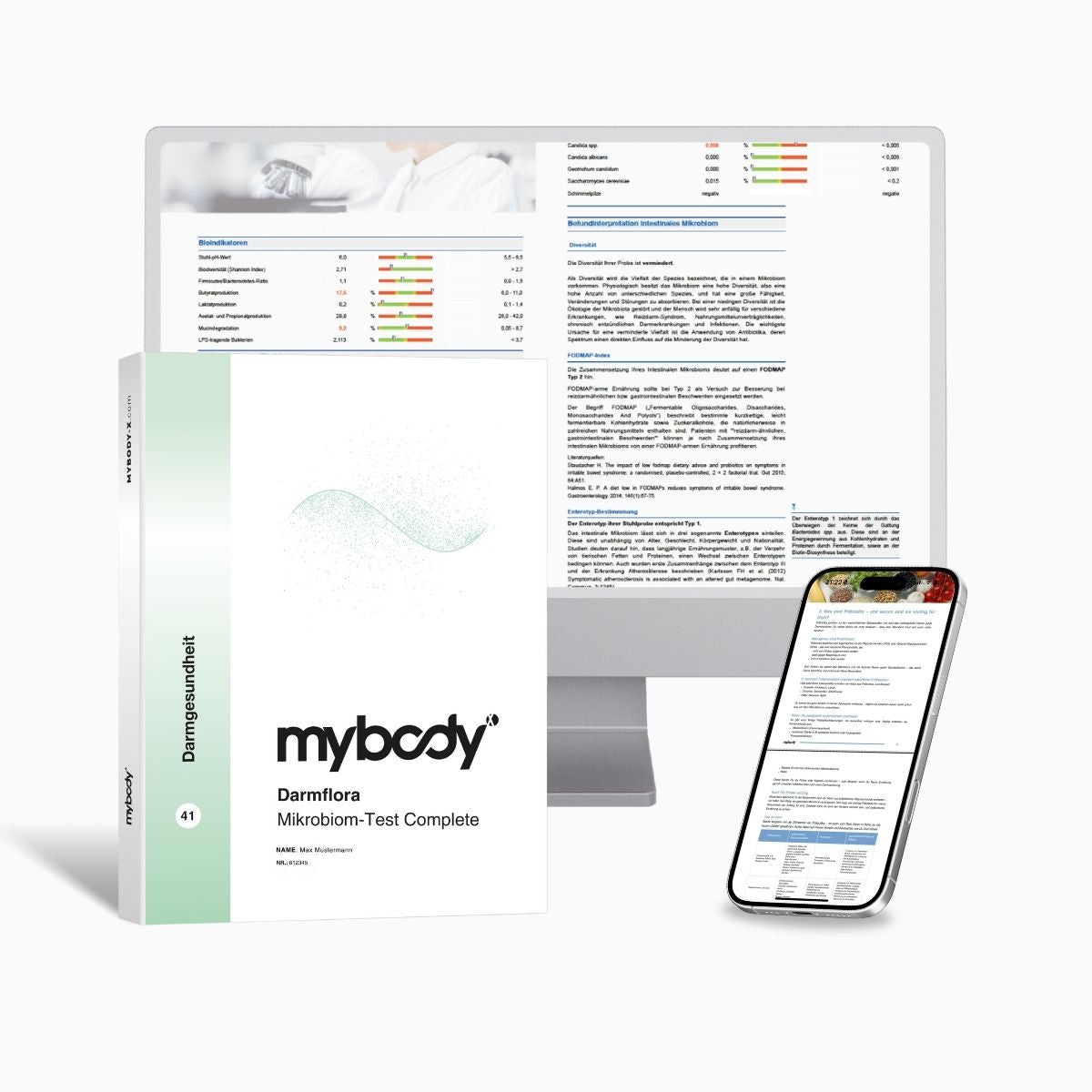
mybody® (MYBODY Lab GmbH) offers these analyses as at-home tests using a stool sample. The analysis is performed in an ISO-certified laboratory in accordance with ISO 27001, and data processing complies with the GDPR.
Gut Flora MICROBIOME Test Complete
The Complete test uses DNA sequencing to identify more than 1,500 bacterial species and provides a report of around 15 pages — covering bacterial diversity, the ratio of protective to potentially harmful microorganisms, indications of dysbiosis, the FODMAP index, and enterotype determination. What the test cannot do: It does not diagnose conditions, detect inflammatory bowel disease, tumors, or celiac disease — and it does not provide information about your stool frequency.
Price: €189.00 (instead of €219.00) · Sample type: stool sample · Processing time: approx. 20–25 business days · Laboratory: ISO-certified laboratory analysis, ISO 27001
To the Microbiome Test Complete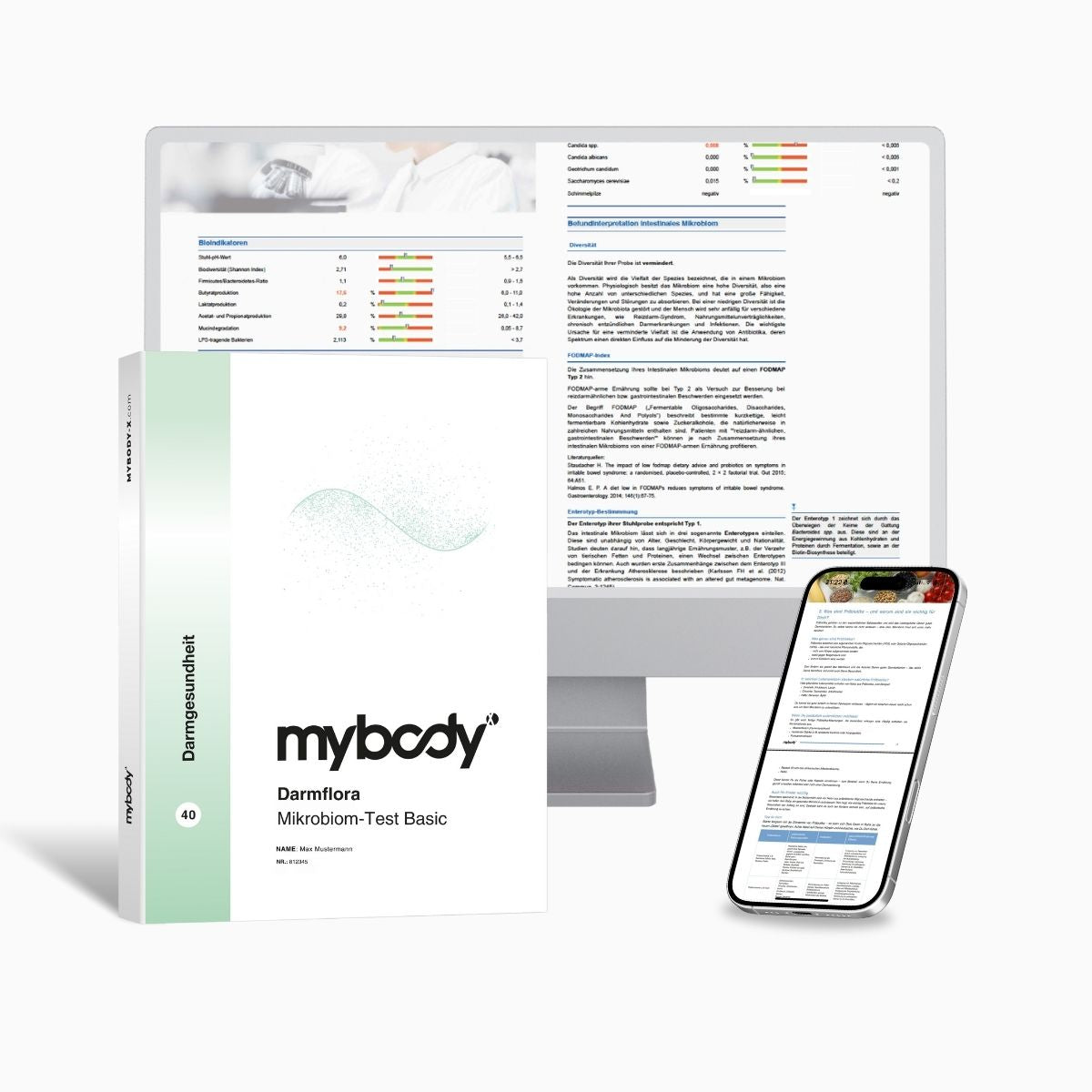
Gut Flora MICROBIOME Test Basic
The entry-level version shows the composition of the gut flora, the ratio of protective to potentially harmful bacteria, the intestinal environment based on the pH value, fungal colonization, and indications of dysbiosis — also in a report of around 15 pages. The FODMAP index and enterotype determination are not included. Like the Complete version, the test is not a diagnostic procedure and does not provide information about stool frequency.
Price: €139.00 · Sample type: stool sample · Processing time: approx. 20–25 business days · Laboratory: ISO-certified laboratory analysis, ISO 27001
To the Microbiome Test BasicAll price and service information is current as of July 28, 2026. Prices and processing times may change; the respective product page always provides the authoritative information.
Is a microbiome analysis worthwhile for this issue?
The following comparison also covers cases in which a test is the wrong answer.
Makes sense for you if …
… you have already implemented the basic measures and want to know how your gut flora is composed.
… you are interested in bacterial diversity, enterotype, and the FODMAP index as a basis for discussion with a healthcare professional.
… you prefer a written laboratory report to simply observing yourself.
Probably not if …
… there is blood in your stool or your bowel habits have suddenly and persistently changed—this should be assessed by a doctor.
… you expect a test result to replace dietary changes—it does not.
… you expect information about your bowel movement frequency—a microbiome analysis does not provide that.
Assessment: A microbiome analysis is a snapshot, not an intervention—it complements the basic options but replaces neither them nor medical evaluation.
What none of these options can do
All eight options address diet, fluid intake, physical activity, or taking stock of the situation. None of them investigates an underlying cause.
No test or home remedy can replace medical evaluation when warning signs occur. This applies to blood in the stool as well as significant weight loss, fever, or pallor.
No test or home remedy can replace medical evaluation when warning signs occur.
A second limitation concerns expectations about speed. The sources reviewed do not specify how long it should take for a change to occur. Anyone expecting a result after three days is measuring against a number that does not exist.
A third limitation is individuality: According to IQWiG (2023), how people react to foods varies greatly from person to person.
Finally, constipation can be a symptom of an underlying condition. Diverticula, for example, are common—according to IQWiG (2026), about 13% of people under 50 have diverticula, compared with about 50% of people over 70. Irritable bowel syndrome is also widespread: IQWiG (2023) estimates that about 10 to 20 out of 100 people have irritable bowel syndrome.
Conclusion
Those who want to stimulate bowel movements have three options with the broadest evidence base: more fiber from foods, adequate fluid intake, and regular physical activity. IQWiG (2025) names exactly these three as well.
Psyllium husks are the best-supported supplement, but only with sufficient fluid intake. According to IQWiG (2023), fiber supplements have not been shown to be effective, while probiotics are merely well tolerated. Laxatives should be discussed with a doctor’s office or pharmacy.
In concrete terms: Start with your diet, increase your fiber intake over two to three weeks toward the DGE guideline value of 30 grams per day, drink 1.5 to 2 liters daily, and incorporate into your week the amount of physical activity recommended by the WHO (2020). If you then want to take a closer look at the composition of your gut flora, a microbiome analysis is a sensible next step—as a snapshot, not a substitute for making these changes.
Frequently asked questions
How can I naturally stimulate my bowel movements?
Through three measures that IQWiG (2025) mentions together: changing your diet to include more fiber, drinking enough fluids—1.5 to 2 liters per day—and exercising regularly. The DGE (2021) recommends that adults consume at least 30 grams of fiber per day.
Does psyllium help with bowel movements?
According to IQWiG (2025), studies provide evidence that plant-based remedies containing fiber, such as psyllium husks, may reduce the frequency of bleeding from enlarged hemorrhoids. Important: According to IQWiG (2025), anyone taking psyllium husks should make sure to drink enough fluids.
Do fiber supplements help?
According to IQWiG (2023), it has not been proven that additional fiber supplements help. A lack of evidence does not automatically mean they are ineffective, but it is not a basis for recommending them either.
When should I seek medical advice for constipation?
According to IQWiG (2023), additional symptoms such as significant weight loss, blood in the stool, fever, or pallor are more likely to indicate another intestinal disease; blood in the stool should always be medically examined. According to IQWiG (2026), if you experience severe abdominal pain, a hard abdominal wall, fever, nausea, a racing heart, and general weakness, it is important to seek medical help promptly.
Does a microbiome test show why my bowel movements are irregular?
No. A microbiome test measures the composition of the gut flora, not the frequency of bowel movements. It provides a snapshot of bacterial diversity and bacterial ratios, but does not provide a diagnosis. If warning signs are present, seek medical evaluation.
Would you like to know how your gut flora is composed?
The mybody® gut flora MIKROBIOM test analyzes a stool sample in an ISO-certified laboratory. It complements the basic measures from this article—it does not replace them and does not provide a diagnosis.
View the Complete microbiome test All gut tests at a glanceYou might also be interested in
→ Abdominal pressure: identifying and assessing the causes
When changes in bowel movements are accompanied by a feeling of pressure or tightness in the abdomen.
→ The most reliable microbiome tests for your gut flora
What you should consider before deciding on a gut microbiome analysis.
→ Gut encyclopedia: all bacteria and markers in your gut flora
Reference work with over 6,000 microbiome biomarkers—from protective bacteria and fiber fermenters to the metrics in your report.
Sources
- IQWiG / gesundheitsinformation.de: What can you do yourself about hemorrhoids? (2025) — gesundheitsinformation.de
- German Nutrition Society (DGE): Reference values for fiber (2021) — dge.de
- World Health Organization: Guidelines on Physical Activity and Sedentary Behaviour (2020) — ncbi.nlm.nih.gov
- IQWiG / gesundheitsinformation.de: What helps with irritable bowel syndrome—and what does not? (2023) — gesundheitsinformation.de
- IQWiG / gesundheitsinformation.de: Irritable bowel syndrome (2023) — gesundheitsinformation.de
- IQWiG / gesundheitsinformation.de: Diverticular disease and diverticulitis (2026) — gesundheitsinformation.de
The verbatim quotation in Chapter 3, the recommended fluid intake of 1.5 to 2 liters, the recommendation to eat high-fiber foods, the study reference on psyllium husks, and the statement about straining strongly are taken from [1]. The guideline value of 30 grams of fiber per day, as well as the information on transit time, stool consistency, and protective effects, are taken from [2]. The exercise recommendation is taken from [3]. The statements on fiber supplements, probiotic tolerability, and the individual nature of responses to foods are taken from [4]. The warning signs, the recommendation to have blood in the stool evaluated, and the prevalence of irritable bowel syndrome are taken from [5]. The additional warning signs and information on diverticula are taken from [6]. The definition of probiotics comes from the “Probiotics” glossary entry on gesundheitsinformation.de, which is listed without a date and is therefore referenced in the text rather than in the list. Product information comes from the mybody® product pages, accessed on July 28, 2026. All other sources cited in the text are identified directly at the relevant point by institution and year.

mybody® Editorial & Expert Team
Gut health Microbiome Fiber Nutritional science
This article was created and medically reviewed by the mybody® Editorial and Expert Team. The team combines expertise in nutrigenetics, microbiome and gut science, blood analysis interpretation, nutritional science, and laboratory diagnostics.
Published on July 28, 2026 · Last updated on July 28, 2026
Medical notice: This article is for general information only and does not replace medical advice, diagnosis, or treatment. Persistent or sudden changes in bowel habits, blood in the stool, significant weight loss, fever, or severe abdominal pain should be medically evaluated. A microbiome test is not a diagnostic procedure.




Share now:
Gut bacteria in children: What is proven and when an examination is advisable
Colon cleanse for weight loss: What is actually proven—and what isn’t?