
Supporting your gut flora: How to strengthen your microbiome and well-being
Do you often feel tired, bloated, or struggle with symptoms you simply cannot explain? Your gut feeling could be signaling that your gut flora has become unbalanced. To specifically support it, however, we first need to understand what is actually happening inside and how you can regain control through the right measures in your diet and lifestyle.
How your gut feeling controls your health

Your gut is far more than just a digestive organ. Think of it instead as a vibrant, teeming jungle. This complex ecosystem, known as the microbiome, is home to trillions of bacteria, viruses, and fungi. This universe within you is a key player in your overall health and has a hand in almost everything—far beyond digestion.
A healthy, diverse gut flora is like a perfectly coordinated team that works tirelessly for you around the clock. It not only breaks down your food and helps absorb nutrients, but is also the command center of your immune system. In fact, around 70–80% of your immune cells are located directly in the gut.
When the ecosystem falls out of sync
But this delicate balance, eubiosis, can quickly become unstable. We call such a disruption dysbiosis. It is as if weeds suddenly began to overrun the beneficial plants in your inner garden. The causes are diverse and often a firmly established part of our modern lives:
- Stress: Chronic stress sends signals via the gut-brain axis that improve the environment for harmful bacteria and displace the beneficial ones.
- Unbalanced diet: Too much sugar, highly processed foods, and too little fiber are like starvation diets for your beneficial gut bacteria.
- Medications: Antibiotics in particular are like an atomic bomb for the gut—they destroy not only the harmful pathogens but also a large proportion of its beneficial inhabitants.
- Lack of sleep: Yes, your gut flora also has a day-night rhythm. Too little sleep disrupts this timing and hinders the important regeneration of the gut.
The effects of dysbiosis often creep in slowly but are far-reaching. They are not limited to classic digestive problems such as bloating or irregular bowel movements. Many people also experience symptoms that they initially do not associate with their gut at all.
An imbalance in the gut flora can manifest itself through constant fatigue, skin problems such as acne or eczema, new food intolerances, increased susceptibility to infections, and even mood swings.
The connection between the gut and the immune system is particularly close. It is therefore not surprising that dysbiosis is closely linked to chronic inflammation. In fact, around 10 percent of people in Germany suffer from chronic inflammatory diseases. New findings even show that, in patients with Crohn’s disease, the composition of gut bacteria can predict the success of a treatment, as you can read in this article from the German Rheumatism League: Learn more about the gut flora as a mirror of health.
This knowledge is the key to understanding why it is so important to actively support your gut flora. It’s about giving your body exactly the building blocks it needs for a strong internal balance. To delve even deeper into this fascinating world, also read our article about the importance of the microbiome for your health.
The right foods for a strong gut flora

Your diet is without question the biggest lever you have for actively shaping your gut flora. Every single meal is a choice: are you feeding the trillions of beneficial helpers in your gut, or giving their counterparts the upper hand? But don’t worry—you don’t need to overwhelm yourself with endless lists of “good” and “bad” foods.
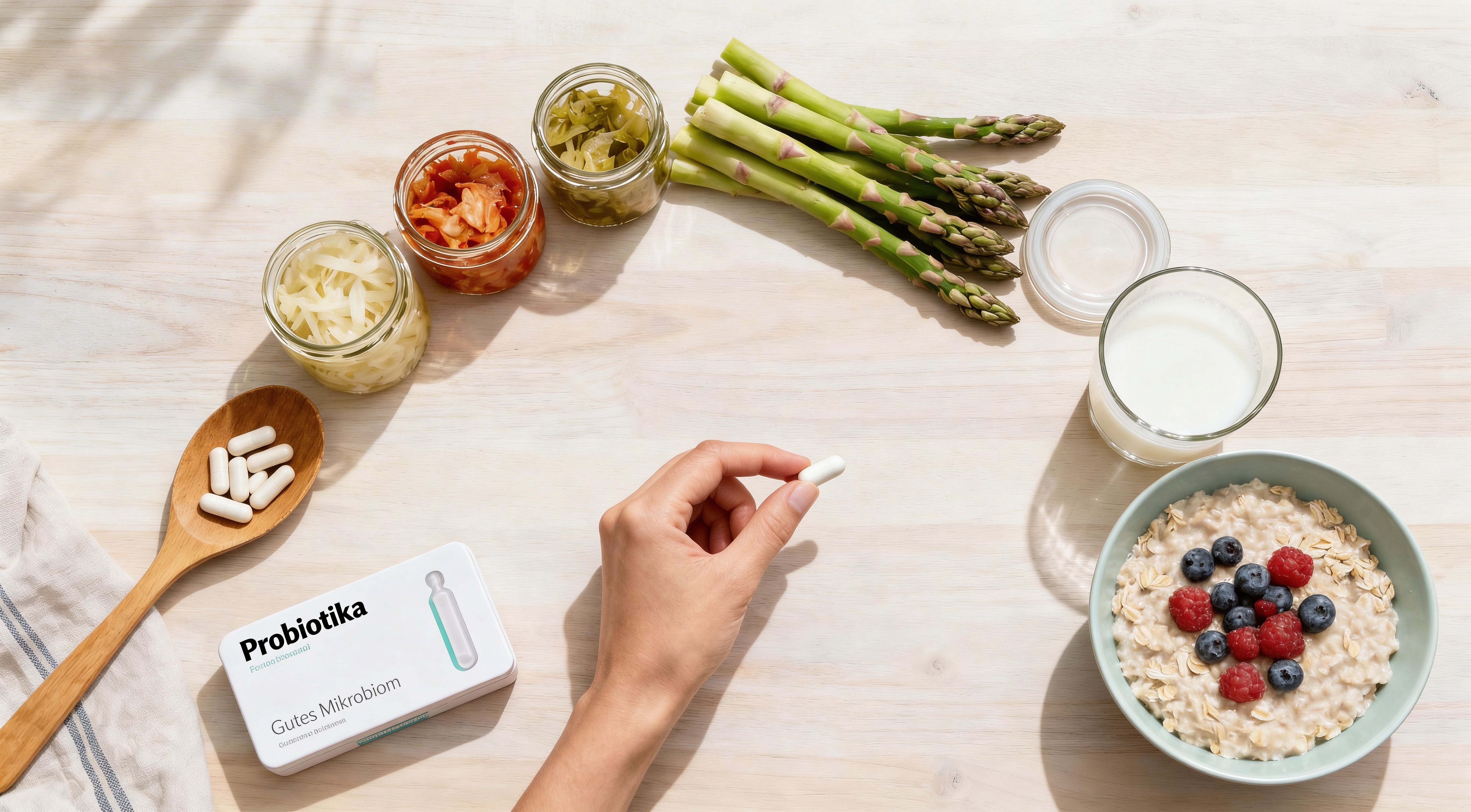
Instead, we focus on what really matters: variety on your plate and targeted support for your tiny inhabitants. There are two key groups of foods you should know about: prebiotics and probiotics. It’s best to think of it like gardening: prebiotics are nutrient-rich fertilizer, while probiotics are the new, beneficial plants you put in the ground.
Prebiotics: fuel for your gut bacteria
Prebiotics are essentially nothing more than special, indigestible dietary fibers. They have no direct nutritional value for you, but they are the absolute favorite food of your beneficial gut bacteria. When these bacteria ferment the prebiotic fibers, valuable substances such as butyrate are produced—a short-chain fatty acid.
Butyrate is the primary energy source for your intestinal cells and helps keep the intestinal lining strong and intact. A well-nourished intestinal wall is crucial for preventing unwanted substances from entering your bloodstream.
The good news? You don’t need to search for exotic and expensive superfoods. Many everyday foods are packed with these valuable fibers.
Excellent sources of prebiotics include:
- Onions, garlic, and leeks: They form the basis of countless dishes and, as an added bonus, provide the important prebiotic inulin.
- Asparagus and chicory: Ideal as a side dish or in a salad, they provide your gut microbes with a welcome meal.
- Oats: A perfect way to start the day. As porridge or overnight oats, they provide important beta-glucans that your bacteria love.
- Resistant starch: This clever form of starch develops when starchy foods such as potatoes, pasta, or rice are cooked and then cooled again. So yesterday’s potato salad is not only practical, but a real feast for your microbiome.
The real key, however, lies not only in individual foods, but in variety. Greater diversity on your plate directly leads to greater diversity in your gut—and that is precisely the hallmark of a healthy and resilient gut microbiome.
Variety is crucial. Try to eat at least 30 different plant-based foods per week. This includes not only fruits and vegetables, but also nuts, seeds, herbs, spices, and whole grains. Each plant provides a unique range of fiber and nutrients for different bacterial strains.
Probiotics: living helpers for your microbiome
While prebiotics feed the beneficial bacteria already present, probiotics introduce new, living microorganisms directly into your system. Fermented foods are the most natural and effective source. The fermentation process not only produces these valuable probiotic cultures, but also makes the foods easier to digest and their nutrients more available to your body. A true win-win.
Some of the best probiotic foods include:
- Yogurt and kefir: Look for plain varieties with “live and active cultures” and no added sugar. Kefir is often even more valuable, as it contains a greater variety of bacterial strains and yeasts.
- Sauerkraut: Be sure to choose the unpasteurized variety from the refrigerated section. Unfortunately, heating (pasteurization) destroys the valuable bacteria.
- Kimchi: This Korean national dish made from fermented vegetables is a true probiotic powerhouse and incredibly versatile. If you want to learn more, read our guide on how healthy kimchi really is for your gut flora.
- Kombucha: A fermented tea drink that can be a refreshing, gut-friendly alternative to sugary sodas.
To broaden your horizons, it is also worth looking at other culinary cultures. Many Asian dishes traditionally rely on fermentation, allowing you to easily integrate a variety of healthy foods into your diet that your microbiome will love.
This table provides concrete examples of prebiotic and probiotic foods that you can easily incorporate into your daily routine to specifically support your microbiome.
Practical foods for your gut health
| Type of support | What it does | Examples of foods |
|---|---|---|
| Prebiotics (food) | Nourish the beneficial bacteria, promote the production of butyrate, and strengthen the intestinal barrier. | Onions, garlic, asparagus, leeks, artichokes, oats, cold potatoes (resistant starch) |
| Probiotics (helpers) | Provide new, living microorganisms that positively influence the balance of your gut flora. | Natural yogurt, kefir, unpasteurized sauerkraut, kimchi, kombucha, miso |
By regularly combining foods from both categories, you optimally nourish your gut ecosystem and create the best conditions for your well-being.
When your stomach still rebels
Sometimes even seemingly healthy foods such as onions, legumes, or certain types of fruit can cause symptoms such as bloating, abdominal pain, or discomfort. This is an important signal from your body that you should never ignore.
If you suspect that certain foods are not good for you, guessing is not the solution. A mybody®x food intolerance test can provide targeted clarity. Such a test analyzes your IgG4 antibody response to a wide variety of foods and helps you identify potential triggers. With this knowledge, you can adjust your diet based on evidence, temporarily avoid problematic foods, and give your intestinal lining the opportunity to regenerate without having to forgo valuable nutrients.
How your lifestyle shapes the microbiome
A gut-friendly diet is essential, no question. But if you really want to build up your gut flora sustainably, we need to look beyond diet. Often, it’s the seemingly insignificant everyday habits that tip the scales. Your entire lifestyle is an incredibly powerful lever that influences the composition of your microbiome anew every day.
It’s about the big picture: stress, exercise, and sleep. These three pillars are not separate areas to address, but a closely interconnected system that communicates directly with your gut bacteria. Let’s take a closer look at how you can adjust these levers to create an environment where your beneficial gut inhabitants can truly thrive.
Show stress the red card
Chronic stress is pure poison for a healthy gut flora. When you’re constantly under pressure, your body continuously releases stress hormones such as cortisol. Via the so-called gut-brain axis—a direct data highway between your brain and your gut—these stress signals reach your bacteria unfiltered.
What happens then? The environment in the gut changes, the protective mucus layer can become more permeable, and the growth of beneficial bacteria is slowed down. At the same time, microbes that promote inflammation suddenly get the best possible living conditions. Many people experience this directly as a “stress belly,” bloating, or digestion that goes haywire as soon as the pressure rises.
Fortunately, you’re not at its mercy. Regular relaxation practices can break this vicious cycle and calm your overstimulated nervous system again.
Two simple techniques that help immediately:
- Mindfulness minutes: Several times a day, take just a minute or two to consciously step out of the carousel of your thoughts. Focus completely on your breathing, feel your feet touching the ground, or listen to the sounds around you. This immediately grounds you and reduces cortisol production.
- The 4-7-8 breathing technique: This simple exercise has an extremely calming effect. Breathe in through your nose for 4 seconds, hold your breath for 7 seconds, and then exhale audibly through your mouth for 8 seconds. Just three to four repetitions can make a huge difference.
By actively reducing stress, you send a powerful relaxation signal directly to your gut flora—while also creating greater mental clarity for yourself.
Exercise in the right balance
Exercise is another key player. Regular, moderate activity increases the diversity of your gut bacteria and promotes the production of extremely important short-chain fatty acids such as butyrate. You could say that your beneficial bacteria love it when you keep moving.
But here, the dose makes the poison. While moderate exercise such as brisk walking, cycling, swimming, or yoga is absolutely ideal, extreme competitive training can have the opposite effect. Excessive training puts the body under pure stress, which in turn can weaken the intestinal barrier and negatively affect the microbiome—this is the well-known “leaky gut” phenomenon.
Find your sweet spot. It is not about exhausting yourself completely every day. The goal is to make regular exercise a consistent and enjoyable part of your daily life. Just 30 minutes of moderate activity on most days of the week can make a noticeable difference to your microbiome and your overall well-being.
Sleep as a superpower for your gut
Good sleep may be the most underrated, yet one of the most effective measures for your gut health. It is not just you—your microbiome also has a consistent circadian rhythm, an internal clock. While you sleep, important regeneration and repair processes in your gut are running at full speed.
Chronic sleep deprivation seriously disrupts this rhythm. Studies show that just a few nights of too little sleep can reduce the diversity of gut bacteria and throw the balance of bacterial strains off course. The result: You are not only tired and unable to concentrate, but you also weaken your intestinal barrier and immune system.
Consistent routines can work wonders for your sleep quality:
- Consistent sleep schedule: Try to go to bed and get up at about the same time every day—yes, even on weekends.
- Screen detox: The blue light from smartphones, tablets, and similar devices interferes with the production of the sleep hormone melatonin. Put your devices away at least one hour before bedtime.
- Relaxation routine: Establish a soothing evening ritual. This could be reading a good book, taking a warm bath, or listening to calming music.
This holistic perspective shows that there is no single miracle pill or superfood. True, sustainable gut health is the result of a balanced lifestyle. If you want to know how to put these principles into practice even more easily, you will find many more practical suggestions in our article 7 Tips for Microbial Health in Everyday Life.
Probiotics & Co.: When gut supplements really make sense
The dietary supplement market is a jungle. Probiotic capsules, prebiotic powders, and vitamin combinations are tempting you everywhere with promises of quickly and easily getting your gut health back on track. But instead of grabbing random products and spending money on things that may not do anything at all, taking a targeted approach is the key to supporting your gut flora effectively.
Let’s get one thing straight: A balanced diet and a healthy lifestyle are and remain the foundation. Supplements are not a cure-all, but in certain situations they can be a valuable, temporary addition—essentially a kind of jump-start when your gut has gotten out of balance.
When probiotics and prebiotics really help
Think of probiotics—that is, preparations containing live bacterial strains—as a kind of special forces unit for your microbiome. You do not deploy them for everyday duties, but for very specific missions.
In these situations, using probiotics can really make a difference:
- After antibiotic treatment: Unfortunately, antibiotics are not selective. They do not only eliminate harmful bacteria but often leave a kind of “scorched earth” in the gut. A high-quality probiotic can help stimulate the regeneration of the gut flora and reduce the risk of the dreaded antibiotic-associated diarrhea.
- For persistent digestive problems: Have you already changed your diet but still suffer from bloating, constipation, or irregular bowel movements? A targeted course containing specific bacterial strains may then help restore balance.
- To support your immune system: A large part of your immune system is located in your gut. During periods when you are more susceptible to infections, a course of probiotics may therefore provide valuable support.
Prebiotics in powder form (such as inulin or acacia fiber) may be worth considering if you find it difficult to get enough fiber through your diet alone. They are essentially your good gut bacteria’s favorite food, helping to specifically promote their growth.
Recognizing quality – what really matters
Not every probiotic you find on the shelf is equally good. And more expensive does not automatically mean better. To distinguish a high-quality product from a less effective one, you should look for a few key criteria:
- Specific bacterial strains: Instead of vague descriptions such as “lactic acid bacteria,” the exact strains should be named using their scientific designations (e.g., Lactobacillus rhamnosus GG or Bifidobacterium lactis BB-12). After all, each strain has its own specific superpowers.
- Dosage in CFUs: The quantity of live bacteria is specified in “colony-forming units” (CFUs). An effective product should contain several billion CFUs per dose—usually, the amount is in the range of 5 to 20 billion CFUs.
- Protection from stomach acid: For the beneficial bacteria to arrive alive where they are needed—in the gut—they must survive the aggressive stomach acid. Therefore, look for indications such as “gastro-resistant capsules” or specially protected cultures.
A probiotic is only useful if the right bacteria reach their intended destination—the gut—alive and in sufficient quantities. Therefore, pay close attention to the information about strains, CFUs, and protective mechanisms.
This infographic shows you at a glance how much your daily choices regarding stress, exercise, and sleep influence your gut microbiome.

The graphic makes it clear: A healthy gut microbiome is not a matter of chance, but the result of a balanced lifestyle.
The importance of an intact gut microbiome even extends to cancer research. In Germany, around 55,000 people develop colorectal cancer every year, and experts increasingly see an impaired gut microbiome as a risk factor—particularly concerning is the fact that more and more younger people are affected. The LEONORA study is currently investigating whether synbiotics (a combination of probiotics and prebiotics) can alleviate the side effects of cancer treatment. You can read more about this exciting research into gut bacteria and colorectal cancer here.
The smart approach: Targeted supplementation instead of blind experimentation
Instead of simply taking probiotics on a whim, the real key lies in individuality. Your gut is unique—and so are its needs. So before reaching for any supplements, it makes sense to find out what your body is really lacking.
A healthy microbiome depends on a strong, intact intestinal lining. This lining, in turn, requires specific nutrients for its regeneration and function. A deficiency in these vitamins and minerals can directly have a negative impact on your gut health.
Important nutrients that strengthen your intestinal lining include:
- Vitamin D: It plays a crucial role in a functioning intestinal barrier and regulates the immune system in the gut.
- Zinc: It is essential for cell division and therefore for the constant renewal of the intestinal lining.
- Vitamin A: It is needed to produce the protective mucus that lines your intestinal wall.
- L-Glutamine: This amino acid is the main energy source for the cells of your small intestinal lining.
This is exactly where a data-driven approach comes in. Instead of supplementing blindly, a mybody®x nutrient test can show you precisely whether you have a deficiency in these or other micronutrients relevant to gut health. Based on your individual blood results, you receive specific recommendations on which nutrients you should supplement in a targeted way.
This approach enables you to effectively support your gut flora—not through guesswork, but through knowledge. You invest your money only in what your body demonstrably needs, creating the optimal foundation for a healthy intestinal lining and a thriving microbiome.
More than just a gut feeling: When data can make a difference to your gut health

Have you changed your diet, reduced stress, and exercised regularly, but persistent symptoms somehow remain? Chronic digestive problems, unexplained fatigue, or skin problems that simply refuse to go away can be extremely frustrating. When general advice reaches its limits, it is time to go one step further—and move from guessing to measuring.
Instead of blindly trying things and going round in circles, a data-driven approach can be the decisive next step. It gives you a clear picture of what is really going on in your body. This is where mybody-x self-tests come in.
When is a mybody-x self-test useful for you?
A data-based test is much more than just a snapshot. It is a tool that provides precise insights and helps you understand the causes of your symptoms instead of always just treating the symptoms.
A mybody-x self-test is particularly valuable if you recognize yourself in one of these situations:
- For chronic digestive problems: You have been suffering from bloating, abdominal distension, constipation, or diarrhea for a long time and simply cannot find a clear cause.
- For unexplained symptoms: Fatigue, loss of energy, skin problems, or a high susceptibility to infections are affecting you, and you suspect the key lies within your body.
- For targeted health optimization: You already live health-consciously but want to take your performance, immune system, and well-being to the next level by supporting your gut flora in a targeted way.
The entire process is remarkably simple and discreet. You order your test kit online, collect the sample conveniently and painlessly at home, and then send it to our certified German specialist laboratory. No waiting for doctor’s appointments, no uncomfortable visits to a medical practice.
A mybody-x test is like a personal look behind the scenes. It translates the complex processes in your body into understandable, actionable information and puts you back in control of your health.
After the analysis, you receive a comprehensive report that goes far beyond mere data. It is your very own roadmap to better health.
What your results really reveal
Your results report is not filled with medical jargon, but is an easy-to-understand analysis that provides you with concrete answers. Depending on the test you choose, you may learn, for example:
- Whether you have nutrient deficiencies: A nutrient test shows whether your body lacks important vitamins or minerals that are essential for a healthy intestinal lining, such as vitamin D or zinc.
- Which foods you react to: An intolerance test helps you identify potential triggers for your symptoms so you can adjust your diet accordingly.
- Whether your hormones are balanced: A hormone test can reveal whether an imbalance, such as in cortisol or estrogen, is affecting your gut health.
The crucial advantage: You are not left alone with this information. Your report contains personalized recommendations tailored to your results for nutrition and lifestyle, helping you promote your health in a highly targeted way.
Understanding the bigger picture: The gut-hormone axis
But sometimes the gut is only one piece of the puzzle. Your body is a complex system in which everything is interconnected. The connection between the gut and the hormonal system is particularly close. Certain gut bacteria are responsible for metabolizing hormones such as estrogen.
An impaired gut microbiome can disrupt this process and lead to hormonal imbalance, which may manifest as cycle problems, mood swings, or symptoms during menopause. Conversely, hormonal fluctuations also affect the composition of the gut microbiome.
So if you notice signs of hormonal imbalance in addition to digestive issues, an additional mybody®x hormone test (e.g., for estrogen or cortisol) can complete the picture. Combining the results allows you to take a more holistic view of your health and take measures that support both your gut microbiome and hormonal balance. This way, you can finally make informed decisions for your well-being.
Building a healthy gut microbiome: Your most frequently asked questions, our answers
Here, we’ve collected the most important questions about building a healthy gut microbiome and answered them concisely. This gives you the clear, easy-to-understand guidance you need on your journey toward greater well-being.
How quickly will I notice an improvement?
We hear this question often—the impatience is completely understandable. Naturally, you want to see results as quickly as possible. And the good news is that initial positive effects, such as more regular digestion or reduced bloating, can actually appear after just a few days if you consistently adjust your diet and lifestyle.
But achieving a stable, sustainable change in your microbiome is a marathon, not a sprint. Give your body and your valuable gut bacteria the time they need. It usually takes several weeks to months for a new, robust balance to become firmly established. Patience is your most important ally here.
Do I have to give up sugar completely now?
No, complete and radical abstinence is rarely the right approach and is often extremely difficult to maintain. Rather, it’s about a conscious reduction of added sugar and highly processed carbohydrates. Remember: They are the favorite food of exactly the bacteria you actually don’t want to feed.
Focus on replacing sugar in your everyday life with gut-friendly alternatives. Enjoy the natural sweetness of berries, use spices such as cinnamon, which help stabilize blood sugar, or reach for an apple instead of a chocolate bar. A mindful approach is much more effective in the long term than strict abstinence, which often leads to cravings.
The key is not prohibition but balance. Consciously choosing nutrient-rich, whole foods in your everyday life is more important than the occasional indulgence.
Is diet alone enough to restore the gut flora?
Yes, a varied, plant-based diet and a healthy lifestyle are the absolute foundation and the most powerful tool you have. Your daily choices on your plate, as well as your choices regarding exercise, sleep, and stress management, significantly shape your microbiome. Don't underestimate this power!
Supplements such as probiotics are not a substitute for this healthy foundation. Rather, they are a targeted addition for very specific situations, such as after antibiotic treatment or when a specific deficiency exists. To act in a truly targeted way rather than blindly, a test can be useful. A mybody®x nutrient test, for example, shows whether a deficiency in vitamins relevant to gut health is holding back your progress.
Are expensive probiotics automatically better?
Absolutely not. The price of a probiotic says absolutely nothing about its effectiveness or quality. Other factors are far more important:
- The specific bacterial strains: Are the strains included actually suited to your needs and symptoms?
- The dosage (CFU): Does the product contain enough live, viable bacteria to reach the gut?
- Scientific evidence: Are there studies proving the effects of these exact bacterial strains?
Instead of spending a lot of money on randomly selected products, it makes more sense to take a data-driven approach. First find out what your body really needs, then invest accordingly.
Are you ready to move from guessing to knowing and take targeted control of your gut health? At mybody-x.com, you'll find scientifically backed at-home tests—from food intolerance tests to nutrient and hormone analyses. Discover now how to truly understand your body and sustainably improve your well-being: Find the right test for you at mybody-x.com

Share now:
Disrupted gut flora: Recognizing and understanding the symptoms
Understand and sustainably resolve bowel and bowel movement problems