
Imbalanced gut microbiome: Recognizing and understanding the symptoms
An uncomfortable feeling of fullness, constant bloating, or fatigue that simply cannot be shaken off—such signals from your body can be quite frustrating, especially when you do not know the cause. These are often the first signs that your gut microbiome has become imbalanced.
The symptoms are by no means limited to the abdomen. They can range from classic digestive problems and skin blemishes to mood swings and a weakened immune system. Your body is sending you cries for help, and it is worth listening carefully.
Your gut is sending you signals—learn to interpret them
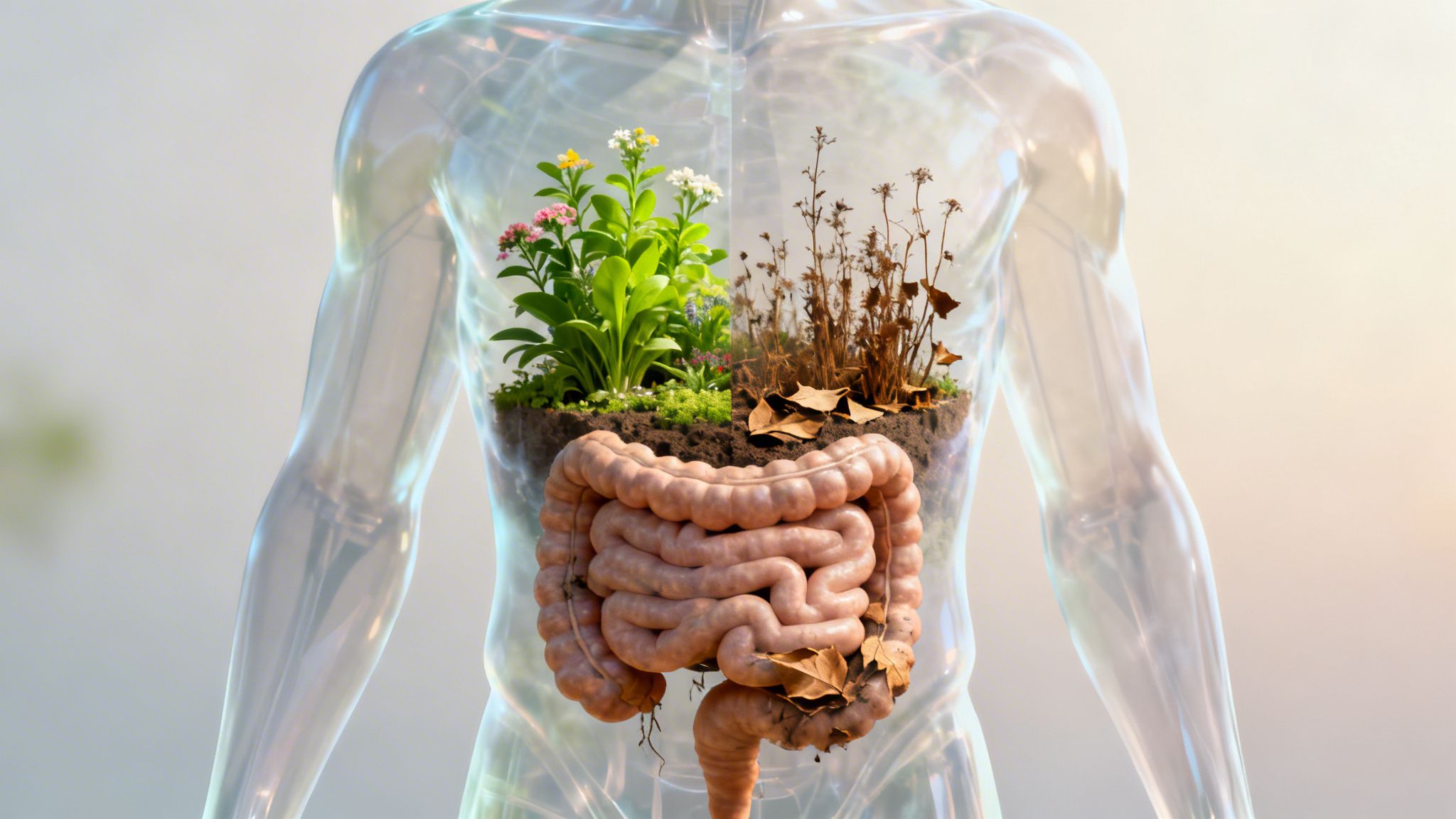
Essentially, your gut microbiome is a living ecosystem, almost like a flourishing garden inside you. Trillions of microorganisms work together here to break down nutrients for you, train your immune system, and even influence your mood.
When this finely tuned balance is disrupted—a condition known as dysbiosis—harmful bacteria can spread like weeds. The result is a range of symptoms that can appear throughout the body. Correctly interpreting these signals is the first and most important step toward improvement.

From abdominal pain to skin problems: the typical signs
An imbalance in the gut microbiome is, of course, most noticeable directly in the digestive tract. Many people affected struggle with a whole range of gastrointestinal problems that significantly impact their daily lives.
The following table summarizes the wide range of symptoms and helps you make an initial assessment of your gut health.
Typical signs of dysbiosis at a glance
| Symptom category | Common signs and symptoms |
|---|---|
| Digestive tract | Bloating, abdominal distension, irregular bowel movements (constipation or diarrhea), abdominal pain, cramps, feeling of fullness. |
| Immune system | Increased susceptibility to infections (e.g. frequent colds), development of new food intolerances. |
| Skin | Acne, eczema, rosacea, dry skin, dull complexion. |
| Energy & mental well-being | Chronic fatigue, lack of energy, difficulty concentrating, mood swings, irritability, depressive moods. |
| Other signs | Joint pain, unexplained weight gain or loss, intense cravings for sugar. |
The list shows how far-reaching the consequences of an imbalance in the gut can be. It is often about more than just a little “stomach rumbling.”
But the symptoms do not stop there. Since around 80% of your immune system is located in the gut, an imbalance also directly affects your defenses.
A disrupted gut can manifest as increased susceptibility to infections, recurring colds, or sudden food intolerances. Your body is fighting on a front you may not even have been aware of.
Subtle Signs You Shouldn’t Ignore
In addition to obvious gastrointestinal problems, there are also subtler signs that may indicate dysbiosis. These include unexplained fatigue and lack of motivation. Do you often feel low on energy even though you have actually slept enough? Your gut could be the cause.
If you want to explore this topic in more depth, our related article explains more about how to correctly interpret symptoms of an unhealthy gut.
Skin problems such as acne, eczema, or simply a dull complexion can also have their roots in a disrupted gut microbiome. The same applies to hormonal fluctuations and low moods. The good news, however, is that once you understand these connections, you can take targeted action and regain control.
Your inner garden, the microbiome, is both a robust and highly sensitive system. Dysbiosis—in other words, an imbalance in your gut flora—therefore almost never develops overnight. Rather, it is usually the result of various factors that strain your delicate ecosystem over an extended period and throw it out of balance.
The good news is that you have control over many of these causes because they are closely linked to your lifestyle. So it is worth taking a close look at which triggers might be affecting you.
Antibiotics as a “broad-spectrum weed killer”
There is no question that antibiotics are a blessing of modern medicine and can save lives. But for your gut flora, they can act like clear-cutting. Think of them as a “broad-spectrum weed killer”: While they effectively target harmful pathogens, they do not distinguish between them and unfortunately also eliminate countless beneficial bacteria.
What remains is often a drastically reduced diversity in the gut. Without the protective army of beneficial microbes, harmful bacteria and fungi suddenly have free rein to spread. This can then trigger the typical symptoms of disrupted gut flora.
How Nutrition and Stress Sabotage Your Microbiome
What you eat has a direct influence on which bacteria in your gut get to party and which starve. A one-sided diet rich in sugar, processed foods, and saturated fats acts like fertilizer for precisely the “wrong” bacterial strains. They thrive and multiply, while the beneficial ones are left behind.
Chronic stress is at least as powerful a disruptive factor. Through the so-called gut-brain axis, your brain sends stress signals directly to your abdomen. This can seriously disrupt gut motility, stomach acid production, and the composition of your gut flora.
Other risk factors that many people often do not even consider include:
- Lack of sleep: Just a few nights of too little or poor-quality sleep can demonstrably reduce the diversity of your gut bacteria.
- Lack of exercise: Regular, moderate exercise, on the other hand, is like a little booster for a healthy gut flora and good digestion.
- Food additives: Certain emulsifiers or artificial sweeteners are also suspected of disrupting the balance of bacteria.
A disrupted microbiome is not only uncomfortable; it can also have serious health consequences. In Germany, around 55,000 people develop colorectal cancer every year, with an imbalanced gut flora considered one of the risk factors. Factors such as chronic stress and an unhealthy diet therefore not only promote symptoms like bloating and abdominal pain, but can also increase the long-term risk of such diseases. Learn more about research on gut bacteria and colorectal cancer.
By identifying these risk factors in your everyday life, you are already taking the first and most important step toward regaining control over your gut health and addressing the true causes of your symptoms.
How a microbiome test finally brings clarity
So you have the feeling that something in your inner ecosystem, your microbiome, has become unbalanced. The symptoms are there, and you may even have an idea of what the causes might be—but what comes next? Instead of continuing to grope in the dark and trying one product after another on a whim, there is a modern way to finally get clarity: a microbiome analysis at home.
Imagine receiving a personal map of your gut that shows you exactly where the problem areas are and where everything is in the green. That is exactly what a test like this does. It is the first, decisive step toward no longer leaving your gut health to chance, but addressing it in a targeted and scientifically sound way.
Your personal insight into your gut ecosystem
A modern at-home gut self-test from mybody-x is designed so that you can easily complete it from home. You avoid unpleasant doctor’s visits and long waiting times. The entire process is discreet and straightforward, providing you with precise data about the state of your gut flora.
The process is designed to be as simple as possible:
- Easy sample collection: You collect a tiny stool sample conveniently and hygienically in your own bathroom. Everything you need is included in the test kit.
- Analysis in a certified laboratory: Your sample is then analyzed in a German specialist laboratory using state-of-the-art technology.
- Detailed results report: You receive an easy-to-understand report that explains exactly what is happening in your gut—without complicated technical jargon.
The following graphic clearly shows how a cause—such as taking medication—can lead to an imbalance (dysbiosis) and ultimately to noticeable symptoms.

The illustration makes it clear that symptoms of an imbalanced gut flora rarely come out of nowhere. They are the end of a chain of events that such a test can uncover.
What valuable information does the test provide?
A microbiome analysis is much more than just a snapshot. It provides you with specific and, above all, actionable information about your internal ecosystem. In addition to a gut test, an intolerance test, nutrient test, or hormone test from mybody-x can also provide valuable pieces of the puzzle to help you understand your symptoms holistically.
A microbiome test is essentially your personal user manual for your gut. It translates your body’s signals into clear data, so you can finally understand what it really needs.
The analysis provides information about, among other things:
- Bacterial diversity: How diverse is your microbiome? High diversity is considered a sign of robust and resilient gut health.
- The balance: What is the ratio of beneficial to potentially harmful bacterial strains? This reveals whether dysbiosis is present.
- Indications of inflammation: Certain markers may point to low-grade inflammation in the gut, which is often associated with symptoms such as fatigue or skin problems.
- Signs of leaky gut syndrome: The test can provide insight into whether your intestinal lining may have become permeable.
These results give you a reliable basis for all your next steps. You can take targeted measures tailored specifically to you instead of blindly testing products. Learn more in our guide about how to test your gut and take your health into your own hands.
Your personal roadmap to a better gut feeling
Okay, your microbiome analysis results are in front of you. This is the moment when you can finally move from guessing to taking targeted action. Instead of continuing to grope around in the dark, you now have a kind of personal map of your gut in your hands. Let’s work together to create a clear, practical plan to bring your internal ecosystem back into balance.
The foundation of a healthy gut rests on two pillars that work together like a well-rehearsed team: probiotics and prebiotics. Think of it like gardening: First, you need new, beneficial plants to increase diversity (probiotics). But for them to grow strong and thrive, they need the right fertilizer (prebiotics).
Probiotics—the new, beneficial inhabitants of your gut
Probiotics are living microorganisms—in other words, exactly the “good bacteria” that can give your health a real boost. By deliberately consuming them through fermented foods, you introduce new helpers into your gut. They increase diversity and help keep unwanted germs in check.
Try incorporating these probiotic powerhouses into your diet gradually:
- Kefir or plain yogurt: The perfect base for your breakfast or a quick snack in between. However, be sure to choose products without added sugar, otherwise you’ll just end up feeding the wrong bacteria again.
- Unpasteurized sauerkraut: Even a small portion as a side dish with your meals provides you with an abundance of valuable lactic acid bacteria. The important thing is that it must be raw! Heat destroys the beneficial cultures.
- Kimchi or kombucha: These fermented specialties not only add variety to your diet, but also provide a broad range of different bacterial strains.
The goal isn’t to eat huge amounts of them overnight. It’s better to start slowly and gradually increase the amount. This gives your gut time to get used to its new inhabitants.
Prebiotics—the favorite food of your little helpers
For your new and existing beneficial bacteria to feel comfortable and multiply properly, they need the right food: prebiotics. These are essentially indigestible dietary fibers that serve exclusively as a food source for your beneficial gut inhabitants.
Make a conscious choice to include these prebiotic foods:
- Vegetables: Onions, garlic, leeks, artichokes, and asparagus are particularly rich in these special fibers.
- Legumes: Lentils, chickpeas, and beans are not only fantastic sources of protein but also true superfoods for your gut flora.
- Whole-grain products: Oats, whole-grain bread, and quinoa provide sustainable energy—for you and your beneficial bacteria.
- Chilled potatoes or rice: Something ingenious happens here: Cooling creates resistant starch, a particularly valuable form of prebiotic.
Probiotic vs. prebiotic foods
To make things even clearer, here is a simple comparison showing which foods build up your gut flora and which feed it.
| Type of support | Food examples | Function in the gut |
|---|---|---|
| Probiotics (building blocks) | Yogurt (unsweetened), kefir, raw sauerkraut, kimchi, kombucha | Introduce new beneficial bacteria into the gut and increase diversity. |
| Prebiotics (food) | Onions, garlic, leeks, asparagus, lentils, oats, chilled potatoes | Serve as food for beneficial bacteria and promote their growth and activity. |
By combining both types of food, you create the best possible conditions for a strong and resilient microbiome.
The trend of deliberately influencing gut health through nutrition is growing stronger. This is also reflected in the fact that the low-FODMAP diet, which is becoming increasingly popular in Germany, has recorded growth of +135.71 percent. At the same time, the global probiotics market is growing and is expected to reach US$77.40 billion by 2026. Science confirms this approach: Studies show that fermented foods can demonstrably increase bacterial diversity in the gut while reducing inflammatory markers such as interleukin-6. You can read more about these fascinating health trends in 2026 here.
A holistic approach that considers nutrition and lifestyle is always the key to success. If you want to delve deeper and learn more about how to care for your microbiome sustainably, you can find valuable tips in our article about a healthy gut flora. Consider this action plan your first decisive step toward a better feeling in your gut and greater well-being.
The strong connection between the gut and the mind
The famous “gut feeling” is far more than just an expression—it is biology in action. A direct, constantly active data highway, known as the gut-brain axis, runs between your gut and your brain. Think of it as a dedicated line through which your gut continuously sends information to your brain and vice versa.
This connection is precisely why emotional stress can immediately affect digestion. But the flow of information goes both ways: an imbalance in the gut can just as severely affect your mood and mental fitness. Your gut bacteria are the behind-the-scenes directors, playing a crucial role in this dialogue.

How Your Bacteria Shape Your Mood
One of the most important neurotransmitters for your inner balance is serotonin, which many people know as the “happiness hormone.” It regulates your mood, your sleep, and even your appetite. But what most people do not know is that an incredible 90% of the serotonin in your body is produced not in the brain, but by the bacteria in your gut.
If your gut flora becomes unbalanced—what doctors refer to as dysbiosis—this important production can start to falter. The result often feels like a constant mental low, even though there seems to be no obvious external reason for it.
Perhaps you recognize yourself in these feelings:
- Lack of motivation: You lack the energy for everyday life, even though you have actually had enough sleep.
- Difficulty concentrating: You often feel “foggy” and struggle to focus on one thing.
- Mood swings: You become irritable or anxious more quickly, or tend to experience depressive moods.
Research is increasingly confirming how closely the health of our microbiome is linked to our mental resilience. In Germany, around 1,200 known bacterial species influence this gut-brain axis. If this ecosystem is disrupted, it can lead not only to digestive problems but also to chronic fatigue or skin problems. The growing interest in this topic, also reflected in data from the Robert Koch Institute, shows how relevant this connection has become in stressful everyday life. Find out more about why gut bacteria are so important and how they affect your health.
Your immune system is located in your gut
But your gut’s influence extends much further. Approximately 80% of your immune cells are located directly in your gut. This makes your gut microbiome your most important training partner and shield against infections. A healthy and diverse community of bacteria trains your immune system continuously and helps it distinguish precisely between friend and foe.
Dysbiosis significantly disrupts this training. As a result, your immune system may either become weakened, making you more susceptible to every wave of colds, or overreact, which can lead to chronic inflammation, allergies, or even autoimmune reactions.
Taking care of your gut is therefore about far more than simply maintaining good digestion. It is a fundamental investment in your overall physical and mental health. By nurturing your internal ecosystem, you strengthen not only your gut but also your mood, concentration, and immune system—and lay the foundation for holistic well-being.
Frequently asked questions about a disrupted gut microbiome
There are many questions and some persistent myths surrounding gut health. You probably have a few of them on your mind too. We will shed light on the subject and answer the most frequently asked questions we encounter, so you can plan the next steps for your well-being with a clear head.
How long does it take to rebuild a disrupted gut microbiome?
That is the question everyone asks—and the answer is as individual as you are. Unfortunately, there is no magical timeframe that applies to everyone. Your personal lifestyle, your previous diet, and, of course, the extent of the imbalance play the leading roles.
You will often notice the first positive changes, such as calmer digestion or more energy, after just a few weeks if you stay consistent. But think of it as a marathon, not a sprint. Fully and sustainably restoring your microbiome can take several months to a year.
A microbiome test is an invaluable guide here. It not only shows you where you are starting from, but also helps you measure your progress and make sure your efforts are paying off.
Are supermarket probiotics enough?
Probiotic foods such as plain yogurt, kefir, or fresh sauerkraut are an absolutely fantastic start and should definitely be part of your diet. They provide your gut with a daily dose of live cultures and are an important source of support.
In the case of pronounced dysbiosis, which manifests through persistent disrupted gut flora symptoms, they often reach their limits. The bacterial strains in supermarket products are usually not specific enough or present in the necessary concentration to produce a targeted therapeutic effect.
Think of it this way: An ordinary yogurt is like a watering can for your entire garden. Targeted supplementation based on an analysis, on the other hand, is like precisely supplying nutrients to the plants that need them most.
For truly effective rebuilding, targeted support based on the results of your personal analysis is usually the much more successful approach.
Can a disrupted gut flora recover on its own?
Your microbiome is a true survivor and remarkably resilient. In the case of mild, temporary disruptions—such as after a short period of stress or a minor dietary slip-up—it can indeed rebalance itself.
However, this self-healing ability has its limits. If you suffer from chronic symptoms, have undergone antibiotic treatment that destroyed a large proportion of your beneficial bacteria, or have lived an unhealthy lifestyle for years, active support is essential. In these cases, your gut needs targeted help to regain its balance.
Does my hormone balance also play a role?
Yes, absolutely! The connection between the gut and hormones is much closer than most people think. There is a particularly direct connection to estrogen levels in women. A specific group of gut bacteria, known as the estrobolome, plays a major role in regulating estrogen in the body.
If your gut flora is disrupted, this process can quickly get out of balance. This can lead to a hormonal imbalance, which in turn may manifest as more severe PMS symptoms, cycle fluctuations, or problems during perimenopause. A hormone test can provide valuable insights here. A healthy gut flora is therefore also a key building block for stable hormonal balance.
Are you ready to take control of your gut health and finally gain clarity about the causes of your symptoms? At mybody-x.com, we offer scientifically grounded analyses to help you better understand your body. Discover what is really behind your symptoms with our at-home self-tests and receive personalized recommendations for your well-being. Find the right test for you now at mybody-x.com.


Share now:
Build a healthy gut microbiome: Your practical guide to feeling better in your belly
Support your gut flora: How to strengthen your microbiome and well-being